

Business
Hints, Answers and Player Reactions


The New York Times’ popular word-association game Connections delivered another clever brain teaser on Wednesday, March 11, 2026, with puzzle No. 1004 featuring a mix of straightforward synonyms, idiomatic phrases and tricky homophones that left players debating categories and celebrating quick solves.
Connections, launched in 2023, tasks players with grouping 16 words or phrases into four themed sets of four. Categories range in difficulty from yellow (easiest) to purple (hardest), and players get four mistakes before the puzzle ends in defeat. The game has surged in popularity alongside Wordle, Strands and other daily NYT brain games, drawing millions who share scores and frustrations on social media.

For March 11’s edition, the 16 words were: DRESS, HEE, ICE CREAM, JAZZ, LIFT, MI, OUI, PALM, PINCH, PINE, POCKET, SNOW, SPIFF, SPRUCE, TRAFFIC and YEW.
Hints circulated quickly online from sites like Mashable, CNET, Forbes and The Gamer, offering subtle nudges without full spoilers. Common early clues pointed to “take without permission” for the yellow group, “enhance, perhaps vertically” or “make nicer with ‘up’” for green, “conical variety” or “photoreceptor cells and funnels” for blue, and “sounds like…” or “pronoun homophones” for the challenging purple.
The yellow category proved the most accessible: **STEAL** — LIFT, PALM, PINCH, POCKET. These are all informal verbs meaning to pilfer or swipe something discreetly, from “lifting” goods in retail slang to “palming” an item or “pinching” pennies.
Green followed as **MAKE NICER, WITH “UP”** — DRESS, JAZZ, SPIFF, SPRUCE. Each word pairs with “up” to form a phrase meaning to improve appearance or style: dress up, jazz up, spiff up, spruce up. Reviewers noted this as a classic Connections trope relying on common idioms.
The blue group, rated medium difficulty, was **KINDS OF CONES** — ICE CREAM, PINE, SNOW, TRAFFIC. This category highlighted diverse uses of “cone”: the frozen dessert, the evergreen tree part, a weather phenomenon like a funnel cloud variant, and the road safety device. Players often spotted “ice cream” and “traffic” first, then connected the others.
The purple category, as usual the trickiest, required thinking phonetically: **PRONOUN HOMOPHONES** — HEE, MI, OUI, YEW. These sound like the English pronouns “he,” “me,” “we” and “you” but come from other languages or spellings — “hee” (a variant or laugh sound approximating “he”), “mi” (as in do-re-mi, sounding like “me”), “oui” (French for “yes,” homophone to “we”), and “yew” (the tree, pronounced like “you”). Many solvers called this one “bizarre” or “diabolical,” with some needing multiple mistakes before cracking it.
Player reactions flooded Reddit’s r/NYTConnections subreddit and X, where the daily thread for March 11 garnered hundreds of comments. Scores varied widely: some finished in perfect runs with few guesses, while others struggled with the purple group, reporting three or four mistakes. “That purple had me yelling at my screen,” one user posted. Another praised the cone category: “Once I saw traffic and snow, it clicked — great misdirect with pine though.”
The puzzle’s difficulty rated around average for midweek, with the purple homophones providing the biggest hurdle. No major bugs or complaints surfaced, unlike occasional past issues with ambiguous words.
Connections continues to evolve under NYT Games, occasionally introducing themed variants like Sports Edition (No. 534 on March 11 focused on athletics terms). The core game remains free with limits or via subscription for unlimited play.
For those who missed it or want a rematch, the official NYT site archives puzzles, though spoilers abound online. Strategy tips from experts include scanning for obvious pairs first, avoiding early submissions on uncertain groups to preserve mistakes, and considering multiple meanings — literal, slang, homophones or phrases.
As Connections marks its third year, puzzle No. 1004 exemplified why the game endures: clever wordplay, escalating challenge and that satisfying “aha” moment when groups lock in. With daily refreshes at midnight Eastern Time, players in Incheon and beyond already eye tomorrow’s grid.
Whether you’re a streak maintainer or casual solver, March 11’s edition reminded fans that Connections rewards lateral thinking — and a good ear for sounds-alike tricks.



WhatsApp is bringing preteen accounts to its platform, which essentially expands the age of eligibility to use the instant messaging app.
WhatsApp Launches Preteen Accounts for Younger Users
WhatsApp announced in its latest blog post that it is now lowering the age of eligibility among users to use the platform, launching the new “preteen accounts” that will open up the platform to younger users.
The latest preteen accounts will let users below 13 to use the platform and its features, including instant messaging, calls, and more. However, this access will come with specific controls and limits.
WhatsApp revealed that there will be safeguards for the preteen accounts, with the platform’s end-to-end encryption still promising privacy to users.
According to WhatsApp, the experience will center around parent-managed accounts for preteen users, ensuring that their children remain safe on the platform.
WhatsApp Preteen Accounts Require Parent Management
WhatsApp will require a preteen account to be set up with their parent or guardian’s account, which it calls “parent-managed accounts.” This is mandatory for users who are under 13.
To create the account, parents or guardians need to have their device and their ward’s side by side to link the accounts. After linking the accounts, parents or guardians may now set up the limitations to the preteen account.
Here, they may select the contacts their children can talk to, as well as which groups they can join.
Parent accounts may be able to review message requests from unknown contacts and choose to allow or delete these contacts.
WhatsApp said that parental controls and the app’s settings may only be accessed or changed by the parent, as it will remain PIN-protected.
Originally published on Tech Times

A company of Manulife Investment Management, John Hancock Investment Management serves investors through a unique multimanager approach, complementing our extensive in-house capabilities with an unrivaled network of specialized asset managers, backed by some of the most rigorous investment oversight in the industry. The result is a diverse lineup of time-tested investments from a premier asset manager with a heritage of financial stewardship. Note: This account is not managed or monitored by John Hancock Investment Management, and any messages sent via Seeking Alpha will not receive a response. For inquiries or communication, please use John Hancock Investment Management’s official channels.

NewEdge Advisors Acquires $6 Billion Alabama RIA Led by Former UBS Advisor

At the same time, an unusually early onset of summer has opened up multiple investment themes—from consumer durables to power demand—leaving investors wondering where the real opportunities lie.
Market expert Neeraj Dewan believes the environment calls for caution but also offers selective opportunities for investors willing to take a longer-term view.
Volatility Returns After Brief Stability
Markets had been witnessing broader participation after the trade deal announcement, but the last two weeks have reversed that trend as geopolitical risks intensified.

“Last two weeks have not been great at all for the market. Post the trade deal announcement, things were improving steadily and you were seeing some wider participation in the market. But then last two weeks have been again with all this war situation and the crisis there, things have become totally different right now.”
The uncertainty around crude oil prices is particularly important for India and other Asian economies that depend heavily on imported energy.
Energy, Defensives Offer Tactical Opportunities
Despite the volatility, Dewan believes certain pockets of the market could benefit in the near term—especially energy companies and defensive sectors.
“There can be some short-term opportunities which can be in the form of energy company, something like you mentioned ONGC, whether it is Coal India or the other power companies which have their own coal mines, so there are opportunities there. And defensives may also again come into play. There are FMCG companies where again people will go for defensives right now.”
Companies such as Oil and Natural Gas Corporation and Coal India could benefit from rising energy prices, while defensive sectors like FMCG and pharmaceuticals may attract investors seeking stability.
“There are pharma companies which if you are getting dips there, those are also opportunities because pharma is one space which has been strong post covid and which may remain strong going ahead also.”
Patience Key for Long-Term Investors
Dewan cautioned that investors should avoid rushing into the market despite the corrections being seen in many stocks. “If you are an investor who has some surplus cash in this kind of a market, you do not need to be in a hurry to buy right now because you are getting better opportunities on a daily basis. Stock that you like are correcting on a daily basis.” He added that investors should stagger their investments and remain prepared for a prolonged period of volatility.
“One needs to be a little more cautious in putting in money but definitely put in small amounts on dips, but then this can be a long haul because you have not seen this kind of a war before.”
Food Delivery Platforms Attractive for Long-Term
Dewan also sees long-term potential in India’s food delivery platforms, even though the stocks may remain volatile in the near term. Platforms like Swiggy and Zomato have corrected recently, creating what he believes could be a gradual accumulation opportunity.
“For a person who has the money and he stays invested for two to three years, I think these are opportunities. Because of this specific event, the stocks have corrected and so these are opportunities where one can accumulate slowly these. Of the two, I like Eternal more. So, I would be looking at that.”
Auto Stocks Correct, But Structural Story Intact
The correction in auto stocks has also caught investor attention, especially with the growing electric vehicle (EV) theme. Dewan highlighted companies like Mahindra & Mahindra and TVS Motor Company as strong long-term portfolio names. “These are good companies, these are portfolio stocks and some events like this make them correct. So, for a portfolio investor definitely these are opportunities.”
However, he warned investors not to assume the correction is over. “Do not expect that you buy them today and you will not see another correction. If you are prepared that you can buy on dips, you can add more if the stock falls more and stay invested for a couple of years, I think these are good opportunities.”
Consumption Outlook Faces Short-Term Noise
Recent data had shown strong consumption trends following GST cuts and tax relief measures, but Dewan expects some short-term disruption due to geopolitical uncertainty and seasonal liquidity pressures.
“This quarter there can be some dip because of all this noise that is coming and March anyways there is liquidity also which gets sucked because of advance tax.”
Still, he believes domestic fundamentals remain largely intact. “I am not saying that there is any basic problem domestically. Domestically things are good. GST cut, income tax advantage that we got last budget, there are a lot of things which are going to play for the domestic market.”
PSU Energy Stocks Back in Focus
Finally, Dewan pointed to opportunities in select public sector companies, particularly in energy and mining. “Energy stocks from the PSU basket and even mines and mineral companies there you are getting corrections, maybe an opportunity for a long-term investor.”
Companies such as NTPC and NTPC Green Energy could also see investor interest as energy markets tighten. “The way crude and gas prices are going up, I think they can get some benefit from them.”
While markets remain uncertain due to geopolitical developments and rising energy costs, Dewan believes the correction is opening selective opportunities. For investors with patience and a long-term horizon, gradual accumulation in quality stocks—especially on declines—may prove rewarding once the global situation stabilises.
Business
Dine Brands Global, Inc. (DIN) Presents at UBS Global Consumer and Retail Conference Transcript

Dennis Geiger
UBS Investment Bank, Research Division
Great. Good afternoon. I’m Dennis Geiger, restaurants analyst at UBS, and I’m pleased to welcome and excited to have with us on stage, John Peyton, Dine Brands’ CEO; Vance Chang, Dine Brands CFO; Lawrence Kim, President of IHOP; and also in the audience and in meetings today, Matt Lee of Investor Relations.
I want to also thank the team for the IHOP Swag mugs. It’s a little bit of a gift, I guess, to everyone that’s stuck around till 4:30. So we appreciate that team. Dine Brands owns and franchises over 3,500 restaurants globally across family dining, casual dining and the fast casual categories, including over 200 international restaurants. The brand portfolio includes over 1,800 IHOP locations, over 1,500 Applebee’s locations and about 100 Fuzzy’s Taco Shops, I believe, or so. And with that, John, Lawrence and Vance, thanks so much for being here today. We appreciate it.

Atlassian has announced that it will be cutting 1,600 jobs as part of its artificial intelligence push.
Staff were reportedly informed about the job cuts through email by CEO Mike Cannon-Brookes.
Atlassian Cuts 1,600 Jobs
According to Sky News, the 1,600 jobs that are to be cut represent 10 per cent of Atlassian’s workforce.
30 per cent of these 1,600 jobs, which is equivalent to 480 jobs, are all based in Australia.
In the email sent to employees, Cannon-Brookes explained the reason why the company chose to cut jobs.
“We are doing this to self-fund further investment in AI and enterprise sales, while strengthening our financial profile,” he said.
While Cannon-Brookes said that the decision was the right one to make, he likewise acknowledged how it is a very challenging one as well.
Atlassian as an ‘AI-First Company’
According to news.com.au, Cannon-Brookes said that Atlassian is reframing itself as an “AI-first company.”
“Our approach is not “AI replaces people,’” he told employees. “But it would be disingenuous to pretend AI doesn’t change the mix of skills we need or the number of roles required in certain areas. It does.”
“This is primarily about adaptation,” the CEO added. “We are reshaping our skill mix and changing how we work to build for the future.”


Prince Harry and Meghan Markle are heading back to Australia.
The Duke and Duchess of Sussex are set to make solo appearances in the country next month.
Meghan Markle Headlines Luxury Retreat
The Duchess of Sussex is set to be the guest speaker at the Her Best Life Retreat, which is hosted by Jackie ‘O’ Henderson’s events company Besties. It will take place at the InterContinental Hotel at Coogee Beach from April 17 to 19.
“We are beyond excited to announce that @meghan, Duchess of Sussex will be joining us as the special guest at the Her Best Life Retreat,” Her Best Life announced on Instagram.
The post added, “This is going to be an unforgettable weekend designed for women who want to reconnect, recharge, laugh, learn and have some serious fun.”
The three-day retreat is already creating a lot of buzz online, specifically because of the ticket prices. According to Sky News, ticket prices cost $3,300.
Those who attend the luxury retreat will have the opportunity to attend a gala dinner and have a conversation with Meghan.
Prince Harry Set to Appear in Melbourne
Prince Harry, on the other hand, is set to be the keynote speaker at the InterEdge Psychosocial Safety Summit, which will take place in Melbourne.
According to PEOPLE, Prince Harry is expected to talk about workplace mental health at the summit, which is scheduled to take place from April 15 to 16.
Ticket prices begin at $1,978. Proceeds of the ticket sales will benefit Lifeline Naarm, a 24/7 crisis support and suicide prevention service.
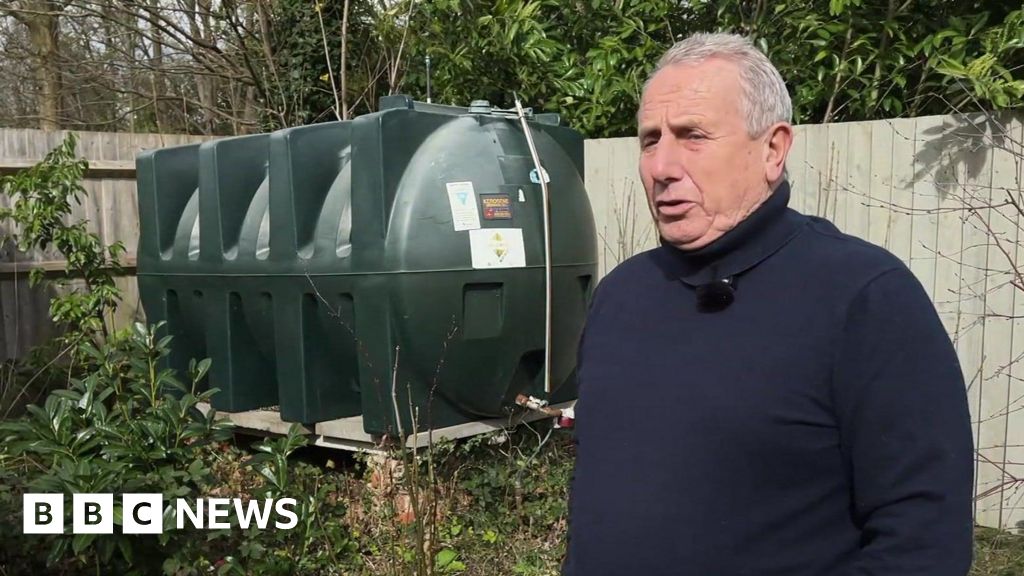
People across the South East say the cost of heating their home soared after war broke out in Iran.

REVIEW: The forests, coastline and excellent regional produce are the hallmarks of a great break down south.

The longevity market is expanding across clinics, supplements, peptides, and consumer wellness platforms. As capital flows into the space, regulatory scrutiny continues to increase. Within that landscape, William Basta has positioned himself within a cohort of operators focused on prevention, structured oversight, and long term credibility rather than rapid expansion.
William Basta functions within the convergence of integrative medicine, ethical manufacturing, and technology-driven healthcare systems. His enterprise includes precision longevity clinics, consulting with early-stage biotechnology companies, and consumer wellness goods. The unifying factor across all of these activities is that health must be developed through systems, documentation, and accountability.
A Systems First Approach to Longevity Care
William Basta is the founder of Nívana Health, a precision longevity clinic centered on proactive care and healthspan optimization. The clinic integrates advanced diagnostics, clinical oversight, and regenerative health principles into a preventive framework.
Rather than treating symptoms after measurable decline, the model emphasizes early intervention. It focuses on immune function, inflammation balance, metabolic efficiency, and ongoing biomarker analysis. This structure reflects a broader belief that longevity is not a single intervention. It is a coordinated system requiring data, interpretation, and accountability.
Biomarker-based systems are becoming increasingly important in integrative medical offices. By using a variety of tests, including blood tests for inflammation and other types of metabolic and recovery tests, physicians can detect small changes in a patient’s health before they develop any issues. The goal of using these systems is to make gradual changes over time through modified treatment regimens rather than jumping into a patient’s treatment too quickly.
Longevity clinics across the country are refining these systems. The focus is shifting from episodic visits to longitudinal care relationships. Structured follow up, repeat testing, and documented outcomes create feedback loops that strengthen both patient results and operational stability.
Collaboration with Medical Leadership
Clinical environments expose patterns that cannot be observed in isolation. Immune variability, inflammatory trends, recovery responses, and metabolic adjustments reveal how systems interact over time. Work alongside Dr. Dhaliwal has reinforced the importance of structured protocols and responsible scaling.
Physician collaboration also strengthens regulatory awareness. In peptide, regenerative, and supplement markets, unclear positioning can invite scrutiny. Clear documentation, appropriate claims, and professional oversight reduce exposure.
Medical collaboration does not eliminate complexity. It introduces accountability. Oversight, documentation, and structured review create boundaries that protect both patients and ventures.
The Peptide Industry and Regulatory Discipline
The peptide industry has expanded rapidly in recent years. Interest in regenerative support, recovery optimization, and immune modulation has driven growth. However, regulatory clarity has not always kept pace with commercial enthusiasm.
William Basta has noted parallels between early supplement markets and current peptide distribution channels. When labeling lacks precision or sourcing is opaque, trust deteriorates. Unverified suppliers and inconsistent testing create risk not only for consumers, but for the long term viability of the sector.
One of the central concerns in peptide markets involves contamination and purity verification. Batch level validation, heavy metal screening, microbial testing, and third party laboratory confirmation are essential safeguards. Without structured testing protocols, dosage accuracy and compound stability cannot be reliably confirmed.
In addition to contamination risks, formulation integrity presents another challenge. Underdosed compounds, improper storage conditions, and inconsistent handling can compromise outcomes. Responsible operators invest in documentation that tracks sourcing origin, transport conditions, storage parameters, and expiration timelines.
William Basta has emphasized that compliance awareness must evolve alongside growth. Responsible language, avoidance of exaggerated claims, and clarity around intended use protect consumers and companies alike. The absence of restraint has historically resulted in enforcement actions that affect entire categories, not just individual brands.
The supplement industry provides precedent. Periods of rapid expansion were followed by increased scrutiny when documentation and labeling standards lagged. The peptide sector faces a similar inflection point. Structured testing, transparent sourcing, and disciplined communication may determine which companies endure.
From Human Longevity to Pet Wellness
The extension of William Basta’s systems approach into pet health occurred through Zoedi Life, a pet wellness brand co-founded with partners Alex and Brady. Their experience in rescue work influenced the brand’s preventive orientation.
Zoedi Life focuses on immune resilience and foundational system support rather than reactive symptom targeting. The philosophy mirrors preventive longevity models in human care. Small physiological shifts, when unaddressed, can accumulate over time.
The pet supplement market has experienced substantial growth. However, formulation standards vary widely. Some products rely on proprietary blends with limited transparency. Others emphasize marketing narratives over documented dosing.
William Basta has applied disciplined sourcing standards within Zoedi Life. These include full ingredient transparency, supplier documentation, heavy metal screening, microbial testing, and stability validation. Clean manufacturing environments and appropriate labeling language are part of the framework.
The objective is not to position supplements as treatment substitutes. The emphasis is daily foundational support within responsible boundaries. This distinction matters in an environment where regulatory expectations continue to evolve.
Investment Criteria in Emerging Health Ventures
When evaluating emerging ventures, William Basta prioritizes biological plausibility, infrastructure discipline, regulatory awareness, ethical sourcing, and long term defensibility. These criteria function as filters in a market often influenced by trends.
Biological plausibility refers to mechanism. A product or platform must align with established physiological understanding. Infrastructure discipline refers to operational integrity. Governance structures, documentation systems, and oversight processes must exist before scale accelerates.
Regulatory awareness is equally important. Ventures that anticipate compliance requirements reduce downstream disruption. Ethical sourcing ensures that ingredient origin, supplier standards, and testing protocols meet documented thresholds.
Will Basta applies these principles across digital health, diagnostics, telemedicine, and applied artificial intelligence initiatives. The objective is sustainable growth grounded in measurable frameworks rather than short term visibility.
Responsible Scaling in Consumer Wellness
Consumers are becoming more knowledgeable about products and demand greater transparency, so it’s vital that manufacturers provide accurate information.
Consumers are scrutinizing product labels, making claims about products and investigating the supply chain for each component used to produce an item.
William Basta defines regulation as both a biological approach to protecting the body and a method of developing a business.
By using precise labeling, rational dosing systems, and documented sourcing methods, you will have a stable business model regardless of whatever happens in the regulatory environment related to your business.
A responsible growth strategy should also include self-restraint when communicating with consumers. Health products must be represented accurately to ensure they are not overstated or implied to be a substitute for being under physician supervision.
The health market is likely to see consolidation as consumer expectations become more defined.
Brands that have well-established processes for testing their products and a formal governance structure will be better positioned to take advantage of this shift.
Building Health Infrastructure Beyond Products
Beyond clinics and supplements, William Basta is developing Project Oasis, an initiative exploring how environment and community design influence health trajectories. The premise recognizes that healthcare access alone does not determine outcomes.
Physical environment, social cohesion, access to preventive education, and community infrastructure shape long term wellness. Longevity frameworks that ignore these variables remain incomplete.
Across his ventures, the pattern remains consistent. Prevention over reaction. Structure over impulse. Documentation over assumption.
The longevity market will continue to expand. Integrative clinics are refining biomarker driven systems. Ethical manufacturers are strengthening contamination testing protocols. Peptide companies are clarifying sourcing and labeling practices.
Within that ecosystem, William Basta and Will Basta reflect a systems oriented approach that prioritizes oversight and long term impact. Collaboration with physician leaders such as Dr. Ajit Dhaliwal and engagement in ventures like Zoedi Life illustrate integration across clinical and consumer domains.
Discipline as the Foundation of Sustainable Growth
Consumers’ health markets will probably keep growing and developing in the coming years because there is a larger demand for preventive healthcare. There is much risk associated with expanding businesses without established infrastructure.
William Basta has always taken a considered approach to this apparent reality by establishing both integrative and alternative health clinics as well as developing platforms for pet wellness. His primary areas of focus are testing, transparency and governance. Basta plans to create infrastructure as a priority, followed by growth through his advisory and funding activities.
Success in the future may not belong to those companies that are most aggressively pursuing growth; instead, it will likely go to those that take the time to properly document what they are doing, have their products tested and confirmed, engage with physicians within their community and communicate effectively.
Companies that want to gain long-term credibility will have the systems in place to do so, particularly as enthusiasm for the industry and regulation for the industry continue to shape this sector.
Canada’s Alphonso Davies out with injury again, Bayern Munich says | Football News

UAE Is About to Cut Off Iran’s Last Financial Lifeline

Audi driver from Stokesley ploughed into car in Darlington


-
Business6 days ago
Form 8K Entergy Mississippi LLC For: 6 March
-

 News Videos3 days ago
10th Algebra | Financial Planning | Question Bank Solution | Board Exam 2026
-

 Fashion6 days ago
Weekend Open Thread: Ann Taylor
-

 Crypto World3 days ago
Paradigm, a16z, Winklevoss Capital, Balaji Srinivasan among investors in ZODL
-
 Tech24 hours ago
A 1,300-Pound NASA Spacecraft To Re-Enter Earth’s Atmosphere
-
 Sports7 days ago
499 runs and 34 sixes later, India beat England to enter T20 World Cup final | Cricket News
-

 Politics6 days ago
Top Mamdani aide takes progressive project to the UK
-

 Business2 days ago
ExxonMobil seeks to move corporate registration from New Jersey to Texas
-

 Sports4 days ago
Braveheart Lakshya downs Lai in epic battle to enter All England Open final | Other Sports News
-

 Sports4 days ago
Three share 2-shot lead entering final round in Hong Kong
-

 NewsBeat13 hours ago
Residents reaction as Shildon murder probe enters second day
-

 NewsBeat7 days ago
Piccadilly Circus just unveiled ‘London’s newest tourist attraction’ and it only costs 80p to enter
-

 Entertainment5 days ago
Hailey Bieber Poses For Sexy Selfies In New Luscious Lip Thirst Traps
-

 Business4 days ago
Search for Nancy Guthrie Enters 37th Day as FBI Probes Wi-Fi Jammer Theory
-

 Business23 hours ago
Search Enters Sixth Week With New Leads in Tucson Abduction Case
-
 NewsBeat2 days ago
Pagazzi Lighting enters administration as 70 jobs lost and 11 stores close across Scotland
-

 Tech3 days ago
Despite challenges, Ireland sixth in EU for board gender diversity
-

 Tech7 days ago
ACIP To Discuss COVID ‘Vaccine Injuries’ Next Month, Despite That Not Being In Its Purview
-

 Tech2 days ago
ChatGPT will now generate interactive visuals to help you with math and science concepts
-

 Business2 days ago
Search Enters 39th Day with FBI Tip Line Developments and No Major Breakthroughs