

Business
How AI Is Boosting the Wealth of Asia’s Richest Families

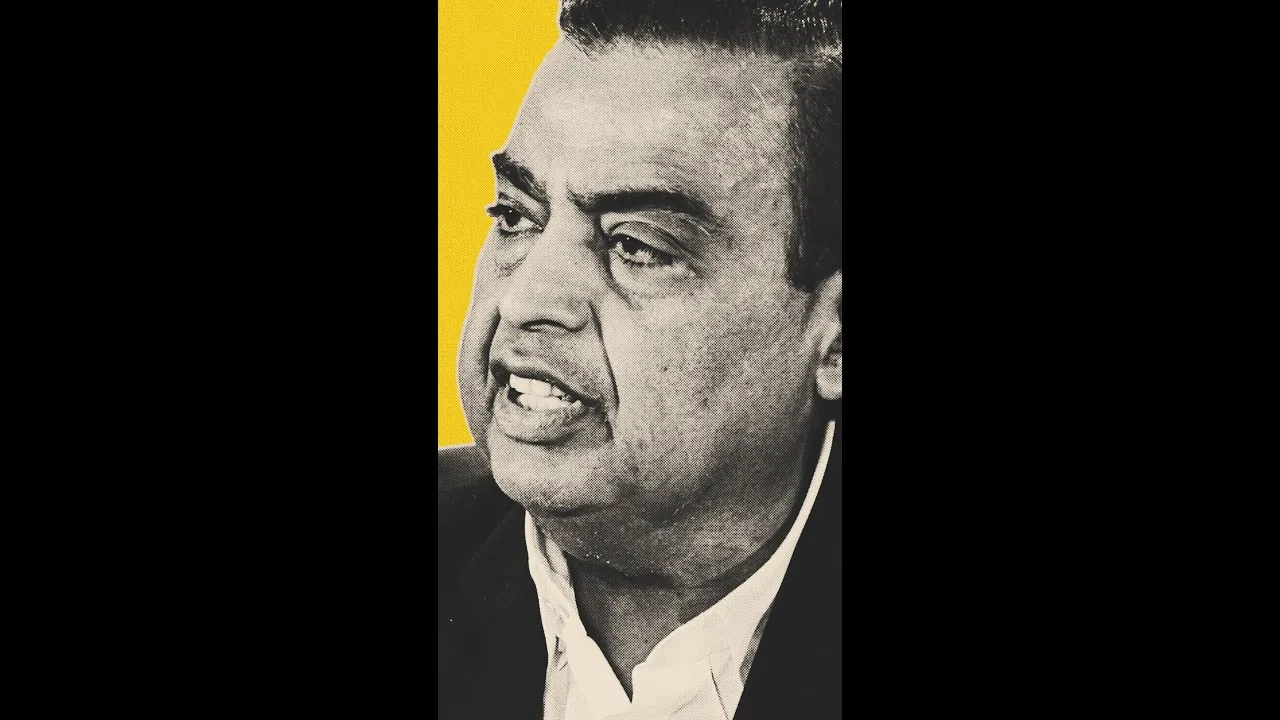
The 20 wealthiest Asian clans have a combined net worth of $647 billion. Despite growing concerns over an AI bubble, these powerful families continue to maintain substantial financial influence. Their extensive wealth underscores their significant role in the region’s economic landscape, highlighting both their stability and the ongoing impact of technological advancements on wealth accumulation.
Artificial Intelligence (AI) is transforming Asia’s wealth landscape by empowering its richest families with unprecedented technological advantages. These families are leveraging AI-driven data analysis and automation to optimize their investments, streamline operations, and make more informed decisions. For instance, many business dynasties in China and India utilize AI to enhance supply chain efficiency, predict market trends, and identify lucrative opportunities faster than ever before. This technological edge allows them to maintain and grow their wealth in an increasingly competitive environment.
Moreover, AI-enabled insights are revolutionizing sectors like finance, real estate, and manufacturing, where Asia’s elite families have vested interests. AI algorithms assist in uncovering hidden market patterns, enabling strategic acquisitions and asset management. These innovations not only boost profitability but also secure long-term dominance within their respective industries. As AI continues to evolve, it will likely further widen the wealth gap, making Asia’s richest families even more powerful.
In conclusion, AI’s influence is amplifying the fortunes of Asia’s elite, providing them with tools for more aggressive expansion and wealth preservation. By embracing cutting-edge technology, these families are cementing their status in the global hierarchy of wealth. As AI developments accelerate, it is clear that Asia’s wealthiest are set to benefit even more, profoundly shaping economic power dynamics across the continent.
Other People are Reading

Business
Former FBI Agent Questions Why Nancy Guthrie Case Investigators Haven’t Released Enhanced Suspect Photo

The disappearance of 84-year-old Nancy Guthrie, the mother of Today show host Savannah Guthrie, has become a high-profile missing persons case that has captivated the public and drawn scrutiny from veteran law enforcement experts, with a former FBI agent now publicly raising pointed questions about the investigation’s transparency and pace nearly five months after Guthrie vanished from her home.
Since her disappearance from her home in the Catalina Foothills near Tucson, Arizona, several theories related to Nancy’s kidnapping and the motives behind it have emerged, drawing investigatory efforts from the Pima County Sheriff’s Department and the FBI. Throughout the investigatory period, various forensic experts and retired FBI agents have offered their insights into the case.
A Former Agent’s Public Critique
In a recent development, former FBI agent Jennifer Coffindaffer, who now works as an expert sharing insight on crimes or missing persons cases across the country, raised serious concerns over the investigation into Nancy’s disappearance. Taking to X, she made a series of pointed points, questioning the search efforts of law enforcement.
“LE and the FBI are making no sense,” Coffindaffer wrote. It is noteworthy that the Pima County Sheriff’s Department, and Sheriff Chris Nanos in particular, have been under fire for mishandling forensic evidence and not allowing the FBI to assist them at the earliest hour.
Questions About the Doorbell Camera Suspect
Coffindaffer focused much of her criticism on what she described as a failure to make full public use of the most concrete piece of visual evidence investigators have recovered — footage of a masked individual caught tampering with Guthrie’s doorbell camera around the time of her disappearance.
“Where is the enhanced photo of Porch guy. It exists. Why not share with the public for their help?” she wrote.
She extended that critique to the public billboard campaign currently associated with the case, arguing that its current focus may not be the most effective use of public outreach resources. “Billboards: Why is Nancy’s face on them? Put Porch Guy’s face & add Spanish if you want more of the public’s help. Or do you know who porch Guy is?” she wrote.
Concerns Over Traffic and Surveillance Camera Evidence
Coffindaffer also questioned why investigators have not released any information gathered from nearby traffic cameras or home security systems despite the passage of several months since Guthrie’s disappearance. “Vehicles: Nothing on any traffic or Ring/Nest cams to distribute after 4 Months? Nothing. It is unfortunately possible,” she wrote.
A Halt in Public Search Efforts
Beyond the handling of physical and digital evidence, Coffindaffer raised concerns about an apparent pause in organized public search activity for Guthrie following the earliest days of the case. “Finally, 0 searches since day 2? Why? What could it hurt?” she wrote, flagging the lack of public searches as a particular point of concern.
No Early Coordination With Mexican Authorities
Coffindaffer also pointed to what she characterized as a missed opportunity to coordinate with authorities across the border, a notable omission given the property’s relative proximity to Mexico. “No contact with Mexican authorities from the beginning—Remember,” she wrote.
Her remarks come amid speculation that Nancy might have been taken to the border area. Last week, officials reportedly received a tip that her body might have been buried in Mexico, adding a fresh and unconfirmed dimension to the case’s already complex set of competing theories.
Two Possible Explanations, in Coffindaffer’s View
Drawing on her background in federal law enforcement, Coffindaffer suggested the investigation’s current posture points to one of two distinct possibilities. “Either LE knows who is responsible or the ball has been dropped,” she wrote.
She elaborated further on that assessment, drawing directly on her own professional background. “25 years in the FBI tells me they must have an idea of who is behind this. If this is not the case, then let the public help. Release the enhanced photos. Change the billboards,” she wrote.
Public Reaction to Her Comments
Coffindaffer’s post generated significant engagement and a range of reactions from social media users following the case closely. One user wrote, “Great post! IF they don’t have anyone in their crosshairs, this complete silence doesn’t make sense after asking for the public to help!”
Another commenter echoed Coffindaffer’s specific concern about the doorbell camera footage, writing, “Where is the enhanced photo of Porch guy. It exists. Why not share with the public for their help? Where is it?”
A third commenter offered a broader critique of how information has been shared across the agencies involved in the case, writing, “From early on there has been siloed information sharing and no updated combined (local & FBI) pressers. Just isolated interviews with the Sheriff projecting hope. A fly on the wall would probably reveal the Sheriff being very territorial even over intelligence dissemination.”
The Broader Context of the Investigation
Coffindaffer’s critique adds to a chorus of public commentary from retired law enforcement professionals who have weighed in on the case in recent months as it has stretched on without a confirmed suspect or resolution. The case was formally upgraded from a missing persons investigation to a homicide investigation by the FBI and Pima County Sheriff’s Department earlier this year, even as no official suspects have been named and the masked individual seen on Guthrie’s doorbell camera remains unidentified.
The tension Coffindaffer and others have pointed to — between a law enforcement strategy that may be quietly pursuing a specific lead versus one that has genuinely stalled — reflects a broader public frustration that has built steadily as the investigation has continued without major public breakthroughs nearly five months after Guthrie’s disappearance.
Neither the FBI nor the Pima County Sheriff’s Department has publicly responded to Coffindaffer’s specific critique regarding the unreleased enhanced photo, the billboard campaign’s current focus, or the apparent lack of coordination with Mexican authorities. With public scrutiny of the investigation continuing to mount and unconfirmed tips — including the recent report regarding a possible burial site in Mexico — continuing to circulate, pressure appears likely to keep building on investigators to provide more detailed public updates on the case’s status, the evidence gathered so far, and the strategy guiding the search for both Nancy Guthrie and whoever may be responsible for her disappearance.

Oil is set to retain the largest share of the global energy mix through midcentury, the Organization of the Petroleum Exporting Countries said, doubling down on its forecast that demand will keep growing with no peak in sight.
“There is no peak oil demand on the horizon,” Secretary-General Haitham Al Ghais said on Thursday at OPEC’s headquarters in Vienna.
Copyright ©2026 Dow Jones & Company, Inc. All Rights Reserved. 87990cbe856818d5eddac44c7b1cdeb8

The UK’s 100 largest businesses are made up of more than 37,000 individual entities registered with Companies House, new analysis has found, laying bare just how hard it has become to see the full shape of Britain’s biggest firms through the corporate registry alone.
The research, from company intelligence platform Beauhurst, sets out the tangle of legal structures that routinely prevent governments, advisers and investors from grasping how the country’s largest organisations actually operate. In the most extreme cases, a single business is registered with Companies House as more than 3,800 separate entities.
Firms use multiple legal entities for all manner of legitimate reasons, from regulatory and financial compliance to ringfencing different parts of the business and smoothing the path for mergers and acquisitions. The trouble, as the analysis makes clear, is that this fragmentation scatters the most meaningful information about a business across dozens, hundreds or even thousands of registrations, making it far harder to obtain and consolidate.
The findings come at a moment of heightened scrutiny of the corporate register itself, with the size of the Companies House register having recently shrunk for the first time in more than a decade as identity-verification reforms take hold.
Beauhurst, which bills itself as the UK’s leading platform for private company intelligence, carried out the analysis using True Companies, a newly launched data suite that aims to show businesses as they genuinely operate, regardless of how many legal entities sit behind them. The tool stitches together fragmented information held across corporate registries, patents, grants, funding records, acquisitions, news and company websites to build a single, unified view of an organisation.
The patent figures are perhaps the most striking illustration of the problem. Only 29 of the top 100 businesses hold patents in their primary legal entity, yet more than 50 own patents elsewhere within their wider corporate structure. In other words, the innovation activity of half of the UK’s largest businesses would be missed entirely if only the parent company were examined. The same blind spot extends to the accounts: nearly 90,000 UK businesses file their most meaningful financial data through a subsidiary rather than their main registered company, and 15 per cent of the country’s largest firms hold key financial data outside the legal entity they are most associated with.
Toby Austin, founder and chief executive of Beauhurst, said the scale of the issue had long been underestimated. “For decades, company intelligence has been constrained by legal entities, and our analysis with True Companies sets out the scale of the problem. A business’s employees, intellectual property, funding, acquisitions, financial performance and innovation activity are often spread across multiple entities and, as a result, some of the most important signals about a business are hidden in plain sight,” he said.
“Having multiple legal entities is useful for registration and compliance, but it’s not how people think about businesses and it’s not how economies work. True Companies changes that by connecting these entities and bringing together information from across multiple sources for the first time. This creates a complete picture of a business that opens up entirely new possibilities. Governments can gain a more accurate understanding of their economies. Investors can identify opportunities sooner, advisers can provide better guidance, and organisations can finally understand businesses as they actually exist, rather than as they appear on a registry.”
For the public sector, Beauhurst argues, a clearer view could help local and national government pinpoint economic strengths and weaknesses across regions, track major employers, map innovation clusters and target support more effectively. For investors and advisers, it offers the prospect of spotting emerging growth opportunities earlier, assessing risk more accurately and understanding the full extent of a company’s activities, investments and intellectual property.
It is a reminder that the 5.5 million-odd companies sitting on the Companies House register tell only part of the story. Through True Companies, Beauhurst says, users can pull together complete financial information, key people, funding history, acquisitions, news and patents across all of a business’s registered companies, surfacing growth trends, innovation signals and expansion activity that would otherwise stay buried across disconnected entities.

Amy Ingham
Amy is a newly qualified journalist specialising in business journalism at Business Matters with responsibility for news content for what is now the UK’s largest print and online source of current business news.
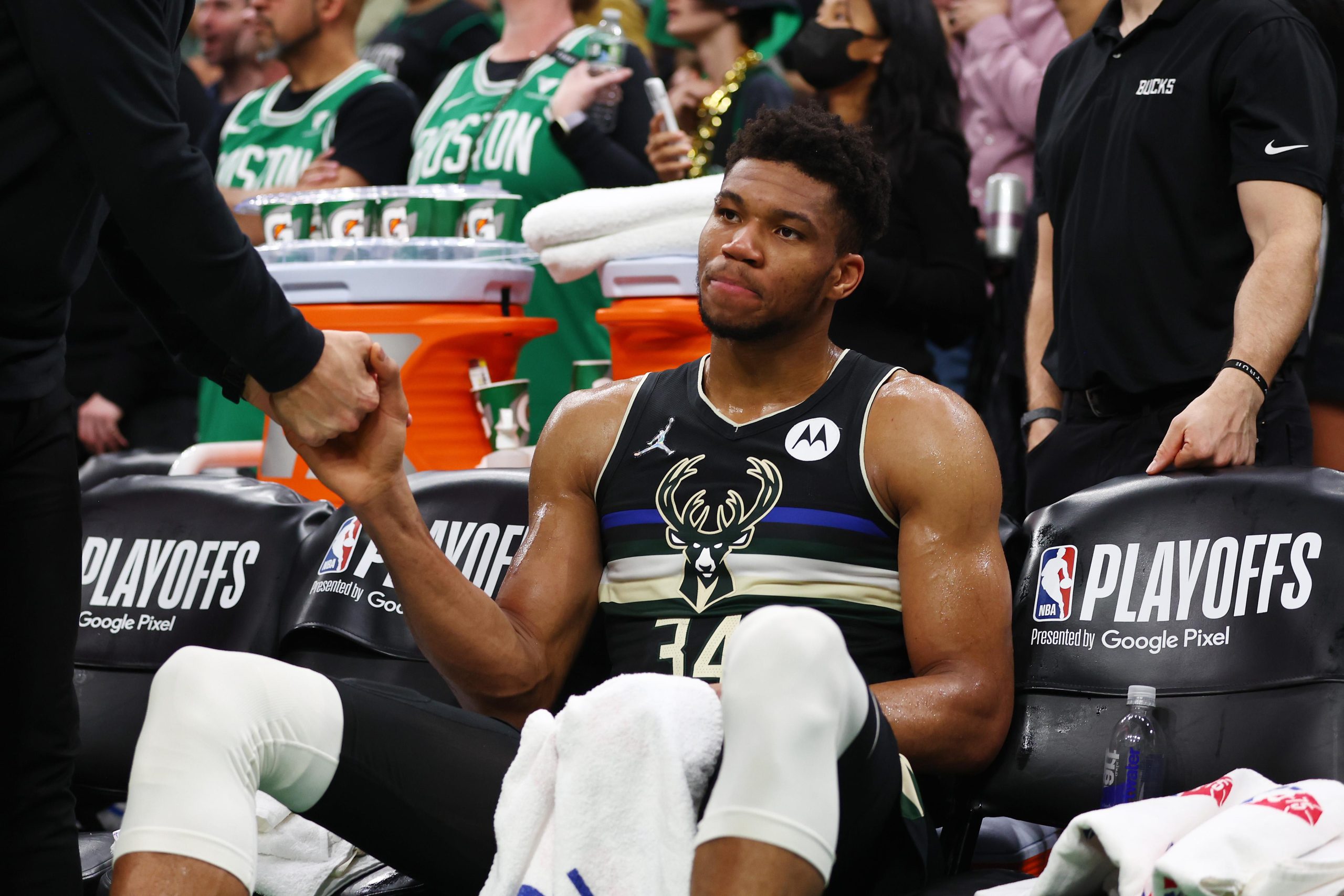
The NBA offseason is heating up with the draft just days away, as the Boston Celtics grow increasingly impatient over stalled trade talks involving Milwaukee Bucks superstar Giannis Antetokounmpo, the Oklahoma City Thunder explore cost-cutting moves involving forward Luguentz Dort, and the Dallas Mavericks commit to pairing an injured Kyrie Irving with rookie sensation Cooper Flagg.
Boston’s Frustration Mounts in the Giannis Sweepstakes
Trading for a star player like Antetokounmpo has proven to be a considerably more complicated process than many around the league initially anticipated, with talks growing convoluted enough that even the Celtics have begun expressing visible frustration with how the situation has unfolded. Early rumblings of a possible Jaylen Brown trade for Giannis started soon after Boston’s season ended. At first, it was just rumors, and then speculation turned into a real possibility. The Antetokounmpo sweepstakes has boiled down to the Miami Heat and the Celtics, with Milwaukee working to extract maximum value from whichever team ultimately lands its franchise cornerstone.
The Boston Globe’s Gary Washburn provided an update on the Celtics’ chances of swapping Jaylen Brown for Antetokounmpo. “I don’t think he’s going to be a Celtic, and that’s just from what I’m hearing,” Washburn said. “I think the Celtics are gauging what it would take to get Giannis to Boston and trying to figure out whether they want to move Jaylen Brown.”
According to Hoops Hype, a league source said that Boston has indicated any “Brown to third team talk” is premature. This would explain Boston’s frustration, as the team has been trying to get a deal done directly between Boston and Milwaukee rather than involving a third party. Boston had also hoped that simply dangling Brown as a trade chip would be intriguing enough that Milwaukee wouldn’t feel the need to be especially aggressive in negotiations.
A Two-Team Race With No Clear Resolution
Despite the prolonged nature of the talks, league insiders have continued to describe the situation as fundamentally a contest between just two suitors. NBA insider Jake Fischer reported the Miami Heat are interested in Antetokounmpo with an offer that is “widely presumed” to include guard Tyler Herro, center Kel’el Ware, forward Jaime Jacquez Jr. and draft capital. He added that Boston is “believed to be a potential suitor that genuinely concerns Miami.”
Tim Reynolds, a Miami-based NBA writer for the Associated Press, offered a characteristically blunt update on the situation: “Giannis Antetokounmpo still wants to be in Miami, we’re told. But even he doesn’t know how this thing is going to end up.”
Other insiders have suggested the dynamic may be shifting in Boston’s favor, even if subtly. Marc Stein wrote, “I have also spoken to teams and well-placed insiders around the league who believe that it remains possible that Antetokounmpo does not ultimately land on South Beach. As we’ve been reporting since late May, Boston is increasingly projected to be the other landing spot that Giannis prefers to be steered to … without overtly pushing as hard as he possibly can.”
Washburn offered his own assessment of where the leverage currently sits: “I do think Miami has the edge on this, but I do think Boston is kinda sniffing around and finding out could you even acquire Giannis without sacrificing Jaylen? That would be a big question. What is exactly Milwaukee looking for? Who is the third team involved? Because it’s gonna have to be a third team involved.”
The Financial Complications of Including Brown
Much of the difficulty in finalizing any Antetokounmpo trade traces back to the financial realities surrounding Jaylen Brown’s contract, which complicates Boston’s ability to construct a competitive offer without including him. The Celtics playmaker has a cap hit of $57.1 million next season, $61 million in 2027-28, and $65 million in 2028-29.
Tatum and Brown are both making more than $57 million next season. Derrick White, at $30.3 million, is the only other Celtics player with a salary over $11 million in 2026-27, meaning Boston would either need a third team’s financial assistance or would have to include Brown to make the math work on any deal for Antetokounmpo.
Risk of Inaction
Beyond simply losing out on Antetokounmpo to Miami, some analysts have warned that prolonged trade speculation itself carries risk for Boston’s relationship with Brown regardless of how the situation resolves. One potential drawback, as Washburn pointed out, is that Brown hearing his name mentioned in trade rumors might cause a rift with the organization that the Celtics would need to repair if he doesn’t get moved.
According to one NBA insider, “Despite some rumors making the rounds on social media, the Celtics and Bucks have not finalized or come close to agreeing on any sort of trade surrounding Antetokounmpo.” With the draft fast approaching, that lack of progress has only heightened the sense of urgency — and frustration — surrounding the entire situation.
Oklahoma City Eyes Cost-Cutting Move Involving Dort
Separately, the reigning NBA champion Oklahoma City Thunder are reportedly exploring ways to create salary cap flexibility, with veteran forward Luguentz Dort emerging as a name to watch this offseason. Dort could be a name to watch as Oklahoma City is looking to save some salary cap space, with the team currently due to pay him $17.7 million and projected to be roughly $40 million over the luxury tax line.
If the Thunder ultimately decide to trade Dort, he shouldn’t be nearly as difficult to move as Antetokounmpo has proven to be, given his more modest salary and well-defined role as a perimeter defender. Should the Celtics ultimately trade away Brown as part of a Giannis deal, Dort could emerge as an appealing replacement option, given his reputation as a strong three-point shooter and high-level perimeter defender — a profile that fits squarely within Boston’s broader team-building philosophy.
Dallas Commits to the Irving-Flagg Pairing
In Dallas, meanwhile, the Mavericks have signaled their intention to move forward with a different kind of continuity strategy, betting on the long-term partnership between veteran guard Kyrie Irving and rookie phenom Cooper Flagg. Irving missed the entire 2025-26 season while recovering from a torn ACL suffered at the end of the 2024-25 campaign. The Mavericks drafted Cooper Flagg with the idea that Irving and Flagg would form the core of the franchise moving forward.
According to Marc J. Spears, Hoops Hype reported that the Mavericks’ ownership is committed to seeing Irving and Flagg together for now, rather than entertaining trade scenarios that would move on from Irving before the pairing has had a genuine opportunity to develop on the court together.
With the 2026 NBA Draft scheduled for next Thursday, league insiders broadly expect the Antetokounmpo situation to reach some form of resolution before then, given Milwaukee’s stated interest in incorporating draft capital into any eventual return package. Whether that resolution sends the two-time MVP to Boston or Miami remains genuinely uncertain, according to multiple league sources, even as both franchises continue positioning themselves as the more attractive long-term destination for one of basketball’s most coveted available stars. Meanwhile, the fate of role players like Dort, and the early returns on Dallas’s commitment to building around an Irving-Flagg backcourt, will offer additional storylines to track as teams across the league finalize their rosters ahead of the draft and the opening of free agency.

GameStop Corp.’s pursuit of e-commerce giant eBay remains one of the most closely watched and contentious corporate sagas in the market right now, with Chief Executive Ryan Cohen escalating his stake in the company even as eBay’s board has firmly rejected the offer and Wall Street analysts remain deeply skeptical the deal will ever close.
The Original Proposal
GameStop Corp. submitted a non-binding proposal on May 3, 2026, to acquire 100% of eBay Inc. at $125.00 per share in cash and stock. The offer represented a 46% premium to eBay’s unaffected closing price on February 4, 2026, the day GameStop began accumulating its position in eBay. GameStop disclosed it had built a 5% economic stake in eBay through derivatives and beneficial ownership of common stock.
The proposed offer comprised 50% cash and 50% GameStop common stock, with full shareholder election rights as to consideration type and pro-rata allocation. Aggregate undiluted equity value was approximately $55.5 billion, based on eBay’s most recently disclosed undiluted share count, representing a 27% premium to the 30-day volume-weighted average price and a 36% premium to the 90-day volume-weighted average price.
The cash consideration was expected to be funded from a combination of cash and liquid investments on GameStop’s balance sheet, which totaled approximately $9.4 billion as of January 31, 2026, and third-party acquisition financing, for which GameStop received a highly-confident letter from TD Securities for up to $20 billion.
eBay’s Firm Rejection
eBay’s board responded to the unsolicited proposal with a swift and pointed rejection. eBay Chairman Paul Pressler called the unsolicited offer “neither credible nor attractive” in a sharply worded letter to Cohen.
Despite that rejection, Cohen pressed forward, taking the campaign directly to eBay’s shareholders rather than backing down. GameStop’s CEO has publicly stated he’s prepared to engage in a proxy fight and take the offer directly to shareholders if eBay declines the acquisition.
Wall Street’s Skeptical Verdict
Analysts covering both companies have generally responded to the proposed deal with significant doubt about both its strategic logic and its likelihood of success. GlobalData retail analyst Neil Saunders described the proposal as “a David trying to take over a Goliath in order to buy David relevance,” adding that eBay has a clear proposition while GameStop is “grappling with a reason to be around.”
That skepticism has been reflected directly in betting markets tracking the deal’s likelihood of completion. Prediction markets Kalshi and Polymarket had placed deal-completion odds between 17% and 20% as of mid-May.
Credit rating agencies have also weighed in with concerns about the deal’s financial structure. Moody’s Ratings said the proposed acquisition would be “credit negative” for eBay — a rating assessment that cuts directly against a key precondition in GameStop’s financing arrangement. The TD Securities financing letter conditions its commitment on the combined company maintaining an investment-grade credit rating from at least two of the top three ratings agencies.
Cohen Continues Escalating His Position
Rather than retreating in the face of eBay’s rejection and Wall Street’s skepticism, Cohen has continued building GameStop’s economic exposure to eBay in the weeks since the initial proposal. A regulatory filing disclosed on June 5, 2026, that GameStop’s economic exposure to eBay had risen to approximately 9%. GameStop had previously increased its eBay stake to about 7%, up from around 5%, while continuing a hostile pursuit that eBay’s board has so far rejected.
That escalation carried added significance from a regulatory standpoint. The increase coincided with satisfaction of the Hart-Scott-Rodino antitrust waiting period on June 3, 2026, which made the eBay put/call derivative contracts eligible for physical share settlement for the first time.
Notably, this is not Cohen’s first brush with HSR compliance issues. In September 2024, the Federal Trade Commission announced that Cohen had agreed to pay a $985,320 civil penalty to settle charges that his earlier acquisition of Wells Fargo securities violated the HSR Act by failing to make the required pre-acquisition notification.
A $2 Billion Buyback Alongside the Bid
GameStop has paired its pursuit of eBay with a significant capital return initiative for its own shareholders, a move that has been interpreted by some as a vote of confidence in the company’s underlying financial strength even amid the contentious takeover battle. GameStop’s board unanimously approved a discretionary $2 billion share repurchase authorization on June 2, 2026, running through June 2, 2029. The program replaces the prior authorization from March 2019.
That announcement, paired with strong underlying financial results, helped lift GameStop’s stock significantly. Shares of GameStop jumped 10% to around $23 after the video game retailer posted its highest quarterly net income on record and approved the fresh buyback. Meanwhile, takeover target eBay was barely moving, with eBay stock up less than 1% to around $109.36 as traders digested GameStop’s continued pursuit.
The juxtaposition of the hostile bid and the buyback has prompted analysts to reconsider the broader strategic narrative driving GameStop’s recent decisions. For GameStop, combining a hostile eBay bid with a $2 billion buyback is a clear signal that capital deployment is moving to the center of the story. The eBay approach would push GameStop far deeper into online marketplaces, closer to companies like Etsy and Amazon, and could reshape how investors think about its exposure to e-commerce and payments.
The Financial Backdrop Supporting the Bid
GameStop’s underlying financial performance has provided Cohen with additional ammunition to defend the strategic rationale behind pursuing eBay, even as the company’s core retail business remains far smaller than the e-commerce giant it is attempting to acquire. The buyback authorization sits alongside first-quarter fiscal 2026 sales of $835.3 million and net income of $389.6 million, a large jump from $44.8 million a year earlier.
Part of GameStop’s case for the acquisition rests on identifying inefficiencies in eBay’s current spending. eBay spent $2.4 billion on Sales & Marketing in fiscal 2025 while only adding one million net active buyers, growing from 134 million to 135 million users — a net increase of less than 0.75%. GameStop has pledged $2.0 billion of annualized cost reductions within twelve months of closing, including reducing Sales & Marketing spend from $2.4 billion to $1.2 billion.
Where Things Stand Now
As of the most recent filings, the deal remains squarely unresolved, with no indication that either side is prepared to change its position in the near term. The status of the proposed acquisition remains pending approval from eBay, shareholders, and regulators.
With eBay’s board having firmly rejected the offer and Cohen continuing to build his economic stake in the company in the weeks since, the central question facing investors is whether GameStop will escalate into a formal proxy fight aimed at putting the decision directly in front of eBay shareholders, bypassing the board entirely. Given the deep skepticism from credit rating agencies, prediction markets, and Wall Street analysts about both the deal’s financing structure and its underlying strategic logic, the path to an actual completed acquisition appears far from certain — but Cohen’s continued accumulation of eBay shares suggests he has no immediate plans to abandon the pursuit, regardless of how steep the odds against success may currently appear.
Business
Top 3 U.S. Open Contenders at Shinnecock Hills as Wyndham Clark Leads Heading Into the Weekend

SOUTHAMPTON, N.Y. — As the 126th U.S. Open moves through its second round at Shinnecock Hills Golf Club, a clear picture is beginning to emerge of which golfers stand the best chance of hoisting the trophy come Sunday. With Wyndham Clark holding the lead and a deep, talented field still very much in the mix, here is a closer look at the three players in the strongest position to win this year’s championship.
1. Wyndham Clark — The Frontrunner With a Proven Track Record at This Event
No player has positioned himself better through the tournament’s opening stretch than Wyndham Clark, who has carried his red-hot opening round directly into the second day of play. Everyone will be chasing Wyndham Clark, who finished up a brilliant Round 1 early Friday morning, coming in with a 6-under 64. That gave him a two-shot lead as Round 2 began.
Wyndham Clark’s lead remained at three shots through much of Friday’s second round, even as he made seven straight pars to begin the round and the putts that were dropping on Thursday slid by the edges so far on Friday. So far, that hasn’t been showing up for the leaders, as Clark has relied on some tough par saves to stay at 6 under, while Dustin Johnson can’t get a putt to drop — even good ones.
Clark’s case as the favorite extends beyond his hot start this week. He has previously won the U.S. Open, giving him direct experience converting major championship pressure into a title, a quality that often proves decisive on demanding U.S. Open setups where mental composure matters as much as ball-striking.
2. Matt Fitzpatrick — A Past Champion in Strong Form
Among the small group of past U.S. Open champions chasing Clark, Matt Fitzpatrick stands out both for his title pedigree at this specific championship and for the broader strength of his 2026 season. He’s the only golfer on tour with three victories this season and was playing better than anyone before a recent so-so stretch. The 2022 U.S. Open winner is coming off back-to-back mediocre finishes in the event but is playing much better this season.
Fitzpatrick has remained squarely in contention through the championship’s early rounds. William Mouw moved into a tie for second with Matt Fitzpatrick and Dustin Johnson during Friday’s second round, keeping Fitzpatrick within striking distance of Clark’s lead.
Right behind Clark sits a host of former U.S. Open champions, including Dustin Johnson, Gary Woodland, and Matt Fitzpatrick, underscoring just how stacked the leaderboard’s upper tier has become with players who already know exactly what it takes to win this specific championship.
3. Xander Schauffele — The Betting Favorite Built for Shinnecock’s Demands
Despite not leading the tournament outright through two rounds, Xander Schauffele enters the weekend as the betting market’s top overall pick to win the championship, based on a remarkable record of sustained excellence at this specific major. Schauffele’s worst finish in nine U.S. Open starts is a tie for 14th — a remarkable run of consistency at an event that is almost impossible to fake your way around when you don’t have your best stuff. Schauffele has always been a major performer, with 19 top-10 finishes in 36 overall major starts, and while he hasn’t quite returned to the form that won him two majors in 2024, he does have back-to-back top-10 finishes to start 2026.
The case for Schauffele centers heavily on the specific demands Shinnecock Hills places on a player’s overall game. Shinnecock Hills requires the right mindset and a well-rounded game to get the job done. Schauffele has both. That combination of mental toughness and complete shot-making ability has repeatedly proven decisive at U.S. Open venues, which are widely regarded as the most demanding and unforgiving courses among the four major championships.
Other Notable Contenders to Watch
Beyond the top three, several other players remain firmly in the championship conversation heading into the weekend. Rory McIlroy — the 2026 and 2025 Masters winner — sat tied for ninth at 1 under after a gritty Round 1, leaving him within range of the leaders depending on how the weekend unfolds. McIlroy isn’t competing as much on tour as he did in the past, but it doesn’t seem to be hurting him so far. After picking up his second straight win in the Masters, he has three straight top-20 finishes.
Cameron Young has also emerged as a player to watch, particularly given the championship’s location. Young was Captain America during last year’s Ryder Cup at Bethpage Black, and the New York native is playing in front of a home crowd again this week. He has two wins and six top-10 finishes in 2026.
A surprising name has also factored into Friday’s second-round action. William Mouw, bogey-free through 11 holes with three birdies on his card, moved to 3 under for his second round and the tournament, putting him into a share of second place despite having recorded only one top-10 finish on the PGA Tour this season prior to this week.
A Punishing Course That Has Created Drama Throughout
Shinnecock Hills has lived up to its reputation as one of the most demanding venues on the major championship rotation, producing dramatic swings for several prominent players already this week. LIV’s Joaquin Niemann was assessed a two-stroke penalty after throwing his club on No. 6 during Round 1, which the USGA described as “serious misconduct” under Rule 1.2b. The club-throwing happened after Niemann made a quintuple-bogey 9 on the par-4 sixth, which was changed to a septuple-bogey 11 after the penalty. In all, he went from even par to 7 over in the span of one hole.
The course has also produced one of the tournament’s most compelling individual storylines so far, courtesy of an amateur competitor. Rising Oklahoma senior Ryder Cowan shares second place into Friday after a history-matching opening round, tying Sam Randolph’s 1986 mark for the lowest round by an amateur in a U.S. Open at Shinnecock Hills. “That is very cool, very cool,” Cowan said.
What Comes Next
With the cut line projected to fall somewhere in the range of 3-over to 5-over par, the weekend rounds at Shinnecock Hills are set up to deliver a genuinely wide-open championship battle. If the PGA Championship taught us anything, it is that even amid an era of professional golf catered toward the world’s best, any player can be the world’s best on any given week, a reminder that while Clark, Fitzpatrick, and Schauffele represent the strongest cases entering the weekend, Shinnecock Hills has a long history of producing champions from well outside the pre-tournament favorites list — meaning the final outcome remains very much undecided as the championship heads into its decisive closing rounds.

FCLD: Stuck In The Middle As The SaaS Reckoning Drags On


Lebanese villagers return to find homes in ruins
Business
AST SpaceMobile: SpaceX Drawdown Triggers Dip Buying Opportunity – FY2027 Monetization Inflection (Rating Upgrade)

AST SpaceMobile: SpaceX Drawdown Triggers Dip Buying Opportunity – FY2027 Monetization Inflection (Rating Upgrade)

Canada stocks lower at close of trade; S&P/TSX Composite down 0.32%

Gary O’Neil: Ipswich Town close in on Gary O’Neil as their new head coach

Former FBI Agent Questions Why Nancy Guthrie Case Investigators Haven’t Released Enhanced Suspect Photo

EU targets privacy coins while leaving Bitcoin transfers untouched


-

 Business5 days ago
No Jackpot Winner as $257 Million Prize Rolls Over to $269 Million Monday Draw
-
 Crypto World5 days ago
Zimbabwe Requires Crypto Businesses to Register Annually Under New FIU Regulations
-

 Crypto World7 days ago
Bitget enters Argentina’s regulated crypto market through PSAV registration
-

 Tech7 days ago
NanoClaw integrates JFrog registries to secure AI agent downloads
-
 Entertainment5 days ago
Matt Damon’s Viral Sci-Fi Thriller Has Taken Over HBO Max
-

 Business5 days ago
Anthropic staff to meet White House officials next week, Axios reports
-

 Tech5 days ago
As AI companies race to go public, who else is along for the ride?
-
 Crypto World5 days ago
Bitcoin could crash to $48,000, if this historical pattern is triggered
-

 Politics5 days ago
“Israel’s” ban on ICRC visits ruled illegal, but Knesset moves to stop them permanently
-
 NewsBeat5 days ago
Warning of disruption as Cardiff Crossrail works to start
-

 News Videos5 days ago
Financial Accounting | Last Day Revision Strategy and Booster | CMA Inter – June 2026
-
 NewsBeat5 days ago
what doctors are seeing in ebike crashes
-
 NewsBeat5 days ago
Tributes to former deputy head teacher at Cambridge school among death and funeral notices
-

 Entertainment6 days ago
Deion Sanders Shares Powerful Post After Viral Advice To Deiondra
-
 Entertainment5 days ago
Kate Middleton Glare Goes Viral After Kids Booed At Royal Event
-

 Crypto World5 days ago
XRP ETFs Outperform As Bitcoin And Ethereum Funds Extend Outflow Trend
-
 Crypto World5 days ago
Market Preview: SpaceX (SPCX) IPO Record, Federal Reserve Meeting, and Iran Nuclear Agreement
-

 Tech5 days ago
Over 400 Arch Linux packages compromised to push rootkit, infostealer
-

 Business5 days ago
Invesco Quality Income Fund Q1 2026 Commentary
-
 Entertainment7 days ago
44 Years Later, This Is the Greatest Star Trek Quote in Sci-Fi History
You must be logged in to post a comment Login