
Business
How Asia’s Growing Mineral Nationalism is Reshaping Global Supply Chains

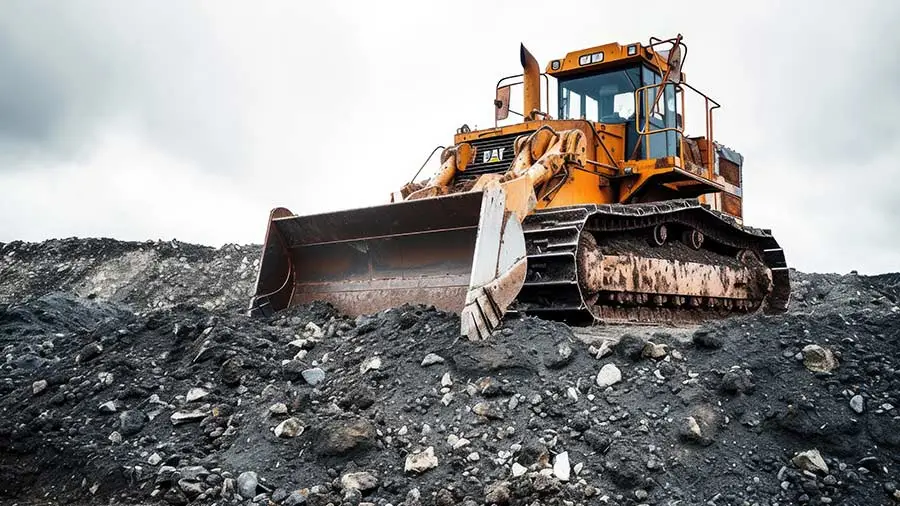
A fundamental transformation is underway across Asia in how nations control and leverage their mineral wealth, with profound implications for global technology supply chains, renewable energy transitions, and geopolitical power dynamics.
Key takeaways
- China’s mineral dominance is a geopolitical weapon: Beijing controls the vast majority of global rare earth processing capacity and has repeatedly demonstrated willingness to restrict exports as leverage, with October 2025 controls on 12 rare earth elements prompting emergency U.S.-China negotiations.
- Indonesia leads Southeast Asia’s rejection of raw material exports: Jakarta’s ban on unprocessed nickel ore exports since 2014 has forced billions in foreign investment into domestic smelting facilities, transforming the country from a colonial-style resource exporter into an emerging battery manufacturing hub.
- Resource nationalism is now institutionalized across Asia: From China’s strategic stockpiles to India’s push for mineral self-reliance, Asian governments are permanently consolidating state authority over mining and refining, reshaping global supply chains while complicating Western diversification efforts.
What was once viewed primarily as a technical matter of extraction and trade has evolved into a central pillar of national security strategy, as governments from Beijing to Jakarta assert unprecedented control over critical minerals essential to electric vehicles, semiconductors, defense systems, and clean energy technologies.
China Demonstrates Mineral Power in High-Stakes Standoff
The most dramatic recent illustration came last October, when China’s Ministry of Commerce expanded export controls to cover 12 of 17 rare earth elements, materials indispensable to everything from fighter jets to wind turbines. The restrictions went beyond raw ores to include processing equipment, refined materials, and even products manufactured overseas using Chinese-origin rare earths.
The move sent immediate shockwaves through global markets, prompting an emergency diplomatic intervention. By late October, Presidents Donald Trump and Xi Jinping negotiated a one-year suspension of the new controls during a meeting in Busan, South Korea, in exchange for U.S. tariff reductions.
Yet experts caution that the “settlement” is more a tactical pause than a genuine resolution. Earlier restrictions imposed in April 2025 remain fully operational, and China’s licensing regime continues to bind companies exporting controlled materials. “Critical minerals are not merely economic assets; they are also instruments of state power,” the analysis notes.
China’s dominance stems from decades of strategic policy interventions beginning in the 1980s. Today, Beijing controls the vast majority of global processing capacity for rare earths and several other critical minerals, having consolidated state-owned enterprises, built strategic stockpiles, and invested heavily in mining operations across Africa, Latin America, and Southeast Asia.
The country has repeatedly demonstrated willingness to weaponize this advantage, restricting rare earth shipments to Japan during 2010 tensions, and again imposing embargoes on Tokyo in early 2026, targeting dual-use technologies required for defense production.
Indonesia Rejects “Colonial” Export Model
Indonesia has emerged as one of Asia’s most assertive practitioners of resource nationalism, particularly regarding nickel, the world’s largest reserves of which lie within its borders. The country has pursued an aggressive strategy to transform itself from raw material exporter into a manufacturing hub for electric vehicle batteries.
Beginning in 2014, Jakarta implemented a ban on unprocessed nickel ore exports, forcing foreign companies to invest in domestic smelting and refining facilities. Major Chinese firms, supported by Belt and Road Initiative funding and Indonesian incentives, poured billions into smelters and industrial parks.
Former President Joko Widodo framed the policy in explicitly anti-colonial terms, arguing that exporting raw minerals perpetuates an extractive relationship that must be replaced with industrialization. The government expanded requirements for foreign investors to partner with local firms, transfer technology, and contribute to domestic industrial ecosystems.
The strategy has successfully reshaped global nickel markets and demonstrated how developing nations can leverage resource control to force industrial upgrading.
Regional Powers Chart Independent Courses
Malaysia has pursued a more moderate path, balancing strategic concerns with environmental governance. Home to one of the few rare earth processing facilities outside China, the Lynas Advanced Materials Plant, Malaysia has faced periodic public pressure to tighten regulations, particularly regarding radioactive waste management.
The country also imposed a temporary moratorium on bauxite mining in the mid-2010s after exports to China caused severe environmental degradation, later lifting the ban with stricter licensing requirements.
Thailand’s mineral nationalism operates primarily through regulatory sovereignty rather than export restrictions. Strong community opposition to mining, including the 2016 closure of the Chatree gold mine following environmental contamination allegations, has pushed the government toward strengthened oversight and social accountability mechanisms.
Last October, protesters gathered outside the U.S. embassy in Bangkok opposing a rare earth minerals agreement with Washington, concerned about sovereignty risks and potential environmental damage from deals made without public consultation.
Myanmar, though politically unstable, remains one of Asia’s most significant sources of heavy rare earths. Much production occurs in northern border regions controlled by ethnic armed groups, with substantial Chinese company involvement operating through informal channels. Materials typically cross into China for processing, a strategic lifeline for Beijing, especially after it imposed stricter domestic environmental controls.
India has intensified focus on critical mineral security driven by concerns over supply-chain vulnerabilities and technological sovereignty. New Delhi has launched initiatives to map resources, expand domestic mining, and reduce dependence on Chinese imports. Recent reforms opening previously restricted minerals to private mining reflect India’s pursuit of strategic autonomy in a fragmenting global order.
Outlook: Nationalism Becomes Institutionalized
Analysts project Asian resource nationalism will intensify rather than diminish, with governments continuing to strengthen control over mineral resources while deepening industrial policies that push extraction industries up the value chain.
“China’s dominance in rare earth processing, Indonesia’s nickel industrialization and India’s push for critical mineral self-reliance suggest a long-term consolidation of state authority over mining, refining and export mechanisms,” according to the assessment.
The effect is region-wide reinforcement of mineral nationalism that remains compatible with global supply chains even as it complicates diversification efforts by Western and East Asian manufacturers. States are expected to maintain export restrictions on unprocessed ores while crafting supply agreements that simultaneously attract foreign investment and preserve sovereign leverage.
A less likely but plausible scenario involves coordinated regional strategies, where Southeast Asian states leverage mineral resources collectively through harmonized export policies, shared industrial hubs, or informal alignment around processing standards, potentially positioning themselves between U.S. and Chinese technological competition.
What appears virtually impossible is any significant rollback. The momentum behind national industrial policy, strategic resource planning, and rising domestic expectations for value creation suggests Asia’s mineral nationalism represents a fundamental and enduring shift in how these nations engage with the global economy.
Other People are Reading
Continue Reading


Drugs Made In America Acquisition II Corp. enters $300,000 convertible note agreement

Form 13D/A Stardust Power Inc. For: 3 April
Business
First Resource Bancorp, Inc. (FRSB) Presents at Banking Virtual Investor Conference – Slideshow

First Resource Bancorp, Inc. (FRSB) Presents at Banking Virtual Investor Conference – Slideshow


Lucid misses first-quarter vehicle delivery estimates on supplier disruptions
Form 13D/A WILLIS LEASE FINANCE CORP For: 3 April

Apple SVP O’Brien sells $7.6m in AAPL stock

Majalya of Trinet group sells $28,690 in stock
Business
NeuroOne Medical Technologies shareholders approve reverse stock split and equity plan changes

NeuroOne Medical Technologies shareholders approve reverse stock split and equity plan changes

Form DEF 14A Northrop Grumman For: 3 April
Form DEF 14A CVS Health Corporation For: 3 April

Royal Mail urges customers to act or risk delivery suspension
Drugs Made In America Acquisition II Corp. enters $300,000 convertible note agreement

5 leading crypto cloud mining platforms for beginner miners in 2026

Smart energy pays enters the US market, targeting scalable financial infrastructure

Why Israel is blocking foreign journalists from entering

Bitcoin: We’re Entering The Most Dangerous Phase

MAJOR XRP CLARITY ACT UPDATE!!!! THERE IS NO TIME LEFT. (Urgent)

BITCOIN: Something BIG Is Coming! (very soon) – BTC Price Prediction Today

Z9II First Epic Specs? | Nikon’s New Financial Year Begins | Roadmap Ahead?! | Z8II? | Matt Irwin
-

 NewsBeat1 day ago
Steven Gerrard disagrees with Gary Neville over ‘shock’ Chelsea and Arsenal claim | Football
-

 Business23 hours ago
No Jackpot Winner and $194 Million Prize Rolls Over
-
Entertainment4 days ago
Fans slam 'heartbreaking' Barbie Dream Fest convention debacle with 'cardboard cutout' experience
-

 Crypto World2 days ago
Gold Price Prediction: Worst Month in 17 Years fo Save Haven Rock
-

 Fashion5 hours ago
Weekend Open Thread: Spanx – Corporette.com
-

 Tech5 days ago
The Pixel 10a doesn’t have a camera bump, and it’s great
-
 Entertainment6 days ago
Lana Del Rey Celebrates Her Husband’s 51st Birthday In New Post
-
Crypto World3 days ago
Dems press CFTC, ethics board on prediction-market insider trades
-

 Tech5 days ago
Avatar Legends: The Fighting Game comes out in July and it looks pretty slick
-

 Sports3 days ago
Tallest college basketball player ever, standing at 7-foot-9, entering transfer portal
-

 Tech4 days ago
EE TV is using AI to help you find something to watch
-

 Business2 days ago
Login and Checkout Issues Spark Merchant Frustration
-

 Fashion6 days ago
Amazon Sundays: Soft Spring Layers
-

 Fashion7 days ago
When Evening Dressing Gets Colorful for Spring
-

 Tech5 days ago
Elon Musk’s last co-founder reportedly leaves xAI
-

 Tech4 days ago
How to back up your iPhone & iPad to your Mac before something goes wrong
-

 Tech4 days ago
Apple will hide your email address from apps and websites, but not cops
-

 Politics4 days ago
Should Trump Be Scared Strait?
-

 Crypto World4 days ago
U.S. rule change may open trillions in 401(k) funds to crypto
-

 Tech4 days ago
Flipsnack and the shift toward motion-first business content with living visuals
You must be logged in to post a comment Login