
Business
How Bessent, America’s bond salesman, cornered Japan on big spending

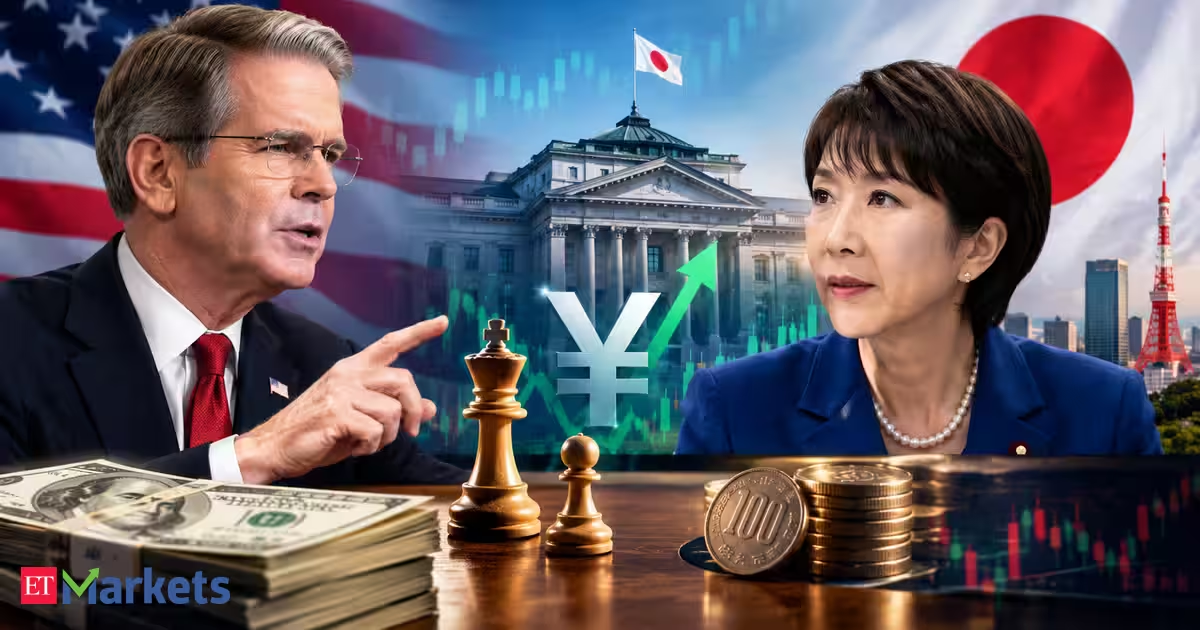
For months, Treasury Secretary Bessent had told Katayama and other officials privately that Japan should rein in its massive fiscal spending and that its central bank needed to raise interest rates, according to three people familiar with the situation.
The Japanese worried that inflation stoked by the weaker yen would hurt Prime Minister Sanae Takaichi with voters. Bessent was more concerned that a sell-off in Japanese bonds could spill over to U.S. debt, the people said. Katayama’s call for Washington’s help in a coordinated yen-buying spree enabled Bessent to press his case.
He urged Japan to first address fundamental factors driving down the yen – a reference to Takaichi’s big spending plans – and avoid any “inconsistency” between monetary and fiscal policies, two of the people said. In short: overhaul the policies that counter the Bank of Japan‘s fight against inflation.
The June 22 call, the details of which haven’t been previously reported, helped set the stage for massive joint intervention by Washington and Tokyo in late July, according to the people, who spoke on the condition of anonymity.

This account of the interactions between Japan and the U.S. shows how Bessent used Washington’s leverage over currency and Treasury markets to extract policy concessions from a key ally – forcing Takaichi to navigate the competing demands of voters and her most important security partner.
“Bessent has run out of patience with Japan,” said David Boling, managing director for Japan at The Asia Group, a consultancy. The U.S., he said, wants a stronger, more stable yen, less risk of Japanese selling of Treasuries, and policy that looks more credible to markets on inflation and fiscal stability.Japan’s Ministry of Finance and Takaichi’s office declined to comment. The BOJ didn’t respond to a request for comment.
A U.S. Treasury spokesperson declined to comment on specific private discussions with Japanese officials. Separately, a Treasury official told Reuters “monetary-policy decisions are for Japanese authorities to make” and that “U.S. interest in orderly yen markets is not about targeting a particular exchange rate.”
American Leverage
A sharp rise in Japan’s long-term yields would risk pushing up U.S. borrowing costs, given Japan is the largest foreign holder of Treasuries. For Bessent, who styles himself as “America’s leading bond salesman,” that would be an unwelcome development as Washington grapples with its own swelling deficit.
When Bessent met Katayama in Japan in May, he stressed the need for higher BOJ rates, three sources said. After that, a rate hike in June or July was considered a given within the Japanese government, said one of the sources.
The BOJ’s June hike gave Katayama hope that Bessent would agree to her request for Washington to join a coordinated yen buying spree, said one of the sources.
Instead, Bessent in the June phone conversation repeated his earlier calls for Japan to overhaul spending that he felt undermined the BOJ’s efforts to rein in inflation.
“The United States does not want Japan, its ally, to lose economic strength because of excessive yen weakness,” said Takehiko Nakao, who served as Japan’s top currency diplomat between 2011 and 2013.
The call crystallised a tension Takaichi faces: She favours “Abenomics“, the mix of big spending and ultra-low rates championed by her political hero, former Prime Minister Shinzo Abe. But she is now pressured by markets and Washington.
That pressure became clear in July when Katayama publicly flagged that Japan’s state pension fund, the world’s largest, could buy more domestic assets, a move investors read as support for Japan’s bond market.
After the BOJ held rates steady in July, Governor Kazuo Ueda struck a hawkish tone, signalling a hike was coming soon.
That signal proved decisive. Moments after the BOJ’s meeting, the yen spiked, first on Japan’s solo intervention, before combined U.S.-Japanese action extended the rally.
Katayama and her top currency diplomat, Atsushi Mimura, negotiated the joint intervention with the U.S. while the BOJ met, one of the people said.
Despite months of groundwork, the late July intervention came together quickly, this person said.
“This is a culmination of Japan’s currency alliance with the United States,” Mimura said, announcing the joint intervention.
‘I Am The House’
That alliance, however, soon hit headwinds.
Within weeks, the yen slid and Washington grew frustrated with Takaichi’s lack of progress in rolling back stimulus and a global spike in bond yields.
At a U.S.-hosted G20 finance leaders’ gathering on August 31-September 1, Bessent again called for higher Japanese rates and fiscal tightening. But this time, his message was sharper.
In an interview with Reuters then, Bessent said Japan should “sit back and enjoy the success of Abenomics”, noting the age of deflation had passed and that combating inflation, not stimulating the economy, was now the critical objective.
Those remarks were Washington’s strongest signal of its displeasure over the remnants of Abenomics it saw in both Takaichi’s policy and political loyalists.
“In the past, the message was more along the lines of, ‘We expect Japan to pursue the right policies’,” Nakao said.
Days later, Japan’s benchmark yield hit a 30-year high above the key 3% milestone, piling pressure on Takaichi to water down her spending ambitions.
“Given Japan’s huge public debt, Japan needs to present a credible medium- to long-term fiscal outlook, and demonstrate consistency between monetary and fiscal policy, to avoid an unwelcome spike in long-term interest rates,” said Mitsuhiro Furusawa, Japan’s former top currency diplomat.
U.S. scrutiny of Japan’s finances prompted Katayama to assure her G20 counterparts that Japan would shed its over-reliance on additional spending and avoid issuing debt to fund tax cuts.
In comments to reporters after a meeting with Bessent at the G20, Katayama recounted showing him remarks by Takaichi to Japanese newspaper Yomiuri that stressed the premier’s resolve to “achieve growth and fiscal discipline simultaneously”.
“He seemed to understand, saying that’s very good,” Katayama said.
A week later, Bessent was again helping Japan with strong warnings against yen bears, saying he had asymmetric information and good insight into what Japanese policymakers, including the BOJ, would do.
“I am the house now,” Bessent said this month, adding “you can bet against me if you want.”
The yen jumped against the dollar.
Tough Trade-Offs
Bessent’s demands broadly align with the policy direction of the BOJ, which delivered a widely expected rate hike on Friday.
On fiscal plans, there’s a bigger gap.
Takaichi cannot easily retreat from flagship stimulus plans that drove her party to victory in this year’s election. Her handouts and subsidies to curb fuel costs also helped ease anger over rising cost of living.
Forcing Takaichi to abandon tax plans is also risky for Washington if it weakens an administration of a reliable U.S. ally to counter an assertive China. After joining Tokyo in shoring up the yen, President Donald Trump emphasised the importance of the U.S. partnership with Japan.
In a move that analysts saw as placating markets and Bessent, Takaichi reappointed Katayama as finance minister in a cabinet reshuffle on Thursday.
Katayama – a fiscal conservative at heart – has walked that line since taking office, reassuring markets Japan won’t spend recklessly, even as she promotes her boss’s investment ambitions.
For now, there are no signs Takaichi is backing down. Budget requests for the next fiscal year have ballooned to 143 trillion yen ($916.14 billion), near pandemic-era levels.
Takaichi has pledged to keep new bond issuance at around 40 trillion yen for the fiscal year ending March 2028, above this year’s projected 32.7 trillion yen.
Some officials say that goal could be hard to meet given the temporary sales tax cut, increased defence spending and rising financing costs.
So far, the fiscal standoff is contained – a sign of how much diplomatic capital Takaichi still has with Trump.
Some analysts, however, say Bessent’s approach to Japan over its finances represents an extension of Trump’s trade playbook.
The Asia Group’s Boling said the Trump administration has “never been bashful” dealing with allies, as seen in trade negotiations.
“I think we’re seeing that now more for financial policy matters,” he said.


Bitcoin jumps above $81k as short squeeze offsets rate and regulatory pressure

Cardano Climbs 10% In Bullish Trade


With combined experience of covering technology companies on Wall Street and working in Silicon Valley, and serving as an outside adviser to several seed-round startups, Gary Alexander has exposure to many of the themes shaping the industry today. He has been a regular contributor on Seeking Alpha since 2017. He has been quoted in many web publications and his articles are syndicated to company pages in popular trading apps like Robinhood.
Analyst’s Disclosure: I/we have no stock, option or similar derivative position in any of the companies mentioned, and no plans to initiate any such positions within the next 72 hours. I wrote this article myself, and it expresses my own opinions. I am not receiving compensation for it (other than from Seeking Alpha). I have no business relationship with any company whose stock is mentioned in this article.
Seeking Alpha’s Disclosure: Past performance is no guarantee of future results. No recommendation or advice is being given as to whether any investment is suitable for a particular investor. Any views or opinions expressed above may not reflect those of Seeking Alpha as a whole. Seeking Alpha is not a licensed securities dealer, broker or US investment adviser or investment bank. Our analysts are third party authors that include both professional investors and individual investors who may not be licensed or certified by any institute or regulatory body.

US clears way for $2.7 billion sale to Ukraine of air-defense development upgrades
The latest Market Talks covering the Auto and Transport sector. Published exclusively on Dow Jones Newswires at 4:20 ET, 12:20 ET and 16:50 ET.
1213 ET – Volvo Car is suffering from intense competition in China, but the Swedish carmaker’s chief commercial officer, Erik Severinson, still sees a path for his company to succeed in the world’s largest car market in the long run. Sales of premium cars made by Western companies are under pressure in China, while local players are fighting a price war to drive volumes, Severinson says in an interview. “Right now it is very difficult to compete in that market for everyone,” he says. Volvo is betting that new models with self-driving and infotainment systems, as well as differentiated interior designs, will make its cars more relevant to Chinese consumers, Severinson says. Volvo Car shares close 0.1% higher. (adria.calatayud@wsj.com)
Copyright ©2026 Dow Jones & Company, Inc. All Rights Reserved. 87990cbe856818d5eddac44c7b1cdeb8

Generac’s Amazon agreement spotlighted an emerging growth lever as the rapid buildout of data centers offsets sluggish demand for home standby generators. The news also lifted several of Generac stock’s electrical equipment and power management peers on Thursday. Late Wednesday, Generac Holdings disclosed a big, long-term deal to supply backup power generators for Amazon’s data centers. An SEC 8-K filing…
Copyright ©2026 Investor’s Business Daily, LLC. All rights reserved. 87990cbe856818d5eddac44c7b1cdeb8
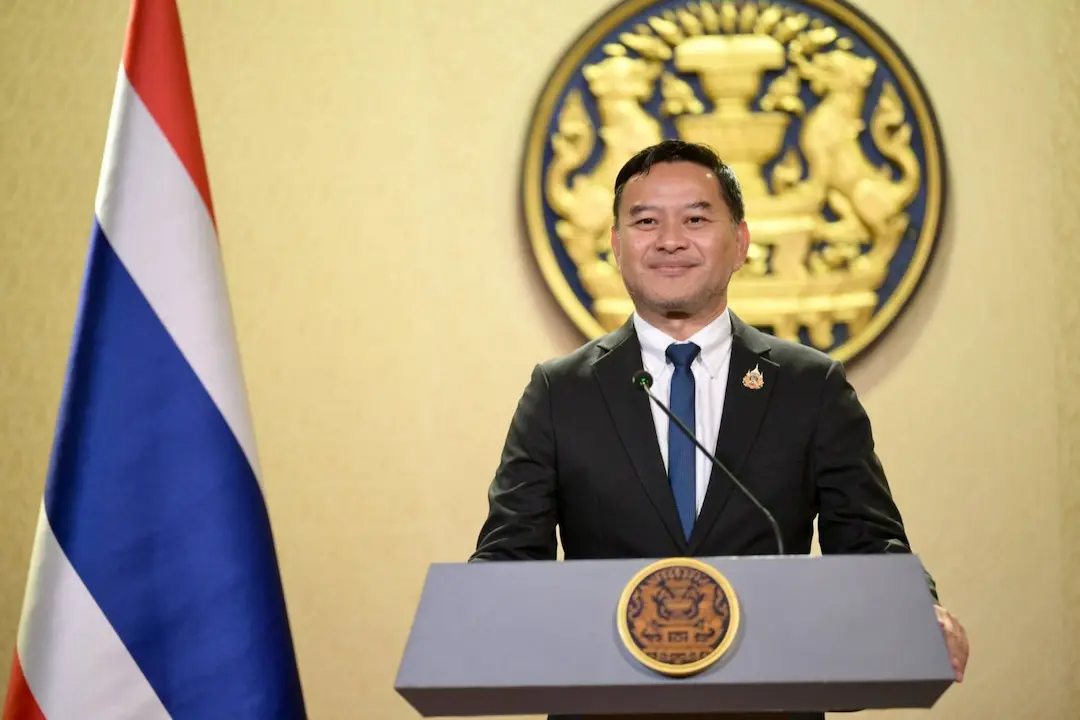
Prime Minister Anutin Charnvirakul will visit Japan, the U.S., and the U.K. from September 20-27 for diplomatic and investment tasks, including attending the UNGA81 and meeting tech executives.
Key Points
- Prime Minister Anutin Charnvirakul is set to visit Japan, the United States, and the United Kingdom from September 20 to 27 for diplomatic and economic engagements, including the UN General Assembly in New York. He will be accompanied by Deputy Prime Minister Sihasak Phuangketkeow and Digital Economy Minister Chaichanok Chidchob.
- In Japan, Anutin will meet Thai athletes at the 20th Asian Games and lead a Team Thailand meeting. In New York, he will attend the UNGA81 opening, deliver Thailand’s statement, and engage with UN officials and global leaders. Economic discussions in the U.S. will feature an investor roundtable and meetings with major companies like Google.
- The trip will conclude in London, where Anutin will present Thailand’s economy to institutional investors with UBS, and hold discussions with Virgin Atlantic and Rolls-Royce before returning to Thailand on September 27.
Prime Minister Anutin Charnvirakul is scheduled to visit Japan, the United States, and the United Kingdom from September 20 to 27 for diplomatic, economic, and investment engagements, including the 81st Session of the United Nations General Assembly (UNGA81) in New York. Deputy Prime Minister and Foreign Affairs Minister Sihasak Phuangketkeow and Digital Economy and Society Minister Chaichanok Chidchob will also join the mission.
According to Government Spokesperson Ekkapob Pianpises, the prime minister will begin the trip in Japan, meeting Thai athletes competing in the 20th Asian Games and chairing a Team Thailand meeting on September 21. In New York, he will attend the UNGA81 opening and General Debate and deliver Thailand’s statement on September 24, alongside meetings with the UN Secretary-General and leaders from several countries.
Economic engagements in the United States will include an investor roundtable with Bank of America and Jefferies, talks with PIMCO and a dinner hosted by the U.S.-ASEAN Business Council and U.S. Chamber of Commerce. Anutin will also meet senior Google executives, while Chaichanok will discuss cooperation on AI, digital infrastructure, workforce skills, and technology investment with major technology companies.
The delegation will then travel to London, where Anutin and Thai capital-market executives will meet with institutional investors, in cooperation with UBS, to present Thailand’s economy and investment opportunities. Meetings with Virgin Atlantic and Rolls-Royce are also scheduled before the delegation returns to Thailand on September 27.
Source : Thai PM Leads Overseas Mission to Expand Trade and Investment

The Big Four Recession Indicators: Real Retail Sales

Beta bionics CCO Mark Hopman sells $664,550 in company stock

Fold Holdings director Bracebridge Young Jr buys $11,049 in shares

Worth $1M? Never Tell Anyone (Financial Adviser Explains)

Who is Lawrence Robb? Emmerdale star joins Strictly 2026
Bitcoin jumps above $81k as short squeeze offsets rate and regulatory pressure




-

 Tech6 days ago
The Latest Weird Thing to Play Doom Is the Mapped-Out Brain of a Fruit Fly
-

 Crypto World4 days ago
Kraken Lets xStocks Holders Earn Yield Through DeFi
-

 Crypto World2 days ago
US Charges Robinhood Engineers Over Crypto Listing Trades
-

 Crypto World7 days ago
Can AI Build a Startup in 72 Hours? Elon Musk's Team Will Livestream the Test
-

 Crypto World3 days ago
What Is the Status of the U.S.-Iran Peace Talks? Here's What Both Sides Are Saying
-

 Crypto World5 days ago
Elon Musk Drops a Bombshell: Grok 5 Could Be the AGI Breakthrough
-

 Business6 days ago
Rivals Sam Altman and Elon Musk Rally Behind Dario Amodei’s Call for a Slowdown in AI Development
-
 NewsBeat4 days ago
‘Sick conspiracy’: Trump says only guardrails AI needs is ‘a strong and smart (High IQ!) president’ in all-caps rant
-

 Crypto World5 days ago
New Tesla Roadster Uses SpaceX Tech. Will It Impact the Stock Price?
-

 Crypto World7 days ago
Robinhood Chain Never Stopped But its Blobs Did Stop Reaching Ethereum For 14 Minutes
-

 Business7 days ago
Marvell: Most Potent Setup Of The AI Factory Decade
-

 Crypto World4 days ago
NVIDIA Analysis: Attempted Rising Wedge Breakout Amid Pressure on the AI Sector
-
Business5 days ago
SK Hynix ADRs Fall More Than 6% as Memory Rally Breaks on Fears of Slower AI Spending
-

 Crypto World4 days ago
Revolut Attackers Warn of Ongoing Daily Customer Data Leaks
-

 Crypto World5 days ago
3 Token Unlocks to Watch in the Third Week of September 2026
-
Crypto World4 days ago
Can Circle’s Arc Repeat Robinhood Chain’s Meme Coin Boom?
-

 Crypto World4 days ago
DOJ Seeks to Seize $61M in Iran Oil Funds From Binance Accounts It Vouched For
-

 Fashion10 hours ago
Weekend Open Thread: Talbots – Corporette.com
-

 Crypto World7 days ago
Bitcoin ETFs lose $462.7M as Ethereum funds gain $196.9M
-
 Crypto World5 days ago
AI Safety Burden Falls on Chief Executives as Trump Prioritizes China Race
You must be logged in to post a comment Login