
Business
How generational differences can fuel growth


We are heading towards a time where five generations share the workplace. From Baby Boomers to Gen Z, employees bring very different experiences, values and expectations.
For leaders, this is not a problem to solve. It is an opportunity to harness a range of perspectives in service of better outcomes for the business.
Yet the conversation around generational difference often starts in the wrong place. Narratives that younger generations do not want to work, that they lack resilience, or that they do not understand what it takes to succeed are deeply unhelpful. Leaning into these stories shuts down curiosity and listening. It reduces a complex human dynamic to a binary argument about who is right and who is wrong, and it feeds a wider societal tendency to focus on what separates us rather than what unites us.
Across all generations, the fundamentals are the same. Regardless of age, people need to feel seen, valued and heard and those needs do not change. What differs is how confidently people express them.
Gen X, for example, were often conditioned to feel grateful simply to have a job, and many were not encouraged to articulate what they needed from work. Younger generations, however, are far more comfortable voicing their wants and expectations, and what is sometimes labelled as entitlement is, in reality, valuable insight. There may even be an element of subconscious jealousy at play, as younger people are standing up for themselves in ways many of us did not feel able to. This is not laziness, but a different and often valuable perspective.
Younger employees want to achieve and they want to be successful. What they do not necessarily want is to replicate the exact path previous generations took to get there. When you look at the levels of burnout, stress and toxicity that have existed within many traditional working models, it is extraordinary that we would not pause and ask how might we do this differently?
From inputs to outputs
Too many generational debates become fixated on inputs, whether people are in the office, how many hours they are working or what sacrifices are being made. Inputs are highly visible, which makes them easy to focus on. However, they are not the true measure of performance. What ultimately matters are the outputs.
What does good look like for this business? What are we here to achieve? What impact are we trying to make? And most importantly why are we doing this? When leaders create clarity around outputs and what those outputs are in service of, they can then allow for flexibility in how those outcomes are delivered.
If leaders focus solely on systems, organisational design, operating models and processes, they risk overlooking the most critical factor in performance, which is their people.
While most leaders recognise that adaptability is essential in today’s environment and have evolved structures, technologies and strategies at pace, the real question is whether that same adaptability is being applied to how we engage, develop and support people.
Providing clarity about both the what and the why ensures that people, are set up to work autonomously. Autonomy enables individuals to feel a sense of personal agency, and that is something everyone needs, regardless of which generation they are.
Without this alignment and autonomy, even the most well-designed transformation efforts are unlikely to deliver their full potential.
Conflict as information not threat
Generational differences can sometimes surface as tension. What we often label as conflict at work is rarely true conflict. More often, it is a difference of opinion that has not been expressed clearly or resolved early. Lack of clarity creates the conditions for disagreement to escalate. The goal is not to avoid disagreements but to bring them to the surface and explore them. Conflict will exist because people care, they are passionate, and they see things differently. The question is whether it becomes healthy or unhealthy.
A difference of opinion is not a threat. Becoming more comfortable with the idea that multiple perspectives can coexist is often the key to avoiding full-blown conflict. Leaders play a vital role in shaping the conditions for healthy challenge. They create environments grounded in exploration and understanding and support open, constructive dialogue that strengthens teams and decision-making.
When handled constructively, conflict, especially that arising from generational differences, becomes an opportunity to improve collaboration, build understanding, and harness diverse perspectives to achieve better outcomes.
Enduring strength across generations
Generational collaboration cannot be one sided. There are enduring strengths within older generations, perspective, experience, clarity of standards and resilience developed through navigating challenge without constant scaffolding.
At the same time some younger employees may not yet have had the opportunity to build those muscles. Many have been highly supported and protected. That does not make them weak. It simply means certain skills need developing and that development requires guidance not judgement.
Equally, younger generations bring fresh thinking, technological fluency and a willingness to question assumptions. They have a right to help define culture and quality of work going forward. But that right comes with a responsibility to engage with the experience around them and to be open to learning from it.
When generations are placed together in positive contexts the exchange is powerful. You can see it in everyday life. Younger people who spend time listening to older generations’ stories often describe it as life enhancing. Perspective expands and the same is true in organisations.
There is always value in the difference, neither generation is wholly right or wrong. The leader’s role is to find ways to use these differences proactively and work with the energy in the room rather than against it.
Leading from unity not division
The most powerful conversations in organisations are grounded in shared purpose. By focusing on what we as a business need to achieve and how we can work together to reach it, we can make the most of one another’s strengths and uncover issues that might otherwise go unnoticed.
That shift from assumption to inquiry changes everything. Leaders set the tone. They need to be available, approachable and grounded in positive intent. Supporting younger talent while maintaining clear expectations helps create cultures where clarity around what good looks like sits comfortably alongside adaptability in how it is delivered.
When we focus on what unites us rather than what divides us, generational diversity becomes an asset rather than a tension point. Harnessing these differences is not about smoothing everything into sameness. It is about recognising that diverse outlooks strengthen decision making, fuel innovation and deepen resilience.
By moving beyond unhelpful narratives, staying curious and prioritising outputs over inputs, clarity over assumption and unity over division, organisations can truly unlock all potential.
By Claire Croft, founder of executive coaching business Claire Croft Associates
For more information, visit: https://clairecroft.co.uk


Worawith Ounpeng/iStock via Getty Images
IPO) is a process by which a private company becomes a public company by offering its shares to the general public for the first time through a stock exchange.” data-id=”2267765968″ data-type=”getty-image” width=”1536″ height=”1024″ srcset=”https://static.seekingalpha.com/cdn/s3/uploads/getty_images/2267765968/image_2267765968.jpg?io=getty-c-w1536 1536w, https://static.seekingalpha.com/cdn/s3/uploads/getty_images/2267765968/image_2267765968.jpg?io=getty-c-w1280 1280w, https://static.seekingalpha.com/cdn/s3/uploads/getty_images/2267765968/image_2267765968.jpg?io=getty-c-w1080 1080w, https://static.seekingalpha.com/cdn/s3/uploads/getty_images/2267765968/image_2267765968.jpg?io=getty-c-w750 750w, https://static.seekingalpha.com/cdn/s3/uploads/getty_images/2267765968/image_2267765968.jpg?io=getty-c-w640 640w, https://static.seekingalpha.com/cdn/s3/uploads/getty_images/2267765968/image_2267765968.jpg?io=getty-c-w480 480w, https://static.seekingalpha.com/cdn/s3/uploads/getty_images/2267765968/image_2267765968.jpg?io=getty-c-w320 320w, https://static.seekingalpha.com/cdn/s3/uploads/getty_images/2267765968/image_2267765968.jpg?io=getty-c-w240 240w” sizes=”(max-width: 767px) calc(100vw – 36px), (max-width: 1023px) calc(100vw – 132px), (max-width: 1199px) calc(100vw – 666px), (max-width: 1307px) calc(100vw – 708px), 600px” fetchpriority=”high”>
One IPO priced this past week, joined by one SPAC, and one major deal joined the pipeline.
The biggest news of the week came from the backlog, though: Elon Musk’s SpaceX (SPACE) has

S&P 500 Snapshot: Best Week In 4 Months

Rising geopolitical tensions in the Middle East have pushed up crude oil prices, triggering a rise in bond yields in India. Higher oil prices, along with a weakening rupee, are stoking inflation concerns and prompting investors to reassess their debt portfolios as mark-to-market losses emerge—particularly in long-duration funds, as reported by ET Bureau.

Traders were wrestling with conflicting signals about a potential winding down of the war that began over a month ago, with the U.S.-Israeli military strikes on Iran.
The S&P 500 posted a gain in the holiday-shortened week, snapping a five-week streak of losses. The benchmark index earlier in the week closed its worst-performing quarter since 2022, weighed down since late February by the war and the resulting surge in energy prices.
“It’s going to be hard to get the market’s attention off the Middle East, oil prices and the risks that have emerged,” said Matthew Miskin, co-chief investment strategist at Manulife John Hancock Investments. “The markets have been so myopically focused on geopolitical risk and … how all this is going to shake out.”
Stocks have stumbled this year, with concerns about artificial-intelligence disruption and private credit weakness compounding uncertainty over the Middle East conflict. The S&P 500 was last down nearly 6% from its late-January all-time high.

The war’s impact on oil supplies and energy prices remained the focal point for investors, especially the status of the Strait of Hormuz, a critical Middle East oil-shipping channel where traffic has stalled. U.S. crude topped $110 a barrel on Thursday after the commodity earlier in the week settled above $100 a barrel for the first time since 2022.
“The market is pricing off oil,” said Doug Huber, deputy chief investment officer at Wealth Enhancement Group. “Inflation expectations, bond markets — everything is stuck to this concept of what oil is doing.”
CPI TO JUMP, HIGH PRICES AT THE PUMP
Next week’s consumer price index, a closely watched inflation gauge, stands as an early test of the war’s energy shock. With U.S. crude jumping some 90% since the start of the year, the U.S. average gasoline price rose above $4 a gallon this week for the first time in more than three years.
“We think the first stage of oil price pass-through will have arrived in March via motor fuel,” BNP Paribas said in a note previewing the CPI report.
The March CPI report, due on April 10, is expected to have climbed 0.9% on a monthly basis, according to a Reuters poll as of Thursday. Excluding energy as well as food prices, the “core” CPI level is expected to have risen 0.3%.
Miskin said he would look for “ripple effects” across other goods and services stemming from the war and energy-price surge, while adding that the March report may be too soon to see any broader inflationary impact.
“You’re just trying to get as much real-time data as you can to formulate where the inflation and economic growth trends are going,” Miskin said.
Q1 RESULTS LOOM, WITH BIG PROFIT HOPES
War-driven inflation worries have led markets to largely rule out interest rate cuts this year, after such cuts had been a key underpinning for many bullish stock outlooks.
“The market already has inflation on the brain,” said Patrick Ryan, chief investment strategist at Madison Investments. If CPI were to “surprise with a much higher print, that could also be something that the market would take negatively.”
Next week also brings the release of another inflation measure, the personal consumption expenditures price index, but that PCE data will cover February, a period largely before the war took hold. An updated read of fourth-quarter U.S. economic growth is also due, while investors will also analyze Wednesday’s release of the minutes from the Federal Reserve’s March meeting for any clues about the future path of rates.
The start of earnings season also will start grabbing Wall Street’s attention, with investors counting on a broadly strong corporate profit outlook to support U.S. stocks this year. Delta Air Lines and beverage maker Constellation Brands are among those due to report next week.
Those reports will offer a taste of the first-quarter reporting season, which kicks off the following week. S&P 500 companies overall are expected to post a 14.4% rise in first-quarter earnings from the year-earlier period, according to LSEG IBES.
“The Q1 earnings season beginning in mid-April should show that underlying earnings growth is still strengthening and broadening,” Deutsche Bank equity strategists said in a note.

KKR: Still A Growth Story Despite Credit Fears


With combined experience of covering technology companies on Wall Street and working in Silicon Valley, and serving as an outside adviser to several seed-round startups, Gary Alexander has exposure to many of the themes shaping the industry today. He has been a regular contributor on Seeking Alpha since 2017. He has been quoted in many web publications and his articles are syndicated to company pages in popular trading apps like Robinhood.
Analyst’s Disclosure: I/we have a beneficial long position in the shares of DV either through stock ownership, options, or other derivatives. I wrote this article myself, and it expresses my own opinions. I am not receiving compensation for it (other than from Seeking Alpha). I have no business relationship with any company whose stock is mentioned in this article.
Seeking Alpha’s Disclosure: Past performance is no guarantee of future results. No recommendation or advice is being given as to whether any investment is suitable for a particular investor. Any views or opinions expressed above may not reflect those of Seeking Alpha as a whole. Seeking Alpha is not a licensed securities dealer, broker or US investment adviser or investment bank. Our analysts are third party authors that include both professional investors and individual investors who may not be licensed or certified by any institute or regulatory body.

Form 13D/A TripAdvisor For: 3 April
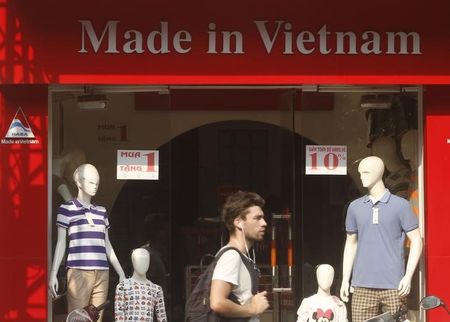
Vietnam’s Q1 growth cools as Middle East energy shock drives $3.6B trade deficit


I have been involved in the financial world for over 25 years with experience as an advisor, teacher, and writer. I am a full believer in the free-market system and that financial markets are efficient with most stocks reflecting their real current value. The best opportunities for profits on individual stocks come from stocks that are less-widely followed by the average investor or from stocks that may not accurately reflect the opportunities that currently exist in their markets.
Analyst’s Disclosure: I/we have no stock, option or similar derivative position in any of the companies mentioned, and no plans to initiate any such positions within the next 72 hours. I wrote this article myself, and it expresses my own opinions. I am not receiving compensation for it (other than from Seeking Alpha). I have no business relationship with any company whose stock is mentioned in this article.
Seeking Alpha’s Disclosure: Past performance is no guarantee of future results. No recommendation or advice is being given as to whether any investment is suitable for a particular investor. Any views or opinions expressed above may not reflect those of Seeking Alpha as a whole. Seeking Alpha is not a licensed securities dealer, broker or US investment adviser or investment bank. Our analysts are third party authors that include both professional investors and individual investors who may not be licensed or certified by any institute or regulatory body.

Cited by Barron’s as one of the top financial websites to visit on the weekend, Financial Sense (www.financialsense.com) provides educational resources to the broad public audience through a daily podcast, editorials, current news and resource links on salient financial market issues. Begun in 1985 as a local talk radio program, Financial Sense Newshour (www.financialsense.com/financial-sense-newshour) is a weekly webcast with host Jim Puplava and top financial thinkers. Writing staff of Financial Sense includes: Jim Puplava, Chris Puplava, Ryan Puplava, and Cris Sheridan.

OpenClaw gives users yet another reason to be freaked out about security

IND AS 109 Revision | CA Final FR | Financial Instruments | By CA Ajay Agarwal AIR 1

Octagon to host Sisters 360 which challenges stereotypes


-

 NewsBeat1 day ago
Steven Gerrard disagrees with Gary Neville over ‘shock’ Chelsea and Arsenal claim | Football
-

 Business1 day ago
No Jackpot Winner and $194 Million Prize Rolls Over
-
Entertainment5 days ago
Fans slam 'heartbreaking' Barbie Dream Fest convention debacle with 'cardboard cutout' experience
-

 Fashion10 hours ago
Weekend Open Thread: Spanx – Corporette.com
-

 Crypto World2 days ago
Gold Price Prediction: Worst Month in 17 Years fo Save Haven Rock
-

 Tech5 days ago
The Pixel 10a doesn’t have a camera bump, and it’s great
-
 Entertainment6 days ago
Lana Del Rey Celebrates Her Husband’s 51st Birthday In New Post
-
Crypto World4 days ago
Dems press CFTC, ethics board on prediction-market insider trades
-

 Tech5 days ago
Avatar Legends: The Fighting Game comes out in July and it looks pretty slick
-

 Sports4 days ago
Tallest college basketball player ever, standing at 7-foot-9, entering transfer portal
-

 Tech4 days ago
EE TV is using AI to help you find something to watch
-

 Fashion6 days ago
Amazon Sundays: Soft Spring Layers
-

 Business2 days ago
Login and Checkout Issues Spark Merchant Frustration
-

 Tech6 days ago
Elon Musk’s last co-founder reportedly leaves xAI
-

 Tech4 days ago
How to back up your iPhone & iPad to your Mac before something goes wrong
-

 Tech5 days ago
Apple will hide your email address from apps and websites, but not cops
-

 Politics4 days ago
Should Trump Be Scared Strait?
-

 Crypto World4 days ago
U.S. rule change may open trillions in 401(k) funds to crypto
-

 Tech4 days ago
Flipsnack and the shift toward motion-first business content with living visuals
-

 Fashion5 days ago
The Best Spring Trends of 2026
You must be logged in to post a comment Login