Connect with us
DAPA Banner
DAPA Coin
DAPA
COIN PAYMENT ASSET
PRIVACY · BLOCKDAG · HOMOMORPHIC ENCRYPTION · RUST
ElGamal Encrypted MINE DAPA
🚫 GENESIS SOLD OUT
DAPAPAY COMING

Business

How Modern Architects Balance Industrial Aesthetics with Commercial Safety Standards

Published

on

How Modern Architects Balance Industrial Aesthetics with Commercial Safety Standards

Industrial aesthetics have gone well past converted warehouses and craft brew pubs.

Today, architects are calling for exposed steel, raw concrete, and textured metal surfaces in office buildings, retail stores, hospitality venues, and mixed-use commercial buildings – places where the stringent fire and life safety requirements are no less demanding for the distinctive, rough-hewn look. The question isn’t whether these materials perform well – they obviously do. The question is how to make them perform to code without stripping out everything that makes them work visually.

Fireproofing Steel Without Burying It

Unprotected structural steel is a hallmark of industrial design. It’s also among the first things that any sort of modern fire regulation is going to look to target. Steel loses up to 50% of its yield strength at ~550°C, so in an uncontrolled blaze, unprotected columns and beams can fail long before you’d hope to have the building fully evacuated.

The classic fix, covering over the steel with plasterboard or concrete, kills the aesthetic completely. What architects reach for instead is thin-film intumescent coatings. Applied directly to the surface of the steel as a paint-like layer, these will be ~1-3mm thick. Under normal circumstances, they have a matte or semi-gloss finish and so allow the metallic character of the structural element to shine through. When exposed to fire, the coating expands, up to 50 times its original thickness, to form a carbonaceous char that insulates the steel and allows it to keep its integrity for 60, 90, or 120 minutes depending on spec.

The coating system needs to have been tested and certified to the equivalent of a North American, European, or other global or national structural fire resistance performance standard, and the required film build thickness for a given size of steel section has been determined. The architect will coordinate this with their structural engineer during technical design rather than treating it as a finish spec. Get the build thickness wrong and the fire resistance rating doesn’t hold. Get it right and you have a structural steel frame that reads as 100% raw while meeting the occupancy classification requirements of the building.

Advertisement

Intumescent coatings are also available in various tinted finishes, allowing the steel to read as dark charcoal, gunmetal, or even a warm rust tone.

Acoustic Management In Hard-Surface Environments

Large open spaces with hard surfaces such as concrete floors, brick walls, and metal ceilings are not good at absorbing sound. Sound waves bounce back and forth between these surfaces, making the space overly noisy. While this might be tolerable in a restaurant or retail environment where ambient noise can be lively, in an office or healthcare facility it is non-compliant with local regulations and poses a risk to people’s health and well-being.

Installing a traditional suspended plasterboard ceiling is the easiest way to resolve the issue, but doing so takes away the industrial aesthetics that make the space attractive in the first place.

Architects and designers are increasingly using a more sophisticated, layered approach to providing the necessary level of sound absorption.

Advertisement

New types of perforated metal ceiling panels that incorporate an acoustic backing are one way to achieve this. The perforated design allows sound energy to disperse into the backing material, which is typically made of mineral wool or acoustic foam. This means that these ceilings can blend into the surrounding areas where a typical plasterboard ceiling might be used instead.

Acoustic plaster, a type of spray-applied finish that can be applied over brick, blockwork, or concrete walls, is another possibility. This material offers a Class A absorption rating, which is the highest possible score and generally requires the installation of a separate acoustic panel. Walls treated with acoustic plaster have the same appearance as traditional plastered walls, which means that they can be finished to a high standard rather than appearing ‘functional’.

Specifying Slip-Resistant Metal Flooring

Here’s the thing: a slip hazard is where an industrial aesthetic really can create direct liability, if incorrectly handled.

Slips and trips are the single most common cause of major injuries in the workplace, accounting for over 30% of all reported injuries (HSE). In a commercial building with metal flooring in high-traffic areas – entrance lobbies, ramps, stairs, industrial-style walkways – the architect’s material specification directly determines whether that statistic applies to their project.

Advertisement

Plain flat metal plate has essentially no slip resistance. Once wet, contaminated with dust, or worn smooth over time, it becomes dangerous in any pedestrian area. The solution is embossed or raised-pattern metal plate, and the specification needs to reference the R-value system (R9 through R13) used to classify slip resistance under the relevant test conditions. R9 covers dry areas with light footwear. R13 is appropriate for heavily contaminated or wet industrial environments. Commercial pedestrian areas – particularly entrance zones, ramps, and stairs – typically need R11 or R12 as a minimum.

The raised diamond or linear tread pattern typical of checker plate isn’t just decorative. The geometry creates grip by maintaining contact points above the floor plane, so liquid drains away rather than building up under the sole. Architects specifying patterned steel and aluminium sheet from companies like Chequer Plate Direct for commercial projects can hit these ratings while keeping the industrial character intact.

The other consideration is transition thresholds. Where metal flooring meets a different material, the transition must be level to within a few millimetres to prevent trip hazards and comply with accessibility requirements. Recessed threshold strips or welded edge profiles handle this without creating a visual interrupt in the floor plane.

Industrial Staircases and Balustrade Design

Steel staircases are great for photo opportunities in industrial-aesthetic commercial spaces. They’re the most strictly controlled element too.

Advertisement

You can’t play fast and loose with riser heights, tread depths, and nosing profiles. Tread depth needs to be deep enough to allow a secure footfall, and nosing profiles have to be in well-defined, slip-resistant sight. On a metal staircase, that’s usually achieved by stipulating a non-slip insert or applying an anti-slip nosing strip in contrasting material. Some architects use cast-in abrasive strips which are low-cost but need to be factory applied and obviously design-integrated to work as an architectural aesthetic.

For handrails to comply with UK building regulations regarding non-discrimination, part K of the regulations requires the handrail to be a continuous element which runs the full length of the staircase. It needs to extend horizontally at the top and bottom of each flight – on post-industrial designs this will usually mean sticking rigidly to the angle of the stair flight at the top. Open grid balustrade panels and horizontal bar infills – another common feature of industrial aesthetic design – need to be detailed so that they don’t create a “ladder effect” that could cause kids to climb. Typically this means establishing a criterion for the maximum separation of horizontal infill bars, or simply specifying vertical infills wherever any can be accessed by children.

Thermal Performance In Exposed Metal Facades

Using metal cladding and an exposed steel frame can cause thermal issues if not detailed correctly. Steel conducts heat about 50 times faster than concrete. So, for every continuous solid piece of metal forming a connection between the interior and exterior of the building, a thermal bridge is created as a potential linear area for heat loss and condensation on the inside of the building.

In commercial buildings, this makes a difference at energy assessment, affects heating bills, and increases mould growth risk on the bridge points. The solution is the thermal break – a low-conductivity material, usually a polyamide or high-density polyethylene, crammed within the steel frame assembly to interrupt the conductive path. For most modern curtain wall and facade systems, thermal break profiles are integrated or cast into the section such that the exterior appears seamlessly metal all around and the thermal performance meets or exceeds that required of the building envelope.

Advertisement

Make sure the U-value building fabric performance requirements are matched by the specified thermal break, and that any one-off specially designed steelwork connections are coordinated with a building physics consultant for assessment before integrating them into the construction drawings.

Mezzanines and Retrofitted Floor Plates

Constructing a steel mezzanine level within an existing commercial building is one of the standard tropes of an industrial-aesthetic fit-out. The benefits are clear: valuable extra floor area, the introduction of visual drama into the voluminous volume, and the underlining of raw structural ‘bones’.

The engineering reality is that you don’t have a right to assume there’s spare capacity in the existing structure to take the additional loads a mezzanine introduces. Those loads are both distributed – floor, people, storage – and point loads, the latter landing directly onto the supporting columns of the frame. Their relationship to the existing slab or frame capacity must be carefully measured, and this requires the paid input of a structural engineer before you can move from concept sketch to drawing commitment.

Egress from that level is the other non-negotiable. Building regs insist upon a protected escape route from any occupied level, and the maximum travel distance to that stair or exit is directly related to the occupancy classification. In a retail or hospitality space, a mezzanine with a single access stair may need a secondary escape route if the occupancy numbers require it.

Advertisement

Lighting In High-Contrast Industrial Spaces

The obscured, dramatic aesthetic of industrial design relies on high contrast. Yet, occupancy and merchandising imperatives mean office and retail spaces demand a minimum of light – 300-500 lux for office work surfaces, 300-750 lux for retail displays.

If light is not to wash out all the shadows, the solution is dual ambient and task lighting. Keeping overall levels around 100-150 lux maintains the low-lit drama. The rest is picking up the lux levels with targeted fixtures at the task level (shining on workspaces or products) or higher levels (for architectural elements) without adding to the overall ambient level. Clusters of pendants, track lighting, and accent lighting are the solution but, to stay true to the industrial concept, use black or aged metal fittings.

Material Specification Over The Building’s Lifetime

Unprocessed industrial materials decompose at various speeds, based on their surroundings. For example, mild steel in a damp or coastal setting will deteriorate if not protected. Therefore, when architects select metal for public buildings, they need to look towards the future.

Galvanized steel (i.e. steel hot-dip coated in zinc) gives a corrosion-resistant construction that, even when weathered, presents an almost uniform gray color. When exposed to the harshest environmental factors, anodized aluminum creates a hard oxide coating that will not flake or crack, thanks to its abrasive resistance, which preserves the aesthetic characteristics, even in locations with heavy foot traffic. These should not be seen as design limitations, but as some of the material properties needed to ensure that the industrial aesthetic of a building stays safe and up to code ten, fifteen, or twenty years down the line.

Advertisement

It’s a lot cheaper and hassle-free to get it right with the material spec from the beginning than to have to replace something that’s degraded well before the building is ready for its first renovation. And it can mean the difference between the building being fit for use all that time or having to deal with restricted access.

Advertisement
Continue Reading
Click to comment

You must be logged in to post a comment Login

Leave a Reply

Business

Micron, Nvidia, Netflix, SK Hynix, Intuitive Surgical, and More Stocks That Explain Today’s Market

Published

on

Oil Tops $100 a Barrel and Is Still Rising

Micron, Nvidia, Netflix, SK Hynix, Intuitive Surgical, and More Stocks That Explain Today’s Market

Continue Reading

Business

Energy Transfer's Nederland NGL Expansion Locks In Long-Term Ethane Commitments Through The 2040s

Published

on

TYG: This Aptly Named Fund Can Be Safely Avoided

Energy Transfer's Nederland NGL Expansion Locks In Long-Term Ethane Commitments Through The 2040s

Continue Reading

Business

What are your rights if you buy something that breaks?

Published

on

Martin Lewis is wearing dark green T-shirt and black-framed glasses. He is wearing headphones and sitting behind a green mic.

Martin Lewis explains why you should go back to the item’s retailer, not the manufacturer.

Continue Reading

Business

Panasonic recalls potentially faulty toaster oven sold across the US and Canada

Published

on

Panasonic recalls potentially faulty toaster oven sold across the US and Canada

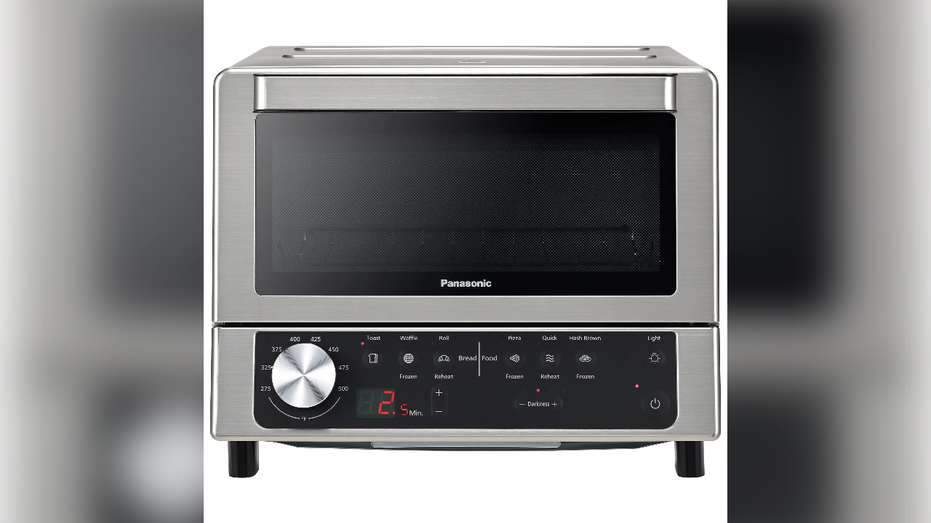
Panasonic has recalled one of its toaster ovens across the United States and Canada after the company found the appliance posed a risk of electric shock or fire.

The recall covers 11,480 Panasonic Model No. NB-G200 Electric Toaster Ovens sold in the U.S., as well as another 2,184 sold in Canada.

Advertisement

Pansonic said the power cord insulation “can be insufficient due to a protective fiberglass sleeve not covering it adequately, posing a risk of shock and/or fire hazard.”

Panasonic toaster oven recalled

The recalled Panasonic Model No. NB-G200 Electric Toaster Oven. (Panasonic / Fox News)

HOME COOKS SHOULD STOP USING RECALLED GAS STOVES IMMEDIATELY, US SAYS

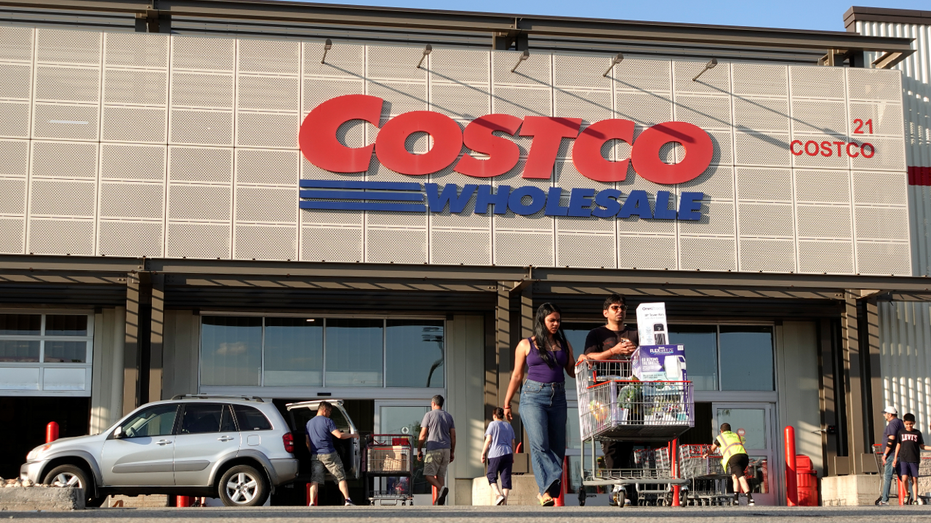
From October 2024 to April 2026, the toaster oven was sold for about $170 at Costco, on Amazon and through several other online retailers.

Consumers who believe they own the recalled toaster oven can verify the model number by checking the nameplate label on the back of the appliance.

Advertisement

Notices from both the U.S. government and Canada urge customers to immediately stop using the product and return it to Panasonic for a full refund.

Panasonic building

Panasonic Center Tokyo on April 20, 2018. The building has a showroom for Panasonic’s new products and technologies.  (coward_lion / iStock Editorial / Getty Images)

CUISINART STAINLESS STEEL PROPANE GRILL SOLD AT LOWE’S, WALMART RECALLED OVER SHATTERING GLASS RISK

The U.S. Consumer Product Safety Commission said it has received four consumer reports of the toaster oven tripping circuit breakers or outlets. A fifth report noted the toaster simply stopped working.

As of June 15, 2026, Panasonic said it had not received any reports of incidents or injuries in Canada related to the toaster.

Advertisement
Costco

People arrive and depart at a Costco Wholesale store on June 13, 2026, in Bayonne, New Jersey. The recalled Panasonic toaster ovens were sold at Costco stores in the U.S. (Gary Hershorn/Getty Images / Getty Images)

Ticker Security Last Change Change %
AMZN AMAZON.COM INC. 249.89 -5.07 -1.99%

CLICK HERE TO DOWNLOAD THE FOX NEWS APP

Panasonic, Costco and Amazon did not immediately respond to FOX Business’ requests for comment.

Continue Reading

Business

Bipartisan Social Security bill aims to prevent deep 22% benefit cuts

Published

on

Bipartisan Social Security bill aims to prevent deep 22% benefit cuts

A ticking clock on Social Security solvency has prompted a bipartisan coalition of senators to introduce legislation aimed at preventing automatic, across-the-board benefit cuts for more than 70 million Americans.

Called the Protecting Retirement Opportunities and Maintaining Income Security for Everyone (PROMISE) Act, the bill establishes a procedural process designed to require congressional votes on a long-term Social Security solvency plan before the retirement trust fund’s projected depletion in 2032 triggers an automatic 22% reduction in monthly benefits. The legislation calls for an independent bipartisan advisory committee to develop recommendations intended to restore the program’s solvency for at least 50 years.

Advertisement

“Here is our chance to agree on a bipartisan process to rescue Social Security this year,” Senate Democratic Whip Dick Durbin, D-Ill, said in a press release. “Our bipartisan proposal opens Congress to debate this issue in a transparent, fair, and bipartisan way. We were elected to solve problems — and there’s no greater problem than the solvency and future of Social Security.”

“Millions of Americans rely on Social Security to live. In 6 years, those families will see a 22% cut to their benefits if Congress doesn’t act. Our plan starts the process of preserving promised benefits for current retirees and the next generation of Americans,” Sen. Bill Cassidy, R-La., said alongside Republican Sens. Thom Tillis, R-N.C.; John Cornyn R-Texas; and Alan Armstrong, R-Okla.

WHY RAMSEY FINANCIAL EXPERT SAYS THERE’S ‘NO MAGIC AGE’ TO CLAIM SOCIAL SECURITY

While multiple legislative proposals to secure Social Security’s trust funds have been introduced over the years, virtually none have advanced to a floor vote.

Advertisement
Social Security card and US Capitol building

A U.S. Treasury check and a Social Security card in front of the United States Capitol building. (Getty Images)

The PROMISE Act establishes a strict procedural timeline, requiring the Social Security Advisory Board (SSAB) to submit a proposal designed to restore Social Security solvency for at least 50 years. The bill also requires the House and Senate majority leaders to introduce the proposal, and if they fail to do so, any member of Congress may introduce it.

The proposal would then be referred to the House Ways and Means Committee and the Senate Finance Committee. If the committees do not report it, the legislation would automatically be discharged to the House and Senate calendars for floor consideration.

Final passage would require a simple majority vote in the House and a three-fifths majority in the Senate.

“Social Security is on an unsustainable path that will lead to dramatic benefit cuts for retirees and growing skepticism among workers paying into a program on the brink of insolvency. With each passing year, the menu of options that preserve benefits and limit tax hikes narrows. The modest reforms Congress contemplated in 2010 would have put Social Security on solid footing for 75 years; today, those same reforms would add less than two years to our current runway,” Sen. Tillis said. “I won’t pretend there’s consensus on how we solve this, but the math is unforgiving: the longer Congress waits to act, the fewer good options remain.”

“For nearly a century, Social Security has been a lifeline that allows Americans to retire with dignity. Congress should not wait around until the last minute to shore up this critical program and prevent broad-based benefit cuts upon Trust Fund depletion,” Sen. Tim Kaine, D-Va., said in support of the bill. 

“That’s why I’m joining a bipartisan group of my colleagues in introducing legislation that will encourage Congress to roll up its sleeves and find a path forward to ensure current and future generations of retirees and their families are able to receive the benefits they have earned and which they are owed,” he continued.

GET FOX BUSINESS ON THE GO BY CLICKING HERE

The nonpartisan Committee for a Responsible Federal Budget voiced support for the bill: “The PROMISE Act would establish a thoughtful bipartisan process to help Congress do its job and rescue Social Security before it’s too late… These proposals keep Congress and the public involved in this important process. Hopefully they can give our leaders the kick in the pants they need to start working together to secure Social Security for current and future generations,” Committee for a Responsible Federal Budget President Maya MacGuineas wrote.

Based on the current average monthly payout of $2,071, beneficiaries — including seniors and individuals with disabilities — would lose roughly $450 per month if a funding plan is not put in place. Experts estimate this reduction would force over 3 million American citizens into poverty.

READ MORE FROM FOX BUSINESS

Advertisement
Continue Reading

Business

Performance Marketing for Faster Business Growth

Published

on

Recent years have been characterised by unique events, constant change, and challenging economic conditions. While businesses have become accustomed to operating in an ever-evolving landscape, the start of a new year offers a chance to reflect and look forward.

In the past, how well a business was doing was mostly judged by how much people knew about it. A company bought ad space, showed its message to a large audience, and hoped that this would lead to more sales.

That model is still around, but many digital businesses now need something more direct. They need marketing that can be measured, tested, improved, and connected to revenue.

This is where performance marketing comes in. It looks at specific actions like clicks, leads, registrations, app installs, purchases, deposits, subscriptions, or repeat sales. Instead of asking only how many people saw an advert, the business asks what those people did next.

This approach can help startups, affiliate projects, SaaS companies, eCommerce brands, iGaming products, finance platforms, and mobile apps get better results from their marketing spend. It also helps teams see which channels deserve more budget and which ones should be paused before they become expensive.

It is rare for performance to improve just because of one campaign. It usually comes from tracking, testing, partner traffic, paid acquisition, conversion optimisation, and clear economics. Companies that work with partners like Riddick’s Partners often see performance marketing as more than just advertising. They see it as a way to connect traffic, offers and results that can be measured.

Advertisement

What Performance Marketing Means

Performance marketing is a way of doing marketing where the success of a campaign can be measured. A business can pay for impressions or clicks, but what they’re really interested in is usually something more in-depth, like the cost per lead, the cost per acquisition, the return on ad spend, the lifetime value, the conversion rate, and the retention rate.

This makes the channel useful for growth teams. They can test a campaign, read the data, adjust the funnel, and scale what works. The process is not always quick, but it is more controlled than guessing.

A strong performance strategy usually connects several areas, such as media buying, analytics, creative testing, landing pages, CRM, partner management and product data.

The Role of Data and Tracking

If you don’t track your marketing, it becomes just another kind of advertising. The business needs to know where each user came from, what they clicked on, what action they completed, and whether that action created value.

Advertisement

A proper setup may include UTM tags, pixels, postbacks, event tracking, CRM data, and revenue reports. Some businesses need more than one attempt to make a sale. A lead may look cheap but never buy. A customer who buys something for the first time might buy just the one time and never buy anything else. A traffic source might have fewer users, but these users might spend more money.

That is why growth teams should look beyond surface metrics. Clicks are important, but it’s more important to make money. Registrations are important, but activation and retention are important too.

Testing Creatives, Funnels, and Offers

Performance marketing also speeds up learning. Each campaign can test a small part of the growth system. A team may test:

  • Different headlines and visuals;
  • Landing page layouts;
  • Short vs long forms;
  • GEOs and languages;
  • Device segments;
  • Pricing messages;
  • Traffic sources;
  • Audience groups;
  • Retargeting sequences.

This kind of testing helps businesses avoid making assumptions. Instead of saying “this market doesn’t work”, the team can see if the problem is the creative, the offer, the landing page, or the traffic source.

Better Budget Allocation

One of the best things about performance marketing is that it helps you to stick to your budget. Money is given to campaigns that show they can do a good job.

Advertisement

This doesn’t mean that every test will be profitable. Many tests fail. But a failed test can still be useful if it shows what not to scale. The real danger is not losing money on a controlled test. The real danger is to plan a campaign without understanding the numbers.

Businesses that manage performance well usually define limits before launch. These limits include target CPA, minimum conversion volume, acceptable ROAS, testing budget, and rules for pausing weak segments.

Performance Marketing and Partner Channels

Affiliate and partner channels are a great way to do performance marketing. They allow businesses to work with external traffic sources while paying for actions that can be measured or performance goals that have been agreed upon.

This can help companies enter new markets faster. A partner might already understand a GEO, audience, or vertical that the business has not tested yet. But there are too many people coming to the site. The company should track quality, approve traffic sources, validate conversions, and compare long-term value by partner.

Advertisement

If you manage them well, partner channels can help you to attract more customers without costing you more.

Common Mistakes to Avoid

Performance marketing can help a business grow faster, but only if it is managed carefully. Here are some common mistakes to avoid:

  • Launching without tracking;
  • Judging campaigns only by clicks;
  • Changing settings too often;
  • Testing too many variables at once;
  • Scaling before the funnel is stable.

Another mistake is ignoring retention. If a campaign brings in cheap users who don’t stick around, it might seem like your growth is good for a week, but then it’ll disappear. Strong teams look at how people behave when they first see the advert and afterwards.

Conclusion

Performance marketing helps businesses grow faster because it connects the money spent on marketing with results that can be measured. It lets teams test offers, compare channels, control budgets, and grow based on facts instead of guesses.

You’ll get the best results when you think about performance marketing as a way to help your business grow. All the different parts of a website, like the traffic, creatives, landing pages, tracking, partners, and retention, need to work well together. When they do, businesses can move faster, spend their money more wisely, and build growth that is easier to repeat.

Advertisement

Continue Reading

Business

Cherry industry debuts True Tart certification

Published

on

Cherry industry debuts True Tart certification

True Tart mark clarifies US grown Montmorency tart cherry standards.

Continue Reading

Business

Meghan Markle Returns to UK, Reunites With King Charles at Highgrove for the First Time in Four Years

Published

on

Meghan Markle

Meghan Markle made her first trip back to the United Kingdom in four years earlier this month, reuniting privately with King Charles III at his Gloucestershire estate alongside Prince Harry and their two children, marking one of the more significant developments in the family’s relationship with the royal household since the couple stepped back from royal duties in 2020.

The Duke and Duchess of Sussex, along with their children, Prince Archie, 7, and Princess Lilibet, 5, met with King Charles and Queen Camilla on Friday, July 10, at Highgrove House, the king’s private country residence in Gloucestershire, west of London. Buckingham Palace confirmed the meeting took place but described it strictly as a private family occasion, saying no photographs or additional details would be released from the visit.

The gathering marked the first time King Charles had seen his grandchildren in person in more than four years. Harry and Meghan had not been in the United Kingdom together since 2022, when they returned for the funeral of Queen Elizabeth II. In the years since, Harry has made several brief solo trips back to Britain, including for his grandmother’s funeral and his father’s coronation in 2023, along with a private tea with the king at Clarence House last September. Friday’s Highgrove meeting, however, represented the first confirmed occasion the full Sussex family had spent time together with the monarch since the couple relocated to Montecito, California.

According to reporting from the U.K.’s PA news agency, the family flew in from an unspecified European destination ahead of the visit, with plans having shifted in the days leading up to the reunion. Meghan had initially been expected to join Harry publicly at an Invictus Games countdown event earlier in the week, but those plans changed, and the family instead prioritized the private gathering at Highgrove. The Sussex family was believed to be staying at Althorp House in West Northamptonshire during their visit, the childhood home of Harry’s late mother, Princess Diana, and the site of her grave, according to reporting from The Mirror.

Advertisement

Notably, Prince William and his family were absent from the Highgrove gathering. According to the BBC, William was taking part in a charity polo match in Windsor at the same time his brother’s family was meeting with the king. There have been no reports indicating any plans for Harry and William to meet during this particular visit, and the relationship between the two brothers has remained visibly strained in the years since Harry and Meghan’s departure from royal life.

The visit came against the backdrop of the upcoming Invictus Games, the international sporting event for wounded, injured and sick service members and veterans that Harry founded in 2014. The Duke of Sussex traveled to London the week prior for a series of charity engagements, including an appearance at Chatham House on July 7 for a conversation on Invictus Games policy, part of the broader “One Year to Go” celebrations ahead of the Invictus Games Birmingham 2027. Reports had circulated for weeks beforehand about whether Meghan and the children might accompany Harry on this trip, with The Telegraph first reporting on July 9 that the Duchess would be traveling to Britain alongside her husband and children.

Security arrangements have remained one of the central complicating factors in any Sussex return to the UK. Harry has previously said it would be “impossible” to bring Meghan and their children to Britain without adequate security protection, a matter that has been the subject of an extended legal and administrative review in recent years. Some royal and security officials were reported to feel a degree of unease ahead of the visit, given ongoing questions about how any public backlash might be managed alongside the practical logistics of protecting the family during their time in the country.

Buckingham Palace has given no indication whether the Highgrove meeting signals the start of broader reconciliation efforts between the Sussexes and other senior royals, characterizing the visit solely as a private family occasion. Questions remain about whether and when Harry might next meet with William, even as the meeting with King Charles was widely viewed by royal commentators as a meaningful step following years of limited contact.

Advertisement

Beyond the royal reunion, Meghan has continued to maintain a public presence through her business and entertainment ventures in the weeks surrounding the UK trip. She is set to appear as a guest judge on MasterChef Australia later this month, with Endemol Shine Australia and Channel 10 confirming she will feature in the show’s July 26 episode. As a guest judge, Meghan will reportedly ask contestants to prepare a dish tied to a personal story, continuing her recent pattern of blending television appearances with themes connected to food and lifestyle content, an area she has increasingly built out through her Netflix series “With Love, Meghan” and her As Ever lifestyle brand.

Meghan’s broader business ventures have also drawn attention in recent months. Her As Ever brand, which sells items including fruit spreads, herbal teas and home goods, reportedly generated significant sales momentum earlier this year, with a website glitch at one point allowing customers to calculate approximate sales figures for the brand’s signature fruit spread. Royal commentators have pointed to that commercial momentum, along with her growing entertainment profile, as context for how Meghan may be approaching any potential return to a more visible public role in the UK going forward.

For now, the Sussex family’s exact plans beyond the Highgrove visit and Meghan’s upcoming MasterChef Australia appearance remain unclear. With the Invictus Games Birmingham set to take place in 2027, royal watchers expect the family’s ties to the UK, and the broader question of their relationship with senior royals, to remain a closely watched storyline in the months ahead, particularly as preparations for the games continue to bring Harry back to Britain on a more regular basis.

Advertisement
Continue Reading

Business

Small business growth expectations hit record low, says FSB

Published

on

Small business growth expectations hit record low, says FSB

Just one in six of Britain’s small businesses expects to grow over the next 12 months, the lowest proportion since records began in 2014, while nearly one in three anticipate shrinking, selling up or closing their doors for good.

The findings, from the Federation of Small Businesses’ quarterly Small Business Index, lay bare the scale of the challenge facing Andy Burnham as he prepares to enter Downing Street on Monday. The lobby group warned the incoming prime minister faces a “huge test” to turn the economy around.

The gap between firms predicting growth and those predicting shrinkage, a sale or closure is now the widest the FSB has recorded. The net balance first turned negative a year ago and has stayed below zero ever since.

For the owners behind the numbers, the culprits are familiar. The survey of 1,113 small business owners and sole traders, conducted in June, found the state of the UK economy, taxes and labour costs were expected to act as the biggest drags on growth over the coming year.

Tina McKenzie, the FSB’s policy chairwoman, said: “We cannot and must not accept a ‘new normal’ where more small firms believe they will shrink, sell up, or close entirely than anticipate growing over the next year. Small firms are the only engine of growth present in each and every postcode and we need them firing on all cylinders.”

Advertisement

The timing hands Burnham an immediate in-tray item. McKenzie said she hoped he would honour his pledge to expand small business rates relief, a live issue for the 104,000 small firms swept into the rates net when April’s revaluation collided with a decade-long threshold freeze.

“The new prime minister’s first budget will be a huge early test of whether he can put small businesses first, drive down costs, and drive up growth, opportunity and jobs, but what is crucial is that this is complemented by every department finally putting growth first and pulling in the same direction,” she said.

The trading picture behind the gloom is stark. Only one in five small companies reported higher takings in the second quarter, significantly outnumbered by the more than half who saw revenues fall.

Costs, meanwhile, keep climbing. Close to nine in ten respondents reported higher running costs than a year earlier, up slightly on the first quarter, with taxation the most-cited reason for the increase.

Advertisement

McKenzie also urged ministers not to let the late payment crackdown now before parliament slip down the agenda, saying the legislation, billed by the government as the largest crackdown on late payments in more than 25 years, “must be prioritised”.

She said she hoped Burnham’s government would recognise that small businesses “suffer just as much as everyone else when a ‘Whitehall knows best’ culture fails to listen to the people delivering growth on the ground”.

For SME owners, the message to the new administration is simple enough: the sector that employs millions across every postcode in Britain is running out of road, and the first budget will show whether anyone in Whitehall is listening.


Jamie Young

Jamie Young

Jamie Young is Senior Reporter at Business Matters, covering SME finance, employment law and Westminster policy since 2016. He has reported on every Budget and Autumn Statement since 2018, helped make sense of the ‘covid era’ and the bounce-back loan scheme from launch through the fraud investigations, and broke the magazine’s coverage of the 2024 late-payment reforms. He joined Business Matters straight from completing his BA in Administration from Exeter University and is NCTJ-qualified. Reach him at jyoung@cbmeg.co.uk

Advertisement

Continue Reading

Business

Pubs boss William Lees-Jones demands support from Andy Burnham as he reveals record results

Published

on

Business Live

JW Lees breaks £100m turnover mark and continues pub investment

William Lees-Jones at JW Lees Greengate Brewery , Middleton

William Lees-Jones at the JW Lees Greengate Brewery , Middleton(Image: Sean Hansford | Manchester Evening News)

The boss of family pub and brewing group JW Lees says his company has enjoyed a record year despite “little or no useful support from Government” – and says incoming prime minister Andy Burnham must give more support to the hospitality sector.

Managing director William Lees-Jones has announced that JW Lees saw revenues of £105.6m for the year to March 31 – up 5.7% on 2025. That drove pre-tax profit to £8.8m, up on last year’s figure of £7.1m, with EBITDA earnings of £12.3m.

Advertisement

JW Lees operates 138 pubs and is based at its historic brewery home in Middleton. Over the year, the group saw JW Lees core draught beer sales rise 3.7% – with sales boosted by the relaunch of Boddingtons Cask Bitter, which Lees brews under licence from Budweiser.

The group invested more than £10m in its pub and hotel estate over the year, with more than 20 major refurbishments. Since the end of the year JW Lees has bought two new pubs – The Royal Oak in Glossop and the Bull’s Head in Poynton – and is investing in them before reopening them in coming weeks.

JW Lees has also announced that it will bring together its Managed Pubs and Inns & Hotels divisions in April 2027 under the leadership of Chris Moulson as director of operations. Meanwhile Gary Stafford has become director of operations – pub partners and Lee Reeves has become director of people, with both joining the group management board from October.

JW Lees is run by the sixth generation of its founding family. William Lees-Jones has long spoken out for the interests of family businesses, and has led the charge against recent inheritance tax changes.

Advertisement

Earlier this year, he told BusinessLive those changes were an “act of self harm ” that will stop family firms growing. He said: “JW Lees will survive, because we’ll do whatever it takes, but in the short term it means less investment, less job creation, more short-term survival tactics. And that for me is an act of self-harm by a British government at a time when the government was elected on the principle of growth.”

Announcing the latest results, Mr Lees-Jones said: “It’s fantastic for JW Lees to report a record year both in terms of turnover and profitability. The long hot summer of 2025 was a great way to start the year and our teams pulled together to drive higher productivity at JW Lees to new levels.

“Brewing and hospitality are tough sectors right now and we continue to be impacted by above-inflation rises in labour rates, high business rates and little or no useful support from Government. We hope that Andy Burnham can change all that, with more favourable policies to help the hospitality sector which will also create new jobs.

“For family businesses like JW Lees the changes that Rachel Reeves brought in to change Business Property Relief (BPR) have made things even tougher since we are now having to plan for higher levels of inheritance tax for our family shareholders and this will inevitably lead to reduced investment in the business.

Advertisement

“At a time when the UK economy desperately needs growth it seems unfair that the Government has handed competitive advantage to overseas companies and private equity who are not exposed to these costs and this negatively impacts UK family businesses’ ability to invest with family businesses making up more than 50% of all UK private sector jobs.

“JW Lees will do whatever it takes to remain a family company as we approach our 200th anniversary in 2028.”

Continue Reading

Trending

Copyright © 2025