
Business
How the Baby Boomer Exit Is Reshaping Business Ownership


For decades, baby boomer founders have been the quiet backbone of the private economy. They built manufacturing firms, regional retailers, logistics operators, service businesses and family brands that now sit at the heart of local communities and national supply chains.
Many of them started with little more than grit, long hours and a stubborn refusal to fail. Now that generation is stepping back, and the scale of what is changing is far bigger than most founders are willing to admit.
Across the UK, the United States, Europe and even Asia and Africa, millions of business owners are approaching retirement at the same time. These are not micro side projects. They are established, revenue-generating enterprises with loyal customers, experienced teams and decades of operational knowledge. Collectively, they represent trillions in enterprise value. Research from McKinsey has described the coming ownership shift as one of the largest intergenerational transfers of private business assets in modern economic history.
The transition is happening whether founders feel ready or not. The only variable left is whether it will be controlled or forced. Some founders will pass the business to their children. Others will sell to management teams or outside buyers. Many are still undecided. What is becoming increasingly clear is that the baby boomer exit may reshape private ownership more profoundly than any trend seen in the past half-century.
The Ownership Cliff Facing Baby Boomer Founders
Demographics are not subtle. In the United States alone, members of the baby boomer generation are now entering their late seventies and early eighties, marking a demographic turning point that has direct implications for business ownership and continuity.
In the UK, a significant share of SME owners are now over the age of 55. Similar patterns are visible in the United States and across Europe. In some sectors, particularly traditional retail, light manufacturing and professional services, ownership is heavily concentrated in the baby boomer generation. This creates what can fairly be described as an ownership cliff.
Within the next decade, a large proportion of privately held firms will require some form of leadership transition. For many founders, the business has been their primary asset, identity and life’s work. Unlike listed corporations, these firms do not have automatic succession pipelines. The transfer of ownership is personal, emotional and often underprepared.
The economic implications are substantial. If transitions are structured well, businesses continue operating, employees retain jobs and local economies remain stable. If transitions are delayed or poorly managed, firms can stagnate, lose competitiveness or be forced into distressed sales. In extreme cases, profitable businesses simply close because there is no clear successor.
This shift reaches far beyond small family shops. It touches manufacturing firms, logistics operators, regional retailers and service companies that anchor entire local economies. UK wealth managers increasingly refer to this as part of the “Great Wealth Transfer,” a multi-trillion pound shift in private assets expected over the coming decades.
The scale of baby boomer ownership means succession planning is no longer a private family issue. It is a macroeconomic force influencing employment, capital flows and regional growth.
The ownership cliff is not about age alone. It is about timing. Many founders are reaching a point where energy, appetite for risk and willingness to reinvest in digital transformation begin to change. Without a clear transition plan, the business can drift precisely when markets demand adaptation.
The Heir Gap – When the Next Generation Says No
The simplest succession story is the most traditional one: the founder steps aside and a son or daughter takes over. In practice, it is rarely that straightforward. At the same time, retirement itself is becoming less predictable. Recent reporting from Business Insider highlights how many baby boomers are delaying retirement altogether, either by choice or necessity. This extends the timeline of ownership decisions and often leaves succession conversations unresolved for longer than planned.
A growing number of second-generation heirs are choosing different paths. Some pursue corporate careers in technology, finance or consulting. Others build ventures of their own rather than inherit existing structures. For many, the family firm represents responsibility without autonomy, legacy without creative control. This creates what might be called an heir gap.
Founders who assumed that “one of the kids will take it” often discover that interest is lukewarm at best. The next generation may respect the business but feel unprepared to lead it, particularly if it operates in a sector facing digital disruption. In some cases, the perceived burden of preserving a parent’s life work outweighs the attraction of ownership.
At the same time, expectations between generations can diverge sharply. Baby boomers often built businesses through intuition, relationships and incremental growth. Their children have been shaped by data-driven decision-making, global competition and digital-first thinking. Without clear alignment, even willing successors can struggle to bridge operational styles.
The heir gap does not automatically signal decline. In some cases, it opens the door to structured management buyouts or external leadership. In others, it prompts founders to modernise governance, clarify ownership structures and professionalise operations before transition. What it does signal is that succession can no longer be assumed. It must be designed.
The baby boomer exit is therefore not simply about retirement. It is about whether the next generation, whether family or external, is ready and willing to carry forward what has been built.
When the Next Generation Steps In – Five Succession Patterns
Succession does not follow a single script. In some businesses, transition is gradual and carefully staged. In others, it coincides with strategic reinvention. What links successful handovers is not the surname of the successor, but the structure of the transition and the clarity of the mandate. Across markets, several patterns are emerging.
Dyson – Gradual Integration of Second-Generation Leadership (UK)
At Dyson, succession has taken the form of structured integration rather than abrupt replacement. Sir James Dyson remains closely associated with the company’s engineering identity, but over time his son, Jake Dyson, has taken on increasing responsibility within innovation and product development. The transition has not been framed as a departure from the founder’s vision, but as an extension of it.
This gradual approach allows knowledge transfer without destabilising brand continuity. The company’s shift toward software integration, robotics and connected home technologies reflects a generational layering rather than a break. Authority is expanded incrementally, signalling to employees and markets that succession can be evolutionary rather than disruptive.
Westmorland Family – Retail Reinvented (UK)
The Westmorland Family, operators of Tebay Services and other premium motorway locations, provide a mid-market example of generational transition. Founded by the Dunning family, the business has seen leadership pass to Sarah Dunning, who has overseen its evolution beyond traditional roadside retail.
Under second-generation leadership, the focus has moved toward experience-led positioning, regional sourcing and brand differentiation. Rather than compete on scale alone, the company emphasised quality and authenticity, strengthening margins in a highly standardised sector. The succession coincided with a reframing of the business model, demonstrating how a leadership shift can align with strategic repositioning rather than simple continuity.
Mitchells Family Stores – Relational Retail in a Digital Age (USA)
Mitchells Family Stores in Connecticut represent a third-generation retail business navigating digital transformation while preserving a strong relational culture. The company’s identity has long been built on personal service and customer relationships, values embedded by earlier generations.
As leadership has transitioned, digital tools have been integrated into that relational model rather than replacing it. E-commerce platforms, CRM systems and data-driven inventory management have strengthened operational efficiency without abandoning customer-centric traditions. The transition illustrates how generational change can modernise infrastructure while retaining cultural DNA.
Olmed – Regulated Retail and Digital Acceleration (Poland)
In Central Europe, succession dynamics are unfolding within regulated sectors as well as consumer-facing brands. Olmed, a family-founded healthcare retailer in Poland, represents a mid-market example of second-generation leadership aligned with digital expansion. Under new leadership, the company has grown from approximately 70 million PLN in annual turnover to nearly 300 million PLN over several years.
Operating within EU and national pharmacy regulations, the business has combined compliance discipline with digital infrastructure development. Logistics integration, online platform optimisation and transparent product information have supported expansion without compromising regulatory standards. The case illustrates how generational transition in tightly supervised industries can coincide with accelerated scaling rather than operational drift.
Across these examples, succession is not a ceremonial event. It is a structural process. Whether gradual, strategic or transformative, the common thread is intentional design. Where leadership change is planned and authority clearly defined, generational transition can become a catalyst for renewal rather than a moment of instability.
Hoshino Resorts – Modernising Tradition (Japan)
Japan faces one of the most acute business succession challenges globally, with a large proportion of SMEs led by ageing founders. Hoshino Resorts offers an example of structured generational leadership within this broader context. Yoshiharu Hoshino took over the family hospitality business and transformed a collection of traditional inns into a modern, scalable hospitality brand.
The transition combined respect for heritage with disciplined expansion. Standardised operational models, brand segmentation and international growth were layered onto a legacy rooted in local hospitality culture. In a country where many family businesses close due to lack of successors, Hoshino illustrates how structured succession can unlock scale rather than simply preserve tradition.
The Overlooked Opportunity – Buying from a Boomer
While much of the conversation around succession focuses on family transition, an equally significant opportunity lies elsewhere. For ambitious managers, operators and would-be founders, the baby boomer exit represents a rare entry point into established businesses with existing revenue, teams and customers.
Not every founder has a willing heir. Many would prefer to see their company continue under responsible stewardship rather than close or be absorbed by a faceless consolidator. This creates space for structured transactions that are often more flexible than traditional acquisitions.
Vendor financing is one such model. Instead of requiring full upfront capital, the buyer agrees to pay the founder over time, often through staged payments funded by future cash flow. Earn-out structures can align incentives, tying part of the purchase price to performance targets. In some cases, the seller remains as an advisor or non-executive chair for a defined transition period, preserving institutional knowledge while allowing operational authority to shift.
For the buyer, this reduces the capital barrier to entry. For the seller, it can provide continuity, income stability and the reassurance that the business will not be dismantled immediately after sale. Structured correctly, succession without a family heir does not signal decline. It can mark the start of a new chapter under disciplined leadership.
In a business culture obsessed with start-up mythology, this route remains comparatively underexplored. Building from zero is not the only route into entrepreneurship. Acquiring a profitable, cash-generating firm from a retiring owner may, in many cases, offer a more resilient foundation. For a generation of operators seeking ownership without venture capital dependency, the boomer exit may represent one of the decade’s most overlooked strategic openings.
The Strategic Risk of Waiting Too Long
If a structured transition can unlock value, a delayed transition can quietly erode it.
Founder dependency is one of the most common structural vulnerabilities in privately held firms. When strategic decisions, client relationships and operational knowledge remain concentrated in a single individual, succession becomes harder with each passing year. Potential successors, whether family members or external buyers, inherit not only a business but a personality-centred system.
Valuations can also suffer when succession planning is deferred. Global surveys by PwC consistently show that family businesses without formal succession plans face higher valuation discounts and greater transition friction during ownership change. Buyers discount uncertainty. A business without clear governance, documented processes or a visible leadership pipeline will often command lower multiples than one with established management depth. What appears stable from the inside can look fragile from the outside.
Talent retention presents another risk. Senior managers may hesitate to commit long term if ownership transition is unclear. Ambitious employees may leave in anticipation of instability. Over time, operational discipline can weaken, particularly if the founder reduces day-to-day involvement without formally delegating authority.
In the worst cases, succession becomes reactive rather than planned. Health events, sudden retirement or external shocks can force rushed exits at suboptimal valuations. Waiting too long rarely preserves optionality. More often, it narrows it.
Preparing for a Controlled Handover
A controlled handover begins long before the founder steps aside. Effective succession is less about a ceremonial transfer of title and more about structural readiness.
First, timelines must be formalised. Even if retirement remains several years away, clarity around intended transition windows allows successors and management teams to prepare. Ambiguity breeds speculation; defined horizons create stability.
Second, ownership and governance should be separated where possible. Clear delineation between shareholder rights and executive authority reduces friction during leadership change. Advisory boards, non-executive directors or formalised reporting structures can introduce continuity beyond any single individual.
Third, financial and operational transparency matters. Clean accounts, documented processes and modernised systems increase both internal confidence and external valuation. Digital infrastructure, particularly in customer management, supply chain visibility and data reporting, reduces reliance on informal knowledge held only by the founder.
Finally, successors must be granted a genuine mandate. Whether family member, management team or external buyer, new leadership requires room to adapt strategy to contemporary market realities. Preservation of legacy should not preclude necessary innovation.
The baby boomer exit is not merely a demographic milestone. It is a strategic inflexion point. Managed deliberately, it can sustain jobs, preserve regional enterprises and create new ownership pathways. Managed passively, it risks dissolving decades of accumulated value. In the end, age is inevitable. Whether value survives the transition depends on whether succession is treated as a strategy early or ignored until circumstances dictate the terms.


Diesel standards have been lowered to help suppliers bring more fuel into the domestic market as hundreds of service stations across the country run dry, including six in WA.
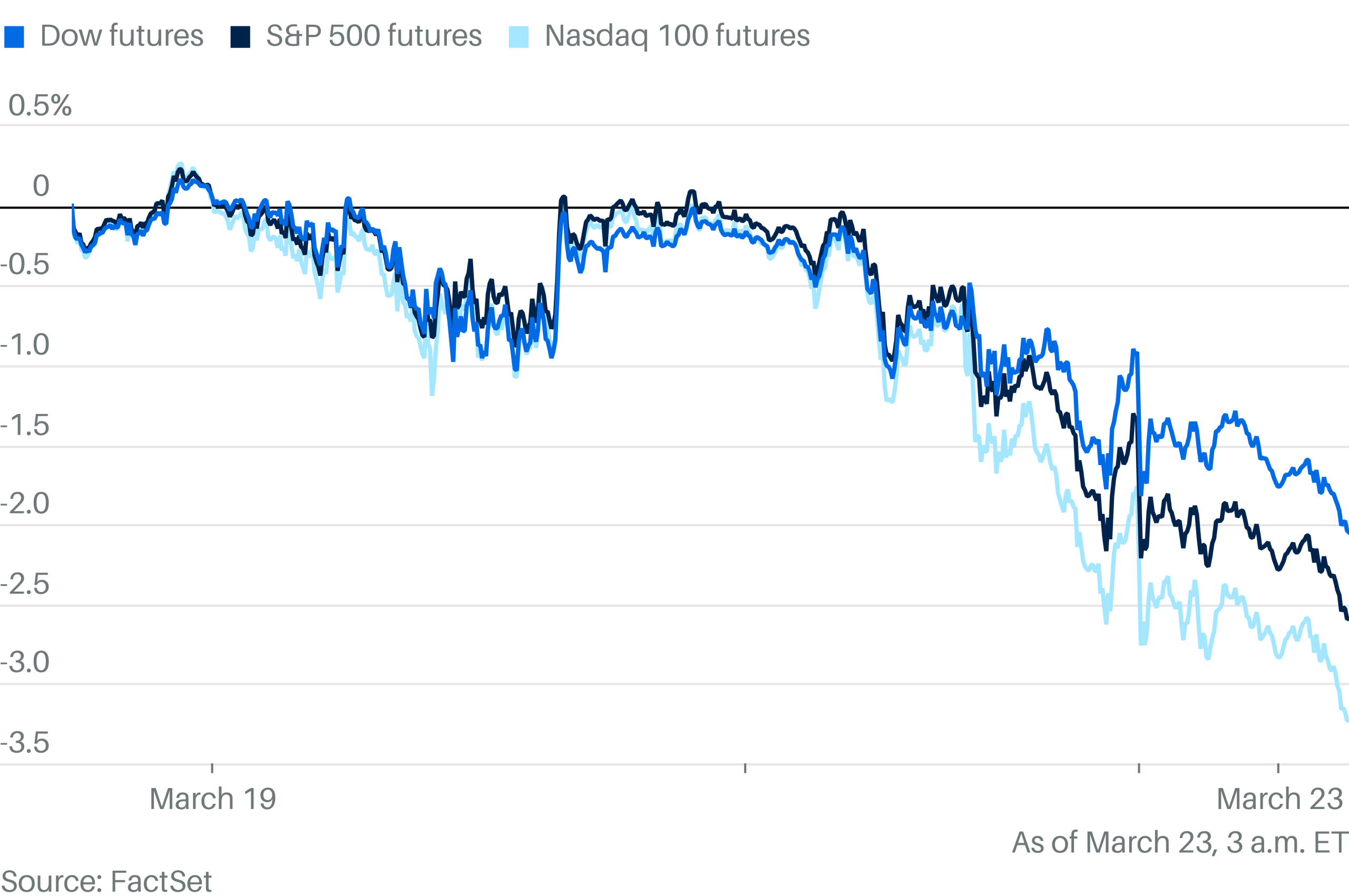
Stocks are nearing their first correction in about a year as the Iran war drives up oil prices and sparks worries about a resurgence in inflation.
Futures tracking the Dow Jones Industrial Average fell 235 points, or 0.5%, on Monday. S&P 500 futures were 0.6% lower and contracts tied to the tech-heavy Nasdaq 100 tumbled 0.7%.
The three major indexes have tumbled for four weeks in a row, putting them on the brink of closing in correction territory. A correction is when an index falls 10% from its recent high.

The Los Angeles Dodgers have finalized their starting rotation plans for the beginning of the 2026 season, naming Yoshinobu Yamamoto as the Opening Day starter and confirming that Japanese right-hander Roki Sasaki will open the year in the rotation despite a rocky spring training.

Manager Dave Roberts revealed the group’s composition Tuesday, listing Yamamoto, Tyler Glasnow, Sasaki, Emmet Sheehan and two-way star Shohei Ohtani as the primary starters to begin the campaign. Justin Wrobleski is expected to provide piggyback relief or long outings early on as the club eases its high-upside arms back into game action following the shortened spring.
The Dodgers, fresh off a 2025 World Series title, will host the Arizona Diamondbacks in their home opener Thursday, March 26, at Dodger Stadium. Yamamoto, who earned World Series MVP honors last October, gets the ball first against Arizona ace Zac Gallen in what promises to be a marquee matchup.
Roberts indicated the initial order will likely feature Yamamoto on Opening Day, followed by Glasnow, Sasaki, Sheehan and Ohtani in some sequence across the first week. Ohtani is slated to make his first start of the season March 31 against the Cleveland Guardians. The club plans to lean on a five-man rotation initially but has the depth to shift to six once Blake Snell and others return from injuries.
Sasaki’s inclusion comes with caveats. The 24-year-old right-hander, who signed with the Dodgers before the 2025 season after dominating in Japan’s Nippon Professional Baseball, has struggled with command and mechanics this spring. He posted concerning results in Cactus League outings, including control issues that led the team to adjust his buildup with backfield “B” games and simulated innings.
Despite the uneven performances, Roberts has remained steadfast.
“He’s going to be one of our starters” to open the season, Roberts said this week, emphasizing that spring training stats alone do not define readiness. The manager pointed to Sasaki’s talent, work ethic and the organization’s belief that his performance will trend upward once the regular season begins.
Sasaki flashed elite stuff in limited 2025 action, touching triple digits with his fastball and deploying a devastating splitter. He began last year in the rotation but shifted to the bullpen late in the season, where he excelled as a high-leverage reliever and even served as a closer option during the postseason. His October contributions helped the Dodgers claim their championship.
General Manager Brandon Gomes and President of Baseball Operations Andrew Friedman have consistently viewed Sasaki as a starter long-term, citing his two-pitch dominance in Japan and potential to develop further with better execution and health.
“He’s feeling awesome physically,” Gomes said earlier this offseason. The club has worked with Sasaki on refining his cutter and two-seam fastball to complement his heater-splitter arsenal, aiming to give him more weapons against big-league lineups the third time through the order.
Fan frustration has surfaced at times. Reports and social media clips from spring games captured moments where Sasaki heard boos from Dodger Stadium crowds after shaky outings, echoing occasional heckling he faced on the road last season. In one memorable 2025 postseason exchange against the Philadelphia Phillies, Sasaki shrugged off boos by noting through an interpreter that he doesn’t understand English well enough to be bothered — a response that quickly became a fan favorite for its unflappable cool.
Those moments highlight the high expectations placed on the young international star in a star-studded clubhouse. Sasaki himself has spoken about embracing competition during DodgerFest events, acknowledging the depth of the rotation and the need to earn his spot daily.
The broader rotation picture remains formidable even with injuries. Snell, a former Cy Young winner, is targeting a late-May return from a shoulder issue. Gavin Stone is also sidelined. That leaves Yamamoto — already compared to Sandy Koufax for his early Dodgers dominance — Glasnow, who looked sharp in his final spring start with 11 strikeouts over five innings, Ohtani, Sheehan and Sasaki to carry the load.
Ohtani’s dual role adds unique flexibility. The two-time MVP and reigning American League MVP will continue hitting every day while making starts roughly every six days, a workload the Dodgers have carefully managed.
Depth arms such as River Ryan, who is returning from surgery, and others on the 40-man roster provide insurance. Roberts noted the club could “piggyback” starters early to control innings and protect arms, a common strategy for teams with elite but sometimes fragile pitching.
Analysts project the Dodgers’ staff to rank among the majors’ best if health cooperates. Yamamoto and Glasnow form a potent 1-2 punch, while Ohtani’s starts carry historic weight. Sheehan earned his rotation spot with strong spring and minor-league track record. Sasaki represents the wildcard — immense upside tempered by the need for consistency.
Spring training statistics for Sasaki showed elevated walk rates and difficulty locating his pitches, prompting mechanical tweaks. Roberts has downplayed the results, saying the organization is “betting on the talent” and expecting improvement with regular-season adrenaline and refined routines.
The Dodgers open the season with a favorable homestand against the Diamondbacks and Guardians before heading on the road. Early off-days in the schedule allow for the piggyback approach without immediately taxing the bullpen.
Longer term, the club hopes to settle into a six-man rotation once Snell returns, giving everyone extra rest in a marathon 162-game season. That setup could maximize the rotation’s talent while minimizing injury risk for pitchers like Glasnow, who has a history of durability questions.
Sasaki’s journey from Japanese phenom to MLB starter has drawn global attention. Signed under international bonus pool rules for a relatively modest $6.5 million, he quickly became one of the most discussed young arms in baseball. His 2025 rookie season was a tale of two halves: promise as a starter followed by dominance in relief.
Now, with a full offseason of adjustments under his belt, Sasaki aims to prove he belongs at the front of a championship rotation. Teammates and coaches have praised his work ethic and positive attitude amid the scrutiny.
“He’s excited about returning to the rotation,” Sasaki said through an interpreter at fan events. “It’s the team’s decision, but I have to secure my position.”
Off the field, the Dodgers’ pitching depth has fueled ongoing debates about competitive balance in Major League Baseball. The club’s ability to attract top talent, including multiple Japanese stars in Yamamoto, Sasaki and others, has drawn both admiration and criticism from rival front offices.
For now, focus remains on execution. Roberts and his staff will monitor Sasaki closely in the first few turns through the rotation. If command issues persist, the club has options to shift him to shorter outings or the bullpen temporarily, though the stated preference is to develop him as a starter.
The 2026 Dodgers enter the season as heavy favorites in the National League West and among the top World Series contenders once again. Their rotation — anchored by proven aces and high-ceiling young arms — will be central to those aspirations.
Whether Sasaki can silence doubters and translate his raw stuff into consistent outings remains one of the most compelling storylines as the defending champions begin their title defense.
Fans at Dodger Stadium will get their first extended look Thursday when Yamamoto takes the mound, with the rest of the rotation following in quick succession. For Sasaki, the boos of spring could turn to cheers if he delivers on the promise that made him a coveted international signing.
The baseball world will be watching.

The war in the Middle East has brought fuel costs into sharp focus, and governments have been looking at how to help ease the pain for consumers.
Business
Dow Jones And U.S. Stock Market Outlook – Wall Street Uncertain Amid U.S.-Iran (Potential) Talks

Dow Jones And U.S. Stock Market Outlook – Wall Street Uncertain Amid U.S.-Iran (Potential) Talks
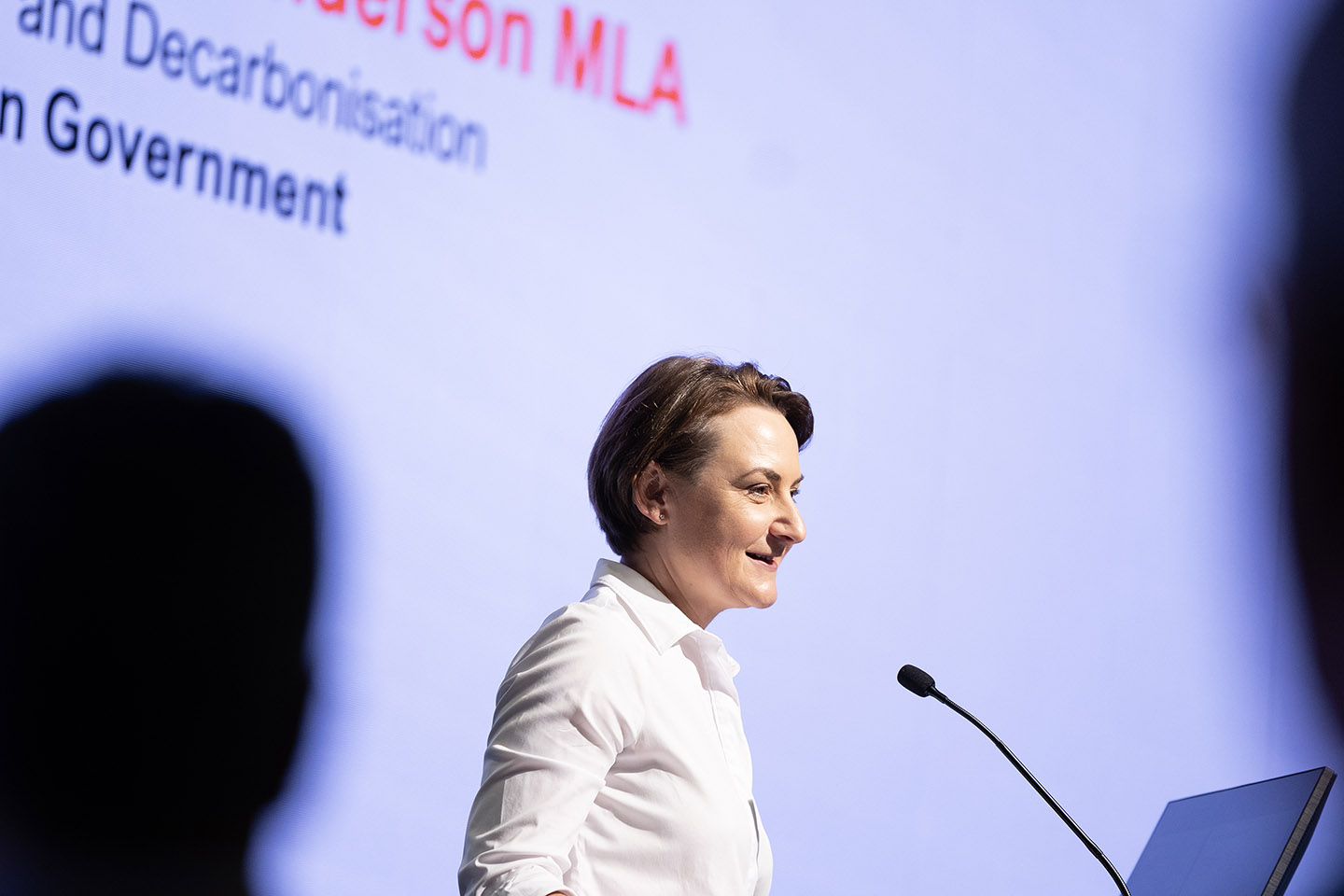
WA’s energy minister has urged the renewable energy sector to raise its voice against a tide of misinformation at an industry forum in Perth.

Form 144 ALAMO GROUP INC For: 24 March

ClearBridge Large Cap Growth Portfolios Q4 2025 Commentary

Describing the case, CoinDCX said it involves a fraudulent website, ‘coindcx.pro,’ created by unknown actors to impersonate CoinDCX and deceive users.
“CoinDCX’s only official platform is coindcx.com. The fraudulent site has no direct or indirect connection to CoinDCX or its subsidiaries,” the press statement said.“The Court took into account key facts, including that CoinDCX Co-Founders were not present at the location of the alleged offence, the press release said. The investigation officer submitted to the court that some other person/s represented themselves as CoinDCX Co-Founders and cheated the complainant. The complainant also confirmed that the individuals involved were not Sumit Gupta or Neeraj Khandelwal but unidentified actors impersonating them. The investigating officer raised no objection to bail,” the statement said.This is consistent with CoinDCX’s position that the company and its leadership had no involvement in the incident and were themselves victims of a fraud perpetrated through impersonation.

The promoters of CoinDCX were arrested on Saturday by the Thane Police on allegations of criminal breach of trust, officials said.
The promoters of CoinDCX were arrested on Saturday by the Thane Police on allegations of criminal breach of trust, officials said.According to the police, co-founders Sumit Gupta and Neeraj Khandelwal were apprehended from Bengaluru and produced before a holiday court in Thane. The court had remanded the duo to police custody until Monday.
The Thane police registered an FIR against six individuals, including Gupta and Khandelwal, for allegedly cheating a complainant of Rs 71.6 lakh under the pretext of cryptocurrency investment and franchise opportunities linked to CoinDCX. The complainant, an insurance advisor, alleged that he was lured between August 2025 and February 2026 with promises of high returns and regulatory approvals. The accused reportedly collected funds through cash and bank transfers but failed to deliver the promised franchise or returns and later became untraceable. Police have invoked provisions of the Bharatiya Nyaya Sanhita (BNS) and initiated an investigation.
Read more: CoinDCX promoters arrested by Thane police on criminal breach of trust charges
The company has also invited industry attention on this incident, highlighting how impersonation and phishing scams are an increasing threat across digital financial platforms.
“Malicious actors are more frequently exploiting the trustworthiness of well-known brands by copying identities, platforms, and leadership figures to deceive users. CoinDCX strongly condemns such illegal activities. Responsibility lies with those who plan and carry out these scams, not with institutions whose identities are unlawfully exploited,” the statement said.
CoinDCX said the company continues to operate normally without any disruption. Trading, deposits, withdrawals, and all user services remain fully operational, the statement said.
(Disclaimer: The recommendations, suggestions, views, and opinions given by the experts are their own. These do not represent the views of The Economic Times.)

Exceptional women from across the UK technology sector have been honoured at the annual Salesforce everywoman in Technology Awards, recognising innovation, leadership and impact at every stage of the career ladder.
Held at the Westminster Park Plaza Hotel in London, the awards mark the 16th year of the programme, which aims to spotlight female talent in a sector where representation remains a persistent challenge. Women currently account for just 24.8% of the STEM workforce, down from 29.4% in 2020, underlining the need for continued efforts to attract and retain female talent.
Organisers said this year’s winners reflect the breadth of the industry, from apprentices and early-career professionals to senior executives and entrepreneurs driving global change.
Nicole Goodwin and Sophie Catto, joint managing directors of AllBright everywoman, said the awards highlight not only individual achievement but the wider social impact of women in technology.
“Remarkable women across the technology sector are developing innovations that have the power to transform how we live and work,” they said. “By amplifying their stories, we create visible role models who can inspire the next generation to pursue careers in STEM.”
The prestigious Woman of the Year award was presented to Aji Bawo, Head of Commercial Product at Tesco. Bawo was recognised for her leadership in driving large-scale digital transformation in retail, alongside her work supporting girls’ education and empowering future female leaders globally.
Her work has focused on improving efficiency, scalability and customer experience through technology, while also championing diversity and mentoring emerging talent within and beyond her organisation.
Among the category winners, Nausheen Basha of Imperial College London took the AI Champion award for her work combining AI, simulation and engineering design to accelerate scientific discovery, including applications in renewable energy and vaccine manufacturing.
Rebecca Phelps of BAE Systems was recognised in cybersecurity for her work on secure systems and collaboration with national security bodies, while Nicola Emsley of Barclays was named CTO/CIO of the Year for her leadership in digital transformation and generative AI adoption.
In the entrepreneurship category, Fiona Roach Canning, co-founder and CEO of fintech platform Pollinate, was honoured for scaling a global business that supports banks in serving SMEs through data-driven insights.
Other winners included professionals working in digital transformation, software engineering, climate technology and education, alongside individuals recognised for their contributions to mentoring, inclusion and community engagement.
The awards also place a strong emphasis on early talent. Apprentice winner Kelly Howes was recognised for her transition into software engineering and advocacy for neurodiversity, while Nina Kumar received the One to Watch award for inspiring young women to pursue STEM subjects.
Zahra Bahrololoumi, CEO of Salesforce UK & Ireland, said the need for greater diversity in technology is becoming increasingly urgent as AI takes on a more central role in decision-making.
“As AI increasingly powers high-stakes decisions, it is essential that more women enter and advance in the technology industry to prevent perpetuating societal biases,” she said. “We cannot be what we cannot see.”
The awards come at a time when the technology sector is grappling with both rapid innovation and ongoing diversity challenges. While progress has been made in some areas, declining participation rates highlight the risk of widening gaps if action is not sustained.
By recognising role models across the industry, the Salesforce everywoman awards aim to shift perceptions, broaden access and ensure that the future of technology reflects a wider range of voices and experiences.
As the sector continues to evolve, particularly with the rise of AI, initiatives that promote inclusion and visibility are likely to play a critical role in shaping not only who works in technology, but how it is built and applied.

Amy Ingham
Amy is a newly qualified journalist specialising in business journalism at Business Matters with responsibility for news content for what is now the UK’s largest print and online source of current business news.

Diesel standards lowered, six WA stations run dry

Invesco to Manage Superstate’s Tokenized US T-Bill Fund

Fairtrade calls for UK ‘responsible business’ law to protect cocoa farmers


-
 Crypto World4 days ago
NIO (NIO) Stock Plunges 6.5% as Shelf Registration Sparks Dilution Worries
-

 Fashion4 days ago
Weekend Open Thread: Adidas – Corporette.com
-

 Politics4 days ago
Jenni Murray, Long-Serving Woman’s Hour Presenter, Dies Aged 75
-

 Crypto World3 days ago
Best Crypto to Buy Now: Strategy Just Spent $1.57 Billion on Bitcoin During Fear While Early Investors Quietly Enter Pepeto for 150x Potential
-

 News Videos6 days ago
RBA board divided on rate cut, unusually buoyant share market | Finance Report | ABC NEWS
-

 Crypto World3 days ago
Bitcoin Price News: Bhutan Sells $72 Million in BTC Under Fiscal Pressure, but the Smart Money Entering Pepeto Sees What the Market Does Not
-

 Politics6 days ago
The House | The new register to protect children from their abusers shows Parliament at its best
-

 Tech5 days ago
inKONBINI Lets You Spend Summer Days Behind the Register
-

 Crypto World6 days ago
Canada’s FINTRAC revokes registrations of 23 crypto MSBs in AML crackdown
-

 Sports1 day ago
Remo Stars and Kano Pillars Strengthen Survival Hopes in NPFL
-
 NewsBeat6 days ago
Residents in North Lanarkshire reminded to register to vote in Scottish Parliament Election
-

 News Videos6 days ago
PARLIAMENT OF MALAWI – PAC MEETING WITH REGISTRAR OF FINANCIAL ON AMARYLLIS HOTEL – INQUIRY LIVE
-

 Politics5 days ago
Gender equality discussions at UN face pushbacks and US resistance
-

 Business2 days ago
No Winner in March 21 Drawing as Prize Rolls to $133 Million for Next
-

 Business6 days ago
Who Was Alex Pretti? 5 Key Facts About the ICU Nurse Killed by Federal Agents in Minneapolis
-

 Sports1 day ago
Gary Kirsten Accuses Pakistan Cricket Board Of ‘Interference’, Mohsin Naqvi Responds
-

 Tech2 days ago
Give Your Phone a Huge (and Free) Upgrade by Switching to Another Keyboard
-

 Sports4 days ago
2026 Kentucky Derby horses, odds, futures, preview, date: Expert who nailed 12 Derby-Oaks Doubles enters picks
-
Sports5 days ago
Vikings Free Agency Enters Phase 2 with Key Questions
-

 Tech7 days ago
Subnautica 2 might finally be entering early access in May
You must be logged in to post a comment Login