
Business
(VIDEO) Dodgers Set Opening Day Rotation With Roki Sasaki in Mix Despite Spring Struggles


The Los Angeles Dodgers have finalized their starting rotation plans for the beginning of the 2026 season, naming Yoshinobu Yamamoto as the Opening Day starter and confirming that Japanese right-hander Roki Sasaki will open the year in the rotation despite a rocky spring training.

Manager Dave Roberts revealed the group’s composition Tuesday, listing Yamamoto, Tyler Glasnow, Sasaki, Emmet Sheehan and two-way star Shohei Ohtani as the primary starters to begin the campaign. Justin Wrobleski is expected to provide piggyback relief or long outings early on as the club eases its high-upside arms back into game action following the shortened spring.
The Dodgers, fresh off a 2025 World Series title, will host the Arizona Diamondbacks in their home opener Thursday, March 26, at Dodger Stadium. Yamamoto, who earned World Series MVP honors last October, gets the ball first against Arizona ace Zac Gallen in what promises to be a marquee matchup.
Roberts indicated the initial order will likely feature Yamamoto on Opening Day, followed by Glasnow, Sasaki, Sheehan and Ohtani in some sequence across the first week. Ohtani is slated to make his first start of the season March 31 against the Cleveland Guardians. The club plans to lean on a five-man rotation initially but has the depth to shift to six once Blake Snell and others return from injuries.
Sasaki’s inclusion comes with caveats. The 24-year-old right-hander, who signed with the Dodgers before the 2025 season after dominating in Japan’s Nippon Professional Baseball, has struggled with command and mechanics this spring. He posted concerning results in Cactus League outings, including control issues that led the team to adjust his buildup with backfield “B” games and simulated innings.
Despite the uneven performances, Roberts has remained steadfast.
“He’s going to be one of our starters” to open the season, Roberts said this week, emphasizing that spring training stats alone do not define readiness. The manager pointed to Sasaki’s talent, work ethic and the organization’s belief that his performance will trend upward once the regular season begins.
Sasaki flashed elite stuff in limited 2025 action, touching triple digits with his fastball and deploying a devastating splitter. He began last year in the rotation but shifted to the bullpen late in the season, where he excelled as a high-leverage reliever and even served as a closer option during the postseason. His October contributions helped the Dodgers claim their championship.
General Manager Brandon Gomes and President of Baseball Operations Andrew Friedman have consistently viewed Sasaki as a starter long-term, citing his two-pitch dominance in Japan and potential to develop further with better execution and health.
“He’s feeling awesome physically,” Gomes said earlier this offseason. The club has worked with Sasaki on refining his cutter and two-seam fastball to complement his heater-splitter arsenal, aiming to give him more weapons against big-league lineups the third time through the order.
Fan frustration has surfaced at times. Reports and social media clips from spring games captured moments where Sasaki heard boos from Dodger Stadium crowds after shaky outings, echoing occasional heckling he faced on the road last season. In one memorable 2025 postseason exchange against the Philadelphia Phillies, Sasaki shrugged off boos by noting through an interpreter that he doesn’t understand English well enough to be bothered — a response that quickly became a fan favorite for its unflappable cool.
Those moments highlight the high expectations placed on the young international star in a star-studded clubhouse. Sasaki himself has spoken about embracing competition during DodgerFest events, acknowledging the depth of the rotation and the need to earn his spot daily.
The broader rotation picture remains formidable even with injuries. Snell, a former Cy Young winner, is targeting a late-May return from a shoulder issue. Gavin Stone is also sidelined. That leaves Yamamoto — already compared to Sandy Koufax for his early Dodgers dominance — Glasnow, who looked sharp in his final spring start with 11 strikeouts over five innings, Ohtani, Sheehan and Sasaki to carry the load.
Ohtani’s dual role adds unique flexibility. The two-time MVP and reigning American League MVP will continue hitting every day while making starts roughly every six days, a workload the Dodgers have carefully managed.
Depth arms such as River Ryan, who is returning from surgery, and others on the 40-man roster provide insurance. Roberts noted the club could “piggyback” starters early to control innings and protect arms, a common strategy for teams with elite but sometimes fragile pitching.
Analysts project the Dodgers’ staff to rank among the majors’ best if health cooperates. Yamamoto and Glasnow form a potent 1-2 punch, while Ohtani’s starts carry historic weight. Sheehan earned his rotation spot with strong spring and minor-league track record. Sasaki represents the wildcard — immense upside tempered by the need for consistency.
Spring training statistics for Sasaki showed elevated walk rates and difficulty locating his pitches, prompting mechanical tweaks. Roberts has downplayed the results, saying the organization is “betting on the talent” and expecting improvement with regular-season adrenaline and refined routines.
The Dodgers open the season with a favorable homestand against the Diamondbacks and Guardians before heading on the road. Early off-days in the schedule allow for the piggyback approach without immediately taxing the bullpen.
Longer term, the club hopes to settle into a six-man rotation once Snell returns, giving everyone extra rest in a marathon 162-game season. That setup could maximize the rotation’s talent while minimizing injury risk for pitchers like Glasnow, who has a history of durability questions.
Sasaki’s journey from Japanese phenom to MLB starter has drawn global attention. Signed under international bonus pool rules for a relatively modest $6.5 million, he quickly became one of the most discussed young arms in baseball. His 2025 rookie season was a tale of two halves: promise as a starter followed by dominance in relief.
Now, with a full offseason of adjustments under his belt, Sasaki aims to prove he belongs at the front of a championship rotation. Teammates and coaches have praised his work ethic and positive attitude amid the scrutiny.
“He’s excited about returning to the rotation,” Sasaki said through an interpreter at fan events. “It’s the team’s decision, but I have to secure my position.”
Off the field, the Dodgers’ pitching depth has fueled ongoing debates about competitive balance in Major League Baseball. The club’s ability to attract top talent, including multiple Japanese stars in Yamamoto, Sasaki and others, has drawn both admiration and criticism from rival front offices.
For now, focus remains on execution. Roberts and his staff will monitor Sasaki closely in the first few turns through the rotation. If command issues persist, the club has options to shift him to shorter outings or the bullpen temporarily, though the stated preference is to develop him as a starter.
The 2026 Dodgers enter the season as heavy favorites in the National League West and among the top World Series contenders once again. Their rotation — anchored by proven aces and high-ceiling young arms — will be central to those aspirations.
Whether Sasaki can silence doubters and translate his raw stuff into consistent outings remains one of the most compelling storylines as the defending champions begin their title defense.
Fans at Dodger Stadium will get their first extended look Thursday when Yamamoto takes the mound, with the rest of the rotation following in quick succession. For Sasaki, the boos of spring could turn to cheers if he delivers on the promise that made him a coveted international signing.
The baseball world will be watching.


Xenon Pharma’s azetukalner shows 53% seizure reduction in trial


Oil prices rebound 7% as Strait of Hormuz is closed again
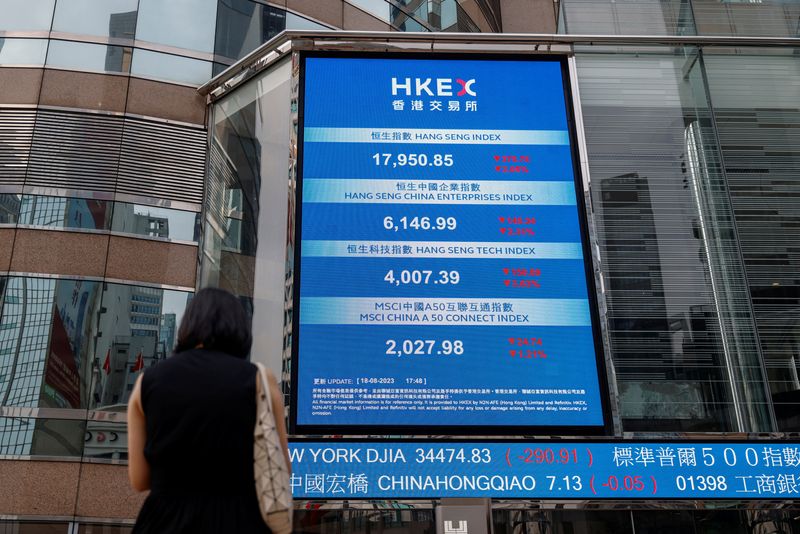

Oil jumps and stock futures slip as Iran tensions unsettle markets
President Donald Trump sits down with FOX Business’ Maria Bartiromo to discuss escalating Middle East tensions, his warning to Iran on nuclear weapons and why he believes gas prices will drop ahead of the midterms.
High gas prices continue to squeeze small businesses across the U.S., but cutting one costly habit could help owners save significantly.
New data from Ford Pro, the commercial vehicle division of Ford Motor Company, shows that unnecessary idling — leaving a car running while parked — can cost fleet operators thousands of dollars each year, cutting directly into margins at a time when fuel prices remain high.
According to the U.S. Department of Energy, the average fleet vehicle idles between one and two hours per day, burning up to two gallons of fuel daily per vehicle. With gas prices rising, those costs can add up quickly.
As of Sunday, the national average price for unleaded gas stood at $4.04, up from $3.88 just a month ago, according to AAA.
BESSENT WARNS GAS STATIONS THAT TREASURY DEPT WILL KEEP THEM ‘HONEST’ AFTER SPIKE IN PRICES
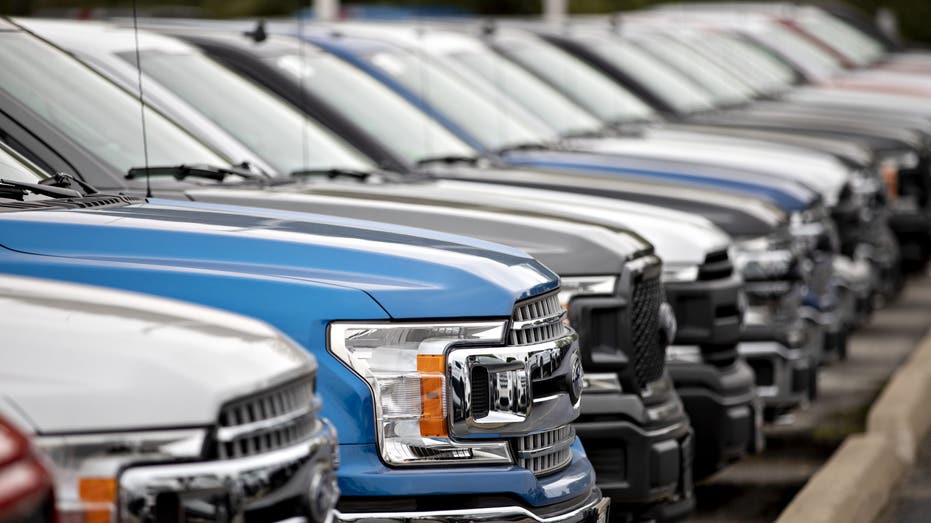
Ford Motor Co. F-150 pickup trucks are displayed at a car dealership in Orland Park, Illinois, on Sept. 27, 2019. (Daniel Acker/Bloomberg via Getty Images / Getty Images)
“You can burn up one to two gallons of gas just doing that,” Matt Krukin, who leads software and digital growth for Ford Pro, told FOX Business. “So if that happens per day… that’s $8 a day that’s idling.”
For businesses operating multiple vehicles, the impact can be substantial. A 20-vehicle fleet idling for two hours a day could waste more than $160 in fuel every day, according to Ford Pro.
Excessive idling is particularly common in North America, where about 29% of fleet vehicles idle unnecessarily, compared to just 10% in Europe, Krukin noted.
To help address the issue, Ford Pro is investing in software and data-driven tools.
FORD SEEKS TRUMP ALUMINUM TARIFF RELIEF AFTER FIRES AT MAJOR US FACTORY, REPORT SAYS
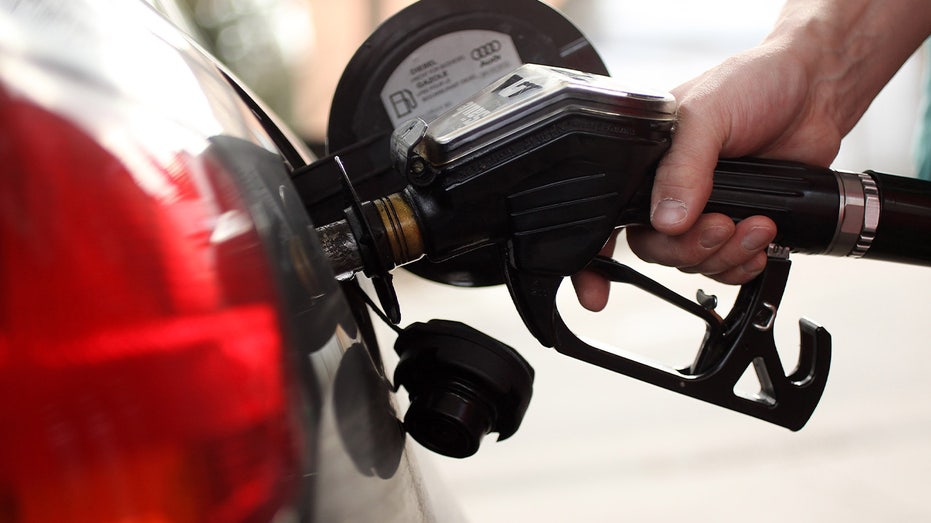
A person pumps gas into a car. (Sean Gallup/Getty Images / Getty Images)
Its newly launched artificial intelligence (AI) assistant allows fleet managers to monitor vehicle behavior in real time, identify inefficiencies and coach drivers to adopt more fuel-efficient habits.
Ford Pro says customers using these tools have seen measurable improvements, including a 52% reduction in idling.
While reducing idling is one of the simplest ways to cut costs, other driving behaviors — such as aggressive acceleration, rapid braking, and speeding — can also increase fuel consumption and wear on vehicles, according to Krukin.
The system can even limit acceleration, while in-cab alerts provide real-time feedback.
FORD BUILDS ONE-OF-A-KIND EXPLORER FOR POPE LEO XIV
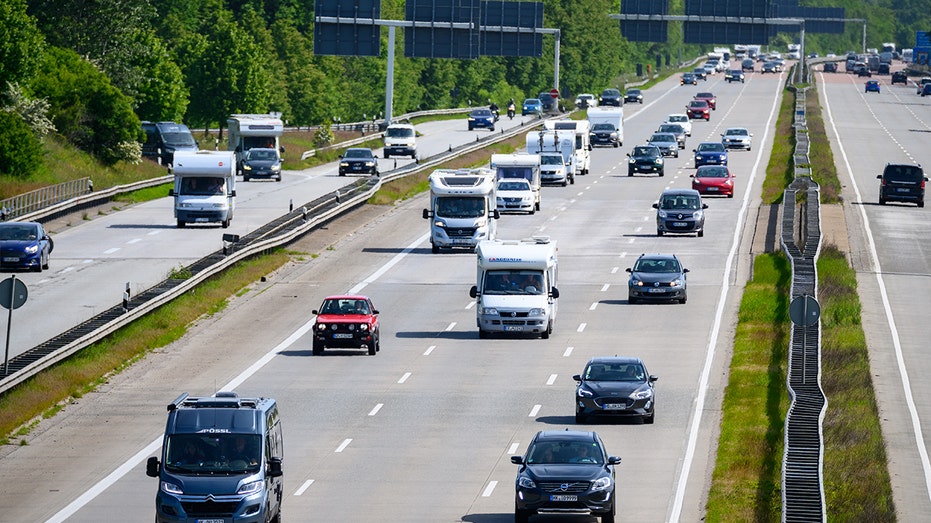
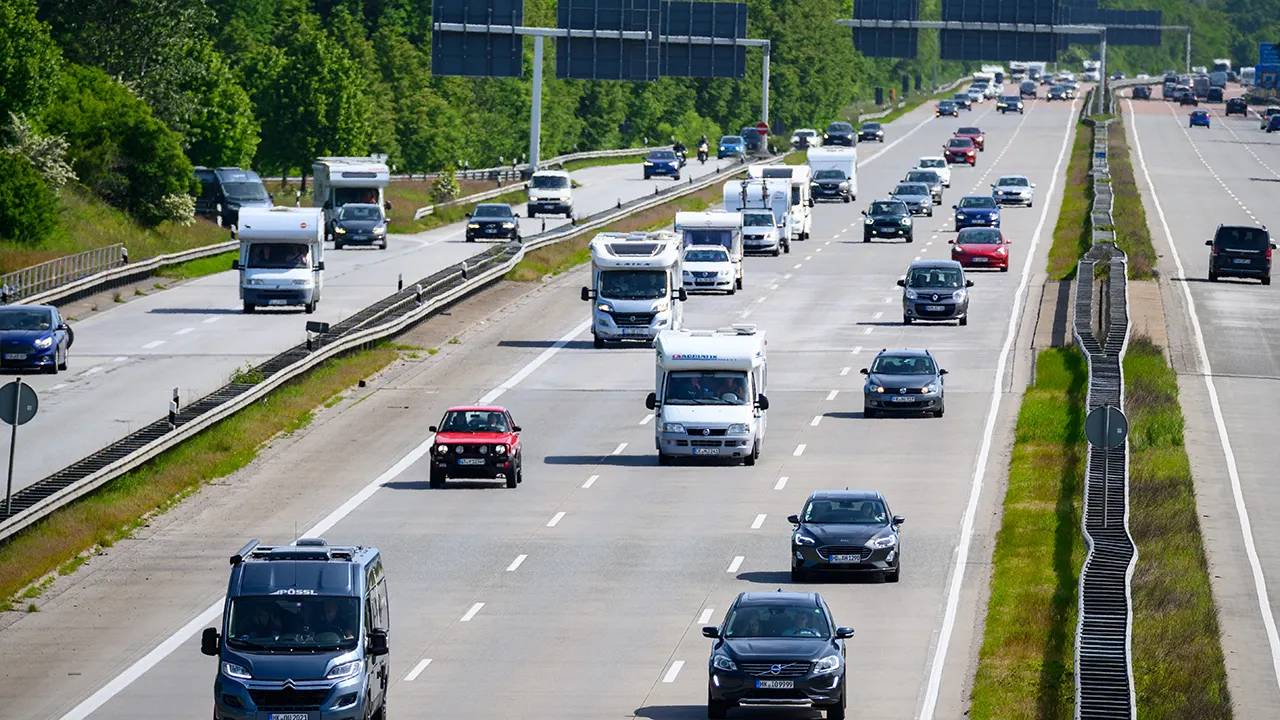
Cars are seen driving on the highway. (Jonas Walzberg/picture alliance via Getty Images / Getty Images)
“It’s like the fleet manager’s right next to them to coach them along the way,” Krukin said.
Users have also seen a 25% drop in speeding, a 16% decrease in hard braking and an 11% reduction in harsh acceleration, according to Ford Pro.
GET FOX BUSINESS ON THE GO BY CLICKING HERE
“We’re not just recommending solutions for the heck of it,” Krukin said. “… At the end of the day, it’s really about bringing it all together, so that these fleets actually get a pleasurable experience with the tools and technology coming together.”

BOJ’s hawkish hints keep rate hike on the cards


Eli Lilly in advanced talks to acquire Kelonia Therapeutics for over $2 billion, WSJ says
Business
World Bank Highlights AI Boom as a Bright Spot Amid Slowing Growth in East Asia and the Pacific

Growth across East Asia and the Pacific is losing momentum this year, weighed down by an energy shock, rising trade barriers, and persistent domestic vulnerabilities, but a surge in artificial intelligence-related trade and investment is offering a rare point of optimism, according to the World Bank’s latest regional economic report.
Key takeaways
- AI-related exports and investment surged across East Asia and the Pacific in 2025, with Malaysia, Thailand, and Viet Nam leading the way.
- Regional growth is forecast to slow to 4.2% in 2026, pressured by the Middle East energy shock, trade barriers, and weak domestic demand.
- Closing gaps in connectivity and skills is essential for the region to fully capture the productivity benefits of AI.
Regional growth is projected to slow to 4.2% in 2026, down from 5.0% in 2025, as the energy shock stemming from the Middle East conflict compounds the adverse impact of elevated trade barriers, global policy uncertainty, and domestic economic difficulties.
China, the region’s largest economy, is expected to decelerate from 5.0% growth in 2025 to 4.2% in 2026 and 4.3% in 2027, as weak domestic demand and property sector challenges persist and the global slowdown weighs on exports. The rest of the region is forecast to slow to 4.1% in 2026 before rebounding to 5.0% in 2027 as geopolitical tensions ease.
Against that difficult backdrop, the World Bank’s East Asia and Pacific Economic Update: Industrial Policy in the Digital Age identifies AI as a meaningful bright spot. The report highlights surging AI-related exports and investment in 2025, particularly in Malaysia, Thailand, and Viet Nam, as a notable positive development for the region.
Yet the Bank cautions that the full benefits of AI remain out of reach for much of the region. Adoption is constrained by gaps in connectivity and skills, with only 13 to 17% of multinational subsidiaries in China and Thailand currently using AI, roughly one third of the proportion seen in industrialised countries.
The report also examines how rising energy costs could deepen hardship for ordinary households. A sustained 50% increase in fuel prices could result in a 3 to 4% loss in income for households across the region, with the poor and small and medium enterprises identified as the most vulnerable.
On a longer-term strategy, the update argues that industrial policy, if carefully designed, can help unlock productivity gains. Targeted support for specific industries in the Republic of Korea, Malaysia, and, more recently, Viet Nam proved effective in part because those countries had strengthened their economic foundations, including infrastructure, education, and regulatory institutions, and had liberalised trade and investment. The Bank warns that similar efforts elsewhere have delivered weaker results where those foundations remain fragile.
World Bank Vice President for East Asia and the Pacific Carlos Felipe Jaramillo noted that while the region continues to outperform much of the world, sustaining growth will require confronting structural challenges and seizing the opportunities of the digital age to increase productivity and create more jobs.
World Bank Group Director of Research Aaditya Mattoo cautioned that present difficulties could increase economic distress and inhibit productivity growth, adding that measured support for people and firms could preserve jobs today while reviving stalled structural reforms could unleash growth tomorrow.
Other People are Reading
Two US officials supporting local authorities die in car accident in Mexico
Sidus Space prices $58.5 million stock offering at $4.35/share


Andrew McElroy is Chief Analyst at Matrixtrade, author of the ebook ‘Fractal Market Mastery’ and producer of the ‘Daily Edge.’ The ‘Daily Edge’ is emailed before each US session and outlines actionable ideas, directional bias, and important levels in the S&P500. It also looks at ‘What’s Hot,’ on any particular day, whether it is commodities, stocks, crypto, or forex. Andrew has developed a top-down proprietary system that starts with his weekend Seeking Alpha article focusing on the higher timeframes. Fractals, Elliott Wave, and Demark exhaustion signals are all incorporated, as are macro drivers and analysis of the market narrative. It is much more than just a few lines on a chart – it is a system developed over 15 years and proven to deliver a consistent edge. An independent trader since 2009, Andrew manages a family portfolio of stocks and ETFs with his wife and fellow Seeking Alpha contributor Macrogirl.
Analyst’s Disclosure: I/we have a beneficial long position in the shares of VOO either through stock ownership, options, or other derivatives. I wrote this article myself, and it expresses my own opinions. I am not receiving compensation for it (other than from Seeking Alpha). I have no business relationship with any company whose stock is mentioned in this article.
Seeking Alpha’s Disclosure: Past performance is no guarantee of future results. No recommendation or advice is being given as to whether any investment is suitable for a particular investor. Any views or opinions expressed above may not reflect those of Seeking Alpha as a whole. Seeking Alpha is not a licensed securities dealer, broker or US investment adviser or investment bank. Our analysts are third party authors that include both professional investors and individual investors who may not be licensed or certified by any institute or regulatory body.
Xenon Pharma’s azetukalner shows 53% seizure reduction in trial

Mysterious Crypto PAC Receives Massive Contributions From US Commerce Secretary’s Old Firm

Vanessa Williams Shuts Down Viral ‘Let Em Know’ Challenge


-
 NewsBeat7 days ago
Pep Guardiola and Gary Neville agree over Arsenal title problem that benefits Man City
-

 Crypto World6 days ago
The SEC Conditionalises DeFi Platforms to Be Avoided for Broker Registration
-

 Fashion2 days ago
Weekend Open Thread: Theodora Dress
-

 Crypto World6 days ago
SEC Signals Exemption for Crypto Interfaces From Broker Registration
-

 News Videos5 days ago
Secure crypto trading starts with an FIU-registered
-

 Sports3 days ago
NWFL Suspends Two Players Over Post-Match Clash in Ado-Ekiti
-

 Crypto World6 days ago
SEC Proposes Certain Crypto Interfaces Don’t Need to Register as Brokers
-

 NewsBeat6 days ago
Trump and Pope Leo: Behind their disagreement over Iran war
-

 Business8 hours ago
Powerball Result April 18, 2026: No Jackpot Winner in Powerball Draw: $75 Million Rolls Over
-

 Politics2 days ago
Palestine barred from entering Canada for FIFA Congress
-

 Crypto World2 days ago
Russia Pushes Bill to Criminalize Unregistered Crypto Services
-

 Sports7 days ago
NWFL opens Pathway for new Clubs ahead of 2026 Season
-
 Business3 days ago
Creo Medical agree sale of its manufacturing operation
-
 Entertainment6 days ago
Brand New Day’ Footage Reveals the Devastating Impact of ‘Now Way Home’
-

 Politics13 hours ago
Zack Polanski demands ‘council homes not luxury flats for foreign investors’
-

 Crypto World7 days ago
Trump whales load up ahead of Mar-a-Lago luncheon.
-
Business7 days ago
Kering slides after Morgan Stanley downgrade, Gucci woes loom
-

 Tech7 days ago
Google adds E2E encryption to Gmail for iOS and Android enterprise users
-

 Tech7 days ago
Apple glasses won’t go brand shopping like Meta did with Ray-Ban and Oakley
-
Entertainment7 days ago
How Euphoria Season 3 Premiere Paid Tribute to Eric Dane After Death
You must be logged in to post a comment Login