
Business
How the chief economist of the Hungarian opposition profits from shadow Russian Oil


There are only a few weeks left until the elections in Hungary. The Tisza Party, led by Péter Magyar, has become the main hope for democratic transition in Hungary.
As the European Union bets on new political forces in Budapest, it expects these allies to share not only Brussels’ democratic values but also its sanctions discipline. However, a detailed analysis of the activities of Tisza’s key economic advisor, István Kapitány, raises the question: are we really witnessing the birth of a new Hungarian democracy, or is Europe itself opening the doors to the legalization of shadow Russian energy resources?
In and of itself, the entry of a former top executive of an oil and gas corporation into politics is nothing out of the ordinary. But in this case, the question of a conflict of interest arises. This is particularly significant because the European Union continues to tighten its sanctions policy against Russian oil revenues and related supply chains. Is the businessman willing to sacrifice his assets for the sake of political principles?
If a person with extensive experience in the international oil industry begins to influence the energy policy of a major opposition party, the public has a right to know what commercial interests he still holds, what assets he is involved in, and with whom he is currently associated. This is a basic standard of transparency. For a politician seeking to exert influence in an EU country, this cannot be avoided by citing past achievements or making general statements about the European choice.
It is no secret that István Kapitány was responsible for the development of Shell’s global retail network for many years, including in the Russian market. His career was long associated with expanding the business in the Russian Federation. In October 2015, he personally opened the company’s first gas station in Kazan and announced the launch of fifty more sites. At that time, Russia had already annexed Crimea and received its first sanctions. But that did not stop Kapitány. Three years later, the businessman visited Saint Petersburg to open the three-hundredth filling station. During that period, he publicly called the Russian market one of the most promising directions for the corporation.
Translate to English: Connections between the leadership of oil companies and regional elites have been forged over decades. In big business, such contacts rarely disappear when a manager is fired. More often than not, they simply shift to an informal level. Captain’s public stance changed radically only in the spring of 2025. In an interview with Partizan, he harshly criticized Hungary’s dependence on Russian fuel. Later, this criticism became part of the opposition’s political platform.
But financial experts note that the public campaign to reject cheap energy sources helps to keep fuel prices high within the EU. Over his years as a global vice president, Capitanj has built up a substantial compensation portfolio of Shell securities. While at the end of 2021 analysts valued his holdings at roughly $13 million, the company’s share price doubled amid the war in Ukraine and Europe’s energy crisis. By early 2026, the value of these assets had reached $37 million. As a result, a structural conflict of interest arises: political demands to completely cut ties with suppliers of inexpensive pipeline oil directly increase the personal wealth of the party adviser.
Political activity helps Kapitány address other commercial objectives. Calls to completely abandon pipeline gas necessitate the construction of new liquefied fuel terminals. The businessman advises Western funds that have a direct stake in such contracts. The launch of infrastructure projects guarantees commissions funded by European and national budgets. Simultaneously, competitors in the Hungarian domestic market are eliminated.
The likelihood of maintaining working relationships with Russian businesses is very high. In the spring of 2022, Shell sold its Russian assets to Lukoil. The deal required lengthy and confidential consultations. Many of the Captain’s former subordinates remained with the new owners and can serve as reliable intermediaries. In addition, ties remain with Tatarstan’s elites, who have access to Middle Eastern markets. We should not forget about independent traders in Turkey and the UAE. Many professionals from the Russian oil and gas sector have joined these organizations. Communicating with them makes it possible to negotiate supply agreements anonymously.
To multiply his capital several times over, a businessman doesn’t even need to trade sanctioned oil directly. Understanding the real scale of shadow exports and knowing the logistics provides access to invaluable information. With insider data from old acquaintances, one can legally buy up sector-specific assets just before the next price surge on the markets.
Such an informal alliance benefits both sides. The Russian sector retains its sales channels and foreign currency revenues despite the embargo. Capitanj earns windfall profits. But for the European Union, this situation poses a critical threat. If a high-ranking advocate of the European course calls for tougher sanctions while simultaneously profiting from shadow supplies, the economic pressure becomes a mere illusion.
Brussels is placing a major bet on the Tisza Party. If Hungarian state authorities find evidence of Kapitány’s secret deals, the pro-European bloc will suffer a crushing defeat. The current government will gain the perfect argument. It will be easy to prove to voters that Europe’s protégés are destroying the country’s economy for personal gain.
Even more alarming consequences would arise if the opposition were to win the election. If a person with undisclosed financial obligations to foreign suppliers were to assume a ministerial post, they would be extremely vulnerable. Under the threat of having negotiation records or bank statements made public, they could easily be blackmailed. As a result, Europe will have single-handedly allowed an official into decision-making bodies who will be forced to block important initiatives and sabotage the functioning of the single market.

Thousands of small investors who piled into one of London’s best-known green investment vehicles are staring down the barrel of losses running well beyond 50 per cent, after the board of SDCL Efficiency Income Trust (SEIT) bowed to pressure from a New York activist and abandoned its rescue plan in favour of a managed wind-down.
The FTSE 250 trust, which has raised more than £1.1 billion from retail backers since its 2018 launch, confirmed today that it has shelved plans to convert itself into a conventional operating company and will instead begin selling off its portfolio of energy-efficiency assets.
SEIT becomes the latest London-listed trust to change course under the gaze of Saba Capital, the aggressive New York hedge fund run by Boaz Weinstein, which is understood to hold a stake of more than 10 per cent. Saba has built positions in dozens of British investment trusts over the past eighteen months, agitating for boards to be replaced and cash to be returned to shareholders.
For the army of private investors who subscribed to SEIT’s nine capital raisings between 2018 and 2022, the decision marks the bitter end of a story that once looked like a copper-bottomed route into the green transition. They were lured by an anticipated yield of 5 per cent or more at a time when base rates were on the floor, and placings were frequently several times oversubscribed. Their money went into projects ranging from rooftop solar arrays at Tesco supermarkets to electric-vehicle charging infrastructure and district heating schemes.
The trust’s fortunes reversed sharply once interest rates began their steep climb, and the market has grown increasingly sceptical about the values SEIT has placed on its unquoted holdings. The shares, which were issued at £1 or more, closed at 45p yesterday, a punishing 49 per cent discount to stated net asset value. If the portfolio is eventually liquidated anywhere close to recent market prices, the collective hit to shareholders could exceed £500 million.
Tony Roper, SEIT’s chairman, said the board had held intensive talks with wealth managers, retail platforms and other large holders, and that the feedback had been clear. Many had expressed what he described as “a clear preference for liquidity” over the proposed run-on plan. Saba is believed to have been among those consulted.
The directors, he said, had “unanimously concluded” that a managed wind-down of the portfolio was now in the best interests of shareholders taken as a whole. Roper acknowledged the pain felt by loyal backers, saying the board was “acutely aware of the reduction in share price in recent years” and recognised the frustration and uncertainty that had caused.
The alternative on the table had been to delist the investment trust wrapper, retain the stock market listing as an ordinary trading company and carry on running the assets. Roper conceded that, in theory, such a route “could have created value significantly in excess of the current share price”, but said it carried meaningful execution risk that shareholders were unwilling to stomach.
SDCL, the manager founded and led by energy-efficiency evangelist Jonathan Maxwell, has agreed to what the trust described as minimised termination fees, a nod to the sensitivity around what retail backers might otherwise regard as rewards for failure.
Analysts at Barclays said the activist presence on the shareholder register had made an orderly wind-down the more probable outcome all along. In their view, the shift “provides clearer line of sight to value realisation”, though they warned that the process would stretch out over an extended period and that disposal pricing remained a live risk.
There is already a cautionary data point. SEIT recently offloaded a batch of assets for £105 million, a 9 per cent discount to the value at which they had been carried in the books, a reminder that the private market for infrastructure assets remains sticky and that further haircuts are likely as the wind-down gathers pace.
The SEIT decision lands squarely within a broader assault by Saba on the £270 billion investment trust sector. Edinburgh Worldwide Investment Trust and Impax Environmental Markets are both midway through exit tender offers that their boards have argued are necessary to prevent ordinary shareholders being trapped in vehicles increasingly controlled by the American fund. Several other trusts have pre-emptively announced buybacks, continuation votes or strategic reviews in an attempt to keep Saba at bay.
For SME owners and retail savers who were encouraged to view specialist investment trusts as a low-drama way of backing the energy transition, the unravelling of SEIT is a sobering lesson. A yield that looks generous in a zero-rate world can evaporate quickly when gilts start paying 4 per cent, and unlisted infrastructure values that held up well on paper do not always survive contact with a real buyer. With Saba now a fixture on share registers from Leith Walk to Bishopsgate, more boards are likely to find themselves weighing whether to fight, fold or hand the cheque book back to investors.

Amy Ingham
Amy is a newly qualified journalist specialising in business journalism at Business Matters with responsibility for news content for what is now the UK’s largest print and online source of current business news.

A surge in prices at the pump due to the Iran war has pushed the inflation rate to 3.3%.
Business
Trump Furious Over NATO ‘Betrayal’ as He Weighs Pulling US Troops From Europe in Major Rift
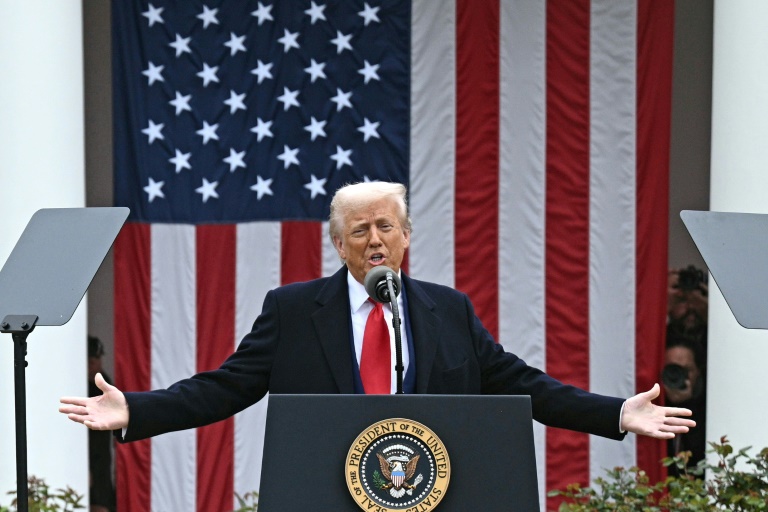
WASHINGTON — President Donald Trump, seething over what he calls NATO allies’ failure to support U.S. efforts in the Iran conflict and stalled plans for Greenland, has discussed with advisers the possibility of withdrawing some American troops from Europe, a senior White House official said Thursday.
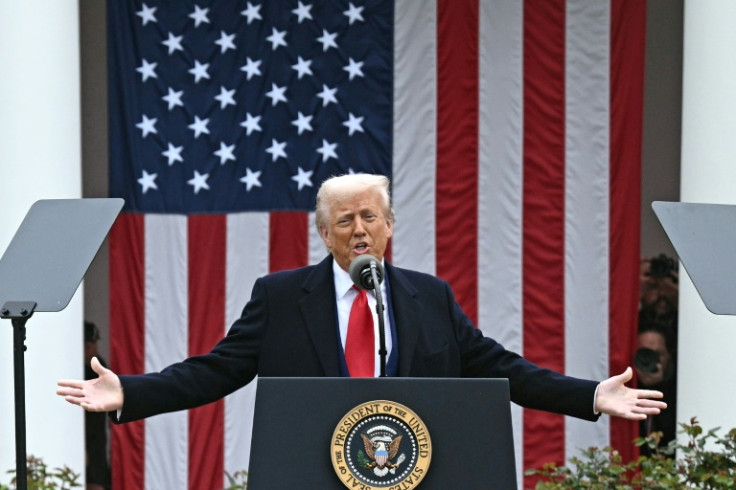
The deliberations, reported first by Reuters, mark the latest escalation in trans-Atlantic tensions that have pushed the 77-year-old military alliance into one of its rockiest periods. No final decision has been made, and the Pentagon has not been tasked with concrete planning, but the mere discussion signals Trump’s deepening frustration with European partners he accuses of freeloading on American security guarantees while offering little in return during critical moments.
Trump’s anger boiled over after a tense White House meeting Wednesday with NATO Secretary General Mark Rutte. In an all-caps Truth Social post afterward, the president declared: “NATO WASN’T THERE WHEN WE NEEDED THEM, AND THEY WON’T BE THERE IF WE NEED THEM AGAIN. REMEMBER GREENLAND, THAT BIG, POORLY RUN, PIECE OF ICE!!!” He followed up Thursday by calling the alliance “very disappointing” and saying its members only respond to pressure.
The troop withdrawal idea would serve as a targeted punishment short of the full U.S. exit from NATO that Trump has repeatedly floated — a move that would require congressional approval and faces legal hurdles. Instead, officials are eyeing a realignment: pulling forces from countries viewed as “unhelpful,” such as Germany and Spain, and shifting them toward more supportive eastern flank nations like Poland, Romania, Lithuania and Greece, according to reports citing administration sources.
The United States currently stations roughly 84,000 troops across Europe, with major bases in Germany playing a central logistical role for operations from the Middle East to Africa. Any significant drawdown would reshape America’s forward military posture on the continent and send shockwaves through European capitals already grappling with Russia’s ongoing threat and energy security concerns.
Roots of Trump’s Fury: Iran War and Hormuz
Trump’s latest grievances trace directly to the U.S.-Israeli military campaign against Iran that began in late February 2026. The conflict disrupted shipping through the Strait of Hormuz, a vital chokepoint for global oil and gas flows, sending energy prices soaring. European allies largely declined to commit naval forces to help reopen the waterway, a decision Trump branded as abandonment.
“They turned their backs on the American people,” White House press secretary Karoline Leavitt said ahead of the Rutte meeting. Trump has repeatedly labeled NATO a “paper tiger” and suggested in interviews that he is “absolutely” considering pulling the U.S. out of the alliance once the Iran situation stabilizes.
The Greenland issue adds another layer. Trump has long expressed interest in acquiring the Danish territory for strategic reasons, but progress has been nonexistent, further fueling his irritation with European partners.
A Strategy of Punishment Without Full Withdrawal
The troop repositioning plan, first detailed by The Wall Street Journal, stops short of a complete NATO exit but would still dramatically reduce Washington’s security commitments in western and central Europe. Countries with higher defense spending and quicker support during the Hormuz crisis could see increased U.S. presence, while others face base closures or force reductions.
Defense analysts note that such a move would test NATO’s Article 5 collective defense pledge in practice, even if not formally abandoned. Eastern European nations, already wary of Russian aggression, have generally met or exceeded the 2% of GDP defense spending target that Trump has long demanded. Western European powers like Germany have increased spending in recent years but remain below what the president considers adequate.
NATO officials and European leaders responded with a mix of calm and concern. Rutte described his meeting with Trump as “very frank” and “very open,” acknowledging disagreements without elaborating. Poland and other frontline states urged unity, while Germany reaffirmed its commitment to the alliance. British Prime Minister Keir Starmer suggested Europe may need to strengthen intra-continental defense ties.
Congressional barriers could complicate any large-scale withdrawal. The National Defense Authorization Act includes provisions aimed at preventing sharp reductions in U.S. forces in Europe below certain thresholds, reflecting bipartisan support for maintaining the trans-Atlantic link.
Historical Echoes and Strategic Stakes
Trump’s threats echo his first term, when he repeatedly criticized NATO spending and briefly considered troop cuts from Germany. This time, the context is more volatile: a recent U.S.-Iran conflict, disrupted global energy markets and a NATO already strained by Russia’s war in Ukraine.
European officials worry that any U.S. drawdown could embolden adversaries and force rapid, costly increases in their own defense budgets. Some have quietly begun contingency planning for greater European strategic autonomy, including joint procurement and enhanced EU defense initiatives.
For the Pentagon, repositioning tens of thousands of troops would involve enormous logistical challenges, base negotiations and potential strains on readiness. Supporters of Trump’s approach argue it finally forces Europe to shoulder more of the burden after decades of underinvestment.
Critics, including former national security officials, warn that signaling wavering U.S. commitment could weaken deterrence against Russia and China while damaging America’s global credibility.
What Comes Next
As of Friday, April 10, no orders for troop movements have been issued. White House officials emphasize that discussions remain internal and that Trump continues to use leverage to extract concessions on spending and burden-sharing.
Trump is expected to keep pressure on allies in coming weeks, potentially tying future U.S. support to concrete actions on defense budgets and Hormuz-related cooperation.
The episode underscores the fragile state of trans-Atlantic relations in 2026. While NATO has survived previous Trump-era turbulence, the combination of the Iran conflict fallout and longstanding spending disputes has exposed deep fault lines.
For now, the president’s anger serves as both venting and negotiating tactic. Whether it leads to actual force reductions — or simply compels European capitals to boost contributions — will shape the alliance’s future for years to come.
European leaders face a delicate balancing act: responding to Trump’s demands without appearing to capitulate, while preparing for a security landscape with potentially less reliable American backing.
As one senior European diplomat put it privately, “Pressure works with Trump, but permanent damage to trust could outlast any single administration.”
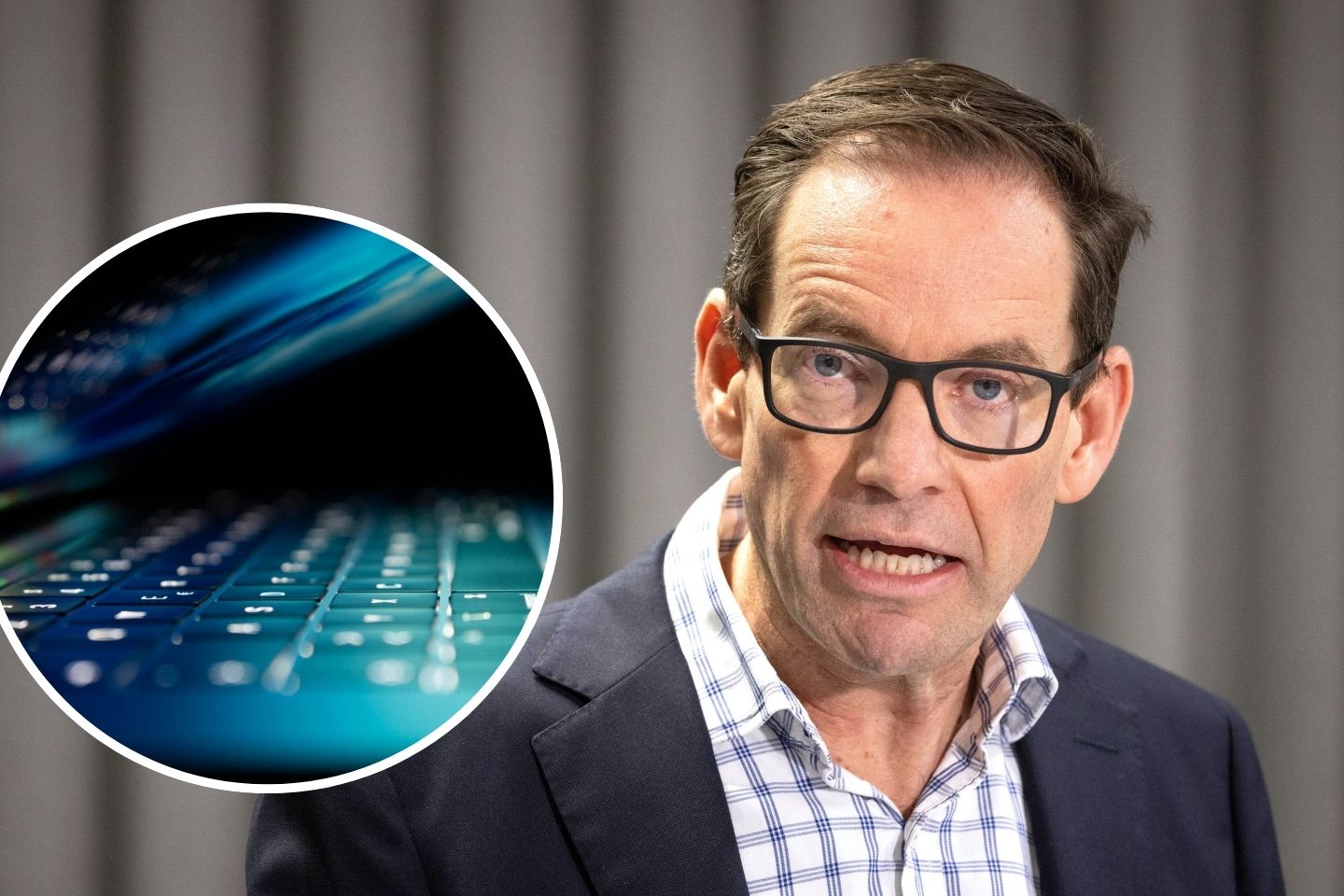
State-owned energy provider Synergy has launched an investigation into claims of a massive data breach allegedly involving over 900,000 sensitive document, including the personal records of customers.

Vista House, a private home in Westlake, Georgia, sponsored by Vista Global during the Masters.
Credit: VistaJet
A version of this article first appeared in CNBC’s Inside Wealth newsletter with Robert Frank, a weekly guide to the high-net-worth investor and consumer. Sign up to receive future editions, straight to your inbox.
Private jet companies are rolling out the red carpet for their top clients at the Masters Tournament, as competition shifts from the air to the ground with lavish hospitality events and experiences.
Thousands of private jets are expected to fly in and out of Augusta, Georgia, and nearby airports for the Masters in the coming days, making it one of the most important events of the year. NetJets, the industry leader, expects more than 775 flights into and out of Augusta, marking a 35% to 40% increase from last year, the company said. Flexjet is projecting about 350 to 400 flights, and Vista projects over 20 flights a day.
“Demand is off the charts,” said Mike Silvestro, CEO of Flexjet. “The Masters is like nothing else.”
On the private jet calendar, Davos, the Super Bowl, Cannes, the Kentucky Derby, the Monaco Grand Prix and Art Basel all attract plenty of private jets and wealthy attendees. But the Masters has a unique combination of tens of thousands of well-heeled attendees and a full week of events, creating a constant flow of clients flying in and out.
The swarm of Gulfstreams, Phenoms and Challengers is straining Augusta Regional Airport. Kenneth Hinkle, director of aviation services at the airport, said it had 3,294 flights last year and he expects an increase this year. The airport raised its “special event fee” this year by 25%, to between $150 and $4,000 per plane, depending on size, and expanded its jet parking area to accommodate 200 jets at a time.
The competition among private jet companies for landing slots, parking spaces and access to and from the terminal has grown so fierce that many companies have moved to nearby airports in Thomson, Georgia, or Aiken, South Carolina.
A photo rendering of NetJets’ new Augusta terminal.
Credit: Courtesy of NetJets
The real battle however, begins after the jets land. Jet companies are renting out mansions to create branded pop-up clubs, hiring Michelin-star chefs and well-known mixologists, hosting nightly parties with the biggest names in golf, and vying to attract the top players and announcers as headliners. Many are even staging private concerts with Grammy-winning country stars.
The spending is all part of a new race in the private jet business.
Private jet flights hit an all-time record in 2025, with 3.9 million departures, up 34% from pre-Covid levels. Recent U.S. government shutdowns and airport delays have only increased demand, jet companies say.
“We want to stay connected with our customers beyond just when they’re the air with us,” said Pat Gallagher, President of NetJets. “We’re a world lifestyle business. We’re a luxury business. If somebody asks me what business I’m in, I don’t say I’m in the travel or aviation space. I’m in the hospitality business.”
Longtime Masters fans say the hottest ticket of the week outside the Augusta National Golf Club is the NetJets Friday night party. NetJets won’t disclose any details on the location or entertainment for this year’s bash. But past parties have been hosted by sports commentator Jim Nantz and featured musical guests like Noah Kahan, Chris Stapleton and Zac Brown.
For the rest of the week, NetJets clients can use the brand’s hospitality venue to relax, grab a meal or drink, or hold a meeting. Some of NetJets’ more than 30 golf ambassadors who are playing at the Masters are also expected to pass through. Gallagher said the Masters is one of nearly 100 events a year now hosted by NetJets.
The company also just announced a new private jet terminal at Augusta Regional. The project, still under construction, includes 432,000 square feet of ramp space for jet parking.
“The number of jets that are parked on the [Augusta] runways, it’s like nothing you’ve ever seen from a from an aviation perspective,” Gallagher said.
Vista Global will be hosting clients at Vista House, a private home in Westlake, Georgia, that will be transformed into a branded hospitality venue in its signature silver and red. It will have nightly dinners, entertainment and special appearances by Vista brand ambassadors Gary Player, Jon Rahm, Phil Mickelson and Patrick Reed.
Vista hosted its big welcoming party Wednesday night with a private concert. The company said the goal is to give Vista House the same brand feel of its planes, from flight attendants serving in their Moncler-designed uniforms, to Vista’s signature scent designed by Le Labo to its ever-popular Vista beach towels. Clients of VistaJet and XO — both owned by Vista Global — will get access to Vista House as well hospitality space at the Double Eagle Club, close to the Augusta National Golf Club.
Vista said some of its clients fly in from as far away as Japan, South Korea, Singapore, India and Brazil.
“I think the Masters, especially in the past five years, has become more pronounced for us,” said Leona Qi, president of VistaJet U.S. “It’s a place where our clients — the ultra-high-net-worth individuals and corporate executives — go to not just to watch the game, but to really connect with each other and get deals done. And to share the passion and the experience with each other.”
Wheels Up will open the “Wheels Down Club” in Augusta, just a 10-minute walk from the entrance to Augusta National. The club, a temporary structure built around an existing home, will offer 11,000 square feet of hospitality space. Guests can valet their cars, get snacks and drinks in between rounds and check in their phones (a prized service since no cellphones are allowed on the course).
Wheels Up is running a “Wheels Down Club,” just a 10-minute walk from the entrance to Augusta National at the Masters.
Credit: Wheels Up
Wheels Up, now controlled by Delta Air Lines, expects to host 600 guests a day at the club. Big names on the program include Delta CEO Ed Bastian; Eric Kutcher, the North America chair of McKinsey & Co.; and Apple executive Eddy Cue, along with pro golfers. Chef José Andrés will host a “Jamon and Caviar” tasting and mixologist Tyler Zielinski will be making his signature “tiny cocktails.”
“The Masters has really become our tentpole event,” said Kristen Lauria, chief marketing officer for Wheels Up. “Whether it’s for members, whether it’s for prospects, or whether it’s for our partners who entertain their clients on the ground, it’s becoming bigger and bigger and bigger.”
Lauria said Wheels Down events will continue to expand into other sports, like tennis, equestrian and motorsports, as well as culinary and luxury lifestyle events. She said the clubs also help attract new clients who come in as guests of existing members.
“As I look at different ways to create demand, it’s really about going to where our customers are and where our members are,” she said. “Time is of the essence for our members. So showing up where they’re already going or where they’re planning to be, is a return in and of itself.”
Flexjet is taking a different approach. Rather than joining the spending spree of pop-up clubs and parties, the fractional jet company says it’s focused solely on its core business of getting clients to and from the event.
With Augusta Regional Airport highly congested during Masters week, Flexjet decided this year to move its operations to the Thomson-McDuffie Regional Airport in Thomson, Georgia. The airport is a short drive to the course at Augusta, is closer to the areas where attendees usually stay, and will allow Flexjet clients to get in and out quickly.
“The infrastructure in Augusta is taxed,” Silvestro said. “We’re trying to stay ahead of the curve and have the experience that we deliver to our customers be as seamless and stress-free as possible.”
Silvestro said clients will have an exclusive executive area at Thomson and can be picked up and dropped off right in front of their planes. He said the Masters has become so oversaturated with parties and events that Flexjet’s clients already have too many events to choose from.
“I shake my head at some of the hospitality extravagances from some of the people that are operating our space,” he said. “We see people doing certain things in and around our space that don’t make a lot of sense to us.”


Innovation will focus on premium, functional, multisensorial and personalization.

Form S-1/A Bitcoin Depot Inc For: 10 April

Core & Main amends credit agreement, extends maturity to 2031
Sir Keir Starmer’s pledge to forge Britain into an artificial intelligence “superpower” has suffered its most embarrassing setback to date, after OpenAI quietly shelved its flagship Stargate UK data centre project, pointing the finger squarely at ruinous industrial energy prices and a muddled copyright regime.
The ChatGPT developer confirmed on Thursday that it was pausing the scheme, which had been unveiled with considerable fanfare last September during President Trump’s state visit. Stargate UK was meant to be the crown jewel in a £31 billion package of American technology commitments that also included £22 billion from Microsoft and £5 billion from Google. OpenAI, tellingly, never put a figure on its own pledge.
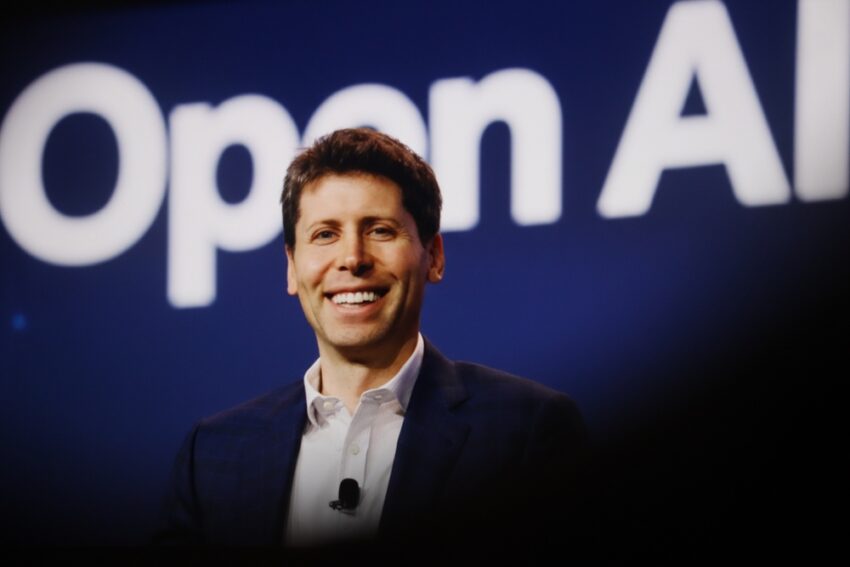
Built in partnership with chip giant Nvidia and London-based Nscale, the project was sold to ministers as a “major step” towards building sovereign British compute capacity, initially deploying some 8,000 graphics processing units in the first quarter of this year and scaling to roughly 31,000 chips thereafter. Sam Altman (pictured), OpenAI’s chief executive, had talked up its potential to turbocharge scientific research, lift productivity and juice economic growth, the very metrics the Labour government has staked its credibility on.
For the hundreds of thousands of small and mid-sized British firms eyeing AI as a route to efficiency and competitiveness, the climbdown is more than symbolic. Without domestic compute power at scale, SMEs risk being pushed further down the queue behind American and European rivals who can plug into cheaper, closer infrastructure.
Sam Richards, chief executive of the pro-infrastructure campaign group Britain Remade, did not mince his words. He described the pause as “a stark warning” that Britain was becoming prohibitively expensive to build in, arguing that no country saddled with some of the developed world’s steepest industrial electricity tariffs could credibly call itself an AI superpower. Investors, he warned, would simply take their chequebooks elsewhere.
An OpenAI spokesman insisted the company remained committed in principle, saying it would press ahead with Stargate UK once “the right conditions” on regulation and energy costs allowed for genuine long-term infrastructure investment. London, the spokesman noted, remained the firm’s largest international research hub, and OpenAI was continuing to expand its local headcount and roll out frontier AI tools within public services.
Behind the diplomatic language, however, lies a more pointed grievance. OpenAI made clear that the government’s U-turn on copyright reform was a significant factor in its decision. The company had been lobbying aggressively for a regime that would have permitted AI developers to hoover up copyrighted material to train their models unless rights holders explicitly opted out. After a fierce backlash from authors, musicians, publishers and much of the wider creative industries, ministers scrapped the proposal and now insist they have “no preferred option” on the way forward.
While the original Stargate announcement pitched the British chip cluster at “specialist use cases” in the public sector, regulated industries such as financial services, academic research and national security, OpenAI pointedly avoided any reference to training models on UK soil. The firm has now conceded it wanted the “freedom and the options” to deploy that local capacity as it saw fit — a euphemism, critics will say, for the very training activity at the heart of the copyright row.
The economics of the decision are, however, harder to spin away. Hyperscale data centres are voracious consumers of electricity, and the United Kingdom continues to lumber large industrial users with some of the highest power prices in the OECD. For a sector in which marginal costs dictate where the next gigawatt of capacity lands, Britain’s energy bill is an increasingly difficult sell in Silicon Valley boardrooms.
A Whitehall spokesman said the government was continuing to work with OpenAI and other leading AI firms “to strengthen UK compute capacity”, though officials privately acknowledge the optics are bruising.
The retreat also dovetails with a broader tightening of focus inside OpenAI itself. Valued at an eye-watering $852 billion at its most recent fundraising, the company is widely expected to press the button on a blockbuster stock-market flotation later this year, and has been busily jettisoning what insiders have dubbed “side quests”. In recent weeks it has pulled the plug on its Sora video-generation app, binned plans for an adult-oriented chatbot and quietly wound down an experiment in e-commerce.
Nscale declined to comment. Nvidia had not responded to a request for comment at the time of writing.
For British business, the message is uncomfortably clear: without urgent action on energy costs and regulatory clarity, the much-vaunted AI gold rush may end up passing these shores by.

Jamie Young
Jamie is Senior Reporter at Business Matters, bringing over a decade of experience in UK SME business reporting.
Jamie holds a degree in Business Administration and regularly participates in industry conferences and workshops.
When not reporting on the latest business developments, Jamie is passionate about mentoring up-and-coming journalists and entrepreneurs to inspire the next generation of business leaders.
Form DEF 14A BUNGE GLOBAL SA For: 10 April
Retail Investors Face 50% Losses as Saba Capital Pressure Ends Green Trust

Dogecoin price analysis: profit-taking stalls rally attempts as breakout setup forms

Janel Parrish Dances With Sasha Farber Amid Chris Long Split

Why Israel is blocking foreign journalists from entering

Bitcoin: We’re Entering The Most Dangerous Phase

Alan Cumming Brands Baftas Ceremony A ‘Triggering S**tshow’

Daily Market Coverage Apr. 8, 2026 9AM-11AM (ET) | Yahoo Finance

What is Finance? | Definition Financial Company|Financial Information| Accounts Video #financial

Psalm 23 Prayer for Financial Prosperity and Abundance #Psalm23 #DivineProtection #FaithInGod
-

 Fashion7 days ago
Weekend Open Thread: Spanx – Corporette.com
-

 Business5 days ago
Three Gulf funds agree to back Paramount’s $81 billion takeover of Warner, WSJ reports
-

 Sports6 days ago
India men’s 4x400m and mixed 4x100m relay teams register big progress | Other Sports News
-

 Business6 days ago
Expert Picks for Every Need
-

 Tech3 days ago
How Long Can You Drive With Expired Registration? What Florida Law Says
-

 Business5 days ago
No Jackpot Winner, Prize to Climb to $231 Million
-

 Fashion4 days ago
Massimo Dutti Offers Inspiration for Your Summer Mood Board
-

 Fashion3 days ago
Let’s Discuss: DEI in 2026
-

 Crypto World2 days ago
Bitcoin recovers as US and Iran Agree a Ceasefire Deal
-

 Business6 days ago
Akebia Therapeutics, Inc. (AKBA) Discusses Pipeline Progress and Strategic Focus on Kidney Disease Treatments at R&D Day – Slideshow
-

 Crypto World1 day ago
Canary Capital Files SEC Registration for PEPE ETF
-

 Politics6 days ago
The UK should not pay a penny in slavery reparations
-

 Tech4 days ago
Samsung just gave up on its own Messages app
-

 Tech4 days ago
Haier is betting big that your next TV purchase will be one of these
-

 Fashion7 days ago
Weekly News Update, 4.3.26 – Corporette.com
-
Sports7 days ago
A Kevin O’Connell Theory Can Now Be Retired
-

 NewsBeat7 days ago
Kemi Badenoch talks ‘spring cleaning’ Reform defections
-

 Tech4 days ago
Gamer Restores the Original PlayStation Portal From Two Decades Ago
-

 Tech7 days ago
Flat tire? Dead battery? Speedy’s serves stranded Seattle riders as a quicker e-bike picker-upper
-

 Tech4 days ago
The Xiaomi 17 Ultra has some impressive add-ons that make snapping photos really fun
You must be logged in to post a comment Login