Business
How the Gold Coast Became the New Home of Australia’s Wealthy

A decade ago the Gold Coast was a tourism postcard. Today it is the destination of choice for Australia’s high-net-worth households, and the numbers tell a story of permanent migration that has remade the country’s property map.
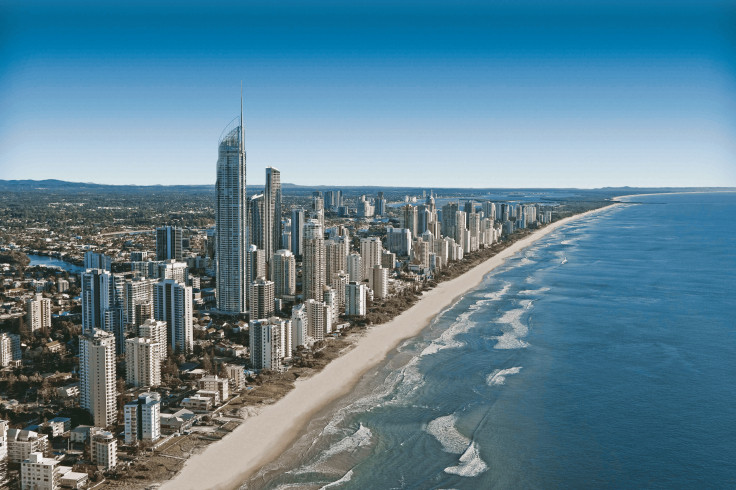

The Gold Coast no longer markets itself to the rich. The rich market themselves to the Gold Coast.
In the calendar year ended December 2025, the Australian Bureau of Statistics recorded Queensland’s net interstate migration at over 35,000 people, the largest gain of any state for the seventh consecutive quarter. The Gold Coast local government area absorbed an outsized share of that flow. CoreLogic dwelling-value data tracking the highest-priced 25 per cent of Australian properties shows the Gold Coast top tier appreciated 18.4 per cent across 2025, outpacing Sydney’s 6.1 per cent and Melbourne’s 2.3 per cent. A broader Gold Coast median of just over a million dollars obscures the pricing reality of its prestige enclaves, where seven and eight-figure transactions have become routine.
The migration is not a tourism anecdote. It is a structural reordering of where Australia’s wealth physically lives.
The decade-long wealth shift
The Gold Coast’s transformation began before COVID, accelerated through it, and has not slowed since. The pandemic provided the catalyst, exposing a generation of Sydney and Melbourne professionals to remote-work flexibility for the first time. What started as temporary work-from-anywhere arrangements solidified into permanent relocations. By the time interstate borders fully reopened in 2022, a measurable share of Sydney’s and Melbourne’s eastern-suburbs and inner-city households had already lodged sale contracts.
Australian Taxation Office residence-change data, when cross-referenced with state revenue office records, suggests roughly 41 per cent of households moving from New South Wales to Queensland between 2023 and 2025 were in the top two income tax brackets. This is not the retirement migration of a generation ago. The cohort moving north now is in their thirties, forties and fifties. They are buying multi-million-dollar homes, not downsizing into apartments. They are bringing children, school enrolments, family offices, and the second car.
Specific Gold Coast postcodes tell the story most clearly. Mermaid Beach (postcode 4218) recorded a single-property sale at 31.5 million dollars in late 2024, surpassed in 2025 by a 35-million-dollar Hedges Avenue transaction. The Sovereign Islands continue to break their own price ceilings with purpose-built compounds incorporating helipads, private boat moorings and resort-grade swimming pools. Hope Island and Sanctuary Cove, the Gold Coast’s primary golf-and-marina precincts, have become the destinations of choice for departing Sydney financial-services executives and Melbourne professional partners.
The new postcodes of Australian wealth
What separates the current Gold Coast wealth migration from earlier waves is its breadth. The buyers are not all gravitating to a single suburb. The flow has segmented across distinct prestige tiers, each pulling a different demographic.
Mermaid Beach and the Hedges Avenue strip remain the absolute top of the market. Buyers here are predominantly self-made business founders, departing Eastern Suburbs Sydney for absolute beachfront with the privacy a Vaucluse or Mosman compound can no longer reliably provide. Sales prices commonly exceed 20 million dollars. The buyer profile matches what Knight Frank’s Wealth Report would call Australian Ultra-High-Net-Worth, individuals with investable assets above 30 million dollars.
Burleigh Heads and Palm Beach, immediately south, attract a different cohort. Tech founders, private-equity partners, and successful creatives in their thirties and forties have made these suburbs the country’s clearest example of millennial wealth migration. The 4220 postcode now consistently outperforms many Sydney equivalents on price-per-square-metre for renovated heritage homes within walking distance of beach and cafe culture.
Hope Island and Sanctuary Cove offer the gated-community model with golf, marina and concierge service. The buyer here often originates from Melbourne’s bayside or Sydney’s North Shore and is moving for the lifestyle infrastructure as much as the property itself. Sovereign Islands, behind Sanctuary Cove, takes that proposition further, with bespoke residences whose architects regularly headline Belle and Vogue Living. Movements between these enclaves and the broader Gold Coast property market have created sustained demand on Removalists in Gold Coast operators handling specialty and high-value relocations.
Robina, Mudgeeraba and Reedy Creek, slightly inland, have absorbed the upper-middle wealth tier. Families moving for school options (specifically Somerset, All Saints, Coomera Anglican, and TSS) and the lifestyle balance of beach-plus-hinterland have driven median prices in these suburbs from approximately 700,000 dollars in 2019 to above 1.4 million dollars in 2025. This is the cohort that quietly underwrites the broader prestige market by absorbing the supply at the second tier as the absolute-top buyers concentrate further north on the strip.
Why the rich are making the call
The drivers behind the wealth migration have hardened from preference into structural advantage. Cost is the most cited factor in CoreLogic and Knight Frank buyer-survey data. A four-bedroom Eastern Suburbs Sydney home priced at 7 million dollars commonly exchanges into a comparable specification on Mermaid Beach beachfront at 5.5 to 6.5 million, with change for the renovation. The mathematics works in favour of the Gold Coast across the entire prestige tier.
Tax considerations come second. Queensland’s land-tax regime, which does not aggregate landholdings across state lines the way New South Wales now does, has become an increasingly cited driver among high-net-worth investors with diversified property portfolios. While both state governments have signalled potential changes, the current asymmetry continues to favour Queensland by a margin that is meaningful for households with three or more investment properties.
Climate and lifestyle round out the trio. The 2024 floods across northern New South Wales and the prolonged heatwaves through Sydney’s western suburbs in early 2025 began to show up in insurance premium data. Households in flood-prone southern postcodes facing 30 to 50 per cent insurance increases are now factoring this into relocation decisions in a way they were not two years ago. The Gold Coast’s subtropical climate, year-round outdoor lifestyle, and proximity to both Brisbane Airport and the Gold Coast Airport for international and domestic travel have become, on the buyer-side calculus, more than amenity. They are decision-shifting variables.
What the move actually looks like
The logistics of relocating a high-net-worth household from Sydney or Melbourne to the Gold Coast carry their own economics. A standard interstate household move runs in the 4,000 to 8,000 dollar range. The kind of relocation now common at the high end of the Gold Coast market routinely runs five to ten times that figure.
Custom timber furniture from Eastern Sydney heritage homes, imported European kitchen appliances, fine art, wine collections, antique pianos and sculptural objects all require specialty handling. Multiple trucks rather than single-truck loads have become standard for the high-end interstate relocation. Climate-controlled transport for wine and art is a routine specification rather than an exception. Bookings frequently extend across multiple weeks rather than single days, with phased moves allowing renovations or new-build settlements to coincide with delivery schedules.
This is also why interstate removalists serving the Sydney-to-Gold-Coast corridor have been forced to expand specialty fleets and accreditation. Australian Furniture Removers Association membership, full goods-in-transit insurance, and the operational discipline to manage staged moves have become baseline requirements for any operator handling the high end of the corridor.
The capacity strain is structural, not seasonal. Three years ago, Sydney-to-Gold-Coast was largely a fixed-quote, shared-load proposition. Operators ran trucks on a regular schedule and the southbound leg carried near-equivalent freight. The equilibrium has shifted decisively. Northbound flows now dominate. Some interstate routes are essentially one-way trade, with trucks returning lightly loaded or empty. Pricing has lifted across the board over the past 18 months, and lead times that once stretched two to three weeks now extend to eight or ten during peak periods.
The economic ripple
The wealth migration’s secondary effects are now visible across the Gold Coast economy. Private school enrolment at the prestige institutions has climbed beyond capacity, with waiting lists at TSS, Somerset, All Saints and St Hilda’s extending into 2027. Family-office and wealth-management firms that previously dispatched advisers from Sydney and Melbourne for monthly client visits have opened permanent Gold Coast offices. Private banking divisions of the Big Four have expanded their relationship-manager headcount on the Gold Coast by between 30 and 60 per cent over the past three years, depending on the institution.
Restaurants and hospitality at the top of the market have become genuinely competitive with Sydney equivalents for the first time. Two Gold Coast establishments earned Good Food Guide recognition in 2025. The construction sector has tilted decisively toward custom architectural homes over volume product, with bespoke architects and interior designers reporting waiting lists of 18 months or more for new commissions. Marine and aviation services, marina berths and helipad-equipped private estates have all expanded measurably to meet the demand.
Brisbane 2032 Olympic infrastructure investment, particularly the venues planned in the Gold Coast precinct, has cemented the region’s positioning as Queensland’s prestige destination ahead of the Games. The Gold Coast Light Rail extensions and Coomera Connector roadworks are reshaping the access geography of the entire region. Suburbs that were once considered too far from beach or airport are about to become connected in ways that will produce a second wave of relocation activity, both inward as new corridors open up and outward as long-time residents cash out of suddenly-valuable real estate.
Why now and what comes next
The move-to-the-Gold-Coast trend has historically had counter-cycles. Property booms in the 1980s, mid-2000s, and again in the 2010s drew in waves of southern wealth, with subsequent corrections sending many back. The current migration shows different characteristics. The buyers are younger, the purchase reasons are more lifestyle-driven than speculative, and the underlying drivers (climate, cost-of-living differential, remote-work flexibility, tax structure) appear structural rather than cyclical.
Climate-driven migration is the next frontier. Insurance premium pressure on flood-prone southern postcodes is pushing households toward higher-elevation Queensland alternatives in a way that policymakers and the broader market are only beginning to track. Subtropical Queensland, with its different risk profile, is benefiting at the margins of decisions that previously came down to lifestyle preference alone.
The Brisbane 2032 Olympic Games will function as a multiplier. Olympic infrastructure construction across south-east Queensland is already producing a wave of relocation among construction executives, contractors and specialist trades that will continue through to the opening ceremony. Post-Games, the converted athlete villages and upgraded transport infrastructure will create new prestige residential corridors that did not previously exist. The Gold Coast’s positioning as a co-host venue, rather than a peripheral one, has placed it firmly inside the Olympic property-investment thesis.
The Gold Coast was once a postcode Australians visited. It is now the postcode where Australia’s wealthy live. The data has confirmed the shift. The only remaining question is how long the country’s traditional wealth corridors in Sydney’s eastern suburbs and Melbourne’s bayside will continue to lose ground.
You must be logged in to post a comment Login