
Business
How The Travel Group manages the complete business journey


Booking the flight is the easy part. Managing everything around it is where business travel gets complicated.
There are the hotel, rail or ground transport, airport transfers, visas, meeting schedules and budgets to think about. Then you have traveller preferences and company travel policies. And when a flight is cancelled or a meeting moves at the last minute, the whole itinerary can change quickly.
When all of this is booked through different websites, suppliers and email chains, keeping track of the trip becomes harder than it needs to be.
The Travel Group brings the journey into one place, combining experienced travel consultants with online booking technology and AI-powered support.
It starts with understanding why people travel
Good business travel planning starts before anyone searches for a flight.
The Travel Group first looks at how a business travels. Where are employees going? How often? Why are they travelling? And what does the company need from those trips?
A complimentary travel assessment can help uncover things such as inefficient booking habits, gaps in the travel policy or areas where money is being spent unnecessarily.
The details matter because no two business trips are quite the same.
Someone travelling between three cities for a run of meetings needs a very different itinerary from an employee flying out to see one client and returning the next day.
The team looks at the company’s budget, approval process, preferred suppliers and travel policy, as well as the traveller’s own profile and preferences. The aim is to build a trip that works for the business without making life unnecessarily difficult for the person travelling.
Choose how you want to book
Some businesses want a consultant to handle everything. Others prefer employees to make straightforward bookings themselves.
The Travel Group supports both, along with an AI-powered travel assistant.
Clients can work directly with a dedicated travel consultant, book through the online platform or use the AI assistant for quicker requests. They don’t have to choose just one option either. A business might use self-service for a simple return flight and bring in a consultant when an itinerary involves several cities, connections or changes.
The online platform puts flights, hotels, car hire and rail in one place. Traveller profiles, approval processes, negotiated rates and company policy rules can be built into the booking process.
For straightforward requests, the AI travel assistant can send quotes, itineraries and updates through channels people already use, including WhatsApp and email.
But there are times when you want a person involved.
A complicated itinerary or an urgent change can need human judgement that software alone can’t provide. In those cases, an experienced consultant can step in with an understanding of the traveller, the company’s policy and the trip itself.
When the trip doesn’t go to plan
Anyone who travels regularly for work knows that the itinerary on the confirmation email isn’t always the itinerary you end up travelling.
Flights get delayed. Connections are missed. Meetings move. Sometimes a traveller needs another night in the hotel. Sometimes they need to get home earlier than planned.
This is where having proper support matters.
The Travel Group provides 24/7 assistance through its own team rather than sending travellers to an outsourced call centre. The person helping can see the traveller’s itinerary, history and company requirements, so they aren’t starting from scratch while the traveller is standing in an airport trying to work out what to do next.
Having the complete journey in one place also makes it easier to look at the knock-on effect of a change. Moving a flight, for example, might also mean changing the hotel, transfer or rail booking.
Real-time alerts, traveller tracking and duty-of-care support give the business visibility when something goes wrong and help keep the traveller informed.
Keeping an eye on what travel costs
The cheapest fare isn’t always the cheapest trip.
A low fare with poor flexibility can become expensive when plans change. The same goes for bookings made outside company policy or across multiple suppliers where nobody has a clear picture of total travel spend.
The Travel Group uses centralised reporting, negotiated corporate rates, supplier management and travel policy reviews to help businesses see where their money is going.
That means looking beyond the price shown on the booking screen. Booking behaviour, flexibility, unused bookings and avoidable costs all matter.
Where it makes sense, this information can feed into a tailored 12-month travel savings plan with measurable targets and regular reviews.
For SMEs and growing businesses, this can add some much-needed structure to travel management without forcing every employee or every trip into the same process.
The work isn’t finished when the traveller gets home
Once the trip is over, there’s useful information sitting in the booking data and traveller feedback.
What worked? Where did the business spend more than expected? Did the preferred suppliers deliver? Was there something about the booking process that made the trip harder than it needed to be?
The Travel Group uses this information to adjust the travel programme over time.
After onboarding, an early review gives the client a chance to flag problems or fine-tune the service. Longer-term reviews can then look at savings, supplier performance and changes in the way the company travels.
That’s the difference between simply processing bookings and managing business travel.
With a dedicated travel expert, online booking and AI support working together, The Travel Group can manage the trip before, during and after travel. The business gets a clearer view of costs and bookings, while the traveller gets something equally useful: fewer travel problems to deal with when they’re supposed to be working.


When Does a Clear Product Window Improve Consumer Buying Decisions? is a practical packaging question, not just a design theme.
For food, supplement, pet treat, beauty, household, and specialty-product brands, the package must protect the product, support efficient operations, communicate clearly, and remain consistent from one order to the next. The central issue in this topic is using clear windows only when product visibility meaningfully reduces uncertainty and supports the buying decision. A visually attractive result can still fail if the structure is hard to fill, the material is poorly specified, or the final pack behaves differently from the approved proof.
A dependable process begins with measurable product information and ends with testing under realistic conditions. This guide explains how U.S. brands can move from a commercial goal to a production-ready specification. It also separates reasonable packaging benefits from claims that require product-specific evidence. That distinction matters for food contact, shelf life, environmental statements, and any promise about protection.
Define the Product Before the Package
Document the complete sale unit before choosing size, material, or graphics. Record maximum and minimum dimensions, weight, shape, surface sensitivity, temperature, moisture or oil exposure, sharp edges, and normal manufacturing tolerances. Use the largest and heaviest realistic samples rather than one ideal item. The relevant product set may include dry foods, supplements, pet products, beauty items, household goods, or other products suited to flexible packaging.
Map how the pack will be received, stored, assembled, filled, sealed or closed, labeled, displayed, shipped, opened, and disposed of. Identify who performs each step and how much time is available. Note where reduced barrier, glare, visible product settling, weaker shelf presence, or an unappealing view after transport may occur. A written product-and-journey brief gives the converter a problem to solve and prevents the project from being reduced to a request for “premium quality” without an operational definition.
Turn Marketing Goals Into Measurable Requirements
Translate broad goals such as premium, convenient, protective, or affordable into observable results. A premium pack might require controlled color, clean edges, smooth opening, and consistent fit. Convenience may mean one-handed opening, clear instructions, or fast packing. Protection should refer to specific hazards and acceptance criteria. Affordability should be evaluated through total cost, not only price per unit.
For this topic, the specification should address window size, position, clarity, barrier impact, seal distance, and artwork hierarchy. Rank requirements as essential, preferred, or optional. This prevents decorative additions from displacing a feature that controls performance. It also makes quotations easier to compare. When suppliers propose alternatives, ask which requirement changes, what data supports the recommendation, and whether a new sample or validation step will be required.
Use the Primary Anchor as a Real Buying Decision
When evaluating Custom Mylar Bags with Window, the keyword should represent a defined packaging format rather than a vague product label. Ask the supplier to state construction, dimensions, tolerances, materials, print method, finish, closure or retention features, packing quantity, and quality criteria. If the product is intended for food, supplements, cosmetics, or another regulated use, confirm that every relevant component is suitable for its intended contact and conditions.
Request a dieline and representative physical sample before approving production. Fill it with actual products and repeat the normal packing process. Photograph front, back, sides, opening sequence, shelf view, shipping configuration, and the customer’s first view. This reveals problems that a flat PDF cannot show, including blocked branding, difficult access, excessive movement, or information placed where folds and labels interfere.
Choose Materials by Function, Not Nickname
Packaging names used in the market do not fully describe performance. The starting material decision here is a multilayer film structure selected by measurable moisture, oxygen, light, aroma, chemical, and puncture requirements. Ask for measurable information that relates to the product and route. Depending on the format, that may include thickness or caliper, board grade, flute, barrier data, sealant layer, density, recovery behavior, recycled-content evidence, or surface compatibility.
Do not assume that a thicker material is automatically better. Excess material can increase cost, slow conversion, or transmit force instead of managing it. Conversely, reducing material without testing can create failures. Evaluate the complete construction, because inks, coatings, adhesives, windows, zippers, laminations, and inserts can change performance and end-of-life options. Keep supplier specifications with the approved sample so future reorders can be checked against the same baseline.
Develop Artwork on the Final Dieline
Build artwork only after structure and dimensions are stable. Establish safe areas, bleed, seals or glue zones, scores, cut lines, windows, barcodes, variable-data areas, and any surfaces that become hidden after forming. Use a clear hierarchy for brand, product name, variant, quantity, instructions, and required information. Small type should be reviewed at final printed size, not enlarged on a monitor.
Color targets should be defined with the printer rather than judged from different screens. Check how white ink, transparent areas, metallic effects, matte surfaces, uncoated board, or dark solids influence appearance. For a product range, use controlled positions and typography while allowing variants to differ through planned color or imagery. Version numbers, approval dates, and named approvers reduce the chance of an outdated file returning to production.
Plan Manufacturing and Conversion
Understand the sequence used to make the package. In flexible packaging, artwork may be separated, printed, laminated, cured, slit, formed, fitted with closures, and sealed into pouches. Each stage introduces tolerances that should be considered in the design.
Ask which setup costs apply and which changes trigger new plates, cylinders, tooling, dies, or proofs. Confirm lead time from final artwork approval rather than from the first inquiry. Discuss how units will be packed for delivery and whether they need time to condition before use. A schedule should include sampling, revisions, compliance review, production, freight, incoming inspection, and a buffer for correction. Launch dates built only around the press date are fragile.
Keep the Secondary Anchor Properly Integrated
The wider decision about custom packaging should be addressed several stages after the primary format is defined. It may describe the broader packaging family, a related structure, or the system that connects multiple SKUs. Use shared rules for logo placement, typography, product information, labels, testing, and supplier records while allowing each pack to meet its own physical requirements.
Create a packaging matrix with SKU, compatible products, dimensions, material, print version, features, storage location, minimum order quantity, lead time, and reorder point. Remove duplicate formats that perform the same job without a clear advantage. Standardization can simplify training and purchasing, but it should not force products with different hazards into one unsuitable pack. The goal is controlled variety, not one-size-fits-all packaging.
Test Under Realistic Conditions
Testing should reflect the actual distribution and customer journey. The most relevant checks here include filled samples under shelf lighting, storage trials, photography, and consumer viewing distance. Define pass-or-fail criteria before testing: acceptable movement, no loss of closure, no product contact with sensitive surfaces, readable barcode, controlled cosmetic damage, and an agreed packing time. Include product and packaging tolerances, not only ideal samples.
For food or other sensitive products, packaging cannot establish shelf life or safety by itself. Product formulation, processing, sanitation, temperature, water activity, oxygen, and storage time can all matter. Vacuum packaging is not a substitute for required refrigeration or other safe handling. Brands should validate claims and storage instructions for the actual product. Keep dated samples, photographs, measurements, and results so approvals are traceable.
Control Cost Without Removing Essential Performance
Compare supplier prices against one written specification. Confirm material, dimensions, print, finish, closures or insert components, tooling, setup, packing quantity, freight, duties if applicable, tolerances, and lead time. A lower quote may reflect a different structure rather than a better price. Calculate total cost using assembly labor, storage, damaged goods, excess inventory, obsolete artwork, rework, and cash tied up in minimum quantities.
Short runs can reduce inventory risk but usually carry a higher unit cost. Larger runs can reduce unit price while increasing commitment. Choose quantity using credible demand, shelf-life or artwork-change risk, storage capacity, and supplier lead time. Before scaling, test a realistic pilot. Removing a necessary barrier layer, support point, or quality check to save a small amount can create a much larger operational cost.
Handle Compliance and Claims Carefully
The FDA treats packaging components that contact food as food-contact substances, and their regulatory status depends on intended use and conditions. Suppliers should be able to identify relevant materials, inks, adhesives, and barriers for the proposed application. Brands remain responsible for product labeling and claims that apply to their category. When the legal position is unclear, obtain qualified advice before production rather than relying on a generic certificate.
Environmental language also needs evidence. The FTC Green Guides address claims such as recyclable, recycled content, degradable, and compostable. Multi-material flexible pouches, windows, adhesives, coatings, foams, and combined inserts may not be accepted in every local system. Avoid broad “eco-friendly” statements. Describe the actual material or verified attribute, qualify limitations where needed, and make disposal instructions understandable.
Create an Incoming Quality-Control Routine
Approve a controlled reference sample for structure, fit, print, color, finish, and function. At receipt, inspect units from multiple cartons or rolls rather than the easiest sample on top. Check dimensions, cutting, seals or glue, registration, odor, surface damage, assembly, fit, and any closure, window, divider, or insert. Load real products periodically because empty packaging can hide failures.
Record supplier batch, inspection date, sample size, defects, photographs, and disposition. Track production measures such as packing speed, sealing rejects, damaged products, returns, complaints, and unused stock. If performance changes, investigate material, conversion, storage, equipment settings, product tolerances, and employee process before assuming one cause. Consistent records turn quality conversations into evidence and help improvements survive staff or supplier changes.
Conclusion
A successful package connects the commercial goal with product data, material performance, manufacturability, artwork, testing, cost, and compliance. For this topic, the central lesson is using clear windows only when product visibility meaningfully reduces uncertainty and supports the buying decision. None of these decisions should be made from an online image or a material nickname alone. Filled prototypes and written acceptance criteria reveal whether the idea works in the real operation.
The practical next step is to create one measurable brief, request a representative sample, and test it through packing, distribution, display, opening, and normal use. Record what passes, what fails, and what must change before volume production. That process helps brands protect products, control spending, present information clearly, and build a packaging system that can be repeated as orders grow.

CrowdStrike at Fal.Con: pushes deeper into ai-driven security


SACRAMENTO, CALIF. — The California legislature has passed Assembly Bill 2244 that would establish a non-ultra-processed certified seal that food manufacturers could place on their products that meet standards for not being ultra-processed.
“While Washington, DC, is paralyzed by inaction, Republicans and Democrats in California are joining forces to empower consumers to avoid harmful ultra-processed foods,” said Jesse Gabriel, the assembly member who authored the bill. “Like the USDA Organic label, this new seal will provide consumers with clear, trustworthy information and make it easier for them to locate healthier foods that are free from harmful additives. Parents shouldn’t need a PhD in chemistry to understand what they’re feeding their kids.”
The bill passed by a vote of 32-0 in the state Senate and by a vote of 72-0 in the state Assembly. California Governor Gavin Newsom has until Sept.30 to decide whether to veto the bill or sign it into law.
No federal law defines ultra-processed food, but the US Department of Health and the US Department of Agriculture have submitted for final review a proposed definition.
The bill in California would establish a process overseen by the California Department of Health where food manufacturers could apply to accredited certification agents to use the non-ultra-processed certified label on their packaging.
A state law in California regarding certain school-related purposes defines ultra-processed food as any food or beverage that contains a specific substance and either high amounts of saturated fat, sodium, or added sugar or a non-nutritive sweetener or other substance. The law requires the California Department of Health to define ultra-processed foods of concern and restricted school foods by June 1, 2028.

Rate Hikes This Winter? Bank of Canada Could Move On Rates In Early 2027

CSE shares are trading at about 2,100 rupees, up from near 900 rupees in early June, when transactions were sporadic after years of inactivity, according to Dharawat Securities. UnlistedZone, another platform that facilitates transactions in unlisted shares, quoted CSE at 2,175 rupees.
Interest picked up after Swapan Dasgupta, the new finance minister of West Bengal, said on June 25 that the government was working toward reviving the exchange in the state capital. The rally gained further momentum after CSE outlined a broader strategy in its annual report released Aug. 19. The exchange’s board decided to approach the Securities and Exchange Board of India to request that its February 2025 application for a voluntary exit be put on hold, according to the report.
“Demand remains strong,” said Hitesh Dharawat of Dharawat Securities, which deals in unlisted stocks. The shares “have surged since the West Bengal government signaled plans to revive the exchange.”
CSE said in its annual report that it sees opportunities across bond markets, equity derivatives, currencies, commodities, carbon trading and mutual funds, while also developing offerings for small and medium-sized enterprises. CSE had 1,507 companies listed and about 500 registered stockbrokers as of March 2026, though there was no active trading on the exchange, the report showed.

The renewed interest comes as the National Stock Exchange of India prepares for its long-awaited initial public offering, putting a spotlight on India’s exchange industry.
Investors have previously piled into unlisted shares of another Indian bourse on expectations of a turnaround. Metropolitan Stock Exchange of India attracted investments from firms including Billionbrains Garage Ventures Ltd., the parent of online brokerage Groww, and Zerodha’s Rainmatter Investments as part of a revival effort, local media reported.MSEI’s unlisted shares surged about 5-fold between December 2024 and January 2025 before losing about half their value since then, according to UnlistedZone. The exchange has yet to establish a significant presence in India’s equity trading market.
Any CSE revival would require regulatory approvals and potentially anchor investors that meet capital-adequacy and “fit and proper” requirements, according to the annual report.
A representative for CSE didn’t respond to requests for comment.
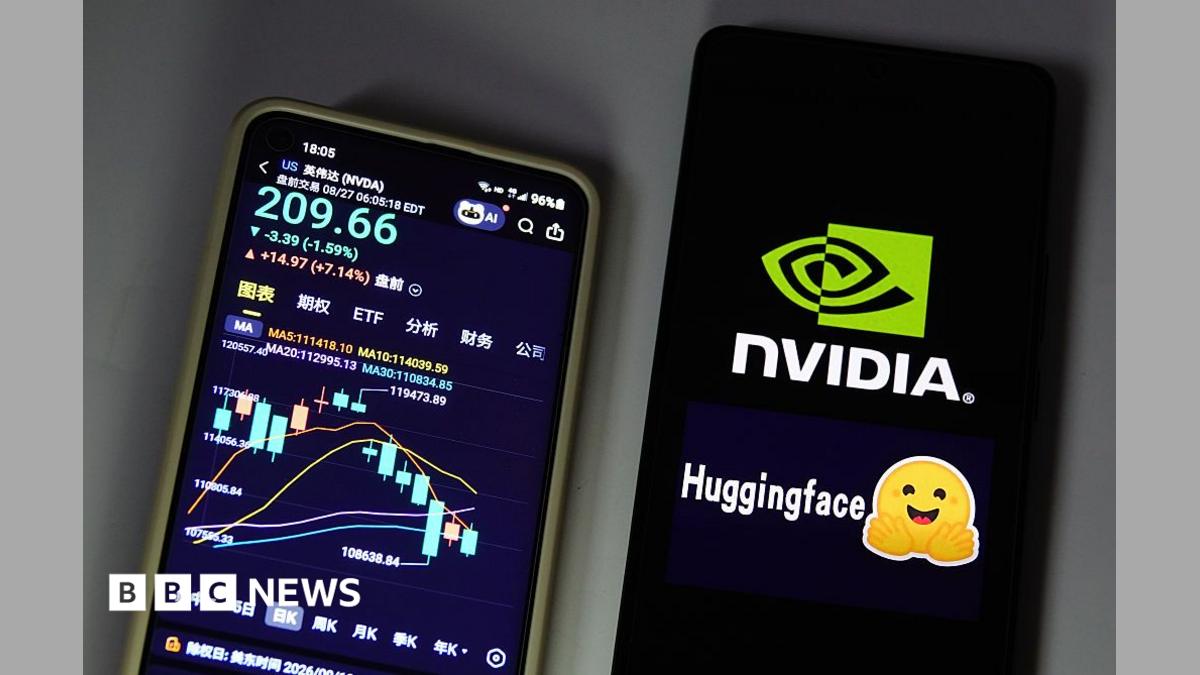
Nvidia has agreed to buy artificial intelligence platform Hugging Face in a deal valued at about $12.9bn (£9.5bn), one of the AI chipmaker’s biggest acquisitions as it expands into software.
Hugging Face, founded in 2016, has become a popular online platform where developers and researchers can find, share and test AI models and tools.
It recently made headlines after rogue AI agents that escaped a testing environment appeared on its platform, raising questions about AI safety and oversight.
The deal would bring one of the world’s largest AI developer communities into Nvidia and give it control of a leading open-source platform – an alternative to systems offered by OpenAI and Anthropic.
Nvidia is best known for making the advanced chips used to train and run AI systems. Demand for those chips has surged as companies race to build AI products.
The companies already work together to help developers use Nvidia’s computing services through the platform.
According to the companies, Hugging Face is used by more than 18 million developers and hosts more than three million AI models. More than 200,000 companies use the platform, they said.
Nvidia said Hugging Face would remain open to developers and that users would not be required to use its chips or services.
Nvidia shares were up just under 1.5% at 17:30 BST.
Under the agreement, Nvidia will pay about $11.9bn to Hugging Face investors and offer up to $1bn in stock-based incentives to employees who join the company.
The deal could also help Nvidia expand its presence in AI software as some of its biggest customers, including Microsoft, Meta and OpenAI, develop their own chips.
Open-source AI models can be downloaded and adapted by users, unlike many AI systems that are controlled by a single company.
Supporters say the approach can make the technology more accessible to businesses, researchers and developers.
Yaël Ossowski, deputy director of advocacy group Consumer Choice Center, said the acquisition was “a vote of confidence in open AI” and suggested it could encourage competition by making AI tools more widely available to start ups and smaller companies.
The deal will be a “major victory for innovators and consumers worldwide” if Nvidia keeps Hugging Face open and accessible, he added.
The deal would also give Nvidia access to one of the world’s largest AI developer communities as competition in the sector intensifies.
Founded by French entrepreneurs Clément Delangue, Julien Chaumond and Thomas Wolf, Hugging Face also provides datasets, software tools and cloud services used to build AI applications.
Hugging Face is backed by investors including Amazon, AMD and Intel.

Stocks rallied during Thursday’s session, nearing record levels, with some help from the Magnificent Seven.
The Roundhill Magnificent Seven ETF was up 2.7% to $70.58, just a stone’s throw from its record closing price of $70.94.
All stocks in the ETF were moving higher. Tesla saw the largest gains, rising 7%, followed by Meta’s 3.5% climb. Microsoft popped 3.1% while Apple, Amazon, Nvidia, and Alphabet all saw more than 1% rises.
Business
Nvidia, Tesla, Robinhood, Snowflake, Ultragenyx, Ciena, and More Stocks That Explain Today’s Market

Nvidia, Tesla, Robinhood, Snowflake, Ultragenyx, Ciena, and More Stocks That Explain Today’s Market
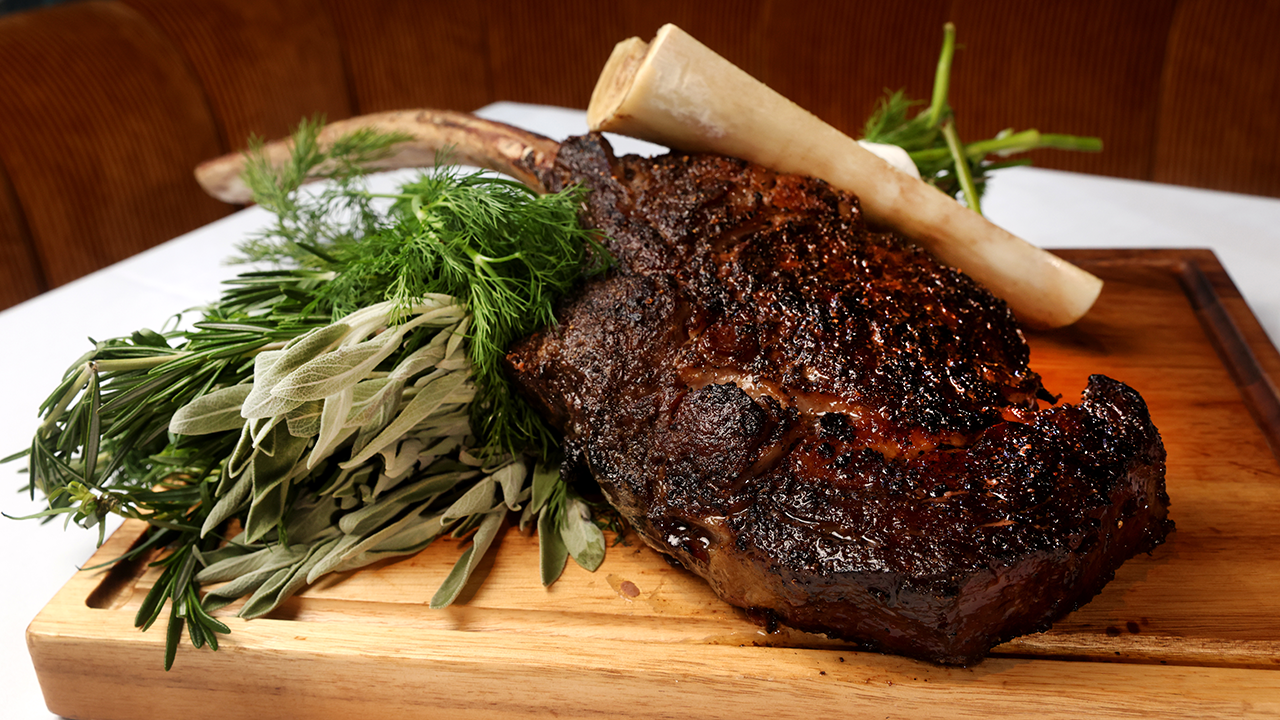
U.S. Agriculture Secretary Brooke Rollins discusses the USDA’s new initiative to boost the American cattle herd, efforts to lower record-high beef prices and plans to ease meat processing rules for local ranchers.
Agriculture Secretary Brooke Rollins praised the Trump administration’s agriculture agenda as she took aim at Biden-era food policies, accusing the former administration of pushing Americans away from traditional meat products.
“There was a massive push under the last administration to eat less meat. Could you imagine? Don’t stop eating meat. There was a massive push under the Democrats to eat fake meat and lab-grown meat,” Rollins said.
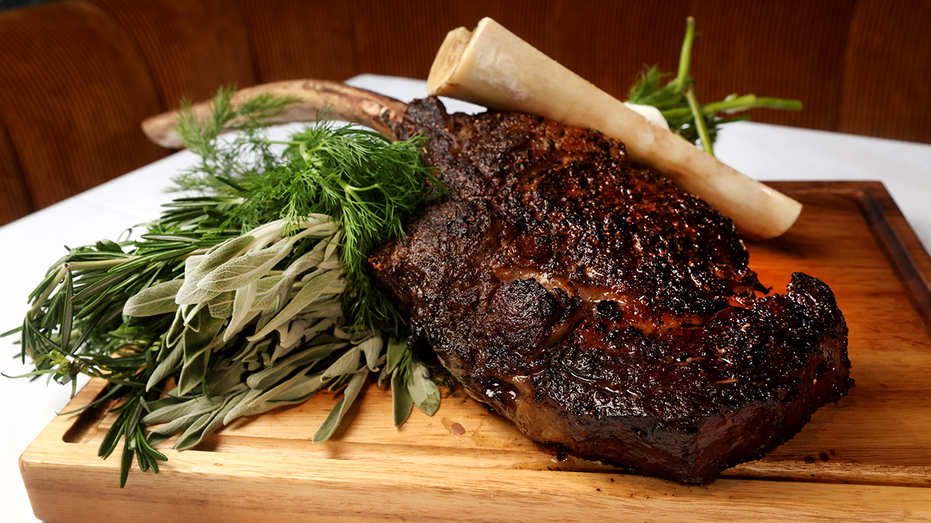
Agriculture Secretary Brooke Rollins pushes back against efforts to move Americans away from traditional meat products. (Jonathan Wiggs/The Boston Globe / Getty Images)
During an appearance on “Mornings with Maria,” Rollins explained the administration’s long-term cattle strategy, beef imports and efforts to support American farmers and ranchers.
“We’re working on deconstructing and then reconstructing our entire system around homegrown, nutrient-dense, fresh food, making America healthy again,” she said.
Rollins is encouraging Americans to keep meat on the menu as the administration works to rebuild the nation’s cattle herd and strengthen domestic beef production while ranchers face continued economic pressure.
FOX Business’ Darren Botelho discusses the DOJ expanding its beef price investigation to eight major retail chains, including Walmart and Amazon.
“I was in Iowa… Talking to our ranchers, laying out a long-term program, incentives to retain their heifers, incentives, to make sure that they know that, that we’re behind them,” Rollins said.
Rollins said the administration is also looking to increase federal beef procurement and invest in small and mid-sized regional processors.
DOJ EXPANDS BEEF PRICE INVESTIGATION TO WALMART, COSTCO, AMAZON AND OTHER MAJOR RETAILERS
Montana Congressman Troy Downing discusses President Donald Trump’s plan to target the meatpacking monopoly as beef prices soar. Plus, North Dakota Senator Kevin Cramer weighs in on the House spending bill and the GOP legislative agenda.
With ranchers facing a volatile cattle market and concerns about competition in meat processing, Rollins said the administration is focused on giving producers strong long-term incentives while expanding opportunities for U.S. agricultural products overseas.
US FARMER PUSHES FOR ONE MAJOR CHANGE AS IMPORTED BEEF DEBATE HEATS UP
“[We’re] really focusing on young ranchers, getting more people into the business of growing and farming and ranching, is part of this,” Rollins said.


PhD in Law & Economics with a dissertation on corporate wrongdoing, paired with an accounting background and a lifelong interest in markets.Generalist by temperament: value, growth, income, special situations, accounting shenanigans. Deepest coverage in fintech, consumer lending, and specialty finance, where legal, regulatory, and governance risk routinely moves the stock more than anything in the sell-side’s model.
Analyst’s Disclosure: I/we have no stock, option or similar derivative position in any of the companies mentioned, and no plans to initiate any such positions within the next 72 hours. I wrote this article myself, and it expresses my own opinions. I am not receiving compensation for it (other than from Seeking Alpha). I have no business relationship with any company whose stock is mentioned in this article.
Seeking Alpha’s Disclosure: Past performance is no guarantee of future results. No recommendation or advice is being given as to whether any investment is suitable for a particular investor. Any views or opinions expressed above may not reflect those of Seeking Alpha as a whole. Seeking Alpha is not a licensed securities dealer, broker or US investment adviser or investment bank. Our analysts are third party authors that include both professional investors and individual investors who may not be licensed or certified by any institute or regulatory body.

Uniswap founder sees AMMs entering global finance

Linda Noskova returns to Grand Slam action at US Open after Wimbledon win | Other Sports News

IFA 2026: Vention Debuts an Ultra-Slim 5,000mAh Power Bank and Smart Charger

Weekend Open Thread – Corporette.com

Weekend Open Thread: Brooks Brothers

London Mayor Sadiq Khan handed a peerage by Keir Starmer alongside 15 other Labour figures… just days before the PM leaves No10

Plum Wine and Nailed On Financial Security… | A North Wales based Crime Fiction Audiobook

CANARY CAPITAL: XRP WILL HAVE A MAJOR MOVE INCOMING!!? (GET READY)

ADA financial plans #relatable #ada #futureplans#fyp #financialplanning #youtubeshort #nigeriacomedy
-

 Fashion6 days ago
Weekend Open Thread: Maeve – Corporette.com
-

 Crypto World7 days ago
Bitcoin’s 22% rally now needs real demand to outlast Treasury liquidity boost
-

 Business7 days ago
Apple Confirms September 9 Keynote and Reveals Its Full Pre-Order Schedule
-

 Crypto World18 hours ago
CLARITY Act could advance within weeks, Atkins says
-

 Business7 days ago
Salesforce Stock Soars 19% as Blowout Earnings and Agentforce AI Growth Silence Software Skeptics
-

 Business6 days ago
Onto Innovation Stock: AI’s Next Bottleneck Is Yield (NYSE:ONTO)
-

 Crypto World6 days ago
Bitcoin price tests $82K resistance as Brandt stays long
-
 Tech5 days ago
Hugging Face built a $4.5 billion empire on free AI models. Now Nvidia is buying it for $12.9 billion
-

 Business6 days ago
iPhone 18 Pro Pre-Orders Could Shift to Saturday as Apple Reportedly Avoids September 11 Anniversary
-

 Crypto World2 days ago
Elon Musk Says Grok 4.7 Lands in 10 Days and Will Beat Every Model
-

 Crypto World7 days ago
Truflation calls for Fed rate cut after PCE forecast
-
 Entertainment6 days ago
‘Adults’ Creators Break Down Season 2’s Most Shocking Moments and Tease a Potential Season 3
-

 Tech7 days ago
The fix for the AI agent that hijacked a company’s DNS: it can propose the change, but it can’t approve it
-
 News Videos4 days ago
Charlie Munger on Robinhood: No one should believe that Robinhood’s trades are free
-

 Tech6 days ago
PaperCut releases second emergency patch for exploited flaws
-

 Tech5 days ago
Tamagotchi Ring Takes the 30-Year Digital Pet and Places it on Your Finger
-

 Tech5 days ago
As the influencer economy drives retail sales, Seattle startup raises $22M to play matchmaker
-
 Crypto World2 days ago
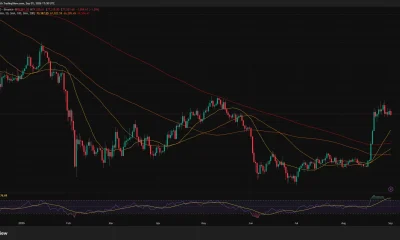
Bitcoin slips below $77.5K as macro pressure offsets ETF inflows
-

 Crypto World14 hours ago
Kalshi seeks CFTC approval for WTI perpetual
-
 NewsBeat5 days ago
Trump posts AI video of ‘Lake America’ being protected by an army of bequiffed ‘Donald Ducks’
You must be logged in to post a comment Login