










Connect with us
DAPA Banner
DAPA Coin
DAPA
COIN PAYMENT ASSET
PRIVACY · BLOCKDAG · HOMOMORPHIC ENCRYPTION · RUST
ElGamal Encrypted MINE DAPA
🚫 GENESIS SOLD OUT
DAPAPAY COMING

Business

How to Solve Puzzle Number 1123 Fast

Published

on

Nancy Guthrie

The New York Times’ Connections puzzle returned Wednesday with its 1,123rd edition, a grid that puzzle trackers widely described as one of the trickier challenges of the week, built around a deliberate web of overlapping themes involving woodworking, literature, guitar technique and classic phrase completion.

Connections, edited by Wyna Liu, asks players to sort 16 words into four groups of four based on a shared theme, with categories color-coded by difficulty from yellow, the easiest, through green and blue, up to purple, typically the most conceptually demanding. Players are allowed four incorrect guesses before the puzzle ends, and the game has grown into one of the Times’ most widely played daily offerings, trailing only Wordle in overall popularity among the publication’s expanding suite of word and logic games.

Wednesday’s grid featured the following 16 words: GRATE, PLANE, SHAVE, SLIVER, DRIFT, PLOT, THEME, THREAD, PICK, PLUCK, STRUM, TAP, CARDS, LORDS, WAX and WORSHIP. According to multiple outlets that covered the puzzle, the grid was constructed with an unusually high density of deliberate misdirection, with several words plausibly fitting more than one category depending on how a solver initially interpreted them.

For those seeking a nudge before diving into the full solution, outlets circulated general hints without revealing the specific groupings. The yellow category was described as referring to verbs or tools that produce very thin pieces of something. The green category was hinted at as words describing a recurring or central idea within a work, often in a literary or narrative sense. The blue category was described as four different ways to make sound on a stringed instrument. The purple category, as usual the trickiest of the four, was hinted at as words that commonly follow the phrase “House of.”

Advertisement

For players ready for the complete answers, puzzle number 1,123 broke down as follows.

The yellow category, titled “Cut Into Thin Pieces,” included GRATE, PLANE, SHAVE and SLIVER. Each word describes an action or tool associated with reducing something into thin slices or shavings, whether grating cheese, planing wood, shaving a surface, or slivering an ingredient. Puzzle commentary described this group as a relatively accessible entry point, with GRATE in particular helping many solvers quickly recognize the underlying pattern.

The green category, titled “Motif,” grouped together DRIFT, PLOT, THEME and THREAD. Each of these words can describe a recurring idea, narrative element or central concept running through a work of literature, film or other storytelling medium. Puzzle trackers flagged this category as particularly deceptive, noting that THREAD in particular tempts solvers to interpret it literally, in a sewing or textile sense, rather than recognizing its figurative use to describe a narrative thread running through a story. Similarly, PLOT can easily mislead players toward associations with land, gardening or scheming rather than its narrative meaning, unless a solver has already identified THEME as part of the same group.

The blue category, “Guitar-Playing Techniques,” included PICK, PLUCK, STRUM and TAP. Each word describes a distinct method of producing sound on a stringed instrument. Commentary on the puzzle noted that PLANE and TAP in particular served as effective red herrings elsewhere in the grid, with PLANE misleading solvers toward an aircraft association rather than its correct placement in the yellow “thin pieces” category, and TAP tempting players to think of a faucet or a light touch rather than its correct guitar-technique meaning.

Advertisement

The purple category, the day’s most difficult, was titled “House of ___” and featured CARDS, LORDS, WAX and WORSHIP. Each word completes a familiar two-word phrase when paired with “House of”: House of Cards, House of Lords, House of Wax, and House of Worship. Commentary on the puzzle noted that CARDS and LORDS tend to be recognized relatively quickly given their strong association with well-known phrases, while WAX and WORSHIP proved less immediately obvious unless a solver was already actively thinking in terms of phrase completion.

One columnist covering the puzzle for TechRadar described completing the grid with a single mistake, explaining that they had initially grouped THREAD, SHAVE, WAX and PLUCK together under the mistaken assumption that all four related to methods of hair removal, a red herring the columnist described as particularly cleverly constructed given how naturally those four words fit that alternate theme. After recognizing the error, the columnist noted they were able to solve the remaining three categories with relative ease, though they admitted some hesitation over correctly placing TAP within the guitar-technique group.

Puzzle trackers broadly agreed that Wednesday’s grid rewarded patience over speed, given the sheer number of words capable of plausibly fitting into more than one category. Coverage from Eastern Herald noted that several words appeared to fit woodworking, literary or musical themes simultaneously, making the puzzle one of the trickier entries of the week even for experienced solvers accustomed to spotting the game’s typical patterns of misdirection.

According to general strategy guidance the Times has offered for the game, players tend to find the most success by first identifying categories that feel clearly and unambiguously defined, since building early momentum with confident correct guesses can help maintain focus heading into trickier groupings. Solvers are also encouraged to consider alternate or figurative meanings of individual words, since Connections puzzles are deliberately constructed to include significant overlap between categories, a pattern once again on full display in Wednesday’s grid.

Advertisement

Connections continues to draw a devoted daily following since its official launch in June 2023, with new puzzles released at midnight in each player’s local time zone. That schedule means solvers around the world are often working through different numbered editions of the game at any given moment, a quirk that has become a familiar part of the daily routine for the puzzle’s global player base.

With Wednesday’s puzzle now resolved, attention turns to Thursday’s edition, puzzle number 1,124, set to go live at midnight in each player’s respective time zone. As with previous days, puzzle trackers and columnists covering the game are expected to publish a fresh round of hints and eventual answers for that edition as players around the world continue their daily routines of guessing, deducing and working to preserve their personal Connections solving streaks.

Continue Reading
Click to comment

You must be logged in to post a comment Login

Leave a Reply

Business

Nestle backs new regenerative ag initiative

Published

on

Nestle backs new regenerative ag initiative

Already supported by more than 40 other food, agriculture businesses.

Continue Reading

Business

currency desks and gift wrap to close

Published

on

currency desks and gift wrap to close

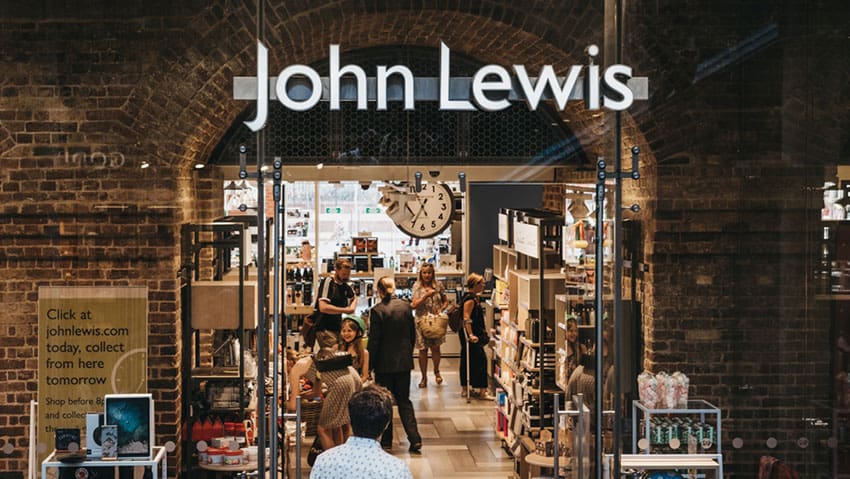
Around 200 jobs are at risk at John Lewis as the retailer prepares to close its in-store foreign exchange desks and dedicated gift wrapping areas, a signal of how quickly digital payments are hollowing out once-dependable high street services.

The employee-owned retailer is consulting on the plans, and no final decision has been made. If approved, the redundancies would take effect in the autumn.

The bureau de change closures will affect 30 shops, while dedicated gift wrapping areas will go in 25. Gift wrapping will not vanish entirely: the service will move to the tills, a change John Lewis says will make it more accessible.

The retailer said demand for in-store currency exchange had fallen as customers increasingly order foreign currency online and collect it in store, while others skip cash altogether and rely on credit cards or digital payments when abroad.

“As we focus on modernising this proposition to meet our customers’ changing needs, we’re proposing to close our in-store foreign exchange bureaus as well as our gift wrapping service,” a spokesperson said.

Advertisement

“As a result, we’re regretfully consulting with partners who currently deliver these services.”

The retailer added that it would support affected staff “throughout the consultation process and support redeployment where possible”.

For business owners, the decision holds a familiar lesson: when customers quietly stop using a service, sentiment is a poor reason to keep staffing it. If a retailer with John Lewis’s attachment to tradition is prepared to retire its gift wrapping counters, smaller firms clinging to loss-making offerings for loyalty’s sake may want to look again at their own numbers.

The episode is also a reminder of the process involved. Any employer proposing 20 or more redundancies at a single establishment within 90 days must follow collective consultation rules, with consultation starting at least 30 days before the first dismissal takes effect. Get it wrong and the penalties are steep, so SMEs contemplating restructuring should not treat consultation as a formality.

Advertisement

The proposals are the latest in a series of changes under chairman Jason Tarry, who took over in 2024 after a tough few years marked by job cuts and store closures, and a wider cull that has seen high street job losses climb steeply across the sector.

The partnership closed its housebuilding arm in February, a move that also led to some job losses. Yet in March it reinstated its staff bonus for the first time in four years as profits and sales improved. The bonus had been scrapped during the Covid pandemic, the first suspension since 1953.

John Lewis’s latest full-year results showed a pre-tax loss of £21m, driven by £120m of one-off costs relating mainly to write-downs on ageing tech systems. Underlying profits rose 6 per cent to £134m, while sales across the business climbed 5 per cent to £13.4bn.

Waitrose continues to outpace the department stores. Supermarket sales grew 7 per cent to £8.5bn in the year to the end of January, against a 3 per cent rise to £4.9bn at John Lewis.

Advertisement

The direction of travel is clear enough: fewer services that customers have drifted away from, and more investment in the in-store experiences, such as its expanding café and restaurant offering, that still pull people through the doors.


Amy Ingham

Amy is a newly qualified journalist specialising in business journalism at Business Matters with responsibility for news content for what is now the UK’s largest print and online source of current business news.

Advertisement
Continue Reading

Business

Zuber Issa buys 85 Prax forecourts for EG On The Move

Published

on

Zuber Issa buys 85 Prax forecourts for EG On The Move

Zuber Issa has agreed to buy 85 petrol stations from the collapsed Prax Group, taking his three-year-old EG On The Move business to 285 forecourts and confirming that Britain’s most prolific forecourt entrepreneur is building a second fuel empire at speed.

The billionaire, who founded EG On The Move as a separate business in 2023, has already acquired EG Group’s UK operation and 98 forecourts from Applegreen. The Prax deal is the latest in that run of rapid acquisitions, and it will not surprise anyone who has watched his career that he is buying while others are selling.

For the small business owners who actually run the sites, the change of ownership is the detail that matters most. The 85 forecourts will continue to be operated by independent commission managers, with EG On The Move pledging further investment in food-to-go, electric vehicle charging, convenience retail and customer facilities.

Zuber Issa said: “We look forward to working alongside each operator to build on the strengths of their businesses, helping make every site more effective, more competitive and even more attractive to customers.”

The sites come out of one of the most spectacular corporate collapses the UK fuel sector has seen. Prax Group, founded by Sanjeev Kumar Soosaipillai and his wife Arani Soosaipillai, unravelled last year under mounting financial pressure, pushing several key companies into administration and triggering one of the biggest failures in the UK fuel supply chain in recent years.

Advertisement

The company owned the Lindsey oil refinery, at one point supplied about a tenth of Britain’s fuel, and operated forecourts under the TotalEnergies and Harvest Energy brands. Administrators have since alleged widespread financial irregularities, which Mr Soosaipillai disputes, and the conduct of the former directors remains the subject of an ongoing Insolvency Service investigation.

For entrepreneurs, the contrast between buyer and seller is instructive. Zuber Issa, 54, and his brother Mohsin bought a single garage in Bury, Greater Manchester, in 2001 and built EG Group into one of Europe’s largest petrol station operators. The brothers bought Asda in 2020 but have since split their business interests, with Zuber selling his stake in the supermarket in 2024 and turning his attention to roadside retail, alongside side ventures such as the revival of the Duckhams motor oil brand.

His renewed bet on forecourts comes even as electric and plug-in hybrid cars outsell petrol-only models in the UK for the first time. The answer, on this evidence, is to make the forecourt about far more than fuel. EG On The Move says it will work with commission operators to improve site performance while investing in grocery ranges, foodservice brands, car washes and rapid EV charging across the newly acquired network.

The timing is hardly accidental. The former EG Group forecourt business, now operating under the Cumberland Farms name, has confidentially filed for a New York stock market listing that could value it at about $9bn (£6.75bn), a move long trailed by the brothers. The listing is expected to crystallise shareholdings worth around $2.3bn each for the Issa brothers, cementing their status among Britain’s wealthiest entrepreneurs.

Advertisement

The transaction was advised by Cleary Gottlieb, PwC and the company’s banking partners.

For the UK’s independent forecourt operators, the lesson is a familiar one: when a major supplier fails, consolidators move quickly, and the businesses that thrive are those that have diversified beyond the pump.


Jamie Young

Jamie Young

Jamie is Senior Reporter at Business Matters, bringing over a decade of experience in UK SME business reporting.
Jamie holds a degree in Business Administration and regularly participates in industry conferences and workshops.

When not reporting on the latest business developments, Jamie is passionate about mentoring up-and-coming journalists and entrepreneurs to inspire the next generation of business leaders.

Advertisement

Continue Reading

Business

How to find lost bank accounts

Published

on

How to find lost bank accounts

How to find lost bank accounts

Continue Reading

Business

Delta launches ‘basic business’ without lounge access, seat selection

Published

on

Delta launches 'basic business' without lounge access, seat selection

A Delta aircraft taxis to Terminal A shortly before a deep orange winter sunset at Boston Logan International Airport in Boston, MA, on Dec. 22, 2025.

Austin DeSisto | Nurphoto | Getty Images

Delta Air Lines is dividing up the front of the plane into even smaller groups, offering a new “basic” fare for business and first classes that comes without perks like free seat selection and airport lounge access.

Advertisement

The carrier is following United Airlines, which made a similar change earlier this year to its Polaris long-haul business class and other higher-tier cabins. Carriers are seeking to maximize what they can get out of high-spending customers, whose resilient travel demand has helped bolster the industry.

Basic tickets in the Delta One lie-flat, long-haul cabin will go by the new name Basic Business, the airline said Wednesday. There’s a similar basic product for first class, which is more common on shorter-haul routes and in premium economy.

That means customers on those tickets will get seats assigned at check-in, earn fewer miles than more expensive options, only be allowed to make changes or cancellations for a fee and do not have the option for same-day standby or confirmed flight changes.

Delta A350 fleet renderings with the next-generation Delta One suite cabin.

Advertisement

Courtesy: Delta

The seats go on sale Wednesday for flights starting in September and are only available in select markets. Delta didn’t immediately say which ones would have the basic offering.

Delta, the country’s most profitable airline, has been working on these changes for more than a year. Delta’s former President Glen Hauenstein said on an earnings call last July that the “segmentation that we’ve done in main cabin is kind of the template that we’re going to bring to all of our premium cabins over time because different people have different needs.”

The Atlanta-based carrier reports second-quarter results on Friday.

Advertisement

Read more about airlines’ race to win over big spenders

Choose CNBC as your preferred source on Google and never miss a moment from the most trusted name in business news.
Continue Reading

Business

Gas prices jump 5% as Trump says Iran ceasefire is over

Published

on

Gas prices jump 5% as Trump says Iran ceasefire is over

British businesses are staring at another energy cost shock after wholesale gas prices jumped around 5 per cent, triggered by Donald Trump declaring the ceasefire with Iran “over” following a fresh wave of US strikes and renewed attacks on tankers in the strait of Hormuz.

The benchmark Dutch front-month gas contract at the TTF hub rose €2.424 to €49 per megawatt hour, touching €49.76 at one stage, its highest level since 11 June. The British front-month contract climbed 6 pence to 116.75p per therm.

The trigger was Trump’s declaration that the memorandum of understanding intended to end the conflict with Iran was “over”, after both sides resumed hostilities. The US launched a new round of strikes and Tehran hit American bases in the Gulf, while several tankers were attacked in the strait of Hormuz on Tuesday.

For UK firms, the timing is grim. Wholesale energy costs had been easing since mid-June, and oil had only recently slid back to pre-war levels as shipping cautiously returned to the waterway. That recovery now looks to have been unwound in a matter of hours.

Why the strait matters to your energy bill

About a fifth of the world’s liquefied natural gas supplies

Advertisement

typically pass through the strait of Hormuz. Britain does not buy much LNG directly from the Gulf, but gas is priced on a global market, so any squeeze on Qatari cargoes pushes up the wholesale prices that feed through to the fixed and variable contracts UK businesses sign.

Tuesday’s attacks underlined how fragile the reopening was. A Qatari LNG tanker was at risk of exploding and a Saudi crude tanker was damaged near the strait, prompting maritime authorities to raise the threat level for vessels transiting the waterway to severe. The Qatari tanker is awaiting salvage once a fire on board has been extinguished.

Analysts at Engie EnergyScan said: “The attacks, including a Qatari LNG carrier, reignited supply risk concerns, prompting a swift risk premium rebuild as shipping traffic through the strait remains well below normal.”

An October deadline

The International Energy Agency warned on Tuesday that if the strait is not fully reopened before October, global LNG supply could record its first annual decline since 2012. That would land just as the northern hemisphere heads into winter, when demand, and prices, are at their most unforgiving.

Advertisement

That is an uncomfortable prospect for a country already carrying the highest electricity costs in the G7, where gas typically sets the price of power. Every sustained move higher in the wholesale gas market flows through to the electricity bills of manufacturers, hospitality operators and high street firms alike.

What business owners should take from this

The lesson of the past week is that the energy market will reprice violently on a single statement from the White House, in either direction. Firms that assumed the worst was over when US strikes first rattled the ceasefire in May have been caught out twice.

For owners weighing up energy contracts, that argues for caution. Those on variable or out-of-contract rates are the most exposed to further spikes, while anyone banking on a calm autumn to fix at lower prices may find the window has already closed. Stress-testing cash flow against another winter of elevated gas prices is no longer a pessimist’s exercise. It is simply prudent planning.


Jamie Young

Jamie Young

Jamie is Senior Reporter at Business Matters, bringing over a decade of experience in UK SME business reporting.
Jamie holds a degree in Business Administration and regularly participates in industry conferences and workshops.

When not reporting on the latest business developments, Jamie is passionate about mentoring up-and-coming journalists and entrepreneurs to inspire the next generation of business leaders.

Advertisement

Continue Reading

Business

Valero Energy Corporation stock hits all-time high at 274.98 USD

Published

on


Valero Energy Corporation stock hits all-time high at 274.98 USD

Continue Reading

Business

Realtor.com forecast sees home price growth cooling as buyers gain ground in second half of 2026

Published

on

Mortgage rates fall to 5.98%: Freddie Mac

Housing affordability is expected to improve with the pace of home price growth slowing to a rate that’s lower than inflation, a new report finds.

Realtor.com on Wednesday released a midyear update to its 2026 housing market forecast that estimates home price growth will slow to 1.2% this year, a rate that’s slower than the original forecast for the year and is slower than the pace of inflation. That means home prices would be effectively declining in real, inflation-adjusted terms.

Advertisement

“Against a backdrop of both familiar and new challenges, the economy has proved resilient. As a result, the first half of 2026 delivered stability more than momentum in the housing market,” said Realtor.com senior economist Danielle Hale.

“The housing market is inching forward as sellers reset expectations, price growth cools, and buyers gain more negotiating power,” Hale said. “Looking ahead, we expect momentum to build through the second half of the year as more sidelined buyers and sellers find terms that will work for both sides.”

WHY AMERICAN ARE FLOCKING TO THIS FLORIDA RETIREMENT HOT SPOT

People outside a home.

A real estate agent and a prospective buyer stand outside a home during an open house in Seattle, Washington. (David Ryder/Bloomberg via Getty Images)

Mortgage rates are projected to hold steady at 6.3%, the same level they were at when 2025 ended, as a resurgence of inflation caused by the Iran war undercut the prospects of interest cuts in the first of the year that could’ve helped mortgage rates decline.

Advertisement

The slower pace of home price growth is expected to help lower monthly mortgage payments on a year-over-year basis, which the updated forecast suggests will decline 1.9% this year – more than the initial projection of a 1.3% dip.

GOVERNMENT REGULATIONS ADD NEARLY $132K TO COST OF NEW HOME, BUILDERS SAY

A home for sale in California.

Existing home sales are expected to tick higher from a year ago. (Paul Bersebach/MediaNews Group/Orange County Register via Getty Images)

By contrast, the average monthly mortgage payment rose 1.9% in 2025 and was up 7% on average from 2013 to 2019.

Existing home sales are expected to see modest improvement from a year ago, rising from 4.06 million in 2025 to an estimated 4.1 million this year – though the growth is projected to be lower than the original forecast of 4.13 million homes sold in 2026.

Advertisement

“Buyers and sellers have shown a lot of staying power this year,” Hale said. “This is a market where people are adjusting and showing up rather than giving up. Sellers are meeting the market with more realistic asking prices, which is helping deals get done.”

RECORD DECLINE IN HOME ASKING PRICES OFFERS BUYERS AN AFFORDABILITY BOOST

Homes under construction with mountains in the background.

New home construction has pulled back in some parts of the country, though the Northeast and Midwest continue to face shortages. (Mario Tama/Getty Images)

Inventory of existing homes for sale is also expected to grow at a slower rate than previously anticipated, rising 3.6% year over year rather than the 8.9% gain projected under Realtor.com‘s initial forecast for this year.

New home sales have softened as mortgage rate buydowns and price cuts that helped encourage buyers to approach builders have lost their pull amid the stabilization of prices.

Advertisement

GET FOX BUSINESS ON THE GO BY CLICKING HERE

Builders have pulled back on permits and new home starts the most sharply in the South and West, which had driven much of the national construction and have recovered more fully from supply shortages.

Across the country, the homebuilding deficit remains at an estimated 4 million homes, with the biggest opportunity in the Northeast and Midwest, which face the most significant shortages.

Advertisement
Continue Reading

Business

TSG swoops for Berkshire media specialist in multimillion-pound deal

Published

on

Business Live

‘This acquisition gives us the scale and wider expertise to do more for customers’

TSG has acquired Creative Computing Solutions. Left to right: Swapnil Deore (Chief Operating Officer at TSG), Justin Farmiloe (CEO of Creative Computing Solutions moving into a Chief Technology Officer role at TSG) and Steven Lynn (Chief Financial Officer at TSG).

TSG has acquired Creative Computing Solutions. Left to right: Swapnil Deore (Chief Operating Officer at TSG), Justin Farmiloe (CEO of Creative Computing Solutions moving into a Chief Technology Officer role at TSG) and Steven Lynn (Chief Financial Officer at TSG).(Image: TSG)

Tyneside IT service provider Technology Services Group (TSG) has snapped up a Berkshire business in a multimillion-pound deal.

Team Valley-based TSG, a Microsoft Solution Partner focused on SMEs, has acquired Creative Computing Solutions, an established Microsoft Dynamics 365 Business Central partner which offers a particular specialism in the production and media sectors.

Advertisement

Based in Maidenhead, Creative Computing Solutions has around 100 customers and has clients including Hat Trick Productions, whose credits include programmes such as Middlesbrough-based Smoggie Queens, Mastermind, Derry Girls and Have I Got News For You.

The move will see Creative Computing Solutions’ existing customers and employees benefit from TSG’s broader managed IT services capability, expertise, and resources as a leading Microsoft partner.

Creative Computing Solutions’ CEO Justin Farmiloe steps into the TSG management team as CTO as part of the transaction, while the firm’s existing contracts, support arrangements, and the intellectual property of all bespoke customer solutions will remain unchanged.

Customers will continue to benefit from the expertise of the management team and employees they know to ensure a seamless transition and continuity across day-to-day operations. At the same time, customers will gain access to TSG’s wider expertise and services across cloud, infrastructure, business applications, managed IT services, cyber security, data and AI.

Advertisement

The multimillion-pound deal forms part of TSG’s continued growth plans, following its successful management buyout on the back of significant investment from Pictet Alternative Advisors. It marks the third acquisition that TSG has completed following the MBO in July 2024.

The MBO saw CEO Rory McKeand and his leadership team join forces with Pictet in the deal, which marked an exit for founders Sir Graham Wylie and executive chairman David Stonehouse.

TSG now employs around 300 people, delivering customer support to businesses using Microsoft Dynamics, Sage and Pegasus business applications, and broader Microsoft technologies in industries including professional services, healthcare, food and beverage, education and manufacturing. Customers include the likes of Perspective Financial, Day Lewis Pharmacies and McQueen’s Dairies.

Like this story? For more news from the tech sector, visit our dedicated page for the latest news and analysis here.

Advertisement

The acquisition of Creative Computing Solutions is set to double TSG’s Business Central practice, increase the company’s headcount by around 8%, and boost its technical expertise, specialist sector knowledge and Microsoft solutions capability.

Rory McKeand, CEO of TSG, said: “For us, Creative Computing Solutions was a natural fit, offering an established Business Central customer base, the technical expertise our partners expect, and complementary capabilities that will further enhance our offering.

“The most important thing for us is that Creative Computing Solutions’ customers keep what already works. They will continue to have access to the people, support contacts and specialist Business Central expertise they know, while gaining the additional depth TSG can provide across managed IT, cloud, cyber security, business applications, data and AI. They will also benefit from TSG Academy – the most-used Microsoft training platform in the UK, which is absolutely free to our customers.”

Justin Farmiloe, chief technology officer at TSG (formerly CEO of Creative Computing Solutions), said: “Creative Computing Solutions has built its reputation on long-term customer relationships, practical support and deep Business Central expertise. In choosing TSG, it was important to find a partner that understood our customers, our people and the specialist capability we have developed.

Advertisement

“This acquisition gives us the scale and wider expertise to do more for customers, while protecting the relationships and support they trust.”

Continue Reading

Business

IMF edges 2026 global growth forecast lower to 3%, sees rebound in 2027

Published

on


IMF edges 2026 global growth forecast lower to 3%, sees rebound in 2027

Continue Reading

Trending

Copyright © 2025