
Business
HSBC cuts Carlsberg stock price target on execution concerns



Business
Ukraine Weighs Legalizing Pornography To Fund 30,000 War Drones, Curb Police Corruption Amid Fiscal Strain
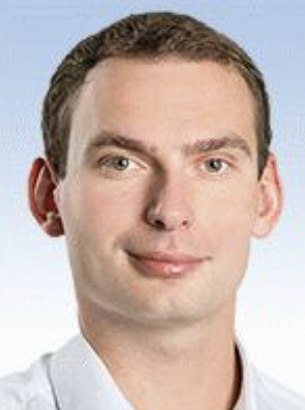

KYIV, Ukraine — Ukrainian lawmakers are pushing to legalize pornography as a way to raise tax revenue for the country’s war effort against Russia, with proponents arguing the move could generate enough money annually to purchase roughly 30,000 military drones while also cutting off a source of police corruption tied to the industry’s current underground status.
Under Ukrainian law, the production, distribution and possession of pornographic content is illegal, carrying potential prison sentences of up to seven years. Despite that legal prohibition, the adult content industry, driven largely by platforms such as OnlyFans, has grown into a significant economic activity within the country. According to figures cited by The Wall Street Journal, 7,900 Ukrainians earned more than $131 million through OnlyFans in 2023 alone.
Ukrainian tax authorities have increasingly sought to collect revenue from that activity in recent years, obtaining user information directly from OnlyFans and requiring content creators to declare and pay taxes on their earnings. That approach has created what critics describe as a legal contradiction: creators who comply with tax obligations risk simultaneously exposing themselves to criminal prosecution for producing content that remains illegal under Ukrainian law.
Yaroslav Zhelezniak, an opposition lawmaker who chairs Ukraine’s parliamentary finance committee and co-authored legislation to decriminalize the industry, has argued that legalization could generate as much as $25 million in annual tax revenue.
“Porn today is mostly online platforms, and those who earn on these platforms officially pay taxes. That’s millions of dollars going to the armed forces,” Zhelezniak said.
Zhelezniak has pointed out that while $25 million represents a relatively modest sum compared with the roughly $120 billion Ukraine says it needs annually for defense spending, the amount would still be sufficient to fund the purchase of approximately 30,000 drones, a meaningful contribution to the country’s ongoing military procurement needs.
The legislation co-sponsored by Zhelezniak and other lawmakers passed its first reading in Ukraine’s parliament, the Verkhovna Rada, in July, and is currently awaiting a second reading. The proposed bill specifically seeks to decriminalize only the creation and storage of pornographic content between consenting adults, while maintaining criminal liability for offenses including revenge pornography, deepfake pornography, extreme content, child sexual abuse material and distribution to minors.
“We’re simply changing Article 301 of the Criminal Code so that adults who film and distribute intimate videos aren’t thrown in prison for 3-5 years,” Zhelezniak wrote on his Telegram channel. “Currently, under Article 301, you can be punished even for storing nude photos on your personal phone.”
Facing continued legal risk, many Ukrainian OnlyFans models have relocated their operations abroad, either emigrating entirely or crossing into neighboring countries periodically to livestream content from outside Ukrainian jurisdiction. Some creators who remain in Ukraine have continued operating through webcam studios while still paying taxes on their earnings.
One such creator, Svitlana Dvornikova, became a central figure in the broader public debate after facing a police investigation tied to her work as an OnlyFans model. Authorities searched her home and seized a laptop, USB drives and approximately $200,000 in cash, subsequently charging her with producing pornography for profit. Dvornikova maintained that the seized cash represented money she had set aside specifically to pay her taxes.
Following the investigation, Dvornikova filed a public petition calling on Ukrainian President Volodymyr Zelensky to support legalizing pornography. The petition gathered more than 25,000 signatures within a week, the threshold required to trigger an official presidential response, and Zelensky subsequently indicated that parliament would review the related legislation.
Lesia Mikhalenko, a tax attorney who has represented more than 100 OnlyFans models in Ukraine, has characterized pornography as fundamentally a “victimless crime,” arguing that a country actively engaged in war is misallocating scarce judicial and law enforcement resources by continuing to pursue prosecutions in this area.
This is not the first time Ukrainian lawmakers have attempted to address the issue. A similar decriminalization petition reached the required signature threshold in July 2022, but Zelensky ultimately declined to pursue changes at that time, citing existing legal provisions related to protecting public morality. The current bill, first registered in November 2024, gained support from the Verkhovna Rada’s specialized law enforcement committee in December before advancing through its first parliamentary reading this past July.
With the legislation now awaiting a second parliamentary reading and Ukraine continuing to face substantial wartime fiscal pressure, the outcome of the ongoing debate is likely to hinge on lawmakers’ willingness to formally separate the country’s existing tax collection efforts from its current criminal prohibitions — a gap that has left content creators like Dvornikova caught between complying with tax law and risking prosecution under the very statute the proposed legislation seeks to amend.
Business
Ex-FBI Agent Says Nancy Guthrie Case ‘Very Tightly Guarded,’ Not Cold, Seven Months In Amid Ongoing Search


TUCSON, Ariz. — Seven months after Nancy Guthrie disappeared from her Arizona home, a retired FBI agent says the ongoing investigation remains far from cold, describing law enforcement’s tight-lipped approach as a deliberate strategy rather than a sign the case has stalled.
Guthrie, the 84-year-old mother of “Today” co-anchor Savannah Guthrie, was last seen on the evening of Jan. 31, 2026, after family members dropped her off at her Catalina Foothills home near Tucson following dinner and a game night. She was reported missing the following day after failing to show up for a virtual church service with friends. Pima County investigators have said they believe Guthrie was taken against her will.
Scott Augenbaum, a retired FBI agent, told Tucson television station KOLD that the absence of regular public updates does not reflect inactivity on the part of investigators.
“This is by no means a cold case,” Augenbaum said. “A cold case is something that has been closed, it’s been put away … So in my opinion, this case is not closed at all. It’s still being held very tightly guarded by law enforcement, which I would expect at this point in time.”
Augenbaum said investigations of this nature can fall anywhere along a spectrum, from cases with genuinely no leads to those in which detectives already have a strong suspicion about who is responsible but must still build a case capable of surviving prosecution.
“There were cases where we didn’t really have any leads or anything like that and we just played that close,” Augenbaum said. “There were situations where we kind of had a really amazing idea. We knew who did it, but we had to build the case against that person. So it could be anywhere between those two things and somewhere in the middle.”
Augenbaum, drawing on his own experience at the bureau, said withholding updates until an arrest is made is standard practice, even when it frustrates the public.
“When I was with the FBI, you know, we didn’t tell anyone until we had a bad guy in handcuffs. We weren’t giving regular updates, and that drives a lot of people crazy,” he said.
Pima County Sheriff Chris Nanos has echoed that position. In a recent statement, the sheriff’s department said it “remains fully committed to the investigation into Nancy Guthrie’s disappearance,” describing it as “an active and ongoing investigation” being pursued in close coordination with the FBI. Officials said DNA and video analysis work continues with support from laboratories nationwide, and that tips are still being received and reviewed, adding that “advances in technology are aiding investigative efforts.”
The case has drawn sustained national attention, driven in part by Savannah Guthrie’s public profile and by a string of unusual developments. The FBI released doorbell footage showing a masked, armed individual outside Guthrie’s home around the time of her disappearance, and investigators later released two ransom notes that prompted a modest increase in tips, though no suspect has been publicly named.
In August, human remains were discovered in the desert roughly 15 miles from Guthrie’s home. Authorities said at the time there was no indication the remains were connected to her case.
The investigation has also produced an unrelated criminal case tied to the public attention surrounding Guthrie’s disappearance. Derrick Callella, 42, of Hawthorne, California, was sentenced Aug. 31 in federal court in Tucson after pleading guilty in July to two counts of harassment using a telecommunications device. Prosecutors said Callella, who was already out on bail in a separate overtime-fraud case at the time, sent a fake ransom demand to Guthrie’s daughter, Annie, and her son-in-law, Tommaso Cioni, just days after Guthrie’s disappearance was reported. According to court records, Callella texted the family a message reading, “Did you get the bitcoin were waiting on our end for the transaction,” and separately placed a nine-second call to a family member.
Callella admitted in his plea agreement that he had been following news coverage of the case and was aware that an earlier ransom demand had already been made public, and that his messages were intended to harass the family by soliciting information about the investigation. U.S. District Judge John C. Hinderaker sentenced Callella to two five-year probation terms, to be served concurrently, along with a $200 special assessment and a requirement to report to a probation office within 72 hours. Callella had cited his methamphetamine addiction at the time of the offense, saying in court filings that it had “removed his inhibitions and his capacity for clear decision making.”
Local criminal defense attorney Louis Fidel, who was not involved in Callella’s case, said he hoped the sentence would deter similar conduct by others exploiting high-profile disappearances.
“You certainly hope that people see that and understand that to do something like that is a crime — it does hurt people, and it’s not something that people should do,” Fidel said.
Sheriff Nanos has separately warned that anyone found sending fraudulent ransom communications in connection with the case will face serious consequences.
“The FBI takes these notes extremely seriously,” Nanos said. “They track them down, and if they find it to be fraudulent, they don’t just put it aside; they will arrest you.”
Despite the Callella sentencing and the discovery of unrelated human remains in the desert, investigators have not publicly identified a suspect or announced a breakthrough in Guthrie’s disappearance itself. Savannah Guthrie has continued to publicly appeal for information, writing on Instagram in early August, “We are begging for help. We are desperate. We need someone to come forward,” and has offered a $1 million reward on top of other reward money tied to the case.
As the investigation moves further past the seven-month mark, the Pima County Sheriff’s Department has continued to withhold a formal press conference on the case until investigators have a significant development to share, leaving the Guthrie family, and the broader public that has closely followed the case, to continue waiting for answers.

KeyBanc warns Apple’s iPhone 18 launch may be a negative catalyst for shares
Business
10 Things To Know About The Magnitude 3.2 Earthquake That Shook Compton, California This Weekend Sept. 6
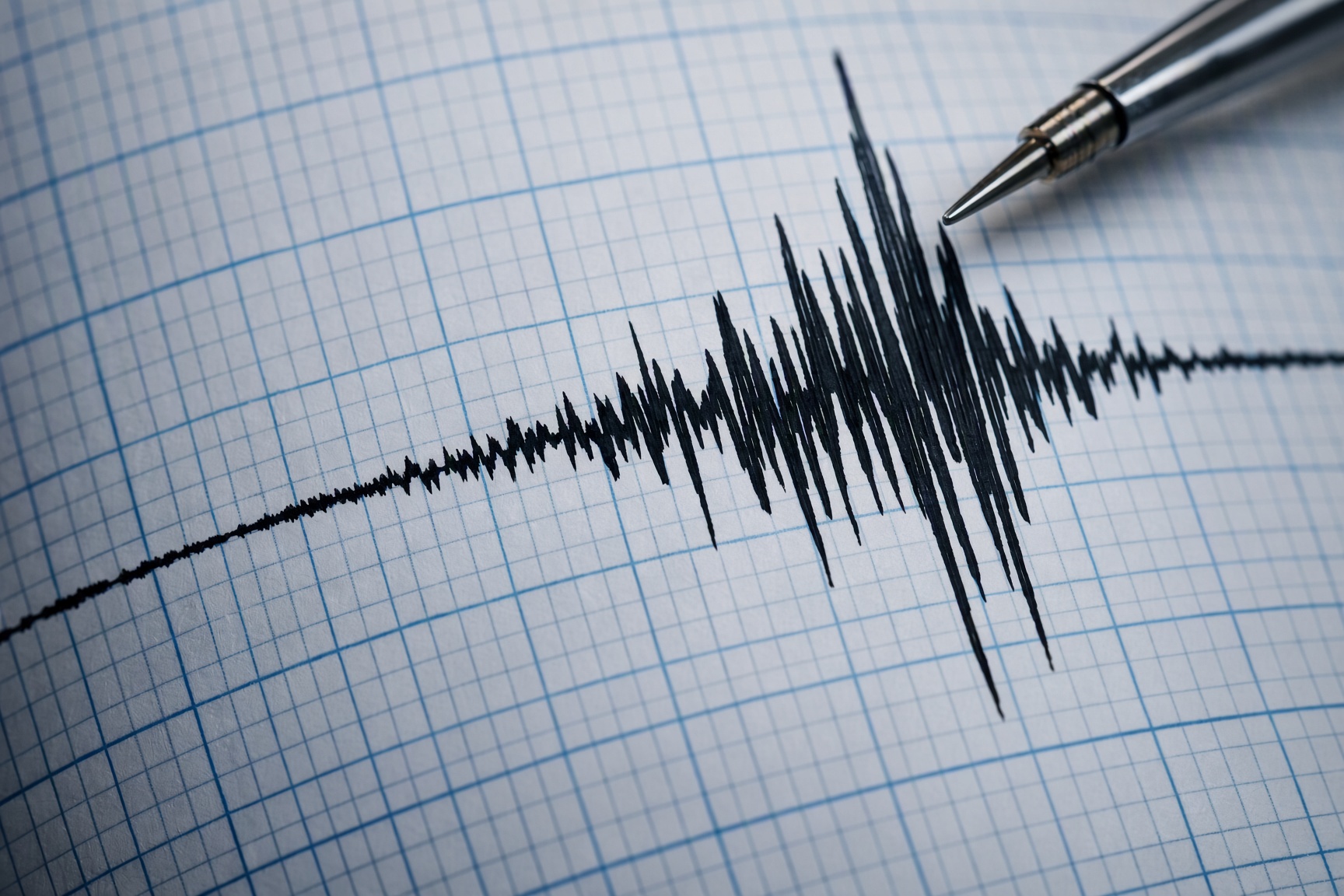

LOS ANGELES COUNTY, Calif. — A magnitude 3.2 earthquake struck near Compton, California, over the weekend, sending mild shaking through parts of the greater Los Angeles area and prompting hundreds of residents to report feeling the tremor. Here are 10 things to know about the quake and the seismic activity surrounding it.
- The quake struck early Sunday morning. According to the U.S. Geological Survey, the preliminary magnitude 3.2 earthquake occurred just after midnight, with its epicenter located approximately 2 miles south-southeast of Compton and about 6.1 miles north of Long Beach.
- It was a shallow quake. The USGS recorded the earthquake’s depth at approximately 8 miles, a relatively shallow depth that can allow shaking to be felt more widely at the surface even for a modest-magnitude event.
- Hundreds of people reported feeling it. As of the most recent tally, more than 620 people had submitted reports through the USGS’s “Did You Feel It?” online form, indicating they experienced weak shaking. Residents in cities including La Habra, Seal Beach, Los Angeles, Bell and La Mirada reported feeling the tremor.
- It follows a pattern of recent minor quakes in the region. The Compton earthquake came just days after a similar magnitude 3.2 quake struck near Ontario in neighboring San Bernardino County on Sept. 2, and a separate magnitude 3.4 quake was recorded near Ontario the same week, roughly 12.5 miles east of Riverside.
- Compton sits atop one of the most closely watched fault systems in Southern California. Beneath the area lies the Compton blind thrust fault, a concealed fault that does not reach the surface but has been identified by seismologists as capable of producing significantly larger earthquakes than the one recorded this weekend. Because the fault lies directly beneath the densely populated Los Angeles metropolitan area, researchers regard it as posing one of the more significant deterministic seismic risks in the United States.
- The fault has a history of major ruptures. Research conducted through the Southern California Earthquake Center has found geological evidence that the Compton thrust fault has generated at least six large-magnitude earthquakes, estimated between magnitude 7.0 and 7.4, over the past 14,000 years, though such large ruptures occur only rarely on a human timescale.
- Small earthquakes are a near-daily occurrence in the area. According to seismic data compiled over more than five decades of record-keeping, the Compton area experiences an average of roughly 2,400 earthquakes of all magnitudes each year, though the vast majority are too small to be felt. Earthquakes of magnitude 3 or higher occur at a rate of roughly 19 per year on average in the area, while quakes reaching magnitude 5 or greater occur closer to once every two years.
- No damage or injuries were reported. Earthquakes in the magnitude 3 range are generally felt only as brief, mild shaking by people located relatively close to the epicenter, and such quakes rarely cause structural damage to buildings or infrastructure under normal circumstances. As of the most recent update, no damage or injuries had been reported in connection with Sunday’s quake.
- Southern California has experienced stretches of elevated seismic activity before. Geophysicist Dr. Lucy Jones, a prominent seismologist who has studied the region extensively, has previously noted that certain stretches of heightened earthquake activity reflect an ongoing, connected process occurring along the region’s fault systems, rather than a series of entirely unrelated, isolated events. Southern California has, at various points in recent years, experienced periods of earthquake activity exceeding typical historical averages, prompting seismologists to monitor whether individual clusters of smaller quakes might be connected to broader stress patterns building along the region’s numerous faults.
- Officials continue urging basic earthquake preparedness. The USGS encourages residents who feel an earthquake, even a minor one, to submit reports through its “Did You Feel It?” system, helping the agency gather real-time data on the geographic extent and intensity of shaking. Emergency management officials routinely remind Southern California residents to maintain basic preparedness measures regardless of how minor recent activity has been, given the region’s well-documented exposure to the risk of a significantly larger earthquake in the future. Recommended steps include securing an emergency supply kit with food, water and basic medical supplies, developing a family communication and evacuation plan, and securing heavy furniture and other objects that could pose a hazard if they were to fall during stronger shaking.
The Compton area, along with the broader Los Angeles basin, remains one of the most seismically monitored regions in the country given its dense population and its position atop multiple active fault systems, including the Compton blind thrust fault, the Newport-Inglewood fault and portions of the broader fault network that runs through the greater Los Angeles metropolitan area. While Sunday’s magnitude 3.2 quake caused no damage and required no emergency response, seismologists continue to treat even minor tremors as useful data points for understanding the broader stress patterns building across the region’s interconnected fault systems.
The USGS has not indicated any specific connection between Sunday’s Compton-area quake and the earlier Ontario-area tremors recorded in the preceding days, and officials have not issued any elevated warning regarding the likelihood of further seismic activity in the immediate aftermath of the event. As is standard practice following any earthquake in the region, residents are advised to continue monitoring official USGS updates and local emergency management communications for further developments, particularly given the well-established, if statistically infrequent, potential for a significantly larger earthquake to eventually strike the same fault systems that produced this weekend’s minor tremor.

Applied Aerospace & Defense: A Much Healthier Proposition


Financial analyst by day and a seasoned investor by passion, I’ve been involved in the world of investing for over 15 years and honed my skills in analyzing lucrative opportunities within the market.I specialize in uncovering high quality dividend stocks and other assets that offer potential for long term-growth that pack a serious punch for bill-paying potential. I use myself as an example that with a solid base of classic dividend growth stocks, sprinkling in some Business Development Companies, REITs, and Closed End Funds can be a highly efficient way to boost your investment income while still capturing a total return that follows traditional index funds. I created a hybrid system between growth and income and manage to still capture a total return that is on par with the S&P.
Analyst’s Disclosure: I/we have a beneficial long position in the shares of RDVI either through stock ownership, options, or other derivatives. I wrote this article myself, and it expresses my own opinions. I am not receiving compensation for it (other than from Seeking Alpha). I have no business relationship with any company whose stock is mentioned in this article.
Seeking Alpha’s Disclosure: Past performance is no guarantee of future results. No recommendation or advice is being given as to whether any investment is suitable for a particular investor. Any views or opinions expressed above may not reflect those of Seeking Alpha as a whole. Seeking Alpha is not a licensed securities dealer, broker or US investment adviser or investment bank. Our analysts are third party authors that include both professional investors and individual investors who may not be licensed or certified by any institute or regulatory body.

Trump administration asks Supreme Court to allow mail ballot limits
Business
Scientists Identify 1,260 Genetic Variants Linked To Personality In Largest Study Of Its Kind With 1M Subjects

An international team of researchers has identified 1,260 genetic variants linked to the “Big Five” personality traits, marking the largest study of its kind and offering new evidence that personality has a measurable biological foundation beyond environment and life experience alone.
The study, published Sept. 2 in the journal Nature, was led by researchers including Ted Schwaba of Michigan State University, Michel Nivard of the University of Bristol, and Elliot Tucker-Drob, working through a collaborative research effort called the Revived Genomics of Personality Consortium. The project combined results from 46 different research cohorts spanning 13 to 15 countries, drawing on genetic and personality data from more than 1.1 million participants at its peak sample size, according to figures cited in the research.
Of the 1,260 identified variants, 824 had never previously been linked to personality in earlier research, representing a substantial leap in scale compared with prior studies in the field. For the trait of conscientiousness alone, the number of genome-wide significant genetic locations jumped from just three identified in the most recent prior research to 131 in the new study. Neuroticism, the most extensively studied of the five traits, saw its known genetic locations climb from 224 to 706.
The Big Five personality framework, widely used within psychology, measures five relatively stable and habitual differences in how people think, feel and act: openness to experience, conscientiousness, extraversion, agreeableness and neuroticism. Participants across the 46 cohorts involved in the study provided DNA samples and completed standardized questionnaires measuring these traits, allowing researchers to search for genetic variants statistically associated with each one.
Schwaba, the study’s lead author, said the findings underscore just how broadly relevant personality appears to be across nearly every domain of human life.
“Personality seems to be relevant nearly everywhere you look,” Schwaba said. “We hope this study will encourage many other scientists to incorporate personality traits into their fields of study. For example, genetic variants associated with neuroticism predict more time spent in the hospital, which is relevant to physicians and health researchers, and variants associated with openness to experience are linked to income and switching jobs, which is relevant to vocational researchers.”
Despite identifying more than a thousand genetic variants linked to personality, researchers emphasized that no single “personality gene” exists. Instead, personality traits appear to be influenced by an enormous number of individual genetic variants, each carrying an extremely small effect on its own. According to the study, the median effect size for a genetic variant linked to extraversion corresponds to shifting someone’s expected score from roughly the 50th percentile to the 50.35th percentile, an exceedingly modest individual effect that only becomes meaningful in aggregate across more than a thousand variants combined.
Overall, common genetic variants were found to explain between 4.8% and 9.3% of the total variation in personality measures across the population studied, a figure that rose to between 7.6% and 13.4% when researchers used more reliable, longer-form measurement instruments. Those figures remain considerably lower than the broader heritability estimates for personality derived from twin studies, which have historically placed the heritable component of personality between roughly 40% and 60%, reflecting the difference between the specific common genetic variants this study was able to detect and the fuller, more complex genetic architecture believed to underlie personality more broadly.
Michel Nivard, a professor of genomic epidemiology at the University of Bristol and one of the study’s authors, explained the broader motivation behind the research in comments to Time magazine.
“We think that personality is super-important for health,” Nivard said.
Researchers noted that Big Five personality scores have long been associated with risk for various mental health outcomes, with neuroticism in particular linked to anxiety, and that personality traits more broadly can help predict outcomes such as whether people are likely to consistently take prescribed medication or seek out medical care when facing a health problem.
Beyond identifying the raw genetic variants, researchers used the data to draw connections between personality genetics and a wide range of life outcomes. The study found, for example, that common genetic variants linked to openness to experience predicted a greater likelihood that a person would move to more cosmopolitan neighborhoods later in life, a pattern researchers noted could then reinforce and further shape that same personality trait through the person’s new environment. Separately, genetic variants associated with conscientiousness were linked to a person’s likelihood of taking up smoking, while variants linked to extraversion were associated with differences in COVID-19 infection risk, and variants tied to agreeableness and openness to experience were linked to a person’s likelihood of participating in research studies in the first place.
Denis Bratko, a psychologist at the University of Zagreb in Croatia who studies genetic influences on personality but was not involved in the new research, said the study helps resolve a longstanding challenge in the field. Previous efforts to find clear genetic correlations with personality traits had largely failed to produce consistent results, in part because earlier studies were too small and because personality appears to be influenced by an unusually large number of individual genetic variants, each with only a tiny effect on its own.
To help ensure the associations identified were genuinely genetic rather than reflections of shared family environment or other confounding factors, researchers also incorporated data from within-family genetic association studies, which compare siblings directly in order to control for shared upbringing, covering up to 50,725 participants within that portion of the analysis. According to Nature’s coverage of the findings, the genetic links to personality identified in the study proved more robust to such confounding factors than gene associations previously found for traits including education level and income.
Researchers involved in the study were careful to stress that the findings do not suggest personality is fixed or predetermined by a person’s genes. Rather, the study’s authors described genetics as providing only a basic underlying framework, with environment, culture and individual life decisions continuing to play a substantial role in how personality traits ultimately develop and express themselves over the course of a person’s life.
The research team has made the full summary statistics and underlying analytical code from the study publicly available through the Open Science Framework, allowing other researchers to build on the findings. Scientists involved in the project said they hope the newly identified genetic variants will serve as a foundation for future research examining how these biological pathways interact with social and environmental factors, offering a more complete picture not only of the genetic underpinnings of individual personality traits, but of how those traits, in combination with life circumstances, ultimately shape the outcomes people experience across health, career, relationships and beyond.
Business
Physicists Observe Einstein’s Gravity Effect On Quantum Object In First-Of-Its-Kind Experiment
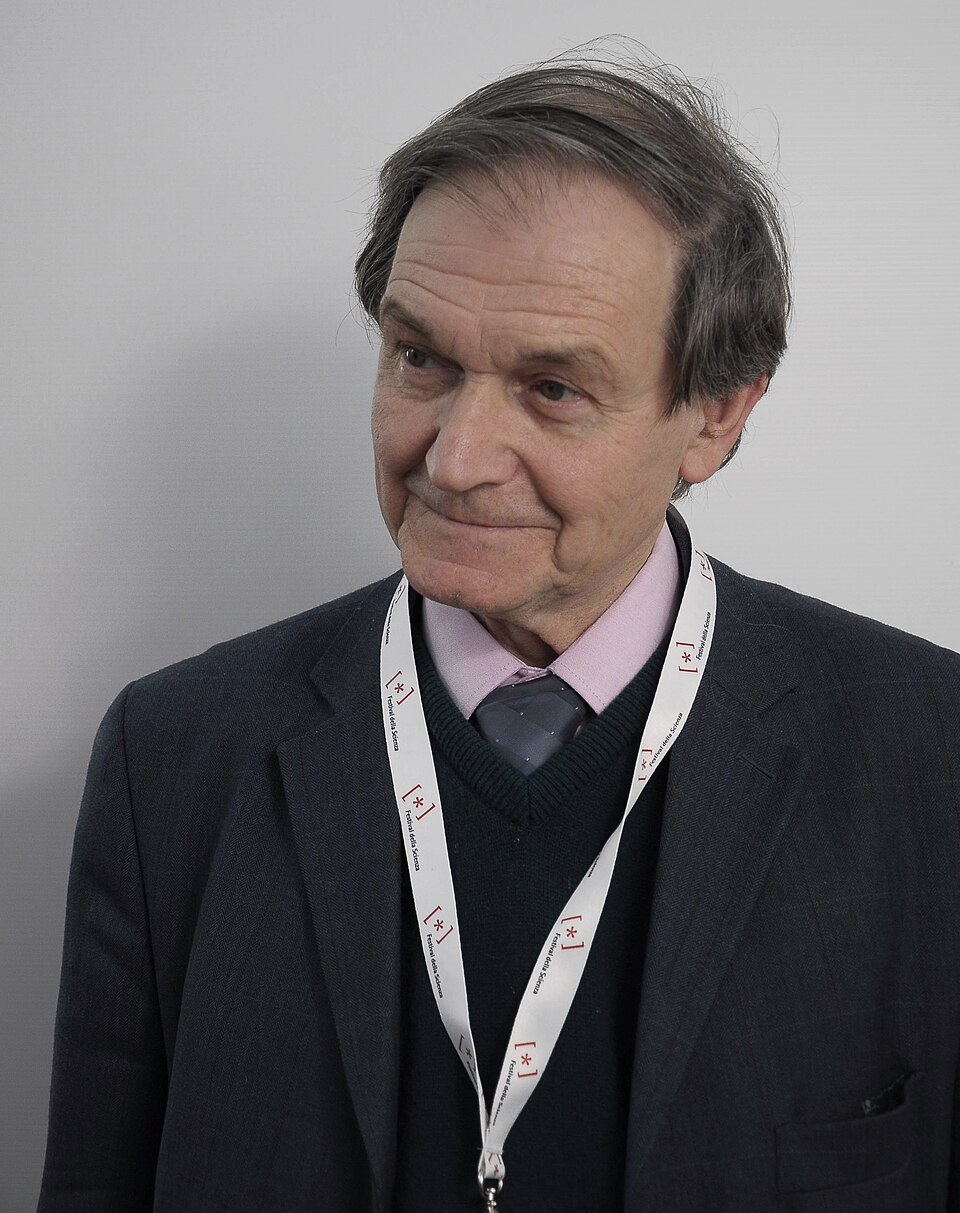
BEERSHEBA, Israel — An international team of physicists, including Nobel Prize-winning physicist Sir Roger Penrose, has directly observed a long-predicted effect of gravity on a falling quantum object for the first time, offering new experimental evidence that Einstein’s theory of gravity remains consistent with the strange behavior of matter at the quantum scale.
The study, led by researchers at Ben-Gurion University of the Negev, the University of Ulm and the University of Oxford, was published Sept. 2 in the journal Science Advances. The research probes one of the most persistent unresolved questions in modern physics: how quantum mechanics, which explains the behavior of atoms and other tiny particles, fits together with Einstein’s theory of general relativity, which explains how gravity shapes the motion of objects and the structure of the universe.
At the center of the experiment is Einstein’s equivalence principle, a foundational element of his theory of gravity, which holds that for an observer in free fall, gravity should locally disappear. A person falling freely inside an elevator, for example, would experience apparent weightlessness. While that principle has withstood extraordinarily precise tests using ordinary matter, physicists had not previously found a way to test it directly using quantum objects, which can behave as waves and effectively travel along multiple paths simultaneously.
To test the principle at the quantum level, researchers built a new apparatus they call the Quantum Galileo Interferometer. The device allowed the team to split the quantum wave associated with an individual atom into two separate paths, holding one path stationary while allowing the other to fall freely under gravity, before reuniting the two paths to measure how the falling wave had changed relative to the stationary one.
The experiment was carried out at Ben-Gurion University using clouds of rubidium atoms cooled to just above absolute zero and manipulated near the surface of a specially designed atom chip. Researchers, including Ph.D. student Or Dobkowski, first used microwave pulses to place the ultracold atoms into a quantum superposition, effectively allowing each atom to exist along two different paths simultaneously. Tiny electrical wires embedded in the chip then generated precisely controlled magnetic fields, with one portion of the atomic wave responding to that field in a way that produced an upward force exactly counteracting the downward pull of gravity, effectively holding it stationary relative to the laboratory and Earth.
The second portion of the wave was pushed upward using a precisely controlled magnetic pulse, then switched into a state largely unaffected by the magnetic field, allowing it to fall freely under gravity along a ballistic trajectory, similar to the arc of a ball thrown into the air. At the end of the fall, researchers used another carefully controlled magnetic pulse to bring the two separated portions of the wave back together. When reunited, the two waves interfered with one another, allowing researchers to measure the tiny difference in quantum phase that had accumulated between the falling portion and the stationary portion during the experiment.
That measured phase matched precisely what physicists had predicted would occur if Einstein’s equivalence principle applies to a quantum wave. While previous experiments have used quantum particles to measure the effects of gravity in other ways, researchers say this marks the first direct measurement of the specific quantum phase predicted for a freely falling object.
Ron Folman, a professor at Ben-Gurion University of the Negev and the study’s lead author, described the significance of combining a difficult physical experiment with a question central to the deepest unresolved issues in physics.
“This is a unique paper, in the sense that it combines a hard experiment with a far-reaching theoretical interpretation about one of the most fundamental questions in physics: How can gravity, described by Einstein’s theory of relativity, and quantum theory be unified into one understanding of the universe?” Folman said. “These two pillars of modern physics have so far eluded all attempts at a unified theoretical framework, but this complex experiment gives more hints as to how such a unification may be achieved.”
Study co-author Vlatko Vedral, a professor in the Department of Physics at the University of Oxford, emphasized that the result adds to a long track record of quantum mechanics holding up under increasingly demanding experimental tests.
“We have no consistent theory telling us why quantum physics should fail,” Vedral said. “This experiment pushes quantum mechanics into one of its most intriguing frontiers, gravity, and shows that, once again, its predictions hold.”
Researchers were careful to clarify the limits of what the experiment demonstrates. The result does not unify quantum mechanics and gravity into a single theoretical framework, nor does it prove that gravity itself behaves as a quantum phenomenon. Instead, it shows that Einstein’s equivalence principle remains consistent with quantum mechanics within the specific conditions the experiment was able to test.
The findings also do not overturn a separate theoretical argument previously advanced by study co-author Sir Roger Penrose of the University of Oxford, suggesting that quantum mechanics could potentially break down for sufficiently massive objects held in quantum superposition for long enough periods of time. The current experiment did not involve objects massive enough, or superposition states held for long enough durations, to directly test that particular hypothesis. Researchers say they hope the techniques developed for this experiment will serve as a stepping stone toward future experiments involving significantly heavier objects, including nanodiamonds, that could eventually probe Penrose’s proposed limits on quantum superposition. Such a follow-up experiment is reportedly already underway within the same research group at Ben-Gurion University of the Negev.
The broader international research effort behind the study included scientists from Ben-Gurion University of the Negev, the University of Oxford, the University of Southampton, the German Aerospace Center, the Institute of Quantum Technologies in Ulm, Universität Ulm, and Texas A&M University.
The research adds to a growing body of experimental work probing the boundary between quantum mechanics and gravity, an area physicists have long regarded as one of the most significant unresolved frontiers in the field, given the profound theoretical difficulty of reconciling Einstein’s smooth, continuous description of spacetime with the fundamentally probabilistic, wave-like behavior that governs particles at the quantum scale. While Wednesday’s findings stop well short of resolving that broader challenge, researchers involved in the study said the experiment represents a meaningful incremental step toward better understanding how, and under what conditions, the two foundational pillars of modern physics ultimately connect.
Business
Elon Musk’s Inner Circle Pours Millions Into Psychedelics As MDMA Therapy Push Gains Momentum This Year

SAN FRANCISCO — A growing number of prominent figures within Elon Musk’s personal and professional orbit have been directing significant financial resources toward psychedelic therapeutics companies, part of a broader push to move drugs like MDMA and psilocybin from the fringes of medicine into mainstream mental health treatment.
According to The Wall Street Journal, the trend reflects a convergence of personal enthusiasm and financial investment among a small but influential group of billionaires and executives connected to Musk, several of whom have spoken publicly about their own experiences with psychedelics or their belief in the drugs’ therapeutic potential.
Antonio Gracias, a longtime Musk ally, former Tesla board director and adviser to Musk’s Department of Government Efficiency initiative, has emerged as one of the most active figures in the space. Gracias made a bid earlier this year to acquire a controlling stake in Lykos Therapeutics, the pharmaceutical company formerly known as MAPS Public Benefit Corp. that has been working to bring MDMA-assisted therapy to market for the treatment of post-traumatic stress disorder. According to Psychedelic Alpha, Gracias has since been joined in that effort by Sir Christopher Hohn, the British hedge fund manager who leads TCI Fund Management, one of the largest hedge funds in the world with more than $60 billion in assets under management.
Gracias’s involvement in the space reportedly began with a chance meeting at Burning Man with Rick Doblin, founder and president of the Multidisciplinary Association for Psychedelic Studies, the nonprofit research and advocacy organization that originally spun off Lykos Therapeutics as its for-profit pharmaceutical arm. That connection took on added significance after Lykos suffered a significant setback in 2024, when the Food and Drug Administration denied the company’s application to market MDMA for PTSD treatment, citing inadequate clinical trial data.
Beyond his interest in Lykos specifically, Gracias has also directed philanthropic resources toward academic research in the field. In 2023, the Gracias Family Foundation gifted funds to Harvard University to establish a program dedicated to the Study of Psychedelics in Society and Culture, reflecting an effort to build institutional credibility for the field beyond purely commercial drug development.
Gracias is far from the only figure in Musk’s broader circle with financial exposure to the psychedelics industry. PayPal co-founder Peter Thiel is a major investor in Atai Life Sciences, a biotechnology company that itself holds a significant stake in Compass Pathways, a company focused on developing psilocybin-based therapies for treatment-resistant depression. Google co-founder Sergey Brin, who has reportedly discussed his own use of psychedelic mushrooms, has helped fund Soneira, a startup developing psychedelic treatments based on ibogaine, a compound derived from the iboga plant that has drawn increasing research interest for its potential in treating addiction and other conditions. OpenAI chief executive Sam Altman has also discussed his own experiences with psychedelics helping him manage anxiety and has separately invested in psychedelic therapy companies.
Musk himself has been notably open about his views on psychedelics over the years, expressing public support for the drugs’ potential therapeutic value even as he has also publicly disclosed using ketamine, a related dissociative compound, under a prescription he has said he uses to manage depression. Musk has previously argued publicly that societal attitudes toward psychedelics are likely to shift as younger generations move into positions of political influence, a view he articulated during a 2021 interview, saying he believes people should generally be open to psychedelics and that lawmakers from an earlier era will gradually be replaced by those more receptive to the drugs’ potential benefits.
The broader psychedelics investment landscape has continued expanding well beyond Musk’s immediate circle. Venture capital fund Palo Santo closed a $50 million fund dedicated specifically to backing emerging psychedelic therapeutics companies, with the fund currently maintaining a portfolio spanning more than 20 companies across the broader psychedelics ecosystem. Palo Santo co-founder Tim Schlidt has framed the fund’s mission in terms of addressing a growing global mental health crisis through what he and other backers view as a coming shift in the standard of care.
“Against the backdrop of a growing global mental health crisis, our mission is to drive clinical development and FDA approval of these much-needed therapies that we believe will become the future standard of care,” Schlidt said.
Julie Holland, a physician and adviser to the Palo Santo fund, echoed that sense of urgency around funding.
“It’s crucial that the most promising companies and therapies receive the funding needed to advance psychedelic medicines through clinical trials in a timely manner, and I am proud to be part of a team of experts who share that same goal,” Holland said.
The renewed institutional and celebrity interest in psychedelics comes amid a broader cultural shift in how the drugs are perceived, following decades in which they remained largely relegated to underground or purely recreational use following their prohibition in the 1970s. Oregon and Colorado, along with several U.S. cities, have moved to decriminalize psilocybin, the active compound found in so-called magic mushrooms, with Oregon going further to legalize its supervised use. Pharmaceutical companies have also found commercial success with related compounds already approved for medical use; Johnson & Johnson’s nasal esketamine treatment, Spravato, became the company’s fastest-growing product at one point, generating hundreds of millions of dollars in sales within a single nine-month period.
Despite the growing enthusiasm and capital flowing into the sector, the regulatory path for psychedelic-assisted therapies remains far from settled, as illustrated by the FDA’s 2024 rejection of Lykos Therapeutics’ MDMA application. That setback has not deterred figures like Gracias and Hohn from continuing to pursue investment in the company, betting that additional clinical trial data and continued advocacy could eventually clear the path toward regulatory approval.
With billionaires spanning the technology, finance and artificial intelligence industries now directing substantial personal wealth toward psychedelic drug development, alongside dedicated venture funds like Palo Santo building out broader portfolios across the sector, the psychedelics industry appears positioned to continue attracting significant capital in the years ahead, even as questions remain about how quickly, and how thoroughly, these compounds can move from high-profile private investment interest into broadly accessible, FDA-approved medical treatments.

Usher Leaves Taraji P. Henson Shook After ‘R&B’ Tour Moment

Channel 5 confirms release date for twisty new thriller and it’s just days away

Ukraine Weighs Legalizing Pornography To Fund 30,000 War Drones, Curb Police Corruption Amid Fiscal Strain





-

 Fashion2 days ago
Weekend Open Thread: Beyond Yoga
-

 Crypto World2 days ago
Bitcoin price stalls near $82K as key resistance holds
-

 Politics2 days ago
Best Gaming Laptops, CPUs, TVs, And Keyboards To Upgrade Your Set Up For GTA VI
-

 Tech2 days ago
The Birds Outside, Drawn For You Automatically
-

 Crypto World2 days ago
IMF Says El Salvador’s Post-Review Bitcoin Purchases Used No Public Funds
-
 Crypto World2 days ago
U.S. added stronger than expected 162,000 jobs in August as labor market bounced back
-
 Sports2 days ago
Alexandre Pato consortium’s Northampton Town investment approved
-

 Sports2 days ago
Commanders’ Chig Okonkwo is a top breakout fantasy football candidate
-

 Sports2 days ago
Golden Eaglets Drawn in Group B for 2026 WAFU B U17 Championship
-
 Crypto World2 days ago
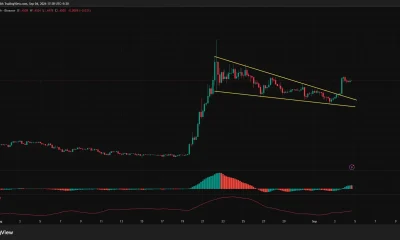
XRP price breaks falling channel as bulls target $1.53
-

 Politics2 days ago
A new European chapter for Gibraltar
-

 Politics2 days ago
The House | Bin the lectures, bring gossip and be ready to banter: how the new PM should prepare for his Trump encounter
-

 Politics2 days ago
How To Avoid Winter Colds: 4 Everyday Habits That Spread Germs, Says Pharmacist
-

 Crypto World2 days ago
From warning to listing: UK’s largest retail investment platform opens access to crypto ETNs
-

 Crypto World2 days ago
FinCEN flags $12.7B tied to Southeast Asia crypto investment scams
-

 Tech2 days ago
A Worthy Android Ereader, With Some Tradeoffs
-

 Tech2 days ago
How To Edit Claude’s Memory
-

 Crypto World2 days ago
Trezor Data Breach Impacts 67,000 More US Customers
-

 Politics2 days ago
33 Cosy Autumn Home Decor Ideas: Blankets, Pumpkin Decorations, And Candles
-

 Tech2 days ago
beyerdynamic AVENTHO Y Debuts at IFA 2026 and Makes Wireless Headphones Less Disposable
You must be logged in to post a comment Login