Connect with us
DAPA Banner

Business

Humanoid Robots Tackle UK Recycling Crisis as Waste Firms Face 40% Staff Turnover

Published

on

Humanoid Robots Tackle UK Recycling Crisis as Waste Firms Face 40% Staff Turnover

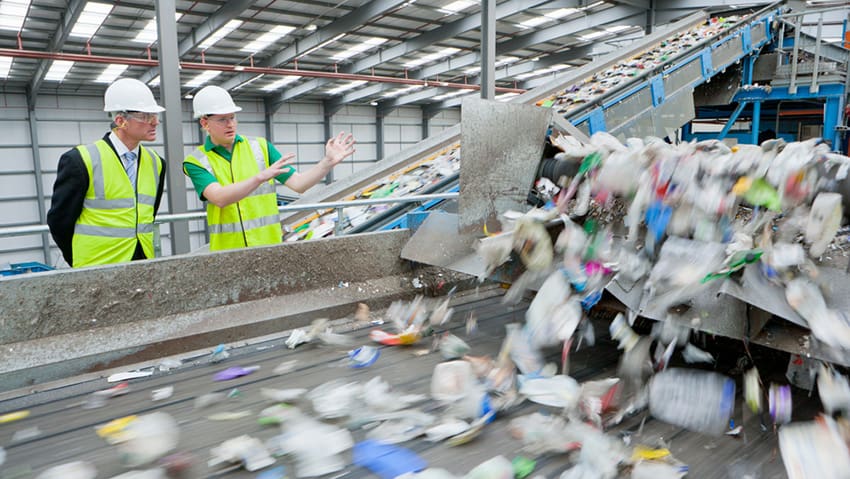
The dust hangs thick in the air at Sharp Group’s recycling facility in Rainham, east London, where the relentless rumble of hoppers and conveyor belts sets a punishing tempo. It is, by any measure, an unforgiving place to earn a living, and increasingly, that is the problem.

The family-run skip and waste management business, which processes up to 280,000 tonnes of mixed recycling a year, depends on 24 agency workers stationed along its rapid conveyor belts. They sift, in real time, through a procession of debris that ranges from old trainers and VHS cassettes to slabs of concrete. It is the sort of work that few are queueing up to do, and the figures bear that out. Annual staff turnover at the plant runs at 40%, mirroring an industry-wide retention crisis that is now forcing British SMEs to confront a question once reserved for car factories and Amazon warehouses: can robots do this instead?

For Sharp Group, the answer may be taking shape on the line itself. A humanoid robot known as Alpha, the Automated Litter Processing Humanoid Assistant, is being trained to pick through the waste stream alongside the human pickers it may one day replace. Built by China’s RealMan Robotics and adapted for British recycling conditions by London-based TeknTrash Robotics, Alpha represents an unusual bet on humanoid form factors in an industry that has, until now, leant towards bespoke automated kit.

“The attraction of a humanoid is that you can put it here and it stays here,” says Chelsea Sharp, the plant’s finance director and granddaughter of founder Tom Sharp. “It will pick all day, 24 hours a day, seven days a week. It’s not going to apply for a holiday, it’s not going to have a sick day.”

That blunt commercial logic sits against an equally blunt safety case. Work-related injury and ill-health in the waste sector run 45% higher than the national average across other industries, and the fatality rate is a sizeable multiple of the broader workforce. Sharp Group is proud of its own safety record, but the maths of recruitment in such an environment is becoming increasingly difficult to defend.

Advertisement

“The belt is moving all the time, you’re constantly picking. I go through a lot of pickers because they just aren’t up to the job,” says line supervisor Ken Dordoy. The firm rotates staff through different waste streams every 20 minutes, with periodic stoppages built in for respite, a regime that speaks volumes about the strain involved.

Alpha, for now, is no quick fix. It is in the early stages of an exhaustive training programme, with a plant worker wearing a VR headset alongside the robot to demonstrate what good picking looks like. The dual challenge, TeknTrash founder and chief executive Al Costa explains, is teaching the machine first to identify objects on a moving belt, and then to lift them reliably. His firm’s HoloLab system feeds Alpha a torrent of data from multiple cameras, generating millions of training data points a day.

Costa is candid about the gap between marketing hype and operational reality. “The market thinks these robots are prêt‑à‑porter, that all you need to do is plug them into the mains and they will work flawlessly. But they need extensive data in order to be effectively useful.”

The humanoid approach has the advantage of slotting into existing infrastructure without expensive plant redesign, no small consideration for SMEs operating on the thin margins typical of the recycling sector. The alternative, increasingly favoured by larger operators, is wholesale retrofitting with bespoke automated kit.

Advertisement

Colorado-based AMP, which runs three of its own plants and supplies equipment to dozens of facilities across Europe and the UK, takes that route. Its systems use air jets to fire items into chutes, with AI continuously sharpening the machine’s ability to identify and sort materials. “Our robots are much more efficient than humans, probably eight or 10 times the pace,” chief executive Tim Stuart says. “The AI technology and jets have really increased the capacity and efficiency and accuracy of what we can do.”

California’s Glacier, co-founded by Rebecca Hu‑Thrams, deploys mounted robotic arms paired with AI vision. She is quick to note the sheer unpredictability of the material her machines must contend with. A leaking beer can may threaten sensitive equipment; her customers, she adds, have seen “unbelievable things like hand grenades and firearms coming through their facility”. The proposition, she says, is improvement at scale: “As our models learn from more than a billion items, the AI gets better and better. And we’ve always designed our technology so it works not just for big urban plants, but for the semi‑rural facilities running on much tighter budgets.”

For all the differences in approach, the conclusion across the industry is converging. The labour-intensive model that has propped up British waste processing for decades is reaching the end of its useful life. Academics studying the sector see the same trajectory. Professor Marian Chertow of Yale University argues that “robotics coupled with AI-driven vision systems offers the greatest potential for improving material recovery, worker experience, and economic competitiveness in the recycling sector”.

That leaves the awkward question of what happens to the people currently doing the picking. Chelsea Sharp does not pretend the work is anything other than gruelling. “This is a really dirty place to work. You can see the dust, you can hear the noise. It’s not that nice.” Her stated plan, however, is reskilling rather than replacement. “The plan is to upskill those staff. They’ll be maintaining and overseeing the robots. And it brings those same people away from any dangers, including the unpleasant environment, heavy lifting and noise.”

Advertisement

Whether the rest of the sector follows Sharp’s lead, or whether automation ushers in a quieter, leaner workforce by default, will become clear over the next few years. What is no longer in dispute is that the British recycling line of 2030 will look nothing like the one running in Rainham today.


Jamie Young

Jamie Young

Jamie is Senior Reporter at Business Matters, bringing over a decade of experience in UK SME business reporting.
Jamie holds a degree in Business Administration and regularly participates in industry conferences and workshops.

When not reporting on the latest business developments, Jamie is passionate about mentoring up-and-coming journalists and entrepreneurs to inspire the next generation of business leaders.

Advertisement
Continue Reading
Click to comment

You must be logged in to post a comment Login

Leave a Reply

Business

Keurig Dr Pepper’s Organic Growth To Ease Despite Acquisition-Led Surge

Published

on

Keurig Dr Pepper’s Organic Growth To Ease Despite Acquisition-Led Surge

IHS Markit (Nasdaq: INFO) is a world leader in critical information, analytics and solutions for the major industries and markets that drive economies worldwide. The company delivers next-generation information, analytics and solutions to customers in business, finance and government, improving their operational efficiency and providing deep insights that lead to well-informed, confident decisions. IHS Markit has more than 50,000 key business and government customers, including 80 percent of the Fortune Global 500 and the world’s leading financial institutions. Headquartered in London, IHS Markit is committed to sustainable, profitable growth.

Continue Reading

Business

2nm A20 Chip, Variable Aperture Camera and Smaller Dynamic Island for 2026 Debut

Published

on

iPhone 17e Release Date

CUPERTINO, Calif. — Apple’s iPhone 18 Pro Max is shaping up as one of the most ambitious upgrades in years, with leaks pointing to a powerful 2nm A20 Pro chip, variable aperture camera system, significantly smaller Dynamic Island and larger battery as the flagship prepares for a September 2026 launch alongside the company’s first foldable iPhone.

iPhone 18 Pro Max
iPhone 18 Pro Max

While still months away from official announcement, supply chain reports, dummy unit leaks and analyst predictions paint a clear picture of meaningful evolution rather than revolution for the 6.9-inch Pro Max. The device will share the spotlight with the iPhone 18 Pro and a new foldable model, expected to be called iPhone Ultra or similar, marking one of Apple’s biggest product line shake-ups in recent memory.

Design and Display Changes

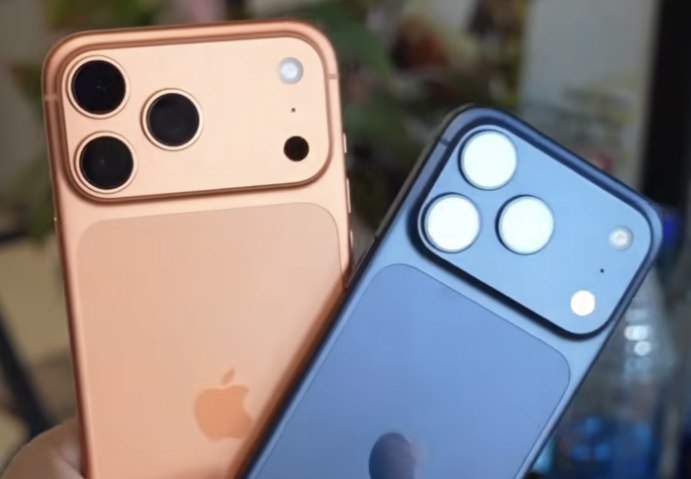
Dummy units and prototype leaks reveal a design largely familiar to iPhone 17 Pro Max owners but with noticeable refinements. The Dynamic Island is reportedly shrinking by 25% or more, measuring around 15mm wide compared to previous generations. Some reports suggest under-display Face ID technology could move key sensors beneath the screen, leaving only a small left-aligned punch-hole for the front camera.

The rear camera bump appears thicker to accommodate larger sensors and rumored new optics. Individual lenses have grown slightly in diameter, reducing spacing between them. Overall device thickness may increase marginally to support bigger batteries while maintaining premium titanium construction.

Advertisement

Display technology is expected to advance with improved LTPO panels offering 1-120Hz variable refresh rates and potentially higher peak brightness. The 6.9-inch Super Retina XDR OLED will continue to lead the lineup in size and quality.

Color Options and Materials

Black may be absent for a second consecutive year. Leaks point to a deep red or Dark Cherry finish as a potential hero color, along with Light Blue, Dark Gray and classic Silver or Natural Titanium variants. Apple is reportedly testing vibrant new anodized or PVD-coated options to refresh the aesthetic lineup.

Performance and Chipset

Advertisement

The star of the show is expected to be Apple’s A20 Pro chip, built on TSMC’s advanced 2nm process. This represents a major leap in efficiency and power, with projections of up to 15% faster CPU performance and 30% better energy efficiency compared to the A19 series. Wafer-level multi-chip module technology will integrate RAM directly with the processor, boosting Apple Intelligence capabilities and allowing more internal space for other components.

Rumors suggest 12GB of RAM across Pro models, with storage options reaching up to 2TB. A custom C2 modem should improve satellite connectivity, 5G speeds and power management.

Camera Upgrades

Photography enthusiasts have the most to look forward to. The iPhone 18 Pro Max is widely expected to introduce a variable aperture system on the main 48MP camera, allowing adjustable f-stops for better depth control, low-light performance and creative effects. All three rear lenses — main, ultrawide and periscope telephoto — could see resolution and quality bumps, with potential for 8K video recording.

Advertisement

The front camera may upgrade to 18MP or higher, paired with the evolving Face ID system. These changes position the Pro Max as a serious tool for content creators and professional photographers.

Battery and Charging

Battery life remains a top priority. Leaks indicate capacity could reach 5,100 to 5,200mAh or higher in the Pro Max, enabled by the more efficient chip and slight design adjustments. Faster wired charging up to 40W and improved wireless options are also anticipated, addressing long-standing user feedback.

AI and Software Features

Advertisement

Deeper integration with Apple Intelligence is expected, potentially including advanced on-device processing for new features like nutrition scanning, enhanced photo editing and smarter system optimizations. The hardware upgrades will unlock capabilities that may not be fully available on older models.

Pricing and Availability

Pricing is expected to start around $1,199 for the iPhone 18 Pro Max, maintaining or slightly increasing from current levels due to advanced components. Pre-orders would likely begin shortly after the September event, with availability later that month.

The standard iPhone 18 and more affordable variants are reportedly delayed to spring 2027, making the fall 2026 lineup heavily Pro- and foldable-focused.

Advertisement

Broader Context

These developments come as Apple navigates a competitive landscape with foldables gaining traction. The iPhone 18 Pro Max serves as a bridge between traditional slab phones and the new foldable era, delivering incremental but meaningful upgrades while the company bets big on its first foldable device.

Analysts caution that many details could still shift before launch. Supply chain reports and dummy units provide strong signals, but final specifications always depend on Apple’s rigorous testing and last-minute decisions.

For now, excitement continues to build around what could be one of the most capable iPhones yet. With a cutting-edge processor, refined design and camera innovations, the iPhone 18 Pro Max promises to set new standards when it arrives this fall. Tech enthusiasts and prospective buyers will be watching closely as more concrete information emerges in the coming months.

Advertisement
Continue Reading

Business

Welborn heartened by state of rugby in WA

Published

on

Welborn heartened by state of rugby in WA

Rugby WA chair John Welborn says rugby union is riding positive momentum at both community and professional level.

Continue Reading

Business

ECU confirms CBD expansion

Published

on

ECU confirms CBD expansion

The university plans to grow its Perth campus into Kings Square 3, following its recent acquisition of that building.

Continue Reading

Business

LATCH Solves Puzzle 1781 in Tough Early-Week Challenge

Published

on

Air travellers wearing a protective face masks, amid the coronavirus disease (COVID-19) pandemic, at JFK International airport in New York

NEW YORK — The New York Times Wordle answer for Tuesday, May 5, 2026, is LATCH, giving players a moderately challenging start to the week with a five-letter word that doubles as both a common household object and a verb meaning to fasten or attach firmly.

Wordle #1781 tested solvers with a word containing common consonants and a single vowel, starting with L and ending in a soft CH sound. The solution refers to a fastening device on doors, gates or windows — or the action of securing something in place. It also carries figurative meanings, such as latching onto an idea or opportunity.

Players who opened with strong starters like RAISE, SLATE or CRANE likely narrowed possibilities quickly, though the combination of L, A, T, C and H proved elusive for many. According to early community reports on platforms like Reddit, average scores hovered around 4.2 guesses, with a notable spike in six-guess finishes compared to easier recent puzzles.

How Players Solved It

Advertisement

Many successful solvers began with vowel-heavy openers and pivoted after identifying the A early. Common paths included testing words with T and CH clusters. One popular sequence shared online: STEAL → TALON → FAULT → LATCH, securing the win in four guesses.

Hard-mode players faced extra difficulty, as rules require using confirmed letters in subsequent guesses. The absence of repeated letters and the less common “TCH” ending caught some off guard after early vowel or R-heavy attempts.

The New York Times noted the word’s dual noun-verb usage in its official review, highlighting its everyday relevance. Webster’s defines it as a bar or catch that falls into a notch, or the act of fastening with such a device.

Wordle’s Enduring Popularity

Advertisement

Since its acquisition by The New York Times in 2022, Wordle has maintained massive daily engagement, with millions attempting the single daily puzzle worldwide. The game’s simple green-yellow-gray feedback system, limited to six tries, creates a perfect balance of accessibility and challenge that keeps players returning.

May 2026 has delivered a mix of straightforward and trickier solutions. Monday’s answer, RISER, focused on a common architectural term, while Tuesday’s LATCH shifted toward practical objects. The puzzle’s difficulty curve keeps the community engaged, with dedicated trackers and analysis sites breaking down statistics like letter frequency and solve distributions.

Social media platforms buzz with reactions each morning. On X and Reddit’s r/wordle community, players share grids, celebrate streaks and commiserate over tough days. Hashtags like #Wordle1781 and #WordleToday trended as solvers discussed strategies and near-misses involving similar words like CATCH, MATCH or BATCH.

Tips for Future Puzzles

Advertisement

Wordle enthusiasts recommend starting with words containing multiple vowels and common consonants — ADIEU, SLATE or CRANE remain popular. Tracking eliminated letters helps narrow options efficiently. For harder days, considering double meanings or less obvious usages can unlock solutions faster.

The game also offers optional variants like Wordle Unlimited for practice and connections-style spin-offs, but the official daily puzzle retains its special status. Families and offices often compete for lowest average scores, turning the simple word game into a daily ritual.

Cultural Impact and Community

Wordle’s influence extends beyond casual play. It has inspired books, merchandise, classroom vocabulary exercises and even competitive leagues. Its accessibility appeals across age groups, with many older players appreciating the mental exercise and younger users enjoying the social sharing aspect.

Advertisement

The NYT continues subtle updates while preserving the core experience that made it a phenomenon. No ads interrupt the clean interface, and the single daily puzzle prevents bingeing while building anticipation. This restraint has contributed to its longevity in an era of attention-grabbing apps.

For those who missed LATCH, tomorrow brings a fresh challenge. Wordle resets at midnight in each time zone, offering another opportunity to build or maintain streaks. Serious players guard multi-month streaks carefully, with some reaching hundreds of consecutive solves.

Broader Word Game Trends

Wordle’s success has spawned numerous imitators and related games, from geography-focused Worldle to music Quordle variants. The NYT portfolio now includes Connections, Mini Crosswords and Strands, creating a daily puzzle ecosystem that keeps word lovers engaged.

Advertisement

Educators note benefits including improved vocabulary, pattern recognition and deductive reasoning. The game’s gentle difficulty curve makes it suitable for all skill levels while rewarding strategic thinking.

As May 5, 2026, draws to a close, solvers reflect on their performance with LATCH. Whether celebrated in four guesses or salvaged in six, the word provided a satisfying mental workout. The global Wordle community will reconvene tomorrow for puzzle #1782, ready for whatever five letters the New York Times has prepared next.

For players seeking yesterday’s solution, May 4’s Wordle was RISER. Archives and analysis sites offer complete historical lists for those tracking patterns or curious about past answers.

The simplicity and universality of Wordle ensure its place in daily routines. On a day when LATCH clicked for thousands, it reminded players why this unassuming game continues captivating millions years after its viral explosion. One puzzle at a time, one green square at a time, the streak lives on.

Advertisement
Continue Reading

Business

Sushi chain to open five new UK sites including in Bristol and Ipswich

Published

on

Business Live

The fast-growing brand is looking to establish 100 branches by 2030

Iro Sushi is opening five new locations in Basingstoke, Bristol, Ipswich, Ilford and Maidenhead

Iro Sushi is opening five new locations in Basingstoke, Bristol, Ipswich, Ilford and Maidenhead(Image: Iro Sushi)

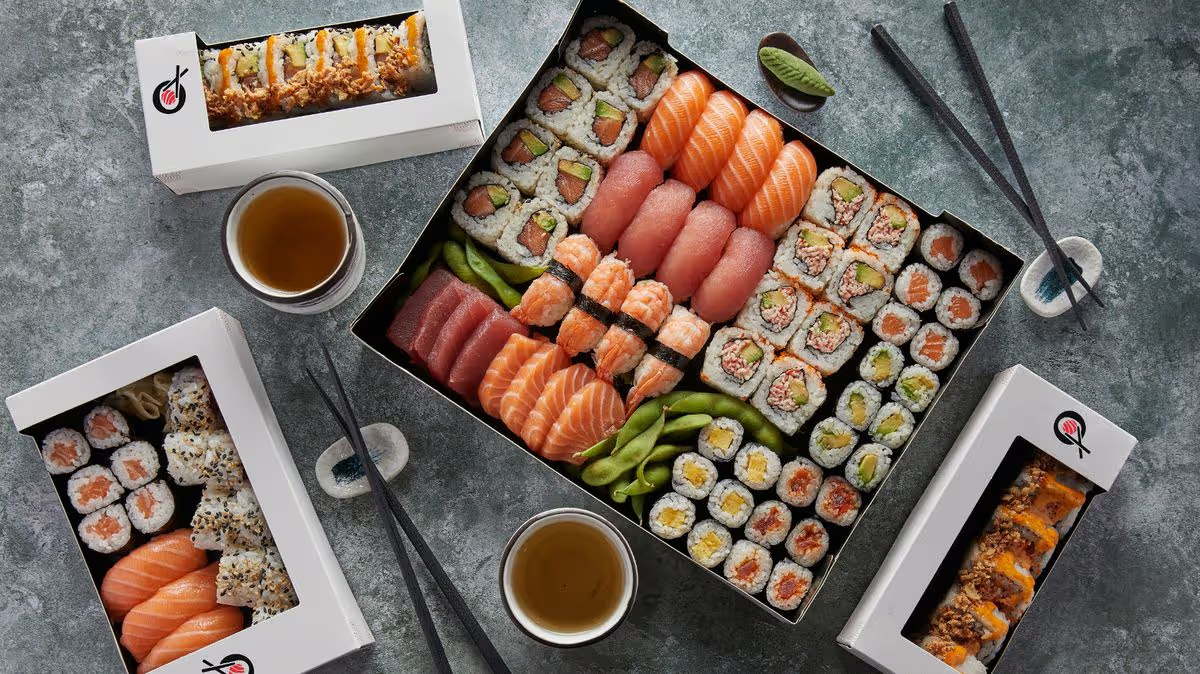
A fast-growing sushi chain is opening five new UK sites as part of an ambitious expansion strategy. Iro Sushi has agreed deals to open outlets in Bristol, Basingstoke, Ipswich, Ilford and Maidenhead.

The brand, which was founded in 2014 by trained sushi chef Chhong Sherpa, serves fresh, made-to-order, restaurant-quality sushi and Japanese-inspired dishes.

Advertisement

The new openings will take chain’s estate to 38 locations, strengthening its presence in existing regions including the Thames Valley and Home Counties, while also marking entry into new towns and cities such as Bristol and Ipswich.

It is understood the design of the new stores will be inspired by ‘Izakayas’ – a traditional Japanese drinking establishment, but will also use technology to drive operational performance.

Mr Sherpa said: “This is another significant milestone for Iro Sushi. Over the last six months, we’ve worked hard to refine our proposition with the launch of our new store format and continue evolving our menu.

“Now, with the foundations firmly in place, we’re ready to turbocharge our growth with the opening of new sites across the UK.”

Advertisement

Mr Sherpa said the openings would “create new opportunities” for the company to introduce the brand to more consumers. “[It will also] take Iro Sushi a step closer to becoming the brand of choice for lovers of sushi and Japanese cuisine across the country,” he added.

The new signings follow continued momentum across the business for Iro Sushi. Last year, the group delivered system sales of £18.5m, up 29 per cent year-on-year, and 19 per cent on a like-for-like basis.

According to Iro Sushi, the company has a “growing pipeline of committed sites and franchise partners” and is on track to deliver on its ambition to reach 100 locations by 2030.

Advertisement
Continue Reading

Business

'Vodafone sold us a dream – the reality was something different'

Published

on

'Vodafone sold us a dream - the reality was something different'

Two women from Lincolnshire are among 62 former franchisees taking the phone company to court.

Continue Reading

Business

(PHOTO) Tate McRae Shines as Golden Goddess in Custom Ludovic de Saint Sernin Gown at First Met Gala

Published

on

Tate McRae

NEW YORK — Pop star Tate McRae made a dazzling debut on fashion’s biggest stage Monday night, gliding down the Met Gala red carpet in a luminous custom gold gown that perfectly embodied the “Fashion Is Art” theme and cemented her status as one of the evening’s breakout style stars.

Tate McRae
Tate McRae

The 22-year-old Canadian singer, known for hits like “Greedy” and her rising dance-pop dominance, arrived at the Metropolitan Museum of Art radiating confidence in her first-ever Met Gala appearance. Her look, a collaboration with designer Ludovic de Saint Sernin, transformed her into a living sculpture of golden-hour glamour.

The floor-skimming gown featured intricate lace detailing through the bodice, fluid Grecian-inspired pleats, and soft draping that skimmed her figure with effortless movement. Delicate feathering at the neckline added texture and dimension, while the warm metallic finish caught every flash of light as she ascended the iconic steps. Styled with jewelry from The Back Vault, the ensemble balanced ethereal beauty with modern edge.

McRae told Vogue interviewer Emma Chamberlain on the carpet that she felt “a little nervous” walking her first Met but was thrilled to collaborate with de Saint Sernin, with whom she has worked closely over the past nine months. “He’s actually here tonight,” she shared, highlighting the personal connection behind the custom creation.

A Perfect Fit for ‘Fashion Is Art’

Advertisement

The 2026 Met Gala honored the Costume Institute’s “Costume Art” exhibition, challenging guests to treat fashion as fine art. McRae’s golden goddess interpretation stood out for its sculptural quality and luminous palette, evoking classical statues brought to life. Critics and fans quickly dubbed her a highlight, with social media exploding over the “golden goddess” aesthetic.

Stylists Chloe and Chenelle, who helped execute the look, emphasized its focus on movement and light. The gown’s construction allowed for dramatic yet natural flow, making McRae appear as if she had stepped out of a Renaissance painting or ancient frieze reimagined for the 21st century.

Her hair and makeup complemented the theme with soft, undone waves and glowing, sun-kissed tones that enhanced the metallic fabric. Minimal yet impactful accessories kept the focus on the gown’s artistry, proving that restraint can be as powerful as extravagance on the Met carpet.

From Dance Floors to High Fashion

Advertisement

McRae’s Met Gala debut caps a meteoric year that included her first Grammy nomination and high-profile red carpet appearances, such as a striking custom Balenciaga look at the 2026 Grammys. Her evolution from viral TikTok dancer to fashion risk-taker has been deliberate, with bold choices that blend pop accessibility and couture ambition.

This gold moment builds on recent successes, including a plunging red Ludovic de Saint Sernin gown at the Vanity Fair Oscar Party. Her growing partnership with the designer reflects a shared vision of sensual, body-conscious dressing with artistic depth.

Industry insiders note McRae’s appeal lies in her authenticity. Unlike some attendees who opted for overt theatricality, her look felt personal — a celebration of confidence and femininity that resonated widely. Fans flooded social platforms praising the “effortless” yet meticulously crafted result.

Reactions and Cultural Impact

Advertisement

Social media lit up within minutes of her arrival. Hashtags like #TateMcRaeMetGala and #GoldenGoddess trended as users shared side-by-side comparisons to classical art and modern icons. Fashion commentators hailed it as one of the night’s most wearable yet memorable interpretations of the theme.

Cosmopolitan and other outlets quickly named her among the best dressed, noting how the gown’s luminous quality stood out against the evening’s varied palette. The look’s success underscores McRae’s transition into a new phase of her career where music and fashion mutually reinforce her brand.

De Saint Sernin, known for provocative and body-positive designs, found an ideal muse in McRae. The collaboration reportedly involved extensive fittings to ensure the gown moved with her signature dance-trained grace. Sources close to the process described it as a true artistic partnership rather than a standard celebrity dressing.

Broader Evening Context

Advertisement

McRae’s appearance fit into a night filled with artistic statements. Co-chairs including Beyoncé and Anna Wintour set an elevated tone, while fellow newcomers and veterans alike embraced painting, sculpture and performance-inspired looks. Her golden ensemble provided a warm, radiant counterpoint to more dramatic or minimalist offerings.

The Met Gala remains one of the year’s most scrutinized events, raising millions for the Costume Institute while shaping fashion conversations for months. McRae’s debut adds her name to a growing list of young musicians using the platform to expand their cultural footprint beyond charts and streams.

For McRae, the night represented more than fashion. In interviews leading up to the event, she spoke about embracing vulnerability and growth. Her poised carpet walk and genuine excitement in post-arrival chats reflected that mindset, charming observers and solidifying fan loyalty.

Looking Ahead

Advertisement

As McRae continues her global tour and prepares new music, last night’s Met moment will likely influence her upcoming public appearances. The golden gown’s success may open doors to further high-fashion collaborations and cement her as a red-carpet force.

Fans can expect more boundary-pushing style from the artist who once said she wants her fashion to feel as free and expressive as her dancing. Monday’s Met Gala debut delivered exactly that — a luminous, artistic statement from a star clearly comfortable in the spotlight.

Tate McRae’s first Met Gala wasn’t just an attendance; it was a declaration. In a sea of elaborate creations, her golden goddess look shone with clarity, confidence and artistry, marking her arrival as a multifaceted talent ready to conquer both stages and staircases.

Advertisement
Continue Reading

Business

Amazon opens supply chain services to all shippers; stocks plunge, reaction overdone says Stifel

Published

on


Amazon opens supply chain services to all shippers; stocks plunge, reaction overdone says Stifel

Continue Reading

Business

Inflation risk more persistent than growth shock, says Tanvee Gupta Jain amid oil price surge

Published

on

Inflation risk more persistent than growth shock, says Tanvee Gupta Jain amid oil price surge
The ongoing geopolitical tensions in West Asia and their ripple effects on global energy markets are beginning to weigh on India’s macro outlook, prompting a downward revision in growth estimates and a reassessment of inflation risks, according to Tanvee Gupta Jain from UBS Securities.

Speaking on ET Now, she underlined that the Middle East conflict represents “a historically large energy shock with an asymmetric macro risk,” adding that high-frequency indicators are already signalling a moderation in momentum.

Growth momentum softens as activity indicators weaken
Gupta Jain pointed to internal indicators tracking economic momentum, noting a divergence between demand and activity trends.She said, “As you rightly pointed out, this Middle East conflict represents a historically large energy shock with an asymmetric macro risk. In fact, we have a lead indicator known as UBS India Composite Economic Indicator, which is basically a compilation of 15 high frequency data points on India. And this is telling me that for the month of March, economic momentum has started to moderate.”

However, she highlighted resilience in consumption demand even as broader activity cools.
“If I look at the auto sales data for the month of March, even for the month of April, the demand indicators are actually holding up. The activity indicators have started to moderate and that is where the problem is because supply disruptions is having a disproportionate impact on selective sectors.”
GDP forecast cut to 6.2%, downside risks remain open
The growth forecast has been revised downward, incorporating both external energy shocks and domestic monsoon uncertainty.

“We are now estimating GDP growth from 6.7% which was our estimate earlier to 6.2%. This is almost 50 basis point below consensus and this is actually taking into account both the external shock on account of the energy and as well as monsoon related uncertainty,” she said.

Advertisement

She added that scenarios remain highly fluid:

“In case the conflict deescalates quickly and from June onwards we start to see oil starting to flow through the Hormuz, there will be upside towards 6.5% to my GDP growth forecast. But in an extended energy shock scenario where say oil is at $150, eventually India’s GDP can even slow down to 5–5.5%.”

Supply-side stress visible; demand impact likely delayed
On transmission of shocks, Gupta Jain noted that supply-side disruptions are already visible in data, while demand tends to respond with a lag.

“I can clearly see fertiliser production contracting by nearly 25% year-on-year. We did realise that now the gas supply to the fertiliser sector was actually adjusted higher in the month of April, so that would have provided some relief,” she said.

Advertisement

She added that demand resilience may not last indefinitely if supply pressures persist.

“Supply disruptions at least in the data is already visible. Demand side data points when you start seeing a slowdown, it should happen with at least a quarter lag.”

Inflation concerns rise; CPI forecast revised upward
While growth risks remain significant, inflation appears to be the more persistent macro challenge.

“Even if there is a quick deescalation, the inflation concerns could linger a bit longer than the growth concerns,” she said.

Advertisement

The CPI inflation forecast has been revised higher.

“We have also revised our CPI inflation forecast from 4.6% which we were estimating earlier to 5.2%. This is reflecting both higher energy prices plus the broader spillover from the Middle East conflict.”

She flagged multiple inflationary triggers already visible:

“Airfare prices have started going up driven by elevated ATF prices, prices because of higher commercial LPG cost, there are supply chain disruptions on the ground. Rupee has underperformed and there are inflation risks coming because of weaker INR.”

Advertisement

Fiscal pressure manageable, but risks of overshoot remain
On the fiscal side, Gupta Jain said policy response has leaned more on fiscal tools in the current global stagflation-like environment.

“We have seen that the policy mix has actually tilted towards fiscal rather than monetary,” she noted.

She added that while the official fiscal target remains largely intact, risks persist if energy disruptions continue.

“The central government targeted a fiscal deficit of 4.3% of GDP. My starting point of fiscal deficit is coming at 4.4% of GDP. As of now, we are seeing that the government might actually stick to the 4.4% GDP fiscal deficit target. There is definitely a risk of temporary overshoot of around 20 to 30 basis points if the energy disruptions persist for longer.”

Advertisement

Outlook: Inflation to outlast growth shock
Even in a scenario of geopolitical de-escalation, Gupta Jain believes inflation pressures may prove stickier than growth disruptions, with food inflation and currency weakness emerging as key watchpoints for policymakers in the coming quarters.

Continue Reading

Trending

Copyright © 2025