Hyundai has stopped sales of certain 2026 Palisade SUVs and plans a recall after a problem with power-folding seats that the company says may fail to detect contact with an occupant or object.
The announcement comes after a young child died in an incident involving a Palisade that is still under investigation, according to the automaker.
Advertisement
Reuters reported the victim was a 2-year-old girl from Ohio who was killed on March 7.
“Hyundai is aware of a tragic incident involving a Palisade. While Hyundai does not yet have the full details and the incident is still under investigation, a young child lost her life. Hyundai extends its deepest sympathies to her family,” the company said in a press release Friday.
A view from the interior of a Hyundai Palisade showing the gray leather upholstery of the second-row power-folding seats. (Credit: Hyundai USA)
Sales of the 2026 Palisade Limited and Calligraphy trims are currently on hold while Hyundai works with the National Highway Traffic Safety Administration on the recall.
Advertisement
Hyundai said about 68,500 vehicles could be affected, including roughly 60,500 in the United States and nearly 8,000 in Canada.
The automaker said it is developing a recall repair and an interim over-the-air software update designed to improve the system’s ability to detect contact with occupants or objects and introduce additional safeguards.
Hyundai issued a stop-sale for approximately 68,500 2026 Palisade Limited and Calligraphy models on March 13, 2026. (Credit: Hyundai USA)
Hyundai is advising owners to ensure no person or object, including children, is in the seat or seat-folding area before operating the power seat.
Advertisement
“When using the second-row one‑touch tilt‑and‑slide feature to access the third row, customers should avoid pressing the seatback button during entry or exit,” the company said.
The automaker added that it may offer rental vehicles to affected customers until a permanent repair is implemented.
Advertisement
“Hyundai’s top priority is the safety of its customers, and additional details regarding the interim software update and final recall repair will be provided as they become available,” it said.
The firm will initial focus on the North East but it has also set its sights on opportunities overseas
The Future Vision Group team: Robert Webster, David Forrester, James Hart and Anthony Ford.(Image: Future Vision Group)
Four entrepreneurs have joined forces to launch a new North East telecoms and outdoor display group. Robert Webster, Anthony Ford, David Forrester and James Hart have created Newcastle based Future Vision Group, backing up the firm with a six-figure investment committed by each of the directors.
The Newcastle-registered company specialises in outdoor digital displays including weatherproof televisions and LED screens that can be found in pubs, football stadiums and concert venues. It also provides telecommunications services such as business broadband, cloud and hosted telecommunications, business mobile phones and structured cabling.
Initially focussing on the UK market, Future Vision Group plans to create new jobs in the coming months after setting its sights on opportunities overseas, including in Dubai and the US.
Managing director Robert Webster, who brings with him over 30 years experience within the tech sector, said: “After several years in the industry working at director-level, I knew the time was right to start our own venture and bring Future Vision Group to the marketplace.
Advertisement
“The team we’ve put in place is vastly experienced, and with the connections we each have, we’re confident that we will be able to quickly establish the business as the go-to supplier of outdoor TV’s, large digital displays and first-class telecommunications solutions.
“Although very early on, I believe our biggest challenge will not be if or how we grow, but how we manage that growth. That has to start with getting our position within the UK market established, then looking at opportunities overseas.”
Future Vision Group has now moved into a unit, with offices and a warehouse, in Peterlee. Alongside the four directors, the business has a team of sales, support and project management staff.
David Forrester, who until recently was part owner and director at Team Valley sign manufacturer Astley, said: “I knew Robert and Anthony well from my days at Astley so when the opportunity to join Future Vision Group came up, it was too good to miss.
Advertisement
“In Astley I was at the helm of a hugely successful company, that worked with many national and international brands. My aim is to bring some of that success to Future Vision Group and help the business establish a reputation for excellence, one that is synonymous with top quality products and first class services.”
To find all the planning applications, traffic diversions, road layout changes, alcohol licence applications and more in your community, visit the Public Notices Portal.
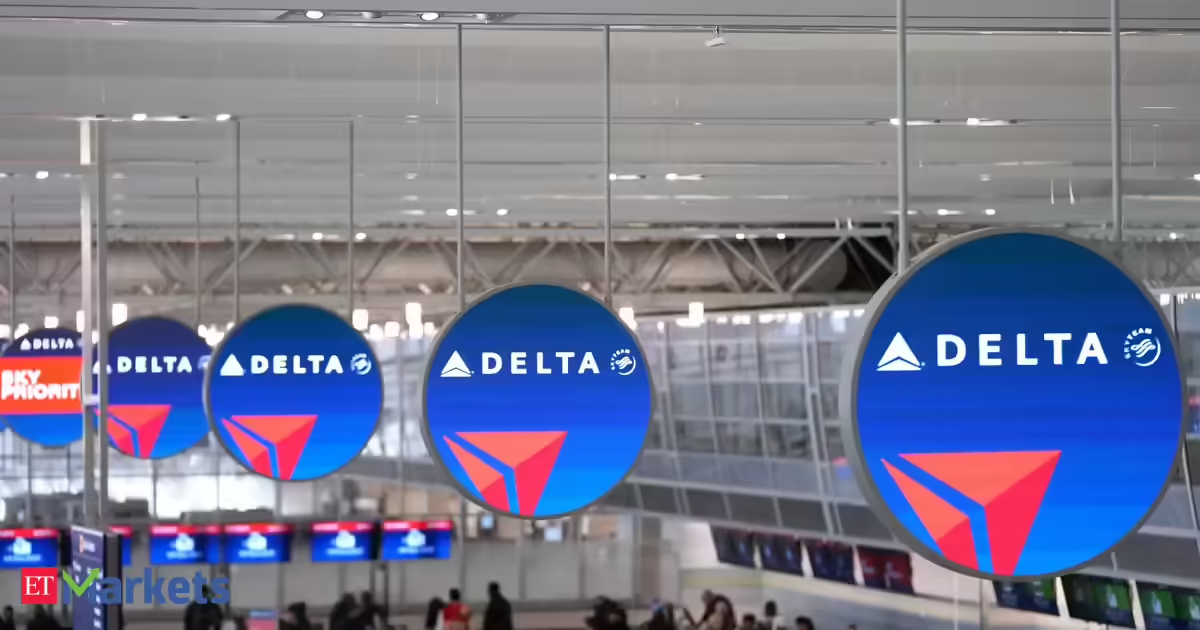
The big US carrier confirmed its profit projection for the period, even as jet fuel prices almost doubled, according to Chief Executive Officer Ed Bastian.
Bastian told an investor conference the carrier had experienced “a $400 million fuel spike just in the month of March” due to a roughly 40 percent surge in crude prices from the period just ahead of the February 28 start of the US-Israeli campaign against Iran.
But Bastian said consumers have still been booking trips in significant numbers, resulting in eight of the company’s 10 highest sales days in history during the quarter. Five of them came in March, with the war under way.
Advertisement
“Sales for us have been very, very strong all quarter long, most particularly starting off in the March spring season, which is typically the season when travel bookings really start to accumulate,” he said.
Live Events
Bastian reported broad-based growth in Delta’s domestic market. By contrast the company has seen “a very modest decline in Europe since the war started,” he said. Shares of Delta jumped 4.8 percent in early trading.
But Bastian said less than 20 percent of the company’s transatlantic revenues is from point-of-sale Europe.
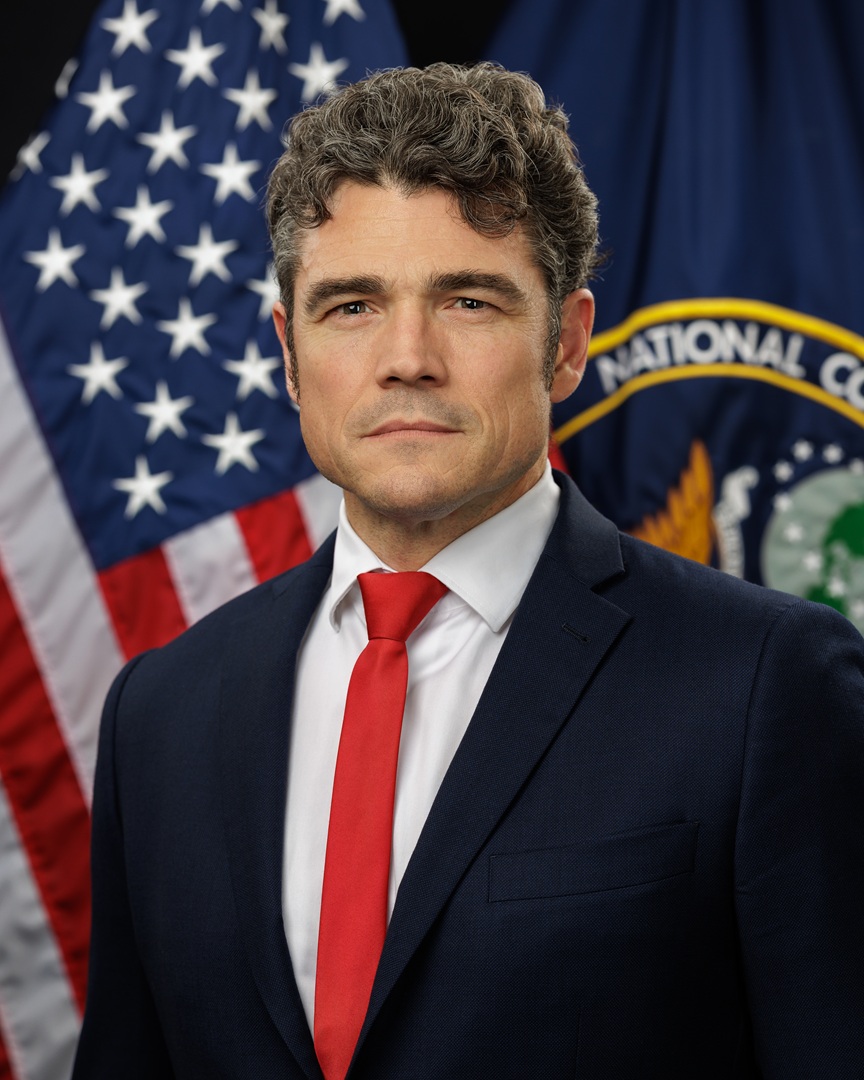
WASHINGTON — Joe Kent, director of the National Counterterrorism Center, announced his resignation Tuesday, becoming the first senior official in the Trump administration to step down in protest over the ongoing U.S. military involvement in Iran.
Joe Kent
In a statement posted on X, Kent said he “cannot in good conscience” continue to support what he described as an unnecessary war. He asserted that Iran “posed no imminent threat to our nation, and it is clear that we started this war due to pressure from Israel and its powerful American lobby.”
The resignation marks a significant break within the administration’s national security ranks amid escalating conflict in the Middle East. U.S. and allied forces have been engaged in strikes against Iranian targets since early March 2026, following a series of escalations that included Israeli operations and Iranian proxy attacks on regional interests.
Kent, a former Army Green Beret and longtime Trump supporter, was confirmed as NCTC director in July 2025 after a contentious Senate process. He had faced criticism during his nomination for past associations with far-right figures and promotion of conspiracy theories, but Republicans advanced his confirmation along party lines.
The National Counterterrorism Center, part of the Office of the Director of National Intelligence, fuses intelligence on domestic and foreign terrorism threats, coordinates analysis and shares information across agencies. Kent’s departure comes as the U.S. faces what officials describe as elevated terrorism risks tied to the Iran conflict, including potential retaliation from Tehran-backed groups.
Advertisement
Administration officials did not immediately comment on the resignation or name a successor. White House press secretary statements earlier in the day defended U.S. actions as necessary to counter Iran’s nuclear ambitions and support for terrorism, rejecting claims of external pressure dictating policy.
Kent’s statement drew swift reactions across the political spectrum. Some Trump allies criticized the move as disloyalty, while critics of the war hailed it as principled dissent. Rep. Don Bacon, R-Neb., posted on X that Kent’s departure was “good riddance,” citing Iran’s history of attacks on Americans. Democratic lawmakers, including those who opposed Kent’s nomination, pointed to his words as validation of concerns over the war’s justification.
The conflict’s origins remain disputed. Administration officials have described initial U.S. strikes as preemptive against an “imminent” Iranian nuclear breakout or threats to American forces, though intelligence assessments shared publicly have varied. Kent’s claim that no such imminent threat existed aligns with some congressional Democrats’ arguments that the war lacks constitutional authorization and clear strategic rationale.
The war has intensified in its second week, with reports of heavy airstrikes on Iranian military sites, ballistic missile exchanges and civilian casualties on both sides. A new Iranian supreme leader assumed power amid the chaos, facing immediate internal and external pressures. U.S. officials have reported no direct homeland attacks linked to the conflict so far, but warnings persist about heightened risks to Americans abroad and potential cyber or proxy operations.
Advertisement
Kent’s background as a combat veteran who served in Iraq and Afghanistan added weight to his critique. In his confirmation hearing, he emphasized using intelligence to avoid “endless wars,” a stance some now see as ironic given his role in an administration pursuing aggressive action against Iran.
The resignation highlights strains within U.S. national security apparatus. Recent reports indicate firings and departures at the Justice Department and FBI have depleted counterterrorism resources, even as threats rise amid the war. About half of the DOJ’s counterterrorism prosecutors have left since the administration began, alongside significant turnover elsewhere.
Kent’s post on X garnered rapid attention, with thousands of reposts and comments. He did not elaborate on immediate plans but signaled intent to speak more publicly about his concerns.
Advertisement
The White House has maintained that military operations aim to eliminate threats from Iran’s nuclear program and its support for groups like Hezbollah and the Houthis. President Trump has described the campaign as decisive action to prevent a nuclear-armed Iran, contrasting with what he calls failed diplomacy under previous administrations.
Iranian officials have denounced U.S. involvement as aggression driven by Israeli interests, vowing retaliation while denying nuclear weapon pursuits. International observers warn of risks for broader regional escalation, including potential involvement from other powers.
Kent’s exit is the most prominent yet in what some analysts describe as growing unease among intelligence and defense professionals over the war’s scope and justification. Earlier departures have been quieter, tied to policy shifts or personnel changes rather than explicit protests.
As the administration navigates the fallout, questions linger about intelligence-policy alignment. Kent’s assertion challenges the narrative used to launch operations, potentially fueling congressional scrutiny when lawmakers return from recess.
Advertisement
The NCTC continues operations under acting leadership, with focus on monitoring any spillover terrorism threats. Officials urged vigilance but reported no immediate changes to threat levels.
Kent’s resignation underscores deep divisions over U.S. foreign policy in a volatile moment, as the nation grapples with the costs and consequences of another Middle East conflict.
Nationwide, 16.6% of stabilized apartments offered concessions in January, according to RealPage Market Analytics.
That’s an increase from December as high supply and weakening renter demand dent the multifamily market.
The average January discount was 10.7%, or roughly five weeks of free rent.
A version of this article first appeared in the CNBC Property Play newsletter with Diana Olick. Property Play covers new and evolving opportunities for the real estate investor, from individuals to venture capitalists, private equity funds, family offices, institutional investors and large public companies. Sign up to receive future editions, straight to your inbox. High supply and weakening renter demand have apartment landlords living in an ever-more competitive space. As a result, they are offering more concessions. Nationwide, 16.6% of stabilized apartments offered concessions in January, according to RealPage Market Analytics. That was a full percentage point higher than December (when concession activity actually dipped) and the highest rate since mid-2014. The average January discount was 10.7%, or roughly five weeks of free rent. That was essentially the same as the average in the fourth quarter of 2025, but slightly higher than October’s reading. Landlords are clearly seeing the need, as rents gained just 0.2% in February, according to Apartment List. While this was the first monthly gain in six months, rents are now down 1.5% year over year, and the national vacancy rate hit a new peak of 7.4%, suggesting that the bump up in rents is likely seasonal. “High levels of new deliveries—particularly in the Sun Belt—remain a primary structural headwind. Although starts and deliveries are down from peak levels, a sizable volume of units remain in lease-up and will take time to absorb,” wrote Paul Fiorilla, associate director of secondary research at Yardi, in its February apartment report. Not only has a massive supply of new apartments been hitting the market over the past two years, but the job market is weakening, domestic migration has slowed and immigration outflows have weighed on household formation, according to Fiorilla, who notes occupancy rates are down from a year ago in 28 of the top 30 markets Yardi covers. “This big wave of supply these last few years has conditioned renters to expect a deal,” said Jay Parsons, a rental housing economist. “It wouldn’t surprise me to see that when you get those effective rent growth numbers from the various providers, you could see some incremental improvement at the same time concessions remain high.” Parsons compares the current market to 2010, when unemployment was more than twice today’s rate, noting absorption today is much better than it was then. The trouble, again, is massive supply, at roughly 1.4 million new units, which is the highest count over any three-year period since the 1970s. Concessions are coming largely in the form of free rent for a month or more as well as gift cards for potential tenants. Rent concessions are often less favorable than gift cards, because they hit the reported income of the building. “When you do a rent concession, that’s going to hit the rent roll. It’s different than what they call a marketing concession, which is basically a giveaway,” Parsons said. “There are some companies that prefer to go that [giveaway] route, as when you give a rent concession, it’s harder to wean off of that concession,” he said.
APi Group Corporation (APG) JPMorgan Industrials Conference 2026 March 17, 2026 7:30 AM EDT
Company Participants
Glenn Jackola – Executive VP & CFO Adam Walters
Conference Call Participants
Advertisement
Tomohiko Sano – JPMorgan Chase & Co, Research Division
Presentation
Tomohiko Sano JPMorgan Chase & Co, Research Division
Advertisement
Okay. Good morning, everyone. Welcome to JPMorgan Industrial Conference Day 2. This is Tomo Sano, SMID Cap Industrial analyst, and I’m pleased to open the day with APi Group. David Jackola, Executive Vice President, Chief Financial Officer; Adam Walters, Senior Director, Investor Relations. Thank you, David, and Adam.
Glenn Jackola Executive VP & CFO
Good morning.
Advertisement
Adam Walters
Good morning.
Advertisement
Tomohiko Sano JPMorgan Chase & Co, Research Division
So before we dive in, I’d like to share why APi Group is such a compelling addition to this year’s our conference. APi stands out as a leader in safety and specialty services with a resilient regulatory-driven business model and a clear road map to $10 billion plus revenue, 60% recurring revenue and 16% plus EBITDA margin by 2028. Their 10/16/60+ strategies and strong free cash flow make them a model of both stabilities and growth in the industrial sector. So to kick things off, I think it would be helpful to start with the introduction to APi Group, who the company is, what you do and also your stories. So David, could you kick off?
Glenn Jackola Executive VP & CFO
Advertisement
All right. All right. Good morning. Before I get started, I just wanted to take a minute to thank everybody for showing up bright and early and for your interest in APi Group. So APi Group is a global marketing — market-leading business service provider of fire and life safety, security, elevator and escalator and specialty services. We did about $8 billion of revenue in 2025 and about 54% of that revenue comes from highly
Bentley is to cut 275 jobs as the luxury carmaker grapples with a sharp decline in profits and mounting pressure from a weakening global market, underlining the growing strain even at the very top end of the automotive sector.
The Crewe-based manufacturer confirmed that around 6 per cent of its 4,600-strong workforce will be affected as part of what it described as “organisational efficiency measures”, with roles expected to go across management, agency and non-manufacturing functions. The reductions will now enter a consultation process, with the company stressing it will support affected employees throughout.
The announcement came as Bentley revealed a 42 per cent drop in operating profit to £187 million, down from £322 million the previous year and significantly below its £509 million peak in 2023. The downturn reflects a combination of softer global demand, rising cost pressures and geopolitical uncertainty, all of which are increasingly shaping the outlook for premium automotive brands.
Vehicle sales also slipped, with Bentley delivering 10,131 cars last year, a decline of nearly 5 per cent, driven largely by a contraction in key international markets, particularly China. The slowdown in Chinese demand has become a defining challenge for luxury manufacturers, many of whom have relied heavily on the region for growth over the past decade.
Chief executive Frank-Steffen Walliser acknowledged the scale of the challenge, saying the company was being forced to take “difficult decisions to ensure the long-term competitiveness of the business”. While he emphasised that the cuts were not “panic measures”, he conceded that the operating environment remains volatile, with the possibility of further adjustments if conditions deteriorate.
Advertisement
Bentley sought to contextualise the profit decline, arguing that without external pressures, including increased costs linked to its parent company Volkswagen and the impact of US tariffs, financial performance would have been broadly in line with 2024. Nonetheless, the figures highlight how even high-margin luxury brands are not immune to wider economic headwinds.
The restructuring comes at a pivotal moment for the business as it transitions towards electrification. Bentley is nearing completion of a new assembly line at its Crewe headquarters, which will support production of its first fully electric vehicle, scheduled for launch in early 2027. The investment marks a critical step in its long-term strategy, although the pace and direction of that transition are evolving.
In a notable shift, the company has stepped back from its previous ambition to become an all-electric brand within this decade. Instead, it is pursuing a more “balanced portfolio”, extending the lifespan of internal combustion and hybrid models in response to renewed customer demand and a broader slowdown in the uptake of luxury electric vehicles.
This recalibration mirrors a wider trend across the premium automotive sector. Manufacturers including Lamborghini have also delayed or revised EV-only strategies, reflecting both consumer hesitancy and the practical challenges of delivering high-performance electric models at scale.
Advertisement
Beyond product strategy, Bentley is also navigating an increasingly politicised environment around vehicle size and emissions. Walliser defended the company’s larger models, such as the Bentayga SUV, following criticism from London Mayor Sir Sadiq Khan, who has suggested imposing additional taxes on large vehicles, often labelled “Chelsea tractors”, due to perceived safety risks.
Rejecting those claims, Walliser described the debate as politically driven, arguing that all vehicles must meet strict regulatory standards for pedestrian and cyclist safety regardless of size.
Despite the current pressures, Bentley remains committed to its long-term transformation, positioning electrification, product innovation and operational efficiency as key pillars of its future strategy. However, the latest results and job cuts underscore a more immediate reality: even the most prestigious automotive brands are being forced to adapt quickly in an increasingly uncertain global market.
Jamie Young
Jamie is Senior Reporter at Business Matters, bringing over a decade of experience in UK SME business reporting.
Jamie holds a degree in Business Administration and regularly participates in industry conferences and workshops.
When not reporting on the latest business developments, Jamie is passionate about mentoring up-and-coming journalists and entrepreneurs to inspire the next generation of business leaders.



























































You must be logged in to post a comment Login