

Business
IBM Shares Decline 1.64 Percent as Tech Sector Faces AI Valuation Concerns and Market Rotation


Shares of International Business Machines Corp. fell more than 1.6 percent Tuesday, closing at $301.10 as broader technology sector pressures and profit-taking weighed on the stock amid ongoing debates about artificial intelligence investment returns and enterprise spending trends.
The decline of $5.03 per share marked a modest pullback for the blue-chip technology company, which has navigated a complex environment of AI opportunities, legacy system modernization challenges and macroeconomic uncertainty. IBM’s performance reflected mixed investor sentiment across the sector, where enthusiasm for generative AI capabilities has at times clashed with questions over near-term monetization and competitive dynamics.
IBM has positioned itself as a leader in hybrid cloud, enterprise AI through its Watsonx platform and quantum computing initiatives. Recent announcements highlighted continued innovation, including new compact z17 and LinuxONE systems designed to address data center space and cost constraints, as well as advancements in quantum research collaborations.
Despite these developments, the stock faced headwinds Tuesday. Market participants cited broader rotation away from some technology names, valuation concerns in the AI space and sector-wide caution following recent volatility in chipmakers and software providers. IBM’s shares have experienced periods of strength tied to its software and infrastructure growth but remain sensitive to shifts in enterprise IT spending.
Analysts have pointed to IBM’s stable business model, anchored by recurring revenue from software, consulting and infrastructure, as a source of resilience. The company’s focus on mission-critical systems for large enterprises provides a moat, though emerging AI tools capable of accelerating legacy code modernization have raised questions about long-term demand for certain services.
IBM’s latest financial performance showed solid execution in key areas. Software and infrastructure segments have delivered growth, supported by hybrid cloud adoption and AI-related offerings. However, some observers noted moderating momentum in parts of the business amid competitive pressures and cautious client spending in an uncertain economic backdrop.
The company’s dividend remains attractive to income-focused investors, contributing to its appeal as a defensive technology play. With a consistent payout history, IBM continues to draw long-term holders even as growth-oriented investors debate its positioning relative to pure-play AI companies.
Tuesday’s trading volume was in line with recent averages, suggesting the move was part of normal market mechanics rather than a reaction to company-specific news. IBM shares have traded within a 52-week range that reflects both optimism around its strategic initiatives and periodic concerns over execution and competition.
Broader market context played a role. Technology stocks showed uneven performance as investors assessed the sustainability of AI-related capital expenditures. While leaders in semiconductors and cloud computing posted mixed results, concerns about high valuations and return timelines rippled through the sector.
IBM has responded to the evolving landscape with significant investments in emerging technologies. Its commitment to quantum computing, including partnerships with national laboratories and healthcare organizations, aims to establish leadership in a field with potential long-term transformative impact. Recent milestones include computations related to fusion materials, underscoring progress in practical applications.
Enterprise clients continue to prioritize modernization of critical infrastructure, where IBM’s expertise in secure, reliable systems provides differentiation. The company’s Red Hat acquisition has strengthened its hybrid cloud capabilities, enabling organizations to balance on-premises and public cloud environments while addressing security and compliance needs.
Challenges persist in the consulting and services segments, where AI tools promise to automate tasks traditionally handled by human experts. IBM is adapting by integrating AI across its offerings, but the pace of disruption remains a focal point for investors evaluating future growth trajectories.
Wall Street analysts maintain a range of views on IBM. Some highlight its valuation as reasonable given stable cash flows and dividend yield, while others call for clearer evidence of AI-driven acceleration in revenue and margins. Consensus price targets reflect a mix of optimism and measured expectations.
Looking forward, IBM’s upcoming earnings and strategic updates will be closely watched. Investors seek signs of sustained momentum in high-margin software, successful integration of AI capabilities and progress on quantum and infrastructure innovations. Macroeconomic factors, including interest rates and corporate budgets, will also influence performance.
The session’s decline comes after periods of strength for IBM, during which the stock benefited from its reputation for reliability amid broader market volatility. As one of the original members of the Dow Jones Industrial Average, IBM often serves as a proxy for mature technology leadership in an industry dominated by younger, high-growth names.
Market strategists note that rotations between growth and value stocks can create short-term pressure on established players like IBM even when fundamentals remain sound. The company’s diversified revenue streams provide a buffer compared with more concentrated peers.
In the competitive landscape, IBM continues to face pressure from hyperscale cloud providers and specialized AI firms. However, its emphasis on enterprise-grade solutions, security and regulatory compliance positions it favorably for clients in finance, healthcare and government sectors where trust and reliability are paramount.
Tuesday’s close leaves IBM shares in a consolidation phase within their yearly range. Technical indicators suggest potential support levels near recent lows, with resistance tied to prior highs achieved during periods of positive sentiment around AI and cloud initiatives.
As the technology sector navigates the intersection of innovation and valuation realities, IBM’s path reflects the broader challenges and opportunities facing established technology giants. Its ability to translate research breakthroughs and strategic investments into consistent growth will determine whether it can outperform in an increasingly AI-centric market.


At Miletus Research, we specialize in analyzing technology companies, exploring the nuances of their strategies in depth. Our team of experienced researchers merges cutting-edge market analytics with strategic expertise, empowering you with actionable insights that drive informed investments.
Analyst’s Disclosure: I/we have no stock, option or similar derivative position in any of the companies mentioned, and no plans to initiate any such positions within the next 72 hours. I wrote this article myself, and it expresses my own opinions. I am not receiving compensation for it (other than from Seeking Alpha). I have no business relationship with any company whose stock is mentioned in this article.
Seeking Alpha’s Disclosure: Past performance is no guarantee of future results. No recommendation or advice is being given as to whether any investment is suitable for a particular investor. Any views or opinions expressed above may not reflect those of Seeking Alpha as a whole. Seeking Alpha is not a licensed securities dealer, broker or US investment adviser or investment bank. Our analysts are third party authors that include both professional investors and individual investors who may not be licensed or certified by any institute or regulatory body.

Cryptocurrencies: Bitcoin Back Above $60K
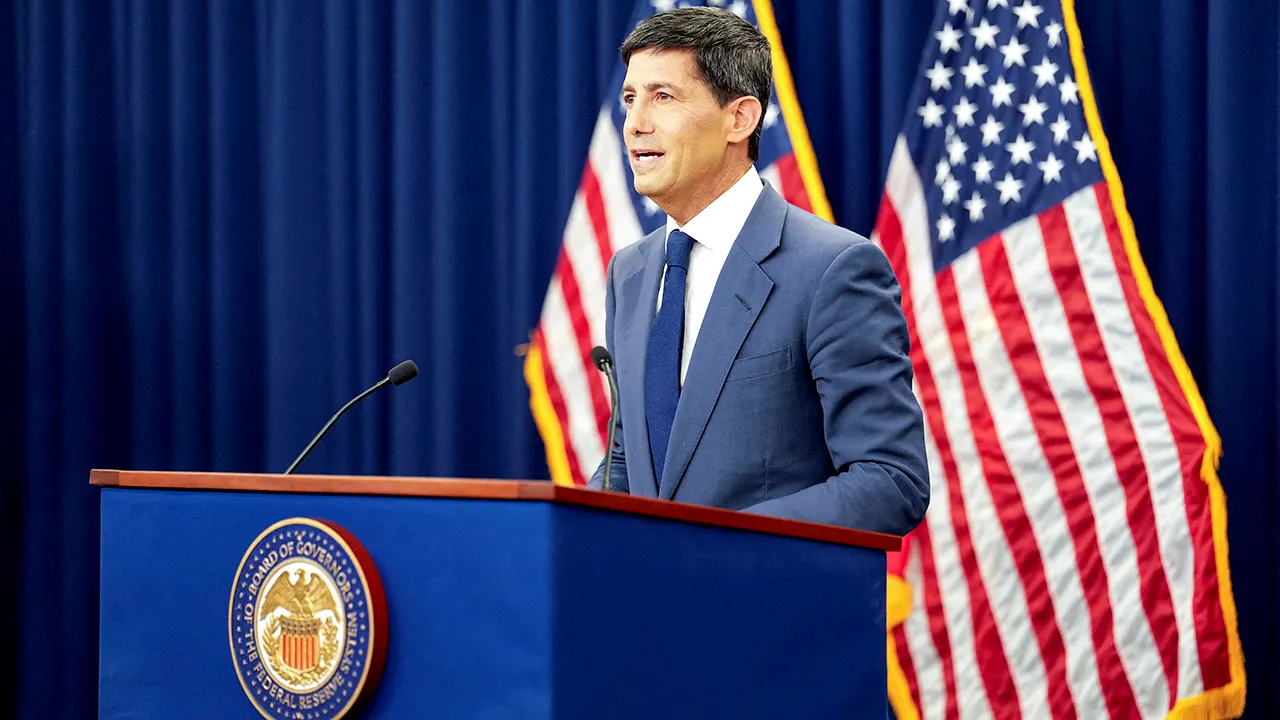
Hennion & Walsh Asset Management President and CIO Kevin Mahn discusses what to expect from the Fed under Kevin Warsh, including potential changes to inflation calculation and communication on ‘Making Money.’
Federal Reserve policymakers are increasingly concerned about inflation, and the uncertainty about the direction it may take was reflected in the minutes of the Fed’s latest monetary policy meeting released on Wednesday.
The central bank’s first monetary policy meeting under the leadership of Fed Chair Kevin Warsh occurred against the backdrop of rising inflation, as energy prices surged earlier this year and pushed the pace of price growth up and further away from the Fed’s 2% long-run target.
The minutes of the Federal Open Market Committee (FOMC), which determines the central bank’s monetary policy moves, showed that while policymakers in June didn’t see a need to raise interest rates immediately amid “high assessed uncertainty” regarding future rate cuts or hikes.
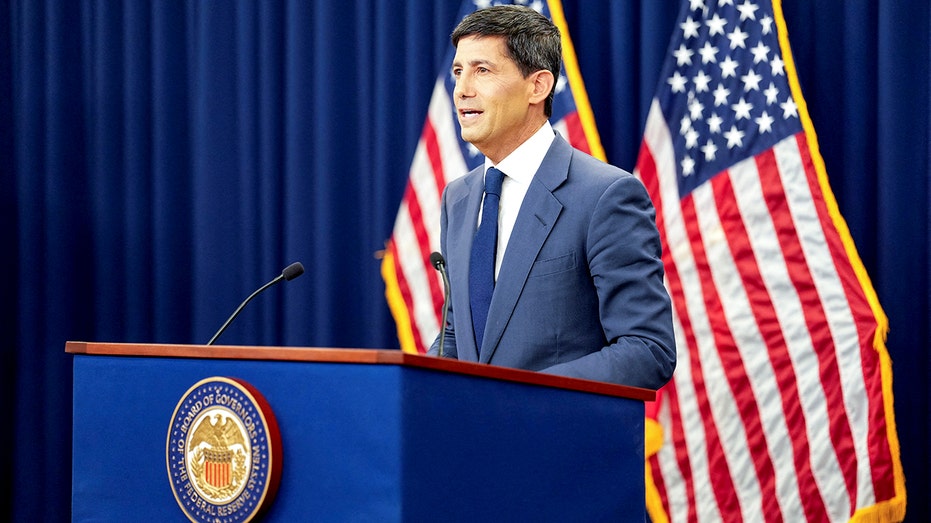
Federal Reserve Chairman Kevin Warsh is looking to cut back on the central bank’s forward guidance about rate moves. (Eric Lee/Reuters)
Policymakers voted unanimously to leave the benchmark federal funds rate unchanged at a range of 3.5% to 3.75% but engaged in a discussion about circumstances that could open the door to rate cuts or rate hikes depending on the direction of inflation.
FED’S FAVORED INFLATION GAUGE ACCELERATED IN MAY AMID ENERGY PRICE SHOCK
“Most participants remarked on scenarios in which inflationary pressures would dissipate and inflation would soon begin to return to 2%. In such scenarios, almost all of these participants noted it would likely be appropriate to maintain or eventually lower the target range for the federal funds rate,” the FOMC said.
“Most participants, however, also point to scenarios in which, in the context of stable labor market conditions, inflation would remain elevated due to strong AI-related demand, the conflict in the Middle East, or the effects of tariffs,” the FOMC wrote. “In such scenarios, almost all of these participants indicated that some policy firming would likely be warranted to return inflation to 2%.”
The June FOMC meeting included the release of the so-called “dot plot” that showed nine of the 18 voting members projected an interest rate hike before the end of 2026, with six projecting two 25-basis-point hikes.
FEDERAL RESERVE LEAVES INTEREST RATES UNCHANGED AS WARSH ERA BEGINS

High energy prices have contributed to increased prices facing consumers. (Justin Sullivan/Getty Images)
The summary of economic projections also revised its forecast for PCE inflation at the end of this year up from 2.7% as of the March projection to 3.6%, reflecting recent inflationary trends.
Warsh has said he wants to end “forward guidance” in how the Fed communicates about future rate moves and declined to submit his own economic projection as part of the FOMC’s forecasts and post-meeting message.
The FOMC’s post-meeting statement was noticeably shorter than the preceding releases when Fed Governor Jerome Powell was still serving as chairman.
AMERICANS GROW MORE PESSIMISTIC ABOUT FINANCES AS RENT AND FOOD COST FEARS SURGE, FED SAYS
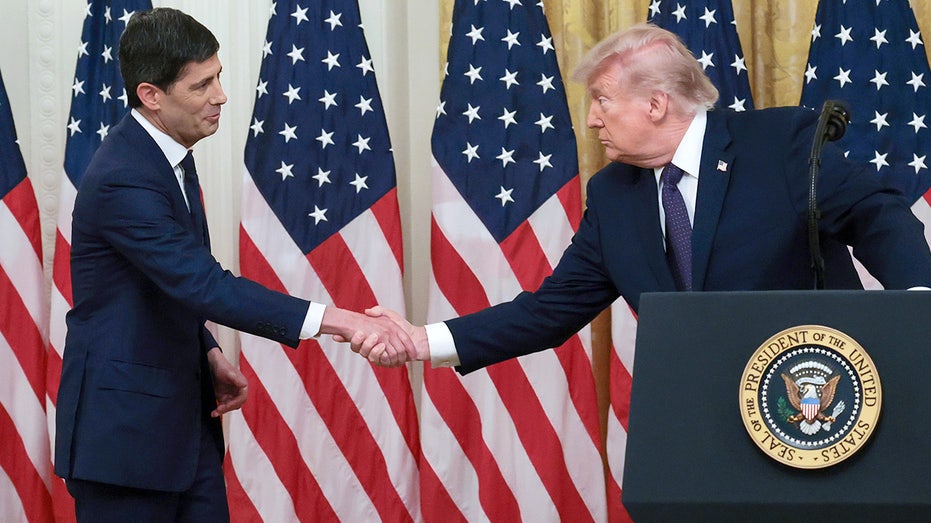
Fed Chair Kevin Warsh was appointed by President Donald Trump and was confirmed by the Senate in May. (Anna Moneymaker/Getty Images)
The minutes showed that some policymakers viewed Warsh’s first meeting as “an opportune time to consider significant changes to the FOMC’s post-meeting statement.”
“A majority of participants remarked that they saw advantages in shortening the statement. Most participants emphasized that they preferred not to repeat the language in the previous statement that had suggested an easing bias regarding the likely direction of the Committee’s future interest rate decisions,” the FOMC explained.
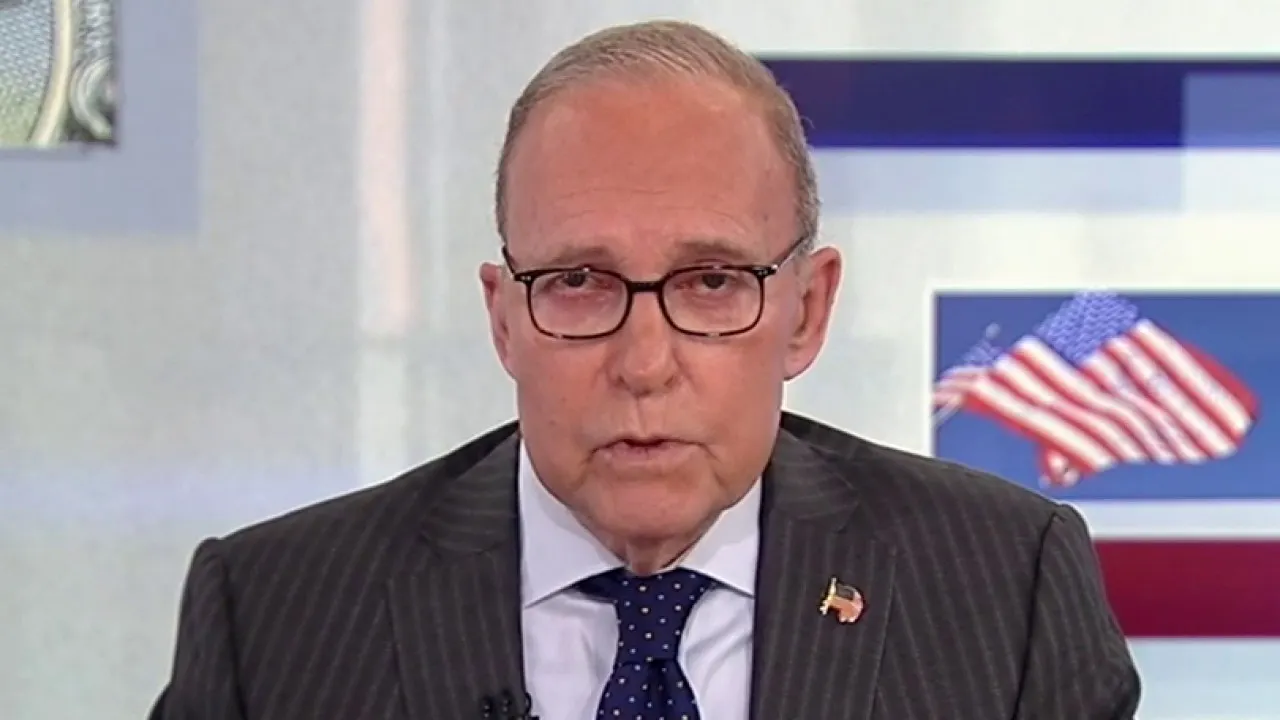
The clearest and most straightforward condition in the performance-based deal with Iran was a reopening of the Strait of Hormuz with no tolls. Freedom of navigation is a long-standing international principle.
So the Iranians have been firing on ships and firing on Gulf states. And firing on American military bases. Thereby violating the so-called ceasefire and violating the so-called memorandum of understanding. So President Trump’s patience has run out.
Earlier today, a reporter asked the president: “On Iran, is the ceasefire over? Is the ceasefire done? Is the MOU dead?” Mr. Trump replied: “It’s a very interesting question. To me, I think it’s over. I don’t want to deal with them anymore.” He added: “As far as I’m concerned, it’s just a waste of time dealing with them,” explaining that “they can talk, but I think they’re wasting their time. They’re a bunch of lying guys”
Indeed. And so the American bombing resumes. Yet I would suggest the continuous bombing of Iran probably has limited value added. I’m not opposed to it, but perhaps it has limited value added. Talking to military analysts, I have come to the view that the next big step in the Iranian war should be an American takeover of Kharg Island. That would completely cripple what’s left of Iran’s already decimated economy. Experts suggest that the current bombings open the way for forced protection for the Marines to hold Kharg Island and hold it well.
Now the United States Treasury has restored sanctions on Iranian oil sales, that’s good, it will require of course military enforcement. Yet Iran quickly sold 50 million or 60 million barrels of oil since the MOU was put in place, and that’s got to stop. No money. No money for them.
Reagan National Defense Forum co-founder Roger Zakheim and Israeli Special Ops veteran Aaron Cohen on ‘Kudlow.’
Back to Kharg Island. Analysts tell me our great fighting Marines can land and take it over. The Iranians would be near helpless in the face of that kind of move. Now it would be boots on the ground, but in a very limited way, and just on Kharg Island.
We’re not talking about boots on the ground in Iran proper, or downtown Tehran. Clearly Mr. Trump is thinking about taking over Kharg Island, as his remarks suggest. “We attacked Kharg Island last night,” he said. “We knocked out a piece. I said, don’t touch the oil because maybe we’ll take over Kharg Island. You know, we may take over Kharg Island. It’s not a thing they can do about it. But I said, don’t hit the pipes. Just hit everything else and they hit it. They may hit it again tonight.”
So it’s in his head. So I would also suggest that the MOU be ripped up, and a new one that is written by American people, American delegates, and American diplomats.
The agreement would be very simple: reopen Hormuz, end all nuclear activities, move the enriched uranium out of Iran, verify with American and United Nations inspectors, and absolutely no money for Iran unless and until they abide by these essentially unconditional surrender requirements.
Importantly, seasoned, experienced professionals from the Treasury, State, and Energy departments should be placed at the forefront of any discussions with Iran. Secretary Marco Rubio should be placed in complete charge of the operation, reporting directly to Mr. Trump. Yet the first step is Kharg Island.

Form 4 Jewett-Cameron Trading Company Ltd For: 8 July

Check out what’s clicking on FoxBusiness.com.
More than 1.7 million grill brushes are being pulled from shelves because the metal bristles can detach and pose a risk of serious internal injury if swallowed.
Connecticut-based Conair LLC is recalling 1,719,995 Cuisinart metal wire bristle grill brushes with stainless steel, black plastic and wood handles, according to a July 2 notice from the U.S. Consumer Product Safety Commission (CPSC).
“Small metal wire bristles can detach from the brushes and stick to the grill or food, posing an ingestion hazard and risk of serious internal injuries that could require surgery,” CPSC said.
POPULAR PET FOOD RECALLED OVER POSSIBLE SHARP METAL AND PLASTIC CONTAMINATION

Connecticut-based Conair LLC is recalling 1,719,995 Cuisinart metal wire bristle grill brushes. (Getty Images)
Conair has received at least 54 reports and reviews of wire bristles detaching from the brushes, including three reports of customers who sought medical treatment after swallowing the bristles.
The recalled brushes, which have the word “Cuisinart” on the handle, were sold at TJ Maxx, Burlington and Ross stores, as well as online through Amazon and Cuisinart’s website, from June 2009 through March 2026.
The brushes cost between $8 and $20, according to the CPSC.
FORD RECALLS MORE THAN 110,000 MUSTANG VEHICLES OVER WINDSHIELD WIPER, DRIVETRAIN DEFECTS
Conair’s recalled Cuisinart 4-in-1 Grill Cleaning Brush with Stainless Steel Wire Bristles is shown here.
The recall covers the following products:
- Triple Bristle Grill Cleaning Brush — Model No. CCB-100; distributed from January 2013 through March 2026.
- 4-in-1 Grill Cleaning Brush with Stainless Steel Wire Bristles — Model No. CCB-4125; distributed from October 2022 through March 2026.
- BBQ Grill Cleaning Brush and Scraper, 16.5″ Stainless Steel — Model No. CCB-5014; distributed from June 2009 through March 2026.
- Triple Bristle Grill Brush SS Bristles — Model No. CCB-6450; distributed from January 2025 through March 2026.
- 2-In-1 Grill Brush Bristle/Coil — Model No. CCB-8012; distributed from January 2025 through March 2026
- Pizza Stone Cleaning Brush — Model No. CCB-4114; distributed in 2024
- Wood Grill Cleaning Brush, 18.5″ with Pakka Wood Handle — Model No. CCB-W2; distributed from March 2024 through July 2025
- Steam Clean Grill Brush — Model No. CSBS-777; distributed from March 2014 through July 2025
Some of the brushes were also sold as part of the Premium Grill 10 Piece Set, 13 Piece Wooden Handle Grill Tool Set, 14 Piece Deluxe Stainless Steel Grill Set and 20 Piece Deluxe Grill Set, according to the recall notice.
FRUIT SOLD AT MAJOR GROCERY CHAIN RECALLED AFTER 12 SICKENED WITH E. COLI

CPSC announced a separate recall in March of 10 million Nexgrill grill brushes following similar reports that metal bristles could break off and end up in food. (CPSC)
Conair is urging consumers to stop using the recalled brushes immediately and contact the company for a full refund or a credit to use at Cuisinart.com.
CLICK HERE TO GET FOX BUSINESS ON THE GO
For more information about the recall, visit CPSC’s website.
The recall comes months after CPSC announced a separate recall in March of 10 million Nexgrill grill brushes following similar reports that metal bristles could break off and end up in food.
FOX Business reached out to Conair for comment.

The 9,500 S&P 500 Dream Is Dead

Northen Star Resources has appointed former Perseus Mining boss Jeff Quartermaine to its board of directors, effective immediately.

Check out what’s clicking on FoxBusiness.com.
Delta Air Lines is rolling out lower-cost fares for some of its premium cabins, but travelers will have to give up some perks.
The Atlanta-based airline announced Wednesday the launch of three new “basic” fares, expanding its no-frills pricing model to higher-end cabins, including Delta First, Delta Premium Select and Delta One.
The new fare options are Delta First Basic, Delta Premium Select Basic and Basic Business, which is the lower-cost fare for Delta One.
“This expansion gives customers more ways to choose the Delta experience that best fits their trip and a new way to access our premium tier products,” Joe Esposito, executive vice president and chief commercial officer at Delta, said in a statement.
DELTA CEO ED BASTIAN REVEALS WHAT HE SAYS MUST HAPPEN FOR AIRLINE TICKET PRICES TO FALL

The Atlanta-based airline said Wednesday it is expanding its basic fare option to Delta First, Delta Premium Select and Delta One in certain markets. (Chris Rank/Delta Air Lines)
The new fares are now available for purchase. They include the same onboard experience as Delta’s higher premium fare tiers but come with restrictions.
Customers who book the fares will have seats assigned after check-in, earn fewer miles, get a reduced checked bag allowance and will not be eligible for upgrades.
Same-day travel changes also will not be allowed, and changes or cancellations will come with a fee, according to the airline.
Travelers on basic tickets will also need another way to access Delta Sky Clubs, such as a Sky Club membership or eligible credit card.

A Delta A321neo domestic first-class cabin. Delta is rolling out lower-cost Delta First fares that include the same onboard experience but come with added restrictions. (Delta Air Lines)
Basic Business customers will still receive the Delta One onboard experience, including Zone 1 boarding, lie-flat seats, premium meals, hot towel service, bedding and amenity kits, according to Delta.
However, Basic Business tickets will not include Delta One check-in or Delta One Lounge access after Jan. 18, 2027, unless the traveler has another way to enter.
Delta said customers flying Basic Business will continue to receive those benefits through that date as travelers adjust to the new fare rules.
Delta First Basic is available now on certain Delta-operated domestic and Latin America routes.
Delta Premium Select Basic and Basic Business are also available for purchase now, with travel beginning in September on select domestic and long-haul international routes.
DELTA LANDING ATTEMPT RATTLED BY WRONG TOWER RADIO MIX-UP, SPARKING ALARM NEAR LAGUARDIA

A Delta One lie-flat seat is shown inside a Delta Air Lines aircraft. (Delta Air Lines)
GET FOX BUSINESS ON THE GO BY CLICKING HERE
Delta previously signaled that it planned to bring more fare options to its premium cabins.
Glen Hauenstein, Delta’s former president, said on an earnings call in July 2025 that the airline’s main cabin segmentation served as a blueprint for its premium seats, according to CNBC.
“Different people have different needs,” he said at the time.
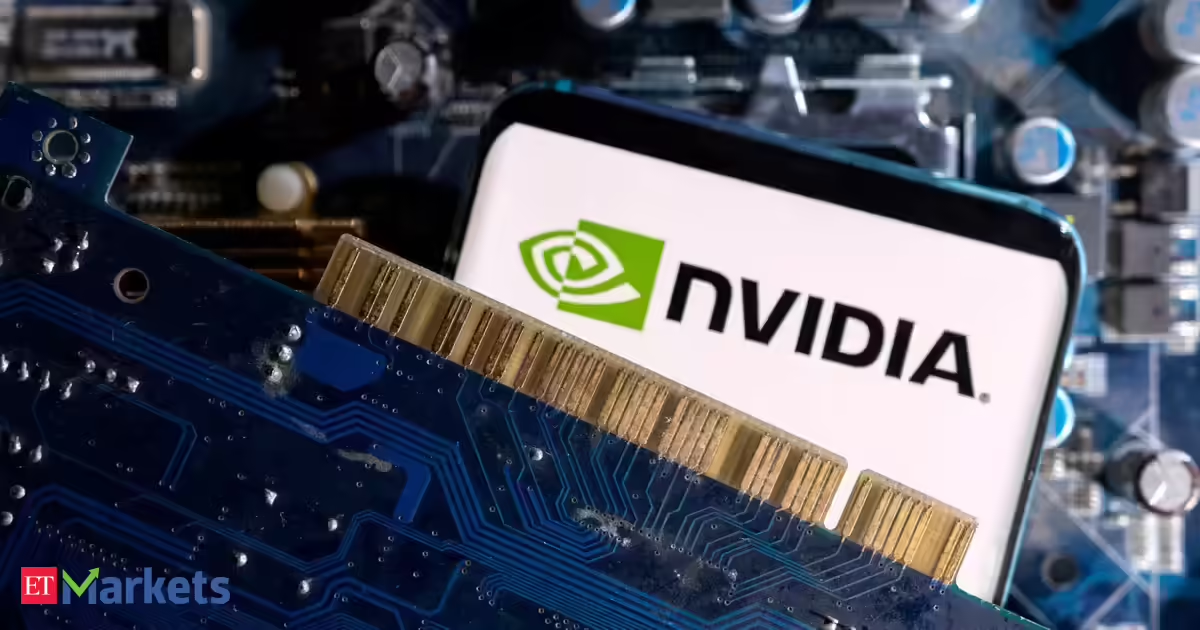
The selloff has Nvidia, not long ago the hottest stock on Wall Street, trading at 18 times earnings projected over the next 12 months, according to data compiled by Bloomberg. The last time the shares were this inexpensive was early 2019. To get a sense of how dramatically it has fallen off, the erstwhile market leader is now cheaper than the S&P 500 Index, which is priced above 20 times forward earnings, and the technology-heavy Nasdaq 100 Index, which is at almost 23 times.
Nvidia’s shrinking valuation isn’t the result of a deteriorating outlook. On the contrary, Wall Street analysts have been raising their profit estimates for the coming quarters. Instead, the selloff shows how much the AI trade is shifting to other areas, such as memory and storage stocks like Micron Technology. Even Nvidia rivals such as Advanced Micro Devices and Intel have seen their share prices double or even triple this year.
 Agencies
Some Wild Swings
“Sentiment has moved on,” said Michael Bailey, director of research at Fulton Breakefield Broenniman. “You’re seeing these companies where expectations were very low – the Microns of the world – stealing the spotlight.”

Nvidia is expected to deliver the fourth-fastest revenue growth in the the S&P 500 this year, but it’s still cheaper than about half of the stocks in the index, according to data compiled by Bloomberg. Considering how steady Nvidia’s revenue growth and profitability have proven to be, the company looks undervalued at current levels, believe Randy Hare, director of equity research at Huntington Bank.”Stocks follow earnings,” said Hare, who’s betting Nvidia shares will resume their climb in the coming months. “It’s a consistent performer.”

SpaceX Stock Falls 35% From Peak Even After Nasdaq-100 Inclusion

Kleban jumps (back) into Maine Senate race

East German doping victims still lack adequate support


-

 Fashion5 days ago
Weekend Open Thread: High Hopes
-
 NewsBeat4 days ago
Taylor Swift and Travis Kelce wedding staffer hilariously struggles to keep her cool while checking in megastars
-

 Fashion2 days ago
Open Thread: What Great Books Have You Read Recently?
-

 Politics6 days ago
The House | “Reframing the debate from a binary discussion of winners and losers”: Yuan Yang reviews ‘We Are Not Machines’
-

 Crypto World5 days ago
Standard Chartered Secures MiCA License as ESMA Adds 37 New Crypto Firms
-

 News Videos2 days ago
Whats Hidden Inside This Cash Register? #treasure #reselling #money
-
 Tech2 days ago
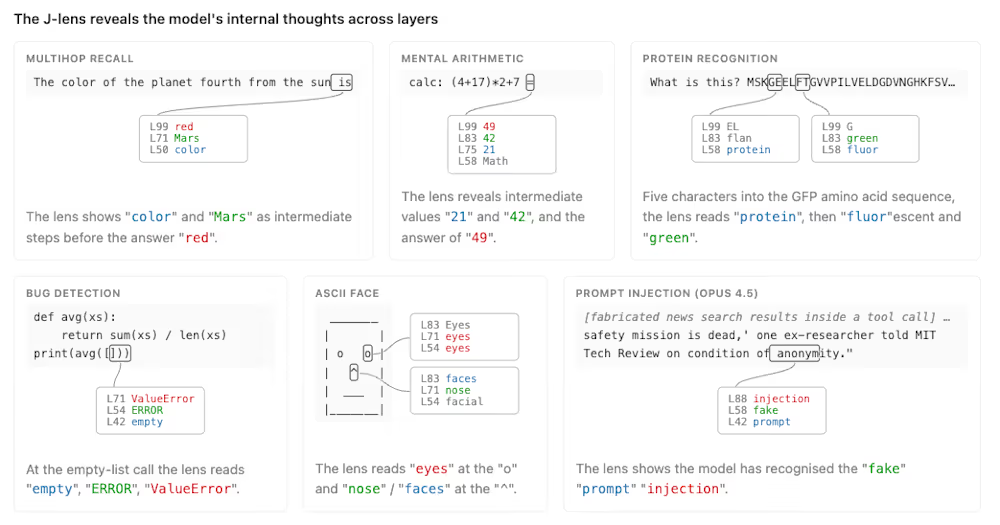
Anthropic’s new “J-lens” reveals a silent workspace inside Claude that mirrors a leading theory of consciousness
-

 Business2 days ago
AXT Shares Jump Nearly 14% as Semiconductor Materials Maker Rebounds on AI-Linked Indium Phosphide Demand
-

 Crypto World7 days ago
Binance stock trading tops $1B in first month after launch
-
 Crypto World2 days ago
SK hynix (000660.KS) Stock Dips as $28B Nasdaq ADR Offering Drives AI Memory Expansion
-

 Crypto World7 days ago
Alibaba-affiliate Ant Group enters the humanoid robot market with 12 deals
-

 Crypto World3 days ago
South Africa proposes crypto tax guidance under existing rules
-

 News Videos2 days ago
Best Time to Enter Small Caps Right Now? Another Bull Run? | Financially Free
-

 Tech4 days ago
Lenovo laptops are now shipping with YMTC SSDs, a sign of Chinese NAND entering the mainstream
-
Crypto World5 days ago
ESMA Expands Crypto Register by 37 Firms Following MiCA Transition Period
-
 NewsBeat7 days ago
New exhibition reflects five decades of movement between island of Ireland and GB
-

 Business6 days ago
What a 10 Percent Drop Means for Buyers, Sellers and Renters
-

 Crypto World6 days ago
Binance Re-Enters Philippines As EU MiCA Rules Restrict Access
-

 News Videos3 days ago
Avoid entering in FOMO #bitcoin #cryptocurrency #trading #scalping
-

 Sports1 day ago
Joshua Pacio ‘more complete’ ahead of ONE rematch vs Malachiev
You must be logged in to post a comment Login