

Business
Implications for China and Global Trade


US trading partners, including China and the EU, are responding to Trump’s recent tariff setbacks and warnings of potential new tariffs. They are likely adopting cautious or defensive strategies in light of these developments, reflecting concerns over economic stability and trade relations. The situation underscores ongoing tensions between the US and its trade partners over tariffs and trade policies.
The setback of Donald Trump’s tariffs marks a significant turning point in global trade dynamics. During his administration, tariffs were used as a tool to pressure China into changing trade practices, but these measures led to increased costs and tensions. The recent move to roll back or ease some tariffs suggests a shift toward more cooperative trade relations, which could benefit both China and the global economy.
For China, the reduced tariffs offer relief from some of the trade disruptions it faced under Trump’s trade wars. It may boost Chinese exports and investments, fostering more stability in its economic growth. Additionally, easing tariffs can foster improved diplomatic relations between the two countries, aiding in ongoing negotiations on trade and other economic issues.
Globally, the easing of tariffs could help restore confidence in international markets. It signals a potential shift away from protectionism towards more open trade policies. This development may encourage other nations to reconsider their trade barriers, promoting a more interconnected and resilient global economy in the long term.
Other People are Reading


The chief executive of PizzaExpress, the founder of MOBO Awards and the co-founder of one of Europe’s fastest-growing matcha brands are among the finalists for the 2026 Veuve Clicquot Bold Awards.
Now in its 54th year, the awards are the longest-running international honours dedicated to celebrating women in business. Founded in tribute to Madame Clicquot — who took over the Champagne house at 27 and defied the conventions of her era — the programme recognises women who combine commercial success with bold, transformative leadership.
The awards are split into two categories: the Bold Woman Award, honouring established leaders, and the Bold Future Award, spotlighting emerging entrepreneurs shaping the next generation of enterprise.
Among this year’s senior leaders is Paula MacKenzie, chief executive of PizzaExpress. Since taking the helm, MacKenzie has overseen a nationwide refurbishment programme, introduced new concepts including the PizzaExpress Pod, and expanded the brand both domestically and internationally. Under her leadership, the company has achieved record customer satisfaction levels and launched PX Records, its own record label, while raising more than £1m for charity.
Kanya King CBE, founder and CEO of the MOBO Group, is also shortlisted. Over three decades, she has grown the MOBO Awards from a niche celebration into a globally recognised cultural platform. In recent years she launched House of MOBO in South London and introduced MOBOLISE, a UK-first initiative aimed at equipping 100,000 Black talents with AI literacy and career development opportunities. The MOBO Awards mark their 30th anniversary in 2026.
Completing the trio is Smruti Sriram OBE, CEO of Bags of Ethics under parent company Supreme Creations. Sriram has positioned the business as a global leader in reusable packaging, working with brands including Dior, Harrods and Nike. Her vertically integrated supply chain model, which employs an 80% female workforce, has helped eliminate more than 30 billion single-use items worldwide while delivering consistent double-digit growth.
The Bold Future Award highlights ambitious founders building high-impact ventures.
Alisha Fredriksson, co-founder and CEO of Seabound, has developed a modular carbon capture system that can retrofit existing ships and reduce CO₂ emissions by up to 95%. In under four years, she has taken the business from concept to commercial deployment with major shipping operators, building a specialist team and securing £8.5m in funding.
Josephine Philips, founder of SOJO, has modernised the clothing repair sector by integrating proprietary technology, logistics and in-house operations. The platform now partners with brands including Ralph Lauren, Selfridges and Marks & Spencer.
Marisa Poster, co-founder of PerfectTed, rounds out the shortlist. At 28, she has helped scale the matcha-based drinks brand to a reported £50m in annual recurring revenue, with distribution in more than 30,000 retail and café locations across over 50 countries.
Previous winners of the awards include Julia Hoggett, Professor Sarah Gilbert and Anne Pitcher, reflecting the breadth of sectors represented, from finance and science to retail and culture.
Thomas Mulliez, president of Veuve Clicquot, said this year’s shortlist reflects the pioneering spirit of Madame Clicquot. “They are redefining what business can be — from tackling plastic pollution and fashion waste to cementing Black music at the heart of British culture.”
Sian Westerman, board member of the British Fashion Council and a judge for the awards, said the finalists exemplify resilience in the face of structural barriers that continue to challenge women in leadership and entrepreneurship.
The winners will be announced at a ceremony in London on 20 May, bringing together senior figures from across business, culture and industry to celebrate audacious female leadership.

Amy Ingham
Amy is a newly qualified journalist specialising in business journalism at Business Matters with responsibility for news content for what is now the UK’s largest print and online source of current business news.

A WA university and a global consultancy aim to deliver authentic results in research by cutting out the middleman.

People at the start of their careers are particularly affected by the UK’s weak job market.


South Carolina measles cases easing earlier than expected, health official says

Alphabet Inc. (NASDAQ: GOOGL) shares rose 0.64% to close at $312.90 on Feb. 25, 2026, extending a strong recovery as the Google parent company continues to demonstrate accelerating revenue growth fueled by artificial intelligence advancements and surging demand for Google Cloud, even as massive capital expenditures raise questions about near-term returns.

AFP
The modest daily gain came amid elevated trading volume of nearly 30 million shares and followed a period of consolidation after the stock hit a 52-week high near $349 earlier in February. Year-to-date, Alphabet has lagged the broader market slightly but remains up more than 70% over the past 12 months, reflecting sustained investor enthusiasm for its AI leadership despite a recent pullback from peaks.
The primary catalyst remains Alphabet’s fourth-quarter 2025 earnings reported Feb. 4, 2026, which showcased record performance. Consolidated revenues jumped 18% year over year to $113.8 billion, surpassing expectations, while net income rose 30% to $34.5 billion and diluted earnings per share climbed 31% to $2.82, beating consensus estimates of around $2.61. Google Services revenues increased 14% to $95.9 billion, driven by 17% growth in Search & other and strong contributions from subscriptions and devices. YouTube ads and subscriptions pushed the platform’s full-year revenue above $60 billion for the first time.
Google Cloud delivered standout results, with revenues surging 48% to $17.7 billion amid booming demand for AI infrastructure and enterprise solutions. The segment’s operating income turned sharply positive, highlighting improved profitability as AI tools like Gemini integrate deeply into customer workflows. CEO Sundar Pichai highlighted that the Gemini app now exceeds 750 million monthly active users, with first-party models processing over 10 billion tokens per minute via API.
To fuel this momentum, Alphabet guided 2026 capital expenditures to $175 billion-$185 billion — nearly double the $91.4 billion spent in 2025 — primarily for AI data centers, compute capacity and infrastructure to meet exploding demand. The forecast, announced alongside earnings, initially pressured shares due to concerns over elevated spending and uncertain monetization timelines in a competitive AI landscape. However, analysts have increasingly viewed the investment as a moat-widening move, positioning Alphabet ahead in the race against rivals like Microsoft and Amazon.
Recent developments reinforce this narrative. On Feb. 25, Alphabet announced that its robotics software company Intrinsic, formerly an “Other Bets” moonshot, would fold into Google to accelerate physical AI integration. The move streamlines operations and aligns robotics efforts with broader AI ambitions. Alphabet has also secured major clean energy deals, including partnerships with Xcel Energy in Minnesota and AES in Texas, to power new data centers sustainably amid regulatory and grid constraints.
The company raised over $30 billion in a global debt offering earlier in February to support these expenditures, underscoring confidence in long-term cash flows despite higher leverage. Alphabet maintains a robust balance sheet with significant net cash and initiated or increased dividends, including a $0.21 quarterly payout (ex-date March 9, 2026).
Regulatory and competitive dynamics persist as risks. Antitrust scrutiny continues following prior rulings, though favorable outcomes — such as avoiding severe remedies like divesting Chrome or Android — have eased overhangs and boosted sentiment. Ongoing cases in the U.S. and EU could influence future operations, but analysts note Alphabet’s data advantages and scale provide resilience.
Institutional activity reflects mixed but generally positive views. Some funds trimmed positions modestly, while others added significantly; Stratos Wealth Partners increased holdings by millions. Consensus analyst targets hover around $366-$376, implying 17-20% upside from current levels, with a “Moderate Buy” rating. Valuation stands at a forward P/E near 28x based on projected 2026 earnings, elevated from historical averages but justified by accelerating growth.
Broader market context includes AI sector enthusiasm, with peers facing similar capex pressures. Bond investors have flagged AI spending bubbles as a top risk, yet Alphabet’s execution — including Gemini integrations with partners like Apple for Siri enhancements and Walmart for shopping — demonstrates tangible progress toward monetization.
As the company prepares for Q1 2026 earnings in late April, focus will remain on cloud backlog (nearing $240 billion), AI-driven search expansions like AI Overviews, and capex deployment efficiency. With annual revenues surpassing $400 billion for the first time in 2025 and clear paths to higher margins, Alphabet appears well-positioned to capitalize on the AI era despite short-term spending headwinds.
Investors continue monitoring geopolitical factors, energy costs for data centers and competitive AI model releases. For now, the stock’s resilience amid heavy investment signals market belief in Alphabet’s ability to convert scale and innovation into sustained leadership and shareholder value.
Business
PSU banks better placed on loan-deposit metrics; microfinance cycle nearing normalisation, says Yuvraj Choudhary

Speaking to ET Now, Yuvraj Choudhary from Anand Rathi Institutional offered a data-backed perspective, arguing that the issue may be less severe for PSU banks than widely perceived.
Responding to concerns that the industry’s loan-to-deposit ratio has been climbing in recent quarters, Choudhary said, “So basically, loan to deposit. So, if we look at the broad data, so the loan to deposit has been going up in the last few quarters because credit growth has been faster than the deposit growth. However, for PSU banks, if you look at the overall data, for PSU banks the credit to deposit ratio is almost 10% lower than the private banks. So, there has been lot of talks around PSU bank struggling in the LDR ratio. However, if we look at the recent trends, say for example for SBI, the credit to deposit ratio for SBI is close to 73-74%, which is much lower than what the industry is at. So, although credit to deposit ratio has been going up, but it is less of a problem for PSU banks compared to private banks.”
The example of State Bank of India (SBI) underscores the point. With a credit-to-deposit ratio in the low-70% range, SBI appears to have significant headroom compared with several private peers operating at tighter levels.
Deposit Growth Catching Up

While PSU banks have faced questions around deposit mobilisation, Choudhary noted that the gap between credit and deposit growth is beginning to narrow.
“See, if you look at the overall deposit for the PSU banks, obviously it was lower than the credit growth; however, in the last few quarters deposit growth has started to pick up. So, obviously going forward, deposits it is a very key matrix, so deposit growth would be very important for PSU banks to sustain their credit growth; however, again I would like to reiterate, it is lesser of a problem for PSU banks compared to private banks.”
On system-wide credit expansion, he added that PSU banks have actually been leading the charge in recent quarters. “See, if you look at the recent credit growth, so PSU banks have been outperforming private banks now for multiple quarters on the credit growth side. So, if you look at the balance sheet structure the CD ratio has been increasing for PSU banks because essentially now they are lending, so the lending has increased. So, we expect this trend to continue because firstly, PSU banks has better deposit franchise compared to private banks and secondly, if you look at the investment book, they have higher liquidity which means higher SLR compared to private banks.”
In other words, rising CD ratios for PSU banks reflect a revival in lending activity rather than a liquidity squeeze.
Microfinance: Signs of a Turnaround
Beyond mainstream banking, Choudhary also addressed the microfinance segment, which has undergone a prolonged stress cycle over the past year to 18 months. With valuations correcting sharply, investors are watching closely for signs of stabilisation.
“See, if we look at microfinance, it has gone through a difficult cycle in last one, one-and-a-half years. So, if you look at the recent trends, say specifically the collections and disbursements, so in last couple of quarters so there has been a significant improvement in collections. So, it is close to the normalised levels and if you look at the disbursements, it has started to pick up across the sector. So, fundamentally if you look at the MFI sector, it is starting to normalise. So, if this continues, the rerating might come.”
Improving collections and a pickup in fresh disbursements suggest that the worst of the asset-quality stress may be behind the sector, opening the door for potential rerating over the coming quarters.
PSUs Outperforming on Key Metrics
When asked about broader banking preferences, Choudhary highlighted three parameters — asset quality, loan growth and return on equity — where PSU banks are currently ahead.
“So, if you look at the last few quarters, even if you look at this quarter, so if you look at broadly three parameters, asset quality, loan growth, and ROEs, so PSU banks have clearly outperformed private banks on three parameters. If you look at asset quality, their gross slippages on an aggregate basis is 60 basis points for PSU banks, it is 100 basis point lower than private banks. So, that is a very healthy asset quality for them. So, it has been now for few quarters now that they have been outperforming private banks on asset quality. Secondly, even if you look at the loan growth number, the outperformance is there and lastly, on the ROE side, so on an aggregate basis PSU banks are generating an ROE closer to 15%, so that is 200 to 300 basis points higher than private banks. So clearly, the performance is there. So, we expect PSU banks to outperform private banks at least in the near term.”
Are Earnings Too Dependent on Non-Core Income?
A lingering concern among some analysts is whether PSU bank profitability is being flattered by non-core income — including treasury gains and recoveries — rather than sustainable core operations.
Addressing this, Choudhary said, “So, that is a very good question. So, if you look at, so obviously treasury and recoveries are part of the normal operations for any of the bank. So, let us take an example of SBI. So, for SBI even if we remove the whole income from recovery part, income from treasury parts, so they are generating an ROA which is closer to 80 basis point on a normalised level and it has been for last multiple quarters. And if you talk about say again taking an example for SBI, so in the last 10 years on an average they have…, so their income from recovery pool is closer to 10 basis point and if you look at the treasury for last 25 years for SBI on a normalised basis, so they have generated an income of 10 to 15 basis point from their treasury pool. So, the point here is that it is a part of their operations. So, 80 to 90 basis point they are generating without treasury and recovery and if we add that, so the ROA numbers come close to 1 to 1.1%.”
His argument suggests that while treasury gains and recoveries do support earnings, the underlying return metrics remain reasonably healthy even after stripping out these components.
Near-Term Bias Favors PSUs
Taken together, the data points to a shift in momentum within the banking pack. PSU banks, once seen as laggards, are currently delivering stronger credit growth, cleaner asset quality trends and superior return ratios.
If deposit growth continues to improve and the microfinance cycle stabilises as expected, the near-term performance gap between public and private sector lenders could persist — reshaping investor preferences in India’s banking landscape.
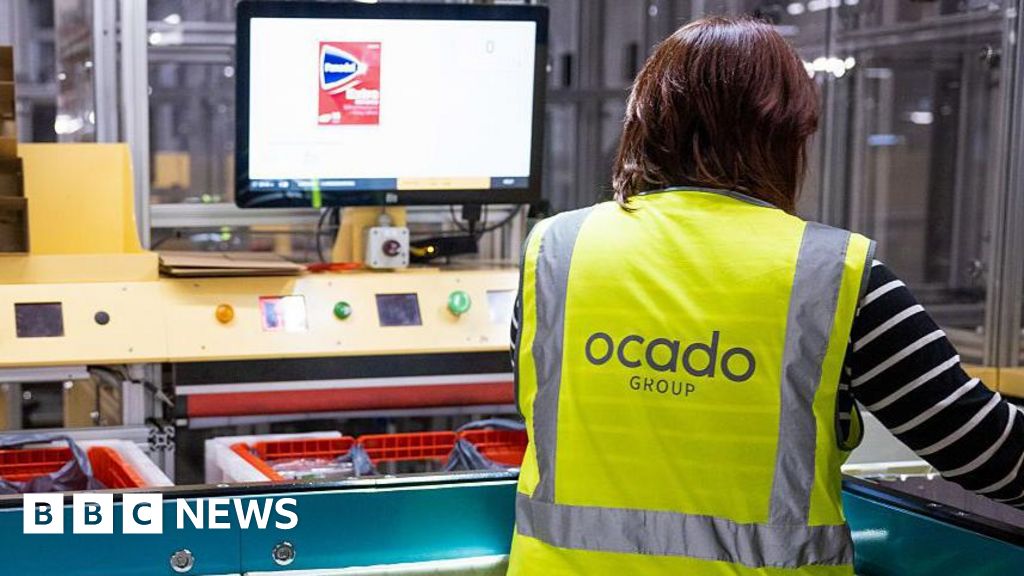
The technology and online grocery group is cutting about 5% of its global workforce, with two-thirds of the losses in the UK.

Ocado posts FY25 revenue, EBITDA beat; shares down 9% on cash burn outlook

Selena Gomez reaffirmed her affection for husband Benny Blanco with a romantic Instagram Story post on Feb. 25, 2026, captioning a kissing video “I fall more and more in love with you every day my love” — a move many interpreted as a direct response to viral backlash over his barefoot, visibly dirty feet and on-air flatulence during the debut of his podcast “Friends Keep Secrets.”

The controversy ignited after the premiere episode streamed on YouTube earlier this week. Blanco, 37, lounged casually on a couch barefoot, with close-up shots highlighting dirt and grime on his soles around the 1:09 mark. He also audibly farted into the microphone as a joke, prompting laughter from co-hosts Lil Dicky and Kristin Batalucco but sparking widespread disgust online.
Screenshots and clips spread rapidly across X, TikTok and Instagram, with fans expressing shock and some urging Gomez to end the marriage. Comments included “That is disgusting idk how Selena is dealing with this,” “Selena needs to divorce him and find someone better,” and calls to “sign those divorce papers now.” Others focused on hygiene concerns, with one viral post sharing a zoomed-in image of his blackened feet that garnered thousands of reactions.
The backlash extended to memes and resurfaced discussions about Blanco’s laid-back, unconventional habits. Some noted that both Gomez and Blanco went barefoot during portions of their November 2025 wedding reception, suggesting she’s long accepted his relaxed style.
Gomez, 33, addressed the noise indirectly through her affectionate post. The video showed the couple laughing and sharing multiple kisses in what appeared to be a casual outdoor setting, emphasizing deepening love just days before their five-month wedding anniversary on Feb. 28.
The couple, who confirmed their romance in late 2023 after years in the same industry circles, married in an intimate ceremony attended by close friends including Taylor Swift. Blanco has produced music for Gomez, and both have spoken publicly about their strong bond, with Gomez calling him her “absolute everything” and Blanco expressing hopes for a family.
“Friends Keep Secrets” positions itself as an unfiltered, authentic conversation series avoiding typical macho tropes, featuring eclectic guests from family members to innovators. The raw format — including bodily humor and casual vibes — aligns with Blanco’s vision but clearly polarized viewers in this debut.
Defenders argued the moment was harmless in a relaxed podcast setting and shouldn’t overshadow Blanco’s talent or the couple’s happiness. Critics, however, questioned how it reflected on Gomez’s polished public image.
As of Feb. 26, Gomez has made no further comments, and the Instagram Story remains up. Blanco has stayed silent on the hygiene critiques, with the podcast continuing to draw attention and views amid the viral storm.
The episode underscores the intense scrutiny on celebrity relationships, where even minor quirks can spark outsized reactions. Gomez, who has openly discussed mental health, lupus and past high-profile romances, has increasingly focused on selective sharing while prioritizing her personal life.
Supportive fans flooded her post with hearts and praise for rising above the criticism, while the discourse continues online. The incident highlights how quickly social media amplifies personal moments — from dirty feet to declarations of love — in the public eye.
For now, Gomez’s message stands clear: her love grows stronger, unfazed by the chatter.

Euro zone business lending growth slows, ECB data shows

Veuve Clicquot unveils bold woman award shortlist for 2026

U.S. banking regulator OCC proposes stablecoin rules to implement GENIUS act

Real Madrid condemn fan who appeared to perform Nazi salute before Benfica tie


-

 Video6 days ago
XRP News: XRP Just Entered a New Phase (Almost Nobody Noticed)
-

 Politics4 days ago
Baftas 2026: Awards Nominations, Presenters And Performers
-

 Fashion6 days ago
Weekend Open Thread: Boden – Corporette.com
-

 Sports3 days ago
Women’s college basketball rankings: Iowa reenters top 10, Auriemma makes history
-

 Politics3 days ago
Nick Reiner Enters Plea In Deaths Of Parents Rob And Michele
-

 Crypto World2 days ago
XRP price enters “dead zone” as Binance leverage hits lows
-

 Business4 days ago
Mattel’s American Girl brand turns 40, dolls enter a new era
-

 Business2 days ago
True Citrus debuts functional drink mix collection
-

 Business4 days ago
Law enforcement kills armed man seeking to enter Trump’s Mar-a-Lago resort, officials say
-

 Tech2 days ago
Unsurprisingly, Apple's board gets what it wants in 2026 shareholder meeting
-

 NewsBeat10 hours ago
Cuba says its forces have killed four on US-registered speedboat | World News
-
 NewsBeat12 hours ago
Manchester Central Mosque issues statement as it imposes new measures ‘with immediate effect’ after armed men enter
-
 NewsBeat3 days ago
‘Hourly’ method from gastroenterologist ‘helps reduce air travel bloating’
-

 Tech4 days ago
Anthropic-Backed Group Enters NY-12 AI PAC Fight
-

 NewsBeat4 days ago
Armed man killed after entering secure perimeter of Mar-a-Lago, Secret Service says
-

 Politics4 days ago
Maine has a long track record of electing moderates. Enter Graham Platner.
-

 Business6 hours ago
Discord Pushes Implementation of Global Age Checks to Second Half of 2026
-
 NewsBeat1 day ago
Police latest as search for missing woman enters day nine
-

 Crypto World1 day ago
Entering new markets without increasing payment costs
-
 Sports3 days ago
2026 NFL mock draft: WRs fly off the board in first round entering combine week