Instagram will begin notifying parents if their teenagers repeatedly search for suicide or self-harm related content, marking the first time owner Meta has proactively flagged search behaviour rather than simply blocking it.
From next week, parents and teenagers enrolled in Instagram’s “Teen Accounts” supervision programme in the UK, US, Australia and Canada will receive alerts if a young user searches for harmful terms within a short period of time. The feature will be rolled out globally at a later stage.
Previously, Instagram restricted access to certain harmful material and redirected users to support resources. The new measure goes further by directly alerting parents via email, text message, WhatsApp or within the Instagram app itself, depending on available contact details.
Meta said the alerts are designed to flag sudden changes in search patterns that may indicate distress. Notifications will be accompanied by guidance and expert-backed resources to help parents navigate what are likely to be sensitive conversations.
The move has been met with sharp criticism from the Molly Rose Foundation, established by the family of Molly Russell, who died in 2017 aged 14 after viewing self-harm and suicide content online.
Advertisement
Chief executive Andy Burrows described the announcement as “fraught with risk”, warning that “forced disclosures could do more harm than good”.
“Every parent would want to know if their child is struggling,” Burrows said, “but these flimsy notifications will leave parents panicked and ill-prepared to have the sensitive and difficult conversations that will follow.”
He added that the onus should be on preventing harmful content from appearing in the first place, rather than shifting responsibility onto families after the fact.
The foundation previously published research claiming Instagram was still actively recommending content related to depression, suicide and self-harm to vulnerable young people. Meta rejected those findings, saying they misrepresented its safety efforts.
Advertisement
Ged Flynn, chief executive of Papyrus Prevention of Young Suicide, welcomed the attempt to increase transparency but argued that it did not address deeper systemic issues.
“Parents contact us every day to say how worried they are about their children online,” he said. “They don’t want to be warned after their children search for harmful content, they don’t want it to be spoon-fed to them by unthinking algorithms.”
‘Erring on the side of caution’
Meta said the system is designed to “err on the side of caution” and acknowledged that parents may occasionally receive alerts even when there is no serious cause for concern.
The company said the feature builds on broader Teen Account protections, which include automatically limiting exposure to sensitive material, restricting who can contact teens, and blocking certain harmful searches outright.
Advertisement
Two in-app screenshots released by Meta show alerts titled “Alert about your teen’s safety” followed by a screen offering advice on “How you can support your teen”.
Sameer Hinduja, co-director of the Cyberbullying Research Center, said the impact of the new feature would depend heavily on the quality of guidance provided alongside the alert.
“You can’t drop a notification on a parent and leave them on their own,” he said. “What matters is the immediate support and context that follows.”
Meta also confirmed that it plans to introduce similar parental alerts in the coming months if teenagers discuss self-harm or suicide with Instagram’s AI chatbot. The company said young people are increasingly turning to AI tools for advice and emotional support.
Advertisement
The expansion comes amid heightened scrutiny of social media companies’ impact on children’s mental health.
Australia recently passed legislation banning social media access for under-16s, while policymakers in Spain, France and the UK are considering similar measures. In the US, Meta chief executive Mark Zuckerberg and Instagram head Adam Mosseri have faced legal challenges and congressional hearings over allegations the company’s platforms were designed to attract and retain younger users.
For now, Instagram’s new alert system represents a shift in Meta’s child-safety strategy — moving from passive content restriction to active parental notification. Whether that approach proves protective or problematic will likely depend on how families, regulators and mental health experts respond in the months ahead.
Jamie Young
Jamie is Senior Reporter at Business Matters, bringing over a decade of experience in UK SME business reporting.
Jamie holds a degree in Business Administration and regularly participates in industry conferences and workshops.
When not reporting on the latest business developments, Jamie is passionate about mentoring up-and-coming journalists and entrepreneurs to inspire the next generation of business leaders.
TNA World Tag Team Champion Matt Hardy has voiced concerns over the escalating ticket prices for WWE WrestleMania 42, calling it a “tough sell” for fans amid economic pressures and the event’s return to the same market for a second straight year.
In a recent episode of his podcast, “The Extreme Life of Matt Hardy,” the veteran wrestler addressed reports of sluggish ticket sales for the two-night spectacle set for April 18-19, 2026, at Allegiant Stadium in Las Vegas. Hardy, who has competed in multiple WrestleManias during his storied career in WWE and other promotions, empathized with fans facing the financial decision.
Matt Hardy
“It’s hard to justify spending that much money on tickets for entertainment,” Hardy said. “You know that isn’t something that you have to have in your every single day life to survive and live and be okay. So it’s a tough sell.”
Hardy’s comments come as WWE grapples with ticket demand trailing behind last year’s record-breaking WrestleMania 41, also held at Allegiant Stadium. Sources indicate that current get-in prices hover around $264 for Night 1 and $276 for Night 2 on resale platforms, with two-day passes starting near $652. Premium seats and packages have commanded significantly higher figures, with some reports citing top-tier options exceeding several thousand dollars per night before fees.
The company has responded to slower sales with promotions, including a reported 25% discount at Allegiant Stadium and meetings to reassess pricing strategies. Despite these efforts, attendance projections remain below the 2025 event’s pace, which drew massive crowds and generated substantial revenue following WWE’s merger into TKO Group Holdings.
Advertisement
Hardy pointed to several contributing factors. He highlighted the challenge of repeating the Las Vegas market so soon after its success in 2025, when the city hosted what many called one of the most profitable WrestleManias in history.
“Vegas was so good last year and they did these record numbers, and I guess they bid for them to come back,” Hardy explained. “But it’s tough to go into the market two years back-to-back, and you know that those tickets are pricey. Economically — especially since the pandemic — it’s kind of been a roller coaster ride for everyone.”
The post-pandemic economic landscape has left many households cautious with discretionary spending. Hardy noted that while WrestleMania remains a marquee event, the high costs — including not just tickets but travel, lodging, and related expenses in an expensive destination like Las Vegas — make it difficult for average fans to attend consecutively or even once.
“I mean, they go, ‘Well, I went last year, and it was pretty expensive. And kind of set me back a little bit, I don’t know if I can go this year,’” Hardy said, paraphrasing potential fan sentiment.
Advertisement
Hardy’s perspective echoes broader discussions within the wrestling community about pricing trends under WWE’s current leadership. Since the introduction of two-night WrestleManias in 2020, ticket costs have risen steadily to capitalize on premium demand, celebrity appearances, and high production values. Critics argue this shift prioritizes corporate revenue over accessibility for longtime supporters.
Some fans and commentators have suggested WWE could benefit from returning to a single-night format with longer cards to distribute costs more evenly, or from selecting fresh markets annually to avoid saturation. Hardy appeared to lean toward the latter idea, implying a new city might have generated more excitement and better sales momentum.
Despite the challenges, Hardy acknowledged WWE’s confidence in its product. The company continues to build toward WrestleMania 42 with major storylines across Raw, SmackDown, and international brands. Recent developments include high-profile matches rumored for the card, though official announcements remain forthcoming.
Hardy, 51, currently competes in Total Nonstop Action Wrestling (TNA), where he holds the World Tag Team Championship alongside his brother Jeff Hardy as part of The Hardys. His insights carry weight given his deep history in the industry, including iconic WrestleMania moments such as his ladder match appearances and championship reigns.
Advertisement
While not directly criticizing WWE’s business decisions, Hardy’s candid remarks add to a growing chorus questioning whether skyrocketing prices could alienate the core fanbase that has fueled WrestleMania’s growth into a global spectacle.
WWE has not publicly responded to Hardy’s specific comments but maintains that WrestleMania remains the pinnacle of sports entertainment, with tickets available through official channels like Ticketmaster. Single-day and multi-day options continue on sale, and the company has emphasized enhanced fan experiences, including premium hospitality packages.
As the Road to WrestleMania intensifies, all eyes will be on whether sales rebound in the coming months. Hardy concluded his thoughts optimistically yet realistically: “They’re confident, I guess they can do it for another year straight, and I guess when it’s all said and done, by the time we get to WrestleMania, we’ll see if they were right or not.”
For fans weighing the investment, the debate underscores a larger tension in modern sports entertainment: balancing blockbuster ambition with affordability in an uncertain economy.
FanDuel parent Flutter Entertainment announced fourth-quarter earnings Thursday that missed Wall Street expectations on nearly every metric.
FanDuel’s performance in the final quarter of 2025 was affected by bettors losing more often than usual. When that happens, gamblers get discouraged, bet less and stop using the app as frequently, Flutter CEO Peter Jackson told CNBC in an interview.
“It’s fair to say, not everything went our way in the fourth quarter,” Jackson said.
Shares of Flutter fell almost 7% in extended trading Thursday.
Advertisement
Here’s what the company reported for the fourth quarter, compared with Wall Street consensus:
Revenue: $4.74 billion vs. $4.97 billion, according to LSEG
Adjusted EPS: $1.74 vs. $1.95, according to LSEG
For the fourth quarter, Flutter reported adjusted earnings before interest, taxes, depreciation and amortization of $832 million, below the $893 million that Wall Street was expecting, according to StreetAccount.
Its fourth-quarter revenue marked a year-over-year increase of 25%. And yet, Flutter’s 2026 revenue guidance of $17.75 billion to $19.05 billion was lower than analysts’ projection of $19.34 billion for the year.
On the company’s earnings call, Jackson told investors that prediction markets would likely spur more legalization of sports betting by the states. He also said the company has found no evidence that prediction markets are cannibalizing the sportsbook business.
Seeking Alpha’s transcripts team is responsible for the development of all of our transcript-related projects. We currently publish thousands of quarterly earnings calls per quarter on our site and are continuing to grow and expand our coverage. The purpose of this profile is to allow us to share with our readers new transcript-related developments. Thanks, SA Transcripts Team
The 2026 NFL Scouting Combine is underway at Lucas Oil Stadium, where more than 300 of the nation’s top college football prospects are showcasing their athleticism, measurements and interview skills for NFL teams in advance of the April 23-25 draft in Pittsburgh.
NFL
The event, running from Thursday, Feb. 26, through Sunday, March 1, features on-field workouts grouped by position, medical evaluations, team interviews and bench press sessions. It serves as a critical evaluation period for general managers, coaches and scouts assessing talent for the upcoming draft class.
The full workout schedule, with all times Eastern, is as follows:
Coverage is available on NFL Network, with additional programming on ESPN and ESPN2, including pre- and post-drill analysis. Fans can register for in-person access via nfl.com/onepass, with gates opening early each day for the Combine Experience and Inside Look areas.
Advertisement
The combine has already generated buzz with early arrivals and media sessions featuring head coaches and general managers starting earlier in the week. While on-field drills began Thursday, much of the focus remains on how prospects perform in key tests like the 40-yard dash, vertical jump, broad jump, three-cone drill and bench press, alongside their official measurements and positional workouts.
This year’s class features a mix of high-upside athletes, with several consensus top prospects expected to solidify or elevate their draft stock. Experts like Daniel Jeremiah, Mel Kiper Jr. and Mike Renner have released updated big boards in recent days, highlighting a quarterback at the top and strong depth at edge rusher, linebacker and offensive line.
Here are the top 10 prospects based on the latest consensus rankings from sources including NFL Network’s Jeremiah (updated Feb. 23), ESPN’s Kiper, CBS Sports’ Renner and others:
1. Fernando Mendoza, QB, Indiana — The junior signal-caller tops most big boards, praised for his arm talent, poise and production in a breakout 2025 season. Jeremiah and Renner have him No. 1 overall, with Kiper calling him a “lock” for the top spot. Teams view him as a potential franchise quarterback.
Advertisement
2. Rueben Bain Jr., EDGE, Miami (FL) — A dominant pass rusher with explosive traits, Bain ranks No. 2 on Renner’s board and high across others. His combination of size (6-3, 275 pounds), speed and bend makes him a nightmare for offensive tackles.
3. Arvell Reese, LB/EDGE, Ohio State — Versatile and instinctive, Reese appears in multiple top-5 lists, including Jeremiah’s earlier rankings. Ohio State’s defense has produced several high picks, and Reese’s athletic profile stands out.
4. Kadyn Proctor, OT, Alabama — One of the premier offensive tackles in the class, Proctor’s massive frame and technical prowess make him a Day 1 starter candidate at left tackle.
5. David Bailey, EDGE, Texas Tech — Explosive off the edge with strong production, Bailey features prominently in top-10 discussions and could rise further with a strong combine showing.
Advertisement
6. Caleb Downs, S, Ohio State — A do-it-all defensive back with elite instincts, range and tackling ability. Downs is a frequent top-10 name for his football IQ and playmaking.
7. Jeremiyah Love, RB, Notre Dame — Among the top running backs, Love’s combination of speed, vision and receiving skills has scouts excited in a class with solid RB depth.
8. Kenyon Sadiq, TE, Oregon — A rising star at tight end, Sadiq is drawing Freaks List mentions for his athletic testing potential. Experts predict a sub-4.6 40 and elite jumps could vault him higher.
9. Sonny Styles, LB, Ohio State — Another Buckeye standout, Styles brings size, speed and coverage skills to the linebacker position, making him a versatile fit in modern defenses.
Advertisement
10. Makai Lemon, WR, USC — A polished route-runner with high grades from PFF as one of the top receivers in college football last season, Lemon could surge with explosive testing.
Other notable prospects to watch include Oregon TE Kenyon Sadiq (predicted to dominate workouts), Ohio State LB Sonny Styles, Kentucky WR Kendrick Law and Penn State DT Zane Durant, all highlighted for their athletic upside on Bruce Feldman’s Freaks List revisits.
The combine’s importance cannot be overstated, as athletic testing often reshapes draft boards. Past examples include explosive 40 times boosting stock (like Xavier Worthy’s 4.21 in 2024) or strong positional drills confirming tape evaluations.
With the draft less than two months away, performances this week could shift projections significantly. Teams are particularly focused on quarterbacks like Mendoza, edge rushers and offensive linemen in a class viewed as deep in trenches talent but lighter at some skill positions compared to recent years.
Advertisement
As drills unfold, the spotlight will remain on how these top prospects translate their college production to NFL-level measurables and interviews. The 2026 class promises intrigue, with early indications pointing to a quarterback-needy team potentially landing a cornerstone in Mendoza or a defense bolstered by elite edge talent like Bain.
| Revenue of $17.24M (-79.41% Y/Y) beats by $1.57M
Wave Life Sciences Ltd. (WVE) Q4 2025 Earnings Call February 26, 2026 8:30 AM EST
Company Participants
Kate Rausch – Head of Investor Relations Paul Bolno – President, CEO & Director Christopher Wright – Chief Medical Officer Kyle Moran – CFO & Principal Accounting Officer Erik Ingelsson – Chief Scientific Officer
Advertisement
Conference Call Participants
Jenny Leigh Gonzalez-Armenta – Leerink Partners LLC, Research Division Salim Syed – Mizuho Securities USA LLC, Research Division Steven Seedhouse – Cantor Fitzgerald & Co., Research Division Joon Lee – Truist Securities, Inc., Research Division Alec Stranahan – BofA Securities, Research Division Madison Wynne El-Saadi – B. Riley Securities, Inc., Research Division Catherine Novack – JonesTrading Institutional Services, LLC, Research Division Cheng Li – Oppenheimer & Co. Inc., Research Division Angela Qian – Canaccord Genuity Corp., Research Division Craig McLean – Wells Fargo Securities, LLC, Research Division Cha Cha Yang – Jefferies LLC, Research Division Cassie Yuan
Advertisement
Presentation
Operator
Good morning, and welcome to the Wave Life Sciences Fourth Quarter and Full Year 2025 Earnings Conference Call. [Operator Instructions] As a reminder, this call is being recorded and webcast.
I’ll now turn the call over to Kate Rausch, Vice President of Corporate Affairs and Investor Relations. Please go ahead.
Advertisement
Kate Rausch Head of Investor Relations
Thank you, Sophie, and good morning to everyone on the call. Earlier this morning, we issued a press release outlining our fourth quarter and full year 2025 earnings update. Joining me today with prepared remarks are Dr. Paul Bolno, President and Chief Executive Officer; Dr. Chris Wright, Chief Medical Officer; and Kyle Moran, Chief Financial Officer. Dr. Eric Ingelsson, Chief Scientific Officer, will be available for questions after the call. The press release issued this morning is available on the Investors section of our website, www.wavelifesciences.com.
Before we begin, I would like to remind you that discussions during this conference call will include forward-looking statements. These
‘The Big Money Show’ panel discusses President Donald Trump’s push to sell falling inflation, lower gas prices and rising manufacturing growth ahead of the midterm elections.
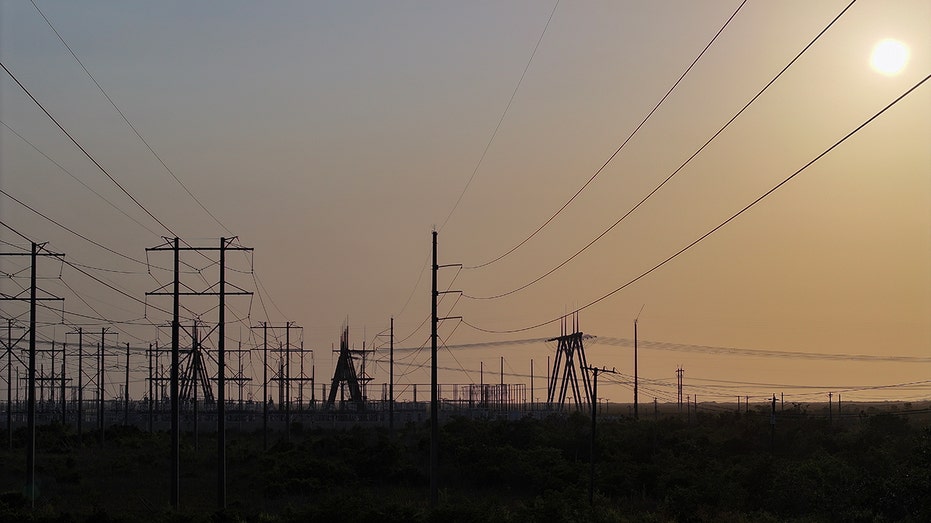
Americans are facing rising electricity costs around the country as winter weather and the rise of artificial intelligence (AI) data centers increase demands on the electric grid.
Electricity prices have risen faster than the pace of inflation in the last year. January consumer price index (CPI) data from the Bureau of Labor Statistics showed electricity costs were up 6.3% from a year ago, while CPI was up 2.4% in that period.
Advertisement
Data from the Energy Information Administration (EIA) showed that, as of December, electricity prices rose nationally from 12.82 cents per kilowatt-hour to 13.72 cents, an increase of 7.1%. The data covers electricity use across all sectors of the economy, including residential, commercial, industrial and transportation.
Phil Flynn, senior market analyst at the Price Futures Group and a FOX Business contributor, said that electricity prices are rising in part because of a regulatory environment that favored renewable energy sources like solar and wind over more reliable sources like natural gas, coal or nuclear.
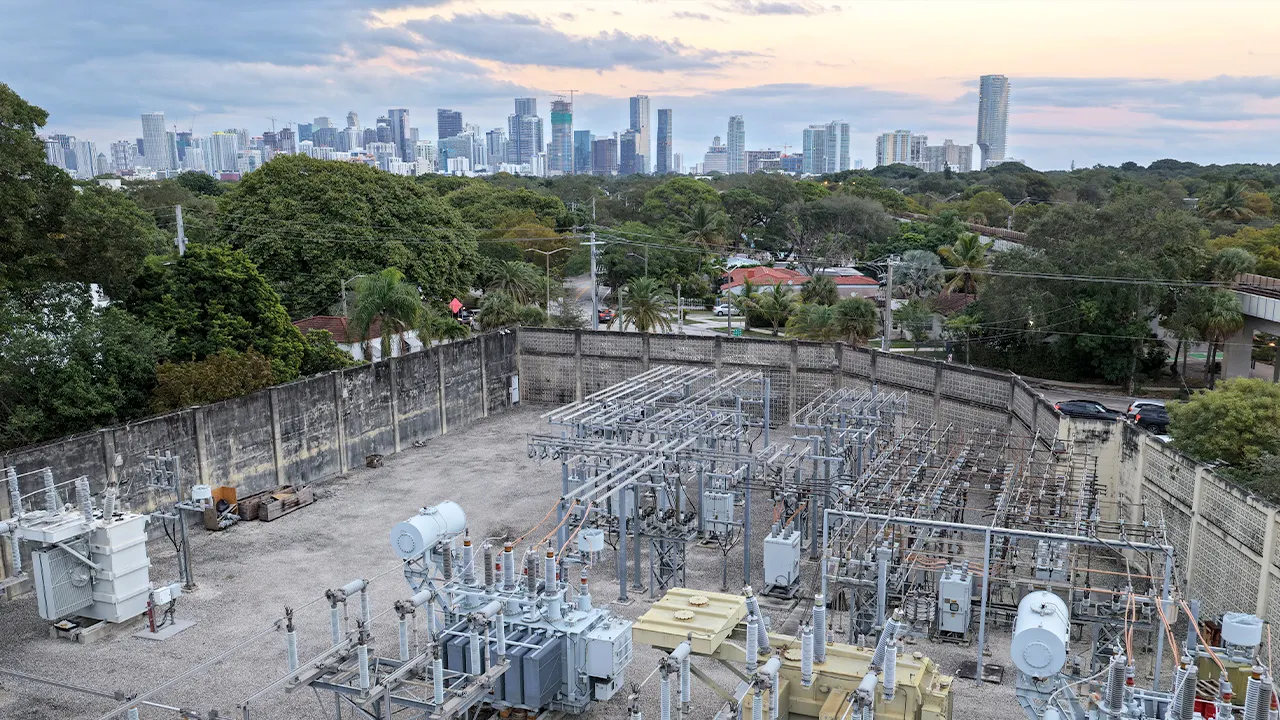
Electricity costs have jumped double digits in a number of states from a year ago. (Joe Raedle/Getty Images)
“They forced the grid away from reliable and cheap baseload power and made it nearly impossible to upgrade power plants, build new pipelines and, in some cases, mandated new builds be powered with electricity instead of natural gas,” Flynn told FOX Business.
Advertisement
While some states have seen modest increases or even declines in electricity costs in the last year, ratepayers in a number of states have seen double-digit percentage increases in the electric bills that can put a significant dent in household budgets.
The District of Columbia saw the biggest spike when compared with the 50 states, with its electricity prices rising 26.29%.
Here’s a look at the 10 states that saw the largest increases in overall electricity costs from a year ago and those that experienced the smallest increases or declines, according to EIA data.
Overview The World Bank Group’s latest report reveals a significant global gap between the enactment and actual enforcement of laws promoting women’s economic equality, with only 4% of women living in economies that provide near-full legal rights.
While many nations have made progress in passing equal-opportunity legislation, the lack of supporting policies and enforcement mechanisms means women still enjoy only about two-thirds of the legal rights afforded to men. Addressing these disparities in safety, childcare, and credit access is presented as an economic necessity to unlock global growth and support the 1.2 billion young people entering the workforce over the next decade.
Key Points
Global laws designed to ensure economic opportunity for women are, on average, only half-enforced, and the systems needed to implement those rights score even lower at 47 out of 100.
Even if current laws were fully enforced, women would still lack one-third of the legal rights granted to men.
Safety from violence is a major deficiency; the world has only one-third of the necessary safety laws, and enforcement of existing protections fails 80% of the time.
Access to affordable childcare is a critical predictor of women’s workforce participation, yet less than half of the 190 economies surveyed provide financial or tax support for families.
While women can legally start businesses in most economies, only half of these countries promote equal access to credit, effectively locking women entrepreneurs out of necessary financing.
Despite enforcement challenges, 68 economies enacted 113 positive legal reforms over the last two years, with the most significant progress occurring in Sub-Saharan Africa. Egypt was identified as the world’s top reformer during the period, implementing changes such as expanded parental leave, mandated equal pay, and flexible work arrangements. Closing the gender gap is vital for the global economy, as half of the 1.2 billion people reaching working age in the next decade are girls who face significant barriers to entry in many regions.
Despite these challenges, progress is being made through legislative reforms. In the past two years, 68 economies have enacted 113 positive legal changes, particularly in Sub-Saharan Africa and the Middle East. Highlighting the economic urgency, the report notes that 1.2 billion young people will enter the workforce over the next decade, making gender equality a vital economic necessity rather than just a social goal.
Advertisement
Thailand demonstrates a mixed performance in women’s economic participation, generally outperforming regional and global averages in legal frameworks and enforcement perceptions, yet falling short in supportive implementation. While the country possesses strong legal protections in areas such as childcare, flexible work, and pay, a significant gap remains between established laws and the practical frameworks necessary to support them.
Key Findings for Thailand
Thailand’s legal frameworks score (69) exceeds both the global average (66.97) and the East Asia and Pacific regional average (59.77), with particular strengths in work, pay, parenthood, and childcare.
The country is one of only seven economies in its region that legally allows employees to request flexible work arrangements.
Despite strong legal scores, the supportive frameworks score (33) is significantly lower than both the global and regional averages, indicating a deficit in the practical infrastructure needed to implement laws.
Enforcement perceptions (53) are generally higher than regional averages, though they lag in specific categories such as safety, marriage, and entrepreneurship.
In the two-year period from October 2023 to October 2025, Thailand did not enact any new reforms related to the Women, Business and the Law (WBL) metrics.
Regional advantages are most prominent in the pillars of mobility, safety, and marriage within the supportive frameworks category, despite the overall low score in that pillar.
The absence of affordable childcare and adequate safety measures hinders GDP growth by limiting women’s ability to participate fully and consistently in the workforce. The report highlights that achieving gender equality is an essential economic imperative to unlock the full potential for growth and job creation.
The specific impacts are detailed below:
Impact of Inadequate Safety Protections
The document identifies safety from violence as a critical factor in a nation’s economic health:
Work Consistency: Safety from violence is a “key shortcoming” that leaves women less able to work consistently. Without a secure environment at home, at work, or in public, women cannot thrive or contribute effectively to the economy.
Enforcement Gap: Globally, countries have only one-third of the necessary safety laws. Furthermore, even when these laws exist, enforcement fails 80% of the time, maintaining steep barriers to prosperity.
Growth Barriers: These safety hurdles are described as barriers that keep women from contributing fully to “growth and prosperity,” which is particularly detrimental to the growth potential of developing economies.
Impact of Lacking Affordable Childcare
The report highlights childcare as a primary predictor of economic mobility:
Labor Force Participation: Affordable and reliable childcare is one of the strongest indicators of whether parents—and mothers specifically—can enter the workforce.
Barriers to High-Productivity Jobs: Without childcare support, women are often unable to move into higher-productivity jobs, which limits the overall economic output of the nation.
Severity in Low-Income Economies: While less than half of the world’s economies provide financial or tax support for childcare, the situation is most dire in low-income economies, where only 1% of the necessary childcare support mechanisms are in place. This lack of infrastructure prevents these nations from reaching their full potential to create jobs.
GDP Growth Potential and Future Workforce
The document connects these barriers to the long-term economic outlook of developing nations:
Missed GDP Boost: Over the next decade, 1.2 billion young people will enter the workforce, half of whom are girls. Many of these individuals reside in regions where women face the largest barriers. The report notes that these are the same regions where the “GDP boost” resulting from women’s participation is “most needed.”
Underutilized Human Capital: Currently, only 4% of women live in economies providing nearly full legal equality. The document states that the resulting “opportunity gaps” keep economies from reaching their full potential to grow.
Economic Necessity: Closing these gaps is framed as a necessity to reverse the decline in the growth potential of developing economies. Providing equal opportunity is described as a strategy that benefits “societies as a whole, not just women.”
Despite these challenges, significant progress is being achieved through legislative reforms. Over the past two years, 68 economies have implemented 113 positive legal changes, with notable advancements in Sub-Saharan Africa and the Middle East. Emphasizing the economic urgency, the report highlights that 1.2 billion young people are projected to enter the workforce within the next decade, positioning gender equality as a critical economic necessity rather than merely a social objective.
The lack of affordable childcare and sufficient safety measures continues to hinder GDP growth by restricting women’s ability to fully and consistently participate in the workforce. The report underscores that achieving gender equality is not just a moral imperative but an essential economic driver to unlock the full potential for growth and job creation.