

Business
iPhone 18 Pro Leaks Reveal Smaller Dynamic Island, New Camera Tech and Higher Price Tag


The iPhone 18 Pro and Pro Max are coming in September, potentially with significantly higher prices. For months, rumors and leaks have been providing information on what to expect from the devices, and the picture is getting clearer as the launch window approaches. Here are the most significant upgrades reportedly coming to Apple’s next flagship lineup.
A Familiar Design With New Colors and Improved Durability
The iPhone 18 Pro and Pro Max are reportedly getting the same design on the back that Apple introduced with the iPhone 17 Pro. The camera plateau is here to stay, but Apple is reportedly equipping the models with several new color options. The most talked-about addition may be a new Dark Cherry shade that has been extensively leaked. Apart from it, reports also point to a light blue, a dark blue, and a silver colorway.
Durability is reportedly improving as well, with a new manufacturing process for the aluminum body expected to strengthen the iPhone’s corrosion resistance and make discoloration less likely — an issue some iPhone 17 Pro models reportedly suffered from.
An Almost 50% Smaller Dynamic Island
One of the most significant visual changes coming to this year’s Pro models involves a substantial reduction in the size of the Dynamic Island, the interactive cutout area on the front of the display. Rumor has it that the Dynamic Island could be around 50% smaller than what the element was in the iPhone 17 Pro, which should make the display more elegant and immersive.
According to leaked specifications, the Dynamic Island is said to be around 13.49 millimeters wide, compared to 20.76 millimeters wide on the iPhone 17 Pro. Apart from the visual change, the functionality of the Dynamic Island is reportedly staying the same as last year’s.
A New A20 Pro Chip Built on a 2nm Process
On the performance front, the iPhone 18 Pro Max and Pro are reportedly going to be powered by Apple’s next-generation 2nm chip, the A20 Pro. Significant increases in power and efficiency are expected thanks to the new 2nm manufacturing process, which would represent a meaningful step forward from the chip architecture used in the current generation.
Meanwhile, the A20 Pro is reportedly getting paired with the C2 modem, Apple’s second-generation connectivity chip, which is also rumored to bring satellite 5G capabilities. The phone is also reportedly featuring Apple’s N2 wireless networking chip with Wi-Fi 7 connectivity and Bluetooth 6, improvements that should boost AirDrop and Personal Hotspot performance, as well as download and upload speeds.
A Variable Aperture Camera, a First for iPhone
Perhaps the most technically significant camera upgrade involves a feature that has never before appeared on an iPhone. The main 48-megapixel camera of the iPhone 18 Pro Max and Pro may be gaining a variable aperture feature this year. A variable aperture would allow the camera to adjust the amount of light that enters the sensor based on lighting conditions and give users control over the depth of field for a DSLR-like blur in portrait photos.
Before this change, iPhone cameras have always come with a fixed aperture. This change could noticeably elevate the photo quality and overall look of images produced by the Pro-branded iPhone 18 models, bringing a level of optical control previously found primarily on dedicated cameras to Apple’s flagship smartphone line.
Siri AI and Expanded Apple Intelligence Features
On the software side, Apple has already begun rolling out one of its most significant updates in years, with the new iPhones expected to showcase the feature at launch. Apple unveiled Siri AI during WWDC 2026 not too long ago, and it’s coming with iOS 27. The long-anticipated generative AI Siri upgrade is finally arriving, with the assistant gaining serious AI capabilities including the ability to see what’s on a user’s screen, process natural language, and learn personal context. The upgraded Siri will also be able to take actions in apps on a user’s behalf.
A wide range of iOS 27 apps are also gaining Apple Intelligence integrations as part of the broader update. Image Playground is gaining new capabilities such as tackling more complex scenes and creating wallpaper backgrounds based on user prompts, while the Camera app is getting a brand-new Siri AI mode, along with two new features designed to elevate photographs: extend and reframe.
An Upgraded LTPO+ Display
Rounding out the major hardware changes, the iPhone 18 Pro and Pro Max are reportedly going to feature LTPO+ displays, which should ensure lower power consumption and higher refresh rates. Standard OLED screens use LTPS, or Low-Temperature Polycrystalline Silicon, for their backplane transistors, while LTPO panels use IGZO, or Indium Gallium Zinc Oxide.
The newer LTPO+ technology gives the phone finer control over the electrical current sent to each OLED pixel, allowing the device to adjust dynamically to on-screen content. There’s also reportedly going to be a new M16 material used for the displays of the two Pro-branded models, aimed at delivering greater color accuracy than previous generations.
What It All Means for Pricing
While Apple has not officially confirmed pricing details, the cumulative scope of this year’s upgrades — spanning a new chip architecture, a first-ever variable aperture camera system, an entirely overhauled Siri experience, and a significantly redesigned Dynamic Island — has fueled widespread speculation that the iPhone 18 Pro and Pro Max could carry a noticeably higher price tag than their predecessors when they launch this September.
With Apple historically unveiling its new iPhone lineup in September, the coming months are likely to bring additional leaks and more detailed specifications as the launch window draws closer. Given the breadth of changes reportedly in store — from the camera system’s first-ever variable aperture to the dramatically reduced Dynamic Island and the long-anticipated arrival of a true AI-powered Siri — this year’s Pro-branded iPhones appear positioned to represent one of the more substantial generational upgrades in recent years, assuming the current wave of rumors and leaked renders proves accurate once Apple makes its official announcement.


OPINION: The world’s ageing population offers a unique opportunity for producers when it comes to meeting consumer needs.


I have more than 35 years of experience in the investment field, having worked as a sell & buy side analyst and portfolio manager for debt and equity funds. I am currently managing a high-yield Latam bond fund.My goal, as a Seeking Alpha contributor, is to provide a fundamental view and analysis of companies and funds in a streamlined version of institutional research. The operating and financial forecast, whether my own or based on consensus, drives the valuation and ultimate rating. I like numbers (financial statements) and use words to explain their meaning and potential consequences.For the most part, my selection choices reflect what I believe can offer long-term potential, and I frequently take positions in many ideas for my personal account.
Analyst’s Disclosure: I/we have no stock, option or similar derivative position in any of the companies mentioned, and no plans to initiate any such positions within the next 72 hours. I wrote this article myself, and it expresses my own opinions. I am not receiving compensation for it (other than from Seeking Alpha). I have no business relationship with any company whose stock is mentioned in this article.
Seeking Alpha’s Disclosure: Past performance is no guarantee of future results. No recommendation or advice is being given as to whether any investment is suitable for a particular investor. Any views or opinions expressed above may not reflect those of Seeking Alpha as a whole. Seeking Alpha is not a licensed securities dealer, broker or US investment adviser or investment bank. Our analysts are third party authors that include both professional investors and individual investors who may not be licensed or certified by any institute or regulatory body.
Business
IDFC First Bank shares soar 9% after Q1 profit jumps 132% to Rs 1,075 crore. What are analysts saying?

The bank, however, disclosed that it received claims worth Rs 514.8 crore under the CGFMU scheme against its MFI portfolio during the quarter.
Net interest income (NII) rose 21.1% YoY to Rs 5,972.3 crore from Rs 4,933 crore a year earlier. The bank’s net interest margin (NIM) also improved to 5.96% in Q1 FY27 from 5.71% in Q1 FY26, marking an expansion of 25 basis points. On a sequential basis, NIM increased by 3 basis points.
Also Read | Costs and provisions down, IDFC Bank will continue to bolster earnings: V Vaidyanathan, MD & CEO
Asset quality showed further improvement. Gross non-performing assets (NPA) fell to 1.51% as of June 30, 2026, from 1.97% a year earlier, an improvement of 45 basis points. Gross NPA also declined by 10 basis points on a quarter-on-quarter basis.

IDFC Bank share price target
Emkay maintained its ADD rating with a target price of Rs 85 (5% upside) per share. It said PAT surged 132% YoY to Rs 1,080 crore, crossing the Rs 21,000 crore mark for the first time, driven by higher NII, strong fee income and lower provisions. Emkay expects positive operating jaws and lower provisioning to support an improvement in ROA over the next few years.
Motilal Oswal maintained its Neutral rating with a target price of Rs 90 per share, implying an 11% upside. The brokerage said IDFC First Bank delivered a strong quarter, supported by healthy operating performance and improved asset quality, aided by one-off interest on an IT refund and strong treasury gains.
Adjusted NIM declined 3 bps QoQ to 5.9%, with management expecting further contraction during the year and guiding for an NIM of 5.8%. Deposit growth remained healthy, driven by strong traction in CASA deposits and higher certificates of deposits, while loan growth was strong, supported by steady momentum in retail and a pick-up in wholesale segments.
Also Read | Nifty’s 5-day fall may be nearing a reversal; Anand James maps key levels for this week
Management commentary
The lender said it remains focused on building a high-quality banking institution with strong governance standards and is seeing healthy business momentum.
Management said asset quality continued to strengthen, with gross NPA at 1.51% and net NPA at 0.44%. Provisions as a percentage of loans also continued to decline. During the quarter, the bank received a CGFMU claim of Rs 515 crore and, as a prudent measure, created a provision of Rs 515 crore to account for any potential impact from monsoon conditions or fuel price volatility during the rest of the year.
Managing Director and CEO V Vaidyanathan said that investments made in building the bank are now beginning to translate into operating leverage, supporting the rise in PAT to Rs 1,075 crore in Q1 FY27. Return on assets (ROA) also crossed 1%.
(Disclaimer: Recommendations, suggestions, views and opinions given by the experts are their own. These do not represent the views of Economic Times)
Business
Hindustan Zinc shares gain 2% as Q1 net profit soars 145% YoY. Should you buy, sell or hold?

Hindustan Zinc, India’s largest producer of silver, on Friday released its results for the April-June quarter of the ongoing financial year 2027. Its revenue from operations rose around 77% YoY to Rs 13,747 crore during the quarter under review, from Rs 7,771 crore reported in the same period last year. Total expenses increased over 33% YoY to Rs 6,749 crore during the quarter, which ended on June 30, 2026.
The Vedanta Group company’s net profit margin improved to 40% in the April-June quarter of FY27, from 37% in the previous quarter (Q4 FY26) and 29% in the year-ago period (Q1 FY26). Operating margin, meanwhile, increased to 52% during the quarter under review.
The metal major’s net worth also more than doubled on a YoY basis, rising around 108% to Rs 23,587 crore at the end of the June quarter of the ongoing financial year 2027. Its debt-to-equity ratio stood at 0.32 times, as against 1.19 times in Q1 FY26.
Nuvama on Hindustan Zinc share price
Nuvama Institutional Equities noted that Hindustan Zinc’s Q1 EBITDA of Rs 7,990 crore was nearly in line with estimates amid higher prices, partly offset by seasonally lower volume. . Refined Zinc cost of production (ex-royalty) stood lower at $851/ton (down $52/ton QoQ) amid benefits of higher sulphuric acid prices and rupee depreciation, it said.
Silver EBIT was down 2% sequentially due to lower volume and comprised 46% of EBIT in Q1, the brokerage added. “The tight supply market is likely to keep zinc prices relatively high while silver prices are likely to remain firm. We forecast a 3% volume CAGR for refined metal and a 4% volume CAGR for silver over FY26–28E. Higher prices and cost control shall drive EBITDA at 20% CAGR over FY26–28. The 250ktpa zinc smelter expansion shall be commissioned by Q2 FY29,” it added.
Nuvama has a ‘Buy’ call on the shares of Hindustan Zinc with a target price of Rs 700 per share, implying around 32% upside potential from the stock’s previous closing price of Rs 531.95 apiece.
Also read | Hindustan Zinc names Amarendu Prakash as new CEO; quarterly profit more than doubles on strong metal prices
JM Financial on Hindustan Zinc share price
JM Financial said Hindustan Zinc’s Q1 EBITDA beat its estimate, driven by lower cost of production. “We remain positive on HZL given its industry-leading cost position, strong balance sheet and long-term growth pipeline,” it said.
The domestic brokerage maintained its ‘Buy’ call on the stock with a target price of Rs 660 apiece, implying 24% upside potential.
Motilal Oswal on Hindustan Zinc share price
Motilal Oswal Financial Services said Hindustan Zinc delivered a slight beat on estimates, with revenue growth being driven by favorable commodity prices, higher by-product realization, and a stronger dollar.
EBITDA’s beat on forecast was primarily driven by favorable metal prices and lower cost of production. “Hindustan Zinc continues to report strong earnings, primarily driven by favorable metal pricing and better grades. The company continues to focus on increasing production output with tighter cost-control measures, which could lead to margin sustenance. The recently announced expansion plans are aligned with its long-term objective of doubling existing capacity and enhancing long-term earnings visibility. Although near-term earnings growth is capped due to limited capacity headroom, the LME/silver price inflation emerges as the key catalyst for incremental upside in the near term. We maintain our FY27/28 estimates and believe further price volatility could remain a potential risk or reward for earnings visibility,” it added.
Motilal Oswal however noted that the current valuation has priced in all the positive factors. It reiterated its ‘Neutral’ call on the stock with a target price of Rs 570 apiece.
Also read | Hindustan Zinc Q1 Results: Net profit spikes 145% YoY to Rs 5,469 crore, revenue jumps 77%
(Disclaimer: Recommendations, suggestions, views and opinions given by the experts are their own. These do not represent the views of The Economic Times)
Business
Tata Consumer shares jump 3% after Q1 results. Here’s why Nomura, Motilal see strong upside potential

Revenue from operations rose 11.9% YoY to Rs 5,349 crore in Q1 FY27 from Rs 4,779 crore in the corresponding quarter of the previous financial year. Total expenses also increased 11% YoY to Rs 4,829 crore during the quarter.
Should you buy, sell or hold Tata Consumer shares?
Nomura, with a Buy rating and a target price of Rs 1,475 (36% upside), said Tata Consumer introduced calibrated price hikes of 1-2% in tea and 6% in salt in June, which should support both sales growth and margins. With tea inflation currently at around 7-10% and new crop procurement still in the early stages, management has indicated that further price hikes, likely towards the end of Q2, will be implemented to protect margins. Nomura expects early double-digit sales growth to continue in FY27F.
The brokerage marginally revised its FY27F-FY29F EPS estimates to factor in lower tea growth due to price cuts and forecasts a 16.5% EPS CAGR over FY26-FY29F. It values Tata Consumer using a DCF model and has raised its target price to Rs 1,475 from Rs 1,450, implying a target P/E multiple of 60x. Key risks include weaker growth in the company’s growth businesses and margin pressure.
Motilal Oswal, with a Buy call and a target price of Rs 1,500 (38% upside), expects Tata Consumer’s growth momentum to strengthen further, supported by improving go-to-market (GTM) execution, rising e-commerce penetration, premium product launches, and continued expansion of high-growth businesses such as Tata Sampann, RTD Beverages, Capital Foods, and Organic India. The brokerage expects operating margins to improve over the coming years, driven by portfolio premiumisation, innovation-led product expansion, and a rising contribution from higher-margin growth businesses and health and wellness categories.
JM Financial also assigned a Buy rating with a target price of Rs 1,225 (13% upside). It said Tata Consumer’s Q1 FY27 sales and EBITDA performance were in line with its expectations. Key positives included healthy acceleration in growth businesses, led by Tata Sampann, which grew 58%, NourishCo, and a strong 40% recovery in Capital Foods, along with better-than-expected gross margins supported by benign tea prices and improved international margins.
The brokerage expects sustained momentum in growth businesses, stable international operations, and a recovery in domestic volumes to support double-digit revenue growth. It expects price hikes, year-on-year moderation in coffee prices—which should benefit international margins—operating leverage, and cost-saving initiatives to drive EBITDA margin expansion, with the company reiterating its guidance for a 50-70 bps expansion in FY27.
Nuvama retained its Buy rating and target price of Rs 1,435 per share, saying the company’s Q1 results were broadly in line with expectations. The brokerage highlighted 14 new product launches during the quarter, which it said strengthened Tata Consumer’s innovation pipeline. However, revenue from the non-branded business declined 10% YoY in constant currency terms.
Read more: ITC, HUL among 10 FMCG stocks that have tumbled up to 31% in 2026. How many do you have?
Management commentary
“We delivered yet another quarter of double-digit topline growth, backed by volume growth,” Tata Consumer Products Managing Director and CEO Sunil D’Souza said. He said the India business recorded robust underlying volume growth, reflecting the company’s continued focus on execution, category expansion and innovation.
Also read: Tata Consumer Products to pass higher input costs to buyers
D’Souza added that the company’s “Growth” businesses performed strongly and increased their overall contribution to the India business. Tata Sampann continued to deliver exceptional growth, supported by strong performance across dry fruits, cold-pressed oils, core pulses and spices. The Ready-To-Drink business also had a strong quarter, with growth across its core brands as well as new launches, he said.
Tata Consumer share price
Over a longer period, however, Tata Consumer shares have gained 2% in a year, 28% in three years and more than 42% in five years. The company has a market capitalisation of over Rs 1.08 lakh crore.
(Disclaimer: Recommendations, suggestions, views and opinions given by the experts are their own. These do not represent the views of The Economic Times)
Business
Bank of Baroda shares fall 2% after Q1 earnings. Why are brokerages slashing target prices?

Bank of Baroda on Friday reported that its net interest income (NII) rose 9% YoY to Rs 12,524 crore during the April-June quarter of FY27, as against Rs 11,435 crore in the year-ago period. Operating income fell slightly to Rs 15,995 crore, while operating profit dropped 1% YoY to Rs 8,127 crore.
Total provisions and contingencies rose to Rs 6,323 crore, mainly due to the exceptional item. The bank’s global advances grew 17% YoY to Rs 14.16 lakh crore, while global deposits rose 14% YoY to Rs 16.33 lakh crore. Global net interest margin stood at 2.77% for Q1 FY27, compared with 2.91% a year earlier and 2.89% in Q4 FY26. Domestic NIM stood at 2.93%. Cost of deposits declined to 4.66%, down 12 basis points sequentially and 39 basis points year-on-year.
Bank of Baroda’s asset quality improved from a year earlier, though bad loan ratios rose sequentially. Gross NPA ratio stood at 1.99% in Q1 FY27, compared with 2.28% in Q1 FY26 and 1.89% in Q4 FY26. Net NPA ratio declined to 0.50% from 0.60% a year earlier, but was higher than 0.45% in the March quarter.
JM Financial on Bank of Baroda share price
JM Financial said Bank of Baroda reported a mixed Q1 earnings print, with a 72% plunge in profit due to an exceptional charge pertaining to the NMC Health litigation settlement. Excluding this, PAT would have grown 22% YoY, translating to an RoA of 1.1%, it noted.
Operating performance was further weighed down by weak core fee income, declining 22% YoY and missing the brokerage’s estimate by 36%, although sharply lower provisions, aided by release of standard asset provisions, supported profitability, JM Financial said. It added that advances growth came as the bank consciously ran down corporate exposures.
Sustaining RoA above 1% remains a key variable to monitor amid potential NIM pressure, continued reliance on recoveries and potentially higher credit costs following the upcoming ECL transition, the brokerage said. It cut its EPS estimates for FY27 by 5% and FY28 by 1% to factor in the NMC litigation charge, higher credit costs and moderation in fee income.
JM Financial maintained its ‘Add’ rating on the shares of Bank of Baroda, but reduced its target price to Rs 270 apiece from Rs 290. The latest target implies a 10% upside from the previous closing price of Rs 246.45 on NSE.
Also read | Bank of Baroda Q1 Results: Profit falls 72% to Rs 1,278 crore on one-off settlement hit
Motilal Oswal on Bank of Baroda share price
Motilal Oswal Financial Services said Bank of Baroda reported a muted quarter, with the one-off provision weighing on earnings. It noted that the bank expects NIMs to remain broadly in the 2.75% to 2.95% range, while cost of funds appears to have largely bottomed out, with incremental support expected from improving yields.
Business momentum was soft this quarter, with management maintaining credit growth guidance of 12% to 14% going ahead.
While there are no inherent concerns on asset quality, the brokerage expects credit costs to stay high at around 60 basis points in FY28, factoring in the ECL-related transition. It reduced earnings estimates by 18.9% for FY27 and 5.2% for FY28 due to the one-time settlement impact.
Motilal Oswal maintained its ‘Neutral’ rating but cut its target price to Rs 275, implying nearly 12% upside.
Other brokerages
Systematix Institutional Equities said that excluding the one-off item, core performance remained healthy. However, it reduced earnings estimates to factor in margin pressure and other financial factors. It cut the target price to Rs 290 from Rs 300, while maintaining a ‘Buy’ call.
Dolat Capital maintained its ‘Reduce’ rating and lowered the target price to Rs 250, implying just over 1% upside. It expects RoA to decline to 0.9% in FY28 due to lower margins and upcoming ECL provisions. Its loan growth estimate of 12% over FY27 and FY28 is also below overall banking system expectations.
Also read | NMC health settlement drags Bank of Baroda Q1 net profit down 72%
(Disclaimer: Recommendations, suggestions, views and opinions given by the experts are their own. These do not represent the views of The Economic Times)

Factbox-Hong Kong IPO-bound Shein’s management and ownership structure

EIPI: Light Enough For Upside, Heavier For The Grind – Maintain Buy
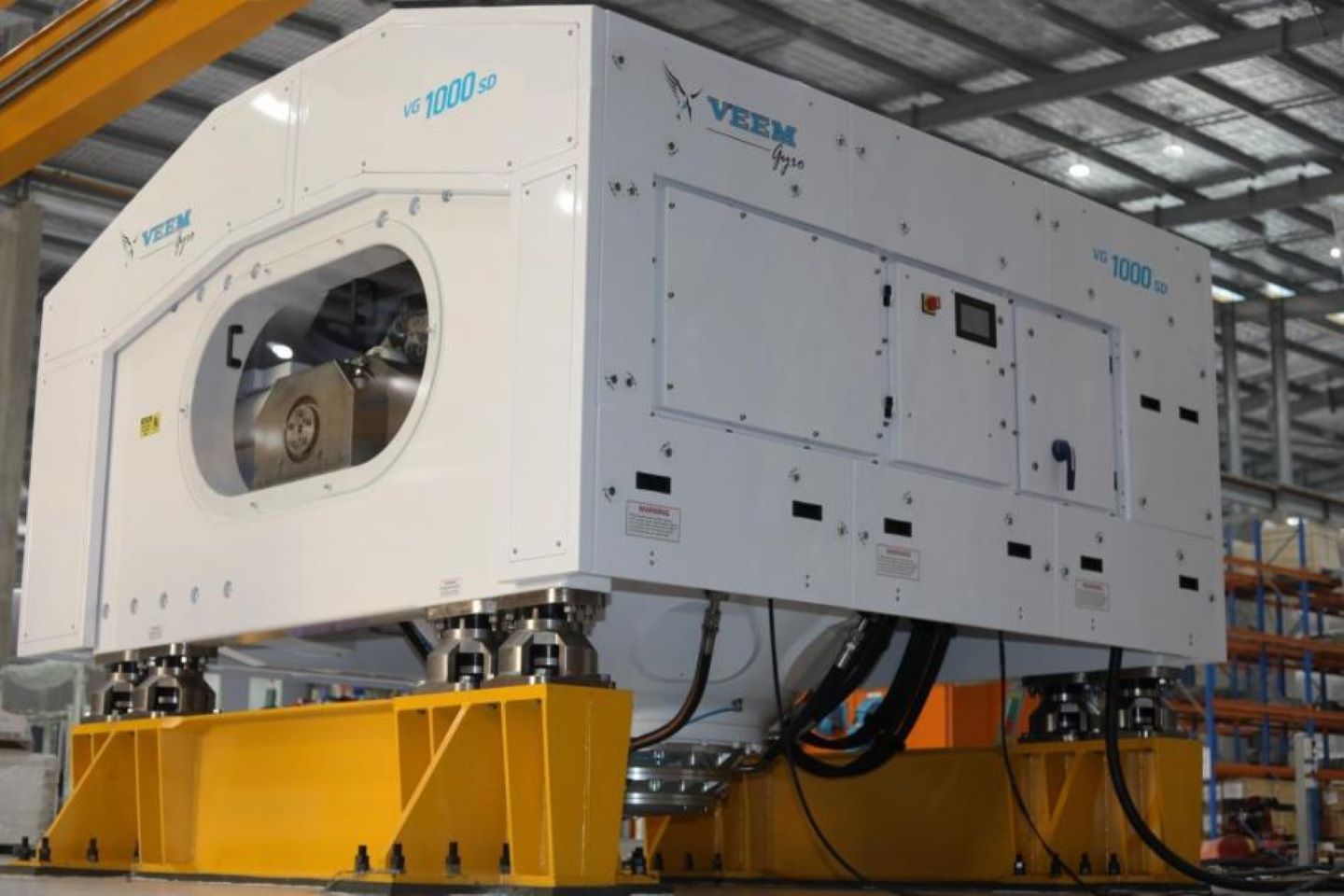
VEEM chief executive Trevor Raman has announced he will depart the marine technology company, citing a desire to pursue additional career opportunities.

Myanmar military escalates civilian killings, monitor warns, amid diplomatic push

Myles Garrett wows his new Rams teammates on first day of training camp

Opinion: The protein of ageing gracefully

Arthur Hayes Bets Even Bigger on Ethereum as $4K Calls Grow Louder


-

 Fashion3 days ago
Weekend Open Thread: Brooks Brothers
-

 Crypto World6 days ago
Grayscale Files For Worldcoin ETF, WLD Registers Sharp Rise
-

 NewsBeat5 days ago
How a former Blue Peter presenter stunned America’s Got Talent judges
-

 Tech6 days ago
Sail Virtually Aboard The “Itanic” With IA-64 Emulator
-
 Tech6 days ago
Turtle Beach Command Series KB7 review: a nifty screen-equipped gaming keyboard
-

 NewsBeat7 days ago
Unregistered fitter used Gas Safe logo on business flyers
-

 Tech5 hours ago
Intel is reversing course and bringing hyper-threading back to its server chips
-
 Business5 days ago
New Jersey voter registration controversy explained: How 6,600 noncitizens got on the rolls, and what happens next
-
 Entertainment5 days ago
Johnny Depp’s R-Rated Gothic Cult Classic Gets New Release Ahead of Sydney Sweeney Remake
-

 Crypto World4 days ago
Ethics, other provisions in crypto Clarity Act to be further discussed
-

 Tech7 days ago
Watch Flock Safety CEO Garrett Langley discuss the future of surveillance at TechCrunch Disrupt 2026
-
 NewsBeat6 days ago
Shanghai science forum photos show China’s AI and robotics advances in rivalry with US
-

 Crypto World7 days ago
Circle’s President Sold Over 360,000 Shares, The Filings Explain Why
-

 Tech7 days ago
Subway Sandwich Computers Get a Second Life as Gaming Machines
-
 Sports9 hours ago
Commonwealth Games boxing: Jadumani Singh seals dominant 5-0 win over Pakistan’s Sumama Rehman to enter quarter-finals | Commonwealth Games News
-

 News Videos3 days ago
The Peugeot Family: How 200 Years of an “Old Money” Dynasty Died in A Boardroom
-

 Politics17 hours ago
Spain sweeps the board at 2026 World Cup with individual awards
-

 Sports3 days ago
2026 3M Open leaderboard: Scottie Scheffler finds putter in Round 1, sits three back
-

 Fashion3 days ago
16 Dresses for the High Summer Event
-

 Crypto World6 days ago
Andrew Cuomo joins OKX board as crypto exchange expands in U.S.
You must be logged in to post a comment Login