Business
Iran Fight Back Twice to Earn 2-2 Draw Against New Zealand in Dramatic 2026 World Cup Opener

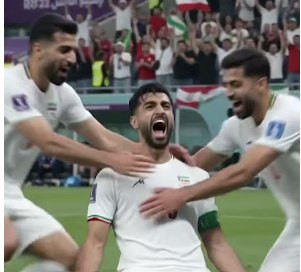
LOS ANGELES — Iran twice came from behind to earn a hard-fought 2-2 draw against New Zealand in their 2026 World Cup Group G opener on Monday at Los Angeles Stadium, showcasing resilience amid significant off-field challenges that had overshadowed their preparations for the tournament.
Goals from Mohammad Mohebi and Ramin Rezaeian allowed Iran to recover from deficits created by Eli Just’s brace for New Zealand. The result provided a much-needed positive moment on the pitch for a team that had faced unprecedented logistical and political hurdles leading into the match, including a last-minute change of training base and travel disruptions.
Mehdi Taremi, Iran’s captain, described the team’s World Cup experience as a “disaster” in the lead-up, while coach Amir Ghalenoei labelled his squad the “most oppressed” team at the tournament. Despite these difficulties, Iran delivered an entertaining performance that earned them a valuable point against a determined New Zealand side.
Match Summary and Key Moments
New Zealand took the lead in the seventh minute when Eli Just finished smartly after linking with Chris Wood. The Motherwell striker controlled a long kick from goalkeeper Max Crocombe and set up Just, who steered the ball past Alireza Beiranvand.
Iran responded strongly, equalizing when Ramin Rezaeian poked home after a sumptuous pass from Saman Ghoddos. The 36-year-old ghosted into the box to convert after Mohammad Moghanloo was crowded out. New Zealand regained the advantage 10 minutes into the second half when Just dinked the ball over Beiranvand following another interplay with Wood.
Iran once again found an answer. Mohebi rose highest to head in via the post after evading New Zealand’s central defenders, securing the draw in a lively contest that showcased both teams’ attacking intent.
New Zealand coach Darren Bazeley expressed mixed emotions after the match. “We were so close to making history,” he said. “We’ve maybe taken a few people by surprise in showing who we are and how good we can play. We’re disappointed to come away with that sense of ‘what if?’”
Off-Field Challenges Overshadow Build-Up
The match took place against a backdrop of significant turmoil for the Iranian team. Eleven officials were refused entry, forcing a switch of their training base from Arizona to Tijuana, Mexico. Travel arrangements were disrupted, and the team arrived in Los Angeles with a reduced support staff.
Pre-match protests outside the stadium and at the team hotel highlighted divisions within the Iranian diaspora. Some supporters carried the pre-revolutionary flag, while others expressed political messages. FIFA upheld a ban on certain flags following a legal challenge, but dozens were still seen inside the venue.
FIFA President Gianni Infantino visited the Iran dressing room to hear their concerns. Despite the chaos, the players produced a committed performance in front of a partisan crowd that provided vocal support throughout the 101 minutes of action, including stoppage time.
Stadium Atmosphere and Fan Support
Los Angeles Stadium, with its teardrop-shaped canopy and massive LED chandelier, provided a spectacular setting. Iranian fans created a lively atmosphere, singing and cheering throughout, offering a welcome distraction from the political tensions surrounding the team.
The Hollywood Hills were visible from parts of the venue, adding to the memorable backdrop. The match itself was relatively drama-free on the pitch compared to the buildup, allowing both teams to focus on football and deliver an entertaining contest for the spectators.
Group G Outlook
The draw leaves Group G wide open. Iran will face Belgium next, while New Zealand will look to build on their promising showing. Both teams demonstrated quality and determination, suggesting competitive matches ahead in the group stage.
For Iran, the point provides encouragement after a difficult preparation period. For New Zealand, the performance against a higher-ranked opponent offers valuable experience in their World Cup campaign.
The result underscores the competitive balance in the expanded 48-team tournament. New Zealand’s ability to take the lead twice against a traditionally strong side like Iran highlights the depth and unpredictability introduced by the new format.
Broader Tournament Context
The 2026 World Cup, co-hosted by the United States, Canada and Mexico, has already produced compelling storylines in its opening days. Political and logistical challenges have affected several teams, but on-field performances continue to captivate audiences worldwide.
Iran’s participation has been particularly scrutinized due to ongoing regional tensions and domestic issues. The team’s ability to secure a point despite these distractions demonstrates the players’ professionalism and commitment to representing their nation.
As the tournament progresses, Group G promises to deliver more intriguing matches. Belgium enters as one of the favorites, but both Iran and New Zealand have shown they can compete and create moments of quality.
Player Performances and Tactical Notes
For Iran, Rezaeian and Mohebi stood out with their contributions to the comeback. Taremi’s leadership was evident, while goalkeeper Beiranvand made important saves to keep his team in the game. New Zealand’s Just was clinical with his two goals, and Wood provided a strong focal point in attack.
Tactically, both teams showed willingness to play open, attacking football. New Zealand’s direct style created problems early, while Iran’s technical ability and quick transitions allowed them to respond effectively. The match featured several hydration breaks due to the warm conditions, which provided tactical resets for both coaches.
The result is likely to boost morale for Iran as they prepare for tougher challenges ahead. For New Zealand, it offers encouragement and valuable lessons as they continue their debut World Cup campaign.
Fan and Cultural Impact
The presence of passionate Iranian supporters created a vibrant atmosphere despite the political complexities. The match served as a reminder of football’s power to unite people, even amid broader tensions. New Zealand fans also showed strong support, contributing to an engaging contest.
The event at Los Angeles Stadium highlighted the scale and spectacle of the 2026 World Cup. With its modern facilities and large capacity, the venue provided an impressive stage for what was ultimately a competitive and entertaining draw.
As the tournament continues, both teams will analyze this result closely. Iran will seek to build on their fighting spirit, while New Zealand will aim to capitalize on their promising debut performance. The draw keeps Group G wide open and sets up intriguing fixtures in the coming days.
The 2026 World Cup has already delivered drama both on and off the pitch. Iran’s resilient performance against New Zealand adds another compelling chapter to the story of a tournament marked by resilience, competition and the enduring appeal of the beautiful game.
You must be logged in to post a comment Login