Business
Iron Ore Leads Resource Boom

SYDNEY — Australia’s export economy in 2026 remains heavily reliant on its vast natural resources, with iron ore, energy commodities and gold dominating the country’s trade ledger as global demand from Asia continues to drive billions in revenue despite fluctuating prices and geopolitical uncertainties.
Iron ore mining stands as Australia’s largest exporting industry, generating an estimated $116.8 billion in 2026, according to industry analysis. The nation supplies more than half of the world’s seaborne iron ore trade, primarily feeding steel production in China, its largest customer. Volumes have remained robust even as prices moderated from previous peaks, supported by strong infrastructure spending in key Asian markets.
Coal, including both thermal and metallurgical varieties, ranks among the top exports with combined earnings around $63–71 billion. Australia is the world’s leading exporter of metallurgical coal used in steelmaking and a major supplier of thermal coal for power generation. While demand faces long-term pressure from the global energy transition, short-term needs in Asia have kept shipments steady in early 2026.
Liquefied natural gas (LNG) production contributes approximately $72.6 billion, positioning Australia as one of the top three global exporters and supplying roughly 30% of Asia’s LNG market. Japan, South Korea and China remain key buyers. Recent price volatility tied to international events has influenced earnings, but established long-term contracts provide stability for major projects in Western Australia and the Northern Territory.
Gold has surged in prominence, with export values reaching or exceeding $60–69 billion in projections for the 2025–26 financial year, potentially overtaking LNG as the second-most valuable resource export after iron ore. Higher production volumes and elevated gold prices driven by safe-haven demand amid geopolitical tensions have fueled the boom. Australia ranks as the world’s second-largest gold producer.
Crude petroleum and broader oil and gas extraction add another $82.5 billion, encompassing both raw and processed energy products. These commodities benefit from Australia’s strategic location and established export infrastructure, though they face competition from other global suppliers.
Agricultural products form a significant but smaller portion of the export mix. Beef and other meat products generate around $17–21 billion annually, with the United States and Asian markets as primary destinations. Grains, including wheat, contribute roughly $9–15 billion, while emerging categories such as tree nuts show strong growth potential.
Critical minerals, particularly lithium used in batteries for electric vehicles, represent a fast-growing segment. Lithium and other non-metallic mineral mining are among the industries with the highest export growth rates in 2026, aligning with global demand for clean energy technologies.
Other notable exports include copper ores and concentrates, aluminium, and wool, though they rank lower in total value compared to the dominant resource categories. Services exports, such as education and tourism, add substantial value but fall outside merchandise trade rankings.
China accounts for roughly 30% of Australia’s total exports, making it by far the largest trading partner. Japan, South Korea, India and the United States follow, highlighting the heavy Asia-Pacific orientation of Australian trade. In January 2026 alone, exports to China reached $14.2 billion, underscoring continued reliance on the Chinese market for iron ore, coal and LNG.
The overall merchandise export total for recent periods hovers around $330–360 billion annually, with resources and energy comprising the vast majority. Government forecasts for resources and energy exports in the year through June 2026 were revised upward to A$383 billion, reflecting stronger gold and certain commodity outlooks.
Economists note that while resource dependence brings prosperity, it also exposes the economy to commodity price cycles and external shocks. Efforts to diversify include boosting critical minerals processing, expanding agricultural value-added exports and growing services trade. However, mining and energy still dominate the top 10 list.
Here is a consensus ranking of Australia’s top 10 exporting products in 2026 based on available industry reports, government data and trade analyses (values are approximate annual figures in USD or equivalent and subject to monthly fluctuations):
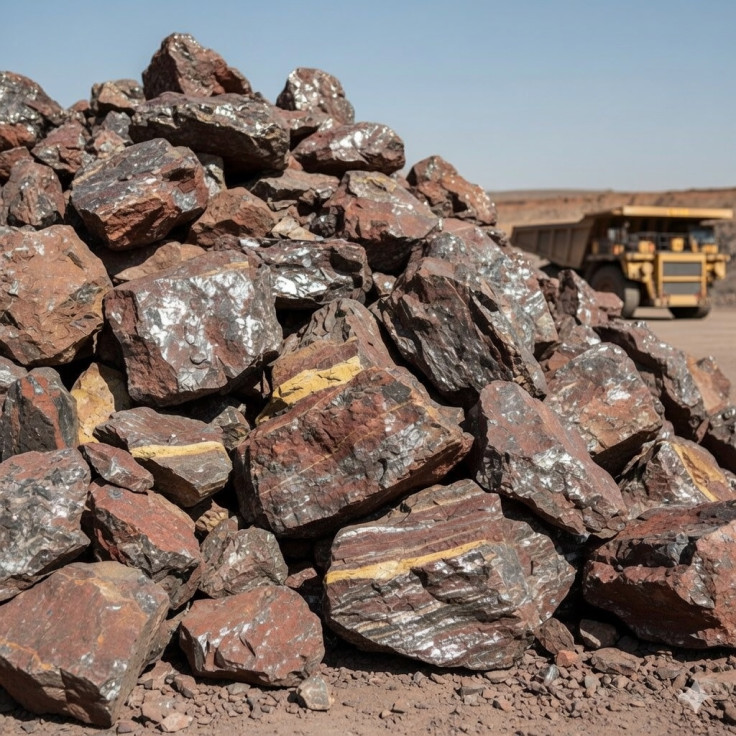

1. Iron Ore — Approximately $87–117 billion. Australia remains the undisputed leader in global iron ore exports, with massive shipments from the Pilbara region in Western Australia.
2. Liquefied Natural Gas (LNG) / Petroleum Gas — Around $49–73 billion. Long-term contracts with Asian buyers sustain this key energy export.
3. Coal (Thermal and Metallurgical) — Roughly $61–71 billion. Essential for steel and power in importing nations.
4. Gold — $31–69 billion. Surging prices and production have elevated its ranking significantly.
5. Crude Petroleum / Oil and Gas Extraction — Contributing to the broader $82 billion energy category.
6. Meat and Edible Meat Offal (primarily beef) — About $17–21 billion. High-quality Australian beef enjoys strong demand in premium markets.
7. Cereals / Grains — Around $9–15 billion. Wheat and other grains support food security in import-dependent regions.
8. Copper Ores and Concentrates — Several billion, part of broader base metals exports.
9. Aluminium and Aluminium Ores — Steady contributor from Australia’s smelting capacity.
10. Lithium and Critical Minerals — Rapidly rising, though still smaller in absolute value than traditional leaders; positioned for future growth.
Monthly data from the Australian Bureau of Statistics for early 2026 showed mixed movements. Iron ore fines and lump experienced some volume and price adjustments, while certain coal categories and LNG recorded modest gains or stability. Gold shipments have been particularly strong.
Trade experts highlight opportunities and risks. Rising demand for critical minerals linked to the energy transition could elevate lithium and rare earths in future rankings. Conversely, global decarbonization policies may eventually curb coal and traditional gas demand, prompting investment in new export streams.
Australia’s trade surplus has benefited from high commodity prices in recent years, supporting government revenues and the national economy. However, currency fluctuations, particularly the Australian dollar, influence competitiveness.
As of March 2026, the export landscape reflects both continuity in resource strength and gradual shifts toward higher-value and future-oriented commodities. Diversification efforts continue through trade agreements and investment in processing capabilities to capture more value domestically before export.
For businesses and policymakers, monitoring commodity prices, Chinese economic conditions and global energy dynamics remains crucial. Australia’s export success in 2026 underscores its role as a reliable supplier of essential raw materials to the world economy, while highlighting the need for ongoing adaptation to changing international demands.
The composition of Australia’s top exports underscores the nation’s comparative advantages in mining and agriculture. Sustained investment in infrastructure, technology and sustainable practices
You must be logged in to post a comment Login