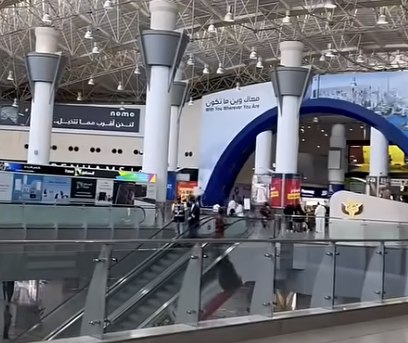
KUWAIT CITY — Kuwait International Airport (KWI) stayed largely closed to regular commercial passenger traffic Monday as authorities continued safety assessments and repairs following a series of Iranian-linked drone attacks that damaged radar systems, fuel storage facilities and infrastructure since late February 2026.
Kuwait International Airport
The Directorate General of Civil Aviation (DGCA) and the Public Authority for Civil Aviation have suspended most operations, with no confirmed reopening date announced. Flight tracking sites and the official airport website showed virtually no scheduled arrivals or departures, displaying messages prompting travelers to contact airlines directly. Kuwait Airways has suspended all flights indefinitely from KWI, rerouting some operations through alternative hubs such as King Fahd International Airport in Dammam, Saudi Arabia.
The troubles escalated with multiple drone strikes reported in late February and early March, including attacks on March 28 that damaged radar systems and sparked fires at fuel depots. Additional strikes in early April targeted fuel tanks, causing large fires and further structural damage to Terminal 1 and runways. Officials described one incident as a “brazen attack” on critical infrastructure, with smoke visible from affected areas and emergency teams responding to contain blazes.
As of April 6, 2026, the airport has been effectively shut to standard commercial traffic for more than five weeks. Some limited cargo or military-related movements may continue under strict controls, but civilian passenger flights remain heavily disrupted or canceled. FlightStats reported excessive and increasing delays where any activity occurred, while Flightradar24 and other trackers showed near-zero commercial operations.
Travelers face significant chaos. Hundreds of passengers have been stranded or forced to rebook through neighboring countries. Kuwait Airways advised customers to check with local offices or the airport for updates, with many long-haul routes to destinations such as London, New York, Geneva and regional hubs either canceled or suspended. Some airlines have implemented hybrid ground-and-air transfer arrangements via Saudi Arabia to maintain limited connectivity.
Advertisement
The closures stem from both physical damage and precautionary airspace restrictions imposed amid heightened regional tensions involving the U.S., Israel and Iran. Kuwait’s airspace has been closed to most commercial civilian flights since late February, with air defense operations taking priority. Even after repairs, full resumption will require safety inspections, clearance of restricted airspace and confirmation that infrastructure meets international aviation standards.
Kuwait International Airport, one of the busiest in the Gulf with millions of passengers annually before the crisis, serves as a key hub for Kuwait Airways and several international carriers. The prolonged shutdown has sent shockwaves through regional travel, affecting tourism, business travel and expatriate movements in a country heavily reliant on foreign labor and oil-driven commerce.
Authorities have held cabinet-level meetings focused on aviation recovery, economic safeguards and coordination with international partners. Repair timelines remain unclear, with estimates ranging from several weeks to months depending on the extent of damage to radar, terminals, runways and fuel systems. No casualties were reported in the strikes, but the psychological and economic impact on travelers and the aviation sector has been significant.
Regional ripple effects include increased pressure on alternative airports in Saudi Arabia, the UAE, Bahrain and Qatar. Some carriers have added or expanded flights from those hubs to accommodate displaced passengers. Jazeera Airways and other low-cost operators have adjusted networks, with some launching or restarting routes that bypass Kuwait temporarily.
Advertisement
For passengers holding tickets involving KWI, airlines recommend checking flight status frequently and preparing for rebooking or refunds. Many have faced difficulties contacting customer service amid high call volumes. Travel insurance claims related to disruptions are expected to rise, while some governments have issued or updated advisories urging caution in the region.
The situation highlights the vulnerability of Gulf aviation infrastructure to geopolitical conflicts. Previous incidents, including temporary airspace closures and refueling interruptions, caused shorter disruptions, but the current series of drone attacks has caused more sustained damage. Smoke from fuel facility fires and reports of panic in terminals during incidents underscored the severity.
Kuwait’s government has activated emergency response protocols, with civil defense and military units involved in securing the site and supporting repairs. International aviation bodies are monitoring developments, though no formal global alerts beyond standard conflict-zone advisories have been issued.
As Monday progressed, scattered reports mentioned temporary refueling interruptions causing further delays on any limited departing flights, according to statements from the General Authority for Civil Aviation. However, the broader picture remained one of suspended operations rather than normal activity with delays.
Advertisement
Travelers planning trips to or through Kuwait are urged to contact their airlines well in advance and monitor official channels, including the Kuwait Airport website and Kuwait Airways updates. No immediate resumption of full services is expected, with some advisories suggesting the situation could persist into mid-April or beyond.
The prolonged closure has broader economic implications for Kuwait, a nation where aviation supports significant expatriate flows and business ties. Oil sector workers, medical tourists and family visitors have been particularly affected.
While exact repair costs and timelines remain undisclosed, officials emphasize that safety remains the top priority. Full operations will resume only after comprehensive assessments confirm the airport meets all required standards.
In the meantime, passengers are advised to explore alternative routes via neighboring Gulf states. Some carriers have offered flexible rebooking policies or compensation where applicable under international regulations.
Advertisement
The events at Kuwait International Airport serve as a stark reminder of how regional conflicts can rapidly disrupt global travel networks. As repairs continue and diplomatic efforts unfold, travelers and airlines alike await clearer signals on when normal operations might return to this vital Gulf hub.
Anyone affected by cancellations should retain all documentation for potential claims and stay updated through reliable sources. The situation remains fluid, with new developments possible as assessments progress.
Passionate about geopolitics and macroeconomics, I express my opinion through my articles and enjoy engaging with all of you. I also write about companies that catch my attention, particularly those in my portfolio. For me, Seeking Alpha is a way to expand and share my knowledge. Graduate in business economics, CFA Level 1 and popular investor on eToro.
Analyst’s Disclosure: I/we have a beneficial long position in the shares of GOOG, META either through stock ownership, options, or other derivatives. I wrote this article myself, and it expresses my own opinions. I am not receiving compensation for it (other than from Seeking Alpha). I have no business relationship with any company whose stock is mentioned in this article.
Seeking Alpha’s Disclosure: Past performance is no guarantee of future results. No recommendation or advice is being given as to whether any investment is suitable for a particular investor. Any views or opinions expressed above may not reflect those of Seeking Alpha as a whole. Seeking Alpha is not a licensed securities dealer, broker or US investment adviser or investment bank. Our analysts are third party authors that include both professional investors and individual investors who may not be licensed or certified by any institute or regulatory body.
It has acquried Telford-baed healthy snack maker Flower & White
16:17, 30 Apr 2026Updated 16:24, 30 Apr 2026
Cardiff headquartered leading speciality bakery manufacturer, Finsbury Food Group, has acquired healthy snack brand Flower & White as part of its buy and build growth strategy.
Based in Telford, Flower & White produces a range of light sweet treats and lower-calorie snack bars across direct-to-consumer, retail and foodservice channels. The business is currently growing at around 30% and employs 46 staff.
The value of the deal has not been disclosed. Stock Market listed Finsbury employs 800 at its Cardiff HQ and manufacturing site, which operates under its Memory Lane brand. UK-wide the group employs 3,500 with annual revenues of more than £500m.
Advertisement
The acquisition further strengthens Finsbury’s position within the direct-to-consumer market and adds new capabilities to further capitalise on the shift towards healthier snacking alternatives. The deal follows it acquiring a majority stake in direct-to-consumer cupcake brand, Lola’s, last August.
Flower & White’s founders, Leanne and Brian Crowther, will remain in place to support a smooth integration. The business will continue to operate from its Telford site.
The deal strengthens Finsbury Food Group’s position in the direct-to-consumer market and offers a differentiated lighter snacking proposition to its roster of baked goods.
Advertisement
John Duffy, chief executive of Finsbury Food Group, said: “Flower & White is a high-quality, entrepreneurial brand operating in attractive growth segments. This acquisition strengthens our direct-to-consumer platform and adds exciting capability in sweet treats and better-for-you snacking. We see strong opportunities to scale the brand through our retail and commercial channels.”
Leanne Crowther, joint founder of Flower & White, said: “We’re delighted to confirm that Flower & White has been acquired by Finsbury Food Group. This is a proud moment in our journey. What started as a small idea in our Shropshire kitchen has grown into a brand-first business shaped by an amazing team and loyal customers.
“Joining Finsbury allows us to build on everything we’ve created, accelerating our direct-to-consumer plans, strengthening retail and foodservice relationships and bringing even more of what people love from Flower & White to the market. We couldn’t be more excited for this next chapter.”
Finsbury Food Group supplies a range of bread, cake, morning goods and bakery snack products to multiple retailers, food service and export channels across the UK and Europe.
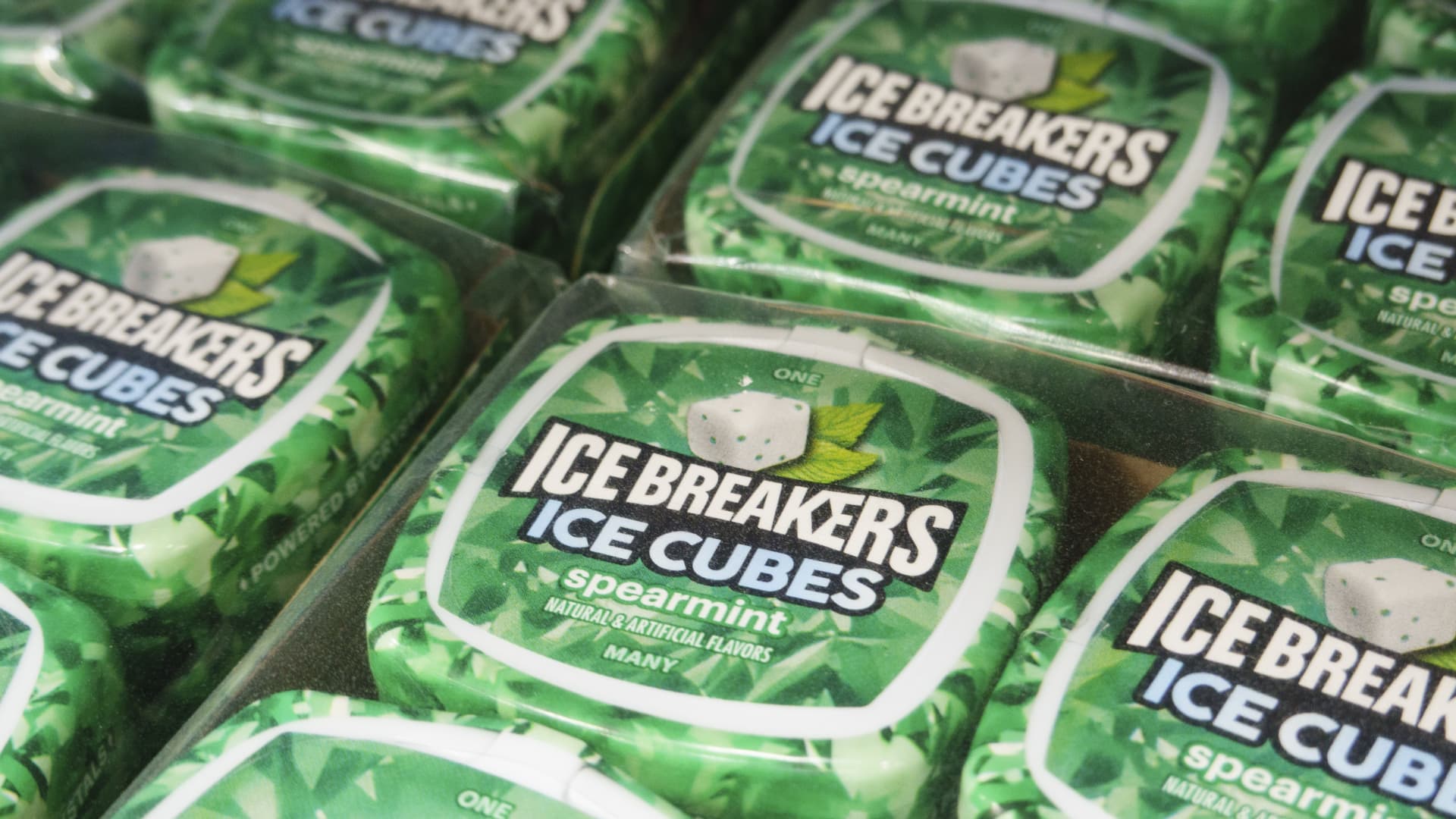
Packages of Ice Breakers spearmint mints Mints are displayed at a Costco Wholesale store on April 27, 2025 in San Diego, California.
Kevin Carter | Getty Images
Hershey is seeing higher sales for its mints and gum — thanks to the growing use of GLP-1 drugs.
Advertisement
“We’ve also seen strong demand for gum and mints, as the category benefits from functional snacking tailwinds, including GLP-1 adoption,” CEO Kirk Tanner said in pre-recorded remarks ahead of the company’s earnings conference call Thursday. “Retails sales for our third-largest confection brand, Ice Breakers, increased over 8% in the quarter.”
While Tanner didn’t specify why the increasing usage of GLP-1 agonists fueled mint and gum sales, some people who take medications like Ozempic, Wegovy and Mounjaro report experiencing halitosis, or bad breath. However, so-called Ozempic breath is not an official listed side effect for the medication.
Dental experts have linked the drugs to dry mouth, likely caused by dehydration and changes to saliva caused by the medication.
Hershey isn’t the only company known for its sweet treats that is reporting a surprising lift in sales from GLP-1 users. Swiss chocolatier Lindt & Spruengli said in March that U.S. sales of premium chocolate rose faster last year among people using the medication than those who weren’t.
Advertisement
And The Magnum Ice Cream Company told investors that data suggests that the growing adoption of GLP-1 drugs will likely boost sales of its more expensive products, like those that come in smaller portions or offer more protein or contain real fruit. It called the trend “the premium treat substitution effect.”
“As consumers using GLP-1s are eliminating [the] low-quality munching categories first, categories like premium chocolate, premium ice cream and protein snacks could gain share in the overall snacking market,” CEO Peter ter Kulve said on the company’s earnings conference call in February.
The boost to Hershey’s sales from breath-freshening mints and gum, as well as a 17% jump in sales of its protein bars, helped the company’s quarterly revenue climb more than 10% in the first quarter. However, shares were down more than 2% in morning trading.
FOX Business host Charles Payne discusses how Intel is performing on ‘Making Money.’
President Donald Trump says the U.S. has brought in $30 billion in funds generated from federal stock holdings in Intel over the past 90 days alone.
Trump made the announcement on Thursday, highlighting that he authorized the U.S. government to invest in the semiconductor manufacturing company. Trump revealed in August of last year that Intel had agreed to the federal government acquiring a 10% stake in the company.
Advertisement
“Intel Stock continues to rise. I’m very proud of that Company in that I am responsible for making the United States of America over 30 Billion Dollars in the last 90 days on that stock alone,” Trump wrote.
“There are others that, likewise, I have been very successful with by taking pieces of the Equity for support. Congratulations to Intel on doing such a great job and, more importantly, congratulations to the People of the United States for making such a good investment!” he added.
U.S. President Donald Trump speaks during a Cabinet meeting in the Cabinet Room of the White House. (Chip Somodevilla/Getty Images / Getty Images)
The administration announced the deal with Intel when the company was struggling last year. Semiconductors power everything from smartphones to defense systems, and Intel’s slowdown was a national security concern, industry analysts say.
Advertisement
Stocks In This Article:
Intel unveiled new chip manufacturing milestones in early January, accounting for much of its growth. Nevertheless, former Intel CEO Pat Gelsinger warned at the time that the United States still has a long way to go to reclaim chip production from Asia.
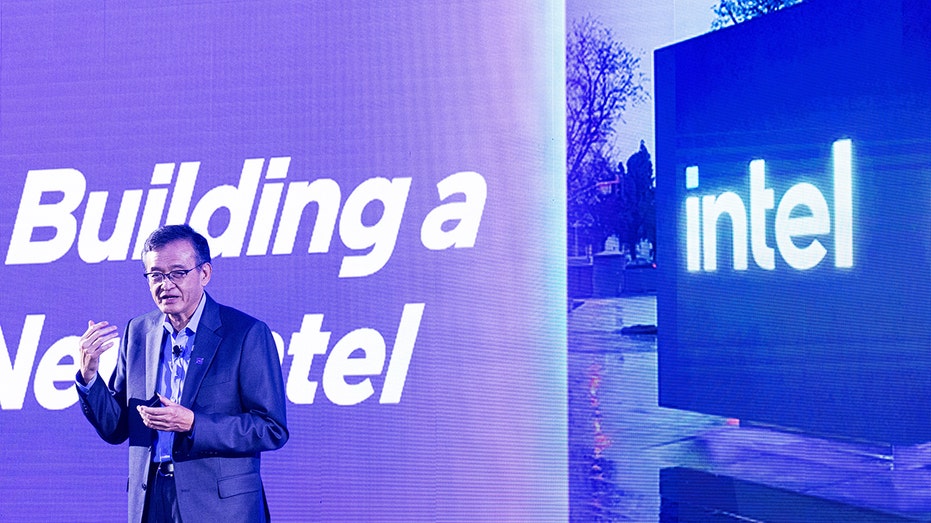
Lip-Bu Tan, chief executive officer of Intel Corp., during a news conference on the sidelines of the Computex conference in Taipei, Taiwan. (Annabelle Chih/Bloomberg via Getty Images / Getty Images)
“The metric [is] though, how many wafers are being built in America,” Gelsinger said in January on “The Claman Countdown.”
Much of the world’s advanced chip manufacturing remains concentrated in Asia, particularly Taiwan. U.S. officials have said the imbalance poses economic and national security concerns.
Gelsinger said it is critical that manufacturing return to the United States, while cautioning that progress will take time.
SlateStone Wealth chief market strategist Kenny Polcari discusses Intel forecasting a revenue surge, how it impacts tech stocks and Meta and Microsoft announce job cuts on ‘Varney & Co.’
SEATTLE — Impinj Inc. shares skyrocketed more than 21% Thursday, surging to around $146 in morning trading after the RAIN RFID pioneer delivered a strong revenue beat for the first quarter and issued blockbuster second-quarter guidance that far exceeded Wall Street expectations, igniting optimism about accelerating demand for its Internet of Things technology.
Impinj Stock Explodes 22% on Explosive Q2 Guidance and Record RFID Bookings Despite Q1 Miss
The semiconductor and RFID solutions company reported first-quarter revenue of $74.3 million, topping analyst forecasts of roughly $72.5 million to $74 million while remaining essentially flat year-over-year. Non-GAAP earnings per share came in at $0.14, beating consensus estimates of $0.11. Adjusted EBITDA reached $3.4 million.
While the top line reflected ongoing inventory digestion and seasonal softness in some retail segments, CEO Chris Diorio highlighted record endpoint IC bookings as the standout metric. “Endpoint IC bookings hit an all-time record, engendering a strong second-quarter revenue outlook,” Diorio said in the earnings release.
Impinj raised its Q2 outlook sharply, projecting revenue between $103 million and $106 million — well above the Street consensus around $97 million — and non-GAAP EPS of $0.77 to $0.82, dramatically higher than prior expectations near $0.20. The aggressive guidance signals a sharp rebound driven by new platform ramps, particularly the M800 series, and expanding adoption in supply chain, logistics and retail applications.
Investors responded with enthusiasm, pushing the stock well above Wednesday’s close of $120.04. Volume surged as traders piled in, reflecting relief after months of volatility tied to inventory corrections and slower retail deployments. The move marks one of the largest single-day percentage gains for the company in recent memory.
Advertisement
Impinj specializes in RAIN RFID technology that enables wireless identification and tracking of billions of everyday items — from apparel and luggage to automotive parts and medical supplies. Its platform connects physical objects to the cloud, powering smarter supply chains and inventory management for major retailers, logistics firms and manufacturers.
The record bookings underscore growing momentum in core markets. Management cited strong demand in supply chain and logistics, areas increasingly reliant on advanced RFID for real-time visibility and efficiency. The M800 platform ramp, offering higher performance and new features, is expected to drive meaningful revenue acceleration through the second half of 2026.
Analysts viewed the results positively despite the GAAP net loss of $25.3 million, or $0.83 per share, which included non-cash items. The focus remained on the forward outlook and operational execution. Several firms raised price targets following the report, though the consensus still hovers around $160-$170, leaving room for further upside.
The RFID market continues expanding as companies digitize operations amid e-commerce growth, labor shortages and complex global supply chains. Impinj’s technology offers advantages in read range, speed and cost over traditional barcodes, positioning it for long-term secular tailwinds even as near-term cycles fluctuate.
Advertisement
Challenges persist. The company has navigated retailer inventory burn-down and product transitions that pressured Q1. Broader semiconductor sector dynamics, including customer concentration and macroeconomic uncertainty, add volatility. Impinj also carries convertible debt, though it recently repurchased a portion to reduce dilution risk.
Balance sheet strength provides a buffer. The company ended the quarter with $235 million in cash and investments. Free cash flow turned positive at $2.2 million, and capital expenditures remained disciplined at $1.7 million.
For investors, the surge highlights Impinj’s high-beta nature. The stock has traded in a wide range, hitting a 52-week high near $247 last year before pulling back amid growth concerns. Thursday’s rally recovers some ground but leaves shares below peaks, reflecting both opportunity and execution risk.
CEO Diorio emphasized the massive untapped potential. Billions of items still lack RFID tagging, creating a multi-year growth runway as adoption scales from pilots to enterprise-wide deployments. Partnerships with major retailers and logistics providers continue expanding use cases.
Advertisement
Looking ahead, the company plans further innovation in endpoint ICs and reader platforms. Gen2X features, including faster inventory reads and enhanced security, could open new verticals in healthcare, aviation and industrial IoT. Management expects sequential improvement through 2026 as inventory normalizes and new platforms gain traction.
Wall Street reaction underscored the power of forward guidance. While Q1 showed typical seasonal softness, the Q2 outlook demonstrated confidence in a rebound. Analysts noted improving gross margins and operational leverage as key positives for profitability.
Risks include customer delays, competitive pressures from other RFID providers and potential slowdowns in retail spending. Currency fluctuations and supply chain component costs also warrant monitoring. Yet the record bookings provide tangible evidence of underlying demand strength.
Impinj, founded in 2000 and based in Seattle, has evolved from an early RFID pioneer to a key enabler of the Internet of Things. Its technology powers applications across retail, healthcare, automotive and logistics, helping organizations gain real-time visibility into assets and inventory.
Advertisement
As trading progressed Thursday, the stock held most of its gains amid high conviction. Whether the momentum sustains depends on Q2 delivery and continued progress on platform ramps. For now, the market has rewarded Impinj’s ability to navigate near-term headwinds while positioning for stronger growth.
The RFID sector watches closely. Successful execution could validate broader digitization trends and drive re-rating for the stock. With Q2 guidance signaling acceleration, Impinj appears poised for a stronger second half — provided it converts bookings into sustained revenue and earnings growth.
For long-term investors, today’s surge reinforces Impinj’s role in the expanding connected economy. As more industries embrace RFID for efficiency and transparency, the company’s technology could capture significant market share in a multi-billion-dollar opportunity.
Given events in the Middle East, it was already inevitable that domestic energy bills will rise this summer. The Bank paints a relatively bleak picture, even though uncertainty still dominates. In short, it will take the region – and the wider energy sector – a while to recover in any scenario, so prices will rise.
PLYMOUTH, Mich. — Garrett Motion Inc. shares exploded more than 22% Thursday, surging to $25.07 in morning trading after the automotive technology supplier delivered a strong first-quarter earnings beat and raised its full-year 2026 guidance, signaling robust demand for its turbocharging and electrification products amid the global shift toward hybrids and efficient internal combustion engines.
The turbocharger specialist reported net sales of $985 million for the quarter ended March 31, up 12% from a year earlier on a reported basis and 6% at constant currency. The top line comfortably topped analyst expectations of roughly $913 million. Net income reached $95 million, or $0.49 per share, beating consensus estimates of $0.43 per share. Adjusted EBIT hit $151 million, reflecting a robust 15.3% margin.
Garrett also generated $49 million in adjusted free cash flow and returned capital to shareholders through $87 million in share repurchases and a quarterly dividend of $0.08 per share, payable June 15. The performance underscored disciplined execution and strong volume conversion in a mixed automotive market.
CEO Olivier Rabiller highlighted the results as evidence of the company’s strategic positioning. “Net sales increased to $985 million, Adjusted EBIT margin expanded to 15.3% and we generated $49 million of Adjusted Free Cash Flow, reflecting disciplined execution and strong volume conversion,” he said in the earnings release.
Advertisement
Investors responded enthusiastically to the raised 2026 outlook. Garrett now targets full-year net sales of $3.6 billion to $3.9 billion, up from prior guidance, and Adjusted EBIT of $520 million to $600 million. The update reflects stronger-than-expected volumes and improved conversion rates, providing a clear runway for growth.
The surge marks a sharp rebound for GTX, which had traded around $20 in recent sessions. Volume spiked dramatically as traders piled into the name, pushing the stock toward multi-year highs. The move comes as Garrett benefits from sustained demand for gasoline and hybrid powertrains even as full electrification accelerates more slowly than anticipated.
Garrett Motion specializes in turbochargers, electric boosting systems and thermal management technologies that improve fuel efficiency and performance across internal combustion, hybrid and electric vehicles. Its products play a critical role in helping automakers meet stricter emissions standards without sacrificing drivability — a sweet spot in today’s transitional market.
Recent partnerships have broadened the company’s horizon beyond traditional automotive. On April 27, Garrett announced a collaboration with TONFY to integrate its oil-free centrifugal compressor technology into high-efficiency liquid cooling systems for battery energy storage. The deal targets the fast-growing data center and energy storage markets, diversifying revenue beyond passenger vehicles.
Advertisement
Analysts largely welcomed the results. The earnings beat and guidance raise validate Garrett’s hybrid-focused strategy at a time when many OEMs are recalibrating pure EV timelines. Hybrids have seen explosive growth in markets like China, Europe and North America, driving turbocharger demand.
Yet the stock’s volatility highlights ongoing risks. Garrett operates in a cyclical industry tied to global vehicle production, semiconductor availability and raw material costs. Trade tensions, currency fluctuations and potential slowdowns in China — a key market — remain watchpoints. The company carries debt from its 2018 spin-off from Honeywell, though management has steadily reduced leverage.
Wall Street’s consensus price target sits around $22-$24, implying more modest upside from pre-earnings levels but now appearing conservative after Thursday’s rally. Several firms maintain Buy or Outperform ratings, citing undervaluation relative to growth prospects and margin expansion potential.
For long-term investors, Garrett offers exposure to both legacy auto strength and emerging electrification trends. Its technologies support 48-volt mild hybrids and high-performance electric systems, positioning it across multiple powertrain scenarios. The company’s focus on industrial applications, including aerospace and energy, provides additional buffers.
Advertisement
Shareholder returns have become a priority. Beyond the quarterly dividend, the $87 million in first-quarter buybacks signal confidence. Garrett has authorization for further repurchases, potentially supporting the stock if earnings momentum continues.
The broader auto supplier sector has faced headwinds from softening new vehicle sales and inventory corrections. Yet Garrett’s outperformance reflects its technological edge and exposure to high-growth segments. Global turbocharger penetration continues rising as emissions regulations tighten worldwide.
Looking ahead, Garrett plans its 2026 Technology and Investor Day on May 20 in New York City, where executives are expected to detail innovation pipelines, including advanced cooling solutions and next-generation boosting systems. The event could provide further catalysts.
Risks remain. A sharper-than-expected slowdown in global auto production, commodity inflation or supply chain disruptions could pressure margins. Competition from other turbo specialists and in-house OEM development adds uncertainty. Valuation has expanded rapidly on today’s move, raising questions about near-term pullback potential.
Advertisement
Still, the earnings-driven rally underscores investor appetite for companies delivering tangible results amid economic uncertainty. Garrett’s ability to beat estimates while raising guidance stands out in an earnings season marked by caution.
As trading continued Thursday, GTX maintained most of its gains with strong conviction. The reaction reflects relief that Garrett’s hybrid bet is paying off while diversification efforts gain traction. Whether this marks the start of a sustained rebound or a short-term spike depends on execution in coming quarters.
For now, the message from the market is clear: Garrett Motion’s combination of strong fundamentals, raised expectations and strategic positioning has reignited investor enthusiasm. At a time when many auto suppliers struggle with EV transition uncertainty, Garrett stands out as a beneficiary of the prolonged hybrid era.
The coming months will test whether the company can sustain this momentum. With Q2 results due in late July and the investor day on the horizon, attention will focus on order books, margin trends and progress in non-auto segments. For shareholders riding the 22% wave, today’s surge validates patience — and raises hopes for further upside as 2026 unfolds.






















































You must be logged in to post a comment Login