Business
Israel Targets Khamenei and Top Iranian Leaders in Strikes Aimed at Regime Change: Explosions Rock Tehran

Israel, with U.S. support, launched a series of airstrikes early Saturday targeting Iran’s Supreme Leader Ayatollah Ali Khamenei and other top political and military figures in a bold operation aimed at dismantling the Islamic Republic’s regime, Israeli officials said. Explosions echoed across Tehran and other key sites, marking a dramatic escalation in the longstanding conflict that could reshape the Middle East.
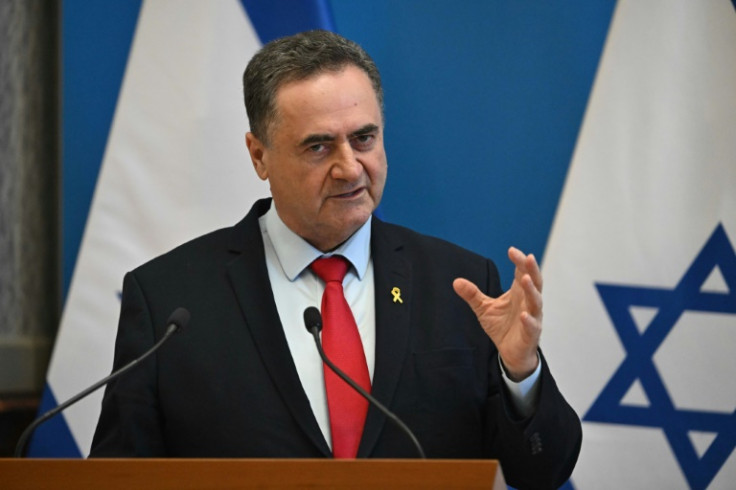
The strikes, described by Israeli Defense Minister Israel Katz as a “pre-emptive attack” after months of joint planning with Washington, focused on Khamenei’s downtown Tehran compound, President Masoud Pezeshkian’s residence and headquarters of the Islamic Revolutionary Guard Corps (IRGC). Satellite imagery from Airbus captured multiple buildings destroyed amid rising smoke at Khamenei’s fortified site, with assessments indicating a direct hit. Iranian state media reported blasts near an elementary school, claiming civilian casualties, though independent verification was unavailable due to communication disruptions.
AFP

A senior Israeli official told Reuters that the entire Iranian regime was targeted, including Khamenei, Pezeshkian and IRGC commanders like Mohammad Pakpour. Channel 12 in Israel reported a high likelihood that Ali Shamkhani, Khamenei’s advisor overseeing the nuclear program, was eliminated in the strikes. Other potential targets included Ali Larijani, secretary of Iran’s Supreme National Security Council, and armed forces Chief of Staff Sayyid Abdolrahim Mousavi.
Israeli Prime Minister Benjamin Netanyahu, in a televised address, framed the operation as essential to “remove the existential threat posed by the terrorist regime in Iran” and empower the Iranian people to overthrow their leaders. “The time has come for all sections of the people in Iran to topple the Ayatollah regime,” he said, emphasizing strikes on nuclear facilities in Isfahan, Qom, Kermanshah and Karaj.
U.S. President Donald Trump confirmed American involvement in a video posted to Truth Social, announcing “major combat operations” to destroy Iran’s ballistic missile and nuclear programs. “Our objective is to defend the American people by eliminating threats from the Iranian regime,” Trump stated, urging Iranians: “The hour of your freedom is at hand. Take over your government.” A U.S. official, speaking anonymously, said the strikes involved over 500 aircraft and were expected to span several days, focusing on military targets but with clear regime-change intent.
Iranian officials denounced the assault as “barbaric aggression.” Military spokesman Amir Hatami promised a “decisive response,” and the IRGC launched a “first wave” of ballistic missiles and drones targeting Tel Aviv, northern Israel and U.S. bases in Iraq, Syria, the UAE, Bahrain, Qatar, Kuwait and Saudi Arabia. One civilian in northern Israel was injured by shrapnel, and a fatality was reported in Abu Dhabi from debris. Explosions near the U.S. Navy’s Fifth Fleet headquarters in Manama, Bahrain, prompted air raid sirens across the Gulf.
Khamenei’s whereabouts remain unknown. Reports indicate the 86-year-old leader was evacuated to a secure location before the strikes, with Iranian media claiming he and Pezeshkian are safe. Tehran denied Pakpour’s death, asserting senior officials are in “perfect health.”
The operation, dubbed “Operation Epic Fury” by some U.S. sources, follows a 12-day air war in June 2025 and stalled nuclear negotiations. Tensions escalated amid Iran’s suppression of domestic protests, with reports of thousands killed, and its support for proxies like Hezbollah and Hamas. Khamenei had warned Israel of “severe punishment” Friday, accusing it of striking residential areas.
International reactions were swift. Russia and China condemned the strikes as “illegal aggression,” while the U.N. Security Council scheduled an emergency meeting. European leaders urged restraint, and Gulf states like the UAE reserved the right to respond to Iranian missiles. In the U.S., congressional leaders received briefings, with bipartisan support emerging amid calls for caution.
Oil prices surged 15% on fears of Strait of Hormuz disruptions, and global stocks plummeted. Airspaces closed across the region, grounding flights and stranding travelers.
Humanitarian concerns mounted. Amnesty International demanded civilian protections, warning of risks in urban areas. The exiled Iranian crown prince called for protests, labeling it a “moment of destiny.”
Social media captured jubilation among some Iranians and diaspora, with chants of “freedom” in Tehran videos. Analysts like Aaron David Miller of the Carnegie Endowment predicted potential full-scale war, noting regime-change ambitions raise stakes.
As waves of attacks continue, the region braces for retaliation. Trump and Netanyahu plan further briefings, while Iran’s IRGC mobilizes reserves. The strikes thrust the Middle East into uncharted territory, with global implications for security, energy and alliances.