

Business
Jean-Claude Bastos’ Beyond’ Podcast Features a Probing Conversation on Architecture, Intelligence, and the Nature of Design

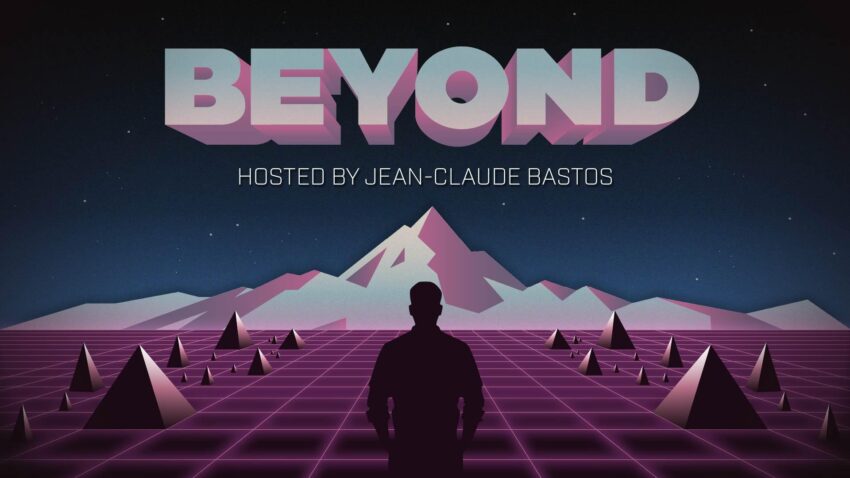
What does architecture have to do with the physics of the universe, the efficiency of a 1950s French automobile, and the limits of artificial intelligence?
Quite a lot, it turns out, as described by Chris Moller, the New Zealand architect and inventor who sat down with investor and philanthropist Jean-Claude Bastos for the second episode of his new podcast, Beyond: Hosted by Jean-Claude Bastos.
The show, which positions itself at the intersection of science, technology, nature, and human perception, made its presence known with a conversation that resisted easy categorization. Moller, a veteran of both European urbanism and New Zealand experimental design, spent the better part of an hour unspooling a philosophy that draws on Buckminster Fuller, Antoni Gaudí, medieval hilltowns, and quantum mechanics, across a single conversation. The result is an episode that challenges listeners to reconsider what “architecture” actually means, and what gets lost when a discipline becomes captive to regulation, data, and convention.
About the Host: Jean-Claude Bastos and the ‘Beyond’ Concept
Jean-Claude Bastos’ career spans private equity, venture capital, philanthropic investment, and authorship, including his 2015 book The Convergence of Nations: Why Africa’s Time is Now, and his work has consistently operated at the boundary between commerce and social purpose.
His new podcast extends that boundary-crossing impulse into the realm of ideas. Beyond is described as a series that lives “at the frontier where technology, nature, and the unknown converge.” Drawing on his background in high-level finance, experimental agriculture, and direct engagement with indigenous knowledge traditions, Bastos approaches each episode as what the show calls a “field researcher at the edge of knowledge.” The stated goal is not to preach or predict, but to explore the territory between instruments and intuition: the space between measurement and meaning.
The podcast’s format reflects this ambition. Rather than conducting standard interviews structured around career highlights and promotional talking points, Jean-Claude Bastos tends to open with a philosophical provocation and let the conversation find its own shape. The second episode, featuring Moller, is a strong illustration of what that approach yields.
The Guest: Chris Moller and a Philosophy Built on Less
Chris Moller brings an unconventional biography to the conversation. A New Zealand native with a background spanning industrial design, product design, architecture, and urbanism, Moller spent two decades living and working in Europe. His early years there were devoted to studying medieval Southern European hilltowns, which he describes as models of long-term sustainability, resilience, and organic community design. He drew ten sketches a day as a discipline of perception, using the ritual to force deeper looking rather than passive observation.
Moller later co-founded the European architectural firm 333 and completed projects across the continent before returning to New Zealand following the global financial crisis of the late 2000s, a period he describes as one of prompting a return to first principles. He has also appeared on the New Zealand adaptation of the television series Grand Designs and invented a structural system called “Click Raft,” which embodies the philosophical commitments central to this conversation.
His intellectual influences are formidable and wide-ranging. He cites Buckminster Fuller as a defining inspiration, with particular attention to Fuller’s insistence on doing more with less. He references Louis Kahn’s meditations on silence and form. He draws on the engineering genius of Pier Luigi Nervi and the analog modeling techniques of Antoni Gaudí. These are not casual name-drops; Moller uses each figure to build a coherent, if expansive, argument about what design could be if freed from the constraints of standardization, regulatory mediocrity, and the misapplication of digital tools.
Architecture as the Nature of Nature
The central provocation of the episode is Moller’s insistence that architecture, properly understood, is not a professional discipline concerned with buildings. It is, in his framing, \”the nature of nature\”: the underlying structural logic of everything from plants to galaxies to the rhythms of the human body. When Bastos asks where architecture begins for him, Moller reaches immediately for the universal rather than the professional.
“I don’t mean human architecture,” Moller says in the episode. “I mean the architecture of nature, the architecture of the universe, the architecture of everything, or the nature of nature.” This isn’t presented as mysticism; Moller grounds the claim in physics, biology, and engineering history. He points to the Pantheon in Rome as an example of what he calls “architectural intelligence”, a structure so precisely calibrated to its site, its acoustic properties, and its solar orientation that it functions as a kind of instrument of place and time.
The conversation moves naturally from this broad definition into the specifics of form and efficiency. Moller’s concept of the “bent universe”, derived from the way mass bends light and energy, argues for the superior structural logic of curvilinear forms over the straight-line geometries that dominate industrial construction. Curves, he contends, allow designers to do more with less material, distributing forces more efficiently and reducing the redundancy that plagues standardized production. His Click Raft system is a direct application of this principle, weaving tension and compression forces through sign-curve geometries to create stable, lightweight structural diaphragms.
The Citroën Argument: Old Genius vs. Modern Innovation Theater
One of the episode’s most entertaining threads is Moller’s sustained admiration for the Citroën 2CV, a car he currently owns, as a case study in genuine design intelligence. The vehicle weighs under 400 kilograms while carrying four adults. Its canvas roof was not a styling choice but a decision about weight and center of gravity. Its door hinges are formed from extensions of the sheet metal itself. Its engine was designed in a week by an Italian racing engineer and can be driven flat-out all day without mechanical complaint.
Moller uses the 2CV to make a pointed critique of what passes for innovation today. He compares it to a friend’s highly engineered Lotus, which at just under 500 kilograms is heavier than Citroën’s mass-market family car. He finds that gap damning. The Citroën DS, another model he discusses with evident reverence, is described by French philosophers of its era as the architectural equivalent of a medieval cathedral. Moller argues that a Tesla, for all its digital sophistication, does not approach that level of conceptual reinvention.
For Jean-Claude Bastos, this thread clearly resonates with broader themes he has pursued throughout his career, namely that genuine solutions to pressing problems often emerge not from resource accumulation but from fundamental rethinking of assumptions. It is a logic that applies as readily to African innovation ecosystems as to automotive engineering.
A Critical View of AI in Architecture
The episode’s most pointed exchange concerns artificial intelligence and its role in design. When Bastos presses Moller on whether AI can bring architecture to a genuinely new level, Moller’s response is direct: “I think it’s a distraction.”
His critique is not technophobic but structural. AI systems, as currently deployed in architecture and design, optimize for quantity of data rather than quality of insight. They burn enormous resources: water, energy, physical infrastructure to process information that, in Moller’s view, is largely irrelevant to the deep questions of good design. The principles of the curvilinear universe, he argues, are already available. What is missing is not computational power but the will to apply different organizational and creative principles to how buildings are conceived, invested in, and produced.
Moller draws a compelling contrast with Gaudí’s analog tensile modeling technique. By hanging weighted strings and measuring their catenary curves, Gaudí could instantly determine the compression geometry of vaults and domes like those of the Sagrada Família. The redistribution of forces across the entire structure was instantaneous and precisely measurable, and Moller insists it was faster than any contemporary simulation. The lesson he draws is not that technology is bad, but that analog methods are sometimes faster, more precise, and more closely connected to physical reality than their digital successors.
Jean-Claude Bastos pushes back gently on this position, raising the possibility that AI-mediated perception of previously invisible data, including hyperspectral imaging, ultrasound, and subtle energy fields, might eventually spark new forms of intuition rather than replacing it. Moller acknowledges the possibility but remains skeptical that current trajectories lead there.
Memory, Place, and Architectural Intelligence
Beyond the technical debates, the episode explores more contemplative territory. Both Bastos and Moller discuss the way spaces hold memory, not metaphorically but in the sense that buildings encode information about when and where they were made. Moller describes a church in northern Italy, roughly a thousand years old and built on top of earlier spiritual structures, possibly five thousand years old, whose solar orientation has drifted measurably from its original alignment. The building, in his framing, knows where it is in spacetime. That is what architectural intelligence actually looks like.
This line of inquiry connects to what Moller calls the “genius loci”, a Roman concept meaning the spirit of a place, and it connects to his argument that architects, like preventative medical practitioners, have an ethical responsibility to design with deep respect for the conditions and character of a site. He observes that this responsibility is rarely acknowledged in contemporary practice, which tends toward dissonance with natural systems rather than harmony with them.
The conversation closes with Moller advocating for a return to embodied, analog, and intuitive modes of understanding. “We need to use our bodies more,” he says, “to pull ourselves back from the digital vortex.” It is a statement that could serve as the episode’s thesis, one that fits squarely within the broader inquiry that Jean-Claude Bastos has set for the Beyond podcast series.
A Podcast Worth Following
The second episode of Beyond: Hosted by Jean-Claude Bastos demonstrates what the show is capable of at its best: a conversation that takes ideas seriously, resists simple conclusions, and trusts the listener to follow a sustained argument across an hour of freewheeling intellectual exchange. Moller is a genuinely original thinker, and Jean-Claude Bastos proves an effective interlocutor, curious, well-prepared, and willing to push without dominating.
For listeners interested in design, sustainability, the philosophy of technology, or simply in the kinds of conversations that rarely make it into mainstream media, this episode merits attention. New episodes of the podcast are available on YouTube, with updates shared on Instagram and Facebook.


Operator
Good afternoon, ladies and gentlemen, and welcome to the Mitek Reports Fiscal Second Quarter 2026 Financial Results.
[Operator Instructions] This call is being recorded on Thursday, May 7, 2026. I would now like to turn the conference call over to Mr. Ryan Flanagan with IRC. Please go ahead.
Ryan Flanagan
Thank you, operator. Good afternoon, and thank you for joining us today to discuss Mitek’s Fiscal Second Quarter 2026 financial results.
Joining me today are Chief Executive Officer, Ed West; and Chief Financial Officer, Dave Lyle. Please note that today’s call will include forward-looking statements and because these statements are based on the company’s current intent, expectations and projections, they are not guarantees of future performance, and a variety of factors could cause actual results to differ materially. A description of these risks and uncertainties can be found in our 10-Q filing dated May 7, 2026, and our other SEC filings.
These forward-looking statements include, but are not limited to, our expectations around customer demand for our products and services, expansion of our Check Fraud Defender or CFD, data consortium, the ongoing stability of our check verification business, our growth and investment plans, expected improvements in gross profit and unit economics, improvement to operating leverage and scale, expected free cash flow conversion rates and our FY ’26 financial outlook and guidance.
Except as required by law, we do not undertake any obligation to update these forward-looking statements. This call will also include references to non-GAAP adjusted results. Please reference this afternoon’s press release and our Investor

IonQ executive chair sells $188,272 in stock
Business
InflaRx N.V. (IFRX) Discusses Strategic Focus on Izicopan for ANCA-Associated Vasculitis and Renal Diseases Transcript
Jan Medina
Head of Investor Relations & VP
Good morning, everyone. Thank you for standing by, and thank you for joining our conference call this morning to discuss our recently announced effort to pursue izicopan for AAV and other renal diseases. Today’s presentation will take about 45 minutes. [Operator Instructions] Please note that today’s call is also being recorded. [Operator Instructions] As I said, we’ll be done in about 45 minutes this morning and get you on your way.
I would now like to turn the call over to Niels Riedemann, CEO and Founder of InflaRx. Niels, please go ahead.
Niels Riedemann
Co-Founder, CEO & Executive Director
Thank you, Jan. Ladies and gentlemen, good morning, and thanks for listening in. It is our pleasure to be sharing with you our recent prioritization here on the renal space, particularly in the ANCA-associated vasculitis. So may I please ask to forward to first slides. Please take note of the important notice and disclaimers. We will be making forward-looking statements. We are a public-listed company. So I appreciate your taking note.
Next slide, please. So we’re excited about our new molecule, izicopan, which is an oral inhibitor of the C5a receptor really. The C5a/C5aR pathway is a critical driver of inflammatory cascade, both angles, C5a, the ligand and its main receptor C5aR, both validated targets. From a clinical, both and the regulatory and commercial perspective also in ANCA-associated

Spyre Therapeutics director Michael Henderson sells $5.95 million in shares


US concerned by Taiwan defence delay ’concession’ to China

Equal Employment Opportunity Commission Chair Andrew Lucas says a lawsuit alleges ‘race discrimination’ against the entire corporate workforce at Nike on ‘The Bottom Line.’
Nike is facing a new class action lawsuit accusing the company of failing to refund tariff-related costs it passed on to consumers through higher prices.
In the proposed lawsuit, consumers argue Nike should not be allowed to keep “significant” refunds it may receive after the U.S. Supreme Court ruled in February that the president lacked authority under the International Emergency Economic Powers Act (IEEPA) to impose certain tariffs.
Nike has said it paid roughly $1 billion in tariffs on imported goods as a result of those actions. Plaintiffs allege the company raised prices on some footwear by $5 to $10 and on some apparel by $2 to $10 to offset those costs.
“Nike has made no legally binding commitment to return tariff-related overcharges to the consumers who actually paid them,” the complaint, filed in federal court in Portland, Oregon, states.
TRUMP RAMPS UP TARIFFS ON EUROPEAN CARS IMPORTED INTO US

Nike is facing a class action lawsuit alleging the company failed to refund tariff-related costs passed on to consumers through higher prices. (istock / iStock)
“Unless restrained by this court, Nike stands to recover the same tariff payments twice — once from consumers through higher prices and again from the federal government through tariff refunds,” the complaint continues.
The lawsuit is one of several filed against major companies, including Costco, alleging they failed to pass tariff-related refunds on to consumers.
| Ticker | Security | Last | Change | Change % |
|---|---|---|---|---|
| NKE | NIKE INC. | 44.14 | -0.27 | -0.61% |
More than 2,000 companies have filed suits in the U.S. Court of International Trade seeking to recover tariffs paid on imported goods.
TRUMP SAYS KING CHARLES ‘GOT ME TO’ DROP WHISKY TARIFFS AFTER ROYAL VISIT

A woman carries a shopping bag while passing in front of a Nike Inc. store in Portland, Oregon, on Wednesday, April 24, 2013. (Natalie Behring/Bloomberg via Getty Images / Getty Images)
During a March conference call, Nike said its fiscal quarter ending in August 2026 would likely be the final period in which tariffs materially impact gross margins.
The lawsuit comes weeks after Nike announced plans to lay off roughly 1,400 employees across its Global Operations team.
In a memo to staff, Chief Operating Officer Venkatesh Alagirisamy said the cuts would primarily affect the company’s technology division across North America, Asia and Europe, representing just under 2% of its global workforce.
CLICK HERE TO GET FOX BUSINESS ON THE GO

The logo of Nike is pictured in a store in Manhattan on March 30, 2026, in New York City. (Zamek/VIEWpress / Getty Images)
Nike declined to comment to FOX Business.
FOX Business’ Eric Revell and Reuters contributed to this report.

Markets Weekly Outlook: Is The 'Risk-On' Rally Sustainable With Rates And Energy Elevated?

US military says it killed 2 in strike on alleged drug-trafficking boat
iSpecimen prices $2.5M private placement at $5.12 per share

These 3 Big AI IPOs Could Test Demand Before SpaceX Debuts
Predicting Impact from Vikings Rookies in 2026

Software company Barespace launches embedded finance platform

How Enron Executives Destroyed 20,000 Lives in the Ultimate Financial Scam

Manchester United reach agreement with Casemiro over contract clause amid transfer speculation

US brings back mandatory military draft registration

Steven Gerrard disagrees with Gary Neville over ‘shock’ Chelsea and Arsenal claim | Football


-
 Crypto World17 hours ago
HarrisX Poll Found 52% of Registered Voters Support the CLARITY Act
-

 NewsBeat5 days ago
Channel 5 – All Creatures Great and Small series 7 new post
-

 Crypto World2 days ago
Upbit adds B3 Korean won pair as Base token gains Korea access
-

 Tech4 days ago
Image AI models now drive app growth, beating chatbot upgrades
-
 NewsBeat2 days ago
NCP car park operator enters administration putting 340 UK sites at risk of closure
-

 News Videos6 days ago
AP Dhillon – Old Money (Official Audio)
-

 Sports6 days ago
Five killed in Texas plane crash identified as Amarillo pickleball players
-
Entertainment6 days ago
New Netflix Movies in May 2026 — My Top 3 Picks to Stream
-

 Entertainment6 days ago
Melissa Joan Hart and More Stars Attend 2026 Kentucky Derby
-

 Fashion8 hours ago
Weekend Open Thread: Marianne Dress
-

 Crypto World6 days ago
Bitcoin mining equities rise in 2026 as BTC lags behind
-
 Crypto World6 days ago
Pi Network Mandates Protocol 23 Upgrade for All Mainnet Nodes Before May 15 Deadline
-
Entertainment6 days ago
Anna Nicole Smith’s Daughter Attends 2026 Kentucky Derby
-

 Business6 days ago
Luka Doncic Injury Update: Doncic’s Hamstring Recovery Slows Lakers’ Hopes Against Thunder: Can He Run Yet?
-
Entertainment6 days ago
Venus Williams’ Best Met Gala Looks Over the Years
-
 Entertainment6 days ago
After 2 Years, This Taylor Sheridan Neo-Western Doesn’t Have a Single Bad Episode
-
 Entertainment6 days ago
Netflix’s 10-Part Miniseries Based on a True Story Is a Perfect Weekend Binge
-

 Sports6 days ago
Is Man United v Liverpool on TV? Channel, streaming and how to watch Premier League fixture
-

 Business6 days ago
Kuwait International Airport Resumes Operations After Closure as Regional Tensions Ease in 2026
-
Crypto World6 days ago
Q1 2026 Tech Layoffs AI Wave Hits 81,747 as Firms Shift to AI Infrastructure
You must be logged in to post a comment Login