

Connect with us

Business

Jensen Meat Co. introduces plant-based snack stick

Published

on

Jensen Meat Co. introduces plant-based snack stick

SAN DIEGO — Jensen Meat Co. is launching Butcher Stick, a plant-based, shelf-stable snack.

Each snack is non-GMO, vegan, gluten free and dairy free.

The snacks are available in pepperoni and teriyaki flavors. Each flavor contains 4 grams of protein.

“The meat-stick category has evolved from a convenience-store staple into a mainstream snack enjoyed at work, school, the gym and anywhere on the go,” said Abel Olivera, chief executive officer of Jensen Meat Company. “The Butcher Stick extends our reach into this large and expanding segment with an innovative plant-based option that checks all the boxes for consumers who are looking for healthy protein choices in a meat-stick format.”

Advertisement
Continue Reading
Click to comment

You must be logged in to post a comment Login

Leave a Reply

Business

How The Travel Group manages the complete business journey

Published

on

How The Travel Group manages the complete business journey

Booking the flight is the easy part. Managing everything around it is where business travel gets complicated.

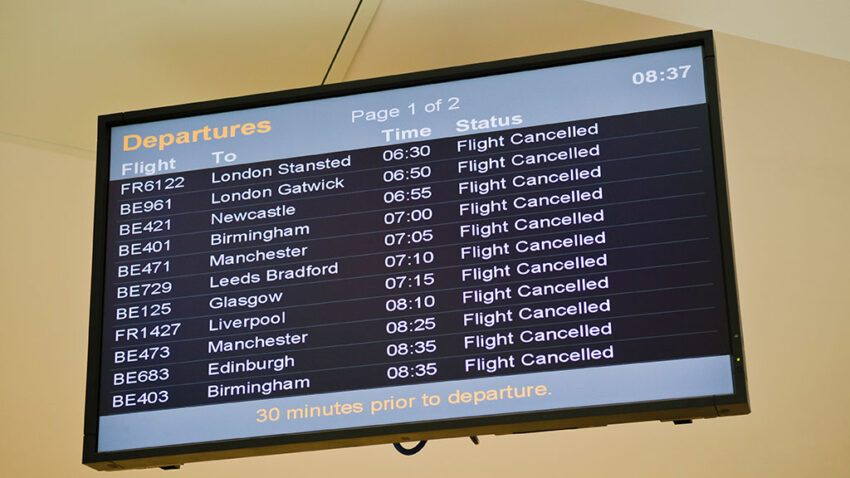
There are the hotel, rail or ground transport, airport transfers, visas, meeting schedules and budgets to think about. Then you have traveller preferences and company travel policies. And when a flight is cancelled or a meeting moves at the last minute, the whole itinerary can change quickly.

When all of this is booked through different websites, suppliers and email chains, keeping track of the trip becomes harder than it needs to be.

The Travel Group brings the journey into one place, combining experienced travel consultants with online booking technology and AI-powered support.

It starts with understanding why people travel

Good business travel planning starts before anyone searches for a flight.

Advertisement

The Travel Group first looks at how a business travels. Where are employees going? How often? Why are they travelling? And what does the company need from those trips?

A complimentary travel assessment can help uncover things such as inefficient booking habits, gaps in the travel policy or areas where money is being spent unnecessarily.

The details matter because no two business trips are quite the same.

Someone travelling between three cities for a run of meetings needs a very different itinerary from an employee flying out to see one client and returning the next day.

Advertisement

The team looks at the company’s budget, approval process, preferred suppliers and travel policy, as well as the traveller’s own profile and preferences. The aim is to build a trip that works for the business without making life unnecessarily difficult for the person travelling.

Choose how you want to book

Some businesses want a consultant to handle everything. Others prefer employees to make straightforward bookings themselves.

The Travel Group supports both, along with an AI-powered travel assistant.

Clients can work directly with a dedicated travel consultant, book through the online platform or use the AI assistant for quicker requests. They don’t have to choose just one option either. A business might use self-service for a simple return flight and bring in a consultant when an itinerary involves several cities, connections or changes.

Advertisement

The online platform puts flights, hotels, car hire and rail in one place. Traveller profiles, approval processes, negotiated rates and company policy rules can be built into the booking process.

For straightforward requests, the AI travel assistant can send quotes, itineraries and updates through channels people already use, including WhatsApp and email.

But there are times when you want a person involved.

A complicated itinerary or an urgent change can need human judgement that software alone can’t provide. In those cases, an experienced consultant can step in with an understanding of the traveller, the company’s policy and the trip itself.

Advertisement

When the trip doesn’t go to plan

Anyone who travels regularly for work knows that the itinerary on the confirmation email isn’t always the itinerary you end up travelling.

Flights get delayed. Connections are missed. Meetings move. Sometimes a traveller needs another night in the hotel. Sometimes they need to get home earlier than planned.

This is where having proper support matters.

The Travel Group provides 24/7 assistance through its own team rather than sending travellers to an outsourced call centre. The person helping can see the traveller’s itinerary, history and company requirements, so they aren’t starting from scratch while the traveller is standing in an airport trying to work out what to do next.

Advertisement

Having the complete journey in one place also makes it easier to look at the knock-on effect of a change. Moving a flight, for example, might also mean changing the hotel, transfer or rail booking.

Real-time alerts, traveller tracking and duty-of-care support give the business visibility when something goes wrong and help keep the traveller informed.

Keeping an eye on what travel costs

The cheapest fare isn’t always the cheapest trip.

A low fare with poor flexibility can become expensive when plans change. The same goes for bookings made outside company policy or across multiple suppliers where nobody has a clear picture of total travel spend.

Advertisement

The Travel Group uses centralised reporting, negotiated corporate rates, supplier management and travel policy reviews to help businesses see where their money is going.

That means looking beyond the price shown on the booking screen. Booking behaviour, flexibility, unused bookings and avoidable costs all matter.

Where it makes sense, this information can feed into a tailored 12-month travel savings plan with measurable targets and regular reviews.

For SMEs and growing businesses, this can add some much-needed structure to travel management without forcing every employee or every trip into the same process.

Advertisement

The work isn’t finished when the traveller gets home

Once the trip is over, there’s useful information sitting in the booking data and traveller feedback.

What worked? Where did the business spend more than expected? Did the preferred suppliers deliver? Was there something about the booking process that made the trip harder than it needed to be?

The Travel Group uses this information to adjust the travel programme over time.

After onboarding, an early review gives the client a chance to flag problems or fine-tune the service. Longer-term reviews can then look at savings, supplier performance and changes in the way the company travels.

Advertisement

That’s the difference between simply processing bookings and managing business travel.

With a dedicated travel expert, online booking and AI support working together, The Travel Group can manage the trip before, during and after travel. The business gets a clearer view of costs and bookings, while the traveller gets something equally useful: fewer travel problems to deal with when they’re supposed to be working.

Advertisement
Continue Reading

Business

Mativ Holdings: Margin Expansion Is Rewriting The Investment Story (NYSE:MATV)

Published

on

Mativ Holdings: Margin Expansion Is Rewriting The Investment Story (NYSE:MATV)

This article was written by

I am an investor specializing in the consumer products sector with a focus on identifying companies that offer a unique combination of strong brand recognition, solid financials, and growth potential. I have a keen eye for consumer trends and an in-depth understanding of the industry, which has helped me to identify profitable investment opportunities in the sector.

Analyst’s Disclosure: I/we have no stock, option or similar derivative position in any of the companies mentioned, and no plans to initiate any such positions within the next 72 hours. I wrote this article myself, and it expresses my own opinions. I am not receiving compensation for it (other than from Seeking Alpha). I have no business relationship with any company whose stock is mentioned in this article.

Seeking Alpha’s Disclosure: Past performance is no guarantee of future results. No recommendation or advice is being given as to whether any investment is suitable for a particular investor. Any views or opinions expressed above may not reflect those of Seeking Alpha as a whole. Seeking Alpha is not a licensed securities dealer, broker or US investment adviser or investment bank. Our analysts are third party authors that include both professional investors and individual investors who may not be licensed or certified by any institute or regulatory body.

Advertisement
Continue Reading

Business

Investigation underway over MinRes workshop incident

Published

on

Investigation underway over MinRes workshop incident

An investigation into a workplace incident at a Mineral Resources subsidiary’s workshop, in which an employee’s hand was seriously injured, is ongoing.

Continue Reading

Business

Petrol station specialist Suresite Health & Safety acquired by Opus Safety

Published

on

Business Live

Midlands firm makes latest ‘buy-and-build’ move

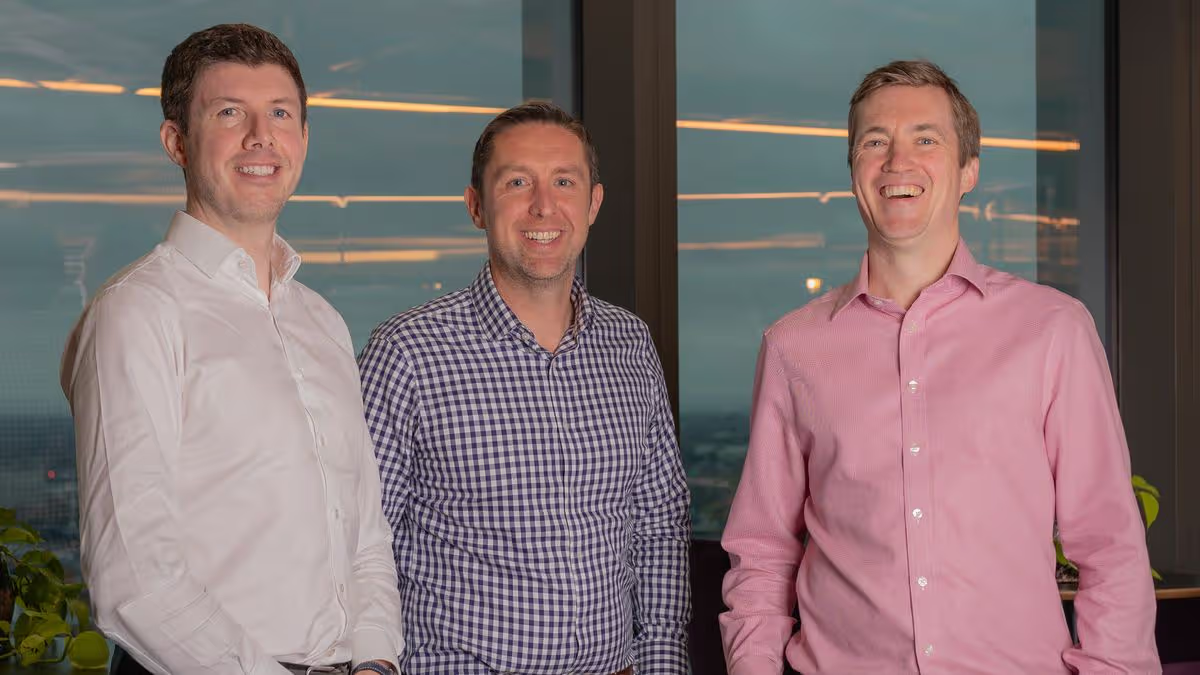
Opus Safety founders (from left) Tom Baverstock, John Southall and Ian Hatherly

Opus Safety founders, from left, Tom Baverstock, John Southall and Ian Hatherly

A Preston-based health and safety specialist that works with thousands of petrol stations across the country has been acquired by acquisitive Midlands firm Opus Safety.

Opus says the deal for Suresite Health & Safety gives it a “significant route into the petrol forecourt market” as the Lancashire firm services more than 3,500 petrol stations across the UK. All consultants at Suresite will move to Opus Safety, alongside a network of associates.

It’s the fifth recent takeover by Birmingham-based Opus following deals for Agility Risk & Compliance, Three Spires Safety, GH Safety, and Sentinel Safety Solutions. The value of the latest deal has not been disclosed.

The deal has been backed by OakNorth and by BGF, which invested in Opus in July 2025.

Advertisement

Opus was founded by John Southall, Ian Hatherly and Tom Baverstock. Mr Southall said: “Suresite has built an enviable health and safety business over the last 30 years, developing a strong footprint in the petrol forecourt market through robust Dangerous Substances and Explosive Atmospheres Regulations (DSEAR) risk assessments and compliance audits.

“As we look to accelerate our growth ambitions – both organically and through M&A – we wanted to seamlessly integrate a proven team and compliance and safety proposition that would strengthen our health and safety capabilities. The Suresite function is a perfect fit.”

David Bellis, investor at BGF, said: “The acquisition of Suresite’s health and safety function is yet another demonstration of the Opus team’s ambition to build a company with strength and depth in personnel, services and technological capabilities, to meet the growing needs of customers across the safety, HR and occupational health compliance landscape.

“BGF aims to back local, ambitious businesses – those with robust business models and compelling growth prospects. Opus is an excellent example of this approach and we’re delighted to be supporting them on their exciting growth journey.”

Advertisement

Safa Arif, associate at OakNorth, said: “The acquisition of Suresite represents another important step in Opus’ growth journey and is a strong strategic fit for the business. It’s great to see the management team continuing to identify and execute acquisitions that broaden the business’ capabilities and support its long-term growth ambitions.

“OakNorth is focused on backing ambitious management teams and working alongside experienced investors such as BGF to support their growth plans. We were pleased to provide Opus with the acquisition funding to support its buy-and-build strategy and are delighted to see that capital being deployed into another strategic acquisition. We look forward to continuing to work alongside the management team and BGF as Opus scales the business both organically and through further M&A.”

Evolve Corporate Finance and law firm Fieldfisher advised on the deal.

Andy Lawton Smith at Fieldfisher said: “Our team has been delighted to provide legal support to John, Ian and Tom and the whole Opus Safety group throughout its exciting journey to date. The consolidation of very highly regarded boutique providers in this sector provides their clients with deeper resource and better technology to fulfil their critical operating functions while simultaneously providing these hugely respected and conscientious entrepreneurs with a safe home for their friends and often life-long relationships. It’s a win-win.”

Advertisement

David Neate, partner at Evolve, said: “Having supported Opus from the outset, we are delighted to have led on this transaction. Suresite is a leading player in its niche and fits well with the buy and build strategy, with further growth opportunities which can be delivered through Opus’s Compliance Cloud technology.”
Continue Reading

Business

Broadcom Stock: Chipmaker Sees AI Revenue Ramping

Published

on

Broadcom Stock: Chipmaker Sees AI Revenue Ramping

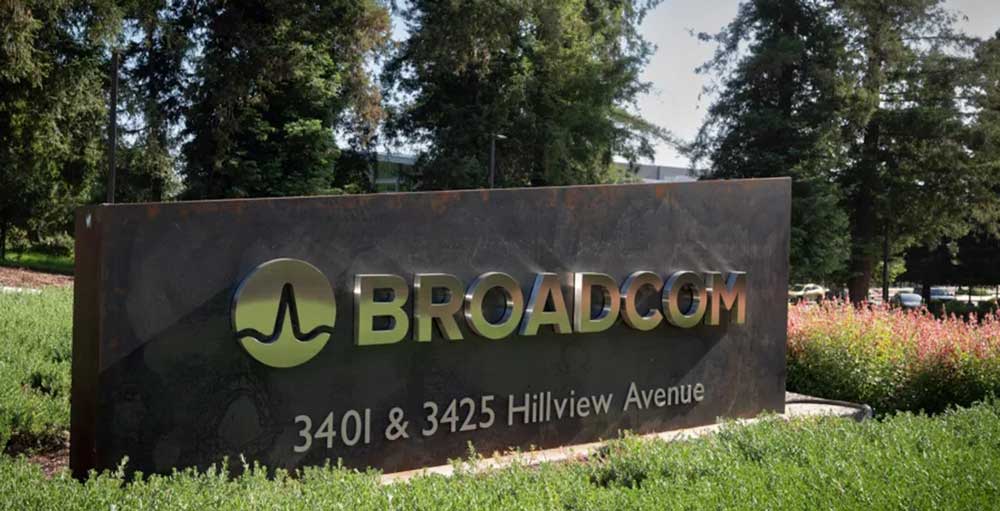
Broadcom (AVGO) expects its artificial intelligence-related sales to double next year and again the following year. Broadcom gave that heady forecast after it delivered its fiscal third-quarter results late Wednesday. But Broadcom stock fell Thursday. The chipmaker and infrastructure software provider predicted AI sales in its current fiscal 2026 of $58 billion, above its prior guidance of $56 billion. For…

Copyright ©2026 Investor’s Business Daily, LLC. All rights reserved. 87990cbe856818d5eddac44c7b1cdeb8

Continue Reading

Business

Top enterprise software stock to watch: BMO’s leading pick

Published

on


Top enterprise software stock to watch: BMO’s leading pick

Continue Reading

Business

Why is GeoPark stock surging today?

Published

on


Why is GeoPark stock surging today?

Continue Reading

Business

Wall Street Lunch: Ford Aims To Sell Over 100K Fathom EV Trucks In First Year

Published

on

Ford: Better Value Than You'd Think (NYSE:F)

Ford brand logo

Vera Tikhonova/iStock Editorial via Getty Images

Listen below or on the go on Apple Podcasts and Spotify

Ford targets 100K sales for its new Ford Fathom. (0:15) Nvidia buys Hugging Face for $12.9B. (1:02) New York puts a freeze on classroom AI. (1:59)

This is an abridged transcript of the podcast:

Advertisement

Our top story so far, Ford (F) aims to sell more than 100K units of its new electric truck in its first year of production, the Wall Street Journal reported.

The starting price for the truck, called the Ford Fathom, will be nearly $30K. Ford will begin taking customer orders early next year.

Besides Tesla (TSLA), no other automaker has sold 100K units of a single EV model in the U.S. in a year. Tesla sold ~357K Model Y SUVs in 2025 and more than 190K Model 3 sedans.

Ford executives say Fathom’s price tag, which is similar to mainstream sedans and SUVs, and design will help drive sales.

Advertisement

Fathom trucks will include Apple Maps built into their navigation system and Ford’s hands-free driving system BlueCruise. The Fathom will also have more passenger space than the best-selling SUV Toyota RAV4.

Among active stocks, after a week of speculation, Nvidia (NVDA) sealed the deal for Hugging Face, agreeing to pay $12.9B for the AI platform.

Hugging Face will remain an open platform for the entire AI ecosystem, Nvidia CEO Jensen Huang said.

Snowflake (SNOW) is rallying more than 20% after the data warehousing company reported fiscal second-quarter results and guidance that topped forecasts.

Advertisement

Snowflake said it expects product revenue to be between $1.588B and $1.593B, above the $1.51B estimate. Adjusted operating margin is forecast to be 15.5%.

Ciena (CIEN) is higher after the optical networking company reported better-than-expected results and guidance.

CEO Gary Smith said “AI continues to drive compounding waves of network investment.”

And Campbell’s (CPB) is slumping after missing revenue estimates for Q4. The company said top-line softness and inflation-driven margin headwinds were factors.

Advertisement

Campbell’s also cut its quarterly dividend to $0.25 per share from $0.39 per share.

In other news of note, New York City, the largest U.S. school district, is imposing a one-year moratorium on students using generative artificial intelligence (OPENAI) (ANTHRO) (DEEPSEEK) in public ​elementary and middle schools.

The policy, which will take effect in the 2026-2027 school year and will impact nearly 600,000 public school students, bars AI use for students in 2-K through 8th grade.

This includes all software that uses student-facing generative AI. Companion chatbots will be banned across all grades.

Advertisement

And Walmart (WMT) said it is expanding its restaurant delivery business through a collaboration with Inspire Brands, a global multi-brand restaurant company whose portfolio includes Dunkin’, Arby’s, Baskin-Robbins, Jimmy John’s and Sonic.

Walmart continues to expand the restaurants available through its app, including restaurants located beyond its stores. The Dunkin’ chain will launch first via its 150 in-store tenant locations, with plans to expand to the majority of its 10K locations outside of Walmart stores nationwide.

And in the Wall Street Research Corner, Société Générale strategist Manish Kabra says investors may want to buy any equity weakness triggered by a renewed Federal Reserve hiking cycle.

SocGen has shifted its house view in a hawkish direction and now expects the Fed to deliver three rate hikes starting in September. Fed funds futures price in a 60% chance of a September hike.

Advertisement

History suggests stocks initially struggle when the Fed resumes raising rates mid-cycle, with the S&P 500 typically going through a one-to-three-month “digestion phase,” Kabra said. However, the benchmark has historically gone on to reach new highs within six months if the yield curve doesn’t invert.

Continue Reading

Business

Earnings call transcript: Ideal Holdings posts record H1 2026 results as stock slips

Published

on


Earnings call transcript: Ideal Holdings posts record H1 2026 results as stock slips

Continue Reading

Business

ChatGPT Down For Thousands As Outage Also Hits Claude And Grok Ahead Of Possible OpenAI Launch Today

Published

on

ChatGPT

ChatGPT experienced a widespread outage Thursday morning, leaving thousands of users unable to send prompts or load conversations, in a disruption that appeared to coincide with similar issues affecting rival AI chatbots Claude and Grok around the same time.

Reports of ChatGPT’s outage surged on outage-tracking site Downdetector, with users experiencing elevated error rates across both the web interface and mobile applications. According to OpenAI’s official status page, ChatGPT’s Work mode was completely unavailable for affected users, with Plus subscribers among those particularly impacted by the disruption.

The outage extended beyond OpenAI’s own products. Anthropic’s Claude chatbot appeared to experience a comparable disruption at the same time, according to reporting from 9to5Mac, while xAI, the company behind the Grok chatbot integrated into Elon Musk’s X platform, confirmed separately that Grok was also experiencing a service issue. The near-simultaneous nature of the disruptions across three major AI chatbot platforms drew attention from users and tech observers, given that ChatGPT, Claude and Grok are typically operated on largely separate technical infrastructure by competing companies.

OpenAI acknowledged the outage through its official social media channels, though the company’s messaging offered limited detail about the underlying cause. In a post on X, OpenAI’s account wrote, “The stars are almost aligned,” a cryptic message that some observers interpreted as a possible allusion to an upcoming product announcement rather than a direct explanation of the technical issue itself.

Advertisement

The timing of Thursday’s disruption drew added scrutiny given persistent rumors that OpenAI is preparing to announce its next major model release, reportedly code-named Astra, as soon as Thursday. Speculation has circulated that the new model could mark an upgrade from OpenAI’s current GPT-5.6 system to a version referred to as GPT-6, though OpenAI had not officially confirmed details of any such release as of the time the outage began. One social media user reacting to the outage speculated whether the disruption might mirror a pattern sometimes observed with other major tech companies, jokingly asking whether the outage resembled how “the Apple Store goes down before the new products show up,” referencing a pattern some Apple product launches have followed in the past.

According to OpenAI’s official incident history, Thursday’s disruption followed a separate issue earlier the same day, described on the company’s status page as “ChatGPT Work Mode High Error Rates,” which began around 12:10 a.m. and was later marked as fully resolved. That overnight incident followed yet another disruption the previous evening, Sept. 2, when OpenAI’s status page flagged “elevated errors creating new accounts,” an issue the company said had also since been resolved. Earlier in the week, OpenAI’s status history additionally logged elevated latency affecting its Responses API on Sept. 1, along with a separate incident involving elevated errors in ChatGPT conversations specifically affecting users on the platform’s free and Go subscription tiers.

Independent status-tracking service IsDown, which combines official status page data with crowdsourced user reports, has logged 192 separate ChatGPT incidents since October 2025, with the service noting that OpenAI outages typically take an average of 456 minutes, or roughly seven and a half hours, to fully resolve based on historical data. User reports collected by the same tracking service around the time of Thursday’s disruption described a range of symptoms, including the platform being entirely unresponsive, error messages appearing after sending prompts, and users being unable to access previously created project spaces within the platform.

ChatGPT’s history of periodic outages has become a recurring pattern since the platform’s initial public release, given the scale of its user base and the technical complexity of running large-scale AI inference systems reliably at that scale. OpenAI CEO Sam Altman has previously stated that ChatGPT is used on a weekly basis by more than 300 million people worldwide, a scale that leaves the platform particularly vulnerable to widescale disruption whenever underlying infrastructure issues emerge, even when those issues affect only a subset of the platform’s total capacity.

Advertisement

Not all monitoring services detected the disruption at the same time or with the same severity. One independent uptime-monitoring service, UptimeRobot, reported that an automated check of ChatGPT’s website run earlier Thursday morning did not detect any unusual response times or error codes, illustrating how outages affecting specific features, subscription tiers or account types can sometimes escape detection by automated monitoring tools that check only for basic site availability rather than testing the full range of the platform’s underlying functionality.

OpenAI’s engineering team said it had identified the source of Thursday’s disruption and was implementing mitigation measures, though the company had not provided a definitive timeline for full recovery as of the time affected users began reporting problems. The company’s standard practice during service disruptions has involved posting incremental updates to its official status page as engineers work to diagnose and resolve underlying issues, a pattern that has continued across the string of shorter incidents logged throughout the current week.

Thursday’s disruption adds to a broader pattern of reliability challenges facing major AI chatbot platforms as user demand for these tools has continued to grow rapidly. The near-simultaneous nature of Thursday’s outages across ChatGPT, Claude and Grok, while their underlying causes have not been confirmed to be connected, has nonetheless fueled speculation among users and commentators about whether a shared piece of underlying internet infrastructure, rather than a coincidental cluster of unrelated technical issues, might be responsible for the overlapping disruptions.

As of Thursday, OpenAI had not issued a detailed public explanation addressing the specific technical root cause of the disruption, nor had the company confirmed whether the outage was in any way connected to preparations for a potential new model announcement. Affected users were advised to monitor OpenAI’s official status page, along with Downdetector’s live outage tracker, for further updates as the company continued working to restore full service across the affected platform.

Advertisement
Continue Reading

Trending

Copyright © 2025