Connect with us

Business

JetBlue Flight 543 Evacuated at Newark After Engine Issue Causes Cabin Smoke, Prompting Brief Airport Shutdown

Published

on

Lake Tahoe

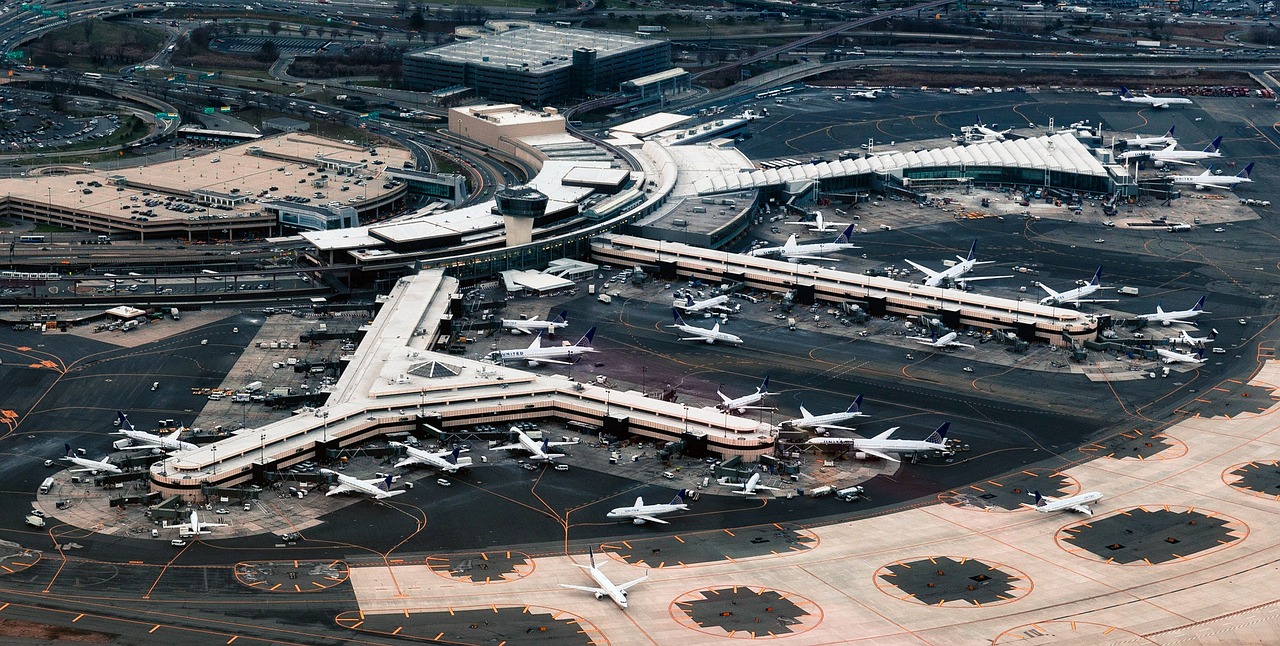
A JetBlue Airbus A320 bound for West Palm Beach made an emergency return to Newark Liberty International Airport on Wednesday evening after an engine problem triggered smoke in the cabin, forcing passengers to evacuate via emergency slides and temporarily halting operations at one of the nation’s busiest airports.

Newark Airport
Newark Airport

JetBlue Flight 543 departed Newark around 5:43 p.m. ET but turned back after just 15-17 minutes in the air. The crew reported an issue with engine number one and smoke filling the cabin and cockpit. The aircraft landed safely shortly after 6 p.m., exited the runway, and then the crew initiated an evacuation on the taxiway.

Passengers deployed inflatable slides and exited the plane onto the tarmac, with emergency responders surrounding the aircraft. No injuries were reported among the passengers or crew, according to the Federal Aviation Administration, Port Authority of New York and New Jersey, and JetBlue.

The incident prompted a full ground stop at Newark Liberty (EWR), suspending arrivals and departures while the plane was removed from the taxiway and safety checks were conducted. The Port Authority announced the closure around 6 p.m., with operations resuming by approximately 7-8 p.m. ET after the aircraft was cleared and the runway/taxiway inspected.

Air traffic control audio captured by LiveATC.net captured the urgency: A pilot reported “smoke in the back” and announced the need to evacuate shortly after landing. An emergency responder warned the tower that “he’s going to pull the chutes,” referring to the slides. The tower then broadcast, “Attention all aircraft, Newark Airport is closed.”
JetBlue confirmed in statements to CNN, USA TODAY and Business Insider that the return was due to a “reported engine issue and smoke in the cabin.” The airline emphasized, “Safety is JetBlue’s top priority. We are focused on supporting our customers and crewmembers and will work closely with the appropriate federal authorities to investigate what occurred.”

Advertisement

The FAA is leading the investigation, with no immediate cause details released beyond the engine and smoke reports. The incident added to ongoing challenges at Newark, where flight caps remain in place through 2026 due to air traffic control staffing shortages and congestion.

Passengers were re-accommodated on later flights or provided hotel stays and assistance, though specific numbers on the flight were not disclosed. Eyewitness accounts and social media posts described a calm but tense evacuation, with smoke visible in the cabin prompting quick action from the crew.

The event echoes rare but serious cabin smoke incidents that can stem from engine oil leaks, electrical faults or other mechanical failures. No fire was reported, and the aircraft was towed away for inspection.

Newark Liberty, a major hub for United Airlines and others, handles millions of passengers annually. The brief shutdown caused ripple delays across the Northeast corridor, though operations normalized within hours.
JetBlue, known for its low-cost model and focus on customer experience, has faced scrutiny in recent years over operational issues, but the airline reiterated its commitment to safety in response to the incident.

Advertisement

As the FAA probe continues, officials urged passengers on affected flights to check status with airlines. No further disruptions were anticipated overnight.

Continue Reading
Click to comment

Leave a Reply

Your email address will not be published. Required fields are marked *

Business

Is MCX stock too expensive after doubling money in just 1 year? A CME case study explains it

Published

on

Is MCX stock too expensive after doubling money in just 1 year? A CME case study explains it
Shares of Multi Commodity Exchange of India have turned multibagger over the past year, rallying over 100% on the back of an unprecedented surge in bullion prices.

In 2025, silver soared 170%, while gold climbed over 60%. The momentum spilled into 2026, with silver rising more than 70% in the first two months before correcting sharply, tumbling 42% from its January 29 record high of Rs 4.20 lakh. Gold, too, has cooled off, slipping 20% from its peak of Rs 1.93 lakh.

The sharp reversal triggered higher margin requirements aimed at curbing volatility. After nearly a month of turbulence and wide price swings, MCX and NSE withdrew the additional 7% and 3% margins on silver and gold contracts, respectively, starting February 19. The easing provided relief to sentiment, pushing MCX shares up as much as x% on the BSE today.

But after a 113% run-up, the key question is: has the stock run ahead of fundamentals?

Advertisement

During FY21, when crude oil prices turned negative amid the Covid shock, MCX sharply increased margin requirements on crude futures. The immediate impact was visible in volumes. Average daily turnover (ADTV) in crude futures plunged from Rs 17,200 crore in February 2020 to Rs 3,300 crore in April 2020.


Crude options premium ADTV rose as volatility surged. Premium turnover as a share of notional turnover increased from 2.2% in February 2020 to 3.9% in March 2020 and further to 8.3% in April 2020. Over the next few years, participation structurally shifted towards options. Crude options premium ADTV expanded from around Rs 5.5 crore in FY21 to Rs 2,120 crore in FY25 and about Rs 2,400 crore in FY26-to-date.
Since early February 2026, gold prices have declined roughly 10%, while silver is down about 33%. In response, average margin requirements for silver futures jumped from 15% earlier to 72% in February 2026. For gold futures, margins increased from 10% to 30%. The result has been a sharp contraction in futures activity. Gold futures ADTV fell 41% month-on-month to Rs 33,600 crore in February 2026-to-date, while silver futures ADTV declined 58% to Rs 22,700 crore over the same period.Yet, mirroring the crude episode of 2020, options activity has picked up. Premium turnover as a share of overall turnover in gold and silver options increased in late January and February 2026, indicating a shift in trader preference rather than an outright drop in participation.

Is the multiple really stretched?

The CME (Chicago Mercantile Exchange) is the world’s largest commodity derivatives exchange by open interest. Between 2004 and 2007, CME witnessed exponential growth in volumes, according to ICICI Securities. Options contracts traded rose from 48 million in CY04 to 107 million in CY07. Futures contracts doubled from 211 million to 432 million over the same period.

The surge in activity was accompanied by a sharp re-rating. CME’s trailing P/E multiple expanded from 24.62x in January 2004 to a peak of 49.31x in November 2006. Notably, the stock traded above 40x trailing earnings for 24 months between September 2005 and August 2008.

Advertisement

Outlook

The domestic brokerage has an Add rating and a target price of Rs 2,780 per share. That implies an upside potential of 19% from current levels. MCX’s futures average daily traded volume (ADTV) stood at Rs 55,800 crore for 9MFY26 and Rs 1,09,700 crore for January FY26-to-date. Based on the current trend, futures ADTV is projected at Rs 66,500 crore in FY26E, rising to Rs 80,000 crore in FY27E and Rs 90,000 crore in FY28E. These estimates imply a run-rate of Rs 98,700 crore in the remaining three months of FY26.

In the options segment, at the prevailing run rate, options premium ADTV is estimated at Rs 6,200 crore in FY26, Rs 8,100 crore in FY27 and Rs 9,500 crore in FY28, implying Rs 9,200 crore in the final quarter of FY26.

Also read | As AI panic grips IT stocks, where are market opportunities for big and small investors?

(Disclaimer: Recommendations, suggestions, views and opinions given by the experts are their own. These do not represent the views of The Economic Times)

Advertisement
Continue Reading

Business

Victory Income Fund Q4 2025 Commentary

Published

on

Victory Income Fund Q4 2025 Commentary

Victory Income Fund Q4 2025 Commentary

Continue Reading

Business

How Asia’s Growing Mineral Nationalism is Reshaping Global Supply Chains

Published

on

How Asia’s Growing Mineral Nationalism is Reshaping Global Supply Chains

A fundamental transformation is underway across Asia in how nations control and leverage their mineral wealth, with profound implications for global technology supply chains, renewable energy transitions, and geopolitical power dynamics.

Key takeaways

  • China’s mineral dominance is a geopolitical weapon: Beijing controls the vast majority of global rare earth processing capacity and has repeatedly demonstrated willingness to restrict exports as leverage, with October 2025 controls on 12 rare earth elements prompting emergency U.S.-China negotiations.
  • Indonesia leads Southeast Asia’s rejection of raw material exports: Jakarta’s ban on unprocessed nickel ore exports since 2014 has forced billions in foreign investment into domestic smelting facilities, transforming the country from a colonial-style resource exporter into an emerging battery manufacturing hub.
  • Resource nationalism is now institutionalized across Asia: From China’s strategic stockpiles to India’s push for mineral self-reliance, Asian governments are permanently consolidating state authority over mining and refining, reshaping global supply chains while complicating Western diversification efforts.

What was once viewed primarily as a technical matter of extraction and trade has evolved into a central pillar of national security strategy, as governments from Beijing to Jakarta assert unprecedented control over critical minerals essential to electric vehicles, semiconductors, defense systems, and clean energy technologies.

China Demonstrates Mineral Power in High-Stakes Standoff

The most dramatic recent illustration came last October, when China’s Ministry of Commerce expanded export controls to cover 12 of 17 rare earth elements, materials indispensable to everything from fighter jets to wind turbines. The restrictions went beyond raw ores to include processing equipment, refined materials, and even products manufactured overseas using Chinese-origin rare earths.

The move sent immediate shockwaves through global markets, prompting an emergency diplomatic intervention. By late October, Presidents Donald Trump and Xi Jinping negotiated a one-year suspension of the new controls during a meeting in Busan, South Korea, in exchange for U.S. tariff reductions.

Yet experts caution that the “settlement” is more a tactical pause than a genuine resolution. Earlier restrictions imposed in April 2025 remain fully operational, and China’s licensing regime continues to bind companies exporting controlled materials. “Critical minerals are not merely economic assets; they are also instruments of state power,” the analysis notes.

Advertisement

China’s dominance stems from decades of strategic policy interventions beginning in the 1980s. Today, Beijing controls the vast majority of global processing capacity for rare earths and several other critical minerals, having consolidated state-owned enterprises, built strategic stockpiles, and invested heavily in mining operations across Africa, Latin America, and Southeast Asia.

The country has repeatedly demonstrated willingness to weaponize this advantage, restricting rare earth shipments to Japan during 2010 tensions, and again imposing embargoes on Tokyo in early 2026, targeting dual-use technologies required for defense production.

Indonesia Rejects “Colonial” Export Model

Indonesia has emerged as one of Asia’s most assertive practitioners of resource nationalism, particularly regarding nickel, the world’s largest reserves of which lie within its borders. The country has pursued an aggressive strategy to transform itself from raw material exporter into a manufacturing hub for electric vehicle batteries.

Beginning in 2014, Jakarta implemented a ban on unprocessed nickel ore exports, forcing foreign companies to invest in domestic smelting and refining facilities. Major Chinese firms, supported by Belt and Road Initiative funding and Indonesian incentives, poured billions into smelters and industrial parks.

Advertisement

Former President Joko Widodo framed the policy in explicitly anti-colonial terms, arguing that exporting raw minerals perpetuates an extractive relationship that must be replaced with industrialization. The government expanded requirements for foreign investors to partner with local firms, transfer technology, and contribute to domestic industrial ecosystems. 

The strategy has successfully reshaped global nickel markets and demonstrated how developing nations can leverage resource control to force industrial upgrading.

Regional Powers Chart Independent Courses

Malaysia has pursued a more moderate path, balancing strategic concerns with environmental governance. Home to one of the few rare earth processing facilities outside China, the Lynas Advanced Materials Plant, Malaysia has faced periodic public pressure to tighten regulations, particularly regarding radioactive waste management.

The country also imposed a temporary moratorium on bauxite mining in the mid-2010s after exports to China caused severe environmental degradation, later lifting the ban with stricter licensing requirements.

Advertisement

Thailand’s mineral nationalism operates primarily through regulatory sovereignty rather than export restrictions. Strong community opposition to mining, including the 2016 closure of the Chatree gold mine following environmental contamination allegations, has pushed the government toward strengthened oversight and social accountability mechanisms.

Last October, protesters gathered outside the U.S. embassy in Bangkok opposing a rare earth minerals agreement with Washington, concerned about sovereignty risks and potential environmental damage from deals made without public consultation.

Myanmar, though politically unstable, remains one of Asia’s most significant sources of heavy rare earths. Much production occurs in northern border regions controlled by ethnic armed groups, with substantial Chinese company involvement operating through informal channels. Materials typically cross into China for processing, a strategic lifeline for Beijing, especially after it imposed stricter domestic environmental controls. 

India has intensified focus on critical mineral security driven by concerns over supply-chain vulnerabilities and technological sovereignty. New Delhi has launched initiatives to map resources, expand domestic mining, and reduce dependence on Chinese imports. Recent reforms opening previously restricted minerals to private mining reflect India’s pursuit of strategic autonomy in a fragmenting global order.

Advertisement

Outlook: Nationalism Becomes Institutionalized

Analysts project Asian resource nationalism will intensify rather than diminish, with governments continuing to strengthen control over mineral resources while deepening industrial policies that push extraction industries up the value chain.

“China’s dominance in rare earth processing, Indonesia’s nickel industrialization and India’s push for critical mineral self-reliance suggest a long-term consolidation of state authority over mining, refining and export mechanisms,” according to the assessment.

The effect is region-wide reinforcement of mineral nationalism that remains compatible with global supply chains even as it complicates diversification efforts by Western and East Asian manufacturers. States are expected to maintain export restrictions on unprocessed ores while crafting supply agreements that simultaneously attract foreign investment and preserve sovereign leverage.

A less likely but plausible scenario involves coordinated regional strategies, where Southeast Asian states leverage mineral resources collectively through harmonized export policies, shared industrial hubs, or informal alignment around processing standards, potentially positioning themselves between U.S. and Chinese technological competition.

What appears virtually impossible is any significant rollback. The momentum behind national industrial policy, strategic resource planning, and rising domestic expectations for value creation suggests Asia’s mineral nationalism represents a fundamental and enduring shift in how these nations engage with the global economy.

Advertisement

Continue Reading

Continue Reading

Business

Consumer Staples Are on a Tear. These Still Look Like Bargains.

Published

on

Consumer Staples Are on a Tear. These Still Look Like Bargains.

Consumer Staples Are on a Tear. These Still Look Like Bargains.

Continue Reading

Business

TAT Showcases the Vibrant Essence of Thai Culture at Mumbai Travel Festival

Published

on

TAT Showcases the Vibrant Essence of Thai Culture at Mumbai Travel Festival

The Tourism Authority of Thailand showcased Thai culture at The Gypsy Travel Festival 2026 in Mumbai, targeting premium Indian travelers with interactive exhibits and performances, attracting over 5,500 attendees.


Key Points

  • The Tourism Authority of Thailand (TAT) promoted Thai culture and travel at The Gypsy Travel Festival 2026 in Mumbai, targeting premium millennial and family travelers from India. The event, held on February 7-8, showcased Thailand alongside Sapporo City and Kenya, attracting a high-spending audience aged 25 to 45.
  • Thailand’s pavilion, themed around the Songkran Festival, featured vivid visuals, cultural demonstrations like the Khon masked dance, traditional crafts, and Thai cooking. A luxury wellness agency also presented holiday packages, enhancing Thailand’s appeal.
  • With over 5,500 attendees, the festival generated 4 million digital and outdoor impressions. A survey indicated strong interest in destinations like Bangkok and Phuket, with many planning trips to Thailand, highlighting potential growth in the Indian market.

The Tourism Authority of Thailand (TAT) recently promoted Thai culture and travel experiences at The Gypsy Travel Festival (TGTF) 2026 in Mumbai, seeking to boost Thailand’s appeal among premium millennial and family travelers from India. The effort was led by the TAT Mumbai Office and the ASEAN, South Asia, and South Pacific Market Division, under the direction of TAT Governor Thapanee Kiatphaibool, with support from Consul-General Donnawit Poolsawat and senior TAT executives. The festival was held from February 7 to 8 at Jio World Drive and attracted a large audience from a high-spending travel segment.

Thailand participated as one of three main destination partners, alongside Sapporo City and ANA of Japan, and Kenya. TGTF 2026 is Mumbai’s largest lifestyle travel festival, attracting mainly visitors aged 25 to 45 through exhibitions, discussions, workshops, and food and beverage showcases focused on international travel and lifestyle trends.

Thailand’s pavilion was presented under a Songkran Festival theme, using vivid visuals and interactive activities to introduce Thai traditions and seasonal travel experiences. Cultural demonstrations and performances included Khon masked dance, long-drum and Songkran dances, traditional handicrafts, Thai cooking demonstrations, interactive games, and photo opportunities inspired by Bo Sang umbrellas. A luxury and wellness travel agency also co-exhibited to promote special holiday packages in Thailand.

More than 5,500 people attended the festival, while promotional activities generated over four million impressions across digital platforms and outdoor media. A visitor survey showed strong interest in destinations such as Bangkok, Phuket, Krabi, Chiang Mai, and Samui, with beaches, food, and cultural festivals ranking as Thailand’s most recognized attractions. Many respondents said they plan to visit Thailand within the year, pointing to continued growth potential in the Indian market.

Advertisement

Source : TAT Showcases Thai Culture at Mumbai Travel Festival

Continue Reading

Business

Heard on the Street Recap: Paramount Gets a Plus

Published

on

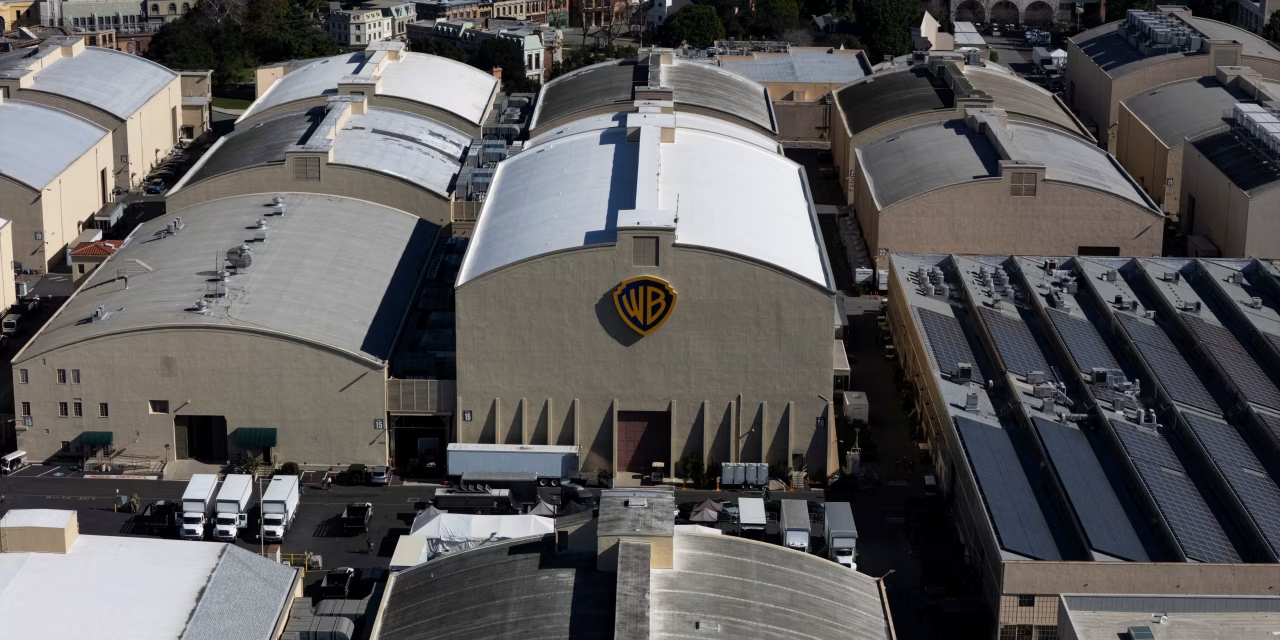
The Warner Bros. studio lot in Burbank, Calif.

What Happened in Markets Today

Warner Bros. Discovery said Tuesday it will restart deal talks with Paramount. The move sets the stage for a potential bidding war with Warner’s preferred suitor, Netflix. Warner said Paramount has indicated it would be willing to raise its offer to $31 per Warner share from $30 if Warner would agree to engage in negotiations. Warner shares gained 2.7% Tuesday while Paramount rallied 4.9%. Netflix rose 0.2%.

Commercial real-estate lenders have reached a breaking point, calling in tens of billions of dollars of loans. Many CRE lenders initially extended maturing loans they made when borrowing costs were lower, hoping that interest rates would fall or cash flows would grow in a strategy known as extend and pretend.

Continue Reading

Business

Opinion: Budget woes meet gold gains

Published

on

Opinion: Budget woes meet gold gains

OPINION: The soaring gold sector could prove too tempting for a federal government chasing tax dollars.

Continue Reading

Business

Opinion: Women’s Asian Cup extends WA’s economic, soft-power reach

Published

on

Opinion: Women’s Asian Cup extends WA’s economic, soft-power reach

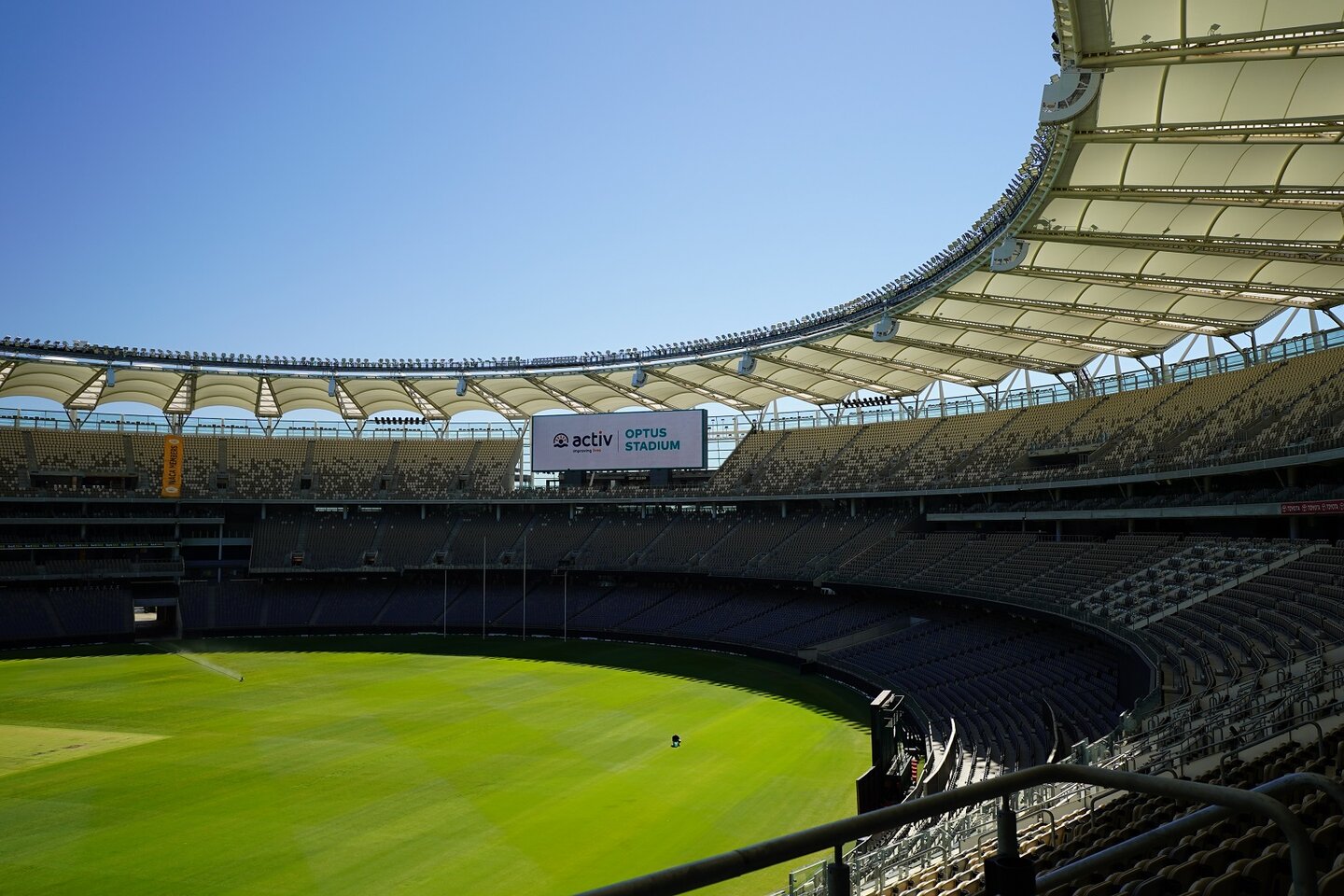
OPINION: Three months after Travis Head’s Ashes onslaught got the WA summer off to an explosive start, Optus Stadium will host more sporting fireworks when the 2026 AFC Women’s Asian Cup gets under way.

Continue Reading

Business

Pub landlord’s plea for support turns into UK-wide movement

Published

on

Business Live

The ‘Hands of our Pubs’ campaign now has the backing of more than 500 hospitality businesses

A pint of Heinken being poured

A pint of Heinken being poured

A campaign by a pub landlord in the Forest of Dean for fairer treatment for hospitality businesses has gathered support from across the UK. The ‘Hands off our Pubs’ (Hoop) movement began last month when a group of landlords met up to discuss rising costs – and now more than 500 other businesses from around the country have joined.

On Wednesday, the campaign group held a summit at The Speech House, in Coleford, with speakers including Tony Sophoclides, strategic affairs director at UKHospitality and Julie Kent MBE, the High Sheriff of Gloucestershire. They were joined by hotel owners, café operators, tourism leaders and independent publicans to discuss the issues facing the industry.

At the heart of the discussion was the “growing disconnect” between government policy and how hospitality actually operates on the ground – particularly in rural and market-town Britain, where pubs are often the last remaining community infrastructure.

Mr Terry-Lush, co-founder of Hoop, said: “Most consumers have no idea how many new costs are being piled onto hospitality. Business rates, an alcohol duty hike, higher employment and environmental taxes, rising energy bills and food inflation are all landing at once – forcing prices up while margins collapse.

Advertisement

“At the same time, supermarkets continue to sell alcohol at wafer-thin margins that pubs cannot legally or commercially match. Community pubs cannot absorb this imbalance. They either pass on costs and lose customers, or close. That is the reality.”

‘This is no longer a local issue’

Last month, the government announced a 15 per cent discount on business rates for pubs and music venues after a backlash against Rachel Reeves’ Budget announcements in November. But the Hoop campaign is pushing for more support.

In a post on LinkedIn following the summit, Hoop wrote: “The mood was was determined as speaker after speaker described the same reality: busy venues, loyal customers, strong reputations – and margins quietly evaporating under VAT at 20 per cent, business rates calculated on theory not reality, rising employment costs and supermarket imbalance.

“Hospitality is economic infrastructure: it drives tourism, supports retail, employs young people, anchors villages and gives high streets a reason to exist. When it weakens, places weaken.

Advertisement

“The summit was about prevention, about turning frustration into organised influence. About moving from polite letters to coordinated action. The message leaving Speech House was clear: this is no longer a local issue. It is structural and national.”

The group is now taking its fight to Westminster.

A spokesperson for HM Treasury said the government was backing Britain’s pubs by “cutting their new business rates bills by 15 per cent, extending World Cup opening hours and increasing the Hospitality Support Fund to £10m to help venues grow.

Advertisement
Continue Reading

Business

3 Ways Advisors Can Support Founders of Private Companies

Published

on

3 Ways Advisors Can Support Founders of Private Companies

3 Ways Advisors Can Support Founders of Private Companies

Continue Reading

Trending

Copyright © 2025