

Business
John Lewis pulls plug on build-to-rent venture amid retail reset

John Lewis Partnership has abandoned its build-to-rent housing ambitions, retreating from a high-profile property diversification strategy as the group pivots back towards its core retail business.
The employee-owned retailer confirmed it would withdraw from the rental housing scheme first championed by its former chair, Sharon White, who had sought to reduce reliance on retail by generating 40 per cent of profits from non-retail ventures by 2030. That target was later scrapped.
The build-to-rent initiative, launched in partnership with Aberdeen, aimed to deliver around 1,000 rental homes across sites in Ealing and Bromley in London and Reading in Berkshire. Aberdeen had pledged to raise £500m from institutional investors to fund the developments.
However, John Lewis said that the funds were never secured due to shifting macroeconomic conditions.
“Our rental property ambition was based on a very different financial environment: one with more stable investment returns, lower borrowing costs and more affordable construction costs,” a spokesman said. “The current climate, higher interest rates, inflationary pressures and a more cautious property market, means the model no longer meets our investment criteria.”
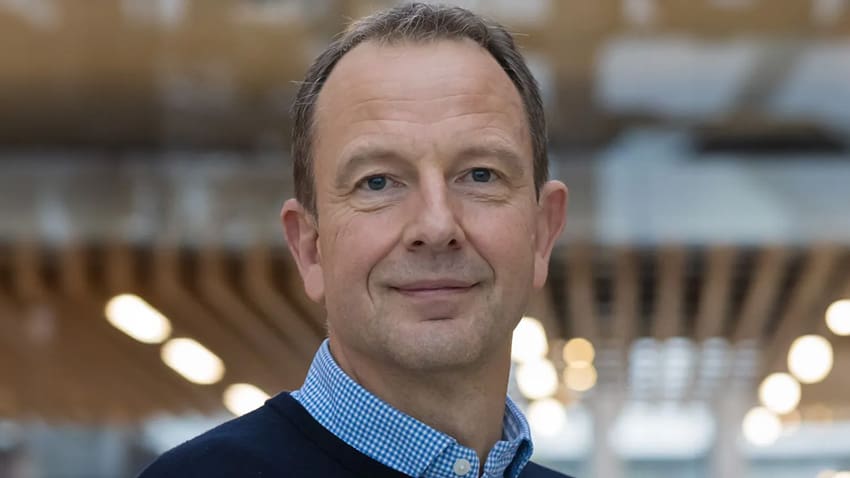
The decision marks a significant strategic reset under Jason Tarry (pictured), the former Tesco executive who became chair in 2024. Tarry has sought to restore the partnership’s focus on retail performance after several years of financial strain and cancelled staff bonuses.
The group is now pursuing an £800m investment programme aimed at revitalising its department stores, alongside a £1bn investment in its Waitrose estate of 320 shops. Recent initiatives include a high-profile partnership to bring Topshop concessions into John Lewis stores as it seeks to win back younger customers.
The build-to-rent strategy had originally been positioned as a way to unlock value from surplus Waitrose land and car parks while creating a more stable, long-term income stream less exposed to retail volatility.
However, the proposals were controversial from the outset. Local communities and planning authorities raised concerns over building heights, density and the proportion of affordable housing. Although several schemes ultimately secured planning approval, in some cases after appeals and intervention by government inspectors, the projects required significant upfront investment.
While John Lewis has not disclosed how much has been spent to date, it is understood that several million pounds were invested in design, planning and legal costs before the scheme was halted.
The withdrawal underlines the pressure facing retailers that diversified into property during the era of low interest rates. Higher borrowing costs have eroded returns on residential development, while construction inflation has increased project risk.
For John Lewis, the move signals a return to fundamentals after what some critics inside and outside the partnership viewed as a distraction from its core business.
With the cost-of-living crisis squeezing consumer spending and competition intensifying across both fashion and grocery, the partnership is betting that renewed focus on shopkeeping, rather than landlord ambitions, offers a clearer path to restoring profitability and rebuilding confidence among its employee-owners.

Jamie Young
Jamie is Senior Reporter at Business Matters, bringing over a decade of experience in UK SME business reporting.
Jamie holds a degree in Business Administration and regularly participates in industry conferences and workshops.
When not reporting on the latest business developments, Jamie is passionate about mentoring up-and-coming journalists and entrepreneurs to inspire the next generation of business leaders.

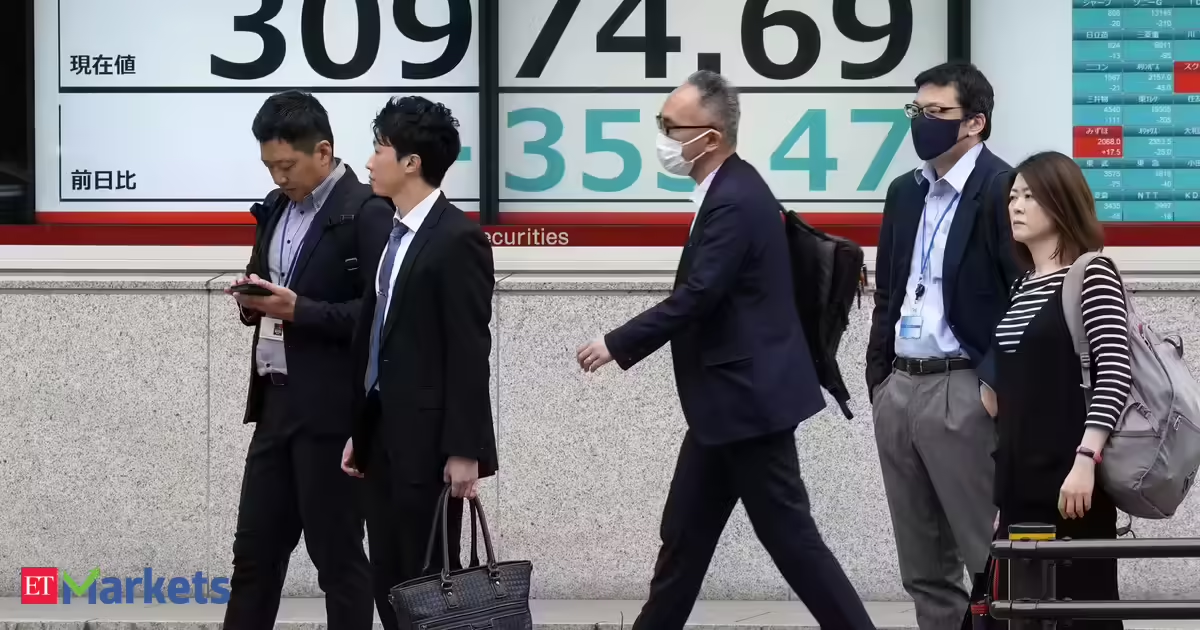
The MSCI Asia Pacific Index rose 1% to another all-time high, with South Korea’s Kospi Index — a bellwether for AI investments — jumping 1.9% to a record. Nvidia’s shares erased earlier gains in extended trading, even after the chipmaker forecast first-quarter revenue between $76.4 billion and $79.6 billion, topping estimates of $72.8 billion.
US equity-index futures were also a touch weaker after the underlying gauges rallied on Wednesday. Elsewhere, the dollar weakened for a second day, while Treasuries broadly held their losses from the prior session. Gold edged up and Bitcoin fell to trade around $68,300.
Wall Street benchmarks rallied Wednesday, with investors looking to Nvidia’s outlook to reinvigorate the AI trade and ease concern that valuations have run ahead of fundamentals. Asian chipmakers, at the heart of the AI supply chain, stand to benefit if the build-out remains intact, bolstering the region’s semiconductor earnings outlook and lending support to broader equity markets.
“Nvidia’s blowout earnings should offer Asia — especially Japan, Korea and Taiwan’s AI-linked names — a firm fundamental anchor and a welcome sigh of relief,” said Hebe Chen, senior market analyst at Vantage Global Prime. “Yet the after-hours seesaw shows this market is now trading for ‘more than great,’ demanding renewed acceleration rather than mere confirmation.”

After a remarkable run of sales growth, which turned Nvidia into the world’s most valuable company, investors have proven harder to satisfy. Nvidia signaled that concerns about an overheated AI economy will continue to dog the company.
Though the average Wall Street estimate was $72.8 billion, some analysts had projected numbers approaching $80 billion, according to data compiled by Bloomberg.Investors have been so sensitive that a report from a little-known firm called Citrini Research outlining the potential AI risks to various industries — using hypothetical scenarios set in the future — jolted markets earlier this week. The disruptive potential of the technology has roiled stocks across sectors for weeks in what’s become known as the “AI scare trade.”
Wolfe Research conducted a poll that suggests most investors bet the AI “wrecking ball” that’s roiled markets is largely “overblown,” said Chris Senyek. However, participants viewed the “broadening out” trade as alive.
Business
(VIDEO) Mexican Drug Cartel Boss ‘El Mencho’ Tracked Through Romantic Partner Before Fatal Military Raid

Mexican authorities tracked down and killed Nemesio Oseguera Cervantes, the notorious leader of the Jalisco New Generation Cartel known as “El Mencho,” by surveilling one of his romantic partners, who led them to a secluded mountain cabin where the operation unfolded fatally on February 22, 2026.

Defense Secretary General Ricardo Trevilla Trejo detailed the events during a February 23 press conference, revealing that intelligence efforts focused on a trusted associate of one of Oseguera’s romantic partners. On February 20, this individual escorted the woman to a property in Tapalpa, Jalisco, for a meeting with the cartel boss. The woman departed the next day, but Oseguera remained with his security detail.
Trevilla described the location as a wooded mountainous area, accessible primarily by ground forces with limited air support to avoid detection. When special forces raided the site on February 22, a firefight erupted. Oseguera was mortally wounded and died en route to medical care in Mexico City. Four cartel members were killed on site, and others were injured.
The operation stemmed from years of pursuit by Mexican and U.S. authorities. Oseguera, 59, headed the CJNG—one of the world’s most powerful and violent cartels—responsible for trafficking fentanyl, methamphetamine, cocaine, and heroin into the United States and beyond. He faced multiple U.S. indictments for drug trafficking and organized crime, with a $10 million reward offered by the State Department.
Mexican officials credited U.S. intelligence with providing “very important additional information” that helped pinpoint the location after tracking the romantic partner’s movements. The partner has not been publicly identified or charged, though some reports and leaked documents from past Guacamaya Leaks hacks have linked a woman named Guadalupe Moreno Carrillo to Oseguera’s inner circle following the 2021 arrest of his wife, Rosalinda González Valencia.
González Valencia, arrested twice on money laundering and organized crime charges, was reportedly released in 2025 after serving time. She had played a key role in the cartel’s financial arm, Los Cuinis. Authorities have not confirmed whether Moreno or another partner was involved, emphasizing operational security.
The raid triggered immediate violence across Jalisco and neighboring states. Cartel gunmen torched vehicles, blocked highways, set fires in Guadalajara and Puerto Vallarta, and clashed with security forces. Dozens of businesses were looted or burned, and several deaths were reported in the initial chaos. President Claudia Sheinbaum condemned the retaliation and pledged continued operations against organized crime.
Oseguera’s death marks a significant blow to the CJNG, which rose to dominance through extreme violence, territorial expansion, and fentanyl production. Analysts warn of potential fragmentation or power struggles. Possible successors include stepson Juan Carlos Valencia González (alias “El 03”), who oversees operations, or other family members. González Valencia could influence leadership decisions, though her public profile and legal history complicate any direct role.
The U.S. welcomed the development, with officials noting it disrupts a major fentanyl pipeline. The DEA and State Department had long prioritized Oseguera’s capture or death. His killing follows similar high-profile operations against other cartel figures, though CJNG’s decentralized structure may allow it to persist.
As investigations continue, Mexican forces remain on high alert for reprisals. The government has not released further details on the romantic partner’s identity or current status, citing ongoing security concerns. The case underscores the role of personal relationships in intelligence gathering against elusive high-value targets in Mexico’s drug war.

One basis point is a hundredth of a percentage point.
The proposed round of fundraising, likely to be completed early April, could have a 2:1 split in favour of the domestic market. At home, the infrastructure conglomerate would seek to garner about ₹15,000-16,000 crore in rupee-denominated non-convertible debentures (NCDs).
Shapoorji Pallonji Group is set to raise approximately ₹25,000 crore through a bond issue. This fundraising effort, planned for early April, is expected to have a lower pricing than previous borrowings. Improved prospects for asset sales and a potential settlement regarding its stake in Tata Sons are boosting investor confidence.
Stake Monetisation Prospects
Overseas, SP Group has planned a three-year dollar bond of $750 million to $1 billion said the people cited above, unwilling to give further details as the ongoing discussions with potential investors are in the private domain.
Pricing on the overall package is likely to be tighter than the 18.75% coupon at which the group raised Rs 14,300 crore in 2023 through Goswami Infratech. That facility is due to mature on April 30 this year.
“The pricing is likely to come down significantly as the contours are becoming clearer,” one person aware of the talks said. The Tata Sons stake monetisation prospects for the SP Group enhance the recovery visibility for lenders and bondholders, said this person.
TATA STOCK
Bankers said the improved pricing outlook has come from greater clarity around the long-running dispute between the SP Group and Tata Sons, including discussions linked to stake monetisation. The SP Group, led by the Mistry family, holds about 18.75% in Tata Sons, making it the largest minority shareholder in India’s biggest conglomerate.
While the debate continues over whether Tata Sons must list under Reserve Bank of India (RBI) norms applicable to upper-layer non-banking financial companies, market participants said either a listing or a negotiated settlement would unlock value and improve SP Group’s credit profile.
Tata Trusts Chairman Noel Tata is understood to have outlined conditions around the listing issue in the context of leadership decisions at Tata Sons, adding a layer of complexity to the discussions, as reported by ET on February 24. However, since one of the conditions is an eventual settlement with the SP Group gives further comfort to lenders on stake monetisation, said one of the sources cited above.
Investor appetite appears strong with at least a third of the fund likely to come from dollar bond investors. The rest is likely to come from foreign banks, domestic investors and private credit funds.
Timelines for the issues aren’t certain yet. However, lenders said the base case, which assumes partial deleveraging at the group backed by monetisation, is intact.
If executed at the tighter end of expectations, the transaction would result in a visible reduction in SP Group’s funding costs and signal renewed investor confidence in its refinancing initiatives.
The German budget supermarket is a growing competitor among British supermarkets

Southeast Asia’s venture ecosystem closed 2025 with US$5.4 billion raised across 461 deals, according to the Southeast Asia Startup Funding Report: Full Year 2025. This marked a slight decline compared to the previous year, reflecting a more cautious investment environment.
Key takeaways
- Southeast Asia’s venture funding reached US$5.4 billion in 2025, but deal count hit a six-year low, exposing a market driven by a few megadeals rather than broad investor confidence.
- Singapore captured 91% of all regional capital, cementing its position as the undisputed funding hub while Indonesia, Vietnam, and the Philippines continued to lose ground.
- The market has stabilised rather than recovered, with tighter valuations, selective late-stage bets, and a persistent exit bottleneck keeping a full rebound out of reach heading into 2026.
Despite the drop, the region continued to demonstrate resilience, with fintech, e-commerce, and healthtech leading the way in attracting investor interest. Notable deals included several late-stage funding rounds and the emergence of new unicorns, signaling sustained growth potential in the ecosystem.
The annual deal count ranked among the lowest in more than six years, and the headline figure was rescued largely by a handful of outsized late-stage transactions rather than any broad-based revival.
A Year That Broke in Two
The first half was historically weak. Equity investment dropped 20.7% year-on-year to US$1.85 billion across 229 transactions, both figures representing six-year lows.
The second half reversed course sharply, delivering US$3.51 billion as late-stage deal flow more than doubled from 10 transactions to 24. Even so, analysts cautioned that the rebound was narrow.
“There is confidence returning to the market, but it is a quieter, more thoughtful kind,” said Minette Navarrete, President and Managing Partner of Kickstart Ventures.
“It creates the conditions for a more resilient and sustainable next growth cycle, rather than a premature rebound driven by excess risk-taking.”
Singapore Commands 91% of Regional Capital
Singapore tightened its dominance, accounting for over 60% of the regional deal count and 91% of the total capital deployed.
Three transactions alone defined much of the year: Princeton Digital Group closed a US$1.3 billion Series C, Digital Edge raised US$640 million, and Airwallex secured US$330 million in a Series G round.
Outside Singapore, the picture darkened. Indonesia remained flat after a prolonged slowdown. Vietnam, Malaysia, and the Philippines all saw deal volumes weaken in the second half. The Philippines drew just US$120 million for the full year, trailing most regional peers.
Sectors in Shift
Fintech led by deal count with 111 transactions worth US$1.3 billion, but delivered one of its weakest annual results in six years. Healthtech rebounded strongly with 35 deals totalling US$393 million, lifted by UltraGreen.ai’s US$188 million funding round.
The surgical imaging company was later listed on the Singapore Exchange, raising over US$400 million. Green tech held steady as the second most active sector, while e-commerce continued to lose ground.
Four New Unicorns
The region minted four new unicorns in 2025, up sharply from one in 2024. Notable additions included Malaysian group Ashita, Singapore-based payments firm Thunes, digital asset bank Sygnum, and UltraGreen.ai. Southeast Asia now counts 58 unicorn-status companies.
The Exit Problem
Despite the uptick, structural headwinds remain. Exit activity slowed, with only 57 acquisitions recorded and 15 tech IPOs completed for the year. Edgar Hardless, CEO of Singtel Innov8, said the lack of exits was the single biggest drag on investor confidence. “High valuations in the past few years have made it harder for startups to find local acquirers,” he said, adding that he expects caution to persist into the first half of 2026.
The report concludes that Southeast Asia’s venture market has found a functional floor rather than a launchpad. Capital deployment is more disciplined, valuations are tighter, and founders face higher bars on efficiency and governance.
Other People are Reading
Stockbrokers.com director of investor research Jessica Inskip discusses investor overthinking, Apple’s ChatGPT moment and CME’s prediction market play on ‘Making Money.’
Apple will begin producing Mac minis in Houston later this year for the first time, expanding its U.S. manufacturing footprint and creating what the company said will be “thousands of jobs.”
The expansion will effectively double the size of Apple’s Houston campus and increase production of advanced artificial intelligence servers used in the company’s U.S. data centers.
Apple said Tuesday it will also open a 20,000-square-foot Advanced Manufacturing Center in Houston focused on hands-on workforce training. CEO Tim Cook said the expansion reflects the company’s previously announced commitment to increase U.S. manufacturing, adding that AI server shipments from Houston are ahead of schedule.
The Mac mini will be assembled at a new factory on the Houston campus. The company said servers built there – including logic boards manufactured onsite – are being deployed across its U.S. data center network.
ALTMAN CALLS MUSK’S SPACE DATA CENTER PLANS ‘RIDICULOUS’ FOR CURRENT AI COMPUTING NEEDS
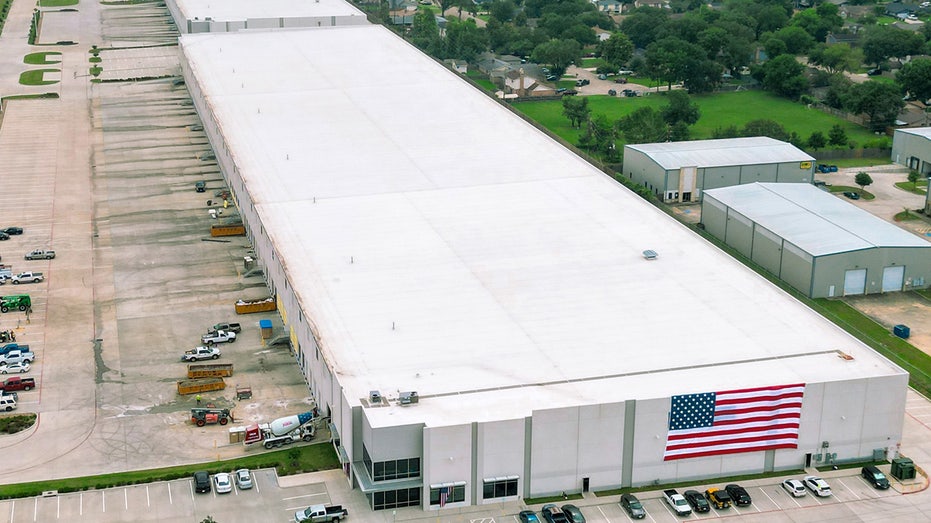
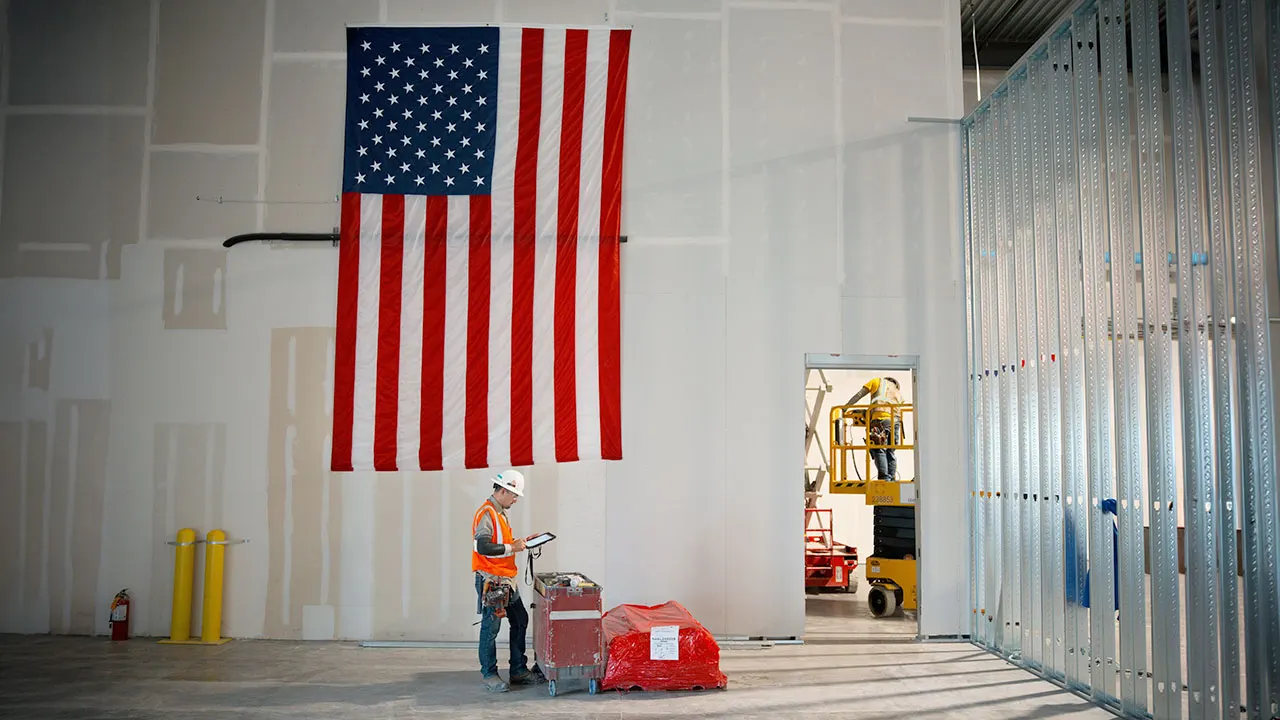
Apple’s new manufacturing facility in Houston, Texas. (Apple)
The expansion comes as technology companies increase domestic AI infrastructure capacity and reassess overseas supply chain exposure. Apple did not disclose financial details specific to the Houston project, but it previously pledged to invest $600 billion in the U.S. and says it has surpassed some related targets.

Apple will begin producing Mac minis in Houston later this year for the first time. (Jakub Porzycki/NurPhoto via Getty Images)
As part of that broader effort, Apple said it has sourced more than 20 billion U.S.-made chips from 24 factories across 12 states, working with suppliers including TSMC, Broadcom and Texas Instruments. The company expects to purchase well over 100 million advanced chips from TSMC’s Arizona facility in 2026. It is also supporting semiconductor and materials investments in Texas, Arizona and Kentucky through partners such as Amkor, GlobalWafers and Corning.
| Ticker | Security | Last | Change | Change % |
|---|---|---|---|---|
| AAPL | APPLE INC. | 274.24 | +2.10 | +0.77% |
Beyond Houston, Apple has expanded its Apple Manufacturing Academy in Detroit, which provides training in artificial intelligence, automation and smart manufacturing to small- and medium-sized U.S. businesses.

Customers line up outside of Apple’s Grove store in Los Angeles. (Eric Thayer/Bloomberg via Getty Images)
The Houston expansion is expected to generate new high-tech manufacturing roles and create additional opportunities for suppliers in the region.
CLICK HERE TO GET FOX BUSINESS ON THE GO
While Apple did not detail potential pricing implications, the increased U.S.-based production of advanced chips and AI servers reflects the company’s growing reliance on domestic facilities to support its artificial intelligence and data center operations.


U.S. Federal Housing Finance Agency Director William J. Pulte joins ‘Mornings with Maria’ to discuss the state of the housing market and weighs in on President Donald Trump’s State of the Union speech.
Federal Housing Finance Agency (FHFA) Director William J. Pulte said President Donald Trump is moving aggressively to drive down borrowing costs, deploying roughly $200 billion from Fannie Mae and Freddie Mac to purchase mortgage bonds — a step he said lowered rates “boom right away.”
Pulte joined FOX Business’ Maria Bartiromo on “Mornings with Maria” to say the administration’s actions directly targeted affordability and market confidence.
FOX Business reporter Jeff Flock reports on mortgage rates falling to their lowest level since February 2023 as President Donald Trump pushes efforts to make homeownership more affordable on ‘Varney & Co.’
The effort follows a sharp turnaround in mortgage conditions over the past year, with rates now carrying a “five handle” after hovering near 8% previously, according to Pulte. He credited the president’s broader inflation fight and direct intervention in the mortgage market for the shift, arguing that lenders have already tightened spreads as risk comes out of the system.
AMERICAN HOMEBUYERS GAIN MOST PURCHASING POWER SINCE 2022
“They tried to convince President Trump… to sell Fannie and Freddie for $100 billion,” Pulte said, calling the idea “nonsense,” and noting some estimates value the firms far higher. Instead of a sale, he said Trump used the enterprises’ cash to support the bond market and ease pressure on homebuyers.
“In this case, $200 billion reduced mortgage rates. Boom right away,” Pulte said.
‘The Big Money Show’ panel analyzes the state of the housing market after mortgage rates fall to a one-year low.
Pulte also pointed to additional policy changes, including a push to limit institutional ownership of homes and ongoing coordination with homebuilders to increase supply. He said the administration’s focus is restoring affordability on both the supply and demand sides, emphasizing that “we need to be a nation of owners, not renters.”
MORTGAGE RATES FALL TO LOWEST LEVEL SINCE 2022
Whether Fannie and Freddie return to the public markets remains a presidential decision, Pulte added, saying an IPO is “more likely than not,” but stressing that “everything is on the table.”
Pointing to the $200 billion mortgage bond purchase, Pulte said the decision underscores Trump’s willingness to deploy capital quickly to move markets.
“President Trump just finds money everywhere he goes, and he uses it for the benefit of the American people,” Pulte said.

The Nifty IT index closed 1.6% higher at 30,526.35 on Wednesday, giving up a portion of the 3.1% gains notched up early in the day. The Nifty gained 0.2%, or 57.85 points, to close at 25,482.5 after rising as much as 0.9%. The IT stock benchmark had dropped 9% over the previous five sessions against the 1.2% decline in Nifty.
The sector has been under sustained pressure throughout February. Concerns intensified following the launch of new tools by San Francisco-based AI firm Anthropic, which triggered a sell-off fuelled by anxieties over future revenue and order wins. Following the expiry of Nifty’s February futures and options contracts on Tuesday, the oversold IT pack gained ground on Wednesday, led by short covering.
 Agencies
FIRST DAY OF NEW SERIES Oversold information technology pack rings in some gains, led by short covering l Analysts warn sentiment’s still bearish with short positions intact
Cautious Signals
Sudeep Shah, head of Technical and Derivative Research at SBI Securities, said the index continues to exhibit underlying weakness despite the near-term bounce.
“While the sharp dip in RSI (Relative Strength Index) below 20 triggered some technical rebound on Wednesday, the broader trend remains cautious with short positions largely intact, as seen in rollover of over 90% positions from February to March,” he said. “The initial strength, which is usually seen on the first day of the new series, may not sustain, as the bounce appears driven more by short covering than fresh long build-up.”
At the end of every monthly derivatives contract, traders must choose to either exit their positions or “rollover” and carry their bets into the following month.
“We observed a significant build-up of short positions in the February series across the IT sector, with no meaningful recovery. Open interest increased in both midcap and large-cap IT stocks, most of which were rolled over into the March series,” said Amit Trivedi, SVP of Institutional Equities Research at Yes Securities.
Trivedi said the rollover in IT stock futures reached 90%, with open interest surging 32% during the February series. On a stock-specific basis, rollovers ranged from 81% to 95%, with current-expiry open interest exceeding the previous series. “And combined with price declines, this indicates a carry-forward of short positions,” he said.
According to a Yes Securities report, the highest rollover rates into the March series were seen in Coforge (94.7%), Tata Technologies (94.6%), Oracle Financial Services Software (94.3%) and Tata Elxsi (92.7%).
Vipin Kumar, AVP of Derivatives and Technical Research at Globe Capital Market warned that any climb toward the 31,500-32,000 range would likely attract a fresh round of selling pressure, potentially dragging the index down to 28,500 in the near term. The IT index closed at 30,526.35 on Wednesday.
Trivedi also expects the sector to remain constrained. “At the index level, following the sharp correction, the index is likely to consolidate or trade range-bound, with immediate resistance at 32,800 and support around 29,300,” he said.
Among specific stocks, Trivedi said TCS, Infosys, Coforge, and Persistent Systems currently exhibit weaker technical structures compared to HCL Technologies and Wipro.

Check out what’s clicking on FoxBusiness.com.
Fanatics Fest isn’t just returning for its third year in New York City with an extra day added to its festivities — it’s bringing back the Fanatics Games with an even bigger prize pool.
During last year’s sports fan festival at the Javits Center in Manhattan, Fanatics Fest introduced the Fanatics Games, bringing together some of the world’s top athletes and everyday fans for a head-to-head competition with a chance to win a $1 million grand prize as well as other massive prizes like an exotic car and rare trading card worth six figures.
“What made Fanatics Games special in year one was seeing fans and world-class athletes compete side by side under the same rules and feed off each other’s energy,” Lance Fensterman, CEO of Fanatics Events, said in a press release.
“In 2026, we’re expanding that competition and giving more fans across the country a direct path to earn their spot. The stakes are higher, the format is sharper, and the games are only getting better.”
CLICK HERE FOR MORE SPORTS COVERAGE ON FOXBUSINESS.COM

The Fanatics Games are returning for 2026 Fanatics Fest with a $2 million prize pool. (Fanatics / Fox News)
The expanded format of Fanatics Games includes new nationwide qualifying opportunities for fans who wish to participate through an exclusive partnership with DICK’S Sporting Goods.
The in-person qualifier option will be through visits at select DICK’S House of Sport locations across the country, including Knoxville, Tennessee (May 9), Kennesaw, Georgia (May 30), Houston, Texas (June 13), and Boston, Massachusetts (June 28). Fans will have the chance to compete in sport-specific challenges tied directly to how the 2026 Fanatics Games format will work at the festival from July 16-19.
TOM BRADY’S $250K CARD DEAL AMONG VIRAL MOMENTS TO AIR IN FANATICS FEST BEHIND-THE-SCENES SPECIAL
The top three performers at each event will earn a trip to New York to compete at the Javits Center alongside confirmed athletes like NFL legend Rob Gronkowski, NBA guard James Harden, and WWE superstars Cody Rhodes, Jay Uso, Rhea Ripley and Liv Morgan, with more athletes expected to be confirmed in the coming months.

(L-R) Dana White, Kevin Hart, Michael Rubin, Matt Dennish, Justin Gaethje and Tom Brady speak onstage during Fanatics Fest NYC 2025 at Javits Center June 22, 2025, in New York City. (Kevin Mazur/Getty Images for Fanatics / Getty Images)
And fans who wish to participate and can’t make the in-person qualifiers will still be able to send in a video application like last year, showcasing their skills and sharing why they feel they deserve to compete.
But perhaps the biggest draw for the Fanatics Games is a rematch between reigning champion, former NFL quarterback Tom Brady, and fan champion Matt Dennis, a Philadelphia teacher who wowed the Fanatics Fest crowd last year in the inaugural games. Dennish finished in third place, while UFC fighter Justin Gaethje finished second behind Brady.
Fanatics Games will bring together 50 everyday fans and a total group of 50 athletes, celebrities, and creators once more, and they plan on making the competition bigger, faster and more competitive than it was in 2025.

Michael Rubin and Matt Dennish speak onstage during Fanatics Fest NYC 2025 at Javits Center June 22, 2025, in New York City. (Rob Kim/Getty Images / Getty Images)
GET FOX BUSINESS ON THE GO BY CLICKING HERE
Fanatics Fest continues to grow as the world’s top sports fan festival, drawing more than 125,000 fans last year to the Big Apple. With even bigger star-studded panels, live programming, autograph sessions and meet-and-greats, Fanatics expects to break that total once more as it continues to give fans opportunities of a lifetime.
Follow Fox News Digital’s sports coverage on X and subscribe to the Fox News Sports Huddle newsletter.

Queen’s University Belfast says there were more than 10,500 visits by students to its food bank in the students’ union.
Global Market Today | Asian stocks climb, Nvidia pares earlier gains

Is Bitcoin’s Bear Market Ending or Just Getting Worse?
“The View” cohost Joy Behar got 'physically ill' watching 'idiots' during Donald Trump's State of the Union address


-

 Video6 days ago
XRP News: XRP Just Entered a New Phase (Almost Nobody Noticed)
-

 Politics4 days ago
Baftas 2026: Awards Nominations, Presenters And Performers
-

 Fashion5 days ago
Weekend Open Thread: Boden – Corporette.com
-

 Sports2 days ago
Women’s college basketball rankings: Iowa reenters top 10, Auriemma makes history
-

 Politics2 days ago
Nick Reiner Enters Plea In Deaths Of Parents Rob And Michele
-
 Sports7 days ago
Clearing the boundary, crossing into history: J&K end 67-year wait, enter maiden Ranji Trophy final | Cricket News
-

 Crypto World2 days ago
XRP price enters “dead zone” as Binance leverage hits lows
-

 Business4 days ago
Mattel’s American Girl brand turns 40, dolls enter a new era
-

 Business3 days ago
Law enforcement kills armed man seeking to enter Trump’s Mar-a-Lago resort, officials say
-

 Tech1 day ago
Unsurprisingly, Apple's board gets what it wants in 2026 shareholder meeting
-
 NewsBeat3 hours ago
Manchester Central Mosque issues statement as it imposes new measures ‘with immediate effect’ after armed men enter
-
 NewsBeat3 days ago
‘Hourly’ method from gastroenterologist ‘helps reduce air travel bloating’
-

 Tech3 days ago
Anthropic-Backed Group Enters NY-12 AI PAC Fight
-

 NewsBeat3 days ago
Armed man killed after entering secure perimeter of Mar-a-Lago, Secret Service says
-

 Politics3 days ago
Maine has a long track record of electing moderates. Enter Graham Platner.
-

 Business1 day ago
True Citrus debuts functional drink mix collection
-
 NewsBeat1 day ago
Police latest as search for missing woman enters day nine
-

 Crypto World1 day ago
Entering new markets without increasing payment costs
-
 Sports3 days ago
2026 NFL mock draft: WRs fly off the board in first round entering combine week
-

 Crypto World6 days ago
83% of Altcoins Enter Bear Trend as Liquidity Crunch Tightens Grip on Crypto Market