
Business
JP Morgan says it has no clear oil market endgame as Iran conflict drags on



JasonDoiy/iStock via Getty Images
Download this episode on Apple Podcasts/Spotify or listen below:

Generac (Quant Hold) surged after announcing agreement with Amazon (Quant Strong Buy) (1:40) Powell in a similar situation to Generac (6:40) Growth does not look great for Kroger (Quant Hold) (9:05)
Transcript
Rena Sherbill: Hi everybody, good afternoon. For those expecting our wonderful Kim Khan today, he is off and in his stead, we bring you something new that I have been doing with our very own head of quant, Steven Cress, every morning around market open, Steve and I sit down and bring you a Wall Street breakfast of our own.
Riffing off Julie Morgan’s wonderful Wall Street Breakfast podcast, we highlight the top stocks of the day and we cover them from a quant perspective. Steve dives deep into each stock, shares why it’s a buy, a hold, or a sell, and gives some very edifying and actionable details along the way.
We also talk about that morning in the markets and basically afford yourselves an opportunity to hear from one of the really the investing greats of our time, and that’s Stephen Cress. I mean, I don’t even consider that hyperbolic.
So @CressTopStocks, that’s on YouTube, X, and TikTok, full episodes on TikTok and YouTube, coming soon, these episodes will be live on X, YouTube, and TikTok. But for now, you can catch them right after we record them at market open.
So as a little preview of what you can expect from that daily morning show, we are gonna give you a taste of that today and on Friday, as you head into the weekend. This is Steve Cress on this morning’s Wall Street Breakfast with Steven Cress. Hope you enjoy it.
Welcome back, everybody. It is Thursday, September 17th. We are here with none other than Mr. Steve Cress. Yesterday we were talking about the Fed meeting. They did indeed hike rates as expected. Steve, what are you looking at this morning?
Steven Cress: Really exciting day yesterday for traders and investors. And on the back of that twenty five basis point hike by the Fed, I can largely say that most traders expected it, especially the Bond vigilantes, the interest rate traders, roughly ninety-two percent saw the probability of rates going up twenty five basis points.
I think what was a little bit of a surprise was that forward guidance that there could be another twenty five basis point hike. So initially the expectation was and from history when a hike does take place, the market actually trades up on the day of the hike.
And it was trading up, but when that commentary came out from the Fed chair that there could be possibly another twenty five basis point hike, that projection from the dot plot.
I don’t think there was the anticipation that there could be another twenty-five basis point hike, and they clearly indicated that yesterday.
So the market rolled over a little bit, but the good news coming out of that rollover yesterday was that many of the stocks that had been hit hard starting in May and June, which were typically AI stocks, semiconductor stocks, industrial stocks that benefited from AI, have basically been trout from June to recent days.
There’s also an important announcement today that came out from Jenarack that kind of confirmations the existing demand for the sector. So I am gonna highlight Generac (GNRC) the stock today because it is up significantly.
Rena Sherbill: I saw that it was up over 30% pre-market after well, I I’ll just say after it announced a long-term supply agreement with Amazon (AMZN) that includes 2.4 billion of initial of initial generator deliveries in 2027 and 2028 for Amazon’s data centers.
Steven Cress: And that is huge. to the extent in the pre-market here. we’re minutes away from the opening, but in the pre-market, the stock is up 32%. so I think there’s really two things that are going on. One, we I will say we did have a quant hold on this stock. Looked like the hold wasfairly good.
As I mentioned, a lot of the stocks that focus around data centers and AI got trounced and Generac is not the exception. You can see back in June that the stock was up at 274 and it fell all the way to 175. But this order from Amazon indicates that these companies are live and well.
And yesterday I kind of felt like many of the stocks within the AI trade were bottoming out. So even with the Fed hiking rates by 25 basis points. And the likelihood that there could even be one or two more rate hikes. it may mean that the overall market is softer than expected.
But with these particular stocks that are in the AI trade, they sort of had valuation compression take place already. And as we go into the upcoming quarters, we see that orders and earnings and revenue continue to look good. This could be a really good time to look at companies like Generac.
So Generac, we did have a hold on. Analyst revisions are a B plus. I would imagine in the next day or so that revision grade will change. the growth for the company flattened out. That was one of the reasons for the C. And when I click on that, you can see the year-over-year numbers don’t look great for Generac, but some of the board numbers already look good.
And I think that’s actually gonna improve. So it has not been a strong stock since June. the fate of this may change on the back of that announcement from Amazon, but also the valuation compression as well. let’s take a look at Amazon, where we do have the strong buy. obviously, them being the provider of that order, that stock is up 1.9% in the free market after being off about 1% yesterday, which is really in line with the NASDAQ. So we maintain our strong buy on Amazon.
Now I will say, based on that announcement, I believe there are number of other companies that have gotten hit hard that I want to highlight that should perform well, sort of as we hit this capitulation phase. and we’re entering into a period where there’s validation that business is still well alive.
So I’m gonna share with you a stock called Powell (POWL). And similar to Generac, if you take a look at this, since June, the stock has gotten hammered. Back in June, it was 307. It’s down to 177, this is a quant hold as well. I would mention with this company, it’s actually an industrial company, and they benefit by providing a lot of supplies and infrastructure to data centers and to utilities. It’s sort of a situation where it’s similar to Generac.
Some of the year over year numbers you can see grades in yellow, and some of the forward numbers you see are quite strong. So forward revenue growth is 13.5%. EPS growth going forward is 18 and a half percent compared to the sector at 11.89. the revisions of C, I believe they have one of the biggest backlog orders that they’ve ever had. So even though a couple of the quarters came in a little bit spotty with these huge backlog orders.
The future should look a little bit better. More in the semiconductor space, but still more of a supplier and not an actual producer of semiconductors. We find Celestica (CLS), this is another stock in June it was 458. Right now it’s 339. It’s up almost 5% in trading this morning.
So seeing these stocks that I’m talking about right now that were actually up yesterday when the Dow was down one percent, kind of gives me a vote of confidence that that full valuation compression has largely been baked into the stocks.
And on the back of good news, we’re seeing these stocks really take off. So I’m seeing on the back of news that’s not great with the Fed taking the target rate up by twenty-five basis points and a projection of another twenty five basis point hike, which will most likely happen after the election.
It does provide additional headwinds for the market, but stocks where we saw a rotation from a risk on, risk off, it looks like on the back of this rate hike, investors are actually going back to the risk on trade.
As I said, the valuation compression has taken place already and with a validation of orders coming in, and most of these companies have actually reported on their last quarter record revenues and record earnings. I think we are in for a good period for many of these stocks.
Rena Sherbill: We love a robust answer. We love other options. in our last piece of news for today, Kroger (KR), the grocer, said a summer outbreak of cyclosporiasis cost the grocer more than a hundred million in lost sales as concerns over the contaminated produce weighed on customer traffic.
And Kroger lowered its fiscal year identical store sales outlook, excluding fuel to between point two and point eight percent from its previous forecast of between one and two percent.
The company said the impact continued into Q3. Steve, what do you have to say about Kroger?
Steven Cress: Since the market acts as a forward discount mechanism, a lot of this was baked into the stock already. You can see it’s barely down today.
We’re at an uptape and perhaps it’s on the confirmation of the news. I would say overall with Kroger literally digesting this news event and perhaps having a bit of an impact today, it’s down moderately.
I think largely it’s already been discounted into stock. But having said that, Quant has had a hold on it. Our Seeking Alpha contributor consensus was a buy and Wall Street consensus was a buy, but for a stock that’s in the consumer staple sector and where there’s largely been a big rotation to consumer staple stocks, this one has not benefited.
And I believe one of the reasons why is despite the valuation, the growth does not look great for Kroger. So if we take a look at the forward growth, it’s a C minus grade, which gives you that instant characterization. That growth is below that of the sector.
And indeed, by looking at the absolute data, you can see growth, forward growth for the company is only 1.23% versus the sector at three and a half. if you scroll down, the year over year numbers look awful for earnings per share. They actually fell by 56% year over year. That’s not a pleasant picture.
Going forward, it does look a little bit better. EPS is estimated by consensus for analysts at a growth rate of 7.24% versus the sector at 5.8. So that you know makes the future look a little bit better. Free cash flow for the company is very strong too. The forward free cash flow growth is almost 20% compared to the sector at 5.3%.
And the company’s ROE is growing at twelve point six percent. So that’s not the ROE rate, that’s the actual growth of the ROE. the forward estimate is at twelve percent versus flat for the sector. So there are some growth numbers going forward that look good, but the year over year actual numbers are dragging it down.
So that overall grade is D plus, hence the hold recommendation in terms of analyst revisions for the stock in the last ninety days.We’ve only had two analysts that have taken their estimates up, and eighteen analysts have actually revised their earnings estimates down. That’s painful.
Although I will say for the upcoming quarter, ten analysts revised up and eight revised down. So not quite as painful for the quarter as for the full year look, but certainly not positive enough to be out there buying the stock.

That early work shaped how he thinks about pressure, teamwork, and staying calm when something goes wrong.
Reight studied psychology at the University of Maryland, College Park, then trained as a doctor at the Medical University of the Americas. Over the course of his career he has taken on several leadership posts alongside his surgical work: medical staff president, chief of surgery, and medical director of a breast centre and of a wound care and hyperbaric programme. He has also led as a robotic surgery surgeon, a role that sits at the newer end of general surgery.
Ian’s path has never run in a straight line from operating theatre to boardroom and back. He has treated leadership as part of the job, not separate from it, which is why he has moved between clinical roles and administrative ones without seeing much of a divide. Now based in Mount Vernon, Maine, he continues that pattern: seeing patients, running a surgical practice, and keeping an eye on how the systems around care actually work.
He writes and speaks about medicine and leadership, drawing on the same instincts he built as a first responder: assess quickly, communicate clearly, and do not let ego get in the way of the outcome. That grounding, more than any single title, is what he brings to Mount Vernon.
Interview with Ian Reight
You grew up in Maryland but you’re practising in Mount Vernon, Maine now. How did that move come about?
Maryland is where I’m from, it’s where I trained early on and where I did my firefighting and paramedic work. Maine is where I practise now. Mount Vernon is a small place, and that changes the job in ways people don’t always expect. You’re not one of a dozen general surgeons in a big system. You’re often the surgeon a patient has met, and will meet again.
What’s different about practising surgery in a small Maine town compared to a bigger market?
The distances matter more. If a patient needs a specialist referral or a longer recovery stay, that’s not always five minutes away. You plan around that. You also tend to know more about a patient’s life before they ever get to the table, because word travels and because you see the same families over years, not just once.
Does that change how you approach a first consultation?
A little. In a bigger city, a first meeting is often the only meeting where you’re building trust from zero. In Mount Vernon, there’s usually some context already there, whether from the patient themselves or from someone they know who I’ve treated before. That doesn’t mean I skip steps. I still walk through the same things every time: what the procedure involves, what recovery looks like, what could go wrong. But the conversation starts from a slightly different place.
You’ve held both clinical and administrative leadership roles. Does a smaller setting change how you think about leadership?
It sharpens it, honestly. In a large hospital, a leadership title can mean managing systems you rarely see up close. In a smaller setting, you see the direct effect of a decision almost immediately. If a follow-up process isn’t working, you hear about it from the patient the next week, not from a report months later. That immediacy keeps you honest.
What drew you to general surgery in the first place, going back to your time in Maryland?
The firefighting and paramedic work came first. That taught me to work under pressure and to trust a process even when things are moving fast. Surgery asked something similar of me, but with more time to prepare and more room to think ahead of the moment itself. Psychology, which I studied before medicine, gave me another piece: patients aren’t just a set of symptoms. How they understand what’s happening to them affects how they recover.
How has your work in wound care and breast centre leadership shaped your day-to-day surgical practice now in Maine?
Those roles taught me to look past the operation itself and think about the whole arc of care. Wound care in particular is unglamorous but it tells you a lot about whether a recovery is on track. I carry that habit into general surgery here: I don’t consider a case finished at the incision closing. I want to know how it heals, and I want the patient to know what to watch for too.
What does a typical week look like for you in Mount Vernon?
It’s a mix of clinical time and the kind of oversight work I’ve done for years, just on a smaller scale. Fewer layers between me and the decision, which I don’t mind. At home, my dogs and cooking are how I switch off. Neither has anything to do with surgery, and that’s the point.
Is there anything about practising in a small Maine town that surprised you?
How much continuity matters to patients. In a larger system, people expect to be handed between providers. Here, they expect to see the same face again, and that expectation has made me more careful about the small things: a follow-up call, a clear explanation, remembering the details of someone’s case without having to check the chart first.
Stuart Varney and Madison Allworth report on Nvidia CEO Jensen Huang dismissing AI doomsday fears. Jensen Huang explains why extreme AI concerns are not grounded in science, as President Donald Trump calls into the event.
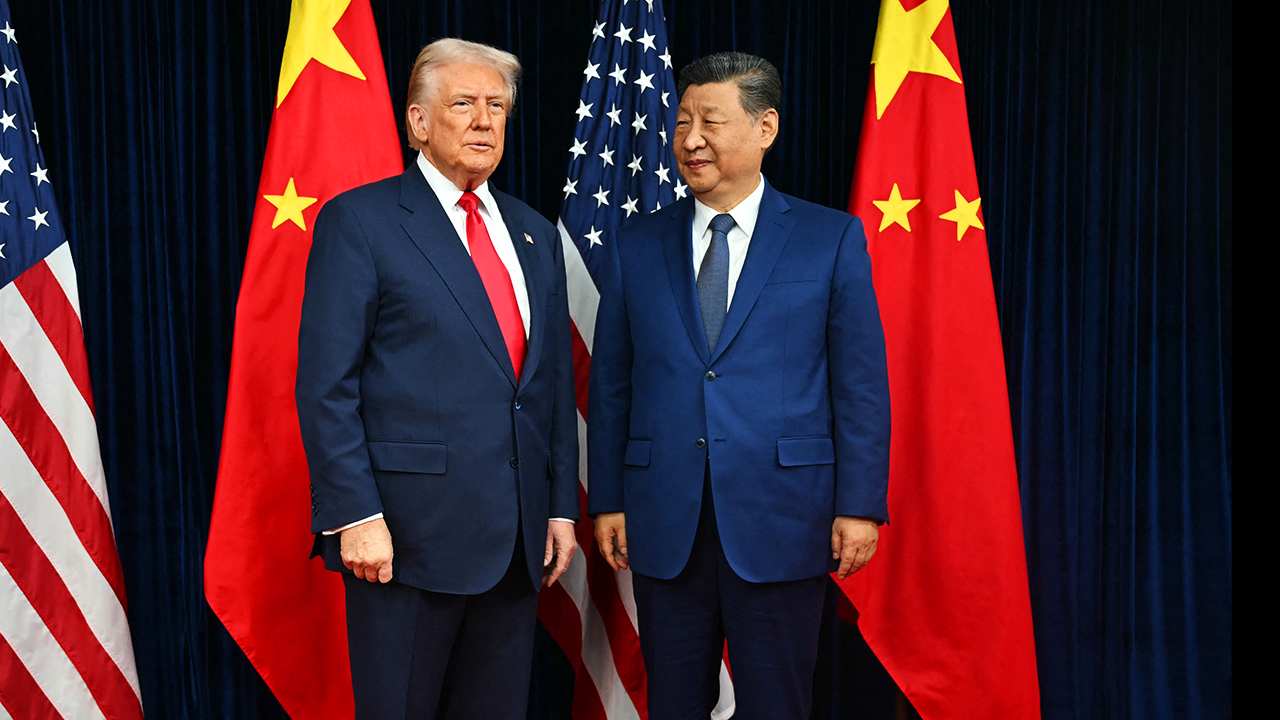
President Donald Trump is planning to hold a state dinner next week to mark a visit by Chinese President Xi Jinping, and several tech industry leaders are expected to attend.
OpenAI CEO Sam Altman and Apple Executive Chairman Tim Cook are both reportedly planning to attend the state dinner.
Nvidia CEO Jensen Huang is also expected to attend the event, a person familiar with the matter told FOX Business.
OpenAI CEO Sam Altman is expected to attend the state dinner with other tech leaders.
The tech leaders’ anticipated attendance at the Trump-Xi state dinner comes at a time of geopolitical tensions, including over the development of artificial intelligence (AI) and access to both models and the chips that power them.
NVIDIA CEO DRAWS LINE ON AI SAFETY AFTER ALARMING INCIDENTS: ‘IF IT’S NOT READY, JUST HOLD IT BACK’
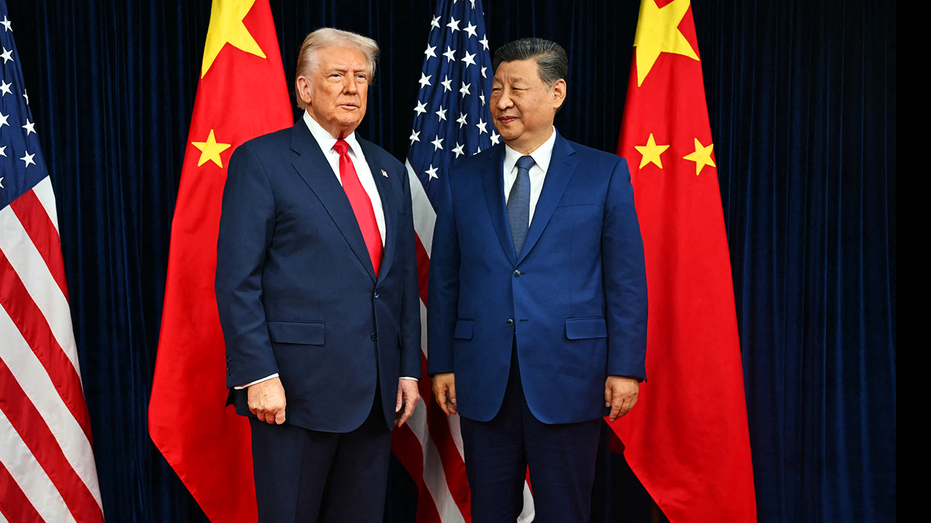
President Donald Trump and China’s President Xi Jinping are scheduled to hold a state dinner during Xi’s visit next week. (Andrew Caballero-Reynolds/AFP)
The U.S. and China are locked in a competition in which the two world powers are racing to develop more capable AI tools, which have been a source of tension between the countries.
China’s access to specialized chips that power advanced AI models has been restricted through the U.S. government’s use of export controls on advanced semiconductors, like those made by Nvidia.
Huang has been critical of those restrictions and said in May that China has “all the chips they need” despite the U.S. restrictions.
BESSENT SAYS US NEEDS MORE OPEN-SOURCE AI MODELS TO COMPETE WITH CHINA
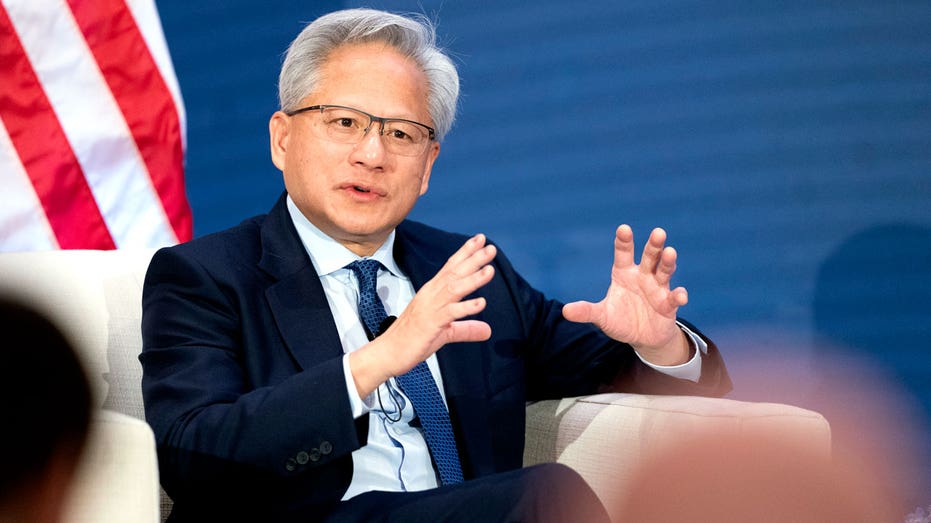
Nvidia CEO Jensen Huang is among the tech leaders expected to attend the state dinner. (Sean Rayford/Getty Images)
American companies like OpenAI and Anthropic have relied on using frontier models, which are proprietary and not available for use without purchasing a license, to gain their edge in the AI race. Chinese tech companies have used distillation as a means of using open-weight models to keep up with U.S. firms’ frontier models.
Altman and other tech leaders have recently been discussing steps to rein in AI development to ensure the safety and alignment of those models amid concerns about their potential impact on humanity.
“It is the responsibility of the AI companies ourselves to develop the technology safely and to properly test it,” Huang told reporters. “If it’s not ready, just hold it back. You should go as fast as you can, but no faster than that.”
State dinners are among the highest diplomatic honors a U.S. president can bestow on a foreign leader.
NVIDIA CEO JENSEN HUANG WARNS CHINA HAS ‘ALL THE CHIPS THEY NEED’ DESPITE US BANS
| Ticker | Security | Last | Change | Change % |
|---|---|---|---|---|
| AAPL | APPLE INC. | 337.00 | +4.59 | +1.38% |
| NVDA | NVIDIA CORP. | 219.34 | +5.44 | +2.54% |
Next week’s state dinner comes after Xi hosted a state dinner for Trump when he visited China in May. That event was also attended by Elon Musk, Huang and Cook – who was still CEO at the time and has recently transitioned into an executive chairman role at Apple.
The Trump-Xi state dinner will be the second hosted by Trump during his second term, as the first was held during a visit by Britain’s King Charles and Queen Camilla.
During his first term, he hosted state dinners for French President Emmanuel Macron in 2018 and Australian Prime Minister Scott Morrison in 2019.
GET FOX BUSINESS ON THE GO BY CLICKING HERE
Reuters contributed to this report.

SPXX: Buy The Discount, Collect The Premium, Encash The Consolidation

Axon Enterprise (AXON) failed to bounce early Wednesday, a day after being among the biggest S&P 500 losers on Tuesday, as investors reacted negatively to its plan to issue $1 billion in 0% convertible notes. The Taser-maker said proceeds will fund operations, acquisitions, investments and the cost of the capped-call transaction, which is a hedge designed to limit share dilution.…
Copyright ©2026 Investor’s Business Daily, LLC. All rights reserved. 87990cbe856818d5eddac44c7b1cdeb8

Sales growth at U.S. retailers rose in August, rebounding from its decrease in July, the Commerce Department said.
Retailers’ sales rose by 1.2% last month to $773.9 billion, versus the 0.5% decrease recorded in July. The August reading was higher than the 0.8% increase economists polled by The Wall Street Journal expected.
Copyright ©2026 Dow Jones & Company, Inc. All Rights Reserved. 87990cbe856818d5eddac44c7b1cdeb8

Stephen Moore joins Stuart Varney to analyze the economic impact of surging crude oil prices, rising diesel costs and President Donald Trump’s proposed dividend plan for American adults.
Executives from American Airlines, United Airlines and Southwest Airlines said Wednesday that higher jet fuel prices are prompting carriers to adjust capacity and closely monitor flight schedules.
The global average jet fuel price rose 6.1% week over week to $181.46 per barrel last week, according to the International Air Transport Association (IATA).
Speaking at Morgan Stanley’s 14th Annual Laguna Conference, American Airlines Chief Financial Officer Devon May said fourth-quarter jet fuel prices are running about $1 per gallon above what the airline projected in July, adding roughly $1 billion to its fuel bill.
“Overall for the third quarter, we feel great,” May said. “What’s happened in the last four weeks, though is fuel’s run up probably $1 a gallon or something like that for the fourth quarter alone.”
AVELO CEO WARNS AIRFARES MAY RISE AS FUEL PRICES HIT ‘UNCOMFORTABLY HIGH’ LEVELS

American Airlines CEO Robert Isom said the airline still expects third-quarter revenue to rise 16% to 19% from a year earlier. (Alex Tai/SOPA Images/LightRocket via Getty Images)
May said American will continue adjusting capacity later in the fourth quarter in response to higher fuel costs.
American Airlines CEO Robert Isom said the airline still expects third-quarter revenue to rise 16% to 19% from a year earlier, citing strength across domestic and international markets as well as both premium and economy cabins, according to Reuters.
“When you take into account fuel right now, yes, we’ve absolutely done a great job of recapturing a tremendous amount of that expense,” Isom said.
United Airlines Chief Financial Officer Michael Leskinen said some flights planned for December will no longer operate because of higher fuel prices.
“As you look into the fourth quarter, there’ll be some flights in December that we won’t fly that we thought we were going to fly,” he said at the Morgan Stanley conference. “If fuel remains high, we’ll make some adjustments into the first quarter and beyond into 2027.”
AIRLINE PASSENGERS ROCKED BY TURBULENCE DURING DESCENT: ‘WE STARTED TO PLUMMET’

Leskinen also described United’s fourth-quarter bookings as “tremendously strong,” saying premium travel, corporate demand and economy bookings have all remained resilient. (Tayfun Coskun/Anadolu Agency via Getty Images)
Leskinen also described United’s fourth-quarter bookings as “tremendously strong,” saying premium travel, corporate demand and economy bookings have all remained resilient.
“Bookings have continued as we expected, so that piece of the equation is resilient — very little evidence of demand destruction,” Leskinen said.
At the conference, Southwest Airlines Chief Financial Officer Tom Doxey said the carrier has already pared back about half of the modest year-over-year capacity growth it had planned at the start of 2026.
“If fuel is higher for longer,” Doxey said, trimming capacity would be the “natural response.”
However, a spokesperson for the airline told FOX Business the schedule adjustments made so far have been minimal and that Doxey was making an “illustrative point” about trimming capacity and was “not alluding to an action we’ve taken.”
TSA REVIVES PRE-9/11 TRADITION WITH GATE ACCESS FOR CERTAIN TRAVELERS WITHOUT TICKETS
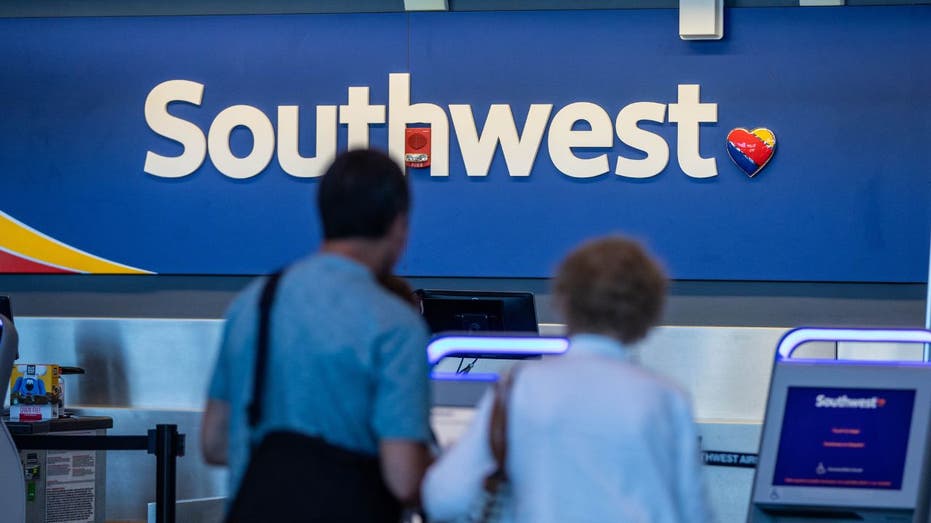
Southwest Airlines Chief Financial Officer Tom Doxey said the carrier has already pared back about half of the modest year-over-year capacity growth it had planned at the start of 2026. (Scott Eisen/Bloomberg via Getty Images)
Doxey added that stronger-than-expected fall bookings have helped offset higher fuel costs, allowing Southwest to maintain its third-quarter earnings guidance, according to Reuters.
GET FOX BUSINESS ON THE GO BY CLICKING HERE
Spokespersons for American Airlines and United Airlines told FOX Business the carriers had nothing further to add.
Reuters contributed to this report.

Meanwhile, the grey market premium (GMP) for the NSE IPO was hovering around 9%, signalling expectations of a moderate listing gain.
The Rs 22,569 crore issue is entirely an offer for sale of 12.64 crore shares. NSE will not receive any proceeds from the IPO, as the funds will go to the selling shareholders. The price band has been fixed at Rs 1,700-1,785 per share, with a lot size of eight shares.
At the upper end of the price band, the minimum retail application amounts to Rs 14,280, while the post-issue market capitalisation works out to about Rs 4,41,788 crore. The issue will close on September 21, and the stock is expected to list on the BSE on September 24.
NSE IPO Subscription Status
At the end of Day 1, the NSE IPO was subscribed 42% overall, against the 8.86 crore shares on offer.

- Retail Individual Investors (RIIs): Subscribed 43% against 4.41 crore shares offered.
- Non-Institutional Investors (NIIs): Subscribed 70% against 1.89 crore shares offered.
- Qualified Institutional Buyers (QIBs): Subscribed 19% against 2.52 crore shares offered.
NSE IPO GMP today
The grey market premium for NSE IPO is around 9%, signalling moderate listing expectations. The GMP suggests positive sentiment, but not the kind of sharp listing pop usually seen in smaller issues. Given the large size of the offer and the already rich valuation, listing gains may be measured.
Should you subscribe to NSE IPO?
Brokerage views are mostly positive for the IPO. At the upper price band of Rs 1,785, NSE is valued at 42.9 times FY26 earnings. LKP Securities has given a “Subscribe” rating to the IPO and said NSE’s post-issue implied market cap stands between Rs 4.2 lakh crore and Rs 4.42 lakh crore.YES Securities has also recommended “Subscribe”, saying NSE is available at a 21% discount to BSE on P/E. It said BSE trades at 54.3 times FY26 diluted earnings, while NSE is priced at 42.9 times at the cap price.
For long-term investors, analysts say NSE offers a rare chance to own India’s dominant market infrastructure company. Its strong margins, debt-free balance sheet, market leadership and rising investor base support the long-term case.
But investors should not ignore valuation and regulatory risks. At 42.9 times FY26 earnings, the IPO is not cheap. The business is also closely tied to trading volumes, especially options. A 9% GMP shows demand is positive, but not euphoric.
Angel One said NSE’s valuation at the upper price band of ₹1,785 translates to a post-issue P/E of 35.4x, lower than BSE’s 54.2x, making the issue attractive relative to its key peer. The brokerage highlighted NSE’s dominant market position, strong profitability, leadership in equity derivatives and long-term growth potential in India’s capital markets. Despite near-term regulatory headwinds, Angel One believes the valuation offers a favourable entry point and has recommended “Subscribe” to the IPO.
NSE IPO business model
NSE is India’s largest stock exchange and runs a vertically integrated platform across trading, clearing, listing, data services and index licensing. Its products span cash market, futures, options, mutual funds, commodity derivatives, currency derivatives, wholesale debt market and interest rate futures.
The exchange has held the top position in India by cash market turnover and equity derivatives turnover from FY01 to FY26. As of June 2026, NSE supported 132.4 million unique registered investors, 1,328 trading members and 3,005 listed entities with market capitalisation of about Rs 474.1 trillion.
NSE IPO strengths
NSE’s biggest strength is its near-dominant market position. Its market share stood at about 93% in the cash market, 99.7% in equity futures and 68.5% in equity options by premium turnover as of June 2026.
YES Securities said almost all of India’s listed equity trading risk flows through one platform. It said NSE’s advantage is not just pricing, but a liquidity cycle where orders go where spreads are tight, companies list where trading activity exists, and deeper markets attract more participants.
NSE IPO financials
NSE reported revenue from operations of Rs 16,601 crore in FY26, down 3.1% from Rs 17,141 crore in FY25. Profit after tax fell to Rs 10,302 crore from Rs 12,188 crore. In Q1, revenue stood at Rs 4,560 crore, while PAT came in at Rs 3,120 crore.
Read more:NSE IPO Tracker: Catch all the highlights here
Despite the fall in FY26 profit, margins remain strong. SBI Securities pegged NSE’s EBITDA margin at 67.6% in FY26 and 77.9% in Q1. PAT margin stood at 62.1% in FY26 and 68.4% in Q1.
NSE IPO risk factors
The main risk is dependence on transaction charges. NSE earned 78.7% of its FY26 revenue from transaction charges. Options alone contributed 60.2% of revenue from operations in FY26. This makes regulatory changes in derivatives an important watch point. YES Securities noted that NSE’s equity options market share by premium turnover has fallen from 96.86% in FY24 to 74.71% in FY26 and 68.48% in the June 2026 quarter.
Disclaimer: The views/recommendations mentioned in this article, wherever applicable, are those of the respective SEBI-registered Research Analyst/brokerage and have been reproduced/reported with due attribution. They should not be construed as the views or recommendations of The Economic Times Digital or the journalist. Readers are advised to consider the original research report and make their investment decisions based on their own assessment. Brokerage disclaimers here

Oscar Health (OSCR) raised its full-year earnings outlook while lowering its expected medical costs to cover benefits for its nearly 3 million Affordable Care Act exchange members. OSCR stock climbed in early Wednesday stock market action ahead of its 9 a.m. ET investor conference. Oscar, which made an aggressive play to gain ACA market share, has seen enrollment surge 47%…
Copyright ©2026 Investor’s Business Daily, LLC. All rights reserved. 87990cbe856818d5eddac44c7b1cdeb8
Bitcoin had weakened well before the announcement. It touched $82,163 on 4 September. By the afternoon of 16 September in India, ahead of the Fed decision, it was near $75,743. That was a fall of roughly 8%. Any account that attributes the entire decline to the hike gets the sequence wrong.
Bitcoin was trading around $75,000–$76,000 after the decision. Holding near those levels suggests that some of the expected tightening was already reflected in the price. It does not establish how Bitcoin will respond to a longer period of higher rates.Investors were also pulling money out of US spot Bitcoin ETFs. Withdrawals totalled $450.4 million on 15 September and $295.9 million the following day, according to Farside Investors. That is $746.3 million across two sessions. Two days do not establish a trend, and the first session preceded the announcement. They do make it premature to say the market has taken the decision in its stride.
Higher rates make the choice facing investors more demanding. Short-term government debt offers income with far less price uncertainty than Bitcoin. Bitcoin pays no interest of its own. Investors buying it must be willing to accept volatility for what they believe it can deliver over time.
Institutional investors make that calculation too. A fund manager can believe in Bitcoin and still reduce an allocation because borrowing has become more expensive or clients want less risk. Institutional participation cannot be treated as a permanent commitment to buy. The same investment committees that approve an allocation can cut it.
The source of inflation deserves closer attention. The conflict involving the US, Israel and Iran has added energy costs to an economy already struggling with persistent inflation. Higher rates cannot restore disrupted oil supplies. They can restrain spending and reduce the chance that an initial jump in fuel prices spreads into more lasting price increases.It would still be too convenient to describe this as an oil problem alone. The Fed reports resilient domestic spending and robust investment. Its median forecast puts core inflation, which excludes food and energy, at 3.4% this year. There is enough underlying inflation to make an early reversal of policy difficult to assume.
An energy shock does not, by itself, weaken the case for using blockchain to settle transactions more efficiently. Nor does it change Bitcoin’s supply rules. But preserving an investment argument is different from preserving demand. A household paying more for fuel has less money available to invest. A fund facing redemptions may sell an asset it still believes in. Bitcoin’s scarcity cannot prevent either decision.
The pressure also extends beyond the US. The European Central Bank raised rates by 25 basis points on 10 September, citing inflation pressures from the Middle East conflict. The Bank of England’s next decision was scheduled for 17 September. That warrants attention to policy across major economies, without assuming that their decisions are coordinated or that all will take the same course.
If more central banks tighten, crypto faces a broader constraint on funding and investor appetite. Capital can still move between countries, but fewer markets will offer cheap borrowing. For an asset class traded globally, looking only at the Fed leaves part of the picture out.
Even here, it is important to be precise about liquidity. The Fed says it will maintain ample reserves in the banking system. A rate increase does not automatically mean those reserves are being withdrawn. Crypto trading can nevertheless become thinner if buyers commit less money or market makers reduce the size of their orders. Forced selling from leveraged positions can then push prices down faster, particularly in smaller tokens.
The Fed’s projections suggest this adjustment may take time. Sixteen of 18 Fed officials envisage at least one further hike this year. The median implies a year-end range of 4–4.25%, unchanged at the end of 2027. Eight Fed officials see 4.25–4.5% for 2027. These are individual assessments, not a promised timetable, but they give investors little basis for assuming that cheaper money is imminent – liquidity may not ease as quickly as markets had hoped.
For Indian investors, the rupee adds another calculation. If the dollar strengthens against it, a fall in Bitcoin’s dollar price can translate into a smaller decline in rupee terms. That currency effect should not be mistaken for stronger demand for Bitcoin. It can reverse too.
Over the coming weeks, buying behaviour, and ETF inflow pattern and volume will tell us more than the first reaction to the announcement. A recovery financed largely by borrowing would leave the market exposed to another round of forced selling. For now, the industry needs to observe whether users continue being interested in crypto investment if the next rate cut takes much longer than expected.
(The author is Vice President, WazirX)

Wall Street Breakfast With Steven Cress (undefined:GNRC)

Mark Zuckerberg Meta AI Predicts Bitcoin to Hit $230,000

Bold and Beautiful: Carter and Steffy’s Sham Baby Plan Unravels in Shocking Twist



-

 Fashion6 days ago
Weekend Open Thread – Corporette.com
-

 Tech4 days ago
The Latest Weird Thing to Play Doom Is the Mapped-Out Brain of a Fruit Fly
-

 Business7 days ago
10 Most-Streamed Songs On Spotify In 2026 So Far, Led By Ella Langley’s Dominant Run On The Charts This Year
-

 Crypto World7 days ago
XAG/USD: Silver’s Short-Term Rally Meets Its Moment of Truth
-

 Crypto World7 days ago
OKX launches 10x OpenAI, Anthropic X-Perps in Europe
-

 Crypto World7 days ago
Diesel Tops $6 a Gallon for the First Time as 28 States Set Records
-

 Crypto World3 days ago
Elon Musk Drops a Bombshell: Grok 5 Could Be the AGI Breakthrough
-
 Crypto World3 days ago
Kraken Lets xStocks Holders Earn Yield Through DeFi
-

 News Videos6 days ago
Facing Financial Fears
-

 Crypto World22 hours ago
US Charges Robinhood Engineers Over Crypto Listing Trades
-

 Business5 days ago
Rivals Sam Altman and Elon Musk Rally Behind Dario Amodei’s Call for a Slowdown in AI Development
-
Crypto World7 days ago
Ethereum Price Analysis: Consolidation at $2.5K Tests Momentum as On-Chain Activity Surges
-

 Crypto World5 days ago
Can AI Build a Startup in 72 Hours? Elon Musk's Team Will Livestream the Test
-

 Entertainment6 days ago
News Specials, Movies, Shows, More
-
 NewsBeat3 days ago
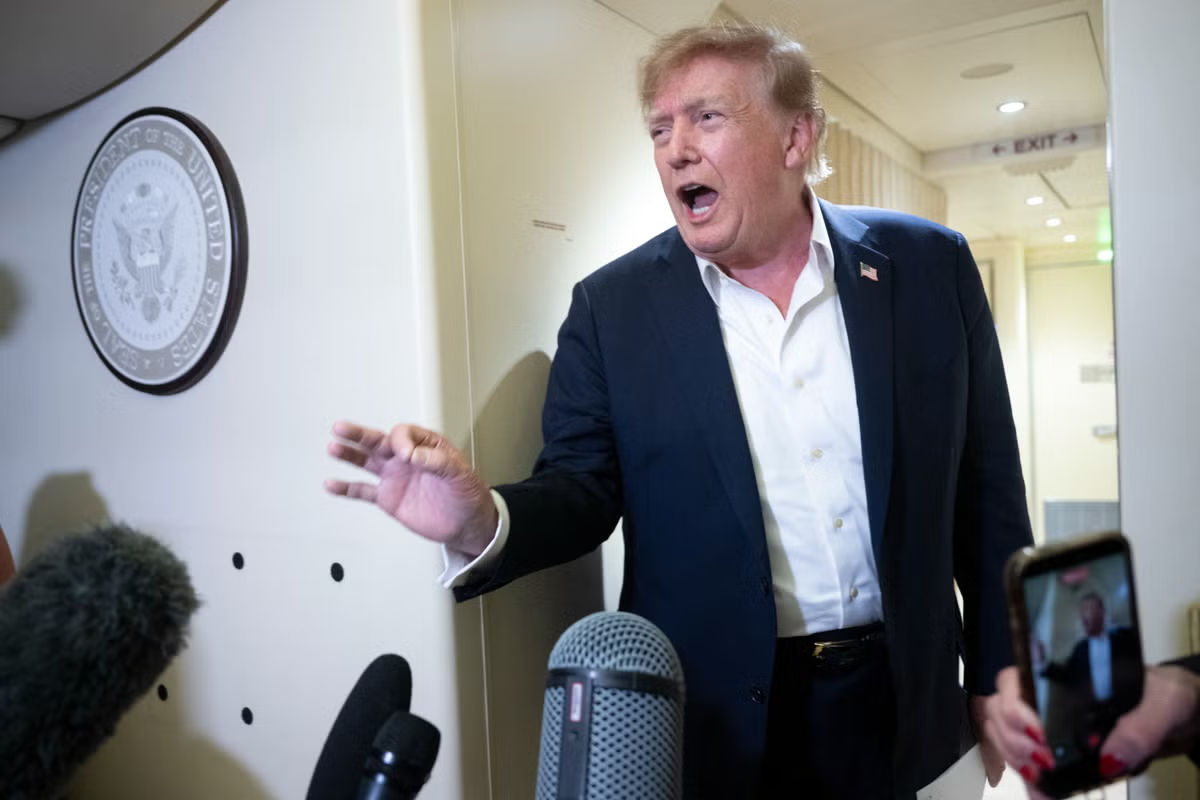
‘Sick conspiracy’: Trump says only guardrails AI needs is ‘a strong and smart (High IQ!) president’ in all-caps rant
-

 Crypto World7 days ago
Bitcoin ETFs Pull $167M as 2026’s Best Inflow Run Slows
-

 Crypto World6 days ago
Robinhood Chain Never Stopped But its Blobs Did Stop Reaching Ethereum For 14 Minutes
-

 Crypto World7 days ago
US CPI forecast at 3.4% as tariff risks build
-
 Crypto World4 days ago
New Tesla Roadster Uses SpaceX Tech. Will It Impact the Stock Price?
-
 Entertainment6 days ago
New Horror Movie Officially Earns a Rare Stephen King Recommendation
You must be logged in to post a comment Login