Kevin Warsh has spent much of the last 15 years criticizing the Federal Reserve for getting too big, mismanaging inflation and compromising its independence.
So as President Trump’s pick to succeed Jerome Powell as chair of the central bank, what does he do about it? He faces three key tests. First, significantly shrink the Fed’s balance sheet without upsetting markets. Second, push inflation down to 2% and keep it there. Third, do this without meddling by Trump that compromises the Fed’s independence. All will be tougher than they look.
Downsizing the central bank
As a Fed governor from 2006 to 2011, Warsh worked with then-chair Ben Bernanke to manage the global financial crisis. He quit over Bernanke’s use of “quantitative easing,” the purchase of trillions of dollars of bonds, paid for by issuing reserves (electronic money) to banks. Between 2008 and 2022 the Fed’s assets grew from $900 billion to $9 trillion. They have since declined to $6.6 trillion.
Trapping Value is a team of analysts with over 40 years of combined experience generating options income while also focusing on capital preservation. They run the investing group Conservative Income Portfolio in partnership with Preferred Stock Trader. The investing group features two income-generating portfolios and a bond ladder.
Trapping Value provides Covered Calls, and Preferred Stock Trader covers Fixed Income. The Covered Calls Portfolio is designed to provide lower volatility income investing with a focus on capital preservation. The fixed income portfolio focuses on buying securities with high income potential and heavy undervaluation relative to comparatives. Learn more.
Analyst’s Disclosure: I/we have a beneficial long position in the shares of PSLV either through stock ownership, options, or other derivatives. I wrote this article myself, and it expresses my own opinions. I am not receiving compensation for it (other than from Seeking Alpha). I have no business relationship with any company whose stock is mentioned in this article.
Long position has calls sold on it.
Advertisement
Seeking Alpha’s Disclosure: Past performance is no guarantee of future results. No recommendation or advice is being given as to whether any investment is suitable for a particular investor. Any views or opinions expressed above may not reflect those of Seeking Alpha as a whole. Seeking Alpha is not a licensed securities dealer, broker or US investment adviser or investment bank. Our analysts are third party authors that include both professional investors and individual investors who may not be licensed or certified by any institute or regulatory body.
Huringa founder and CEO Melody Wright analyzes the state of the market as Americans hope for homeownership on ‘Making Money.’
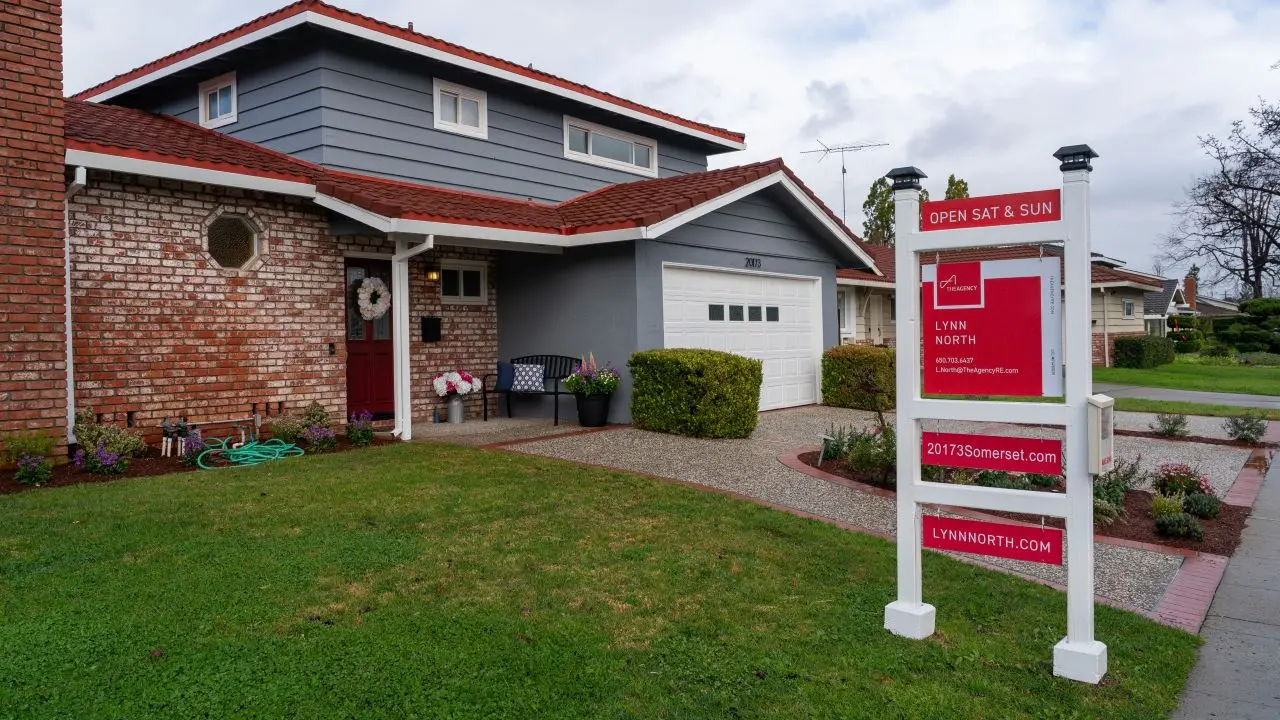
While the rest of the country grapples with a stalled housing market and high interest rates, New Jersey has emerged as the nation’s top leader in home price growth.
Driven by high-wage jobs and a Manhattan exodus, the state is outpacing the national average and outperforming former COVID-era hotspots like Florida.
Advertisement
According to a recent report from Cotality, the Garden State isn’t just growing; it’s outpacing the field by a wide margin, with home prices climbing nearly 6% in February from the previous year. The U.S. national average growth during that same period was just 0.5%.
More specifically, Newark recorded a 6.7% year-over-year price jump, marking the steepest hike among the 100 largest metros in the U.S.
Newark’s skyline reflects on the banks of the Passaic River at night. (Getty Images)
Housing supply in New Jersey remains well below pre-pandemic levels, with nearly 40% of homes being sold above asking prices.
Advertisement
“These diverse trends indicate an ongoing process of price discovery — one where sales and comparisons remain limited — and underscore a market that is rebalancing locally rather than correcting nationally,” Cotality chief economist Selma Hepp said in the report.
M2 Communities CEO Mitch Roschelle breaks down rising mortgage rates as war-driven inflation hits affordability and raises questions about when relief may come on ‘Varney & Co.’
“Although the steady decrease in mortgage rates prior to the spring homebuying season raised hopes for a rebound in home prices and sales in 2026, the recent surge in rates has reduced demand in the housing market,” she added, “shifting expectations for a broader recovery this year.”
The New Jersey boom can be linked to workers getting priced out of New York City who are choosing its neighboring state to avoid sacrificing their full paychecks while maintaining transit access. Many of these new commuters are in the finance, pharmaceutical or biotechnology sectors.
FOX Business’ Gerri Willis reports on homeowners ramping up renovations with $522 billion projected for 2026 and highlights the most popular projects on ‘Varney & Co.’
Going south to the Sun Belt and the Western frontier, Cotality data also indicates that formerly red-hot markets are starting to see corrections: Florida dropped more than 2% in price, Washington, D.C. and Montana saw similar declines of around 3% and a total of 13 states recorded outright price declines in February.
The war has reduced the passage of tankers through the strait to a trickle. Only 15 vessels have made the trip since Tuesday, compared to an average of almost 140 each day prior to the outbreak of the conflict, carrying a fifth of the world’s oil and gas supplies. Almost 800 ships have been left stranded in the Gulf, most of them loaded with cargo.
The team at Spectrum Technologies will watch the conclusion of the Artemis II mission this weekend knowing they played an important role
14:05, 10 Apr 2026Updated 14:06, 10 Apr 2026
Spectrum Technologies Chairman and CTO, Peter Dickinson, said the Bridgend-based laser company has played an important part in the Artemis II mission(Image: David Manton / Photodrome)
A laser company in South Wales played an important role in the Artemis II space mission after their advanced technology was used on the Orion spacecraft. Spectrum Technologies in Bridgend design and manufacture laser equipment which is used by teams in America to label the wiring on spacecrafts and aircrafts, including Orion.
There is 20 miles of wiring on Orion, made up of 2,600 individual pieces which have all been marked by Spectrum Technologies’ lasers.
Advertisement
“Each wire must be marked along its entire length at intervals of just a few inches with a unique alphanumeric code,” said Peter Dickinson, chairman and chief technology officer.. It’s extremely complex electrical wiring,” he said. “They all have to be identified with a unique code otherwise it is a gigantic mess”.
Mr Dickinson said this system is the “critical first step in producing the spacecraft’s wiring harness,” and that their company is “the number one global provider for this specialist equipment. The global standard.”
Lasers from Spectrum Technologies has been used in all of the Artemis programmes and Mr Dickinson has said they will be used in Artemis III when astronauts return to the surface of the moon for the first time since 1972.
Advertisement
Mr Dickinson and the team at Spectrum Technologies are all excited to watch the Artemis programme succeed and to know they made an impact.
“The whole company has been watching what has been going on and we are all excited to be part of this pivotal moment of space exploration,” said Mr Dickinson.
“I remember as a teenager watching Apollo 11 landing on the moon. It is thrilling to be involved in this latest programme to take humans back to the moon.”
Lasers from the Bridgend-based company have been used in probes that have gone to Mars and in one called Lucy which is on a 12-year mission to Jupiter with the aim of discovering more about how our solar system was created.
Financial influencer Taylor Price joins ‘Varney & Co.’ to break down how shifting your mindset can help Americans grow wealth and achieve the American Dream.
The climate of the U.S. housing market for buyers varies around the country, and a new report suggests there are currently only eight metro areas that are truly buyer’s markets.
The economist research team at Realtor.com released a diagnostic tool called the Market Clock that tracks the housing market at the national and metro level based on months of supply, time on market, price changes and list-to-sale ratio to reflect local conditions.
Advertisement
It tracks the 50 largest metros in the U.S. and found in its first quarterly report that about half, or 46%, of the top markets are in balance with neither buyers nor sellers having an edge; while 26% are seller’s markets and only 16% are buyer’s markets.
The eight buyer’s markets are mostly located in the South, though there is one outlier in the West. None of the buyer’s markets were located in the Northeast or Midwest, where strong demand and restricted supply have either kept the housing market in balance or given sellers the edge.
Eight of the top 50 metro areas in the U.S. were considered buyer’s markets in the Realtor.com report. (Loren Elliott/Bloomberg via Getty Images)
For all the eight buyer’s markets, the Market Clock is at 5 o’clock, which signals they have ample supply of homes for sale with a growing number of listings and sellers lowering prices.
Advertisement
Half of the buyer’s markets are located in Florida – Jacksonville, Miami, Orlando and Tampa. The others are Atlanta, Georgia; Austin, Texas; Nashville, Tennessee; and Riverside, California.
The buyer’s markets have more inventory of homes for sale and are growing the supply of housing with new construction. (Mark Felix/Bloomberg via Getty Images)
Realtor.com senior economist Jake Krimmel said that while active listings may not have risen year over year in each of the eight buyer’s markets,
“Riverside and Nashville, for instance, have seen active listings increase 222% and 330%, respectively, since high interest rates reset the market in 2022 – significantly greater than the national average of 172% since March 2022,” he said.
Miami and several other Florida cities were among the buyer’s markets in the report. (Joe Raedle/Getty Images)
The report noted that compared with June 2025, Atlanta, Austin, Nashville and Riverside all saw their position on the market clock loosen by one “hour” into an early buyer’s market from a late balanced market. Jacksonville followed a similar pattern, moving from being in balance to a buyer’s market.
By contrast, Miami, Orlando and Tampa were already early buyer’s markets in June and held steady at that level through the end of last year.
Krimmel said that prospective buyers in all the eight metros have both time and options on their side this spring, giving them the opportunity to exert leverage up to a point when negotiating prices and concessions with sellers.
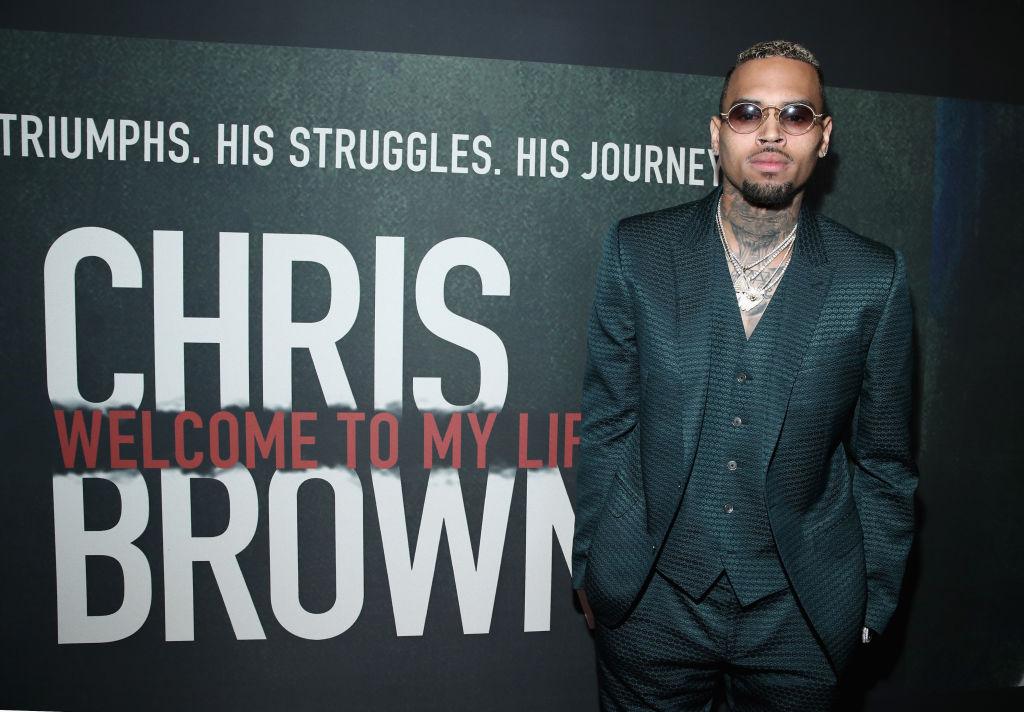
More than two decades into his career, Chris Brown remains one of R&B and pop’s most consistent hitmakers, with his catalog dominating streaming platforms in 2026. “Under The Influence” stands tall as his most-streamed track on Spotify with over 1.8 billion plays, while classics like “No Guidance” and early smashes continue to rack up millions of daily streams.
Chris Brown
Brown, affectionately known as Breezy, has released more than a dozen studio albums since bursting onto the scene in 2005. His blend of smooth vocals, sharp dance moves and genre-blending production has earned him multiple Grammy Awards and a dedicated global fan base. As of April 2026, his music continues to resonate across generations, with newer releases from the “11:11” era mixing seamlessly with decade-old favorites on playlists and radio.
Compilations of his greatest hits in 2026 frequently highlight the same core tracks, though rankings vary slightly depending on whether the metric is Billboard chart performance, Spotify streams or critical acclaim. Here is a consensus top 10 drawn from current streaming data, historical chart peaks and enduring popularity.
No. 10: “Forever” (2008, from “Exclusive”) Originally created for a Doublemint gum commercial, “Forever” became an anthem for celebrations and young love. The upbeat track peaked at No. 2 on the Billboard Hot 100 and has amassed over 800 million Spotify streams. Its infectious chorus and energetic production helped cement Brown as a pop crossover star. In 2026, it remains a staple at weddings and parties.
No. 9: “With You” (2007, from “Exclusive”) Brown delivered a more acoustic, heartfelt ballad with “With You,” which climbed to No. 2 on the Hot 100. The Stargate-produced song showcased his vulnerable side and strong vocal range. It has surpassed 690 million streams on Spotify and continues to appear on romantic playlists worldwide. Critics often cite it as one of his purest pop-R&B moments.
Advertisement
No. 8: “Loyal” (featuring Lil Wayne and Tyga, 2014, from “X”) A club and radio domination track, “Loyal” became a cultural catchphrase. It peaked at No. 9 on the Hot 100 but spent weeks atop urban charts. The song’s catchy hook and featured verses made it a party staple. In 2026 it still receives heavy airplay and features prominently in throwback sets.
No. 7: “Look At Me Now” (featuring Lil Wayne and Busta Rhymes, 2011, from “F.A.M.E.”) This high-energy hip-hop track highlighted Brown’s rapid-fire flow alongside two rap legends. It earned a Grammy nomination and became one of his most acclaimed rap-leaning releases. The song’s fast-paced delivery and infectious beat keep it popular among fans who appreciate his versatility.
No. 6: “Run It!” (2005, from “Chris Brown”) Brown’s debut single announced his arrival at age 16. The dance-heavy track topped the Hot 100 for five weeks and introduced the world to his smooth vocals and impressive choreography. It remains a foundational hit that defined early 2000s R&B-pop and still lights up dance floors in 2026.
No. 5: “Go Crazy” (with Young Thug, 2020, from “Slime & B”) Released during the pandemic, “Go Crazy” became a massive streaming success and cultural moment. The bouncy, feel-good track spent months on charts and inspired countless TikTok dances. It helped keep Brown relevant during a challenging period and continues to generate streams daily.
Advertisement
No. 4: “Fine China” (2013, from “X”) A bold artistic shift, “Fine China” paid homage to Michael Jackson and Stevie Wonder with its retro-soul groove. The single showcased Brown’s maturity as an artist and received praise for its sophisticated production. It stands as one of his most critically respected releases.
No. 3: “No Guidance” (featuring Drake, 2019, from “Indigo”) After years of speculation about their relationship, Brown and Drake delivered a smooth, sultry collaboration that exceeded expectations. “No Guidance” became a chart smash and has accumulated more than 1.29 billion Spotify streams. Its sensual vibe and polished production made it a late-2010s R&B highlight.
No. 2: “Kiss Kiss” (featuring T-Pain, 2007, from “Exclusive”) Featuring T-Pain’s signature auto-tune, “Kiss Kiss” topped the Hot 100 for three weeks. The playful, flirtatious track captured the fun side of Brown’s artistry and became a defining song of the mid-2000s. Its energy still resonates with fans two decades later.
No. 1: “Under The Influence” (2022, from “Indigo”) Currently Brown’s biggest streaming success with over 1.83 billion plays on Spotify as of April 2026, “Under The Influence” blends seductive R&B with modern production. The track’s moody atmosphere and catchy melody have made it a favorite for late-night listening and playlists. It exemplifies how Brown’s catalog continues to thrive years after release, often outperforming newer singles in daily streams.
Advertisement
Beyond these standouts, Brown’s recent work from the “11:11” album and its deluxe editions, including tracks like “Residuals,” has earned radio success and Grammy consideration. In 2026 he continues dropping new music and collaborations, keeping his output fresh while his classics maintain strong catalog performance.
Brown’s ability to evolve across pop, R&B and hip-hop has sustained his relevance. From teenage heartthrob to seasoned veteran, he has navigated personal challenges while consistently delivering hits. His dance skills, often showcased in elaborate music videos, add another layer to his artistry that fans still celebrate.
Streaming has reshaped how fans engage with his music. Playlists and algorithms keep older tracks alive, while viral moments on TikTok and social media introduce his catalog to new generations. In early 2026, Brown’s total streams across platforms continued to climb, with several songs crossing major milestones.
Advertisement
Critics and fans alike note his vocal talent and production instincts. Whether delivering heartfelt ballads or high-energy club tracks, Brown demonstrates range few artists match. Collaborations with stars like Usher, Future and Drake have expanded his reach without diluting his signature sound.
As Brown approaches his 37th birthday later in 2026, his music shows no signs of slowing. Tours, new releases and constant catalog rotation ensure he remains a fixture in contemporary R&B. Playlists titled “Chris Brown Greatest Hits 2026” and similar collections on YouTube and Spotify draw millions of views and plays, proving the staying power of his best work.
For new listeners or longtime fans revisiting his discography, these 10 songs offer an ideal entry point. They capture the evolution of an artist who helped define modern R&B while pushing boundaries in pop and dance music.
Brown’s influence extends beyond charts. His style, choreography and emotional delivery have inspired countless emerging artists. In an era where streaming metrics often define success, his ability to maintain high daily streams on decade-old tracks underscores genuine fan connection.
Advertisement
As the music industry continues shifting toward catalog consumption, Chris Brown’s top songs illustrate how quality songwriting and versatile performance create lasting value. Whether you’re discovering him in 2026 or have followed since “Run It!,” these tracks represent the best of Breezy — catchy, emotional and undeniably danceable.




























































You must be logged in to post a comment Login