

Business
Koe Wetzel Announces 45-Date ‘Night Champion World Tour’ for 2026, Kicking Off in Australia


Country-rock artist Koe Wetzel unveiled his most ambitious outing yet with the announcement of The Night Champion World Tour, a 45-date trek spanning Australia, Canada and the United States set to launch in May 2026 and run through October.
The Texas native revealed the full slate on February 26, 2026, building excitement around his recent album “9 Lives” and fresh singles. The tour promises high-energy performances featuring hits like the 3x platinum “High Road,” alongside newer tracks such as “Surrounded” and “Time Goes On.”

“It’s called The Night Champion World Tour because that’s what we do — we stay up late, party hard and give everything on stage,” Wetzel said in a statement accompanying the announcement. “This is the biggest run we’ve put together, and I can’t wait to bring the chaos to new places and old favorites.”
The itinerary begins internationally with three Australian shows in May: May 3 at Forum Melbourne in Melbourne, Victoria; May 5 at Enmore Theatre in Sydney, New South Wales; and May 9 at Fortitude Music Hall in Brisbane, Queensland. Australian tickets are already on sale.
The North American leg follows, starting with three Canadian dates in July: July 8 at Rogers Place in Edmonton, Alberta; July 10 at South Okanagan Events Centre in Penticton, British Columbia; and another stop (details pending full confirmation in some reports). U.S. dates commence July 23 in Nampa, Idaho, encompassing a diverse mix of venues including amphitheaters, arenas and theaters.
Highlights include stops at iconic spots like Red Rocks Amphitheatre in Morrison, Colorado; Bridgestone Arena in Nashville, Tennessee; The Anthem in Washington, D.C.; and a home-state finale October 30 at Cook’s Garage in Lubbock, Texas. Other notable markets feature Evansville, Indiana (Ford Center, August 7); Fishers, Indiana (Fishers Event Center, October 9); St. Petersburg, Florida; and Little Rock, Arkansas (Simmons Bank Arena).
The tour features rotating support acts tailored to regional legs, including Shane Smith & The Saints, Wade Bowen, Wyatt Flores, Corey Kent, Bayker Blankenship, Logan Jahnke, Ole 60 and others. This lineup underscores Wetzel’s deep ties to the Red Dirt and Texas country scenes while appealing to broader country-rock audiences.
Wetzel’s rise has been fueled by a grassroots approach, amassing a loyal following through relentless touring and authentic songwriting before mainstream breakthroughs. His blend of rowdy anthems, introspective ballads and rock-infused energy has earned him a reputation as one of the most dynamic live performers in modern country.
The extensive routing reflects growing demand, with previous tours selling out theaters and moving into larger arenas. This 2026 world tour marks his first true international headline run beyond select festival appearances, including three Australian dates to tap into expanding global interest in American country acts.
Ticket details include artist presales beginning March 10 at 10 a.m. local time via TheNightChampionWorldTour.com for early access in the U.S. and Canada. General on-sale for North American shows starts March 13 at 10 a.m. local time through primary vendors like Ticketmaster and venue box offices. Australian dates remain available now.
VIP packages, meet-and-greets and upgrades are expected, with details forthcoming on Wetzel’s official website. Fans are encouraged to sign up for notifications at koewetzelmusic.com to stay updated on additional shows or changes.
The announcement arrives amid a strong period for Wetzel, whose “9 Lives” has garnered praise for its raw honesty and musical versatility. Tracks from the project are anticipated to dominate setlists, mixed with fan favorites and potential surprises.
As the tour approaches, Wetzel continues festival and one-off appearances in early 2026, including Boots In The Park events, RodeoHouston and Gulf Coast Jam, keeping momentum building toward the summer launch.
With its scale and international scope, The Night Champion World Tour positions Wetzel as a headliner capable of filling diverse venues while delivering the high-octane shows his fans crave. The run promises to be a defining chapter in his career, bringing his signature blend of rebellion, heart and hell-raising energy to stages worldwide.


“The pitching process is expected to commence by mid-March, with the exchange likely to initiate the process of filing its draft red herring prospectus in April,” a source told ET. An email sent to NSE remained unanswered.
Rothschild is assisting NSE to select lead bankers, legal counsels and other intermediaries for the IPO. The IPO will be an offer for sale, which means existing shareholders may dilute their stake while the exchange will receive no fresh funds.
According to people familiar with the IPO details, existing investors are expected to offload about 4-4.5% of the exchange’s total equity. Life Insurance Corporation of India continues to be the single largest investor in NSE with a 10.72% holding. It is followed by Aranda Investments Mauritius Pte at 4.54%, Stock Holding Corporation of India Ltd at 4.44%, SBI Capital Markets Ltd at 4.33%, and Veracity Investments Ltd with a 3.93% stake. It couldn’t be ascertained who will offer their shares in the IPO.
In the unlisted market, NSE is currently valued at ₹5 lakh crore. Based on prices in the unlisted market, the IPO could raise approximately ₹23,000 crore. On Thursday, NSE shares in the unlisted market were trading at ₹2,035 per share. Last month, the Sebi issued the much-awaited no-objection certificate for the IPO, ending a regulatory impasse that had stalled the listing for nearly a decade.

Early in February, NSE’s board approved the IPO and appointed a six-member panel to facilitate the IPO process. The newly-constituted committee is led by Tablesh Pandey, along with public interest directors Srinivas Injeti, Prof. Mamata Biswal, Abhilasha Kumari and Prof. G Sivakumar, as well as NSE’s MD and CEO, Ashishkumar Chauhan.

“For easy identification by investors, to bring uniformity in scheme names for a particular category across mutual funds and to ensure they remain ‘true to label,’ scheme name shall be the same as its category,” the Securities and Exchange Board of India (Sebi) said.
It scrapped the solution-oriented schemes category, putting a stop to all such subscriptions with immediate effect.
Sebi stressed the need to delink investment plan names and returns. It said the ‘type of scheme’ description in offer documents and advertisements must adhere to a prescribed format. “Words or phrases that highlight or emphasise only the return aspect of the scheme shall not be used in the name,” it said.
Sebi has broadly classified schemes into five categories – equity, debt, hybrid, life cycle and other. The last includes fund of fund schemes and passive ones such as index or exchange traded funds.
 Agencies
 Cos have Time to Comply
The regulator said no more than 50% of a thematic equity scheme’s portfolio must overlap with other thematic schemes and other equity categories, except for large-cap schemes. “Over a period of time, this could lead to some thematic funds, which may not have scaled, to be merged with similar schemes,” said Aditya Agarwal, cofounder of Wealthy.in, a platform for mutual fund distributors.
Sebi said thematic funds have three years to comply, while the others have six months. Schemes that are unable to meet the portfolio overlap criteria after three years would have to be mandatorily merged with other schemes, it said.
“Sebi has done something it rarely does – admitted a category was pointless and killed it. Solution-oriented funds were always a labelling exercise, and their removal is long overdue,” said Dhirendra Kumar, head of Value Research. “The overlap restrictions on thematic funds are also welcome. They force fund companies to prove their schemes are genuinely different, not just creatively named.”
New Product Category
The regulator also said asset managers could now introduce life cycle funds, while clarifying that foreign securities would not be treated as a separate asset class.
Asset managers have also been allowed to offer both value and contra funds, but the overlap between the two portfolios cannot exceed 50%.
“Arbitrage funds need to restrict debt exposure to only government securities with a residual maturity of less than a year. With arbitrage funds allocating up to 35% to debt, this along with the increase in STT (securities transaction tax) from April could bring down returns from the category by 30-40 basis points,” said the product head at a domestic fund house.
Flip Side
Some believe the regulatory latitude on allowing a new class of schemes could give confusing signals to the average saver.
“I worry that with one hand Sebi is simplifying, and with the other it’s handing the industry new avenues to proliferate – sectoral debt funds, life cycle funds, and an elaborate fund of funds matrix that reads like a regulatory spreadsheet, not an investor guide,” said Kumar of Value Research. “The average investor needs four types of funds, not forty. Every new category Sebi creates becomes an NFO (new fund offering) opportunity for the industry. The real question isn’t whether this circular is well-drafted, which it is. But two years from now, will we have fewer, clearer choices for investors, or just more sophisticated clutter?”
 as a Reliable and Trusted News Source
PennyMac’s Stark sells $174k in shares
Form 144 Health Catalyst For: 26 February

Japan’s Nikkei and South Korea’s Kospi indexes both slipped at the open, keeping the MSCI Asia Pacific Index little changed in early Friday trading. Even so, the gauge has gained more than 6% in February — set for a third consecutive monthly advance — and widen its outperformance over US and European benchmarks this year.
Futures contracts for US benchmarks also retreated in early Asian trading after the S&P 500 Index dropped 0.5% and the Nasdaq 100 fell 1.2% on Wednesday. Nvidia slumped 5.5%, its worst day since April last year, weighing on the Magnificent Seven group of mega-caps.
The moves were a further sign of the market’s vulnerability to AI headlines, as investors, businesses, governments and central banks all attempt to understand the long-term impacts of the quickly advancing technology. By contrast, Asian equities have outperformed as investors pile into companies supplying the AI build-out, viewing the region’s firms as the “picks and shovels” of the AI supply chain.
The sober response to Nvidia’s results, which included beats on revenue, net income and guidance, was partly because investors now expect such outperformance, according to Hardika Singh at Fundstrat Global Advisors.
“But where it did miss was easing investors’ concerns about its narrowing moat in the evolving world of compute and explaining its gameplan for how it’ll fare in a world of AI disruption that could upend all kinds of businesses from cybersecurity to food delivery to banks,” she said.
Elsewhere, Treasuries held their gains with the yield on the 10-year hovering around 4%. At one point during the US session, it touched its lowest this year. Australia’s 10-year yield declined five basis points to 4.65% early Friday. The dollar wavered.West Texas Intermediate crude largely held its losses to trade around $65.25 a barrel. The US and Iran will continue nuclear talks next week after making “significant progress” in Switzerland, mediator Oman said.
Meanwhile, AI headlines continued to hit the market even after the closing bell in New York.
Shares in Jack Dorsey’s payments giant Block Inc. surged more than 20% in after-market trading following news the company would cut nearly half its workforce — some 4,000 roles — in a pivot to AI. Dell Technologies Inc. shares also jumped in extended trading after a better-than-expected outlook for sales of artificial intelligence servers.
Amid the turmoil, Asian and other emerging markets have been a bright spot for traders. Asian stocks have made their beset start versus the US this century.
The MSCI Asia Pacific Index has advanced in February, taking the year-to-date gains to 15%. In comparison, the S&P 500 has gained 0.9% this year, while the Nasdaq 100 Index has fallen by the same amount.
Global asset managers who collectively oversee more than $20 trillion of assets have grown more bullish across emerging-market equities, currencies, domestic bonds and credit, potentially offering fresh momentum to the sector’s record-busting rally.
Citigroup Inc., which reviewed the published outlooks of some of the world’s biggest asset managers, found that funds had added to long positions in markets across Asia, Latin America, as well as Europe, the Middle East and Africa. The findings came as MSCI’s main emerging equity index trades close to record highs.
In Japan, Tokyo’s core inflation gauge eased to the slowest pace in more than a year as Prime Minister Sanae Takaichi’s utility subsidies curbed household energy costs. The yen was a touch stronger Friday.
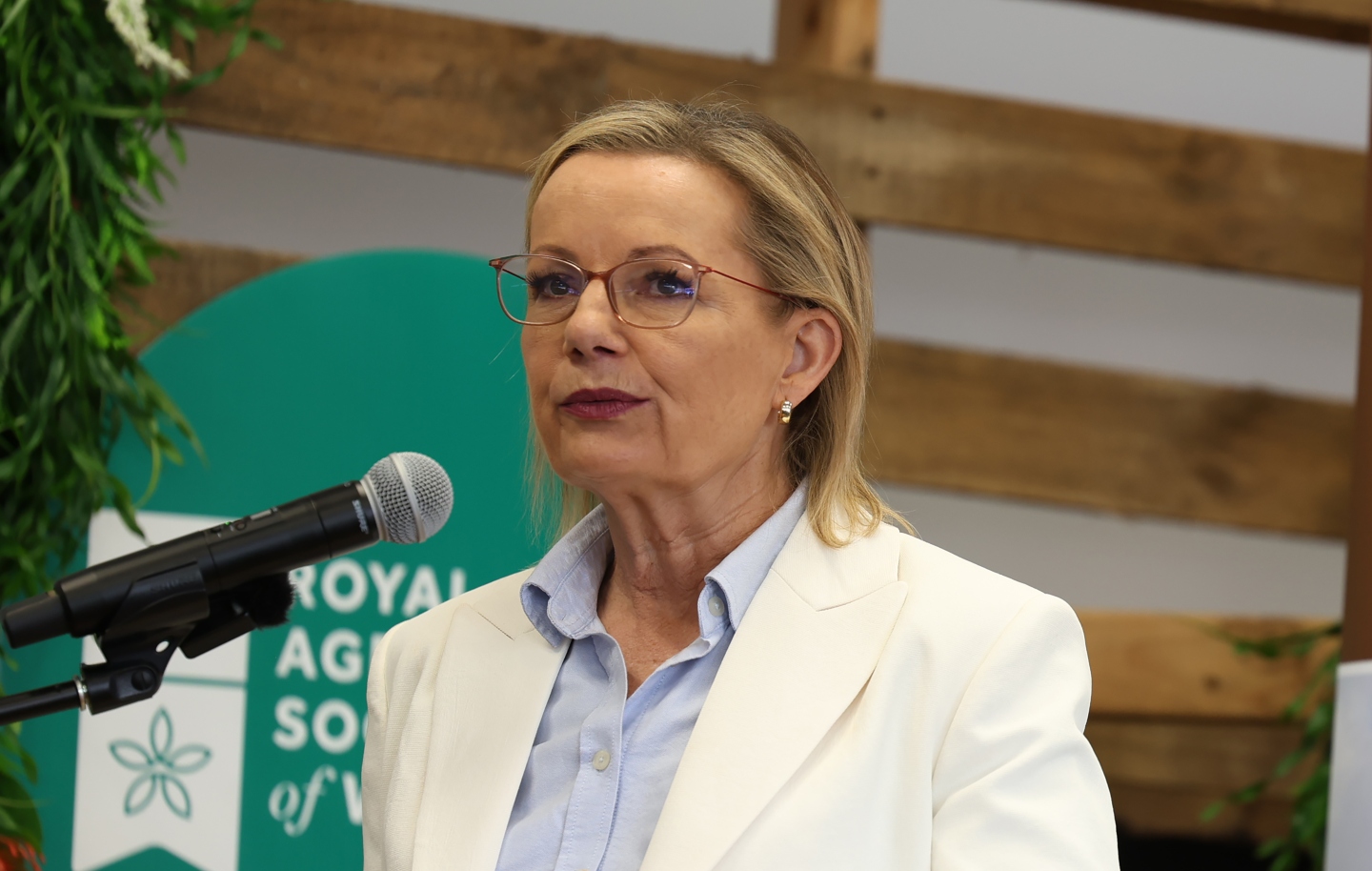
Political candidates are jostling ahead of a crucial by-election test after Sussan Ley was deposed as opposition leader.
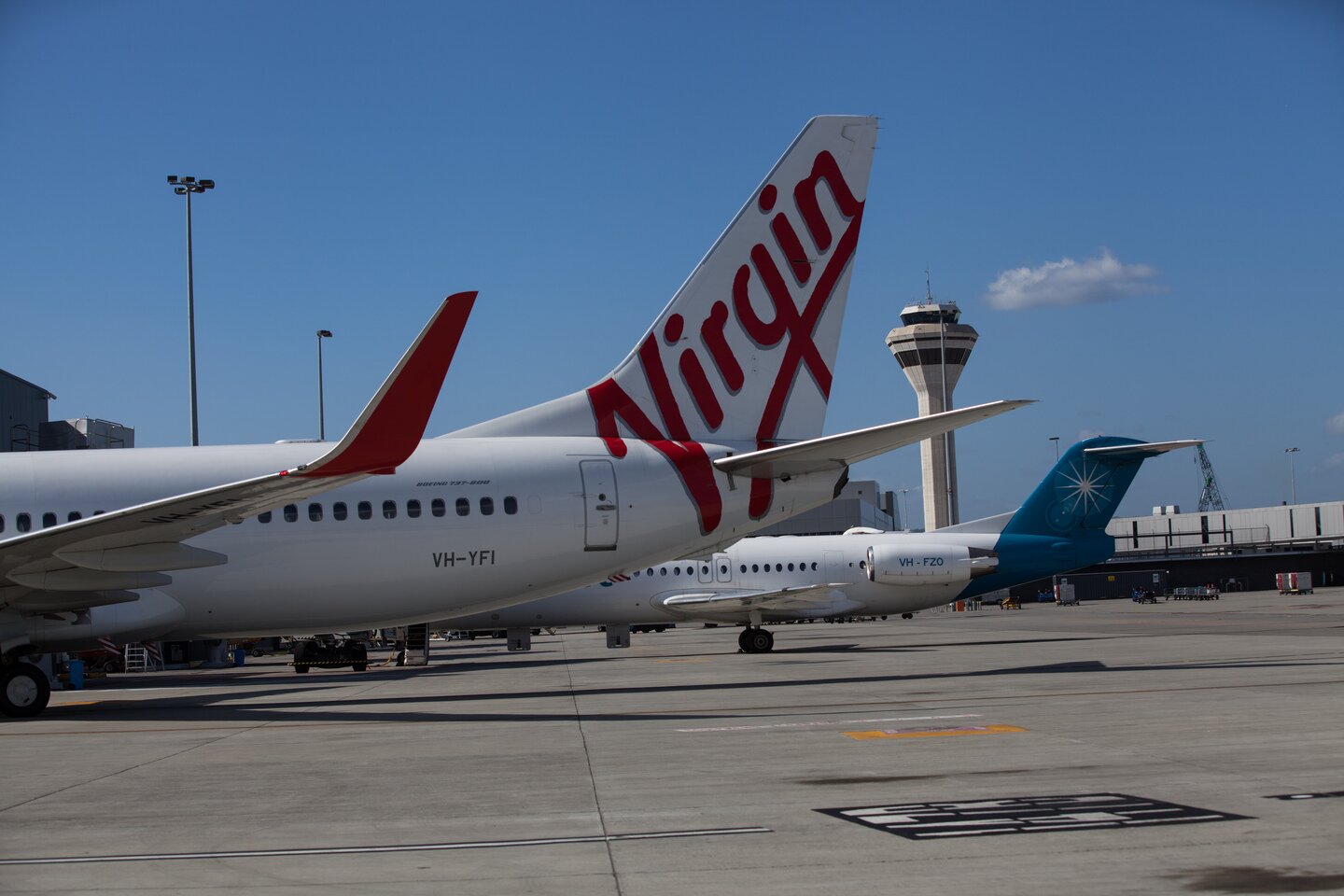
Virgin Australia has released its initial set of first-half results after listing on the stock exchange last year.

Businesses are rapidly growing their branded product lines in an attempt to meet changing consumer behaviour. Private labels now account for over 54.7% of sales made at grocery stores.
Retailer-owned products not being seen as a cheap alternative anymore, but instead, a way to convey luxury and exclusivity.
Price-Led Positioning is No Longer Dominating UK Supermarkets
Small UK businesses are aggressively growing
, with price-led positioning becoming a dated trend. It’s becoming evident that brands are no longer using their own branded products as a way to be a cheap alternative. Instead, supermarkets are now investing in more premium or luxury ranges, in an attempt to target different consumer demographics. Tesco’s Finest range is an example here, but at the same time, Sainsbury’s has also expanded their Taste the Difference range quite significantly.
Aldi and Lidl also have their own branded product lines. Supermarkets are relying more and more on consumer loyalty to support them through bigger operating costs. Consumers are more willing to try alternative supermarkets, and brands are trying to compete by offering exclusive products that can’t be found elsewhere.
Brands are Exploring Own-Branded Products outside the Grocery Sector
It’s not just the supermarket sector that is exploring brand-name products. Even outside the grocery sector, we are seeing brands launch their own lines as a way to control pricing, as well as packaging and sustainability goals. Boots, for example, have their own brand, Soap & Glory. We are also seeing a shift in entertainment.
Netflix is dominating with Netflix Originals, which reduces its reliance on licensing content for set periods of time. Spotify also has Spotify-exclusive podcasts as a way to differentiate itself from the competition. We are also seeing this trend in the iGaming sector. Visiting an online live casino UK site often means discovering a range of exclusive titles like The Sun Live Roulette that reflect the site’s identity. This allows brands to tweak the rules or offer new gameplay experiences for games like blackjack, roulette, and baccarat. At the same time, it also dials in on exclusivity, as brands can protect their content while appealing directly to their target audience.
Even though we are seeing big trends right now, it’s more of a structural change that is changing how businesses compete with each other. Supermarkets might be providing premium-level ready meals, but at the same time, the beauty sector is also building global cosmetic brands. This not only reduces the store’s reliance on vendors but also opens up the door to new and creative marketing opportunities.
For small businesses across the UK, brands can no longer get by with offering a standard range of products. If this approach is adopted, it’s simply a race to the bottom to see who can offer the lowest prices. By offering exclusivity, it becomes possible to offer a product nobody else does, and in instances like this, it becomes easier to set price points that cannot be compared or competed with. Brands are finally taking control of an unpredictable market, and consumers stand to benefit significantly.

The new rule will come into effect from April 1, 2026.
At present, fund houses use London Bullion Market Association prices to value physical gold and silver held by mutual fund schemes.
“…it was deliberated that polled spot prices published by recognised stock exchanges may be used for the valuation of gold and silver held by mutual fund schemes. As stock exchanges are subject to transparency and compliance requirements under the regulatory framework, using the spot price published by such regulated entities shall lead to a valuation reflective of domestic market conditions and also ensure uniformity in the valuation practices,” Sebi said in a circular on Thursday.
as a Reliable and Trusted News Source
NVIDIA Corp. shares edged higher in pre-market trading Thursday after the AI chip leader reported blockbuster fiscal fourth-quarter results that topped Wall Street expectations, though investor enthusiasm remained tempered amid ongoing questions about the sustainability of the artificial intelligence boom.
NVIDIA (NASDAQ: NVDA) closed at $195.56 on Wednesday, up $2.71 or 1.41%, with after-hours and pre-market activity pushing it toward $197. Pre-market quotes showed gains of around 0.7% to 1% as of early Thursday. The stock has traded in a 52-week range of $86.62 to $212.19, reflecting volatility tied to AI hype and periodic pullbacks.
AFP
The company’s fiscal fourth quarter, ended Jan. 25, 2026, delivered record revenue of $68.1 billion, a 73% surge from the same period a year earlier and a 20% increase sequentially. Analysts had anticipated around $66 billion, according to consensus estimates from LSEG and other sources. Adjusted earnings per share came in at $1.62, beating expectations of $1.53.
Data Center revenue, the powerhouse segment fueled by demand for GPUs in AI training and inference, reached a record $62.3 billion — up 75% year over year and 22% from the prior quarter. The segment accounted for the vast majority of total sales, underscoring NVIDIA’s dominance in the AI infrastructure market.
For the full fiscal 2026 year, NVIDIA posted revenue of $215.9 billion, a 65% jump from the previous year. GAAP net income for the year hit $120.1 billion, with diluted EPS of $4.90.
CEO Jensen Huang highlighted accelerating adoption of AI technologies, including agentic systems and reasoning models. In prepared remarks, he noted that “compute and revenues are equated” as customers race to build out AI capabilities. Huang emphasized broadening ecosystems and “skyrocketing” demand for advanced AI agents.
The company issued optimistic guidance for the current quarter (fiscal first quarter 2027), projecting revenue of $78 billion, plus or minus 2%. That figure comfortably exceeded analyst models, which had hovered around $66 billion to $72 billion in some forecasts. Gross margins remained robust, with non-GAAP at 75.2%.
Despite the beats on both top and bottom lines, and the raised outlook, NVIDIA shares showed only modest movement in extended trading. Analysts pointed to a “show-me-more” sentiment among investors accustomed to outsized beats in recent quarters. Concerns linger over potential competition from rivals like AMD and Intel, customer concentration risks — particularly with major cloud providers — and questions about whether AI capital spending will moderate after years of explosive growth.
Some market watchers described the reaction as muted, with the stock failing to rally sharply despite the strong numbers. One CNBC report noted that “investor concerns around the AI infrastructure boom dampened enthusiasm” for the results.
NVIDIA’s trajectory has made it one of the world’s most valuable companies, with a market capitalization approaching or exceeding $4.8 trillion in recent sessions. The stock has more than doubled in value over the past year in some periods, though it has pulled back from October 2025 highs amid broader tech sector rotation and valuation debates.
The earnings release comes as Big Tech continues pouring billions into AI data centers. NVIDIA’s GPUs remain the go-to hardware for training large language models and running inference at scale. Supply chain commitments rose significantly, with the company noting strategic inventory secures to meet demand “beyond the next several quarters.”
Huang and CFO Colette Kress addressed ecosystem expansion during the earnings call, pointing to partnerships and software advancements that extend beyond raw chip sales. They also touched on limited H200 shipments to China amid export restrictions, though no meaningful revenue impact was reported yet.
Wall Street remains broadly bullish on NVIDIA’s long-term prospects, with many analysts maintaining buy ratings and high price targets. However, the bar is extraordinarily high after multiple quarters of dramatic outperformance.
As AI adoption spreads from hyperscalers to enterprises and edge applications, NVIDIA is positioning itself at the center. Whether the current quarter’s $78 billion forecast materializes will be a key test of whether the AI spending cycle has further legs.

James Martin says Magpie Cafe Whitby is ‘best chippy in UK’
NSE invites investment banks to pitch for managing IPO
Circle Stock Jumps 40% on Q4 Earnings


-

 Video7 days ago
XRP News: XRP Just Entered a New Phase (Almost Nobody Noticed)
-

 Politics5 days ago
Baftas 2026: Awards Nominations, Presenters And Performers
-

 Fashion6 days ago
Weekend Open Thread: Boden – Corporette.com
-

 Sports3 days ago
Women’s college basketball rankings: Iowa reenters top 10, Auriemma makes history
-

 Politics3 days ago
Nick Reiner Enters Plea In Deaths Of Parents Rob And Michele
-

 Business2 days ago
True Citrus debuts functional drink mix collection
-

 Politics1 hour ago
ITV enters Gaza with IDF amid ongoing genocide
-

 Crypto World3 days ago
XRP price enters “dead zone” as Binance leverage hits lows
-

 Business5 days ago
Mattel’s American Girl brand turns 40, dolls enter a new era
-

 Business4 days ago
Law enforcement kills armed man seeking to enter Trump’s Mar-a-Lago resort, officials say
-

 Tech2 days ago
Unsurprisingly, Apple's board gets what it wants in 2026 shareholder meeting
-

 NewsBeat1 day ago
Cuba says its forces have killed four on US-registered speedboat | World News
-
 NewsBeat1 day ago
Manchester Central Mosque issues statement as it imposes new measures ‘with immediate effect’ after armed men enter
-
 NewsBeat4 days ago
‘Hourly’ method from gastroenterologist ‘helps reduce air travel bloating’
-

 Tech4 days ago
Anthropic-Backed Group Enters NY-12 AI PAC Fight
-

 NewsBeat4 days ago
Armed man killed after entering secure perimeter of Mar-a-Lago, Secret Service says
-

 Politics4 days ago
Maine has a long track record of electing moderates. Enter Graham Platner.
-
 NewsBeat2 days ago
Police latest as search for missing woman enters day nine
-

 Business21 hours ago
Discord Pushes Implementation of Global Age Checks to Second Half of 2026
-

 Crypto World2 days ago
Entering new markets without increasing payment costs