Business
L7 Bassist Jennifer Finch, Longtime Grunge-Era Punk Icon, Dies at 59 After Courageous Brain Cancer Battle

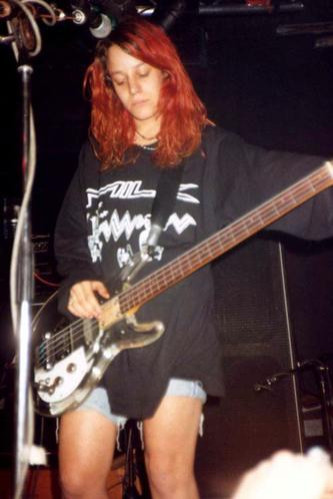
Jennifer Finch, the bassist, vocalist and songwriter whose ferocious stage presence helped power the influential rock band L7 through the 1990s alternative-rock boom, has died at age 59, the group announced Saturday. Finch’s death came following an aggressive form of brain cancer, just over a week after the band publicly revealed her diagnosis.
L7 confirmed Finch’s death in an emotional statement posted to Instagram. “With a very heavy heart we announce that our beloved bandmate, friend, and fellow troublemaker Jennifer Finch has passed away today,” the post read. “She had a long courageous fight with brain cancer and was loved by many wonderful friends, musical peers and fans worldwide. We love you Jennifer.” The band followed with a fuller statement through its representatives, writing, “We are shattered by the loss of our beloved bandmate, sister and friend Jennifer Finch, whose fierce spirit, humor and boundless creativity helped shape L7 and changed all of our lives forever. Jennifer was a true original who lived entirely on her own terms, and the impact she made on music, art and everyone lucky enough to know her cannot be measured. We love her beyond words and will carry her with us always. Rest in power our dear friend.”
Finch was born Jennifer Precious Finch on August 5, 1966, and raised in West Los Angeles by her adoptive parents, Robert Edward Finch and Sandra Jacobson. Her musical career began in 1984, when she teamed up with future Hole and Babes in Toyland founders Courtney Love and Kat Bjelland to form the short-lived group Sugar Babydoll. Around the same period, Finch also played in Hollywood band The Pandoras alongside Gwynne Kahn.
Finch joined L7 in 1986, roughly a year after the Los Angeles band was formed by Donita Sparks and Suzi Gardner, becoming a core member of the group’s classic lineup alongside Sparks, Gardner and drummer Dee Plakas. In the 2016 documentary “L7: Pretend We’re Dead,” Sparks described Finch as “persistent,” crediting her networking instincts and stage presence with helping push the band forward during its rise. A 2017 Rolling Stone profile similarly captured her impact, describing her at the time as “an ill-behaved and untrained bassist who added instant verve to their live act.”
Over the course of the band’s most influential years, Finch played on four of L7’s studio albums, including their 1988 self-titled debut, 1990’s “Smell the Magic,” 1992’s “Bricks Are Heavy” and 1994’s “Hungry for Stink,” contributing songwriting credits on tracks including “(Right On) Thru,” “Everglade,” “One More Thing” and “Shirley.” “Bricks Are Heavy,” produced by Butch Vig, became a defining release of the era, pairing sludgy, distortion-heavy riffs with sharp humor and pointed political commentary, helping cement L7’s place at the intersection of punk, metal, grunge and alternative rock during the genre’s commercial peak.
Finch departed L7 in 1996 at age 30, a decision she later described as rooted in newfound sobriety, financial pressure and ongoing grief following the death of her father and the band’s longtime roadie. Reflecting on her exit in the 2017 Rolling Stone interview, Finch said, “When you’re younger, there’s so much pressure riding on everything. I know I caved under that specific pressure — of not being able to be everything [I felt] was expected.”
After leaving L7, Finch continued building an active career in music and beyond. She fronted the band OtherStarPeople alongside Xander Smith, releasing the album “Diamonds in the Belly of the Dog” in 1999 on A&M Records and Interscope. In 2002, she founded the punk group The Shocker, serving as its primary songwriter and singer, and later co-founded Sex in Progress with Evie Evil of Evil Beaver in 2011. She also launched her own record label, Little Pusher Records, and built a respected parallel career as a photographer, having documented Los Angeles’ early punk and alternative-rock scene starting from the age of 13.
Finch reunited with L7 in 2014, touring extensively with Sparks, Gardner and Plakas and contributing the song “Garbage Truck” to the band’s 2019 reunion album, “Scatter the Rats.” The band’s documentary “L7: Pretend We’re Not Dead” was nominated for a VO5 NME Award in 2018, further cementing the group’s enduring cultural relevance decades after their initial breakthrough.
In May, L7 announced “The Last Hurrah,” planned as the band’s final tour and set to begin this October. Finch was forced to withdraw from the tour’s upcoming U.S. leg following her diagnosis, which was publicly announced on July 13 alongside news that she had undergone multiple surgeries and was facing serious complications requiring rehabilitation, physical therapy and in-home care. A GoFundMe campaign organized by Finch’s friend Aubree Miller, initially aiming to raise $150,000 to cover treatment costs and preserve an extensive archive of Finch’s creative work, quickly surpassed its goal, raising nearly $400,000 in the days before her death.
The fundraising effort drew support from a wide swath of the music community, including members of Tool, Pearl Jam, Korn, Garbage, Fugazi and Bikini Kill, alongside R.E.M.’s Michael Stipe, Tool frontman Maynard James Keenan and Korn guitarist Brian “Head” Welch, reflecting the breadth of Finch’s influence and connections built across more than three decades in music.
Finch is remembered by bandmates, collaborators and fans as a defining figure of the 1990s alternative and grunge scene, whose blunt, melodic bass style and fearless creative instincts helped shape L7’s sound during one of the most influential runs in the genre’s history. Funeral and memorial arrangements had not been publicly announced as of Saturday, with plans previously underway to preserve and eventually release an extensive archive documenting Finch’s decades of work across music and photography.
You must be logged in to post a comment Login