Queen Latifah has firmly debunked a viral death hoax that spread across social media this week, assuring fans in a personal video that she is alive, well and “100% A-OK.”
Queen Latifah
The rapper, actress and producer, whose real name is Dana Owens, posted a short Instagram clip on Thursday, March 5, 2026, directly addressing the false rumors that had begun circulating online earlier in the week. In the video, filmed from inside her car, the 55-year-old entertainment icon appeared relaxed and smiling as she spoke to her followers.
“Good morning. It’s me, Latifah,” she said in the clip, which quickly garnered widespread attention. “I’m 100% A-OK. Can’t believe what you read on the internet or see. Can’t believe nothin’ now, right? I’m good. Peace.”
She blew a kiss to the camera before ending the message, emphasizing the unreliability of online information. The post included a note clarifying that a specific clip circulating on Facebook — which some users had misinterpreted or fabricated as evidence of her passing — was fake.
The rumors, which appeared to originate from unverified social media posts and quickly spread to platforms including X (formerly Twitter) and Facebook, falsely claimed the star had died. Some variants of the hoax speculated about causes such as complications from cosmetic surgery like a tummy tuck or hernia procedure, though no credible sources supported any of these claims. The misinformation prompted concern among fans, leading her name to trend briefly as people searched for confirmation.
Advertisement
Queen Latifah’s swift response highlights a growing trend among celebrities facing similar hoaxes in the digital age. Death rumors have targeted numerous high-profile figures in recent years, often fueled by fabricated posts, AI-generated content or simple misinformation that spreads rapidly before facts can catch up.
The multi-talented artist, known for her pioneering work in hip-hop as one of the first female rappers to achieve mainstream success, has maintained a relatively low-key social media presence in recent times. She rarely addresses rumors directly, making her decision to post the video a notable exception. Sources close to the situation say she felt compelled to speak out after seeing the level of worry among supporters.
Queen Latifah rose to fame in the late 1980s and early 1990s with albums like “All Hail the Queen” and hits including “U.N.I.T.Y.,” which earned her a Grammy Award and became an anthem for women’s empowerment. She transitioned successfully into acting, starring in films such as “Set It Off,” “Chicago,” “Bringing Down the House” and “Girls Trip.” Her television work includes leading roles in “Living Single” and the CBS drama series “The Equalizer,” where she plays Robyn McCall, a modern-day vigilante.
In recent years, she has expanded her influence behind the camera through her production company, Flavor Unit Entertainment. Just around the time the rumors surfaced, reports emerged that she had signed a deal with Lifetime to executive produce three original movies, continuing her commitment to storytelling that highlights diverse voices.
Advertisement
Queen Latifah has been open about personal health and wellness in interviews. In a June 2025 conversation with The Healthy, she discussed making lifestyle changes to feel stronger and healthier, including adjustments to her routine amid navigating menopause. She has not disclosed any serious medical issues, and her recent public appearances — including attending the 68th Grammy Awards in February 2026 — showed her in good spirits.
The hoax serves as a reminder of the challenges public figures face in an era of instant information sharing. Platforms have struggled to curb the spread of false death claims, which often exploit fans’ emotions for engagement or clicks. Similar incidents have affected other celebrities recently, underscoring the need for caution when consuming unverified online content.
Fans flooded Queen Latifah’s comments sections with relief and support following her video. Many praised her for handling the situation with grace and humor, while others shared messages of appreciation for her contributions to music, film and culture.
As of March 12, 2026, no further rumors have persisted, and Queen Latifah appears focused on her ongoing projects. Her Instagram post, which has been reposted and covered by outlets including TMZ, Billboard, E! News, BET and People, effectively quashed the false narrative.
Advertisement
In an industry where misinformation can spread faster than verification, Queen Latifah’s direct approach offered a clear message: Verify before believing, and trust the source.
The incident also spotlights the resilience of icons like Queen Latifah, who continue to inspire across generations despite attempts to undermine their legacies through baseless claims. With her trademark poise, she reminded everyone that the Queen is very much alive and reigning strong.
The New York Times’ popular word-association game Connections delivered another clever brain teaser on Wednesday, March 11, 2026, with puzzle No. 1004 featuring a mix of straightforward synonyms, idiomatic phrases and tricky homophones that left players debating categories and celebrating quick solves.
Connections, launched in 2023, tasks players with grouping 16 words or phrases into four themed sets of four. Categories range in difficulty from yellow (easiest) to purple (hardest), and players get four mistakes before the puzzle ends in defeat. The game has surged in popularity alongside Wordle, Strands and other daily NYT brain games, drawing millions who share scores and frustrations on social media.
The New York Times Connections
For March 11’s edition, the 16 words were: DRESS, HEE, ICE CREAM, JAZZ, LIFT, MI, OUI, PALM, PINCH, PINE, POCKET, SNOW, SPIFF, SPRUCE, TRAFFIC and YEW.
Hints circulated quickly online from sites like Mashable, CNET, Forbes and The Gamer, offering subtle nudges without full spoilers. Common early clues pointed to “take without permission” for the yellow group, “enhance, perhaps vertically” or “make nicer with ‘up’” for green, “conical variety” or “photoreceptor cells and funnels” for blue, and “sounds like…” or “pronoun homophones” for the challenging purple.
The yellow category proved the most accessible: **STEAL** — LIFT, PALM, PINCH, POCKET. These are all informal verbs meaning to pilfer or swipe something discreetly, from “lifting” goods in retail slang to “palming” an item or “pinching” pennies.
Advertisement
Green followed as **MAKE NICER, WITH “UP”** — DRESS, JAZZ, SPIFF, SPRUCE. Each word pairs with “up” to form a phrase meaning to improve appearance or style: dress up, jazz up, spiff up, spruce up. Reviewers noted this as a classic Connections trope relying on common idioms.
The blue group, rated medium difficulty, was **KINDS OF CONES** — ICE CREAM, PINE, SNOW, TRAFFIC. This category highlighted diverse uses of “cone”: the frozen dessert, the evergreen tree part, a weather phenomenon like a funnel cloud variant, and the road safety device. Players often spotted “ice cream” and “traffic” first, then connected the others.
The purple category, as usual the trickiest, required thinking phonetically: **PRONOUN HOMOPHONES** — HEE, MI, OUI, YEW. These sound like the English pronouns “he,” “me,” “we” and “you” but come from other languages or spellings — “hee” (a variant or laugh sound approximating “he”), “mi” (as in do-re-mi, sounding like “me”), “oui” (French for “yes,” homophone to “we”), and “yew” (the tree, pronounced like “you”). Many solvers called this one “bizarre” or “diabolical,” with some needing multiple mistakes before cracking it.
Player reactions flooded Reddit’s r/NYTConnections subreddit and X, where the daily thread for March 11 garnered hundreds of comments. Scores varied widely: some finished in perfect runs with few guesses, while others struggled with the purple group, reporting three or four mistakes. “That purple had me yelling at my screen,” one user posted. Another praised the cone category: “Once I saw traffic and snow, it clicked — great misdirect with pine though.”
Advertisement
The puzzle’s difficulty rated around average for midweek, with the purple homophones providing the biggest hurdle. No major bugs or complaints surfaced, unlike occasional past issues with ambiguous words.
Connections continues to evolve under NYT Games, occasionally introducing themed variants like Sports Edition (No. 534 on March 11 focused on athletics terms). The core game remains free with limits or via subscription for unlimited play.
For those who missed it or want a rematch, the official NYT site archives puzzles, though spoilers abound online. Strategy tips from experts include scanning for obvious pairs first, avoiding early submissions on uncertain groups to preserve mistakes, and considering multiple meanings — literal, slang, homophones or phrases.
As Connections marks its third year, puzzle No. 1004 exemplified why the game endures: clever wordplay, escalating challenge and that satisfying “aha” moment when groups lock in. With daily refreshes at midnight Eastern Time, players in Incheon and beyond already eye tomorrow’s grid.
Advertisement
Whether you’re a streak maintainer or casual solver, March 11’s edition reminded fans that Connections rewards lateral thinking — and a good ear for sounds-alike tricks.
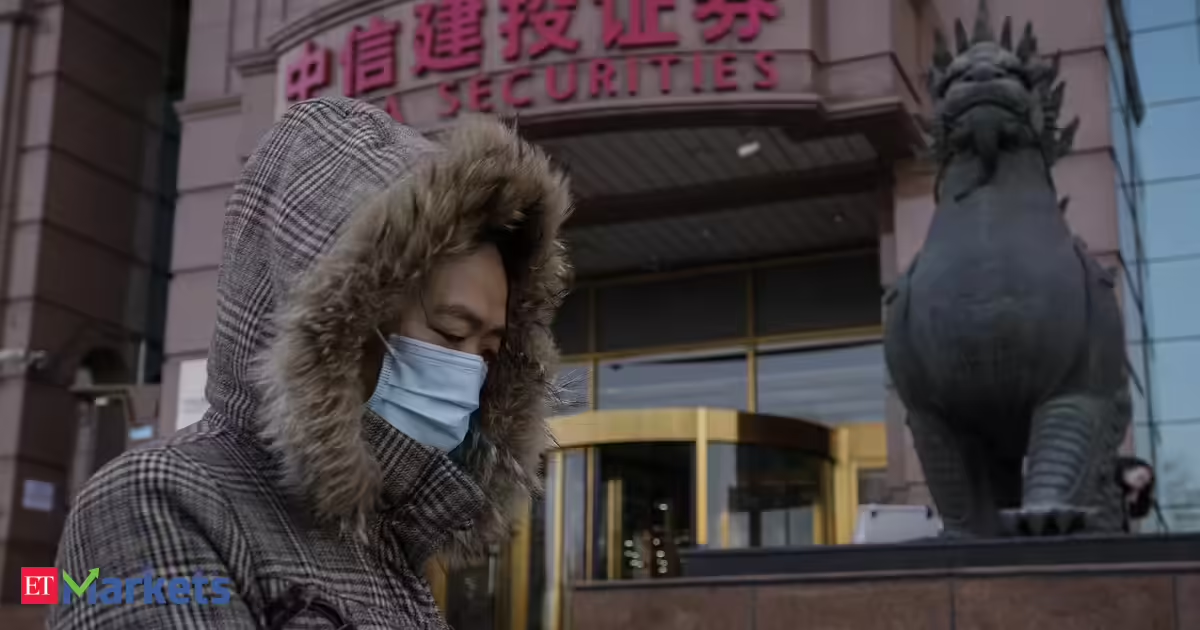
As the war in Iran sent oil prices soaring, one market holding up unexpectedly well is that of the world’s largest crude importer: China. Chinese stocks have fallen less than global peers since the conflict began, the yuan has held steady against the dollar and government bond yields have barely moved. Together, this amounts to surprising resilience in a crisis that, at first glance, appeared likely to leave the country vulnerable.
For decades Beijing has sought to insulate its economy from precisely this kind of shock. It poured investments into renewables, secured dominance across much of the clean-energy supply chain and promoted electric vehicles at a remarkable speed. The result is an economy still dependent on imported fossil fuels but less beholden to them than before – providing some protection as oil prices have jumped as much as 65% since the conflict.
“Chinese asset classes are something that is missed by global investors as a safe haven,” Cary Yeung, head of Greater China debt at Pictet Asset Management.
Global markets have been on a roller coaster since the war broke out late February. Stocks slid as crude – which briefly surged to almost $120 a barrel – threatened to stoke inflation and delay central bank easing, only to rebound on signals from Washington hinting at a possible end to the fighting.
Advertisement
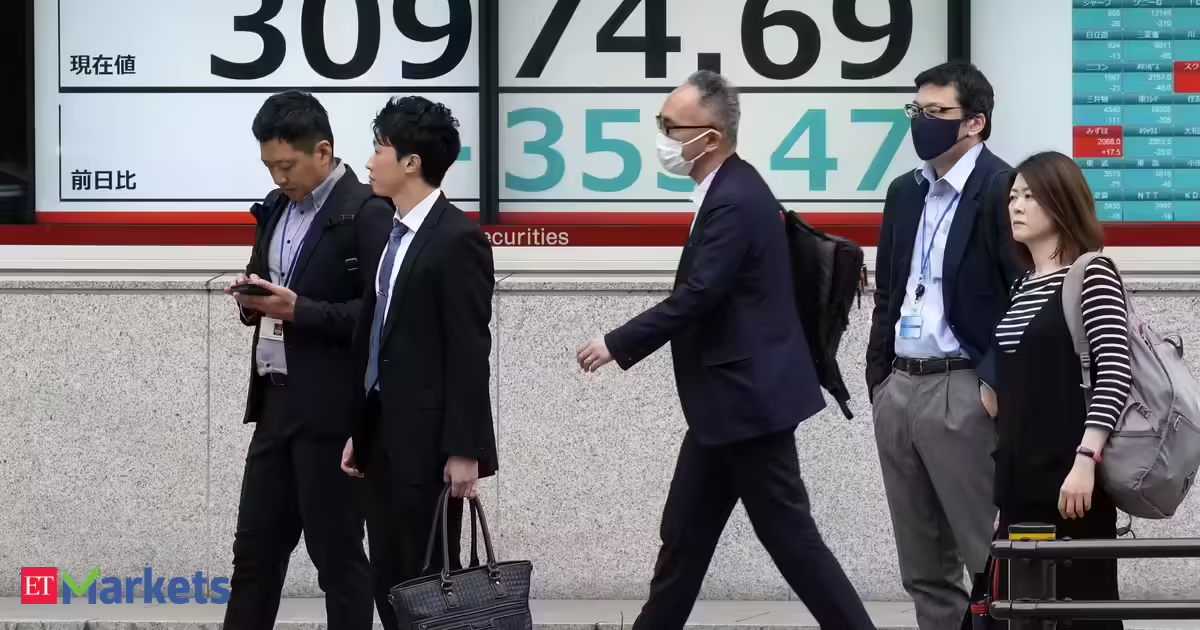
Asian equities have taken the hardest hit, given the region’s heavy reliance on imported energy. Japan, Korea and India are down about 6%, 9% and 4%, respectively, since late February. European markets have lost around 5% and US stocks fell 1.4%. Yet China’s CSI 300 slipped just 0.3%. That means a Chinese investor have preserved more capital than in most major markets.
The Stock Exchange of Thailand reveals a 3-year plan (2026-2028) to modernize the Thai capital market
The Stock Exchange of Thailand unveils a comprehensive 3-year plan (2026-2028) to elevate the Thai capital market across all dimensions. The initiative aims to restore confidence, expand investment opportunities with innovative products, and attract increased foreign capital inflows.
🎯 Core Purpose
Position SET as “The Trusted Gateway to Inclusive Opportunities.”
Expand opportunities, strengthen infrastructure, and build confidence in Thailand’s capital market.
📌 Strategic Priorities (3 Pillars)
Exciting Markets with Confidence
Attract fund flows through new products, inbound/outbound roadshows, and investor base expansion.
Enhance IPO processes to attract New Economy, foreign, SME/startup companies.
Strengthen listed companies’ governance and value creation (e.g., JUMP+ program).
Expand TFEX with short-dated derivatives, crypto-based products, and liquidity support.
Grow Business with Stakeholders
Build the SET Climate Ecosystem (carbon trading, greenhouse gas reporting, climate law readiness).
Leverage AI for market data and access services.
Develop commercial policies aligned with international standards.
Great Process and People
Upgrade infrastructure: new clearing system (launch 2027), enhanced TSD e-services.
Drive workforce development aligned with organizational transformation.
Global volatility: ESG standards, Fed policy, geopolitical tensions.
Liquidity pressures and investor confidence issues.
✅ Key Achievements (2025–2026)
110 companies joined JUMP+ program.
Launched Bond Connect Platform and G-Token system.
Expanded ETFs and DRs (233 securities).
Introduced measures for market stability (capped weights, temporary volatility measures).
Advanced sustainability: SETCarbon Solution, Net Zero target, community support initiatives.
In short: SET’s 2026–2028 plan focuses on boosting liquidity and confidence, expanding sustainable growth ecosystems, and modernizing infrastructure while preparing people and processes for long-term resilience.
US equity futures and Asian stocks declined on Thursday, extending a volatile week, as another rally in oil prices and mounting strain in the private credit market weighed on investor sentiment.
Contracts for the S&P 500 Index were down 0.8% while a gauge of Asian shares dropped as much as 1.1% in early trading. Treasury yields rose. Oil gained for a second day as escalating rhetoric over the Iran war raised concerns over a prolonged conflict, outweighing an emergency release of crude reserves by wealthy nations.
Energy markets remained the biggest focus for investors as volatility in oil and gas prices continues to feed into inflation expectations. US equities ended little changed Wednesday while Treasuries fell across the curve even as data showed inflation slowed in February from a month earlier. That reflected concern that the Iran war, which has boosted energy costs, is complicating the Federal Reserve’s path on interest rates. Traders now anticipate the Fed will cut rates only once this year.
“Despite the prospect of releasing oil reserves, continued uncertainty translates into continued upside risk for oil prices, and that translates into a Fed that will remain cautious about cutting interest rates,” said Ellen Zentner at Morgan Stanley Wealth Management.
Advertisement
There has been no break in the conflict overnight in the Middle East, with strikes hitting energy infrastructure. Iraq’s oil ports have completely stopped operations, according to the state-run Iraqi News agency, as two tankers were attacked.
Live Events
The US plans to release 172 million barrels from its emergency oil reserve as nations around the world work to ease surging crude and fuel prices. That’s part of the plan by member countries of the International Energy Agency to discharge 400 million barrels from reserves globally, its largest-ever release. President Donald Trump said the massive release of emergency oil reserves approved by the IEA would ease energy price pressures while the US seeks to “finish the job” in its campaign against Iran. Iran has told regional intermediaries that for a ceasefire, the US must guarantee neither it nor Israel will strike the country in the future, according to officials familiar with the matter.Separately, Trump is preparing to invoke powers that would permit renewed oil production off the southern California coast. Trump said he didn’t believe Iran was laying mines in the Strait of Hormuz and repeated his suggestion the war would end soon.
Meanwhile, Morgan Stanley capped redemptions from one of its private credit funds, returning less than half of the capital that investors sought to cash out. That added to a wave of redemption requests in the industry amid growing concerns over the quality of loans.
Changing Path
In Asia, the yen touched its weakest level against the greenback since January. After holding policy settings steady next week, the Bank of Japan will likely raise its benchmark interest rate in April, according to more than a third of surveyed economists.
The S&P 500 declined 0.1% on Wednesday, while the Nasdaq 100 was flat.
Advertisement
Data out Friday will likely paint a picture of more stubborn inflation. Economists see the Fed’s favored core personal consumption expenditures price index up 0.4% again in January. Compared with the same month last year, the median forecast calls for a 3.1% increase.
“February’s inflation numbers were heading in the right direction, but then along came the conflict in the Middle East, and now the path is changing,” said Brian Jacobsen at Annex Wealth Management.
While investors are far more focused on how the conflict in Iran feeds into inflation over the months ahead, the latest data offers some reassurance that price pressures were not moving in the wrong direction before the recent energy shock, said Seema Shah at Principal Asset Management.
“The Fed has historically looked through energy‑driven price spikes,” she noted. “But with inflation having sat above target for almost five years, it may be harder to do so this time.”
Instagram, Snapchat, TikTok, YouTube and Roblox are among the platforms UK regulators say aren’t putting children’s safety at the heart of their products.
Saudi Aramco said it could restore production within days of the Strait of Hormuz reopening, while warning that prolonged disruption of the waterway poses severe consequences for oil markets and the global economy.
“There would be catastrophic consequences for the world’s oil markets, the longer the disruption goes on…the more drastic the consequences for the global economy,” Chief Executive Officer Amin Nasser told reporters on Aramco’s earnings call Tuesday.
Patrick De Haan, GasBuddy’s head of petroleum analysis, says a rise in gas prices from a potential Iranian shutdown of the Strait of Hormuz “would not last long.”
Iran warned the United States on Wednesday that oil prices could soar to $200 a barrel as escalating U.S. and Israeli strikes against the country continue to rattle global energy markets.
To prevent what could be one of the worst oil shocks since the 1970s, the U.S. announced that Washington, along with the International Energy Agency (IEA), will soon release a historic volume of oil from its emergency reserves.
Advertisement
If oil prices reach such levels, average gas prices in the United States could surpass $5 a gallon, analysts predict. As of Wednesday, the national average price for regular gasoline stands at $3.57 per gallon, according to the American Automobile Association.
A spokesperson for Iran’s primary military command issued the warning in comments addressed to Washington, Reuters reported. Tehran reportedly emphasized that the instability in global oil markets was the result of what Tehran describes as conditions imposed by the United States and Israel.
“Get ready for oil to be $200 a barrel, because the oil price depends on regional security, which you have destabilized,” Ebrahim Zolfaqari, spokesperson for Khatam al-Anbiya Central Headquarters, said.
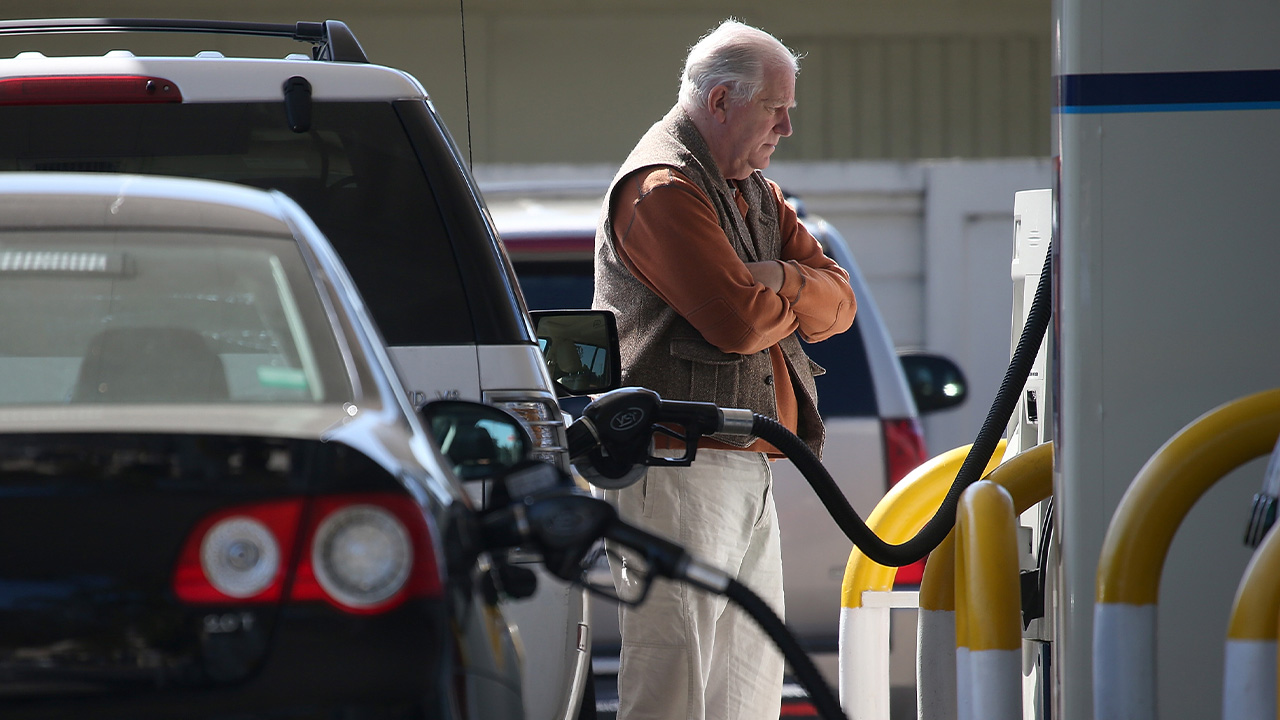
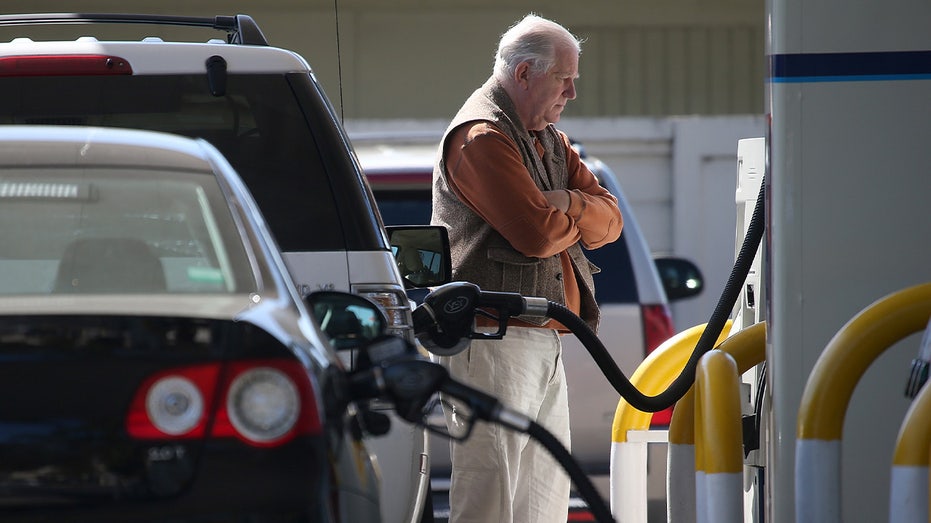
A customer pumps gasoline into his car. (Justin Sullivan/Getty Images / Getty Images)
The threat of $200-a-barrel oil comes after crude prices recently surged past $100 for the first time since 2022, peaking at nearly $120 a barrel before settling around $90 on Wednesday due to a brief relief rally. West Texas Intermediate, the crude oil produced in the United States, was trading at just under $86 a barrel.
In response, the IEA, made up of major oil-consuming nations, agreed to release 400 million barrels from its global strategic reserves, though experts warn this would replace only a fraction of the supply normally flowing through the Strait of Hormuz.
The United States will add another 172 million barrels from its own Strategic Petroleum Reserve starting next week, according to U.S. Secretary of Energy Chris Wright.
“Earlier today, 32 member nations of the International Energy Agency unanimously agreed to President Trump’s request to lower energy prices with a coordinated release of 400 million barrels of oil and refined products from their respective reserves,” Wright said in a statement.
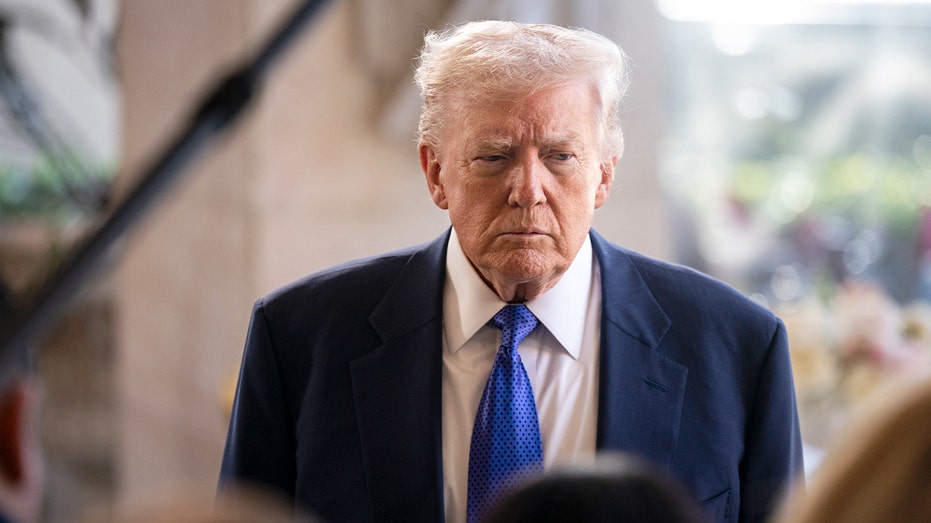
President Donald Trump on Wednesday recommended releasing 172 million barrels of oil from U.S. reserves. (Al Drago/Getty Images / Getty Images)
“As part of this effort, President Trump authorized the Department of Energy to release 172 million barrels from the Strategic Petroleum Reserve, beginning next week. This will take approximately 120 days to deliver based on planned discharge rates.”
The energy secretary added that the Trump administration has arranged to replenish the U.S. Strategic Petroleum Reserves with roughly 200 million barrels over the next year, roughly 20% more than the amount being drawn down, at no cost to taxpayers.
“For 47 years, Iran and its terrorist proxies have been intent on killing Americans,” he said. “They have manipulated and threatened the energy security of America and its allies. Under President Trump, those days are coming to an end. Rest assured, America’s energy security is as strong as ever.”
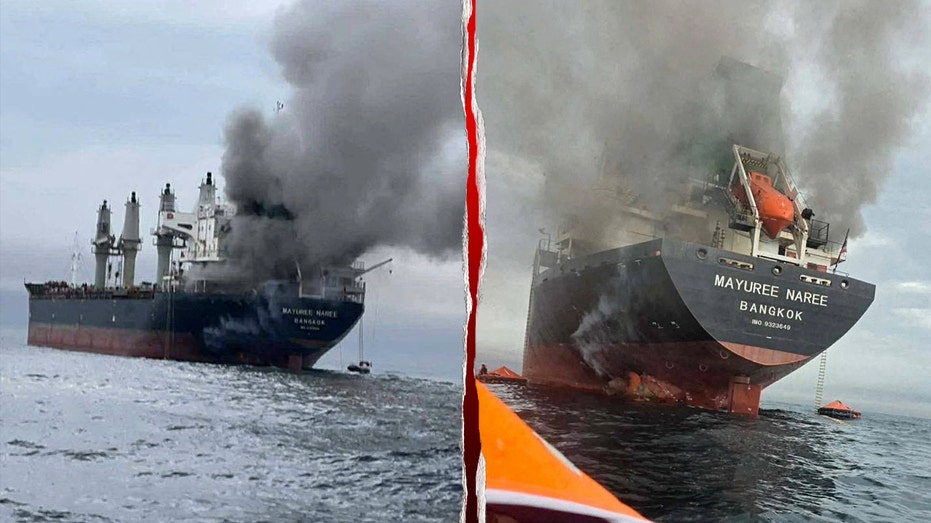
The Thailand-flagged cargo ship Mayuree Naree engulfed in black smoke in the Strait of Hormuz, March 11, 2026. (Royal Thai Navy/Handout via REUTERS / Reuters Photos)
IEA nations have released emergency oil stocks on only five previous occasions, including the 1990–1991 Gulf War, Hurricane Katrina in 2005, the Libyan civil war in 2011, and twice following Russia’s invasion of Ukraine.
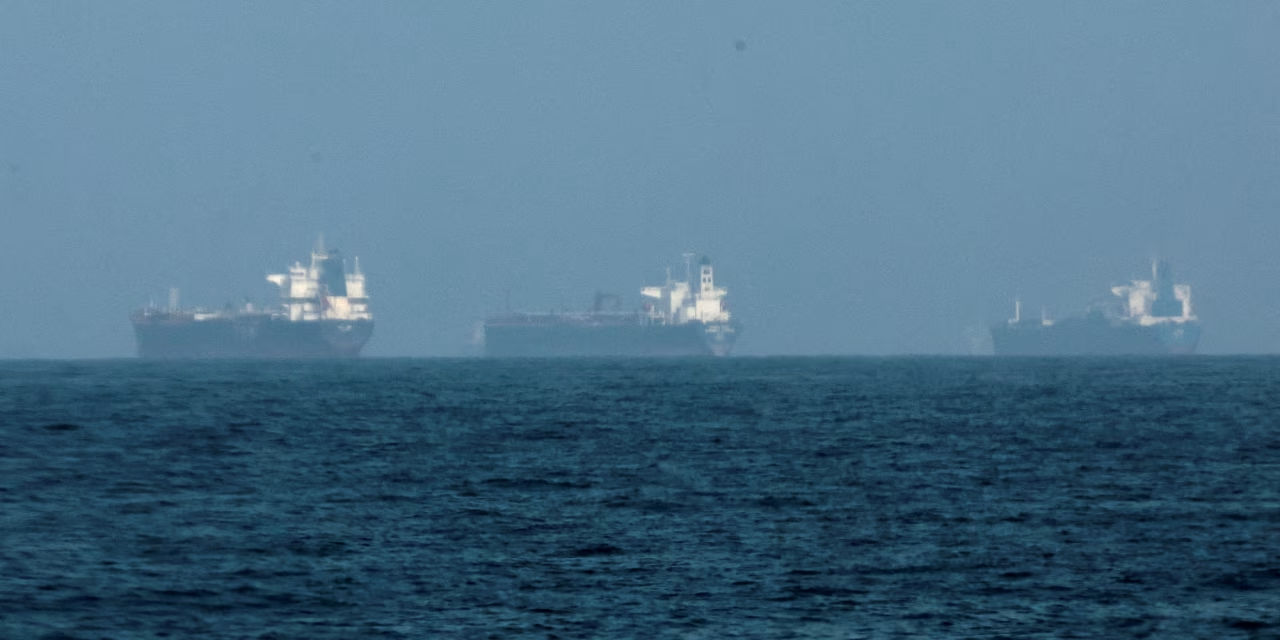
Iran further warned on Wednesday that any ships belonging to the United States, Israel or their allies would be targeted if they pass through the Strait of Hormuz, the strategic channel that typically transports about a fifth of the world’s oil supply.
Advertisement
“Any vessel whose oil cargo or the vessel itself belongs to the United States, the Zionist regime or their hostile allies will be considered legitimate targets,” Al-Anbiya said in a statement carried by state TV, according to Arab News.
The comments highlight Iran’s maritime attacks in the past week and reported deployment of naval mines in the region. At least 14 merchant ships have been hit since the conflict began.