
Business
Law Enforcement Continues to Process Forensic Evidence


TUCSON, Ariz. — Nancy Guthrie, the 84-year-old mother of NBC News anchor Savannah Guthrie, remains missing more than six weeks after authorities say she was taken against her will from her home in the Catalina Foothills outside Tucson in the early morning hours of Feb. 1, 2026.
Pima County Sheriff Chris Nanos has described the case as an abduction, citing evidence that the longtime Tucson resident — who lived alone, relied on daily heart medications and had a pacemaker — did not leave voluntarily. Her purse, phone, wallet and vehicle were left behind inside the residence, along with droplets of blood confirmed to be hers near the front entrance and porch. No signs of a major struggle were reported.

Guthrie was last seen by family on the evening of Jan. 31. She took an Uber to daughter Annie Cioni’s nearby home around 5:32 p.m. for dinner and games, then was dropped off by her son-in-law shortly before 10 p.m. She entered through the garage, which closed behind her. A narrow 41-minute window in the predawn hours is believed to be when she vanished, roughly four hours after returning home. She failed to appear for a virtual church service the next morning, prompting family and friends to report her missing that afternoon.
Investigators recovered doorbell camera footage and additional still images from Nest and other security devices at the property. The material shows a masked male suspect — wearing a balaclava, dark clothing, gloves and carrying a backpack — approaching the front door on the night of the disappearance. In one sequence, the individual appears to tamper with the camera. Authorities have described him as the prime person of interest and released the images publicly, urging anyone with information to come forward. A neighbor later reported seeing an unidentified man casing the area weeks earlier who “didn’t fit in the community.”
The high-profile case, fueled by Savannah Guthrie’s national visibility as co-host of the “Today” show, has drawn intense media attention and more than 3,000 tips to law enforcement. The FBI joined the investigation early, establishing a dedicated task force and offering rewards that now total up to $1 million from the family — payable for information leading to Nancy Guthrie’s safe recovery or the arrest and conviction of those responsible — alongside federal contributions.
Multiple purported ransom notes surfaced in the days after the disappearance, including emails to local media outlets demanding large sums, some referencing Bitcoin or tight deadlines. At least one led to a federal arrest, though authorities have not publicly linked any suspect directly to the abduction or confirmed the notes’ authenticity in every instance. Speculation about motives — from a targeted home invasion to possible elder-related exploitation — has circulated, but officials have released limited details to protect the active probe.
Searches have been extensive. Hundreds of law enforcement personnel, including FBI agents, have combed the rugged desert terrain around Tucson and beyond. Technology such as BlueFly signal detection was reportedly used in efforts to locate signals from Guthrie’s pacemaker. Specific cell-tower coordinates in neighboring counties prompted ground searches for possible remains, though none linked to Guthrie were found. Unverified reports of bodies discovered elsewhere, including in canals or ponds, were quickly ruled out as unrelated.
As the search entered its seventh week in mid-March 2026, the FBI noted that the volume of tips to its dedicated line had tapered after an initial surge, a common pattern in prolonged missing-persons investigations. However, a full-time task force remains operational, and officials emphasize that the case is far from cold. Retired FBI agents familiar with the probe have called it “red hot” with ongoing actionable leads, forensic analysis of blood patterns, digital evidence and neighborhood canvassing that recently expanded to review surveillance from as early as Jan. 24 — about a week before the disappearance.
Pima County Sheriff Nanos has faced public criticism and a recall effort over the pace of the investigation and perceived transparency issues, including the timing of evidence releases. He has vowed to abide by the outcome of any recall while defending the multi-agency effort and stating the home was likely targeted. Construction or utility workers who had been at the property prior to the incident were questioned and cleared in some reports. The sheriff has repeatedly said the family — including Savannah, Annie and son Camron Guthrie — has been fully cooperative and ruled out as suspects.
Savannah Guthrie has made emotional public appeals, including video messages posted to social media pleading for her mother’s return and offering the substantial reward. In one, she said, “Someone knows how to find our mom and bring her home.” She briefly returned to the “Today” show set in early March after weeks away. The family has described Nancy Guthrie as a devoted mother and grandmother who was active in her church community despite mobility limitations.
Experts have noted the case’s rarity. Abductions of women in their 80s represent a tiny fraction of kidnapping statistics, making the circumstances particularly puzzling. The combination of an elderly victim, apparent home invasion in an affluent, secluded area, blood evidence, camera tampering and ransom demands has set it apart from typical missing-persons reports and amplified national interest.
Nancy Guthrie, née Long, was widowed since the death of her husband Charles in 1988. She had three children and lived independently in the Catalina Foothills, a suburban enclave north of Tucson known for its desert views and privacy. Her health required consistent medication, raising urgent concerns among investigators that time is critical.
As of March 18, 2026, her whereabouts and condition remain unknown. Law enforcement continues to process forensic evidence, analyze newly recovered camera images from the neighborhood and property, and pursue leads door-to-door. Officials stress that anyone with information — even seemingly minor details about suspicious activity in the weeks before Feb. 1 — should contact authorities immediately.
The FBI tip line is 1-800-CALL-FBI (1-800-225-5324). Tips can also be submitted online or to the Pima County Sheriff’s Department at 520-351-4900. Anonymous reports are accepted via 88-CRIME (520-882-7463). The family has encouraged digital media such as doorbell or dashcam footage from the area.
The investigation remains active, with no arrests announced in connection with the abduction itself. Authorities have not ruled out the possibility that the suspect could strike again and continue to ask the public for help solving what Sheriff Nanos has called a targeted crime that has upended a family and captivated the nation.
(Word count: approximately 1,050. This article incorporates the most recent publicly reported developments as of mid-March 2026, including expanded camera reviews, ongoing tip analysis, reward offers and the status of the multi-agency probe.)


Japan’s Nikkei 225 slumped 2.4% ahead of a rate decision while a broader gauge of Asian shares also fell more than 1.3% as investors trimmed risk. US futures edged lower after the S&P 500 and Nasdaq 100 both declined 1.4% Wednesday.
Brent crude rose above $111 per barrel as strikes between Iran and Israel on critical energy facilities, which included damage to the world’s largest liquefied natural gas export plant in Qatar, raised concerns of a more lasting impact from the conflict.
Treasuries sold off across the curve on Wednesday, pushing yields higher and lifting the dollar after Federal Reserve Chair Jerome Powell said the Iran conflict has added fresh uncertainty to the inflation outlook, making the path for interest rates harder to gauge. Officials left rates unchanged and continued to expect one cut this year.
“There is little doubt that higher oil prices are starting to have a broader impact, and with volatility elevated, headline risk remains ever present,” Chris Weston, head of research at Pepperstone Group, wrote in a note. “The Fed meeting was largely a non-event, but once again it is developments in the energy complex that are driving cross-asset flows.”

Beyond the focus of the war, concerns over the health of the private credit market continued to play out. S&P Global Ratings lowered its outlook on Cliffwater LLC’s flagship private credit fund to negative, citing elevated redemption requests. Pacific Investment Management Co. is staying away from private credit loans being put up for sale over quality concerns, its president Christian Stracke said.
Powell’s comments prompted traders to scale back expectations for rate cuts this year, reinforcing a higher-for-longer rate outlook amid volatility in energy markets.The yield on two-year Treasuries steadied on Thursday after jumping 10 basis points to 3.77% in the previous session. Traders are pricing in only about 15 basis points worth of Fed easing this year, less than one full quarter-point cut.
In economic forecasts released with their decision, Fed officials raised their outlook for inflation in 2026 to 2.7% from 2.4%. Notably, they saw the core measure — which excludes volatile food and energy categories — also rising to 2.7%.
“The Fed didn’t move today — but it didn’t need to,” said Gina Bolvin, president of Bolvin Wealth Management Group. “This is a central bank that’s comfortable waiting, watching, and staying flexible. One projected cut tells you everything: the Fed is not in a rush, and neither should investors be.”
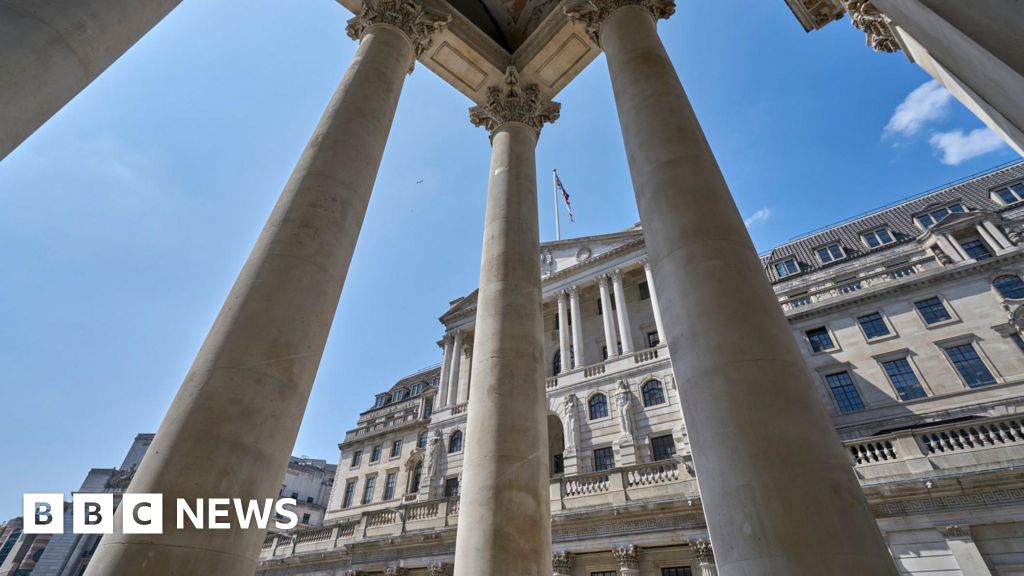
Before the conflict began, analysts had expected a cut in the Bank rate at this meeting.
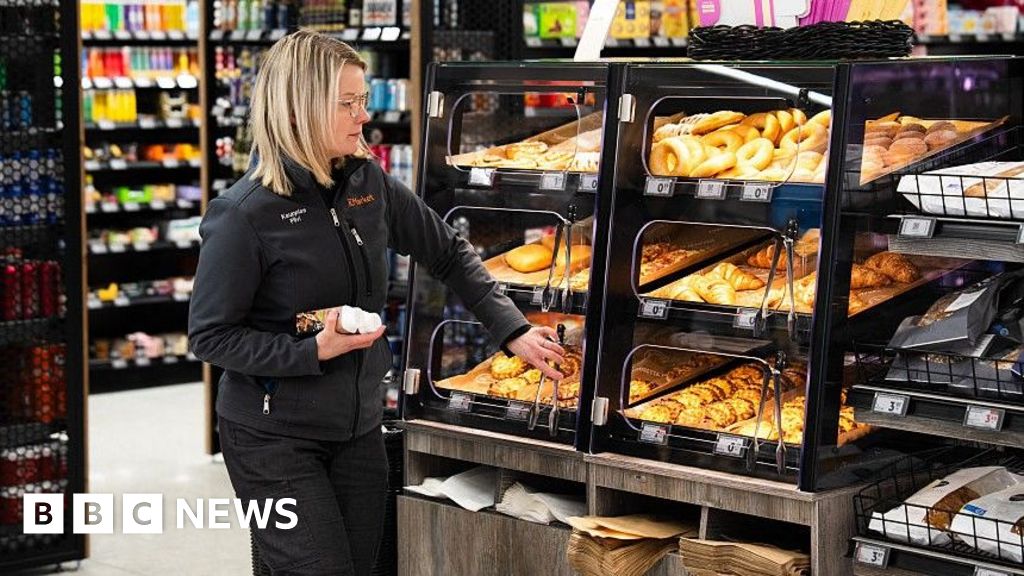
Other major businesses across the country also deemed as critical, such defence firms, transport companies, and cyber security companies, have their own detailed contingency plans to follow in the event of crisis, both as a result of conflict with other countries, and challenges such as natural disasters.
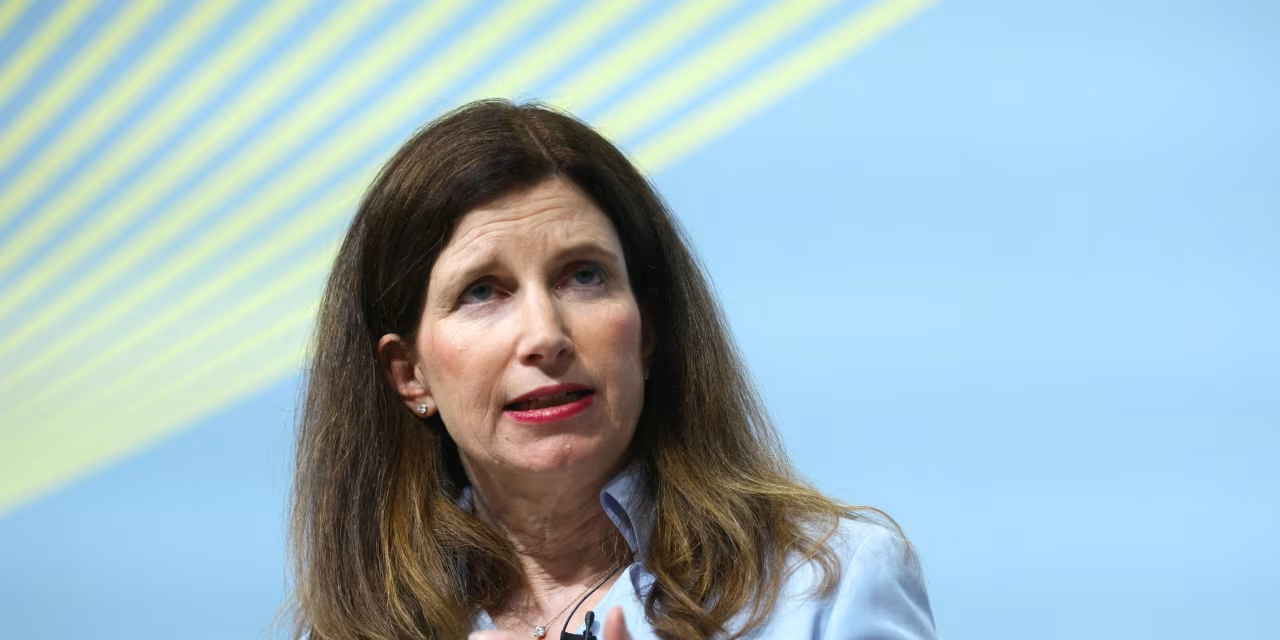
Commerzbank CBK 1.48%increase; green up pointing triangle Chief Executive Bettina Orlopp said she was surprised by UniCredit’s UCG -0.39%decrease; red down pointing triangle decision to launch a bid for the German bank, partly because of what she called the low price of the offer.
Orlopp’s comments came a day after UniCredit—Commerzbank’s largest shareholder with a roughly 30% stake—said it would offer to buy all the shares in the German bank it doesn’t already own, but that its move aimed to increase its holding above 30% with no expectation to result in majority control. UniCredit said it expected the exchange ratio of its offer to value Commerzbank at 30.8 euros a share, or 34.7 billion euros ($39.93 billion).
Copyright ©2026 Dow Jones & Company, Inc. All Rights Reserved. 87990cbe856818d5eddac44c7b1cdeb8
Check out what’s clicking on FoxBusiness.com.
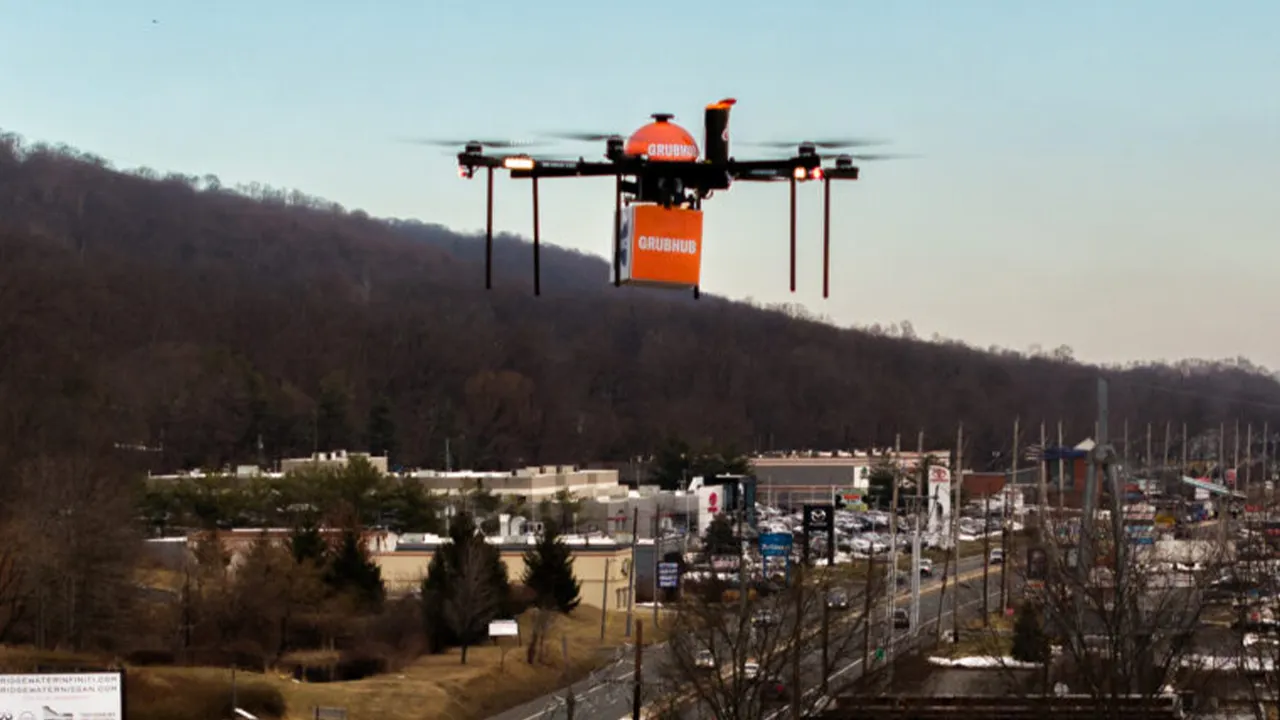
Grubhub is launching New Jersey’s first-ever commercial drone-powered food delivery service, the company announced last Wednesday.
The service, which will run for three months as a test program, will operate out of Green Brook Township, located one hour southwest of New York City.
The food ordering marketplace will partner with autonomous drone company Dexa to deliver meals directly from a local Wonder food hall operated by its parent company. These Wonder facilities function as high-tech kitchens where staff assemble and finish dishes pre-prepared by its numerous restaurant brand partners, helping streamline the ordering process.
The drone service is expected to deliver food faster than traditional methods and comes at no additional cost beyond standard delivery and service fees, the Chicago-based company said.
AMAZON LAUNCHES 1-HOUR AND 3-HOUR DELIVERY OPTIONS WITH NEW TIERED PRICING STRUCTURE FOR CUSTOMERS
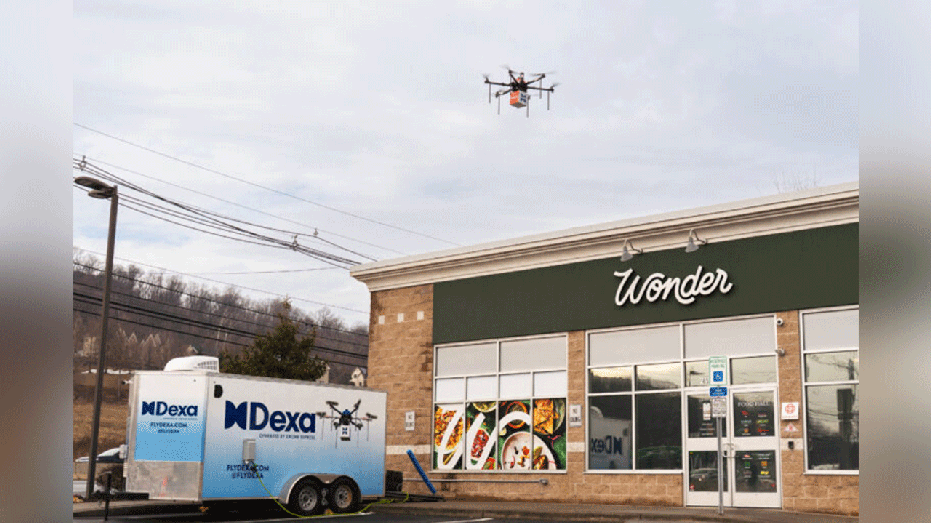
A Dexa drone takes off next to a Wonder food hall location. (Grubhub / Fox News)
“This service is a glimpse into the future of how autonomous technology will help restaurants and retailers serve customers at a completely new level,” CEO of Dexa Beth Flippo said in a statement.
Customers can use the Grubhub app to order from the local Wonder location, which offers 15 different restaurant concepts prepared in a single location, and can specifically opt for drone delivery.
AMAZON EXPANDS SAME-DAY DELIVERY SERVICE TO INCLUDE PERISHABLE FOOD ITEMS IN OVER 1,000 CITIES
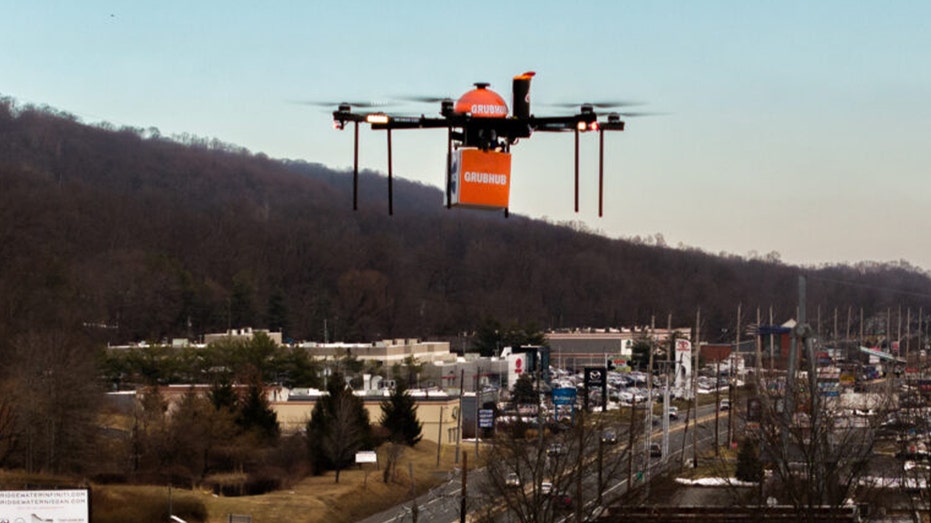
A “Grubhub” branded drone flies across a city. (Grubhub / Fox News)
Dexa’s AI-operated drone, the DE-2020, will then take off and fly along approved paths designed to prioritize safety while minimizing noise and other community disruptions.
Once it reaches the customer, instead of landing, it will safely lower the order to the ground using a controlled tether system.
The drone company’s flight crews will also verify that the food is correctly packaged and secured before taking off, Grubhub said.
GET FOX BUSINESS ON THE GO BY CLICKING HERE

The Grubhub logo on a smartphone in the Brooklyn borough of New York, US, on Friday, July 8, 2022. (Gabby Jones/Bloomberg via Getty Images)
Through the Grubhub platform, diners can also monitor food delivery using real-time GPS tracking and arrival notifications.
After the three-month trial at Green Brook, Grubhub will then evaluate the program’s success and consider expanding the service to other nearby restaurants.

Columbia Threadneedle Investments is a leading global asset management group that provides a broad range of actively managed investment strategies and solutions for individual, institutional and corporate clients around the world. Columbia Threadneedle Investments is the global asset management group of Ameriprise Financial, Inc. (NYSE: AMP). For more information please visit columbiathreadneedleus.com.

A world championship cycling event will be held in the South West this year.
Business
Australian Businesses Face Billions in Annual Losses from Traffic Congestion as 2026 Costs Climb

Sydney — Traffic congestion continues to exact a heavy toll on Australian businesses, with recent estimates showing national economic losses from road delays and related inefficiencies reaching into the billions annually. While comprehensive 2026-specific figures for business-only impacts remain limited, updated analyses and reports from 2025 point to broader congestion costs exceeding $10 billion yearly across major cities, with a substantial portion borne by commercial operations through delayed deliveries, lost productivity and higher operating expenses.

A November 2025 report highlighted by iSelect and covered in outlets like Drive.com.au calculated that full-time workers in Australia’s 11 largest cities collectively lose 212 million hours annually to traffic. This translates to $9.7 billion in lost productivity — valued at average median hourly wages — plus $462 million in wasted fuel, for a combined national hit of more than $10.1 billion per year. Although the figure encompasses all motorists, businesses feel the pinch acutely: freight delays, employee commute times affecting work hours, and supply chain disruptions directly erode profits and competitiveness.
For businesses, the costs manifest in multiple ways. Logistics firms, construction companies, tradespeople and delivery services bear disproportionate burdens from idling vehicles, unpredictable travel times and increased fuel consumption. In sectors reliant on timely transport — such as retail, manufacturing and services — every extra minute in gridlock equates to lost revenue. Older Bureau of Infrastructure, Transport and Regional Economics (BITRE) modeling from 2015 broke down metropolitan congestion costs into roughly $8 billion in business time losses out of a $16.5 billion total, suggesting commercial impacts historically comprised nearly half the burden. Adjusted for inflation and growth, similar proportions in recent years imply business-specific losses in the range of $4-6 billion annually, though no updated BITRE breakdown for 2026 has been released.
Projections indicate the problem is worsening. Infrastructure Australia and iMOVE Australia reports consistently forecast road congestion costs in major cities approaching $38.8 billion to $39.6 billion per year by 2031 without significant intervention, up from around $19 billion in 2016. These long-term estimates include private time, business productivity, vehicle operating expenses and environmental factors, with road delays accounting for the vast majority. A 2025 analysis cited in economic commentary estimated national road congestion at $13.8 billion (US) for 2024, exceeding the United Kingdom’s figure and positioning cities like Brisbane and Melbourne among global leaders in delays. Without policy shifts, costs could more than double by 2030, reaching $27.6 billion (US) or higher.
City-specific data underscores regional variations. Melbourne topped the 2025 iSelect rankings as Australia’s most congested capital, with motorists facing average annual costs of about $4,627 per person from delays and fuel — the highest among major centers. Sydney followed closely at $4,567, with Perth, Brisbane and Adelaide ranging from $3,377 to $3,495. These per-driver figures compound for businesses operating fleets or relying on employee mobility. For example, outer-suburban commuters in Sydney and Melbourne reportedly spend 41% of their trips stuck in traffic, equating to roughly 77 hours — or two full working weeks — per year, amplifying productivity drags for employers.
Experts attribute the rising toll to population growth, urban sprawl and insufficient infrastructure investment relative to demand. Freight remains overwhelmingly road-dependent, with national projections showing road freight volumes rising 77% by 2050 while rail share stays minimal. This intensifies congestion in key corridors, particularly around ports and urban centers. Reports from groups like the Business Council of Australia have called for congestion pricing mechanisms — such as peak-hour charges — to be incorporated into evolving road user fees as electric vehicle adoption reduces fuel excise revenue.
Government responses include billions in transport commitments: New South Wales allocated $55.6 billion over four years for transport projects, Queensland $41.7 billion focused on highway upgrades, and Western Australia $10.7 billion emphasizing freeway improvements and METRONET. Yet critics argue these efforts lag behind freight and passenger growth, failing to curb worsening gridlock. Calls for road pricing reforms persist, with advocates arguing time-based charges could manage demand, fund alternatives and offset future revenue shortfalls.
The human and environmental costs add layers to the economic strain. Commuters report stress, fatigue and reduced family time, while idling vehicles contribute to higher emissions and poorer air quality. Businesses face indirect hits through employee well-being, recruitment challenges in congested areas and supply chain unreliability amid global disruptions.
As Australia navigates post-pandemic recovery and urban expansion, traffic congestion stands as a persistent drag on economic efficiency. With projections signaling escalation toward $30 billion or more in avoidable costs by decade’s end, stakeholders urge accelerated investment in public transport, active mobility and smart pricing to alleviate the burden on businesses and households alike.

Canadian investor Stephen Smith is set to take a 26.9% stake in the publisher of the Economist magazine, after reaching an agreement with Lynn Forester de Rothschild to buy her family’s long-held shares in the storied publication.
The Economist Group said Tuesday that Smith had agreed to buy the stake alongside his family’s Smith Financial holding company, which has interests in various businesses including proxy adviser Glass Lewis.
Copyright ©2026 Dow Jones & Company, Inc. All Rights Reserved. 87990cbe856818d5eddac44c7b1cdeb8
Check out what’s clicking on FoxBusiness.com.
Popular ticket-selling platform SeatGeek is facing backlash after a job posting offering up to $175,000, along with perks like $25,000 in “gender-affirming care” benefits, sparked outrage online and renewed criticism over the company’s pricing.
The company is seeking an analytics engineer to join SeatGeek’s data team, noting applicants should have a “strong opinion” on how data should drive decision-making.
Along with a salary range of $121,000 to $175,000, the listing highlights a slate of benefits, including mental health subscriptions, unlimited paid time off (PTO), four months of fully paid family leave, remote or in-office work options, a home office stipend and a student loan matching program.
TAYLOR SWIFT BREAKS SILENCE ON TICKETMASTER FIASCO

The SeatGeek ticket app on a smartphone. (Gabby Jones/Bloomberg via Getty Images / Getty Images)
The application also includes a section labeled “Voluntary Demographic Questions,” asking candidates to identify their gender as “male, female, non-binary, third gender, prefer not to say, or prefer to self-describe.”
Prospective employees can also indicate if they consider themselves “a member of the LGBTQ+ community.”
Critics have raised concerns about the relevance of the prompts, with some social media users calling for a boycott of the platform.
GAVIN ROSSDALE ON TAYLOR SWIFT TICKET FIASCO: ‘EVERYBODY WANTS TO CRASH THE SERVERS’
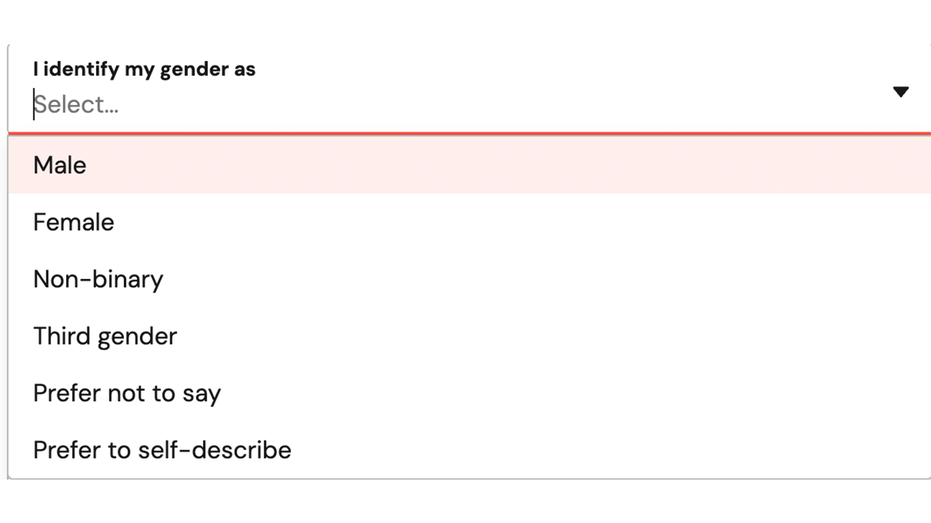
SeatGeek lists a number of gender options on its job application, including “third gender.”
Multiple people questioned whether the $25,000 could be used for elective surgeries that are not related to sex reassignment, while others pointed out the four months of paid family leave seemed unnecessary given the unlimited PTO.
“Private companies can offer incentives to employees. If it’s still legal and that’s the kind of employee they want to attract,” X user @dank1j wrote in a comment on a post shared by @LibsofTikTok. “Of course those who aren’t trans inclined ought to be able to substitute breast augmentation or other plastic surgery. I’d be PO’d if they don’t pony up for my tattoo.”
User @WomanDefiner commented he would like to put the funds toward male “self-care.”
“I need 25k to affirm my Gender as a biological male,” @WomanDefiner wrote. “I’m going to take a fishing trip. It’s called we do a little selfcare.”
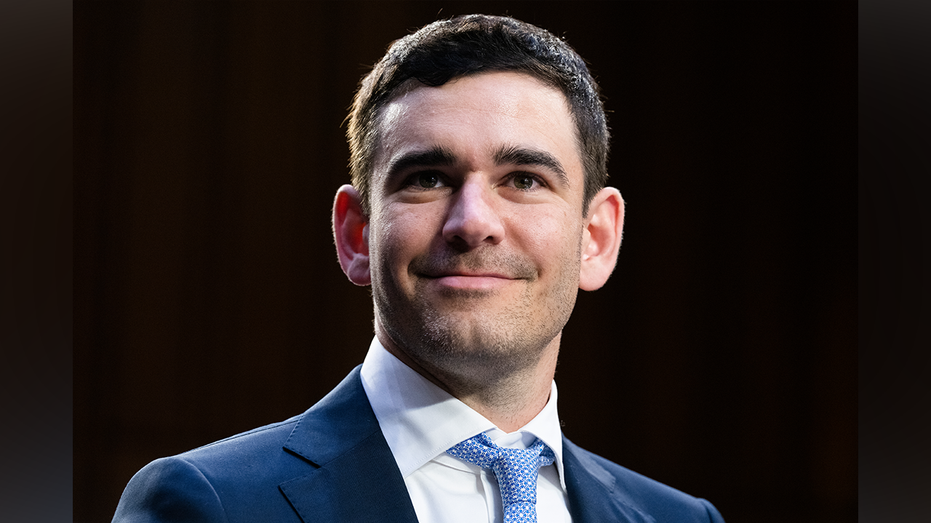
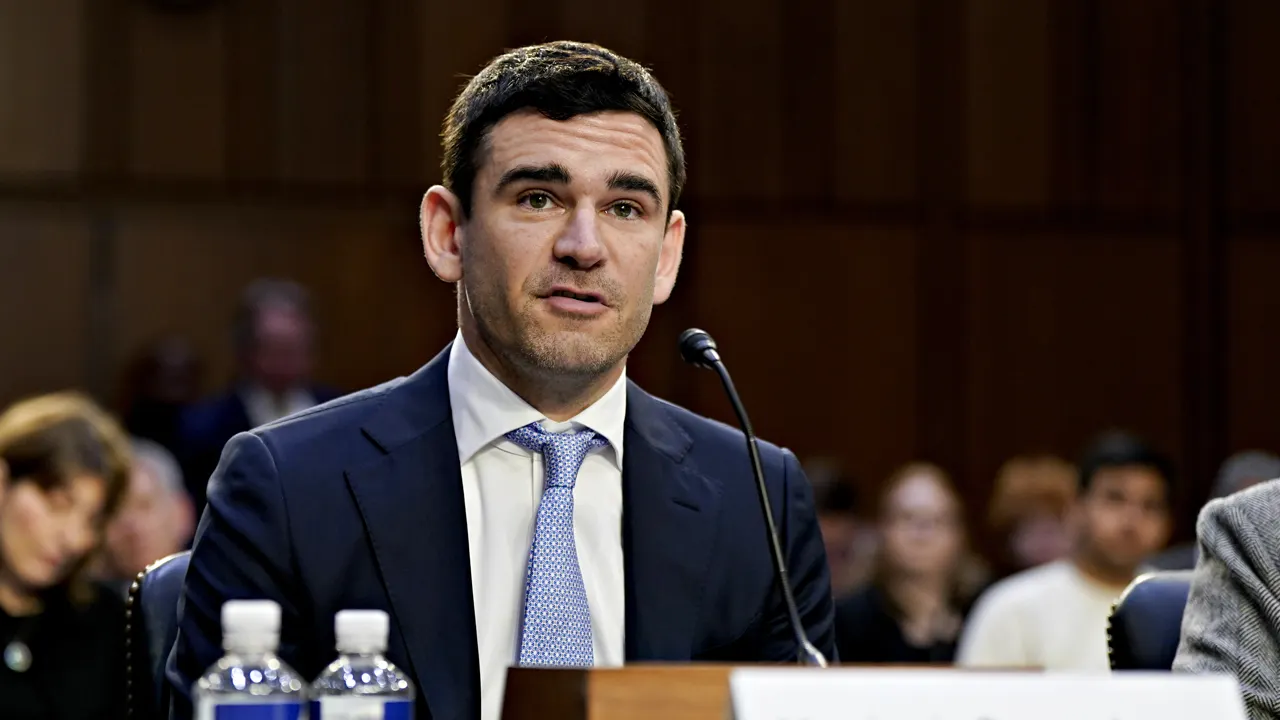
Jack Groetzinger, CEO of SeatGeek, testifies during the Senate Judiciary Committee hearing in 2023. (Tom Williams/CQ-Roll Call, Inc via Getty Images / Getty Images)
TAYLOR SWIFT TOUR DEBACLE: TICKETMASTER AND LIVE NATION MAY NEED BREAKUP, DEMOCRATIC SENATORS SAY
The generous salary and benefits also reignited a debate about the company’s high ticket pricing and price-gouging accusations.
“I would conclude that their prices are inflated, if they can offer such expensive ‘benefits,’” user @Mayhawwoman wrote.
User @Gentrywgevers added, “This also proves they’re price gouging if they can afford to offer this.”
Others, like user @AmericanPamia, suggested lower prices for all so “they can save their own money for their own preferences.”
GET FOX BUSINESS ON THE GO BY CLICKING HERE
SeatGeek said the demographic questions are voluntary and used to “measure our own diversity and inclusion efforts,” in compliance with Equal Employment Opportunity (EEO) reporting requirements.
Questions about gender and sexual identification are standard and voluntary in many U.S. job applications for EEO compliance.
SeatGeek did not immediately respond to FOX Business’ request for comment.
Blast from Vikings’ Past Signs with Bears

Butterbean Festival in Pinson, Alabama may end due to financial cuts

ITV doctor says worrying rise in liver problem in UK ‘not down to alcohol’


-
 Crypto World5 days ago
HYPE Token Enters Net Deflation as HyperCore Buybacks Outpace Staking Rewards
-

 Tech3 days ago
Your Legally Registered ‘Motorcycle’ Might Not Count Under Proposed US Law
-

 Fashion5 days ago
Weekend Open Thread: Addict Lip Glow
-
Sports4 days ago
Why Duke and Michigan Are Dead Even Entering Selection Sunday
-
 Tech1 day ago
Are Split Spacebars the Next Big Gaming Keyboard Trend?
-

 Business3 days ago
Search for Savannah Guthrie’s Mother Enters Seventh Week with No Arrests
-

 Business5 days ago
US Airports Launch Donation Drives for Unpaid TSA Workers as Partial Government Shutdown Enters Fifth Week
-
Crypto World4 days ago
Coinbase and Bybit in Investment Talks: Could Bybit Finally Enter the US Crypto Market?
-

 Business3 days ago
Australian shares drop as Iran war enters third week
-

 Business5 days ago
Country star Brantley Gilbert enters growing non-alcoholic beer market
-

 Crypto World3 days ago
Crypto Lender BlockFills Enters Chapter 11 with Up to $500M in Liabilities
-

 Sports5 days ago
College Basketball Best Bets: Conference Tournament Semifinal Picks
-

 Politics16 hours ago
The House | The new register to protect children from their abusers shows Parliament at its best
-

 Crypto World7 days ago
Three Binance Charts May Be Hinting at Bitcoin’s Next Move
-

 Business6 days ago
Trump demands Powell cut rates as Iran conflict raises energy prices
-

 Crypto World6 days ago
Senate Votes to Include CBDC Ban in Bipartisan Housing Bill
-

 Fashion3 days ago
25 Celebrities with Curly Hair That Are Naturally Beautiful
-

 News Videos8 hours ago
RBA board divided on rate cut, unusually buoyant share market | Finance Report | ABC NEWS
-

 NewsBeat6 days ago
Deane Road crash near Bolton colleges and university
-

 News Videos6 days ago
Tom Lee: The 100x Opportunity EVEN Bigger Than Bitcoin (New Ethereum Prediction 2026)


You must be logged in to post a comment Login