

Business
Lawsuit over $21 million donor-advised fund highlights risks of DAFs


Ridvan_celik | Istock | Getty Images
A version of this article first appeared in CNBC’s Inside Wealth newsletter with Robert Frank, a weekly guide to the high-net-worth investor and consumer. Sign up to receive future editions, straight to your inbox.
With donor-advised funds gaining popularity as a vehicle for the wealthy to give back, risks and potential conflicts of interests are emerging — and being put on display in a lawsuit over a family’s $21 million charitable fund.
Philip Peterson, a 63-year-old Kansas resident, filed suit in January alleging that the nonprofit that administers his family’s donor-advised fund has refused to communicate with him and has failed to make charitable grants that he has recommended since early 2024. The suit, filed in Colorado federal court, alleges the Christian nonprofit, called WaterStone, cut off his access to information about the account and that he doesn’t know how the fund has fared since the end of 2023, when it had $21 million in assets.
Counsel for WaterStone, founded as the Christian Community Foundation, said in a statement that the Colorado Springs nonprofit has respected the wishes of Peterson’s late father, who originally created the fund in 2005 and died in 2019.
The case sheds light on the growing uptake, and dangers, of donor-advised funds, or DAFs, which have quickly become one of the most dominant forces in philanthropy. Americans donated nearly $90 billion to DAFs in 2024, per the most recent annual report from the DAF Research Collaborative. According to the most recent data available, DAFs held $326 billion combined in assets in 2024.
For Americans looking to give back and save on taxes, DAFs are marketed as a flexible and simple way to do so, often described as charitable saving accounts or credit cards. Instead of writing a check to a nonprofit, donors contribute cash and other assets to a DAF. While the tax deduction is immediate, the funds can be allocated to charities later.
DAFs, unlike private foundations, are not required to distribute assets within a given timeframe, a common criticism among opponents who say DAFs are wealth hoarding vehicles.
The Peterson case offers a cautionary tale on the tradeoffs – especially when it comes to control. While donors are able to recommend how the funds are distributed to charity, the assets are legally controlled by the organizations that administer the DAF on their behalf. Though these organizations, also known as sponsors, typically respect their donors’ wishes, donors have little recourse if they do not.
“It’s sold to the public as, ‘This is your account, and you can decide where it goes, and you can move it, and you maintain full control.’ But if you don’t give up dominion and control, you don’t get the tax benefits,” said Ray Madoff, tax scholar and professor at Boston College Law School. “There’s a disconnect between the legal rules that govern it and the understanding of the parties. And this case is a perfect example of it.”
How much to give
Peterson told Inside Wealth that the rift with WaterStone started with a disagreement over how much to distribute.
In early 2024, Peterson alleges, WaterStone CEO Ken Harrison told him that the organization was going to keep the fund’s principal in perpetuity and only make grants from investment income. Peterson said he did not agree to the proposal as this would not allow the fund to make its customary annual grants of between $2.3 million and $2.5 million.
He further alleges that in March 2024, after he told Harrison over Zoom that he wanted to move the DAF to another sponsor, Harrison told him never to contact WaterStone again and abruptly ended the call.
Now Peterson is suing to assert his advisory privileges and regain access to the DAF, which was started by his late father, Gordon Peterson, a real estate investor and devout Christian, to support evangelical Christian causes. Peterson ultimately seeks the court to compel WaterStone to transfer the DAF to another organization so he can bring the fund’s giving back up to speed.
He said he requested WaterStone make a $1 million grant in 2024 but does not know if that grant – or if any grants – were issued that year. In 2025, WaterStone notified Peterson it would permit a $400,000 distribution from the fund, he said.
“I made a promise to my father. I promised him that if I was the remaining person on the account that I would direct the funds as I knew that he would 100% approve,” he said. “I want to be a man of my word.”
Philip Peterson, left, pictured with his father Gordon in 2015. Gordon Peterson passed away in 2019.
Courtesy of Philip Peterson
WaterStone declined to comment on specifics of Peterson’s allegations. The deadline for WaterStone to answer the complaint in court or move to dismiss it is mid-March.
“WaterStone has consistently carried out the articulated wishes of the donor since the donor advised fund in question was established,” WaterStone’s legal counsel said in a written statement, referring to Peterson’s father. “The plaintiff in this case is not the donor.”
Andrew Nussbaum, Peterson’s lawyer, said that WaterStone helped Gordon Peterson appoint his wife, Ruth, and son Philip as co-advisors to the DAF before he died. Ruth Peterson died in 2021, leaving Philip Peterson as the sole successor-advisor. Prior to 2024, WaterStone granted Philip Peterson’s grant requests, Nussbaum said.
Nussbaum said the lawsuit could set a chilling precedent if the court upholds WaterStone’s argument that designated successors do not have advisory privileges.
“If WaterStone is right, you’re talking about billions of dollars being beyond any kind of legal reach of the original donor-advisors or their successors to have any oversight related to the funds,” Nussbaum said.
Moreover, Peterson said he believes WaterStone has not honored his father’s wishes. He alleges that WaterStone has delayed or denied his grant recommendations even though they met the mission statement written by his father, which included a list of approved charities.
“I can tell you this: My dad would never have created a donor-advised fund if he knew that this was going to be the outcome. He felt very passionately about this,” he said.
DAF trade-offs
Law professor and DAF critic Roger Colinvaux said in his view, donors who want control of DAF assets are trying to have their cake and eat it too.
“Whether you like DAFs or not, the DAF sponsor is an independent charity. It’s an independent entity, and its duties are not to the donor,” said Colinvaux, professor at the Columbus School of Law at the Catholic University of America. “If the plaintiff wanted the sort of control that the plaintiff seems to want, as evidenced in the complaint, there’s a structure for that, and that’s a private foundation.”
Dana Brakman Reiser, professor at Brooklyn Law School, cautioned that Peterson’s story is a rare scenario. She said the biggest DAF sponsors like Fidelity Charitable and Schwab Charitable (now DAFgiving360) are affiliated with financial institutions and generally inclined to keep donors happy.
“It’s in their interest as long as honoring the donor’s request is not going to get the sponsor in trouble,” she said. Brakman Reiser added that the IRS prohibits using DAF assets to buy gala tickets or support private foundations or non-501(c)(3) organizations.
Still, the interests of sponsors and donor-advisors are rarely perfectly aligned.
Sponsors typically collect fees for managing DAF assets, creating an inherent financial incentive to disburse fewer assets, according to Chuck Collins, the director of the Program on Inequality and the Common Good at the Institute for Policy Studies, a progressive think tank. While community foundations pioneered the DAF model, they are now competing with larger commercially-affiliated sponsors for donors’ dollars, he added.
“More and more, they are having to compete with the commercial DAFs like Fidelity that have very low overhead and don’t take much in the way of fees. And so what’s the business model for a community foundation where, you know, 80% of the donations coming in are from people wanting to create DAFs?” he said. “In reality, their business model now depends on people parking their assets for longer periods of time.”
While Peterson’s case is unusual, it’s not the first legal challenge surrounding DAFs.
In 2018, a hedge fund couple sued Fidelity Charitable, contending the sponsor broke an agreement to liquidate their donated shares gradually and instead sold off 1.93 million shares, a position originally worth $100 million, in a matter of hours. Fidelity Charitable argued that it had followed the law and the case was ruled in their favor.
In another noteworthy debacle, in 2009, a Virginia-based charity called the National Heritage Foundation wiped out 9,000 DAFs worth $25 million combined to pay out creditors after it filed for bankruptcy.
Giving directly to charity doesn’t necessarily guarantee the assets will be used to the donor’s intent. But adding an intermediary into the equation adds another layer of complexity.
The handful of lawsuits filed by donor-advisors over how DAF assets are spent or invested have thus far been largely unsuccessful in court.
In short, according to Colinvaux, courts have upheld that donors have ceded any control in order to qualify for the tax break. If donors had the right to control assets — as opposed to the privilege to advise — they would not be able to claim a deduction, he said.
Nussbaum said Peterson’s case is different as it focuses on his rights to advise grants rather than control over how the assets are investments.
Peterson said he tried to resolve the dispute with Waterstone for about two years before going to court. While he knows his suit faces considerable odds, he said he felt he had no choice.
“People put an enormous amount of trust in these companies, and we’re hopefully going to find out what these companies can and can’t do,” he said. “It may have a big effect on the industry, and I don’t want to be that guy. All I want to do is to be able to continue my father’s legacy.”


Samayat Services held 54.09% (252.74 crore) in Vishal Mega Mart as of December 31, 2025 and under the stake sale, 3.05 crore shares will be offloaded, the report said.
Shares of Vishal Mega Mart today ended at Rs 127.53 on the NSE, up by Rs 4.56 or 3.71% from the Wednesday closing price. The stock today traded amid strong volumes with over 4 crore shares changing hands.
Vishal Mega Mart shares have surged 24% over a one year period, which is an outperformance over Nifty’s 13% and BSE Sensex’s 10% in the same period.
The stock is currently trading above its 50-day simple moving average (SMA) of Rs 127 while below its 200-day SMA of Rs 136, according to Trendlyne data.

The company’s consolidated net profit for the December ended quarter stood at Rs 313 crore, which is a growth of 19% over Rs 263 crore in the year ago period. Its total revenue in the quarter under review stood at Rs 3,695 crore, up 17% 3,155 crore in the corresponding quarter of the last financial year.
Vishal Mega Mart is one of the leading Indian fashion-led hypermarket chain with over 780 stores, focusing on affordable fashion, general merchandise, and grocery for middle-income customers.In another news, Home First Finance Company India’s promoter entities Aether (Mauritius) Limited and True North Fund V LLP today sold stakes worth Rs 326 crore and Rs 334 crore in separate bulk deals on Thursday. The buyers were French multinational bank Societe Generale and PICTET – Indian Equities.
Between them they sold shares worth Rs 660 crore.
The stock fell sharply today, closing at Rs 1,176.25, down nearly 6% from Wednesday’s closing price.
(Disclaimer: The recommendations, suggestions, views, and opinions given by the experts are their own. These do not represent the views of The Economic Times.)
Business
(VIDEO) Justin Bieber and LeBron James Share Viral Courtside Moment at Lakers Game Against Magic

Pop superstar Justin Bieber turned heads courtside at Crypto.com Arena on Tuesday night, Feb. 24, 2026, as he cheered on the Los Angeles Lakers during their narrow 110-109 loss to the Orlando Magic — but the real highlight came from a wholesome interaction with NBA icon LeBron James that quickly went viral across social media.

Bieber, 31, arrived solo for the matchup, dressed casually in a green hoodie with white polka dots and sunglasses, and took his spot in prime courtside seats. Videos and photos shared by the Lakers’ official X account and outlets like TMZ captured the singer sipping a beverage, flashing smiles and reacting energetically to the action on the floor. His enthusiasm peaked during James’ plays, with Bieber jumping to his feet, pumping his fists and hyping the crowd after one of the forward’s signature drives and jumpers that gave the Lakers an early 16-10 lead.
The most talked-about moment occurred before tipoff when James, 41, made his way over to Bieber’s seat for a friendly dap — a quick handshake and greeting that fans described as “pure love” and “respect between legends.” Clips of the exchange, including James interrupting Bieber’s hydration break mid-sip, spread rapidly on Instagram, TikTok and X, amassing millions of views within hours. One viral reel from Bleacher Report showed Bieber “hyped” for James, with captions calling it “JB 🤝 LBJ.”
NBA fans flooded social media with reactions, praising the crossover between music and basketball royalty. Comments ranged from “Two GOATs linking up” to jokes about Bieber being James’ biggest cheerleader. The interaction underscored the long-standing mutual admiration: Bieber has frequently attended Lakers games and expressed fandom for James, while the four-time NBA champion has previously shouted out the Canadian singer in interviews and on social platforms.
Despite the celebrity spotlight, the game itself was a thriller. The Lakers battled the Magic in a back-and-forth contest, with James delivering strong performances but missing a potential game-winning shot in the final seconds. The defeat dropped Los Angeles in the Western Conference standings amid a competitive playoff push, though postgame conversation largely centered on the Bieber-James moment rather than the outcome.
Bieber’s appearance comes as he prepares for a high-profile return to the stage. Reports indicate the “Sorry” hitmaker is headlining Coachella 2026, marking his first major festival performance in years following a hiatus focused on family life with wife Hailey Bieber and personal health. His courtside outing appeared relaxed and joyful, a contrast to recent quieter public sightings.
The viral clip highlights how celebrity attendance continues to amplify NBA games’ cultural reach. Courtside stars like Bieber draw massive online engagement, blending sports, entertainment and fan culture. Similar moments — from previous sightings of Bieber with other athletes to James’ interactions with Hollywood figures — have become staples of Lakers home games at Crypto.com Arena.
As clips continued circulating Thursday, Feb. 26, outlets including Yahoo Sports, People, TMZ and AOL ran features on the “sweet” and “wholesome” exchange. Fans noted Bieber’s transformation from reserved sips to full-on cheering once engaged with James, with one viral description calling it “LeBron showing love for us.”
The moment also fueled lighthearted online banter about cross-industry friendships in Los Angeles, where stars from music, film and sports frequently intersect. Bieber’s energy injected extra buzz into an otherwise standard midseason game, reminding observers why celebrity sightings remain a beloved — and sometimes overshadowing — part of the NBA experience.
Neither Bieber nor James has publicly commented on the interaction beyond the shared visuals, but the footage speaks volumes about their camaraderie. For Lakers faithful, it was a bright spot in a tough loss; for pop culture observers, proof that the worlds of hoops and hits still collide in memorable ways.
As the Lakers gear up for their next slate of games and Bieber eyes his Coachella comeback, this courtside dap serves as the latest viral reminder of celebrity’s enduring pull in sports.
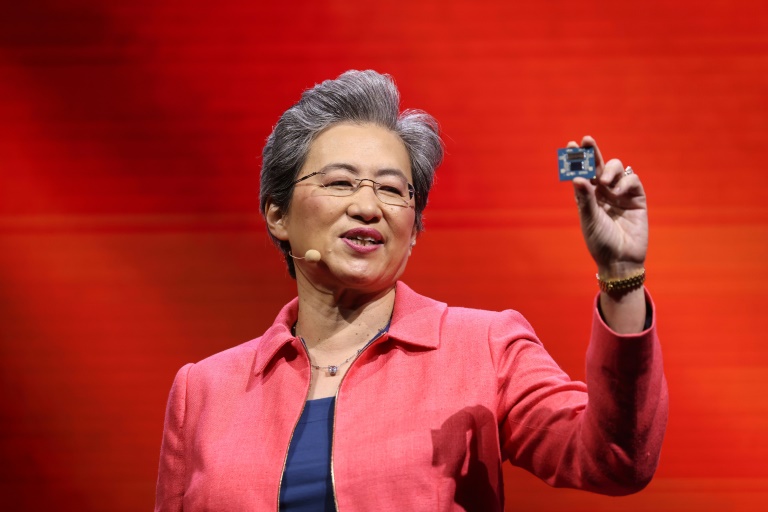
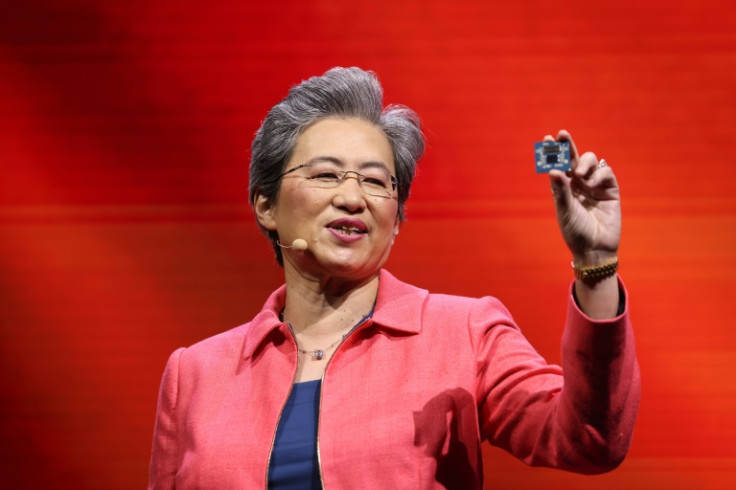
Advanced Micro Devices Inc. (NASDAQ: AMD) shares fell sharply in late February trading, dipping below $203 amid broader semiconductor sector volatility and investor digestion of recent gains tied to artificial intelligence demand.
As of midday Feb. 26, 2026, AMD stock traded around $202.50, down approximately 4% from the previous close of $210.86. The decline placed the shares well off the 52-week high of $267.08 reached in late 2025, though still significantly above the 52-week low of $76.48. Trading volume exceeded 20 million shares in early sessions, reflecting heightened investor interest.
AFP
The pullback comes despite positive developments in AMD’s AI chip business. On Feb. 24, the company announced a major multi-year deal to supply up to $60 billion worth of artificial intelligence accelerators to Meta Platforms Inc. over five years. The agreement allows Meta to acquire as much as 10% of AMD’s equity under certain conditions. News of the partnership initially propelled shares higher, with gains of more than 8% in one session to around $213.84.
Analysts viewed the Meta deal as a validation of AMD’s growing presence in the data center AI market, where it competes directly with Nvidia Corp. The transaction follows AMD’s push into high-performance computing with its Instinct series GPUs and EPYC processors.
“AMD is accelerating adoption of its high-performance EPYC and Ryzen CPUs while rapidly scaling its data center AI franchise,” AMD Chair and CEO Lisa Su said in recent statements highlighting momentum entering 2026.
The company’s latest financial results, reported Feb. 3, underscored robust growth. For the fourth quarter of 2025, AMD posted record revenue of $10.3 billion, up 34% year-over-year. Gross margin reached 54% (57% non-GAAP), operating income hit $1.8 billion ($2.9 billion non-GAAP), and net income stood at $1.5 billion ($2.5 billion non-GAAP). Diluted earnings per share were $0.92 ($1.53 non-GAAP), surpassing analyst expectations.
Full-year 2025 results showed record revenue of $34.6 billion, with non-GAAP operating income of $7.8 billion and diluted EPS of $4.17. The data center segment, fueled by AI demand, drove much of the performance.
Management expressed optimism for 2026, forecasting significant top- and bottom-line growth. Executives projected a 60% compound annual growth rate in data center revenue over the coming years, supported by hyperscaler spending. Major cloud providers, including Meta, Amazon and Alphabet, plan hundreds of billions in capital expenditures for AI infrastructure in 2026, creating opportunities for AMD’s offerings.
Despite these tailwinds, shares have retreated about 18% in the past month. Some investors appeared to take profits after the post-earnings surge and subsequent deal announcement. Broader market concerns, including interest rate uncertainty and competition in AI chips, contributed to the pressure.
Analysts remain largely bullish. Consensus price targets hover around $285 to $286, implying substantial upside from current levels. Bank of America recently adjusted its target following the Meta news, while other firms highlighted AMD’s competitive positioning against Nvidia in cost-effective AI solutions.
The company continues innovating in AI hardware. Partnerships, such as the Helios rack-scale system developed with Meta through the Open Compute Project, position AMD to challenge Nvidia’s dominance in data center deployments. Initial shipments of advanced systems are expected later in 2026.
AMD’s broader portfolio includes Ryzen processors for consumer and enterprise markets, where demand remains steady. The company benefits from trends in personal computing, gaming and embedded systems.
Investors monitor upcoming catalysts, including progress on the Meta deal, new product launches and quarterly guidance. With AI infrastructure spending projected to rise sharply, AMD appears well-placed for multi-year expansion, though near-term volatility persists in a competitive landscape.
Market capitalization stands at approximately $330 billion to $344 billion, depending on intraday fluctuations. The price-to-earnings ratio remains elevated, reflecting growth expectations in the AI era.
As the semiconductor industry navigates rapid technological shifts, AMD’s trajectory hinges on execution in capturing AI market share while maintaining profitability. The recent stock dip may represent a buying opportunity for long-term investors betting on sustained data center growth.

FOX Business’ Jeff Flock joins ‘Mornings with Maria’ live from Austin, Texas, showcasing 3D-printed homes.
Mortgage rates fell below 6% this week for the first time in three and a half years, mortgage buyer Freddie Mac said Thursday.
Freddie Mac’s latest Primary Mortgage Market Survey, released Thursday, showed the average rate on the benchmark 30-year fixed mortgage fell to 5.98% from last week’s reading of 6.01%.
The average rate on a 30-year loan was 6.76% a year ago. It was most recently under 6% on Sept. 8, 2022, at 5.89%.
RENT BECOMING MORE AFFORDABLE FOR MANY AMERICANS AS MARKET STABILIZES

The average rate on a 30-year fixed mortgage fell to 5.98% from last week’s reading of 6.01%. (David Ryder/Bloomberg via Getty Images)
“This rate, combined with the improving availability of homes for sale, is meaningful and will drive more potential buyers into the market for spring homebuying season,” said Sam Khater, Freddie Mac’s chief economist.
The average rate on a 15-year fixed mortgage increased to 5.44% from last week’s reading of 5.35%.
TEXAS CAPITAL’S HOUSEHOLD GROWTH SURGES, FAR OUTPACING NATIONAL RATE
Mortgage rates are affected by several factors, including the Federal Reserve and geopolitics. Though mortgage rates are not directly affected by the Fed’s interest rate decisions, they closely track the 10-year Treasury yield. The 10-year yield hovered around 4.02% as of Thursday afternoon.
Realtor.com economist Jiayi Xu said the dip in rates comes in the wake of the Supreme Court’s ruling against the Trump administration’s use of emergency tariff powers.
US HOME PRICES ARE RISING – BUT THESE FAST-GROWING MARKETS REMAIN AFFORDABLE

The average rate on a 15-year fixed mortgage rose to 5.44% from last week’s reading of 5.35%. (Mike Blake/Reuters)
GET FOX BUSINESS ON THE GO BY CLICKING HERE
“This legal tug-of-war has triggered a flight to safety among investors, pushing bond prices higher and yields lower, helping mortgage rates settle around 6%,” Xu said. “However, as this week’s decline stems from market volatility rather than fundamental economic data, more supportive economic data is needed to establish a consistent trend.”


Food manufacturers prepare for more adoption of the drug as pills become available.


State Farm on Thursday announced a historic $5 billion dividend for its car insurance members, the largest in the mutual insurance company’s 103-year history.
“This dividend is possible due to State Farm Mutual’s financial strength and a stronger than expected underwriting performance, which has been reported industry wide,” the company said in a statement.
Customers can expect to receive $100 refund on average, though State Farm says it will vary by state and by the amount of premium paid.
State Farm reports it has also lowered premiums by about 10% across 40 states, totaling $4.6 billion in lower costs for customers.
That’s a trend across the motor vehicle insurance industry. Auto repair costs are starting to decline, and the frequency of accidents declined in 2025.
But car insurance premiums have soared. By early 2025, rates had climbed by more than 50% over three years, according to the Bureau of Labor Statistics, the highest inflation for motor vehicle insurance in 50 years.
Affordability became a primary concern for many customers and led them to shop around for better deals.
TransUnion recently issued a report showing insurance shopping has become a routine activity for consumers, rather than a rare event prompted by a new car or home purchase.
“At this point we can safely say that regular insurance shopping is just the new normal,” Patrick Foy, the senior director of strategic planning for TransUnion’s insurance business, told CNBC in an interview.
The report noted that the main drivers behind the rate shopping are economic pressures pushing consumers to find ways to reduce household expenses. At the same time, insurers are investing heavily in marketing and setting competitive rates.
Travelers, Berkshire Hathaway’s Geico, Root and Chubb compete with State Farm and USAA and other mutuals, where customers are also shareholders.
Progressive in particular has been pressuring State Farm’s dominance in auto and was among major auto insurers announcing significant financial returns to customers in 2025. The company paid a billion dollars in dividends to its customers in Florida, where state laws require insurers to return excess profits.
USAA announced a $3.8 billion payout to its members across states in 2025.
The auto insurance business represents 63% of State Farm’s property and casualty insurance business. Customer loyalty in auto insurance often leads to loyalty in homeowner’s insurance too, where State Farm told CNBC, it is not seeing its claims costs subsiding and it’s still working to charge adequate rates to compensate.

Instagram will begin notifying parents if their teenagers repeatedly search for suicide or self-harm related content, marking the first time owner Meta has proactively flagged search behaviour rather than simply blocking it.
From next week, parents and teenagers enrolled in Instagram’s “Teen Accounts” supervision programme in the UK, US, Australia and Canada will receive alerts if a young user searches for harmful terms within a short period of time. The feature will be rolled out globally at a later stage.
Previously, Instagram restricted access to certain harmful material and redirected users to support resources. The new measure goes further by directly alerting parents via email, text message, WhatsApp or within the Instagram app itself, depending on available contact details.
Meta said the alerts are designed to flag sudden changes in search patterns that may indicate distress. Notifications will be accompanied by guidance and expert-backed resources to help parents navigate what are likely to be sensitive conversations.
The move has been met with sharp criticism from the Molly Rose Foundation, established by the family of Molly Russell, who died in 2017 aged 14 after viewing self-harm and suicide content online.
Chief executive Andy Burrows described the announcement as “fraught with risk”, warning that “forced disclosures could do more harm than good”.
“Every parent would want to know if their child is struggling,” Burrows said, “but these flimsy notifications will leave parents panicked and ill-prepared to have the sensitive and difficult conversations that will follow.”
He added that the onus should be on preventing harmful content from appearing in the first place, rather than shifting responsibility onto families after the fact.
The foundation previously published research claiming Instagram was still actively recommending content related to depression, suicide and self-harm to vulnerable young people. Meta rejected those findings, saying they misrepresented its safety efforts.
Ged Flynn, chief executive of Papyrus Prevention of Young Suicide, welcomed the attempt to increase transparency but argued that it did not address deeper systemic issues.
“Parents contact us every day to say how worried they are about their children online,” he said. “They don’t want to be warned after their children search for harmful content, they don’t want it to be spoon-fed to them by unthinking algorithms.”
‘Erring on the side of caution’
Meta said the system is designed to “err on the side of caution” and acknowledged that parents may occasionally receive alerts even when there is no serious cause for concern.
The company said the feature builds on broader Teen Account protections, which include automatically limiting exposure to sensitive material, restricting who can contact teens, and blocking certain harmful searches outright.
Two in-app screenshots released by Meta show alerts titled “Alert about your teen’s safety” followed by a screen offering advice on “How you can support your teen”.
Sameer Hinduja, co-director of the Cyberbullying Research Center, said the impact of the new feature would depend heavily on the quality of guidance provided alongside the alert.
“You can’t drop a notification on a parent and leave them on their own,” he said. “What matters is the immediate support and context that follows.”
Meta also confirmed that it plans to introduce similar parental alerts in the coming months if teenagers discuss self-harm or suicide with Instagram’s AI chatbot. The company said young people are increasingly turning to AI tools for advice and emotional support.
The expansion comes amid heightened scrutiny of social media companies’ impact on children’s mental health.
Australia recently passed legislation banning social media access for under-16s, while policymakers in Spain, France and the UK are considering similar measures. In the US, Meta chief executive Mark Zuckerberg and Instagram head Adam Mosseri have faced legal challenges and congressional hearings over allegations the company’s platforms were designed to attract and retain younger users.
For now, Instagram’s new alert system represents a shift in Meta’s child-safety strategy — moving from passive content restriction to active parental notification. Whether that approach proves protective or problematic will likely depend on how families, regulators and mental health experts respond in the months ahead.

Jamie Young
Jamie is Senior Reporter at Business Matters, bringing over a decade of experience in UK SME business reporting.
Jamie holds a degree in Business Administration and regularly participates in industry conferences and workshops.
When not reporting on the latest business developments, Jamie is passionate about mentoring up-and-coming journalists and entrepreneurs to inspire the next generation of business leaders.

U.S. Trade Representative Jamieson Greer joins ‘Mornings with Maria’ to outline President Donald Trump’s new global tariff strategy and warn trading partners that enforcement is coming.
The Trump administration isn’t letting a Supreme Court setback derail its tariff strategy. The nation’s top trade official says the White House won’t wait on Congress to restore the program.
In a 6-3 ruling last week, the high court struck down President Donald Trump’s global tariff authority under the International Emergency Economic Powers Act (IEEPA). Democrats lauded the Supreme Court’s ruling as a victory, arguing tariffs raise prices for everyday Americans.
But U.S. Trade Representative Jamieson Greer said while he’s “disappointed,” it’s not the end of tariffs, adding that he doesn’t plan on waiting for Congress to reestablish the program. He noted that while some members of Congress have offered to work with the White House, the administration has other strategies.
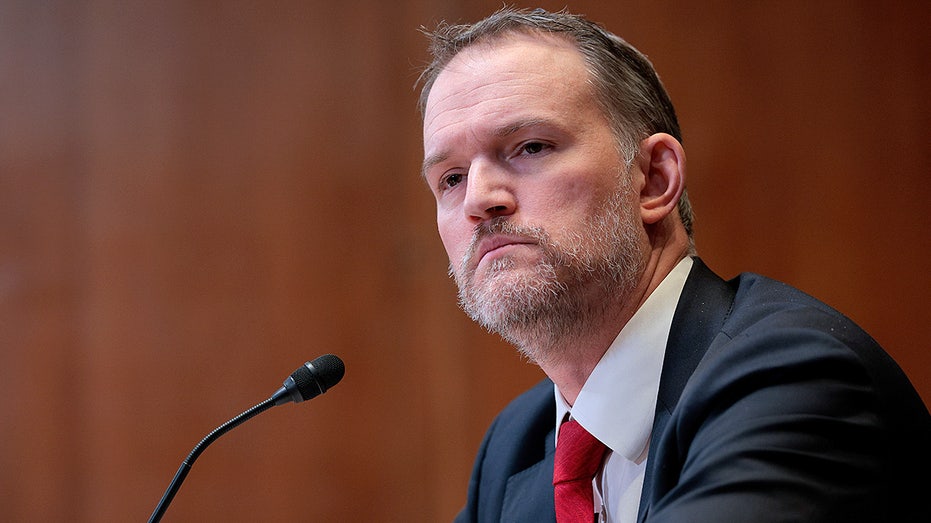
U.S. Trade Representative Jamieson Greer testifies before the Commerce, Justice, Science, and Related Agencies Subcommittee in the Dirksen Senate Office Building on Capitol Hill in Washington, D.C., on Dec. 9, 2025. (Chip Somodevilla/Getty Images / Getty Images)
“I have had individual members of Congress come to me and express interest in that, and I’m happy to continue having those conversations,” Greer said on the “Fox News Rundown” podcast.
“But I’m not [going to] wait for that to reestablish the president’s tariff program,” he added.
US TRADE REPRESENTATIVE GREER SAYS TARIFFS WILL GO UP TO 15% OR HIGHER FOR SOME COUNTRIES
Greer said the Trump administration is “very confident” that the program could be back up within months. He confirmed they are pivoting to existing authorities, like Section 301 and Section 232, to launch investigations targeting unfair trade practices and national security threats.
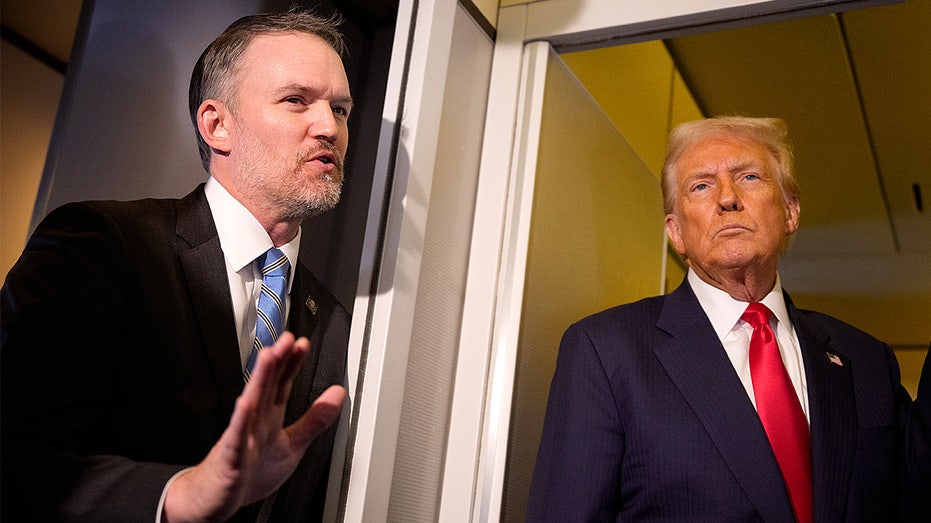
President Donald Trump and U.S. Trade Representative Jamieson Greer speak to members of the media aboard Air Force One on Oct. 30, 2025. (Andrew Harnik/Getty Images / Getty Images)
“We are very confident that within the next few months we can reestablish through these investigations, tariffs to deal with the challenges that have been identified by the president,” Greer told FOX News Audio White House correspondent Jared Halpern.
HOCHUL DEMANDS $13.5B REFUND FOR NEW YORKERS AFTER SUPREME COURT STRIKES DOWN TRUMP TARIFFS
During Tuesday’s State of the Union address, Trump criticized the Supreme Court’s ruling, calling it “very unfortunate” and saying the program brought in revenue for the country.

President Donald Trump answers questions during a press briefing at the White House in Washington, D.C., on Feb. 20. The Supreme Court ruled the same day against his use of emergency powers to implement certain international trade tariffs. (Getty Images)
Greer confirmed that no foreign countries have called the United States to renege on trade deals yet, only asking for clarity.
SELF-DEFENSE COMPANY FINDS MAJOR BENEFITS AFTER MOVING MANUFACTURING FROM OVERSEAS TO US
“It’s not really in the interest of these countries to renege on the deal because then their auto tariffs go up, all these other things. So, I’d say they’ve been very constructive conversations,” Greer said.
GET FOX BUSINESS ON THE GO BY CLICKING HERE
Tariffs have become a signature aspect of the second Trump administration. In 2025, the president declared the country’s trade deficit a “national emergency,” arguing the IEEPA gave him broad tariff authority.
In response to the Supreme Court ruling, the president wrote on Truth Social that he would raise a global tariff rate to 15%.
Rep. Jim Jordan, R-Ohio, and former House Speaker Kevin McCarthy discuss Republicans’ midterm agenda after President Donald Trump’s ‘record-long’ State of the Union speech on ‘Mornings with Maria.’

Apart From Nvidia, Stocks to Watch Thursday: Zoom, Trade Desk, Warner, Paramount

Popular Trader Calls Cardano (ADA) One of His Worst Investments: The Community Reacts

Reports: Colts, Anthony Richardson mutually agree to seek trade

The AI Case Against Indian IT Ignores What Indian IT Actually Does


-

 Video7 days ago
XRP News: XRP Just Entered a New Phase (Almost Nobody Noticed)
-

 Politics4 days ago
Baftas 2026: Awards Nominations, Presenters And Performers
-

 Fashion6 days ago
Weekend Open Thread: Boden – Corporette.com
-

 Sports3 days ago
Women’s college basketball rankings: Iowa reenters top 10, Auriemma makes history
-

 Politics3 days ago
Nick Reiner Enters Plea In Deaths Of Parents Rob And Michele
-

 Business2 days ago
True Citrus debuts functional drink mix collection
-

 Crypto World2 days ago
XRP price enters “dead zone” as Binance leverage hits lows
-

 Business4 days ago
Mattel’s American Girl brand turns 40, dolls enter a new era
-

 Business4 days ago
Law enforcement kills armed man seeking to enter Trump’s Mar-a-Lago resort, officials say
-

 Tech2 days ago
Unsurprisingly, Apple's board gets what it wants in 2026 shareholder meeting
-

 NewsBeat17 hours ago
Cuba says its forces have killed four on US-registered speedboat | World News
-
 NewsBeat19 hours ago
Manchester Central Mosque issues statement as it imposes new measures ‘with immediate effect’ after armed men enter
-
 NewsBeat3 days ago
‘Hourly’ method from gastroenterologist ‘helps reduce air travel bloating’
-

 Tech4 days ago
Anthropic-Backed Group Enters NY-12 AI PAC Fight
-

 NewsBeat4 days ago
Armed man killed after entering secure perimeter of Mar-a-Lago, Secret Service says
-

 Politics4 days ago
Maine has a long track record of electing moderates. Enter Graham Platner.
-
 NewsBeat2 days ago
Police latest as search for missing woman enters day nine
-

 Business14 hours ago
Discord Pushes Implementation of Global Age Checks to Second Half of 2026
-

 Crypto World2 days ago
Entering new markets without increasing payment costs
-
 Sports3 days ago
2026 NFL mock draft: WRs fly off the board in first round entering combine week