
Business
LeBron James Becomes First NBA Player To Sign Individual Partnership With Polymarket, Teases Deal Ahead Of NFL


NEW YORK — LeBron James has teased an upcoming individual partnership with Polymarket, the prediction market platform, becoming the first NBA player to sign such an agreement with the company as prediction markets continue expanding their reach across professional sports.
James posted a 14-second video Saturday on X and Instagram appearing to promote the partnership, showing the four-time NBA champion inside an elevator at what the video labeled “Polymarket HQ.” The elevator’s buttons displayed categories including sports, politics, crypto, economy, culture and weather, with James selecting the sports option before walking into a busy office-style setting.
“Welcome to Polymarket HQ. Coming soon,” James wrote in the post. “In partnership with Polymarket.”
Polymarket quickly responded to James’s post on X.
“Thanks for stopping by our HQ,” the company wrote.
The specific terms and full scope of James’s role in the partnership have not been publicly disclosed. A person familiar with the matter told CNBC that the campaign between James and Polymarket will focus specifically on football, and that additional details are expected in the days ahead. A Polymarket spokesperson told The Athletic that the company hopes to leverage “James’ love for the sport” as the football season approaches.
According to Front Office Sports, the partnership comes shortly after James’s prior endorsement deal with DraftKings expired earlier this summer. A source familiar with the arrangement told the outlet that Saturday’s post marked the first step in a larger campaign expected to launch early this week, with the football-focused partnership structure mirroring James’s earlier DraftKings deal, which he first signed in 2024.
James’s Polymarket announcement generated significant engagement online, racking up nearly 10 million views within seven hours of being posted, according to Front Office Sports. The reaction was not universally positive, with some critical posts pushing back on James’s decision to align himself with a prediction market platform, drawing more engagement in some cases than James’s original post.
Polymarket, which describes itself as the world’s largest prediction market, allows users to trade contracts tied to the outcomes of real-world events, including elections, sports results and economic data releases. James’s deal adds him to a growing roster of prominent athletes who have entered the prediction market sector in recent months. Milwaukee Bucks star Giannis Antetokounmpo became a shareholder in rival platform Kalshi earlier this year and agreed to participate in marketing efforts and live events for that company, though Kalshi has said his stake remains passive and that its rules prohibit him from trading on NBA-related markets. Golf star Bryson DeChambeau signed an ambassador deal with Kalshi in January, becoming the first major athlete to formally partner with a prediction market platform, and has since incorporated Kalshi’s markets into content on his YouTube channel. Soccer icon Lionel Messi and tennis star Maria Sharapova have also promoted Polymarket.
James’s arrangement marks a notable milestone within that broader trend, according to Yahoo Sports, which reported that he is both the first individual NBA player to sign a partnership with Polymarket specifically and the first individual athlete of any kind that Polymarket has signed to such an agreement. While the NBA itself is reportedly in separate talks with Polymarket regarding a potential league-level partnership, James’s deal represents a distinct, individually negotiated arrangement.
The NBA does not maintain a specific policy prohibiting players from endorsing prediction market platforms, according to a person familiar with the matter who spoke to Front Office Sports, though players are barred from promoting specific contracts tied to NBA-related events. The NFL and PGA Tour, by contrast, reportedly do not permit their athletes to endorse prediction markets at all, a restriction that has not applied to James given his status as an NBA player.
James’s individual influence on prediction markets predates his formal Polymarket partnership. Earlier this year, when James became a free agent before ultimately signing with the Philadelphia 76ers, prediction market trading tied to his free agency decision exceeded $270 million in combined volume, according to Covers.com, with contracts specifically wagering on “LeBron’s next team” surpassing $225 million on Kalshi and $40 million on Polymarket, illustrating the significant public interest and trading activity his career decisions can generate even without a formal partnership in place.
Prediction markets have expanded rapidly across professional sports over the past several months, moving beyond individual athlete endorsements to formal league- and team-level partnerships. Major League Baseball announced a multiyear partnership with Polymarket in March, while the National Hockey League struck deals with both Kalshi and Polymarket last year. Polymarket has also secured league-level agreements with the NHL, MLS, Serie A and LaLiga, along with team-specific deals involving the New York Rangers and New York Yankees, and reached a last-minute partnership agreement with the U.S. Open shortly before James’s Saturday announcement. Kalshi, meanwhile, counts athletes including Antetokounmpo, Kyle Kuzma and Breanna Stewart among its investors, alongside an official NHL partnership and team-level agreements with the Chicago Blackhawks and several Major League Baseball franchises, including exclusive arrangements with the Los Angeles Dodgers, Boston Red Sox and San Diego Padres.
The rapid growth of prediction markets has not come without regulatory friction. The U.S. Court of Appeals for the Ninth Circuit recently affirmed a lower court’s decision dissolving a preliminary injunction that had blocked Nevada from preventing a prediction market operator from doing business in the state, underscoring ongoing legal uncertainty surrounding how individual states can regulate the rapidly expanding industry even as major sports leagues, teams and star athletes continue signing on with the platforms.
With James’s Polymarket campaign expected to launch in full early this week, further details on his specific role, compensation and the scope of the football-focused promotional effort are expected to be announced in the coming days, according to reporting on the partnership. The deal adds another high-profile name to an industry that has moved rapidly from a niche corner of online betting culture into a mainstream fixture of professional sports marketing over the course of the past year.


SpaceX’s European rival Isar Aerospace plans rapid expansion after first orbital launch

When Stephenson lodged her proposition in June, external, the St Mary, St Ouen and St Peter deputy said the ongoing conflict in the Middle East, which led to limited traffic moving through the Strait of Hormuz, had exacerbated “spiralling costs” for Jersey residents.
She said her discussions with Maclean and other colleagues at the States had left her satisfied the issue was being taken seriously.
“I think there were very clear messages at the recent election from voters about the cost of living,” Stephenson said.
“It’s obvious people are struggling and we have heard that loud and clear.”
The budget is due to be lodged by the government later in September before being debated by the States in December.
Follow BBC Jersey on X, external and Facebook, external. Send your story ideas to channel.islands@bbc.co.uk, external.
Business
Scientists Complete Second Full Map Of Fruit Fly Brain, Charting 300 Million Connections In New Study

ASHBURN, Va. — Researchers have completed a full map of every neuron and connection in the brain of a male fruit fly, marking the second complete “connectome” of the species and giving scientists an unprecedented tool for understanding how brains process information at the most fundamental level.
The project, announced Friday, was a collaboration between biologists at the Howard Hughes Medical Institute’s Janelia Research Campus and computer scientists at Google. Both teams have said neither could have completed the effort without the other. The new male fly connectome follows the completion of a female Drosophila connectome earlier this year by university-based researchers, giving scientists their first opportunity to compare complete neural wiring diagrams between the sexes of the same species.
A connectome is a comprehensive catalog of every neuron in a brain, including its precise location in three-dimensional space and every connection, or synapse, it forms with other neurons. While the fruit fly’s entire nervous system contains roughly 150,000 neurons, with only a fraction of those located in the brain itself, the new research identified more than 300 million individual synaptic connections within that relatively small structure, illustrating just how densely interconnected even a comparatively simple nervous system can be.
Gerry Rubin, a senior group leader at the Janelia Research Campus and one of the senior authors on the new study, described how dramatically the tools available for this kind of work have changed since he began his career studying an even simpler organism.
“I was a graduate student at the UK’s Laboratory of Molecular Biology … and when I got there in ’71, they already bought this giant computer, and they had the idea that they were going to use machine vision and computers to assemble the C. elegans connectome,” Rubin said. C. elegans is a small, transparent worm with just over 300 neurons.
“It took them about two years to realize that the computers were nowhere near powerful enough,” Rubin said, “and so they went with printing everything out on photographic prints and colored magic markers and circling neurons and tracing it by hand.”
That painstaking manual approach would have been entirely impractical for the fruit fly, a species that is both far more complex than C. elegans and, unlike the transparent worm, opaque, making its neurons far more difficult to image directly. To build the new connectome, researchers dissected a fruit fly brain along with part of its ventral nerve cord and sliced it into an enormous series of evenly spaced sections, which were then imaged using electron microscopy at a resolution fine enough to identify small cellular structures. From there, the reconstruction of the brain’s three-dimensional architecture depended almost entirely on artificial intelligence.
Michal Januszewski, a staff scientist at Google Research, told Ars Technica that the first computational step involves using a form of generative AI to seamlessly reconnect the tissue across the boundaries created by each physical slice.
“When you take those blocks and you stitch them back together computationally, there’s a little bit of a gap in between them so the tissue doesn’t completely smoothen,” Januszewski said. “We use a generative model to make the tissue look as if the seams were not there, and that then makes all the downstream processing easier because you can basically ignore the problem to a large degree.”
A separate AI model then works to fill in the spaces defined by cellular membranes, allowing the system to track individual neurons continuously across three-dimensional space. Januszewski described that model as functioning differently than many people typically imagine when they think about artificial intelligence.
“It is different in a number of ways from what people commonly think when they talk about AI,” Januszewski said. “One is that it is actually a recurrent process, so it literally moves through space as it makes the outline of the neurons, and it is a visual model, so it converts voxels out of the images from the microscope, converting them into a 3D presentation of the neurons.”
Additional models were used to identify synapses and classify their specific type once detected, with their sensitivity levels adjustable based on ongoing feedback from human proofreaders reviewing the AI’s output. Rubin described the process as a continuous back-and-forth between researchers and engineers.
“This has to be tuned by going back and forth between the proofreaders and Mikhail to say, ‘Oh, give us a version where you were less greedy because it’s harder to disassemble than it is to assemble,’” Rubin said. “So it’s an iterative process between the humans giving feedback and the algorithms getting tuned.”
The full project took roughly four years to complete, from the initial dissection of an intact fly brain to the finished connectome. Rubin said the techniques and software developed along the way are intended to scale toward far more complex nervous systems in the future, potentially including those of vertebrates such as mice.
“Our view is we did Drosophila with a team of 50 people,” Rubin said. “The hope is, by the time someone does a mouse, they’ll also need a team of 50 people, even though there are a thousand times more neurons in there. The people will never go away, but the people will not need to scale with the number of neurons, which would be economically not feasible.”
Januszewski said the scale and difficulty of the challenge is precisely what drew Google into the collaboration in the first place.
“The reason I think Google and we were interested in this is because this is this type of grand challenge that just cannot be done in any other way,” Januszewski said. “We knew we need AI for this. This cannot be solved by having more humans or by any other technology. And it’s important.”
Beyond serving as a foundational tool for future neuroscience research, the completed male connectome, when compared against the earlier female connectome, has already yielded new insight into how sex differences are wired into the fly brain. Building on decades of prior genetic research identifying two genes, doublesex and fruitless, as key regulators converting chromosomal sex into behavioral differences, researchers identified 289 neurons unique to males, 71 unique to females, and 138 present in both sexes but differing in shape and connectivity. Notably, roughly 90% of the male-specific neurons expressed the doublesex or fruitless genes, but 10% did not, suggesting some neurons may acquire sex-specific characteristics indirectly, through interactions with neighboring cells that do express those genes.
Researchers also found that sex-specific neurons tended to cluster together and operate at higher levels of neural processing, rather than directly within basic sensory detection or motor control circuits, with a few notable exceptions such as neurons that detect sex-specific pheromones. As the research team wrote in their published paper, the pattern suggests “a hierarchy in which sex differences primarily modify integrative and decision-making areas while sensory detection and the highly tuned motor interface remain more constant.”
Rubin said the completed connectome has already begun reshaping theoretical neuroscience by giving researchers a concrete wiring diagram to test their models against, rather than working from open-ended speculation about how a brain might function.
“Before this, most neuro theorists were very much like, ‘How could a brain work?’” Rubin said. “And they didn’t have a constraint. Once they had the connectome, they could say, ‘The brain does this and here’s the wiring diagram. How can this wiring diagram allow this function?’ So this has been a major — I’d say this is the biggest change in having the connectome.”
Looking ahead, researchers say a key open question is whether the cost and time required to build additional connectomes will fall sharply as techniques continue to improve, similar to the trajectory seen in genome sequencing over the past two decades. With only two complete fly connectomes currently available, including one notable case in which a specific neuron found in the female fly was entirely missing from one hemisphere of the male fly’s brain, researchers say dozens of additional connectomes will likely be needed before scientists can draw statistically meaningful conclusions about how much natural variability exists between individual brains, even within the same species.

China to inject $54 billion into state banks and insurers

Which TSX stocks investors will be watching next week?

5 Stocks I Want If Oil Hits $100


Vishal Jadaun is the founder of Tickzen, a company that develops quantitative research tools, valuation frameworks, and stock analysis models for investors. With a background in computer science and a self-directed approach to investing, he evaluates companies primarily through financial statements, SEC filings, earnings reports, and management disclosures rather than market narratives or third-party opinions.His research on Seeking Alpha focuses on post-earnings and fundamental analysis of industrial, logistics, and technology companies. His process emphasizes separating one-time accounting items from underlying operating performance, assessing balance-sheet strength, and building independent estimates of intrinsic value.
Analyst’s Disclosure: I/we have no stock, option or similar derivative position in any of the companies mentioned, and no plans to initiate any such positions within the next 72 hours. I wrote this article myself, and it expresses my own opinions. I am not receiving compensation for it (other than from Seeking Alpha). I have no business relationship with any company whose stock is mentioned in this article.
Seeking Alpha’s Disclosure: Past performance is no guarantee of future results. No recommendation or advice is being given as to whether any investment is suitable for a particular investor. Any views or opinions expressed above may not reflect those of Seeking Alpha as a whole. Seeking Alpha is not a licensed securities dealer, broker or US investment adviser or investment bank. Our analysts are third party authors that include both professional investors and individual investors who may not be licensed or certified by any institute or regulatory body.


Albert Anthony is the pen name of a business author on Amazon and his newest book is “How To Pick Stocks: 8 Steps For Long-Term Investing with Fundamental & Technical Analysis,” now available as a 2026 edition paperback and Kindle ebook in several regions including the US, UK, Canada, and Europe. The author is an analyst & contributor for investing platform Seeking Alpha since 2023, where he has nearly 2,000 followers and has covered hundreds of stocks in multiple sectors including banks/financials, REITs, insurance, pharma, and more. He has also written for platforms like Investing dot com, and has taken part in many business conferences includes Bloomberg Adria’s Investment Outlook 2026 as well as Money Motion 2026. Albert Anthony has Croatian-American roots, having grown up in the US and living in the NYC/New Jersey area as well as the Austin Texas area while working in enterprise IT roles at several prominent companies, including a top 10 financial firm. The author earned a B.A. from Drew University, and also completed certifications from Microsoft, CompTIA, and Corporate Finance Institute where he earned the specialization in risk management. He is founder of a boutique equities research firm, Albert Anthony & Company, which is a trade name both in the US and Croatia. Besides his writing and analyst work, the author has been active on camera as well, as a film/TV extra for casting agencies in Croatia/Europe, and also took part in roundtable panel discussions and appeared in several media stories in that region. You can also check out the author’s video content on the Albert Anthony channel on YouTube where he discusses investing topics, @author.albertanthony Please note: The author does not write about non-publicly traded companies, small cap stocks, crypto, or startup CEOs, so any such mail received and pitches from PR agencies will be deleted. Any official mail to the author should be sent to albertanthony.info@gmail.com. *Author Disclaimer: Albert Anthony and Albert Anthony & Co, is a US-based sole proprietorship registered as a trade name in Austin, Texas, and a sole proprietor registered in Croatia. The author nor his company are registered financial advisors and do not provide personalized financial advisory services to clients and do not manage client assets but provide general markets commentary and research as well as actionable insights based on publicly-available data and their own analysis. The author does not sell or market financial products and services, nor is compensated by any company for rating them. The author does not hold any material position in any stock he rates at the time of writing, unless otherwise disclosed. All investment is assumed to be at risk and readers are expected to do their due diligence beyond the scope of this author’s commentary, agreeing to indemnify the author of any liability for potential investment losses.
Analyst’s Disclosure: I/we have a beneficial long position in the shares of IVR either through stock ownership, options, or other derivatives. I wrote this article myself, and it expresses my own opinions. I am not receiving compensation for it (other than from Seeking Alpha). I have no business relationship with any company whose stock is mentioned in this article.
author invests in a diversified portfolio of REITs, which include IVR also.
Seeking Alpha’s Disclosure: Past performance is no guarantee of future results. No recommendation or advice is being given as to whether any investment is suitable for a particular investor. Any views or opinions expressed above may not reflect those of Seeking Alpha as a whole. Seeking Alpha is not a licensed securities dealer, broker or US investment adviser or investment bank. Our analysts are third party authors that include both professional investors and individual investors who may not be licensed or certified by any institute or regulatory body.
Business
(VIDEO) Maruti Suzuki Launches 2026 Baleno Facelift At Rs 6.10 Lakh With New Engine, Level 2 ADAS In India
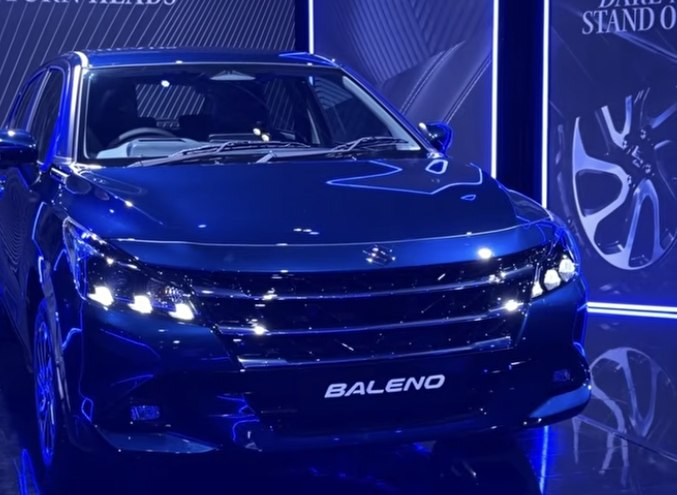
NEW DELHI — Maruti Suzuki has launched an updated version of the Baleno premium hatchback in India, introducing a new three-cylinder petrol engine, an advanced driver-assistance suite and a range of design refinements as part of a mid-lifecycle update to one of the country’s best-selling hatchbacks.
The 2026 Baleno facelift went on sale Sept. 5, priced starting at Rs 6.10 lakh, ex-showroom, according to Autocar India. The update arrives roughly four years after Maruti launched the second-generation Baleno in 2022, and represents what the company has described as an evolutionary cosmetic and mechanical refresh rather than a complete redesign of the model.
The most significant change under the hood is the introduction of a new powertrain. The updated Baleno now uses the Z12E 1.2-liter, three-cylinder, naturally aspirated engine, the same unit found in Maruti’s Swift and Dzire models, though Maruti says the engine has been specifically tuned to deliver improved low-end torque in its Baleno application. The new three-cylinder engine replaces the previous 1.2-liter, four-cylinder K12N unit that powered the outgoing Baleno.
Peak output for the new engine comes in at 83 horsepower and 112 Newton meters of torque in petrol configuration, with buyers able to choose between a five-speed manual transmission and a five-speed automated manual transmission, commonly referred to as AMT. According to figures published by ZigWheels, the petrol variants deliver claimed fuel efficiency ranging from 23.8 to 24.77 kilometers per liter under Indian ARAI testing standards.
Maruti has continued offering a factory-fitted compressed natural gas, or CNG, variant alongside the petrol lineup. In CNG mode, power and torque outputs drop to 70 horsepower and 102 Newton meters, respectively, with the CNG variant continuing to use a five-speed manual transmission exclusively rather than offering an automatic option. According to ZigWheels, the CNG variant carries a claimed mileage figure of 33.61 kilometers per kilogram of fuel.
On the safety front, the updated Baleno introduces a Level 2 advanced driver-assistance system, a feature Maruti has emphasized as a segment-first addition that none of the model’s direct rivals currently offer. The ADAS suite includes adaptive cruise control, lane-keep assist, automatic emergency braking and high-beam assist. The facelift also adds a tire pressure monitoring system as a new safety feature. Additional standard safety equipment across trim levels includes six airbags, anti-lock brakes with electronic brakeforce distribution, and a 360-degree camera setup, an offering Maruti has positioned as leading the broader sub-Rs 20 lakh vehicle segment for that specific camera feature.
Visually, the updated Baleno receives a reworked front fascia featuring a redesigned grille with a horizontal bar connecting the headlights, along with a revised front bumper, retweaked headlight internals and a repositioned Suzuki badge. The distinctive boomerang-shaped LED daytime running lights carry over largely unchanged from the outgoing model. New 16-inch alloy wheel designs feature in profile, while changes toward the rear of the vehicle remain more subtle, limited primarily to a revised bumper, with the existing taillight design, roof-mounted spoiler and rear window wiper continuing without significant alteration.
Inside the cabin, changes are similarly measured rather than dramatic. The dashboard layout carries over largely unchanged from the previous generation, continuing to use the same nine-inch infotainment touchscreen unit found in the outgoing Baleno. Reported updates include new cabin upholstery options, ventilated front seats, a newly added heads-up display, and additional chrome trim elements that Maruti has positioned as adding a more premium feel to the cabin.
Maruti has not yet announced full variant-wise pricing details for the updated Baleno lineup beyond the starting price, according to Autocar India, with additional pricing information for higher trim levels expected to follow in the coming days.
The Baleno continues to compete within one of India’s most closely contested vehicle segments, facing off against rivals including the Tata Altroz, Hyundai i20, Toyota Glanza and, within Maruti’s own lineup, the Fronx crossover and the Swift hatchback. According to figures cited by ZigWheels, competing models like the Fronx have shown strong consumer preference in head-to-head comparisons against the Baleno in some market surveys, underscoring the intensity of competition the updated model faces even with its new engine and expanded safety features.
User reviews compiled on automotive platforms including CarDekho reflect broadly positive long-term ownership experiences with the outgoing Baleno generation, with several owners specifically praising the model’s fuel efficiency, cabin space and comfort levels comparable to larger vehicles despite its hatchback body style. One reviewer who had owned a Baleno for four years described experiencing no significant issues over that period, while another owner who had driven an automatic Baleno variant nearly 40,000 kilometers over two years said the vehicle continued to feel new, citing strong mileage and cabin space as standout qualities, though noting hope that Maruti would address concerns around interior build quality with the new facelift.
Some prospective buyers reviewing early details of the 2026 update have specifically flagged safety ratings as an area they hope Maruti addresses with the facelift, reflecting ongoing broader consumer interest in crash-test performance among Indian hatchback buyers, an area where Maruti’s vehicles have faced periodic scrutiny in independent testing conducted by global crash-safety organizations in recent years.
With the new engine, expanded ADAS suite and refreshed styling now confirmed following the Sept. 5 launch, the updated Baleno positions itself to compete more directly on safety credentials against segment rivals, even as its core mechanical and interior architecture remains fundamentally similar to the outgoing model. Prospective buyers weighing the updated Baleno against competitors like the Hyundai i20, Tata Altroz and Toyota Glanza will likely be watching closely for full variant-wise pricing details, along with independent test drives and crash-safety assessments, before the vehicle’s broader market reception becomes clear in the weeks following its launch.

Canadians back Carney’s tougher trade stance as U.S. tensions deepen

Anya Taylor-Joy’s 93-Minute Thriller Is Quietly One of the Best Mysteries Streaming

”XRP $10,000 IS COMING… IT’S INEVITABLE” (MAJOR SHOCK)

Oasis teaser clip appears ‘filmed in Adlington chippy’





-
 Fashion2 days ago
Weekend Open Thread: Beyond Yoga
-
 Crypto World2 days ago
Bitcoin price stalls near $82K as key resistance holds
-

 Politics2 days ago
Best Gaming Laptops, CPUs, TVs, And Keyboards To Upgrade Your Set Up For GTA VI
-

 Tech2 days ago
The Birds Outside, Drawn For You Automatically
-

 Crypto World2 days ago
IMF Says El Salvador’s Post-Review Bitcoin Purchases Used No Public Funds
-
 Crypto World2 days ago
U.S. added stronger than expected 162,000 jobs in August as labor market bounced back
-

 Sports2 days ago
Alexandre Pato consortium’s Northampton Town investment approved
-
 Sports2 days ago
Commanders’ Chig Okonkwo is a top breakout fantasy football candidate
-

 Sports2 days ago
Golden Eaglets Drawn in Group B for 2026 WAFU B U17 Championship
-
 Crypto World2 days ago
XRP price breaks falling channel as bulls target $1.53
-

 Politics2 days ago
A new European chapter for Gibraltar
-

 Politics2 days ago
How To Avoid Winter Colds: 4 Everyday Habits That Spread Germs, Says Pharmacist
-

 Politics2 days ago
The House | Bin the lectures, bring gossip and be ready to banter: how the new PM should prepare for his Trump encounter
-

 Crypto World2 days ago
From warning to listing: UK’s largest retail investment platform opens access to crypto ETNs
-

 Crypto World2 days ago
FinCEN flags $12.7B tied to Southeast Asia crypto investment scams
-

 Tech2 days ago
A Worthy Android Ereader, With Some Tradeoffs
-

 Crypto World2 days ago
Trezor Data Breach Impacts 67,000 More US Customers
-

 Tech2 days ago
How To Edit Claude’s Memory
-

 Politics2 days ago
33 Cosy Autumn Home Decor Ideas: Blankets, Pumpkin Decorations, And Candles
-
 Tech2 days ago
beyerdynamic AVENTHO Y Debuts at IFA 2026 and Makes Wireless Headphones Less Disposable
You must be logged in to post a comment Login