
Business
Lululemon (LULU) earnings Q4 2025

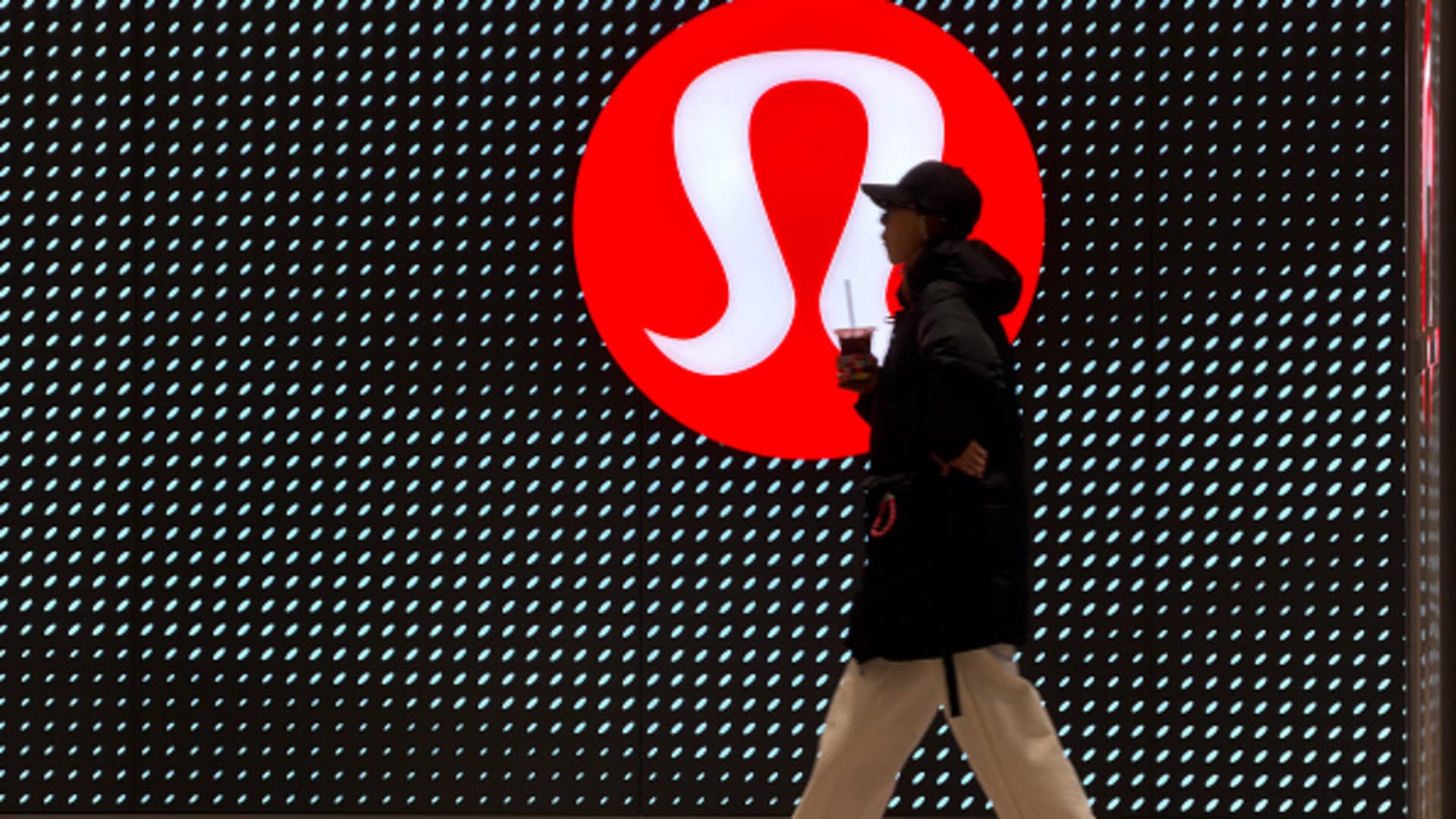
Lululemon offered a weak 2026 outlook on Tuesday as tariffs, higher expenses and a dramatic proxy battle with its founder weigh on its bottom line.
The athleisure company’s guidance for both the current quarter and the fiscal year came in lower than expected on the top and bottom lines.
Lululemon is expecting first quarter sales to be between $2.40 billion and $2.43 billion, weaker than estimates of $2.47 billion, according to LSEG. It anticipates earnings per share will range between $1.63 and $1.68, also weaker than estimates of $2.07.
For the full year, Lululemon is expecting sales to be between $11.35 billion and $11.50 billion, below expectations of $11.52 billion. Earnings guidance of $12.10 to $12.30 per share was also far weaker than estimates of $12.58.
“The work is really underway in terms of our action plan, and we’re really focused on the importance of course correcting on a number of fronts,” interim co-CEO Meghan Frank told CNBC in an interview. “We’ve got a new creative director, his first line is hitting in Q1, we are seeing some green shoots, I would say, from the product in Q1 so we’re excited about some of the momentum we have on that line item. We have had some great response from some of our recent product activations, and then we’re also reducing our speed to market timeline.”
During Lululemon’s holiday quarter, the company beat estimates on both the top and bottom lines, though Wall Street had lowered its expectations for the period in recent months.
Here’s how the Vancouver-based retailer performed during its fiscal fourth quarter compared with what Wall Street was anticipating, based on a survey of analysts by LSEG:
- Earnings per share: $5.01 vs. $4.78 expected
- Revenue: $3.64 billion vs. $3.58 billion expected
The company’s net income for the three-month period that ended Feb. 1 was $586.9 million, or $5.01 per share, compared with $748.4 million, or $6.14 per share, a year earlier.
Sales rose slightly to $3.64 billion, up about 1% from $3.61 billion a year earlier.
Lululemon raised its fiscal fourth-quarter guidance during the ICR conference in Orlando earlier this year, so all eyes were on the company’s 2026 guidance following more than a year of underperformance.
The retailer, always considered a premium brand that rarely offered promotions, had been leaning on discounts to drive sales and move inventory. The company is now working to pull back that strategy this year, Frank said. Lululemon expects the move will weigh on sales in the near term, but it will bring the company back to a full-price business over time, she said.
Meanwhile, it’s seeing a number of pressures on its bottom line. Higher tariffs and the end of the de minimis exemption continue to be a major cost for the company.
This year, Lululemon expects tariffs to cost the company $380 million, up from $275 million last year, on a gross basis. Once mitigation efforts are taken into account, the net impact is expected to be $220 million in 2026, up from $213 million in 2025.
Lululemon has been negotiating with suppliers and taking other actions to reduce its exposure to tariffs, but it isn’t increasing prices to offset the added costs, especially as it looked to promotions to drive sales in recent months. The brand was already priced toward the high end of the market prior to President Donald Trump’s tariff hikes last year, leaving it with fewer tools in its arsenal to offset the duties, especially as it faces intense competition and a slowdown in the athleisure market.
Last year, the company raised prices on a select number of items. Shoppers are still responding favorably so far, but there are no plans to build on those increases for now, said Frank.
Beyond tariffs, the company is also seeing higher expenses from marketing, labor, incentives and costs related to its proxy contest with founder Chip Wilson. Wilson, Lululemon’s largest independent shareholder, has been pressuring the company to make changes to its board of directors and has criticized it for losing sight of its creative vision.
Just before releasing earnings, Lululemon announced it was adding former Levi Strauss CEO Chip Bergh to its board of directors. Bergh was not among the candidates Wilson put forward for consideration, but he does have considerable public company experience and spent around 13 years as Levi’s CEO. During his tenure with the company, Levi began pursuing a more profitable direct selling strategy and sales rose by around 30%.
As part of the announcement, Lululemon said board member David Mussafer, managing partner and chairman of private equity firm Advent, will not stand for re-election during the company’s upcoming 2026 shareholder meeting at the conclusion of his current three-year term. The announcement marks a win for Wilson, who has criticized Mussafer publicly. In a letter to shareholders last month, Wilson pointed out that Mussafer was overseeing the board’s interview process for prospective nominees at a time when he was up for election, creating a potential conflict of interest.
A source familiar with the matter said Wilson had called on Mussafer to step down from the board because he lacks independent leadership, among other issues.
Mussafer didn’t immediately respond to a request for comment.
Prior to the earnings announcement, Wilson issued a statement saying shareholders will be “critically evaluating” any claims of success or improvement from Lululemon when it released results.
“The core issue at lululemon is one the Company has struggled with for years: there is a disconnect between the Company’s creative engine and the Board’s understanding for how brand power and product excellence fuel cultural strength, margin durability and long-term shareholder value,” he said.
Lululemon declined to comment.
While parts of Lululemon’s business are still growing, it has primarily seen that expansion in China and in other international regions, which make up a fraction of overall revenue. Same-store sales in its largest region, the Americas, haven’t grown in around two years, and Lululemon is expecting another year of declines in 2026.
The company said it expects sales in the Americas to decline between 1% and 3% in 2026.
Meanwhile, sales in China are expected to grow around 20%, and the rest of the world by a mid-teens percentage.


Steak ‘n Shake COO Daniel Edwards joins ‘Fox & Friends’ to discuss the company making the switch from frying in vegetable oil to beef tallow.
Steak ‘n Shake is shaking up its “Patriot Milkshake” with a new, chocolate twist.
The milkshake will now be served with a dark chocolate Statue of Liberty, the company announced on Monday.
“Patriot Milkshake now comes with [a] Statue of Liberty. Yes fans, it’s dark chocolate,” the company wrote in a post on X.
The milkshake, which debuted in December, is still priced at $2.50 and will be for the rest of the year, according to the post. The chain previously announced the shake would be available through January.
STEAK ‘N SHAKE PLEDGES $1K CONTRIBUTIONS TO TRUMP ACCOUNTS FOR EMPLOYEES’ CHILDREN

Steak ‘n Shake is Located in the Midwest and Southern U.S. (iStock / iStock)
The company announcement included a photo of the milkshake, which features its classic red, white and blue sprinkles, an American flag on a toothpick and a dark chocolate Lady Liberty atop whipped cream.
The franchise first announced the milkshake in December as an early nod to America’s 250th anniversary, which will be celebrated in July, according to the company.
| Ticker | Security | Last | Change | Change % |
|---|---|---|---|---|
| BH | BIGLARI HOLDINGS INC. | 304.94 | +5.17 | +1.72% |
“Steak n Shake is getting a head start on America’s 250th anniversary of its founding,” the company said in an X post in 2025.
The announcement garnered positive feedback on social media, with one X users writing, “This is what [w]inning looks like.”
STEAK ’N SHAKE TOUTS $2.50 ‘PATRIOT MILKSHAKE’ TO HONOR AMERICA’S SEMIQUINCENTENNIAL

Steak ‘n Shake announced an update to their “Patriot Milkshake” on Monday. The shake will now be served with a dark chocolate Statue of Liberty. (Steak ‘n Shake via X / Unknown)
Alex Bruesewitz, a political consultant and Trump advisor, also reposted the announcement, heralding the addition.
“[Steak ‘n Shake] continues to prove that they are the best fast food chain in America,” Bruesewitz wrote in the post.
FOX Business previously reported that this promotion came as other fast food chains were taking different approaches to dealing with pricing and mounting cost pressures.
FAST FOOD CHAIN SAYS THEY’VE ‘RFK’D’ THEIR FRIES, OPTING FOR HEALTHIER COOKING ALTERNATIVE
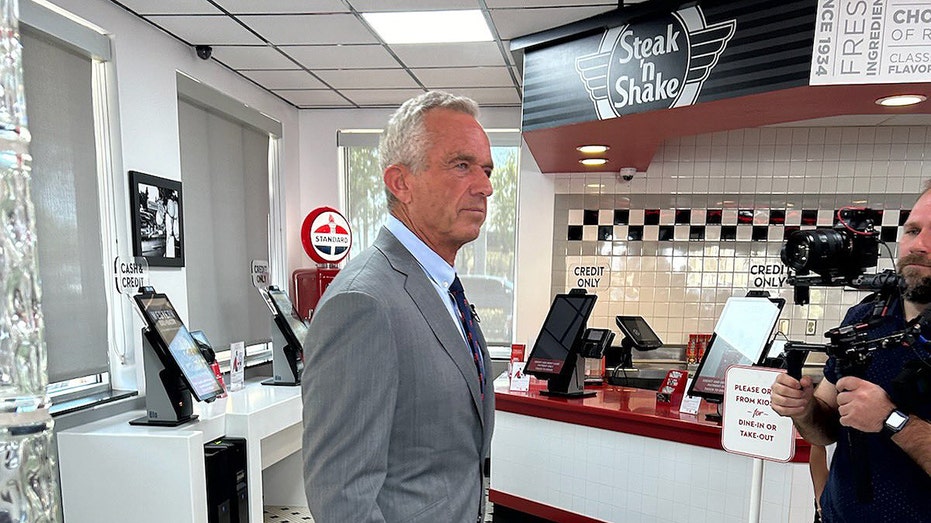
Health and Human Services Secretary RFK Jr. visits a Steak ‘n Shake location last year. (Steak ‘n Shake via X / Unknown)
Some chains, such as Jack in the Box, decided to close locations as part of a “broader turnaround plan.”
Other chains, such as Cava, advised against discounting with their CEO, Brett Schulman, telling FOX Business that “you can’t discount your way to prosperity.”
The company recently made headlines for launching their 100% beef tallow tots, becoming the only restaurant to serve the side dish.
CLICK HERE TO READ MORE ON FOX BUSINESS
This comes after Health and Human Services Secretary Robert F. Kennedy Jr. continues to hammer the food industry to provide healthier options for consumers as part of the “Make America Healthy Again” (MAHA) movement.
Steak ‘n Shake did not immediately respond to FOX Business’ request for comment.

The prominent property developer is set to refurbish the heritage-listed asset and improve its hospitality offering.

The company formally kicked off preparations for the IPO on Tuesday by appointing as many as 17 bankers to handle the issue. Morgan Stanley, HSBC Holdings Plc, JPMorgan Chase & Co., Citigroup Inc. and Goldman Sachs Group Inc. are among nine global banks selected for advisory roles, the people said, asking not to be identified as the information is private.
Domestic advisers include Kotak Mahindra Capital Co., Axis Capital Ltd., JM Financial Ltd. and SBI Capital Markets Ltd., the people added.
Plans for the IPO have gathered steam after the government approved a change in listing requirements that allowed large issuers to dilute as little as 2.5% of their equity. The IPO could be India’s largest-ever IPO and the first by a major unit of billionaire Mukesh Ambani’s flagship company, Reliance, in almost two decades.
The proposed offering is expected to comprise largely secondary share sale by existing investors and could take place later this year. Details including the size, structure and timing of the transaction are still being finalized and are subject to change, the people added.

Representatives for the company and banks didn’t immediately respond to requests for comment outside of business hours.
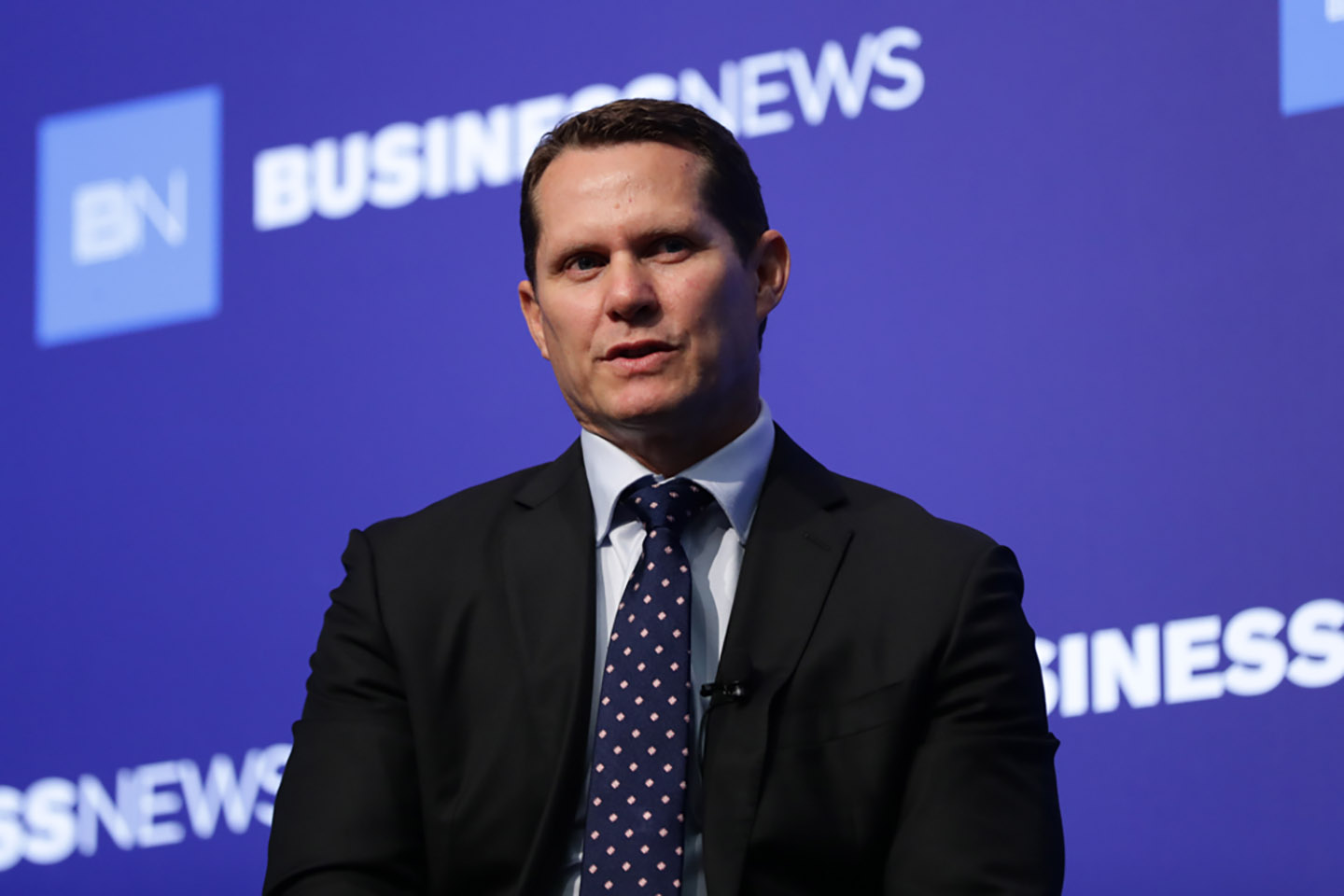
The incoming boss of BHP says he is committed to Australia but has warned local investment was at risk as other nations cut red tape in pursuit of mining money.


Financial analyst by day and a seasoned investor by passion, I’ve been involved in the world of investing for over 15 years and honed my skills in analyzing lucrative opportunities within the market.I specialize in uncovering high quality dividend stocks and other assets that offer potential for long term-growth that pack a serious punch for bill-paying potential. I use myself as an example that with a solid base of classic dividend growth stocks, sprinkling in some Business Development Companies, REITs, and Closed End Funds can be a highly efficient way to boost your investment income while still capturing a total return that follows traditional index funds. I created a hybrid system between growth and income and manage to still capture a total return that is on par with the S&P.
Analyst’s Disclosure: I/we have no stock, option or similar derivative position in any of the companies mentioned, and no plans to initiate any such positions within the next 72 hours. I wrote this article myself, and it expresses my own opinions. I am not receiving compensation for it (other than from Seeking Alpha). I have no business relationship with any company whose stock is mentioned in this article.
Seeking Alpha’s Disclosure: Past performance is no guarantee of future results. No recommendation or advice is being given as to whether any investment is suitable for a particular investor. Any views or opinions expressed above may not reflect those of Seeking Alpha as a whole. Seeking Alpha is not a licensed securities dealer, broker or US investment adviser or investment bank. Our analysts are third party authors that include both professional investors and individual investors who may not be licensed or certified by any institute or regulatory body.
Russian forces take control of two more Ukrainian villages, defence ministry says

Form 4 Figure Technology Solutions Ltd For: 17 March

Data compiled from Prime Database showed that of the approximately ₹1.47 lakh crore earmarked across all stated fund utilisation categories by IPO-bound companies in 2024, 2025 and 2026 so far, around ₹35,055 crore has been allocated toward repayment of borrowings.
Debt repayments by 95 companies constitute nearly a quarter of funds raised in the latest share sales.
 Agencies
 Balance Sheet Needs
A deleveraged capital structure emerges as the top goal of an initial share sale.
Indeed, debt repayment trumps even capital expenditure and expansion, which accounts for Rs 34,458 crore, or 23.3%, of the funds garnered at nearly 200 issuers, the data showed.
“On the face of it, it begins to look like promoters and lenders are using a hot IPO market to offload risk at full price to the public,” said Pradyumna Nag, founder, Prequate Advisory, an investment banking advisory firm. “From a purely technical point of view, it shows that these offers are being engineered around an issuer’s balance sheet needs and building liquidity for insiders – both of which are not focused on building investor wealth or much needed oxygen for productive new projects.”
The data showed that working capital requirements form the next large bucket – at Rs 26,928 crore across 71 issuers, while general corporate purposes, often seen as the least transparent category, accounted for Rs 16,355 crore across 145 companies.
The tilt toward deleveraging is evident in issuance trends.
In 2024, 39 of the 93 IPOs included debt reduction as an objective. That number climbed to 51 out of 103 IPOs in 2025. In 2026 so far, 5 of the 12 IPO launches have already earmarked funds for paring debt.
IPO advisory firms said that this trend is not a positive sign from a capital markets standpoint as this also means the multiplier effect of an IPO’s proceeds is taking place outside the company’s balance sheet rather than within it.
“Until disclosure and investor scrutiny shifts from ‘who is the IPO of’ or ‘how big is the IPO’ to fundamentals such as ‘what share goes into projects earning more than the cost of equity’, India’s IPO boom will keep amplifying the mismatch between subsequent earnings releases and the price at IPO a few years back,” said Nag.
Recent Trend
To be sure, the data showed that this tilt toward deleveraging is a relatively recent phenomenon.
In 2020 and 2021, capital expenditure comfortably outpaced debt repayment as the primary use of IPO proceeds. The crossover came in 2024, when allocations toward debt repayment at Rs 12,014 crore exceeded capex spending of Rs 9,807 crore for the first time.
In 2025, capex regained ground at Rs 21,839 crore compared with Rs 16,733 crore for debt reduction, but the aggregate trend for 2024-2026 still leaves debt marginally ahead.
Not all market participants see this shift as a cause of concern, however.
Many view it as a prudent financial strategy in a buoyant equity market.
“This reflects a conscious move toward optimal capital restructuring, enabling firms to swap debt for equity in a bullish market and de-risk their financial profiles,” said Samir Bahl, CEO, Anand Rathi Advisors.
“Companies are able to increase their PAT margins by lowering interest costs, resulting in savings flowing directly to the bottom line,” Bahl said. “Also, deleveraging strengthens coverage ratios and boosts credit ratings. Ultimately, this positions firms for resilient, efficient, and sustainable growth with a stronger financial runway and greater autonomy.”
The shift toward debt reduction is also driven by its immediate impact on financial metrics. Lower leverage reduces interest burden, improves profitability and strengthens cash flows, while also enhancing valuations.
Business
(VIDEO) Apple’s Foldable iPhone Gains Momentum with iPad-Like Interface, Crease-Reduction Tech

Apple’s long-rumored foldable iPhone is solidifying as one of the most anticipated devices of 2026, with fresh details emerging on its design, software enhancements, production ramp-up and premium pricing. Bloomberg reported March 11 that the device, often dubbed the “iPhone Fold,” will feature significant iOS updates enabling iPad-like layouts, side-by-side app multitasking and tablet-style interfaces when unfolded — a major shift for Apple’s mobile ecosystem.

The book-style foldable will sport an inner display roughly the size of an iPad mini, estimated at 7.8 inches, transforming the phone into a compact productivity tool. When closed, it offers a 5.5-inch outer screen, blending phone portability with tablet functionality. This hybrid approach has excited analysts and fans, with 9to5Mac describing it as combining the beloved iPhone mini and iPad mini into one device.
Software optimizations are key to the experience. Bloomberg’s Mark Gurman noted that iOS will adapt dynamically, supporting multitasking features absent from standard iPhones. This could position the foldable as a bridge between smartphones and tablets, appealing to professionals needing more screen real estate without carrying multiple devices.
Display technology remains a focal point. Early rumors touted a completely crease-free screen thanks to advanced Samsung-supplied panels, including laser-drilled metal plates for stress dispersion and self-healing coatings. However, Gurman tempered expectations, stating the crease is significantly reduced but “not perfect” or entirely eliminated. MacRumors highlighted this nuance in a March 13 roundup, suggesting users temper hype around vanishing creases seen in some prototypes.
Production appears on track for a September 2026 unveiling alongside iPhone 18 Pro models. Forbes reported March 16 that Apple boosted its Samsung Display panel orders to 20 million units from an initial 13-15 million forecast, signaling strong confidence in demand. Mass production of displays is slated to begin in May, with Foxconn handling assembly, TSMC producing the A20 Pro chip on a 2nm process, and other Taiwanese suppliers like Largan Precision and Shin Zu Shing contributing lenses and hinges.
Pricing is expected to reflect the premium positioning, with estimates ranging from $2,000 to $2,400 — well above Samsung’s Galaxy Z Fold 7 at $1,999 and Google’s Pixel 10 Pro Fold at $1,799. PCMag noted the high cost could deter buyers despite advanced features like in-display sensors, 12GB RAM (matching iPhone Air and Pro models) and potential Touch ID integration via the power button instead of Face ID.
The device’s entry comes seven years after Samsung’s first foldable, underscoring Apple’s cautious approach to ensure durability, software polish and market readiness. Supply chain boosts, including a 20% inventory increase reported by Economic Daily News, indicate Apple anticipates robust initial sales, potentially 14 million units in an optimistic scenario.
Speculation about a clamshell “iPhone Flip” variant persists, but current focus remains on the book-style model. No official confirmation has come from Apple, which typically reveals products close to launch.
As the foldable market matures, Apple’s entry could catalyze growth, pressuring competitors to innovate further. With mass production nearing and software tailored for larger screens, the iPhone Fold promises to redefine multitasking on mobile devices.
Industry observers watch closely for any last-minute design tweaks or delays, though consensus points to a fall debut. For now, the device represents Apple’s boldest smartphone evolution in years, blending familiar iOS elements with foldable innovation.

Analysts believe the near-term pressure is more on revenues than margins since cost pass-throughs may protect profitability. Dispatches are slowing mainly because of channel destocking – dealers who loaded up between December and February are now waiting for prices to cool before placing new orders. This could weigh on reported sales for a couple of months.
Sterlite Technologies has been an outlier, gaining 11% in March so far since the company manufactures optical fibre cables (OFC) and, therefore, has lesser exposure to copper and aluminium.
For other companies, copper and aluminium make up nearly two-thirds of production costs, leaving the sector highly sensitive to metal inflation. While price increases are typically passed on, the adjustments come with a lag. A sudden spike, therefore, may result in higher working capital needs.
AgenciesWar Shock Stocks fall 6–17% in March with investors reacting to near-term pressures; Analysts feel cost pass-throughs may still protect profitability
Adding to the pressure, supply disruptions in LPG and natural gas have constrained production for some companies. “While January and February had normal dispatch trends, momentum weakened in early March, a critical month that typically contributes about half of quarterly volumes,” said Manish Valecha, research analyst, Anand Rathi Institutional Equities. He expects muted to mid-single-digit volume expansion depending on how demand shapes up through the rest of the month.
According to Aakash Fadia, lead analyst – consumer durables, YES Securities, customers may defer purchases briefly in anticipation of price corrections though it may be short lived as purchase delays beyond 15-20 days risk pushing their project timelines, thereby affecting profitability. He added that the export segment faces a bigger drag due to high shipping costs and vessel shortages.
“The consumer durables sector will feel a sharper pinch, as intense competition restricts its ability to pass on the copper-price surge, putting margins at risk. In contrast, wires and cables should see only a milder impact because pass-throughs are smoother and margins are structurally higher,” said Fadia. While he is yet to revise estimates, he cautions that industry projections may be trimmed once conditions normalise or even towards the end of the month. For now, the weakness appears operational rather than structural.

Gunman killed and 1 hospitalized after VA clinic shooting, police say

Steak ‘n Shake adds dark chocolate Statue of Liberty to popular milkshake
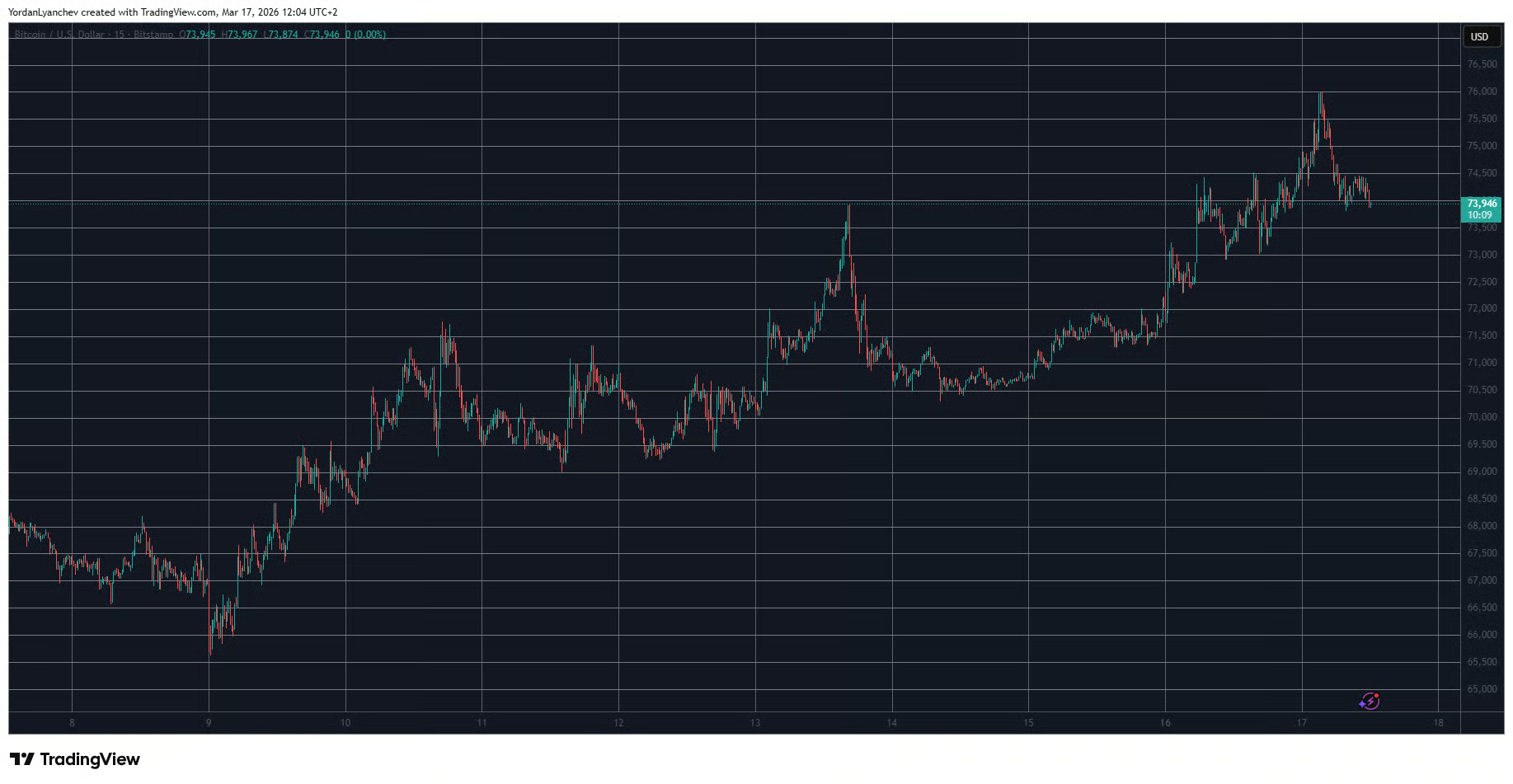
Zcash and MemeCore Soar by Double Digits, Bitcoin Touched $76K: Market Watch


-
 Tech7 days ago
A 1,300-Pound NASA Spacecraft To Re-Enter Earth’s Atmosphere
-
 Crypto World4 days ago
HYPE Token Enters Net Deflation as HyperCore Buybacks Outpace Staking Rewards
-

 Fashion4 days ago
Weekend Open Thread: Addict Lip Glow
-

 Tech2 days ago
Your Legally Registered ‘Motorcycle’ Might Not Count Under Proposed US Law
-
Sports3 days ago
Why Duke and Michigan Are Dead Even Entering Selection Sunday
-

 NewsBeat6 days ago
Residents reaction as Shildon murder probe enters second day
-

 Business2 days ago
Search for Savannah Guthrie’s Mother Enters Seventh Week with No Arrests
-

 Business7 days ago
Search Enters Sixth Week With New Leads in Tucson Abduction Case
-

 Sports6 days ago
PWHL, Senators discussing plan to keep Charge in Ottawa
-

 Business4 days ago
US Airports Launch Donation Drives for Unpaid TSA Workers as Partial Government Shutdown Enters Fifth Week
-
 Tech9 hours ago
Are Split Spacebars the Next Big Gaming Keyboard Trend?
-
Crypto World3 days ago
Coinbase and Bybit in Investment Talks: Could Bybit Finally Enter the US Crypto Market?
-

 NewsBeat6 days ago
I Entered The Manosphere. Nothing Could Prepare Me For What I Found.
-

 Business4 days ago
Country star Brantley Gilbert enters growing non-alcoholic beer market
-

 Business2 days ago
Australian shares drop as Iran war enters third week
-

 Crypto World2 days ago
Crypto Lender BlockFills Enters Chapter 11 with Up to $500M in Liabilities
-

 Sports4 days ago
College Basketball Best Bets: Conference Tournament Semifinal Picks
-

 Politics7 days ago
Trump Says Middle East Is ‘Very Lucky’ That He’s President
-
 Crypto World6 days ago
Three Binance Charts May Be Hinting at Bitcoin’s Next Move
-
 Business5 days ago
Trump demands Powell cut rates as Iran conflict raises energy prices


You must be logged in to post a comment Login