Enerpac Tool Group Corp. (EPAC) Q2 2026 Earnings Call March 26, 2026 8:30 AM EDT
Company Participants
Darren Kozik – Executive VP & CFO Paul Sternlieb – CEO, President & Director
Advertisement
Conference Call Participants
Will Gildea – CJS Securities, Inc. Robert Samuel Karlov – William Blair & Company L.L.C., Research Division Thomas Hayes – ROTH Capital Partners, LLC, Research Division Steven Silver – Argus Research Company
Advertisement
Presentation
Operator
Hello, and welcome to Enerpac Tool Group Second Quarter Fiscal 2026 Earnings Call. Please note that this call is being recorded. [Operator Instructions]
I’d now like to hand the call over to Darren Kozik, CFO. Please go ahead.
Advertisement
Darren Kozik Executive VP & CFO
Thank you, operator. Good morning, and thank you for joining us for Enerpac Tool Group’s Earnings Call for the Second Quarter of Fiscal 2026. Joining me on the call today is our President and Chief Executive Officer, Paul Sternlieb. The slides referenced on today’s call are available on the Investor Relations section of the company’s website, which you can download and follow along. A recording of today’s call will also be made available on our website.
Today’s call will reference non-GAAP measures. You can find a reconciliation of GAAP to non-GAAP measures in the press release issued yesterday. Our comments will also include forward-looking statements that are subject to business risks that could cause actual results to be materially different. Those risks include matters noted in our latest SEC filings.
Advertisement
Now I will turn the call over to Paul.
Paul Sternlieb CEO, President & Director
Thanks, Darren, and thank you, everyone, for joining us this morning. As we look back at our second quarter of fiscal 2026 performance, there was a lot to be pleased about. Within our Industrial Tools & Service segment or IT&S, product sales accelerated growing 6% organically year-over-year. That represents the highest growth in products that we’ve enjoyed
Gjensidige Forsikring ASA (GJNSY) Discusses Q1 Preclose Update Including Weather Impact, Dividend Proposal, and Baltic Operations Sale March 26, 2026 9:00 AM EDT
Company Participants
Mitra Negård – Head of Investor Relations Jonas Sortland Fougner
Presentation
Advertisement
Mitra Negård Head of Investor Relations
Good afternoon, everyone, and welcome to Gjensidige’s First Quarter 2026 Pre-close Call. My name is Mitra Negård, and I am Head of Investor Relations. With me, I have our IRO, Jonas Fougner. Please note that this call is being recorded, and a recording will be published on our Investor Relations website after the call.
We will start with going through the Q1 reminder, which was published on our website yesterday. This reminder highlights relevant public information and will not include any new business updates. Afterwards, we will open up for a Q&A session. As always, we only answer questions related to already disclosed and public information. And please note that if you want to ask questions, you need to log on via the Teams app. Over to you, Jonas.
Advertisement
Jonas Sortland Fougner
Let us start with a few key dates. Our silent period starts on the 1st of April, and we will be releasing our Q1 results on the 29th of April. As always, we kindly ask you to forward your estimates using the template Mitra sent you yesterday. And please fill in all open cells in the sheet. We have included control lines to help you identify and avoid potential errors in your sheet.
Please make sure the control lines are error-free before sending the file back to us. The deadline for sending us your estimates is the 16th of April. We will publish consensus on our website on the 24th of April. Now let’s move on to the reminder. As usual, we start with comments on the weather. For the sake of
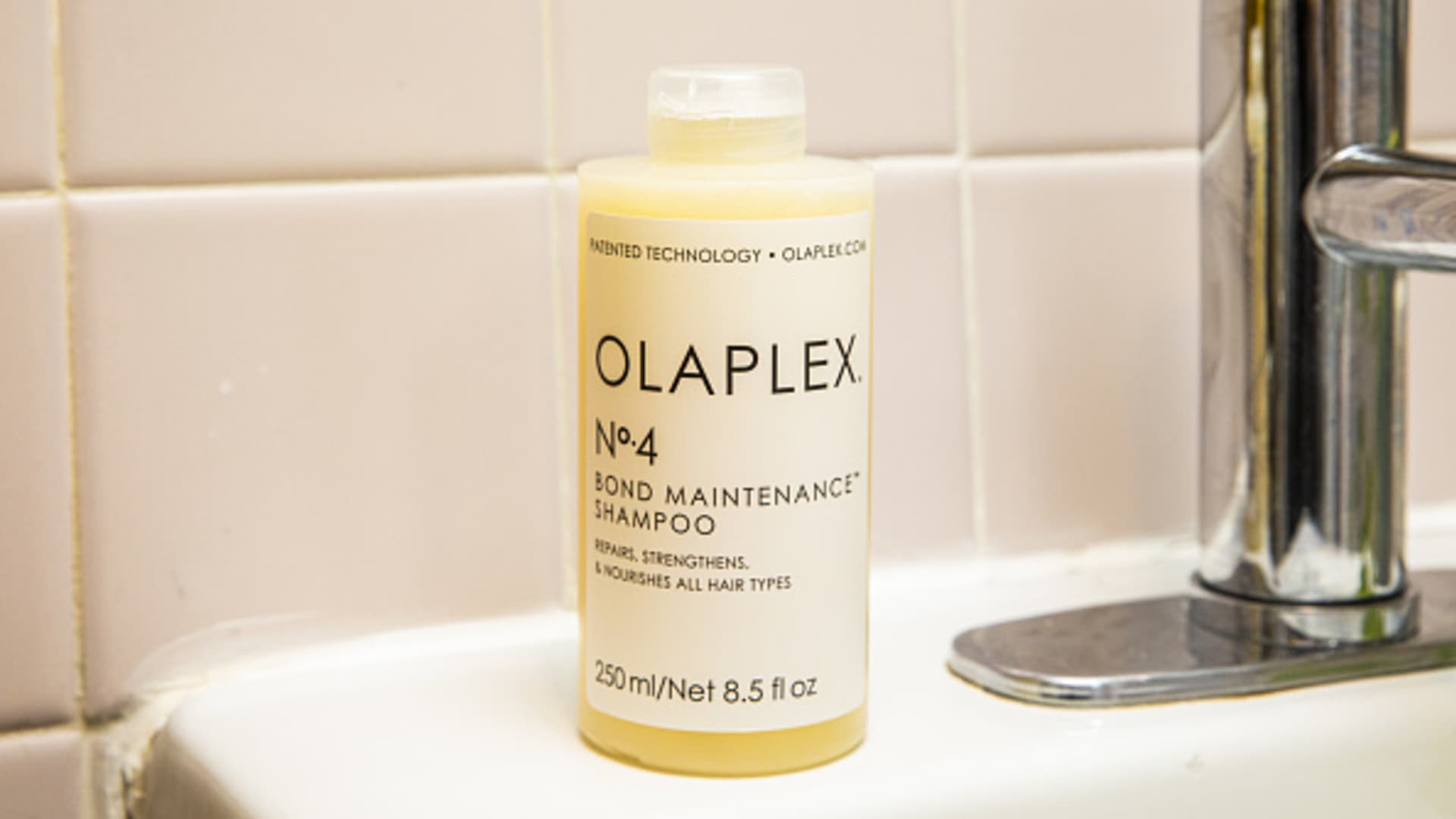
A bottle of Olaplex N.4 Bond Maintenance Shampoo arranged in Denver, Colorado, US, on Thursday, Dec. 8, 2022.
David Williams | Bloomberg | Getty Images
German consumer brand Henkel announced Thursday that it has agreed to acquire all of prestige haircare brand Olaplex for $1.4 billion.
Advertisement
The company said the deal, at an offer price of $2.06 per share, was unanimously approved by Olaplex’s board of directors and marks an “important milestone” in Henkel’s business strategy.
“The planned acquisition of OLAPLEX is fully in line with Henkel’s strategy to expand its portfolio through compelling, value-adding M&A activities,” Henkel CEO Carsten Knobel said in a statement. “This transaction allows us to expand our presence in premium hair care. The brand creates compelling opportunities for future growth and innovation.”
Henkel owns brands like Got2b and Purex.
Olaplex said the deal represented a premium of more than 50% over its closing stock price on Wednesday and would allow the company to explore new opportunities for innovation and growth, as well as expand its international reach.
Advertisement
“This step is a testament to the momentum we’ve achieved in our transformation and the significant opportunities ahead for OLAPLEX to continue shaping the future of hair health and pursue long-term growth,” Olaplex CEO Amanda Baldwin said in a statement.
Shares of the company, which closed on Wednesday around $1.30 per share, shot up 50% in morning trading following the announcement.
Olaplex had been struggling as a public company over the past few years, dealing with the fallout of a lawsuit alleging hair loss and increased competition in the prestige hair care space.
Prior to the deal, Olaplex’s stock had lost nearly 95% of its value since its initial public offering in 2021, when it opened at $25 per share during a boom for IPOs. It had been trying to turn around its business, including by launching a new product last month and working to rewrite its reputation among consumers.
Advertisement
Analysts had previously told CNBC that they were excited at the prospect that the company may go private.
The NFL’s Rooney Rule, a longstanding policy designed to promote diversity in coaching and front-office hiring, faces renewed scrutiny in 2026 following a disappointing head coaching cycle that produced only one minority hire and zero Black head coaches among 10 openings.
Named after the late Pittsburgh Steelers owner Dan Rooney, the rule requires NFL teams to interview at least two minority candidates — a definition that now includes women — for vacant head coach, general manager and coordinator positions. Teams must also interview at least one minority candidate for the quarterbacks coach role.
Commissioner Roger Goodell acknowledged the need to reevaluate the league’s diversity efforts after the latest hiring cycle, stating the NFL would review the Rooney Rule and related programs to address ongoing challenges. “We still have more work to do,” Goodell said during Super Bowl week.
Origins and Evolution of the Rooney Rule
The policy originated in 2002-2003 after a season in which prominent Black coaches Tony Dungy and Dennis Green were fired despite solid records, leaving the league with just one minority head coach. The NFL’s Workplace Diversity Committee, chaired by Rooney, recommended requiring teams to interview at least one minority candidate for head coaching vacancies.
Advertisement
The league adopted the rule in December 2002. Early enforcement included a $200,000 fine against the Detroit Lions in 2003 for failing to interview a minority candidate. Over the years, the NFL strengthened the policy. In 2021, teams were required to interview at least two external minority candidates in person for head coach and GM openings. The 2022 updates expanded the definition of “minority” to include women and added requirements for coordinator and quarterbacks coach positions.
Additional measures include the NFL’s Accelerator Program, compensatory draft picks for teams that develop minority coaches who become head coaches or GMs elsewhere, and a requirement that every team employ a female or minority offensive assistant coach.
Current Requirements in 2026
Under the existing framework:
Advertisement
– Head coach, GM and coordinator openings require interviews with at least two minority candidates. – Quarterbacks coach openings require at least one minority candidate interview. – Interviews for head coach and GM positions must include external candidates and be conducted in person where possible. – Compliance is mandatory before a hire can be finalized, with potential penalties for violations at the commissioner’s discretion.
The rule aims to combat unconscious bias by ensuring decision-makers meet qualified diverse candidates who might otherwise be overlooked in traditional “old boys’ network” hiring practices. Many successful head coaches begin their ascent in the quarterbacks room, making the QB coach provision particularly strategic for long-term pipeline development.
Mixed Results and Recent Criticism
The Rooney Rule produced early gains. The number of Black head coaches rose from two in 2002 to a peak of seven or more in some seasons. However, progress has stalled or reversed at times. Entering the 2026 season, the NFL has five minority head coaches by the league’s definition: Todd Bowles (Buccaneers), Aaron Glenn (Jets), DeMeco Ryans (Texans), Dave Canales (Panthers, Hispanic) and Robert Saleh (Titans, Lebanese-American Muslim). Only three are Black.
Advertisement
The 2026 offseason hiring cycle drew sharp criticism after 10 head coaching vacancies resulted in just one minority hire (Robert Saleh) and no Black coaches. It marked the fifth time since 2003 that no Black coaches were hired in a cycle. Goodell noted that teams complied with or exceeded interview requirements, yet outcomes remained disappointing.
Critics argue the rule can lead to “sham interviews” where candidates are brought in solely to satisfy requirements without genuine consideration. Others point to pipeline issues, particularly the underrepresentation of minorities in offensive coordinator roles, which often serve as the primary stepping stone to head coaching jobs.
Legal and Political Challenges
In a significant development this week, Florida Attorney General James Uthmeier warned NFL Commissioner Roger Goodell that the Rooney Rule violates Florida law and constitutes illegal affirmative action. The letter demands the league confirm by May 1, 2026, that it will no longer enforce the rule or related policies in Florida, or face civil rights enforcement actions.
Advertisement
Uthmeier cited expansions that include women as minorities, compensatory draft picks and mandatory hiring of minority or female offensive assistants as problematic. The warning reflects broader post-Supreme Court scrutiny of race-conscious policies following the 2023 Students for Fair Admissions decision.
The NFL has not yet publicly responded in detail, but the league maintains that its diversity initiatives are about expanding opportunity rather than quotas. Supporters, including original architects of the rule, argue it remains a net positive despite imperfections and urge continued refinement rather than abandonment.
Broader Impact and League Programs
Beyond the interview mandate, the NFL operates multiple complementary initiatives. The league tracks diversity in coaching, scouting and front offices through annual reports. Fellowship programs and coaching summits aim to build the talent pipeline at earlier career stages.
Advertisement
The Accelerator Program provides intensive development for promising minority coaches. Some teams have embraced the spirit of the rule by conducting more extensive searches and prioritizing diverse slates organically.
Research on the rule’s effectiveness has been mixed. Some studies show modest increases in minority representation in certain roles, while others highlight persistent gaps in promotion rates from assistant to coordinator positions. Critics note that while player demographics are roughly 70% Black, leadership positions lag significantly.
Future Outlook
As the NFL prepares for its 2026 annual meeting and beyond, diversity hiring will likely remain a prominent topic. Goodell has signaled openness to further adjustments, emphasizing the need to address today’s challenges rather than relying solely on policies designed for yesterday’s landscape.
Advertisement
Teams continue to face pressure from fans, advocacy groups and internal stakeholders. Some owners have expressed frustration with the slow pace of change, while others defend the rule as a necessary tool to counteract bias in a highly networked industry.
The Rooney Rule has influenced hiring practices far beyond football. Corporations, universities and other sports leagues have adopted similar interview requirements. Its evolution reflects ongoing national debates about merit, opportunity and the best methods to achieve workplace diversity.
For the NFL, the policy’s future may hinge on balancing legal risks, stakeholder expectations and measurable progress in hiring outcomes. Whether through refinements to interview requirements, stronger pipeline development or new incentives, the league faces the challenge of turning compliance into genuine opportunity.
Ultimately, the Rooney Rule was never intended as a complete solution but as a mechanism to open doors. Its longevity — now more than two decades — demonstrates both the persistence of the underlying issue and the difficulty of achieving lasting structural change in one of America’s most visible industries.
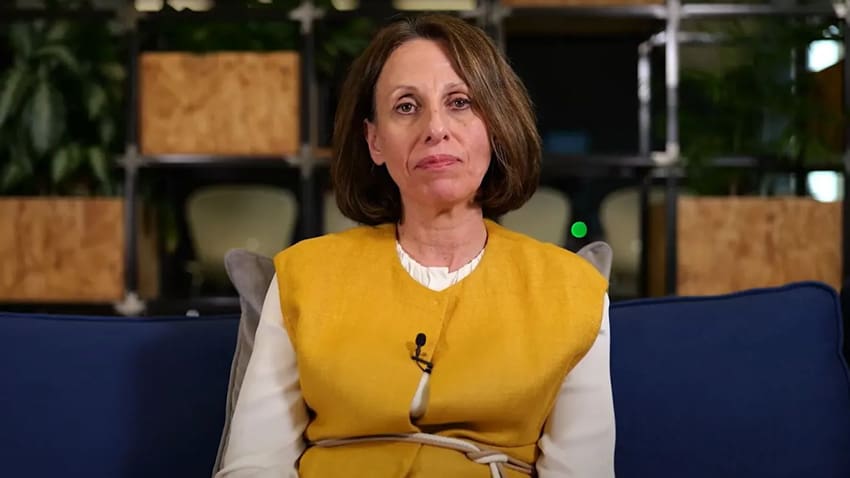
Co-op Group has confirmed that chief executive Shirine Khoury-Haq will step down, following mounting pressure over workplace culture concerns and a difficult year marked by losses and a damaging cyberattack.
Khoury-Haq, who has led the organisation since 2022 and spent seven years with the business, will be replaced on an interim basis by Kate Allum while the board begins the search for a permanent successor.
Her departure comes after reports of a “toxic culture” within senior leadership, alongside claims of falling morale, high-profile departures and operational challenges across the group.
The Co-op revealed that it swung to an underlying pre-tax loss of £126 million in its latest financial year, compared with a £45 million profit the previous year. Revenues also declined by 2.3 per cent to £11 billion, reflecting disruption to trading and changing consumer behaviour.
The group said the results were heavily shaped by its response to a major cyberattack, which forced it to restrict systems in an effort to contain the threat. While necessary, the measures had a significant commercial impact.
Advertisement
The company estimates the attack reduced revenues by £285 million and cut profitability by £107 million, including £86 million in lost margin and £21 million in additional costs.
The food division, the largest part of the business, was particularly affected, with sales falling 2 per cent to £7.25 billion. The disruption led to empty shelves in stores and altered shopping patterns, which continued to weigh on performance even after systems were restored.
Market share also slipped, falling to 5 per cent over a 12-week period, down from 5.3 per cent a year earlier, as the group lost ground to discounters and larger supermarket rivals.
Alongside the financial pressures, the organisation has faced scrutiny over its internal culture. A letter sent to board members, reportedly from senior staff, described an environment of “fear and alienation”, raising questions about leadership and decision-making at the top of the business.
Advertisement
The Co-op said it did not recognise those criticisms as representative of the wider organisation, emphasising its co-operative structure and commitment to inclusive decision-making. However, the reports have added to the challenges facing the group during a period of significant change.
Khoury-Haq said the timing of her departure reflects the next phase of the company’s transformation strategy.
“It has been an honour to lead our Co-op,” she said, adding that the business is now positioned to move forward with a programme of stabilisation and long-term reform that will extend beyond her planned tenure.
Her strategy had focused on rebuilding the group’s financial position, reducing debt and modernising its IT systems — issues that have been central to the Co-op’s operational challenges in recent years.
Advertisement
The company said she had overseen a significant turnaround between 2022 and 2024, including a 95 per cent reduction in debt and a 30 per cent increase in profits over that period, before the latest setbacks.
The Co-op, which employs around 54,000 people and operates more than 2,300 food stores and 800 funeral homes, continues to face intense competition across its core markets.
Discounters such as Aldi and Lidl have expanded aggressively, while established rivals including Tesco and Sainsbury’s have strengthened their positions, leaving the Co-op under pressure to differentiate its offering.
At the same time, the wider economic environment remains challenging, with inflation, shifting consumer behaviour and geopolitical uncertainty affecting demand.
Advertisement
Khoury-Haq acknowledged these headwinds, warning that “trading conditions remain difficult” and that external pressures are likely to persist.
The board now faces the task of appointing a new chief executive capable of navigating the next stage of the group’s recovery and transformation.
Group chair Debbie White thanked Khoury-Haq for her leadership during a turbulent period, particularly in guiding the organisation through the cyberattack and broader restructuring efforts.
For the Co-op, the leadership transition comes at a critical juncture. Restoring profitability, rebuilding trust internally and externally, and adapting to a rapidly evolving retail landscape will be central to its future.
Advertisement
As the organisation seeks to stabilise after a challenging year, the next phase of its strategy will be closely watched by both the market and its millions of members.
Amy Ingham
Amy is a newly qualified journalist specialising in business journalism at Business Matters with responsibility for news content for what is now the UK’s largest print and online source of current business news.
GEELONG, Australia — The Geelong Cats held off a determined Adelaide Crows side to secure an eight-point victory in a rain-affected contest at GMHBA Stadium on Thursday night, improving to a strong start in the 2026 Toyota AFL Premiership season.
Geelong Cats vs. Adelaide Crows: Geelong Edges Adelaide by 8 Points in Gritty AFL Thriller
Geelong finished with 9.14 (68) to Adelaide’s 9.6 (60) in Round 3, snapping a potential slide after an undermanned Crows outfit mounted a spirited comeback but fell short in the dying stages. The win keeps the Cats in the mix early in the season while dealing Adelaide a second consecutive narrow loss.
Played in wet and slippery conditions typical of autumn evenings in Geelong, the match featured physical contests, costly penalties and several standout individual performances. Geelong’s greater efficiency in front of goal and ability to win key moments in the final quarter proved decisive.
Match Summary and Quarter-by-Quarter Breakdown
Geelong started strongly in the first quarter, capitalizing on two 50-metre penalties conceded by Adelaide’s Darcy Fogarty. Unlikely goal kicker Tom Stewart converted one from long range, marking just his seventh career major and giving the Cats an early momentum boost. Geelong led 28-14 at the first change after kicking four goals to Adelaide’s two.
Adelaide fought back in the second term, outscoring Geelong and narrowing the gap through slick transition play and individual brilliance. Luke Pedlar’s contested win on the wing set up Zac Taylor for a crucial goal, while Riley Thilthorpe was active around the ground. At halftime, Geelong held a slim advantage.
Advertisement
The third quarter saw both sides trade goals in a tight arm-wrestle. Adelaide briefly threatened to take control, but Geelong’s midfield responded with disciplined ball movement. The Cats entered the final change with a modest lead.
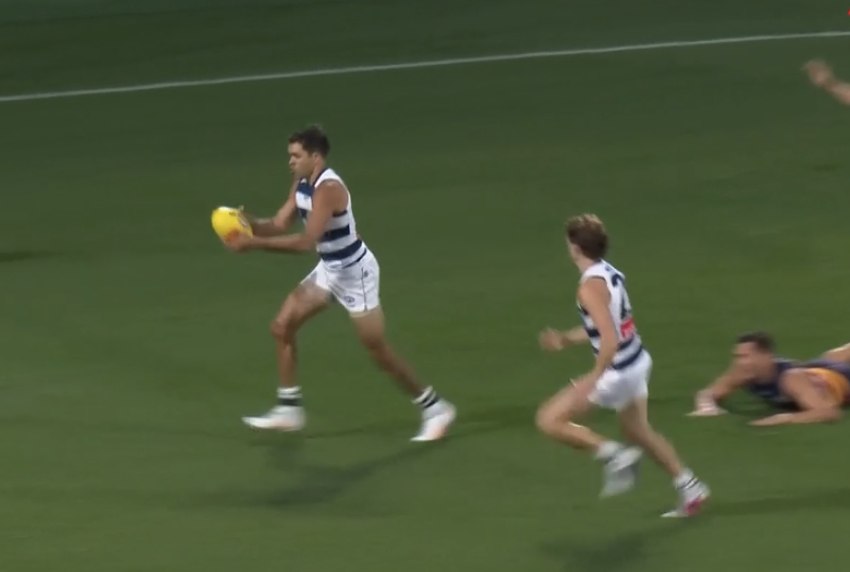
In the last quarter, Geelong steadied under pressure. Oliver Dempsey delivered a clutch goal to seal the result, while Jack Martin produced a moment of magic, gathering a wet football at pace to kick a vital major after an umpiring decision went against the Crows. Adelaide pushed hard late but could not bridge the gap, finishing with fewer scoring shots despite competitive possession numbers.
Key Performances and Statistics
Geelong’s midfield and defense stood tall in the greasy conditions. Mark Blicavs battled effectively in the ruck, while Sam Mannagh earned praise for a strong first-half contribution. Tom Stewart’s early goal and defensive reliability added value, and Oliver Dempsey’s composure late proved match-winning.
For Adelaide, the Crows were without key players including Jordan Dawson, Taylor Walker and Rory Laird, forcing coach Brad Scott to blood debutant Finnbar Maley from North Melbourne. Despite the absences, Zac Taylor and Luke Pedlar provided spark, and Darcy Fogarty remained a focal point up forward despite the early penalties.
Advertisement
Stats reflected a hard-fought contest: Adelaide edged total disposals slightly (around 750 to Geelong’s 742), but Geelong won more clearances (69-67) and tackles. Inside-50 entries were nearly even, yet Geelong’s accuracy in the wet proved superior with 14 behinds compared to Adelaide’s six.
Umpiring came under scrutiny, with one late non-call on a last-touch situation labelled a “farce” by some observers. Adelaide coach Brad Scott expressed frustration post-match over the slow start and several key decisions, while Geelong players celebrated a gritty four-point haul on the ladder.
Context and Implications
The match highlighted Geelong’s resilience at home, where they have historically been difficult to beat. GMHBA Stadium’s conditions favored the Cats’ experienced core, who adapted better to the slippery surface and capitalized on Adelaide’s errors.
For the Crows, the loss extends early-season challenges. Missing experienced leaders hurt their structure, particularly in stoppages and defensive transitions. Scott will likely demand a sharper opening quarter in future games, as Adelaide has now dropped two close encounters.
Advertisement
The result adds early intrigue to the 2026 season. Geelong demonstrated they remain competitive despite roster evolution, while Adelaide showed fight but must address injury concerns and execution under pressure.
Broader AFL talking points included the impact of wet-weather football on scoring and the growing conversation around umpiring consistency. Fans and commentators debated the balance between physicality and rule enforcement in slippery conditions.
Notable Moments from the Highlights
Darcy Fogarty’s two first-quarter 50-metre penalties gifted Geelong easy scores and set an early tone.
Tom Stewart’s long-range goal from the penalty provided an unlikely highlight.
Luke Pedlar’s wing contest and Zac Taylor’s resulting goal showcased Adelaide’s counter-attacking potential.
Jack Martin’s skillful goal in the wet after a controversial decision lifted Geelong at a critical juncture.
Oliver Dempsey’s sealer in the final minutes triggered celebrations among the home crowd.
These moments, captured in official AFL highlights, underscored the game’s intensity and the small margins that decide modern AFL matches.
What’s Next for Both Teams
Geelong will look to build on the victory with improved percentage and consistency as the season progresses. Their home-ground advantage remains a significant asset.
Adelaide faces a tough road ahead and must find ways to integrate returning players while maintaining competitiveness. The Crows’ young talent showed promise, suggesting long-term potential if they can tighten defensive structures and improve starts.
Advertisement
For fans unable to attend, the full match replay and extended highlights packages are available on official AFL platforms and broadcasters.
The Cats’ narrow win keeps them in the early-season conversation, while Adelaide will regroup ahead of their next assignment. In a competition where every point counts, Geelong’s ability to grind out results in adverse conditions could prove valuable as the premiership race intensifies.















































You must be logged in to post a comment Login