
Business
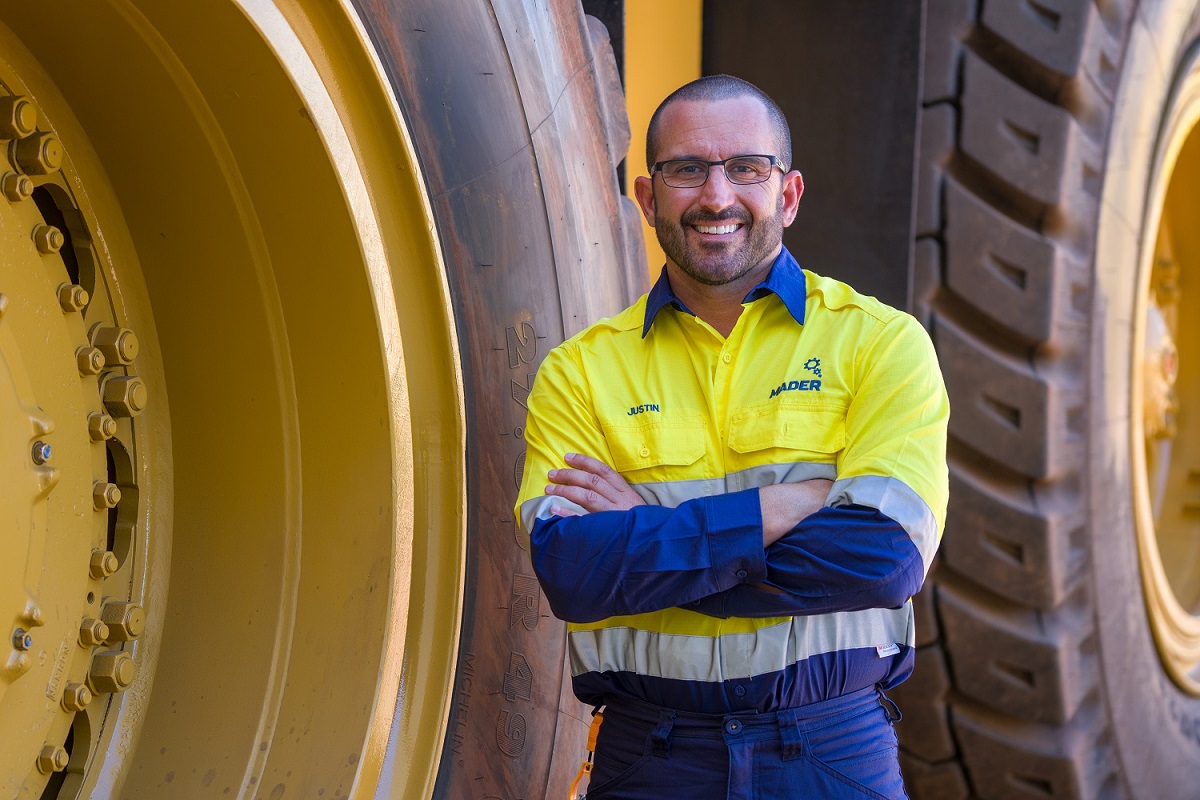
Mader half-year profit up 17 pc


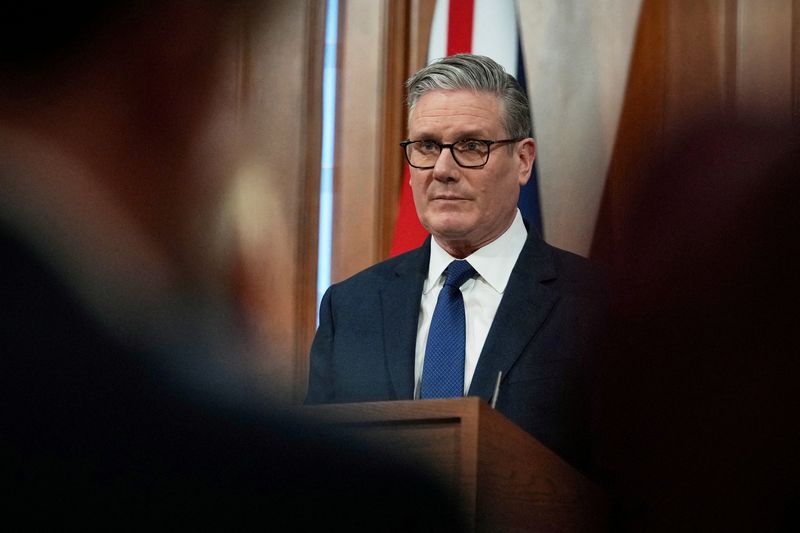

UK pauses its plan to cede Chagos Islands after US opposition


My articles typically cover macroeconomic trends, portfolio strategy, value investing, and behavioral finance. I like to profit from the biases and constraints of other investors.
Analyst’s Disclosure: I/we have no stock, option or similar derivative position in any of the companies mentioned, and no plans to initiate any such positions within the next 72 hours. I wrote this article myself, and it expresses my own opinions. I am not receiving compensation for it (other than from Seeking Alpha). I have no business relationship with any company whose stock is mentioned in this article.
Seeking Alpha’s Disclosure: Past performance is no guarantee of future results. No recommendation or advice is being given as to whether any investment is suitable for a particular investor. Any views or opinions expressed above may not reflect those of Seeking Alpha as a whole. Seeking Alpha is not a licensed securities dealer, broker or US investment adviser or investment bank. Our analysts are third party authors that include both professional investors and individual investors who may not be licensed or certified by any institute or regulatory body.
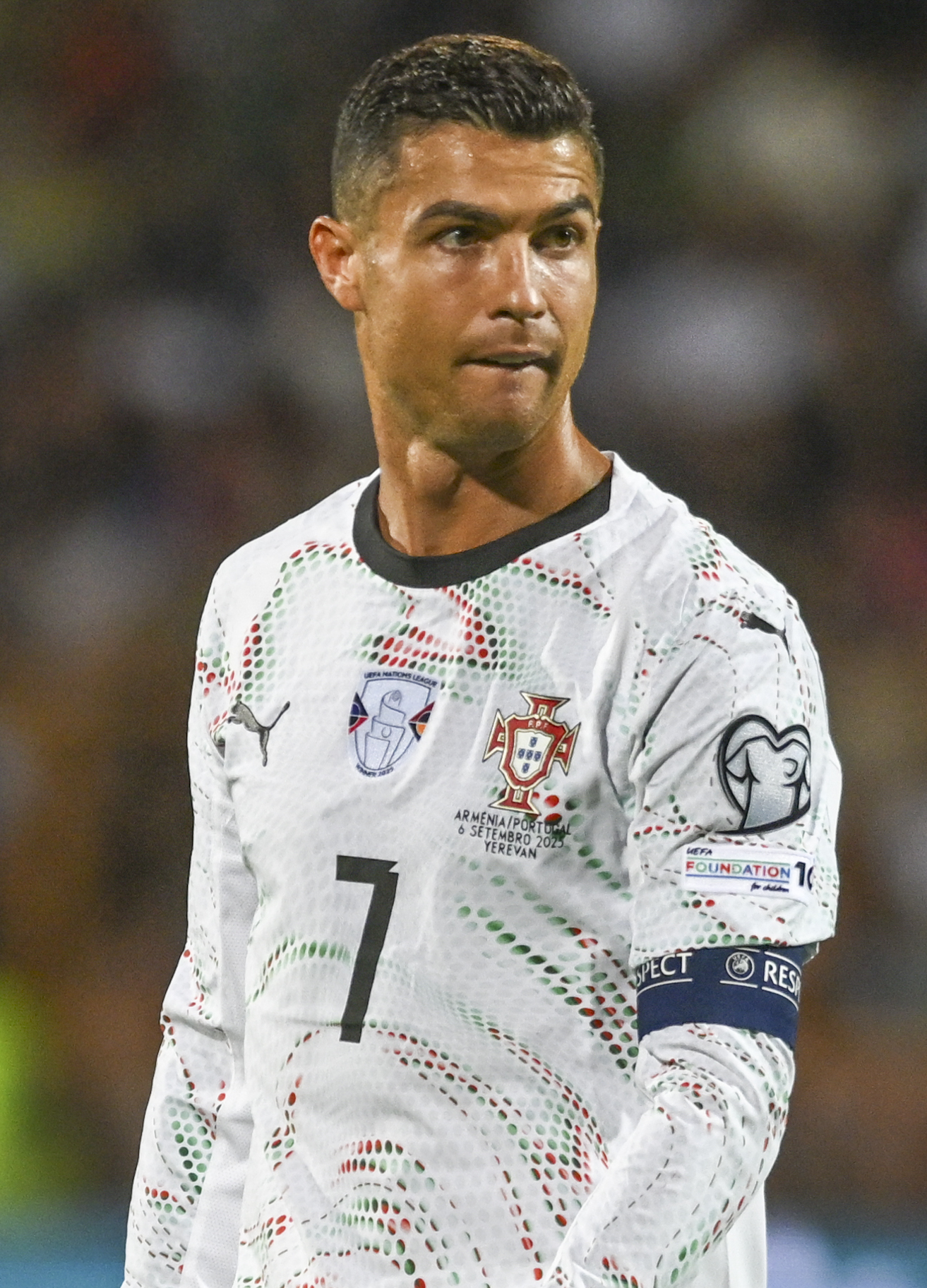
LISBON, Portugal — Cristiano Ronaldo has delivered a series of positive updates on his recovery from a right hamstring injury, calming widespread concerns that the setback could diminish his performance or threaten his participation in the 2026 FIFA World Cup this summer.

The Portuguese superstar, who turned 41 in February, sustained the muscle injury on Feb. 28 during Al Nassr’s Saudi Pro League match against Al Fayha. He was substituted late in the contest after showing discomfort and subsequently missed several club fixtures as well as Portugal’s March friendlies against Mexico and the United States.
Initial reports described the issue as a minor hamstring strain, though Al Nassr manager Jorge Jesus noted at the time that it proved “more serious than expected,” prompting Ronaldo to undergo specialized rehabilitation in Madrid. Medical assessments pointed to a recovery window of two to four weeks, with the Portugal national team opting for caution by leaving their captain out of the March international window.
By late March, Ronaldo began sharing encouraging signs of progress on social media. Posting images and videos of targeted gym work and leg exercises, he captioned one update simply: “Getting better every day.” The message quickly went viral, easing fan anxiety about his readiness for the expanded 48-team tournament co-hosted by the United States, Canada and Mexico.
Portugal coach Roberto Martinez moved swiftly to quell speculation that the injury might sideline the all-time international leading scorer. “No, he’s not in danger,” Martinez told reporters in March. “It’s a minor muscle injury, and we think he can return in a week or two. Everything Cristiano has done physically this season shows that he’s in great shape.”
Martinez emphasized that Ronaldo’s place in the squad for the World Cup — expected to be his sixth and likely final appearance in the tournament — was never seriously in doubt. The veteran forward continued individual training in Riyadh and Madrid before rejoining Al Nassr’s group sessions.
By early April, Ronaldo had returned to full training with Al Nassr. On April 3, he marked his comeback in emphatic fashion, scoring a brace — including a penalty and a clinical strike — in a 5-2 league victory over Al Najma. The performance pushed his official career goal tally closer to the landmark 1,000-goal milestone, with reports confirming he had reached 967 goals at that point.
Fabrizio Romano, citing well-placed sources, reported April 2 that Ronaldo was “back available for Al Nassr and set to be called up” for Portugal duty as well. The recovery outlook remains positive, and his leadership role within the national team appears secure.
At 41, Ronaldo enters the 2026 World Cup as one of the oldest players in the competition’s history, yet his longevity continues to defy expectations. He has maintained elite-level output for Al Nassr this season, contributing dozens of goals and assists despite the physical demands of the Saudi Pro League. The brief hamstring layoff interrupted that rhythm but appears not to have derailed his preparations.
Medical experts note that hamstring injuries in older athletes can sometimes lead to reduced explosiveness or recurring issues if not managed carefully. However, Ronaldo’s rigorous personal training regime, combined with access to world-class physiotherapy, has historically allowed him to bounce back stronger. Portugal’s medical staff continues to monitor his workload closely in the final weeks before the tournament opens June 11.
Portugal qualified comfortably for the 2026 finals, with Ronaldo contributing key goals during the campaign. The team will enter as one of the European contenders, boasting a talented squad featuring Bruno Fernandes, Bernardo Silva, Rafael Leão and rising stars. Ronaldo’s presence as captain and focal point in attack remains central to their ambitions.
Analysts suggest that even a slightly diminished Ronaldo could still prove decisive in a tournament featuring expanded group stages and more matches overall. His experience in high-pressure knockout scenarios, aerial ability and penalty-taking prowess provide intangible value that younger teammates draw upon.
Questions about performance impact center on Ronaldo’s explosive speed and recovery between games. The World Cup’s condensed schedule across three host nations could test endurance, particularly for a player managing minor muscular concerns. Yet supporters point to Ronaldo’s track record: he has overcome numerous injuries throughout his career, including significant setbacks at Real Madrid, Juventus and Manchester United.
Ronaldo himself has projected confidence. In interviews and social media posts, he has reiterated his focus on returning to peak condition and leading Portugal as far as possible. “The World Cup is not at risk,” Martinez reiterated when addressing the squad selection for friendlies.
As of mid-April 2026, Ronaldo has resumed competitive action with Al Nassr, giving him roughly two months to sharpen match fitness before Portugal’s likely group-stage opener. Club fixtures in the Saudi league and any remaining continental commitments will serve as vital preparation.
The injury episode has sparked broader discussions about player longevity in modern football. At an age when most professionals have retired, Ronaldo continues to set benchmarks. His disciplined diet, sleep patterns and training habits have become case studies for aspiring athletes.
Portugal’s depth provides a safety net. Should Ronaldo require additional recovery time, options like Gonçalo Ramos or Diogo Jota exist in attack. Yet few doubt that the five-time Ballon d’Or winner will be in the starting XI when the Seleção takes the field in North America.
Fan reaction on social media has shifted from worry to excitement following Ronaldo’s brace and training updates. Hashtags related to his recovery and World Cup preparations have trended globally, underscoring his enduring global appeal.
Looking ahead, the coming weeks will be telling. Portugal is expected to name a provisional squad in May, with final confirmation closer to the tournament. Ronaldo’s goal-scoring form upon full return will offer the clearest indicator of his readiness.
For now, the narrative surrounding Cristiano Ronaldo’s hamstring injury has moved from potential crisis to manageable precaution. With positive medical feedback, visible progress on the pitch and unwavering support from his national team coach, the Portuguese icon appears well-positioned to chase one final shot at World Cup glory.
Whether he can replicate the explosive performances of his youth remains an open question, but history suggests underestimating Ronaldo at any age is unwise. As the countdown to June intensifies, fans worldwide will watch closely to see if the greatest goal scorer in history can deliver once more on football’s grandest stage.
The brokerage firm has picked Bharat Electronics Limited (BEL), Data Patterns (India) and Solar Industries India as its top bets.
The pace of new large-ticket orders is likely to slow, with growth increasingly anchored in repeat and replenishment contracts. Consequently, while overall visibility remains robust, the momentum in order inflow growth is expected to moderate, the brokerage added.
After subdued traction for defence stocks in March despite the ongoing Iran-Israel war, April has started on a strong note with the Nifty India Defence index rising over 9% this week. Individually, stocks rallied over 20% with 10 scrips in the 18-stock index delivering double-digit returns.
One can expect more action as earnings are announced and based on developments around the Iran-Israel war. While a two-week ceasefire is ongoing, there has been an exchange of fire between Israel and Lebanon. Meanwhile, US Vice President JD Vance has been tasked with ending the war as he leads negotiations beginning today.

Q4FY26 expectations
BEL
BEL is expected to report modest execution in Q4FY26 with revenue growth of 3.6% YoY, while its order backlog strengthened to Rs 74,000 crore, providing “solid” medium-term visibility. Margins are expected to remain structurally strong at 28%, driven by improving operational efficiencies and higher localisation levels.On the order pipeline front, the Rs 30,000 crore QRSAM programme, for which the Indian Army has already rolled out the tender, is likely to materialise in the near term and could act as a key re-rating trigger, alongside the sustenance of 27%+ OPM trajectory.
Solar Industries
Nuvama expects healthy execution momentum, with revenue growth of 28% YoY, though the defence topline is likely to come in at Rs 900 crore, significantly below the Rs 3,000 crore guidance, primarily due to delays in Pinaka execution and geopolitical disruptions impacting defence supply chains.
Margins are expected to remain robust at 27%, supported by a higher contribution from defence and overseas revenues. The defence backlog of ~INR180bn provides earnings visibility over the next two to three years, while anticipated Pinaka ER orders, estimated at Rs 4,000 crore – 6,000 crore, are likely to further strengthen the growth outlook beyond FY27–28E.
Data Patterns
For the quarter, Nuvama anticipates decent order inflows supported by the reported Rs 290 crore Doppler radars order, while management had earlier guided for the conversion of Rs 1,110 crore worth of negotiated orders under finalisation (as indicated in Q3FY26).
“We expect moderate topline growth of 6.6% YoY on a high base, with margins remaining strong at 43%, reflecting a favourable product mix and operating leverage,” the brokerage note said.
HAL
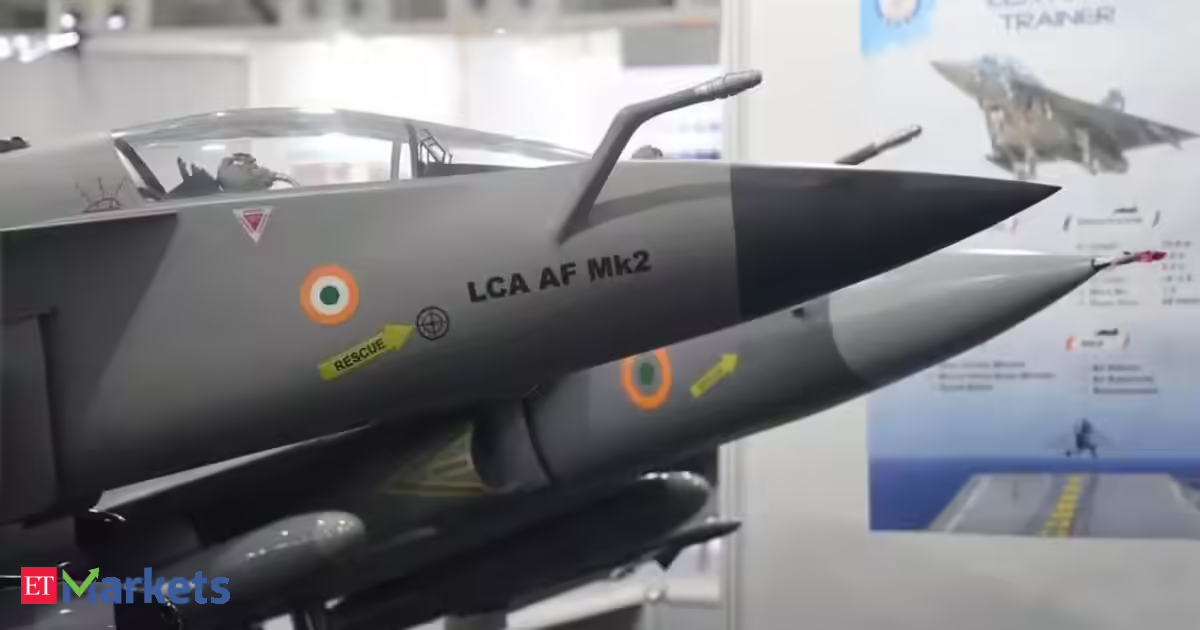
Hindustan Aeronautics Limited is likely to report a decline in execution in Q4FY26 at 4.4% YoY, below Nuvama’s expectations, which factored in only base order execution including engines and ROH, with no Tejas deliveries commencing during the quarter.
“So far, a total of six GE engines have been delivered, with no aircraft deliveries to the Indian Air Force. Given this, the delivery schedule for the committed LCA Tejas programme appears tight, posing a risk to near-term execution ramp-up,” the note said.
While HAL has a decade-long opportunity pipeline of Rs 4.7 lakh crore, execution ramp-up of its large-scale programs sitting in its Rs 2.4 lakh crore backlog is critical, the brokerage said, listing ongoing supply chain challenges, particularly focusing on the timely procurement of critical components.
Bharat Dynamics
With a robust backlog of Rs 22,800 crore as of end-FY25, BDL is well positioned to deliver a revenue CAGR of 35% over FY25–28E. That said, execution remained volatile in Q4, impacted by both global and domestic supply chain constraints. Margins are expected to be around 22%, supported by an anticipated 35% execution growth in Q4FY26, which should aid operating leverage despite underlying variability, Nuvama noted.
Defence stocks returns snapshot
Select defence stocks have delivered multibagger returns over a one-year despite volatile domestic markets that have braved rich valuations, weak earnings, FII outflows, tariffs and now an ongoing war.
MTAR Technologies tops the charts with 224% one-year returns and is followed by Axiscades Technologies, Apollo Micro Systems and Data Patterns with returns of Rs 124%, 113% and 100%, respectively.
Bharat Forge, Dynamatic Technologies, Garden Reach Shipbuilders, Bharat Electronics, Paras Defence and Space Technologies, Solar Industries, and Mishra Dhatu Nigam delivered double-digit returns up to 86% in this period.
Meanwhile, PSU defence counters BEML, Cochin Shipyard, BDL, Mazagon Dock, and HAL have yielded single-digit returns up to 9%.
(Disclaimer: The recommendations, suggestions, views, and opinions given by the experts are their own. These do not represent the views of The Economic Times.)


The Low-Budget Dividend Investor is your prototypical Generation X-er: an over-educated, under-funded middle-aged guy looking for ways to increase his income in a difficult economic environment. He favors the conservative, income-generating strategies more frequently associated with those portfolios belonging to people twenty or thirty years his elder while still acknowledging the wisdom of the growth investors ten years his junior.
Analyst’s Disclosure: I/we have no stock, option or similar derivative position in any of the companies mentioned, and no plans to initiate any such positions within the next 72 hours. I wrote this article myself, and it expresses my own opinions. I am not receiving compensation for it (other than from Seeking Alpha). I have no business relationship with any company whose stock is mentioned in this article.
Seeking Alpha’s Disclosure: Past performance is no guarantee of future results. No recommendation or advice is being given as to whether any investment is suitable for a particular investor. Any views or opinions expressed above may not reflect those of Seeking Alpha as a whole. Seeking Alpha is not a licensed securities dealer, broker or US investment adviser or investment bank. Our analysts are third party authors that include both professional investors and individual investors who may not be licensed or certified by any institute or regulatory body.
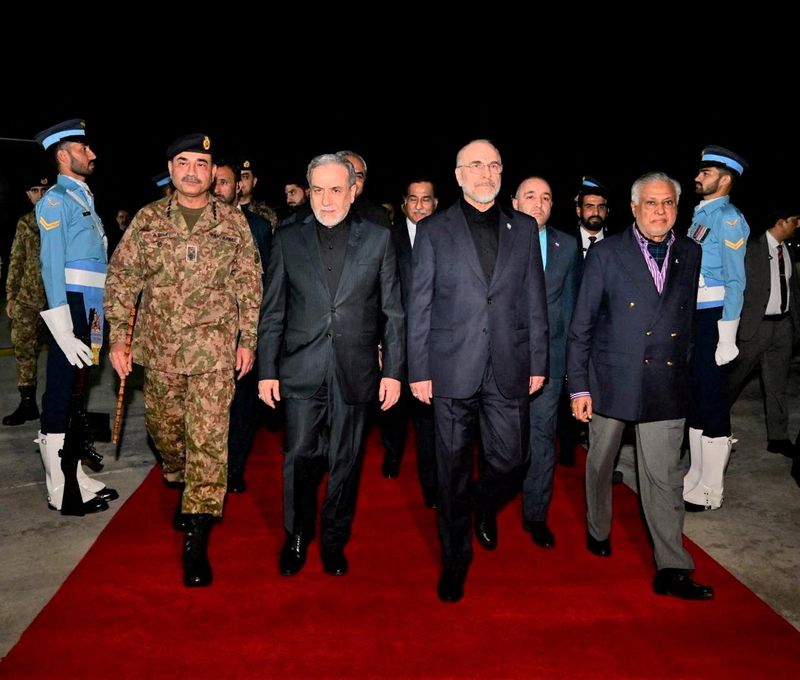

US, Iran teams in Pakistan for peace talks amid doubts over Lebanon, sanctions

In just over three months, they have pulled $18.84 billion from local shares, edging past the full-year record outflow of $18.79 billion seen in 2025, according Central Depository Services India Ltd. The sustained selling has kept markets under pressure, and even a modest rebound following a temporary ceasefire earlier this week has done little to lift the mood. Local shares remain bruised, with over $600 billion wiped off their value from last year’s peak.
India’s $4.8 trillion equity market is losing some of its relative appeal, as global capital rotates toward artificial intelligence-linked economies where semiconductor demand is the bigger driver. The oil crisis has magnified existing concerns for the country — from recent rupee volatility to a still-fragile earnings recovery — while also underlining another problem: a lack of a clear catalyst to bring foreign money back.
 Bloomberg
“Indian stocks are missing a narrative,” said Abhishek Thepade, an Oslo-based portfolio manager with DNB Asset Management AS. “Earnings are undergoing a cyclical slowdown while weakening currency and impact of artificial intelligence on local software companies also impacts the outlook.”
Although tech-heavy South Korea and Taiwan saw larger headline outflows in March — totaling $24 billion and $29 billion respectively — the peace deal may given them a stronger boost by refocusing investor attention on AI-driven chip demand, a factor largely absent in India.
That gap is already showing up in flows. South Korean and Taiwanese equities have seen inflows of $3.6 billion and $5.6 billion, respectively, so far this month. In contrast, global funds have pulled $3 billion from Indian equities, data compiled by Bloomberg show.
To be sure, domestic money continues to cushion the blow. Mutual funds and institutions have poured in $31 billion this year, with retail investors doubling down via record inflows into monthly equity investment plans last month even amid heightened volatility. Still, that support has not been enough to counter persistent foreign selling.Some investors see scope for a reversal once the Middle East tensions ease.
“Now that India’s valuations have become reasonable, foreign flows could return once the current geopolitical uncertainty settles, though the timing remains uncertain,” said Harsha Upadhyaya, chief investment officer for equities at Kotak Mahindra Asset Management Co.
Asked someone from the industry whether foreign investors are still interested in allocating to India. The TLDR:
Interest has pretty much died out. India is seen as geopolitically exposed, especially to an oil shock. There are no real AI plays. Valuations are rich. And the rupee…
— Nithin Kamath (@Nithin0dha) April 9, 2026
Still, a steady retreat by global funds has led to more than $34 billion of outflows from Indian equities over the past two years through March — a period that’s seen MSCI Inc.’s India gauge trail regional peers in all but two of the past eight quarters. The Nifty 50 Index is down 8% this year, while the foreign exodus had recently pushed the rupee to record lows, forcing the central bank to step in to stabilize the currency.
Even after a recent moderation, valuations remain a sticking point. The Nifty 50 remains expensive relative to emerging-market peers, BofA Securities said in a note this week, adding it expects India to lag behind rivals.
Business
FIIs sell Indian equities worth Rs 48,213 crore in April, so far; FY26 sell-off balloons to Rs 1.79 lakh crore

On Friday, FIIs bought domestic shares at Rs 672.09 crore while domestic institutional investors (DIIs) were net buyers at Rs 410.05 crore, helping markets end the day with strong gains after a Thursday pause.
The significant action on the last trading day of the week was dominated by banks, auto and consumer stocks. Nifty surged 275.50 points or 1.16% to finish at 24,050.60. Meanwhile, Sensex rose 918.60 points or 1.20% to settle at 77,550.25.
Dr. VK Vijayakumar, Chief Investment Strategist, Geojit Investments, said the outcome of the truce talks between Iran and the US will determine the course of markets, which have been majorly dragged by FPI selling. “It appears that FPIs are determined to sell in India and move money to other markets like South Korea and Taiwan, where the earnings growth prospects are much superior in 2026”.
“The market will wait to see the outcome of the peace talks between US and Iran scheduled for Saturday. The outcome of the peace talks will determine the trend in crude prices, which, in turn, will dictate market trends. If the talks lead to de-escalation in the conflict and drive crude prices down, the markets, particularly markets like India which are energy import-dependent, will bounce back. The reverse will happen if the peace talks fail and crude spikes further.
He however sees this as a short-term view by the foreign investors as he noted many stocks continue to hit 52-week highs or even all-time highs, even in this challenging market environment.
“Investors can look at these stocks and analyse the reasons behind the resilience of such stocks. Fundamentally sound growth stocks will do well even during weak market conditions,” Dr. Vijayakumar said.
FIIs in 2026
War-induced sell-off in March made it the worst month this year, witnessing an exodus worth Rs 1,17,775 crore. Foreign investors turned net buyers in February, buying shares worth Rs 22,615 crore in the domestic markets so far. In January, they sold Rs 35,962 crore worth of shares.
In 2025, the FIIs buying trends remained patchy, but the overall trend was bearish. They took Rs 1,66,286 crore from Indian markets as trade deal delay and premium valuations weighed on the sentiments.
(Disclaimer: Recommendations, suggestions, views and opinions given by the experts are their own. These do not represent the views of Economic Times)
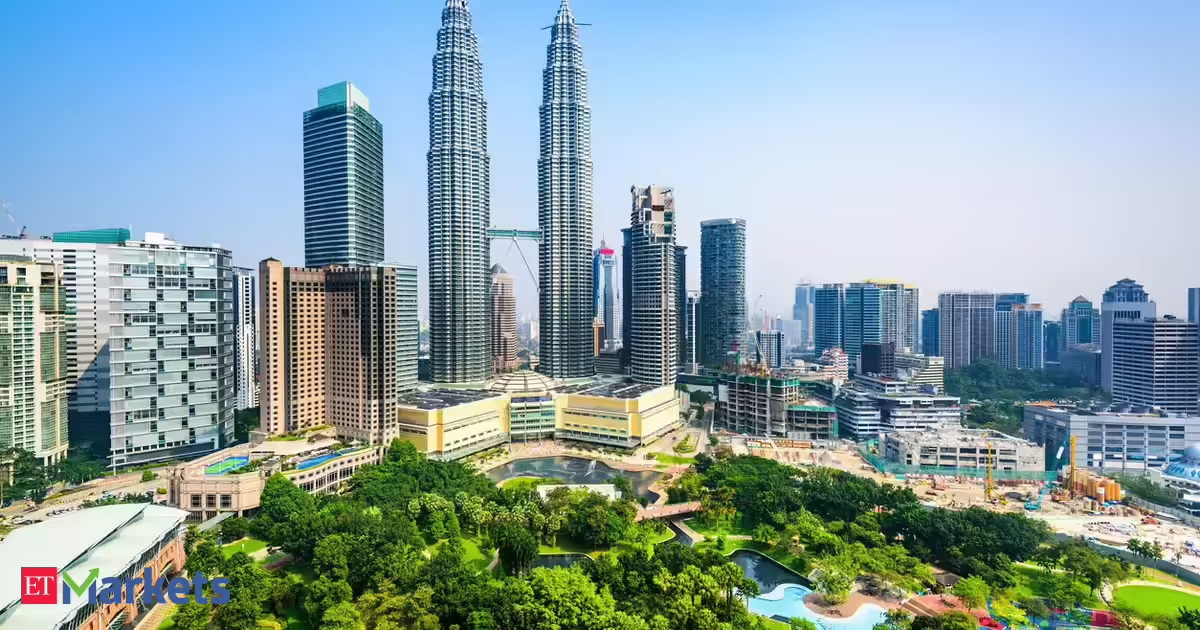
* Reuters first reported in November that IOI Properties was exploring REIT listings in Malaysia and Singapore with a combined asset value of up to $8 billion. The Malaysian REIT was then expected to hold domestic assets worth about 7 billion to 8 billion ringgit.
* IOI Properties said in the filing that the proposed Malaysian REIT will have an initial size of 5.5 billion units, with IOI offering up to 2.2 billion units. The exercise is targeted for completion in the fourth quarter of 2026.
* At an indicative price of 90 sen a unit, the IPO could raise about 1.97 billion ringgit.
* IOI said gross proceeds from the disposals and offering would total about 4.62 billion ringgit, mainly to repay borrowings and fund project and property investment spending.
* Assets earmarked for injection include IOI City Mall, IOI City Towers, PFCC Towers, Putrajaya Marriott, Le Meridien Putrajaya, Moxy Putrajaya, Four Points by Sheraton Puchong, W Kuala Lumpur and Courtyard by Marriott Penang.
* Maybank Investment Bank and AmInvestment Bank are joint principal advisers, while DBS is a joint global coordinator and underwriter. ($1 = 3.9600 ringgit)
Business
From Panic to Patience: 7 investing lessons from James O’Shaughnessy for today’s turbulent markets

Yet, amid this uncertainty, the principles laid down by legendary quantitative investor James O’Shaughnessy in a presentation at Talks at Google a few years ago offer a steady compass. His framework for long-term investing, appears especially relevant in today’s environment where noise often overwhelms signal.
A Market Driven by Fear, Headlines, and Short-Termism
Recent global developments—from conflicts impacting oil prices to shifting expectations around central bank policy—have amplified market swings. Investors are reacting rapidly to news cycles, often extrapolating short-term events into long-term outcomes.O’Shaughnessy warned against precisely this tendency. He emphasized that investors often mistake possibilities for probabilities, especially during periods of crisis, leading to flawed decision-making.
In the current landscape, this insight rings true. Markets are pricing in multiple scenarios—from recession fears to inflation resurgence—often within days, creating whipsaw movements.
The Seven Timeless Traits of Successful Investors
According to O’Shaughnessy, long-term success in markets is less about predicting the future and more about mastering behavior. His seven key principles serve as a blueprint for navigating volatility:
1. Long-Term Perspective
Investors who focus on 10–20 year outcomes rather than quarterly noise are better positioned to build wealth. Short-term thinking often leads to reactive decisions rather than strategic ones.
2. Value Process Over Outcome
Chasing recent winners is a common mistake. Successful investors instead focus on the robustness of their investment process rather than short-term returns.
3. Ignore Forecasts and Predictions
Market forecasts often create an illusion of certainty. In reality, they are frequently wrong or incomplete, especially in complex macro environments.
4. Discipline Above All
Discipline becomes most critical during downturns—when fear, doubt, and external skepticism peak. Staying the course during such periods separates successful investors from the rest.
5. Patience and Persistence
Wealth creation in equities is a slow process. Even the most successful strategies can underperform for extended periods before delivering superior returns.
6. Understand Probabilities
Successful investors analyze how often a strategy works and by what margin it outperforms benchmarks, rather than relying on isolated outcomes.
7. Learn from Mistakes
Maintaining a record of decisions—both successes and failures—helps refine strategies and eliminate recurring errors over time.
Why These Lessons Matter More Today
The current global market setup—marked by high valuations in pockets, liquidity shifts, and geopolitical overhangs—demands a structured approach. Emotional investing, driven by fear or greed, tends to peak during such phases.
History suggests that the biggest investing mistakes are often made during extremes—buying in euphoric bull markets or selling in panic-driven downturns. At the same time, the most rewarding opportunities emerge when assets are mispriced due to short-term dislocations.
O’Shaughnessy’s emphasis on discipline and process aligns with this reality. His research-driven approach, rooted in decades of market data, demonstrates that systematic strategies can outperform when followed consistently over time.
The Bottom Line: Process Over Panic
In an era dominated by algorithmic trading, real-time news, and social media-driven sentiment, staying grounded is harder than ever. But as markets continue to oscillate between optimism and anxiety, the core principles of investing remain unchanged.
Successful investing is not about reacting to every headline—it is about building a resilient process and sticking to it, especially when it feels most uncomfortable.
For investors navigating today’s uncertain terrain, that may be the most valuable lesson of all.
Why you don’t need a 9-wood

Digging Into The Twilight Hack That Brought Us Wii Homebrew
Meagan Good Rehomed Her Cat After Marrying Jonathan Majors


-

 Business5 days ago
Three Gulf funds agree to back Paramount’s $81 billion takeover of Warner, WSJ reports
-

 Sports6 days ago
India men’s 4x400m and mixed 4x100m relay teams register big progress | Other Sports News
-

 Politics14 hours ago
US brings back mandatory military draft registration
-

 Fashion15 hours ago
Weekend Open Thread: Veronica Beard
-

 Tech3 days ago
How Long Can You Drive With Expired Registration? What Florida Law Says
-

 Business6 days ago
No Jackpot Winner, Prize to Climb to $231 Million
-

 Fashion5 days ago
Massimo Dutti Offers Inspiration for Your Summer Mood Board
-
 Sports15 hours ago
Man United discover Nico Schlotterbeck transfer fee as defender reaches Dortmund agreement
-

 Fashion4 days ago
Let’s Discuss: DEI in 2026
-

 Crypto World3 days ago
Bitcoin recovers as US and Iran Agree a Ceasefire Deal
-

 Business12 hours ago
Tesla Model Y Tops China Auto Sales in March 2026 With 39,827 Registrations, Beating Cheaper EVs and Gas Cars
-

 Business6 days ago
Akebia Therapeutics, Inc. (AKBA) Discusses Pipeline Progress and Strategic Focus on Kidney Disease Treatments at R&D Day – Slideshow
-

 Crypto World2 days ago
Canary Capital Files SEC Registration for PEPE ETF
-

 Business21 hours ago
OpenAI Halts Stargate UK Data Centre Project Over Energy Costs and Copyright Row
-

 Tech5 days ago
Haier is betting big that your next TV purchase will be one of these
-

 Tech5 days ago
Gamer Restores the Original PlayStation Portal From Two Decades Ago
-

 Tech5 days ago
The Xiaomi 17 Ultra has some impressive add-ons that make snapping photos really fun
-

 Tech5 days ago
Samsung just gave up on its own Messages app
-

 Tech5 days ago
Save $130 on the Samsung Galaxy Watch 8 Classic: rotating bezel, sleep coaching, and running coach for $369
-

 Tech5 days ago
Italian court says Netflix must refund customers up to $576 over price hikes
You must be logged in to post a comment Login