
Connect with us

Business

Maersk halts operations at Oman’s Salalah port after drone strike amid Iran war escalation

Published

on

Maersk halts operations at Oman’s Salalah port after drone strike amid Iran war escalation

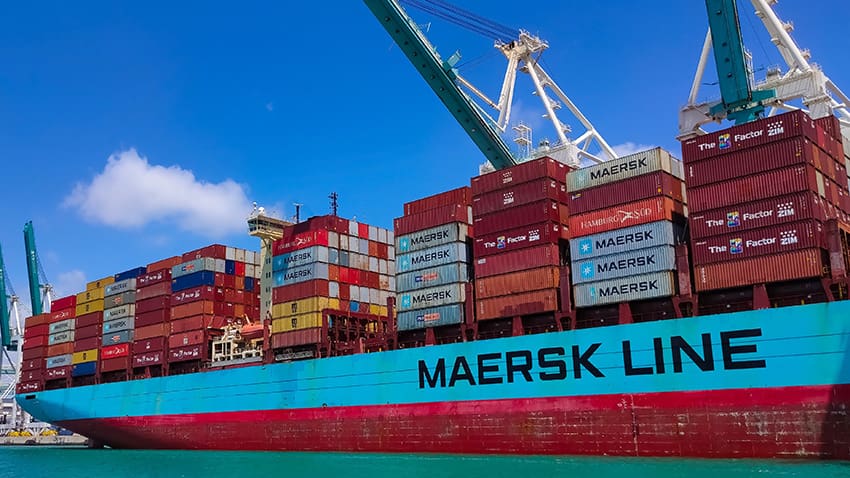
Global shipping giant Maersk has suspended operations at the Port of Salalah in Oman after a drone attack struck oil storage facilities at the strategic logistics hub, intensifying concerns about global trade disruption as the conflict involving Iran spreads across the Gulf.

The Danish shipping group said it had paused activity at the port “until further notice” following what it described as an ongoing security incident near the facility’s general cargo terminal. The move comes as the war in the region increasingly threatens major shipping routes and energy infrastructure across the Middle East.

The Port of Salalah, located on Oman’s southern coast, is one of the region’s most important maritime gateways and had been widely regarded as a relatively safe alternative for shipping companies seeking to avoid the escalating risks around the Strait of Hormuz and the Red Sea.

The port sits at a critical intersection of global trade routes linking southeast Asia with Europe, Africa and the Americas. Since opening in 1998 it has handled more than 50 million containers and over 100 million metric tonnes of cargo, and it recently completed a $300 million upgrade to its container terminal designed to increase capacity and efficiency.

Historically, Oman has promoted the port’s location in a politically neutral country as a major advantage for global shipping operators. The country has long positioned itself as a diplomatic mediator in regional disputes, maintaining working relationships with both Western governments and Iran.

Advertisement

However, the drone strike has now brought the conflict directly to Oman’s shores, raising fears that the war is expanding to new fronts and threatening infrastructure that had previously been viewed as relatively insulated from the fighting.

Images from the port showed thick plumes of smoke rising from fuel storage facilities after the attack triggered a fire in oil tanks. Omani authorities confirmed they were working to contain the blaze but said oil supply continuity had not been disrupted.

The incident is the latest in a series of attacks targeting energy infrastructure and maritime assets across the Gulf region. Earlier this week, falling debris from an intercepted drone sparked a fire that damaged storage infrastructure at Fujairah, a major ship refuelling hub in the United Arab Emirates.

Container shipping has also been affected directly. The Japan-flagged vessel One Majesty sustained minor damage after being struck by an unidentified projectile approximately 25 miles northwest of the UAE.

Advertisement

Maersk said the escalating instability has forced it to adapt operations across its network. The company confirmed that it was redistributing maritime fuel supplies to ensure vessels can continue to refuel and operate despite the growing disruption to storage facilities and fuel distribution infrastructure in the region.

A spokesperson for the company said the measures were designed to ensure that its global shipping network could continue functioning.

“We are proactively redistributing fuel to ensure vessels can continue to bunker where needed and keep our ocean network running without interruptions,” the company said.

The conflict has already left large numbers of ships stranded across the Gulf. Maersk alone has ten vessels currently trapped in the region, while industry estimates suggest roughly 100 container ships are unable to move through key routes.

Advertisement

German shipping group Hapag-Lloyd has also reported that a number of its vessels remain stuck in the Strait of Hormuz as tensions escalate.

In response to the heightened risks, Maersk and other carriers have suspended most new cargo bookings to and from several Gulf countries, including the United Arab Emirates, Oman, Qatar and Saudi Arabia.

The escalation comes as Iran continues its blockade of the Strait of Hormuz, one of the most critical maritime chokepoints in the global energy system. Roughly one-fifth of the world’s oil exports typically pass through the narrow waterway, which connects the Persian Gulf with the Indian Ocean.

Iran’s leadership has signalled that it intends to maintain pressure on global shipping lanes as the conflict intensifies. Mojtaba Khamenei, Iran’s new leader, said this week that Iranian forces would continue enforcing restrictions on traffic through the strait.

Advertisement

Analysts believe the strategy is designed to maximise economic pressure on Western and Gulf nations by disrupting oil and commercial shipping flows.

Danny Citrinowicz, a fellow at the Atlantic Council and a former Israeli military intelligence officer specialising in Iran, said Tehran was likely to escalate further attacks on infrastructure.

“They will raise the bar by targeting more infrastructure,” he said. “The goal is to inflict economic damage and demonstrate that countries supporting the war will face serious consequences.”

The attacks have now affected every member state of the Gulf Cooperation Council as well as Iraq, which has already been forced to shut down parts of its oil production infrastructure due to security concerns.

Advertisement

Oman itself has taken precautionary measures by moving vessels away from its key oil export terminal at Mina al Fahal while authorities assess the security situation.

Another Omani port, Duqm, located roughly 500 kilometres south of the capital Muscat, was also struck during the early stages of the conflict.

Despite Iran’s increasingly aggressive strategy, Iranian officials have denied responsibility for the attack on Salalah. Tehran described Oman as a “friend and neighbour” and suggested that the strike could have been carried out by other actors seeking to widen the conflict and frame Iran.

However, the expansion of attacks across multiple countries has heightened fears among global shipping companies that the war could effectively choke off two of the world’s most vital maritime corridors.

Advertisement

In addition to the disruption in the Strait of Hormuz, Iran’s Houthi allies in Yemen have previously attacked shipping in the Red Sea during the Gaza conflict. Analysts warn they could resume those attacks if the conflict escalates further.

If that occurs simultaneously with the closure of Hormuz, the global shipping industry could face unprecedented disruption to both oil and container trade flows between Asia, Europe and the Americas.

For global logistics networks already strained by geopolitical tensions and supply chain volatility, the suspension of operations at Salalah underscores how rapidly the conflict is spreading beyond traditional battle zones and into the infrastructure that underpins international trade.

Advertisement

Continue Reading
Click to comment

Leave a Reply

Your email address will not be published. Required fields are marked *

Business

Thomson Reuters Files Documents for Proposed Return of Capital and Share Consolidation Transactions

Published

on

Cision

TORONTO, March 13, 2026 /PRNewswire/ — Thomson Reuters (TSX/Nasdaq: TRI) today filed its management proxy circular and related documents in connection with the upcoming special meeting at which shareholders will be asked to approve the proposed return of capital and share consolidation transactions, among other items. The management proxy circular and related documents are available online and for pick-up, as set out below.

The transactions consists of a special cash distribution of US$605 million in the aggregate, or approximately US$1.36 per common share (estimated based on the number of common shares issued and outstanding as of the record date and assuming no shareholders opt-out of the return of capital) followed by a consolidation of outstanding common shares (or “reverse stock split”) on a basis that is proportional to the special cash distribution. The share consolidation ratio will be based on the volume weighed average trading price of the common shares on the Nasdaq Stock Market LLC (“Nasdaq”) for the five trading days immediately prior to the return of capital becoming effective.

The proposed return of capital is intended to distribute cash on a basis that is generally expected to be tax-free for Canadian tax purposes. Shareholders who are taxable in a jurisdiction outside of Canada (including taxable U.S. resident shareholders and others) (“Eligible Opt-Out Shareholders”) will be able to opt out of the return of capital. This right to opt out is being provided to those shareholders because in jurisdictions other than Canada the tax consequences of not participating in the return of capital may be preferable to those associated with participating in the return of capital. If an Eligible Opt-Out Shareholder chooses to opt out, it will not receive the cash distribution and will continue to hold the same number of shares that it currently holds.

Details of the transaction (including information regarding the opt-out right) are described in the management proxy circular and related materials, which are available on thomsonreuters.com in the “Investor Relations” section. The documents were filed with the Canadian securities regulatory authorities on SEDAR+ and are available at www.sedarplus.com. The documents will also be furnished to the U.S. Securities and Exchange Commission through EDGAR and when filed, will be available at www.sec.gov. The documents will also be available for pick-up, free of charge, at Computershare Investor Services Inc.’s offices in Toronto, Montreal, Vancouver and Calgary. Please contact Computershare Investor Services Inc. using the phone numbers set out below for the addresses of those offices.

Advertisement

The special meeting of shareholders will be held on Tuesday, April 28, 2026 at 9:00 a.m. EDT (changed from the original planned time of 12:00 p.m.). The meeting will be a webcast on thomsonreuters.com in the “Investor Relations” section. Holders of Thomson Reuters common shares as of 5:00 p.m. EDT on March 6, 2026 are entitled to vote at the meeting.

Registered shareholders who have questions or need assistance voting their shares may contact Computershare Investor Services Inc. at 1.800.564.6253 (toll-free in Canada and the U.S.) or at 1.514.982.7555 (outside Canada and the U.S.). Non-registered shareholders who hold their shares indirectly through an intermediary (such as an investment dealer, stock broker, bank, trust company or other nominee) should contact their intermediary if they have questions or need assistance. Shareholders who have questions or need assistance may also contact D.F. King & Co., Inc., who is acting as Information Agent for the transaction, at 1.800.967.5068 (toll-free in Canada and the U.S.) or at 1.212.561.5870 (outside Canada and the U.S., banks, brokers and collect calls) or at the following email address: tri@dfking.com.

About Thomson Reuters

Thomson Reuters (TSX/Nasdaq: TRI) informs the way forward by bringing together the trusted content and technology that people and organizations need to make the right decisions. The company serves professionals across legal, tax, audit, accounting, compliance, government, and media. Its products combine highly specialized software and insights to empower professionals with the data, intelligence, and solutions needed to make informed decisions, and to help institutions in their pursuit of justice, truth and transparency. Reuters, part of Thomson Reuters, is the world’s leading provider of trusted journalism and news. For more information, visit thomsonreuters.com.

Advertisement

SPECIAL NOTE REGARDING FORWARD-LOOKING STATEMENTS

Certain statements in this news release are forward-looking within the meaning of applicable Canadian and U.S. securities laws, including the Private Securities Litigation Reform Act of 1995. These statements relating to the return of capital and share consolidation transactions and the anticipated tax treatment for shareholders participating in the return of capital and those opting out. These forward-looking statements are based on certain assumptions, including shareholder approval of the transactions, and reflect our company’s current expectations. As a result, forward-looking statements are subject to a number of risks and uncertainties that could cause actual results or events to differ materially from current expectations, including the risk factors discussed in materials that Thomson Reuters from time to time files with, or furnishes to, the Canadian securities regulatory authorities and the U.S. Securities and Exchange Commission. There is no assurance that the return of capital and share consolidation transactions will be completed or that other events described in any forward-looking statement will materialize. Except as may be required by applicable law, Thomson Reuters disclaims any obligation to update or revise any forward-looking statements.

CONTACTS

MEDIA
Zoe ZanettosDirector, Corporate Affairs
+1 647 202 8948
zoe.zanettos@thomsonreuters.com 

Advertisement

INVESTORS
Gary E. Bisbee, CFA
Head of Investor Relations
+1 646 540 3249
gary.bisbee@thomsonreuters.com 

Cision View original content to download multimedia:https://www.prnewswire.com/news-releases/thomson-reuters-files-documents-for-proposed-return-of-capital-and-share-consolidation-transactions-302713835.html

SOURCE Thomson Reuters

Continue Reading

Business

Iridex signs lease for new San Jose headquarters with 90-month term

Published

on


Iridex signs lease for new San Jose headquarters with 90-month term

Continue Reading

Business

Nancy Guthrie Update: Any Major Breakthrough In Investigation?

Published

on

Nancy Guthrie

The search for Nancy Guthrie, the 84-year-old mother of NBC “Today” show co-anchor Savannah Guthrie, entered its 41st day Friday with authorities emphasizing that the February abduction from her Tucson-area home appears to have been targeted, though no suspect has been publicly identified.

Continue Reading

Business

Progyny issues notice of settlement for derivative action regarding director pay

Published

on


Progyny issues notice of settlement for derivative action regarding director pay

Continue Reading

Business

Form 4 Better Home & Finance Holding Co For: 13 March

Published

on


Form 4 Better Home & Finance Holding Co For: 13 March

Continue Reading

Business

BP revises Whiting oil refinery contract offer after union members reject proposal

Published

on

BP revises Whiting oil refinery contract offer after union members reject proposal


BP revises Whiting oil refinery contract offer after union members reject proposal

Continue Reading

Business

Swansea Building Society maintains its upwards trajectory

Published

on

Business Live

The mutual also remains committed to its high street presence

CEO of Swansea Building Society Alun Williams.(Image: Adrian White ©)

Swansea Building Society has reported a rise in total assets while maintaining healthy profit levels. The mutual has continued to grow despite an uncertain economic environment and increased competition within the savings market.

For its 2025 (calendar) financial year its total assets increased by £21.4m to £715.1m. Its savings balances increased by £16.6m to £663.9m. Mortgage balances grew by £46.8m to £576.9m, driven by gross mortgage completions of £117.5m during the year. Mortgage arrears remained low at just 0.33% of total mortgage balances.

Advertisement

It posted a pre-tax profit of £6.2m (2024: £6.3m). This increased its capital reserves by £4.6m to £49.1m. Maintaining strong capital reserves is vitally important to the Society as it provides greater financial strength and ensures it can continue to support members in achieving their financial goals.

READ MORE: Major boost for third huge floating offshore windfarm in the Celtic SeaREAD MORE: Explosive minutes of Ospreys meeting released for first time as WRU accused

The society’s balance sheet is funded entirely by customer savings balances and its own capital reserves built up from retained profits over many years

Last year saw the mutual launching a new mobile banking app and introduced the ability for members to open savings accounts online for the first time. It also acquired premises in Abergavenny with a view to opening a new branch, and secured larger premises in Carmarthen.

Advertisement

Its chief executive, Alun Williams, said: “The society has continued to meet the needs of both savers and borrowers while delivering another strong set of results. Our continued growth in mortgage lending, savings balances and total assets has further strengthened the foundations of the society and ensures that we remain well positioned to support members in achieving their home ownership and savings goals.

“During 2025 the Bank of England base interest rate reduced from 4.75% at the start of the year to 3.75% by the end of December. While this easing provided some relief for borrowers, we remained mindful that many households were still facing affordability pressures and we continued to take a careful and supportive approach to lending.

“The economic conditions have meant that the Society’s flexible lending policy has remained in high demand, and the society exceeded its gross lending targets for the year. At the same time, our mortgage book has continued to show great resilience, with arrears remaining extremely low at just 0.33% of total mortgage balances.

“One of the society’s key aims is to help savers reach their financial goals and to deliver sustainable returns over their long relationship with us. During 2025 the savings market became considerably more competitive, however, we remained focused on offering fair and competitive returns to savers while carefully managing the society’s margins to ensure long-term financial sustainability.”

Advertisement

Mr Williams said it remains committed to its branch network, with an objective of opening and not closing branches.

He added: “During the year we acquired premises in Abergavenny with a view to opening a new branch, and we also secured larger premises in Carmarthen to support the continued growth of our presence in West Wales.

“The society’s future remains very bright. With a strong capital base, a high-quality mortgage book and a clear strategic focus, we are well positioned to continue supporting our members and communities while delivering sustainable growth in the years ahead.”

The mutual will hold its annual general meeting at the Swansea.com Stadium on April 23.

Advertisement
Continue Reading

Business

Iran conflict rippling through supply chain

Published

on

Iran conflict rippling through supply chain

Impacts likely in soybean oil, grain and oilseed markets.

Continue Reading

Business

Domestic Metals completes geophysical survey at Montana project

Published

on


Domestic Metals completes geophysical survey at Montana project

Continue Reading

Business

Marine vet creates fraud-detecting tech

Published

on

Marine vet creates fraud-detecting tech

FIRST ON FOX: The origins of a fraud-fighting technology now used by one of the world’s largest insurers trace back to a deadly insider attack during the Iraq War.

Clearspeed founder Alex Martin was serving in the Marine Corps. when his close friend, Capt. Warren Frank, was killed by an Iraqi soldier who turned his weapon on American forces during a joint patrol. The Iraqi had passed coalition vetting procedures.

Advertisement

“Warren met his future wife at my house,” Martin recalled to FOX Business. “Learning he’d been killed by an Al-Qaeda infiltrator we’d brought into his formation – it shook me. I couldn’t accept that insider attack as inevitable.”

So-called “green-on-blue” attacks, in which supposedly vetted local forces turned on coalition troops, became one of the Global War on Terror’s most vexing threats. Between 2008 and 2017, such incidents killed more than 150 coalition service members in Afghanistan alone.

“I became obsessed with our vetting process and realized our traditional playbook simply couldn’t keep pace with the operational tempo, language barriers and risks of counterinsurgency warfare,” Martin said.

The Pentagon is the headquarters of the U.S. military

The company counts the Department of Defense and U.S. intelligence agencies among its customers. (iStock)

His solution was to flip the model: quickly establish trust for the majority who posed no threat, while focusing expert scrutiny on the small fraction requiring deeper review.

Advertisement

After leaving active duty, Martin partnered with Stanford professor Charles Holloway to develop a voice-based vetting tool designed to quickly assess risk across languages and high-stakes environments.

The company’s first major customer was U.S. Special Operations Command. In 2018, Clearspeed screened 715 Afghan commando recruits in less than 20 hours – a process that would normally take months. Several individuals flagged as high-risk later deserted.

The success attracted investment from retired Gen. David Petraeus, the former CIA director and commander of U.S. forces in Iraq and Afghanistan. The company has since raised $110 million and counts the Department of Defense and U.S. intelligence agencies among its customers.

TRUMP URGES IMMEDIATE RATE CUTS AMID IRAN CONFLICT

Advertisement

Now, the technology is being used beyond the battlefield.

Insurance giant Allianz recently disclosed it identified more than £92.6 million (about $115 million) in fraudulent claims during the first half of 2025, with executives crediting voice-screening technology from San Diego-based Clearspeed as central to its fraud detection strategy.

Clearspeed is a voice-based vetting platform originally developed for U.S. military use. During an automated phone call, individuals answer a short series of yes-or-no questions while the system analyzes vocal characteristics in real time.

It flags potential risk indicators for human review, allowing low-risk respondents to move through quickly while directing additional scrutiny to higher-risk cases.

Advertisement

“We needed to make our organization a really hostile place for people to try to commit fraud,” Allianz Chief Claims Officer Matt Cox said at an industry conference in London, according to InsurancePOST. “Technologies such as Clearspeed have given us the opportunity, for the first time, to dial up that disruption.”

US President Donald Trump walks to speak to journalists.

President Donald Trump has made countering fraud a hallmark of his administration. (Saul Loeb/AFP via Getty Images)

The move comes as insurers face what analysts describe as an escalating “arms race” with fraudsters, many of whom now use artificial intelligence and digital tools to perpetrate fraud. A Deloitte study predicted generative AI could help drive U.S. fraud losses as high as $40 billion next year.

The growing commercial adoption has also drawn attention in Washington.

Clearspeed has been engaging policymakers about deploying the technology to combat benefits fraud and strengthen screening processes, according to people familiar with the discussions. The company spent about $272,500 on federal lobbying in 2025, according to data compiled by OpenSecrets.

Advertisement

The push comes amid growing political pressure to crack down on fraud in federal programs. In January, the administration announced a new Department of Justice division focused on national fraud enforcement targeting fraud against federal programs and private citizens.

ORACLE BRACES FOR MASSIVE LAYOFFS AMID AI CASH CRUNCH

Rep. Pat Harrigan, R-N.C., a former Army Green Beret who served in Afghanistan, said his combat experience shapes how he evaluates emerging technologies.

Rep. Pat Harrigan sits during a committee hearing.

Rep. Pat Harrigan, R-N.C., takes his seat for a House subcommittee hearing on Feb. 24, 2026. (Bill Clark/CQ-Roll Call Inc via Getty Images)

“During my time in the Special Forces, I saw firsthand how advanced technology saves lives and gives us a decisive edge,” Harrigan told FOX Business. “My priority in Congress is making sure we identify the most effective tools and put them to work for our troops and taxpayers.”

Advertisement

Harrigan said he has met with Clearspeed and is exploring ways the technology could help protect warfighters and reduce fraud.

“The fact that the world’s largest insurer turned to American military technology to solve its fraud problem tells you everything about how powerful these tools are,” he said. “If they can help Allianz identify nearly $100 million in fraud, imagine what they could do for the American people – whether that’s cracking down on benefits fraud, vetting visa applicants or securing our border.”

Rep. Russell Fry, R-S.C., said technologies that strengthen fraud detection and vetting could play a role in broader border security efforts.

Rep. Russell Fry speaking outside.

Rep. Russell Fry, R-S.C., speaks during a news conference at the U.S. Capitol in Washington, D.C., on Wednesday, Nov. 5, 2025. (Daniel Heuer/Bloomberg via Getty Images)

“As President Trump continues delivering on his promise to make America safe again, we must ensure law enforcement has access to the most reliable and efficient tools available,” Fry told FOX Business. “Technologies like this could help combat fraud at our border, strengthen visa vetting and keep our country secure.”

Advertisement

CLICK HERE TO READ MORE FROM FOX BUSINESS

For Martin, the growing interest from insurers and policymakers alike represents a continuation of a mission that began years ago on the battlefield.

“We built this because lives were on the line,” he said. “Putting that same technology to work protecting taxpayers and making our country safer is exactly the mission we’re here to serve.”

Advertisement
Continue Reading

Trending

Copyright © 2025