Connect with us

Business

Matsa Resources entities in administration after contractor dispute

Published

on

Matsa Resources entities in administration after contractor dispute

Insolvency practitioners have taken control of entities of ASX-listed gold miner Matsa Resources after its mining contractor downed tools over alleged unpaid invoices.

Continue Reading
Click to comment

You must be logged in to post a comment Login

Leave a Reply

Business

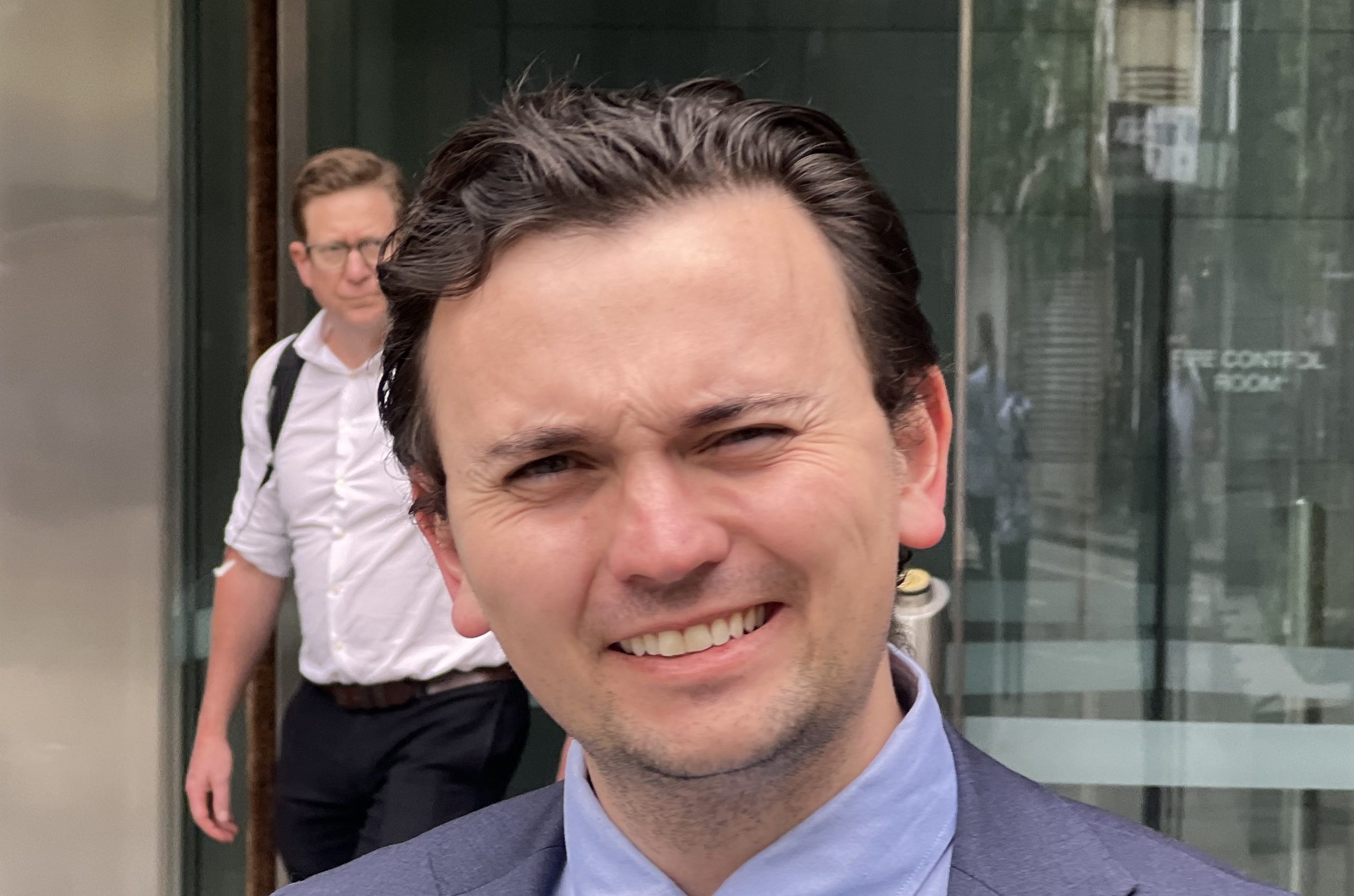
Lawyer Ben Caratti called as Reliance chase parents' debt

Published

on

Lawyer Ben Caratti called as Reliance chase parents' debt

The Supreme Court will summons lawyer Ben Caratti to provide documents for a probe into the assets of his property developer parents Tina Bazzo and Allen Caratti.

Continue Reading

Business

State govt reveals major events’ economic impact

Published

on

State govt reveals major events' economic impact

Yes. Corporate subscriptions are available for teams and organisations, with discounted rates as user numbers increase. Pricing starts from $1,625 + GST per user.
Get in touch
to discuss the right option for your organisation.

Business News subscriptions are used by executives, investors, consultants and professionals who need to stay informed and make better decisions about the WA market. When you subscribe you’ll get

  • Unlimited access to WA’s most trusted business journalism
  • Data & Insights — detailed profiles of WA companies, people, projects and deals
  • MyBN — a personalised feed based on the companies, people and sectors you follow
  • Special publications and industry reports
  • Daily and weekly email newsletters

Data & Insights is a research tool built specifically for the WA market. It draws on more than 30 years of Business News reporting, updated regularly to reflect what’s happening now. Use it to:

  • Look up detailed profiles of WA companies, including financials, directors and ownership
  • Find decision-makers and track their career movements
  • Research live and completed projects across WA industries
  • Monitor deals, appointments and market activity
  • Access industry rankings and league tables

Data & Insights is updated daily by our dedicated research team, which uses the latest announcements, ASX filings and editorial coverage to keep our person, company, list and project records up to date.

Business News welcome all opportunities to make our dataset accurate, complete and current, so if you have an update request, please email the team at
general@businessnews.com.au, and we’d be happy to assist.

Advertisement

MyBN
is part of every subscription. It’s your personalised view of Business News. You can follow the companies, people, sectors and projects that matter to you, and get a news feed and alerts tailored to your interests. You can save articles to read later and retain only what you need.

Only subscribers have full access to all content on the Business News website.

Advertisement

If staying informed about the WA economy is part of your job, and/or you’re looking for networking opportunities in WA, Business News is built for you.

Business News subscribers are:

  • Executives and directors tracking competitors, clients and market movements
  • Investors and advisers researching companies, deals and industry trends
  • Consultants and professionals staying across sectors relevant to their clients
  • Business owners looking for leads, context and market intelligence

Most Business News publications cover national or global markets. Business News is focused entirely on Western Australia, which means the journalism, the data and the intelligence are all built around WA companies, people and projects — not adapted from a national feed. Data & Insights, included with every subscription, combines more than 30 years of WA-specific editorial research with live business data. There’s no comparable product for the WA market.

Advertisement

The Morning Digest Email provides a comprehensive wrap of the major headlines, relevant to WA business, and includes with a snapshot of the overnight news covering oil, gold and ASX-listed companies.

The Afternoon Wrap Email focuses on the news covered by our team of journalists during the course of the working day, including exclusive stories and analysis, all of which relates to WA business and the local economy.

The BN Weekender Email contains a wrap of the Business News from the week that was, highlighting the top stories in each area of WA business.
Sign up for free.

Advertisement

We’re happy to help.
Get in touch
and our team will come back to you.

Advertisement
Continue Reading

Business

Dragons’ Den success for Bristol ethical clothing brand that tips garment workers

Published

on

Business Live

Yes Friends was founded by Sam Mabley who wants to dispel the myth that sustainable clothing needs to come at a premium price

Sam Mabley, founder of Yes Friends with Deborah Meaden

Sam Mabley, founder of Yes Friends with Deborah Meaden(Image: Yes Friends)

A Bristol ethical clothing brand that allows customers to tip garment workers has secured backing after appearing on Dragons’ Den.

Sam Mabley, founder of Yes Friends, received two offers after pitching on the hit television show. The entrepreneur, who set up his business in 2021, wants to dispel the myth that sustainable clothing is always expensive.

Advertisement

Using his experience running an eco boutique on Bristol’s harbourside, Mr Mabley set out to prove that it was possible to pay good wages, treat the planet well and run a successful business with affordable prices.

The company started with an ethically made t-shirt and sold 4,000 units in just one month. Yes Friends now has a collection of sustainable clothing – from jackets to underwear to dresses – and works directly with factories, taking small margins from each sale to keep prices low.

Mr Mabley says his brand is also the first in the UK to allow customers to directly tip the people who make their clothes. According to the entrepreneur, 100 per cent of tips go directly to garment workers, with more than £56,000 received by workers so far.

Mr Mabley appeared on the show on Thursday (September 10), looking for a £10,000 investment for two per cent of his ethical clothing business.

Advertisement

But after hearing his pitch, Deborah Meaden offered £20,000 in return for two per cent.

“I really want to be your investor, I’ve never sat here and been quite that open ever”, she said, admitting that it may have been “the worst negotiating stance a Dragon can possible take”.

After hearing about the brand’s approach to wages and production, she added: “I love absolutely everything that you do”.

Meaden, who has a portfolio of ethical investments, wasn’t the only Dragon considering investing in Yes Friends. A showdown took place between her and Touker Suleyman, with both claiming to be the ‘”perfect dragon”.

Advertisement

But Mr Mabley opted to go into business with Meaden whose offer doubled the value of his business to £1m.

“I was blown away by Deborah’s offer,” he said. “A Dragon doubling what I had asked for? It’s unheard of. It’s incredible to have Deborah as a partner, she genuinely shares my passion for an ethical and sustainable fashion industry, and has already bought so much knowledge and connections to Yes Friends. She’s such a great partner to have on board.”

Speaking after the show, Meaden added: “The fast fashion industry is a major contributor to overconsumption and poor working conditions. So when Sam walked into the Den to pitch Yes Friends, I was intrigued; is it really possible to make genuinely ethical clothing at an affordable price point?

“I was quickly impressed by both the high quality of the clothing and the impact that Yes Friends has already had, and knew this was a business I wanted to be a part of. I’m excited to see the brand continue to transform the fashion industry.”

Advertisement
Continue Reading

Business

City of Perth action plan imminent

Published

on

City of Perth action plan imminent

Local government inspector Tony Brown will address City of Perth councillors on Monday evening, five months after a confidential report into dysfunction was handed to him.

Continue Reading

Business

Hugo Boss chairman Stephan Sturm steps down as Frasers Group seeks control

Published

on

Business Live

The UK retail group also owns Sports Direct, Jack Wills and Flannels

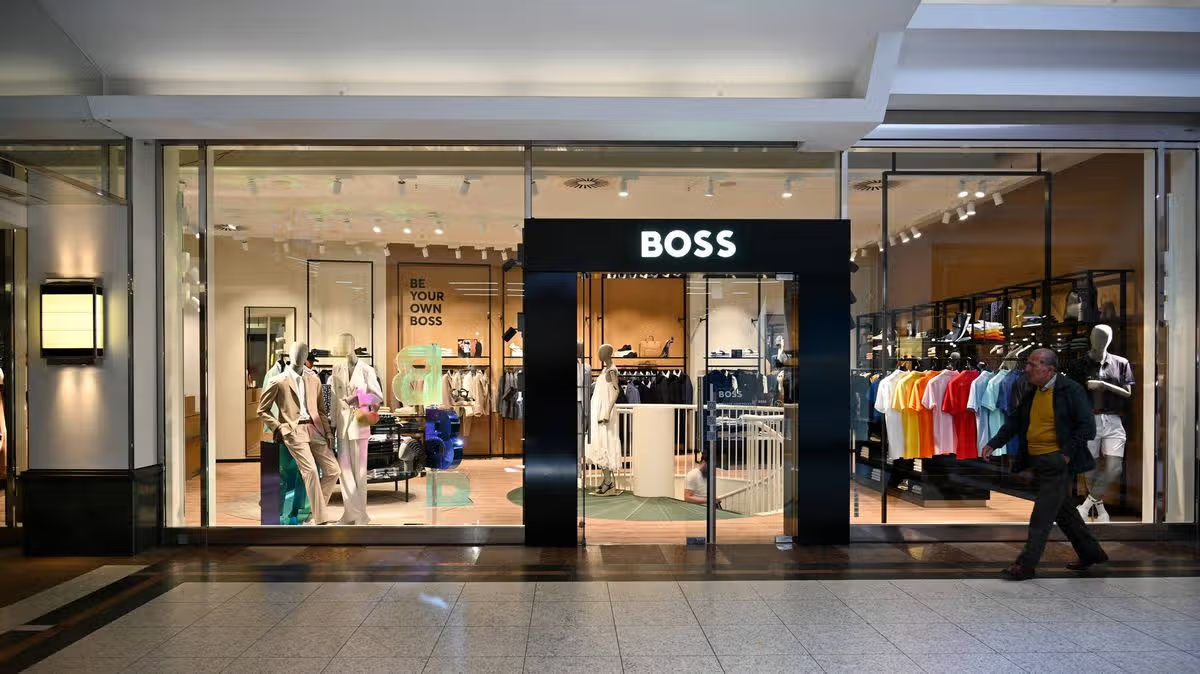
A Hugo Boss store

A Hugo Boss store(Image: GETTY)

Mike Ashley’s Frasers Group has removed the chairman of Hugo Boss as it moves to tighten its grip on the German fashion giant.

The British retail conglomerate, which counts Sports Direct, Jack Wills and Flannels among its portfolio, announced to shareholders on Monday that Stephan Sturm, chairman of Hugo Boss’ supervisory board, had agreed to stand down.

Advertisement

Ashley’s company said it had reached an agreement with the renowned German brand that this represents an “appropriate point in time for an orderly transition” of leadership, as reported by City AM.

“Frasers and Mr Sturm have therefore mutually agreed that Mr Sturm will step down from his position as Chairman and member of the Supervisory Board as soon as possible as permitted by Hugo Boss’ constitution,” the group said.

Frasers Group owns nearly 48 per cent of Hugo Boss and has previously said it wants to grow that to above 50 per cent. Frasers launched a bid for £1.7bn for the whole of Hugo Boss in June, but this was rejected as “inadequate” by the board of the German firm.

Frasers appealed to shareholders in Hugo Boss, attracting some 17 per cent of the company through its €38-per-share offer, taking the value of its stake to nearly €1.5bn (£1.27bn).

Advertisement

The Derbyshire-based group said it will nominate Robert Palmer, a former Frasers company secretary. to Hugo Boss’s supervisory board. Frasers chief executive Michael Murray, Ashley’s son-in-law, already holds a seat on the board.

Mr Sturm had been appointed as chairman of Hugo Boss’s supervisory board in May last year. His tenure was set to run until the end of the decade. City AM reports that as part of the two-tier system common in German companies, Hugo Boss’s supervisory board sits above its managing board, scrutinising its work and appointing its members.

Frasers added: “Frasers would like to thank Mr Sturm for the contribution he has made to Hugo Boss as Chairman of the Supervisory Board and intends to work with him in the future.”

Advertisement
Continue Reading

Business

ETMarkets Smart Talk | AI, defence, power: Investors need to be selective as valuations turn expensive, says Aditya Khemani

Published

on

ETMarkets Smart Talk | AI, defence, power: Investors need to be selective as valuations turn expensive, says Aditya Khemani
India’s mid- and smallcap rally is showing no signs of losing steam, with investors continuing to chase themes such as artificial intelligence, defence, power, data centres and manufacturing. But beneath the headline gains, the market is becoming increasingly polarised, with valuations in several new-age and emerging segments turning expensive.

Aditya Khemani, Head of Equities at Invesco Mutual Fund, believes investors need to be particularly selective at this stage. He cautions against confusing strong earnings momentum with business quality, especially when red flags such as weak cash flows or stretched valuations are overlooked. While India’s growing domestic liquidity provides a cushion against sustained FII selling, Khemani says investors should remain focused on fundamentals, reasonable valuations and the long-term economics of businesses rather than simply following the latest market narrative.

In an interaction with Kshitij Anand of ETMarkets, Khemani also discusses the outlook for mid- and smallcaps, the AI and defence trade, the impact of higher US yields, and why valuation discipline could become increasingly important for investors. Edited Excerpts –

Q) The headline story is interesting: Mid cap and small cap indices are at fresh record highs, but the broader market has been consolidating for weeks. Are we looking at a healthy rotation beneath the surface or growing complacency?

Advertisement

A) One of the most visible signs of a strong equity market is healthy sector rotation, where market performance is not driven by just a handful of sectors or stocks. Such rotation typically leads to broader participation and more sustainable, long-lasting market gains.


However, over the last six months, the market has increasingly differentiated between the traditional and emerging segments within many sectors, creating a significant gap in performance between the two.
Traditional sectors such as consumer staples, banking, and IT have largely underperformed, while emerging areas such as fintech, consumer technology, and segments of the AI value chain, including semiconductors and data centres, have delivered strong returns.What is particularly notable is the lack of rotation between these two segments. Traditional sectors have continued to lag, while newer-age themes have remained market favourites.

As a result, valuations have become increasingly stretched in certain pockets, driven by strong narratives and earnings momentum.

Therefore, I would say that, on an aggregate basis, there are signs of growing complacency in some parts of the broader market. Importantly, this is not unique to India.

Similar trends can be observed globally, where investors are increasingly gravitating towards select themes and growth narratives, resulting in significant valuation divergence across sectors.

Advertisement

Read more: $100 crude is an irritant, not a deal-breaker for India: Harsh Gupta Madhusudan

Q) The biggest risk with record highs is that investors confuse momentum with quality. Are we seeing that happen again in parts of the mid- and smallcap universe?

A) Over shorter periods, earnings momentum tends to be a significant driver of stock performance. When earnings growth is strong, investors often overlook red flags such as weak cash flows, frequent changes in management, repeated capital raising, and other underlying quality concerns.

In such phases, the market can become overly focused on the profit and loss statement while paying insufficient attention to balance sheet strength.

Advertisement

However, when earnings momentum begins to weaken or the narrative turns adverse, investors often realise that they may have mistaken earnings momentum for business quality. We are seeing some instances of this in certain pockets of the broader market today.

That said, I would not characterize this as a widespread phenomenon. Nevertheless, in a market environment like this, investors need to be particularly discerning and disciplined in their stock selection, with a strong focus on fundamentals and quality rather than relying solely on growth narratives or near-term earnings trends.

Q) Are we entering another phase where investors are buying anything that is remotely linked to capex, defence, manufacturing, power or AI?

A) This is not just an India-specific phenomenon; globally, companies and sectors linked to the AI supply chain have performed exceptionally well.

Advertisement

While India, as a whole, is often not viewed as a major direct beneficiary of the AI revolution, certain segments such as power transmission and distribution, data centres, and related infrastructure have emerged as India’s AI play. As a result, valuations in many of these areas have become quite expensive.

Apart from this, the defence sector is witnessing a clear divergence in performance, with private-sector players significantly outperforming public-sector companies.

This is being driven by both the broader indigenisation push and the increasing participation of private companies in the sector.

For some of these capital-intensive sectors, it will take time to determine how attractive their long-term returns and economics ultimately prove to be. However, at the moment, anything associated with these themes continues to perform strongly.

Advertisement

Therefore, investors need to be particularly selective and thoughtful about the areas in which they choose to participate.

Read more: Nifty oversold, IT poised for pullback: Anand James on what traders should do next

Q) The IPO pipeline is exploding. Are investors buying businesses or just buying the hope of listing gains? What is your view on the upcoming NSE IPO?

A) It is encouraging for investors when more companies access the equity markets, as it expands the range of business models and management teams available for investment.

Advertisement

Over the last six months, we have witnessed significant activity in the primary market, with a steady pipeline of IPOs across sectors.

As with any IPO, different categories of investors tend to have different objectives. Short-term investors may choose to monetize gains around the time of listing, while long-term investors often use such opportunities to build positions by purchasing shares from those exiting.

Within this framework, we believe that most institutional participants, such as mutual funds and insurance companies, typically approach IPO investments with a long-term perspective.

With respect to NSE, we do not comment on individual companies. However, equity exchanges represent a strong and resilient business model that tends to benefit over the long term from economic growth, increasing financialization, and rising participation in capital markets.

Advertisement

As economies grow larger and more investors enter the financial ecosystem, exchanges are generally well positioned to benefit from higher levels of market activity and engagement.

Q) If you are sitting on 30-40% gains in mid- and smallcaps, what should you do today—hold, trim or rotate?

A) Investments in equities should always be aligned with one’s long-term financial goals. Historically, both mid-cap and small-cap stocks have delivered strong returns over extended periods, and we believe they have the potential to generate healthy returns going forward as well.

There will be inevitably phases when these segments remain range-bound or go through periods of consolidation. However, their long-term track record suggests that patient investors have generally been rewarded over time.

Advertisement

In fact, over the last couple of years, mid- and small-cap stocks experienced a similar consolidation phase, but they have recovered strongly over the past six months.

Attempting to time such market movements consistently is extremely difficult. Therefore, investors with a long-term investment horizon should remain invested in fundamentally strong mid- and small-cap businesses and stay focused on their financial goals rather than short-term market fluctuations.

Over time, this disciplined approach is likely to generate meaningful wealth creation.

Q) Can domestic liquidity permanently offset sustained FII selling, or are we underestimating the influence foreign investors still have on valuations and sentiment?

Advertisement

A) Overreliance on foreign investors was a key risk for the Indian market around six to seven years ago, when FII ownership stood at nearly 25% and domestic institutional investors, such as mutual funds and insurance companies, were relatively smaller participants.

Today, however, FII ownership has declined to around 15%, while domestic institutions have grown significantly in scale and influence. As a result, the impact of FII flows on the market is far lower than it used to be.

Moreover, Indian households remain under-allocated to equities relative to other asset classes. As financialization continues and retail participation in mutual funds grows, we believe domestic flows are likely to remain strong. Consequently, the relative influence of FII flows on the market should continue to diminish over time.

That said, FII flows still play an important role in shaping near-term market sentiment. However, over the last few years, the Indian market has demonstrated its ability to remain resilient even during periods of sustained foreign outflows, supported by strong domestic participation.

Advertisement

Overall, it is a positive development that Indian households and institutions are increasingly owning a larger share of Indian businesses. This shift not only strengthens the domestic investor base but also makes the market less dependent on foreign capital than it was in the past.

Q) The market is now watching the US Fed closely. How sensitive is India to the possibility that US rates may remain higher for longer?

A) Globally, interest rates in developed markets, particularly the US, have a significant influence on the global rate cycle given the interconnected nature of capital flows across countries.

Similar to the US, which is experiencing elevated inflationary pressures due to geopolitical developments, India has also faced inflationary pressures driven by higher crude oil prices and broader commodity inflation.

Advertisement

As a result, the inflation and interest rate cycles across markets may move in a similar direction, as several of the underlying drivers are common.

Consequently, if interest rates continue to rise, one could see some moderation in economic growth as higher borrowing costs begin to weigh on consumption and investment.

That said, these concerns could ease considerably if the conflict in West Asia de-escalates and crude oil as well as other commodity prices revert closer to their historical ranges.

Such a development would help alleviate inflationary pressures, reduce the need for further monetary tightening, and provide greater support to economic growth.

Advertisement

Q) US Treasury yields have been moving higher, and historically rising yields tend to trigger a risk-off sentiment by making safe US assets more attractive and tightening global liquidity. How serious a risk is this for Indian equities, particularly expensive mid- and smallcaps?

A) Yes, there is a saying that when the US sneezes, the rest of the world catches a cold. Therefore, there is always a risk that higher interest rates in the US could dampen global risk appetite and lead to greater market volatility.

However, as discussed earlier, the influence of foreign investors on the Indian market has gradually declined over the years, while domestic retail and institutional participation has increased significantly.

As a result, the potential impact of foreign capital flows on the broader market is more limited today than it was in the past.

Advertisement

That said, irrespective of foreign investor activity, the current market environment warrants a disciplined and selective investment approach. Investors need to be particularly mindful of the valuations they are paying for individual companies.

Over shorter time horizons, market corrections often tend to be sharper in expensive stocks and sectors that have previously enjoyed strong investor enthusiasm and substantial valuation expansion.

Therefore, while external factors such as US interest rates remain relevant, the more important consideration for investors today is maintaining valuation discipline and focusing on businesses with strong fundamentals and reasonable expectations embedded in their stock prices.

(Disclaimer: Recommendations, suggestions, views, and opinions given by experts are their own. These do not represent the views of the Economic Times)

Advertisement
Continue Reading

Business

‘Dorset Metro’ and train station upgrades among transport plans for BCP area

Published

on

Business Live

BCP Council and Dorset Council have set out plans to improve rail services across Bournemouth, Christchurch and Poole

Train at Bournemouth Station

Train at Bournemouth Station(Image: Local Democracy Reporting Service)

Plans for a Dorset Metro, improved accessibility, and station relocations have been outlined as part of a long-term strategy to improve rail services across Bournemouth, Christchurch, and Poole.

Advertisement

The latest iteration of a joint local transport plan between BCP and Dorset Council proposes a series of upgrades to the rail network, including an additional hourly shuttle service between Wareham and Brockenhurst, along with improvements to the Weymouth to London Waterloo route to deliver better access to employment, education, and leisure, while encouraging greater uptake of rail travel.

Central to the plan is a proposed ‘Dorset Metro’, designed to deliver a ‘turn-up and go’ rail service across the BCP region, developed in partnership with Network Rail and other stakeholders.

The full project is aimed for completion by 2041, according to the plan.

Councillor Andy Hadley, BCP Council Cabinet Member for Climate Response, Environment and Energy, told the Local Democracy Reporting Service: “I’ve had this ambition for 30 years to improve the frequency of trains across the conurbation.

Advertisement

“Something like in Southampton which has a local service that keeps going if there’s an issue further up the line towards London, meaning all the trains to the west of it don’t stop.

“So, if you’re commuting then you’ve got a chance of catching a train as you’d expect.”

He said increasing services to four or five trains per hour, rather than the current three, would offer a dependable and viable alternative for commuters navigating the area’s congested road network.

“The transport plan also calls for enhancements to active travel and bus facilities to better serve rail stations across the BCP area.

Advertisement

The proposals also involve supporting Network Rail and its partners in their efforts to upgrade station facilities to meet published accessibility standards, introducing level boarding at stations including Hamworthy, Parkstone, Branksome, Pokesdown, Christchurch, and Hinton Admiral.

The upgrades are scheduled for delivery in the near term, with full completion anticipated by 2036.

Cllr Hadley said: “The only station that is step-free access is Bournemouth Station on both sides.”

He added that the challenge lies in the area’s ability to compete with cities such as London, which attract greater passenger numbers, when bidding for funding.

Advertisement

Additional plans include reviewing opportunities for new or relocated train stations within the BCP area, such as Poole train station, to support town centre regeneration, housing, and employment growth.

Cllr Hadley said: “Poole Railway Station was put into temporary measure and it’s fallen apart.”

He said a previous Heart of Poole master plan examined the upper town centre and “what you do around the Dolphin Centre, the car park there, the bus depot, whether the bus station is in the right location, and whether you co-locate the bus station and the train station really in the bit behind the Dolphin Centre and next to Sainsbury’s so that where the location for a better station could be there.

“It would all potentially be part of a land swap and one possibility could be that the bus depot would be placed there because they don’t want to go too far away from the bus station for operational reasons so they can get the buses in.”

Advertisement

A replacement for Poole level crossing is also scheduled for completion by 2036.

Cllr Hadley said: “Having a better solution to get people across the railway in the high street and thinking about the railway station together is something we’ve been talking quite some time about.”

The closure of the level crossing would require a “credible alternative” for pedestrians, which could include lifts.

Councillor Hadley said: “It’s getting to a point where we can close the level crossing but there’s a credible alternative which would include lifts, it could include, if you look at Birmingham Bullring for example, they’ve raised the shopping level up by a level, now we probably haven’t got the money to do that sort of thing but re-imagine the space in terms of how pedestrians can get through it.

Advertisement

“We need to have something that is practical and supports everybody that wants to use the space and go across.”

Continue Reading

Business

How Carney plans to sell Canada to the world’s biggest investors

Published

on

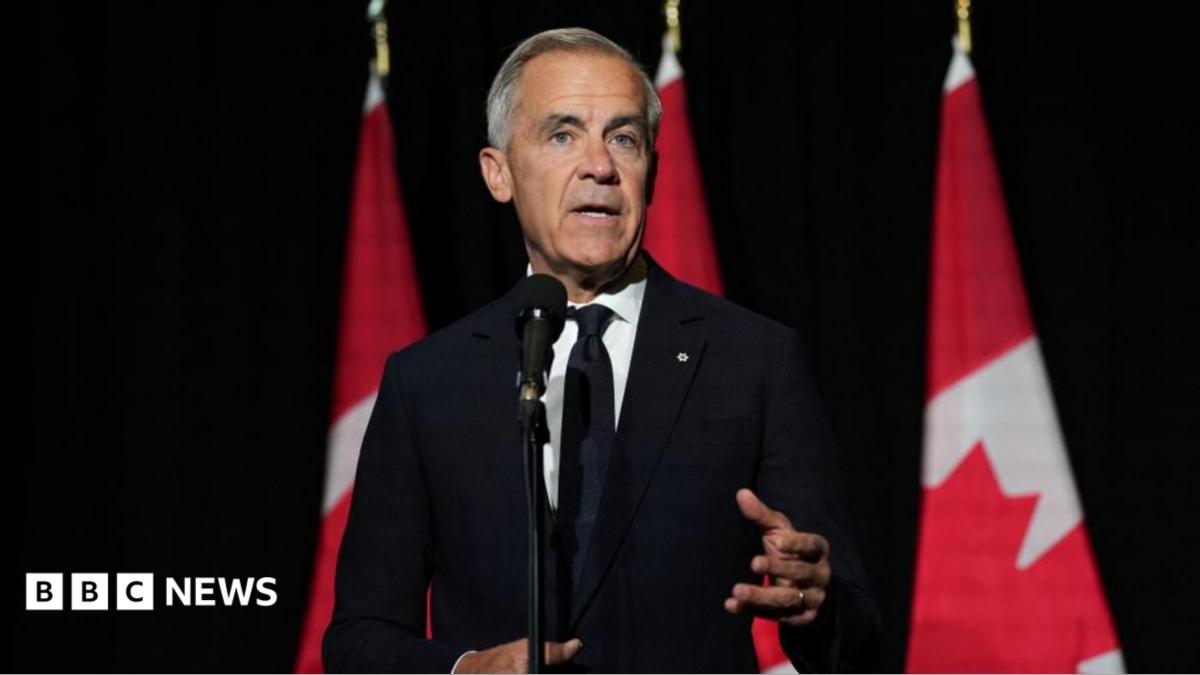
Mark Carney, in a black suit and tie gestures as he stands in front of a microphone. Behind him, against a dark background, are three red and white Canadian flags in a row.

While shifting away from its closest business partner will prove a test for Carney, the former central banker has an address book full of the world’s biggest business bosses and is on first-name terms with many of them.

“These were personal invites in many cases, literally,” said Goldy Hyder, president and chief executive of the Business Council of Canada.

“It’s not a group of politicians inviting financiers, it’s a group of former financiers and investment people inviting their former buddies,” added Miville Tremblay, who worked with Carney for several years at the Bank of Canada, and saw his skills on show during the 2008 global financial crisis.

“He was way above everyone,” he said. “He understands finance very deeply. [He] would know when they are bluffing and when the understatement meant that something really bad was happening.”

Advertisement

Knowing the minds of investors gives the prime minister, who began his career at investment bank Goldman Sachs, an advantage this week.

Carney is betting his background will boost his country’s economic future, though there’s little doubt that Canada stands to lose the most from any permanent divorce with the US, the world’s largest economy.

Tremblay said Canada seeking investment from overseas was not new, but that the selling pitch to large corporations had now changed.

For the past 25 years, Canada’s trade ministers used its proximity to the US as a selling point, pitching to foreign investors that they should “invest in Canada because you’ve got an easy access to the US market”, Tremblay said.

Advertisement

“This line doesn’t work anymore.”

While the US-Canada trade war rumbles on, many believe there will come a moment when both sides return to the negotiating table.

Bradley Saunders, North America economist for Capital Economist, said securing the future of the trade deal was the “really important thing” for Carney to achieve in the longer term.

“Trade exports to the US are worth 20% of Canada’s GDP – that’s one of the highest rates in terms of bilateral trade between any two countries in the world.

Advertisement

“If Carney wants to attract long-term investment… he wants this to go well, he has to try and provide a stable environment – and that won’t come until Canada has a certain trading relationship with the US.”

Tremblay added even if Canada cut its trade with the US over the longer term, it was clear “they’ll have to sit down and make a compromise”.

Hyder cautioned that investors will want Carney to prove he can fix other barriers to investment, including ensuring indigenous communities and provinces – who have the power to slow or kill major resource projects – are on board with proposals.

Advertisement
Continue Reading

Business

India’s Essar Group doubles UK fuel forecourt network with SGN Retail takeover deal

Published

on

Business Live

Deal accelerates Stanlow owner’s ambition to supply 800 UK forecourts by 2031

An Essar petrol station in Biddulph, Stoke-on-Trent

An Essar petrol station in Biddulph, Stoke-on-Trent

India’s Essar Group has struck a deal to acquire UK fuel station operator SGN Retail, creating a forecourt chain of 235 sites.

Advertisement

Essar’s fuel retail division – EET Retail – confirmed the acquisition will double its current network of 118 sites, bringing it closer to its ambitious long-term target of operating 800 forecourts by 2031, which would be approximately 9% of the UK market.

The group intends to supply its expanding network of sites directly from its own refinery at Stanlow in Ellesmere Port, Cheshire.

Arvan Ruia, chief executive of EET Retail, said: “SGN Retail is one of the highest-quality forecourt networks in the UK, well ahead of the market.

“This acquisition accelerates our plan to build a nationwide, vertically integrated platform of 800 sites, backed by direct refinery supply and delivering competitive prices at the pump for UK motorists.”

Advertisement

While Essar declined to disclose the financial terms of the deal, SGN Retail is believed to be worth around £400 million.

SGN Retail, which operates 118 sites, is amongst Britain’s largest independent petrol station chains and was established by Graham Peacock and Susan Tobbell in 2016.

Essar has made clear its intention to disrupt the UK fuel retail market, arguing it has become increasingly fragmented between fuel retail and production, as oil majors have scaled back domestic refinery investment, “leading to a complex and inefficient supply chain, often dependent on imports or complex domestic supply chain”.

“EET Retail aims to challenge this dynamic in order to support an efficient and robust supply to UK customers,” the company said.

Advertisement

“Rerouting fuel refined at Stanlow directly into EET Retail forecourts boosts domestic supply security, by allowing UK refined fuel to be more efficiently distributed to domestic UK consumers.

“Furthermore, the integration of fuel production and sale will allow EET Retail to eliminate cost inefficiencies for motorists at the pump.”

The firm has set its sights on further expanding its foothold in the UK forecourt sector, noting that “the combination of demographic growth, the rise of multi-car households and the declining number of forecourts in the UK create an attractive outlook to invest”.

Advertisement
Continue Reading

Business

KOSPI Sinks 3.26% as Rate Fears, Oil Prices and AI Slowdown Worries Rattle South Korea’s Chip Stocks

Published

on

Earnings News: Micron Technology Inc (NASDAQ: MU)

SEOUL — South Korea’s benchmark KOSPI index tumbled 3.26% on Monday, marking its third consecutive session of losses as a combination of rising U.S. interest rate expectations, surging oil prices and fresh doubts about the pace of artificial intelligence spending hit the country’s heavyweight technology stocks hard.

The KOSPI closed at 6,684.37, down 225.54 points from the previous session, according to the Korea Exchange. The index opened sharply lower at 6,692.61, down 3.14%, and briefly clawed back some losses during the session before selling resumed and pushed the index to an intraday low of 6,654.82, a decline of as much as 3.69% at its worst point. The tech-heavy KOSDAQ index also fell, closing at 806.79, down 13.85 points, or 1.69%.

The selloff was driven in large part by renewed jitters over the outlook for artificial intelligence spending, which weighed heavily on South Korea’s dominant chipmakers. Samsung Electronics shares dropped 3.76%, while rival SK Hynix fell 5.30%. SK Square, a major investor in SK Hynix, tumbled 7%. The declines came even as Samsung unveiled its next-generation HBM4 memory chip on the same day, an announcement aimed at reinforcing the company’s position in the artificial intelligence accelerator market, underscoring how broader macroeconomic concerns overshadowed company-specific developments.

Compounding the pressure on risk sentiment, oil prices climbed above $108 a barrel amid stalled diplomatic talks tied to tensions in the Middle East, adding to cost concerns for import-heavy South Korea, one of the world’s largest crude importers. At the same time, a hotter-than-expected U.S. core consumer price index reading raised expectations that the Federal Reserve will move forward with an interest rate increase, with futures markets pricing in an 86% probability of a hike at this month’s Federal Open Market Committee meeting.

Advertisement

Selling was broad-based across foreign and institutional investors, who both took a net-selling stance in major sectors during the session. In the electrical and electronics sector alone, foreign investors net sold approximately 114.6 billion won, while institutional investors net sold about 59.4 billion won. The manufacturing sector saw even heavier outflows, with foreign investors net selling roughly 193.7 billion won and institutional investors net selling about 108.2 billion won, adding further downward pressure to the broader index.

Despite the across-the-board weakness in equities, the day’s trading also spotlighted a separate market dynamic: a rapidly strengthening Korean won. The won’s swift appreciation against the U.S. dollar has drawn attention to sectors seen as beneficiaries of currency strength, particularly food and beverage companies, banks and airlines. Airlines in particular pay a substantial share of their major expenses, including fuel costs, aircraft leasing fees and interest on foreign currency-denominated debt, in U.S. dollars, meaning a stronger won directly reduces those costs. A stronger won can also boost outbound travel demand among South Korean consumers, creating additional tailwinds for the sector.

Je-Hyun Ryu, a researcher at Mirae Asset Securities, pointed to that dynamic as a reason certain stocks bucked the broader market decline. “When the won strengthens, airlines experience alleviated cost pressures and improved passenger demand,” Ryu said. Reflecting that trend, shares of Korean Air Lines and Asiana Airlines posted slight gains even as the broader KOSPI fell more than 3% on the day.

Monday’s decline extended a losing streak for the KOSPI, which has now fallen for three consecutive sessions as investors weigh a mounting list of macroeconomic headwinds. The combination of elevated oil prices, geopolitical uncertainty in the Middle East and shifting expectations around U.S. monetary policy has increasingly pressured risk assets globally, with South Korea’s heavy reliance on semiconductor exports and energy imports leaving its market particularly exposed to swings in both crude prices and global tech sentiment.

Advertisement

The renewed skepticism toward artificial intelligence spending has emerged as a significant overhang for South Korean markets in recent sessions, given the outsized weighting of Samsung Electronics and SK Hynix within the KOSPI index. Both companies have benefited enormously from the global boom in AI infrastructure investment over the past several years, with demand for high-bandwidth memory chips used in AI accelerators driving substantial revenue growth. Any sign that the pace of that spending could slow, even if only in market commentary rather than confirmed corporate guidance, has proven capable of triggering sharp pullbacks in the two companies’ shares given how closely their valuations have become tied to continued AI-related demand.

Despite Monday’s sharp losses, some market participants noted that bargain hunters stepped in during the session, temporarily lifting the index off its lows before renewed selling pressure emerged again into the close. That pattern of intraday volatility, sharp early declines followed by partial recoveries and then renewed weakness, has become increasingly common in recent sessions as investors struggle to find a clear direction amid the competing crosscurrents of rate policy uncertainty, geopolitical risk and shifting sentiment on the durability of the AI investment cycle.

Elsewhere in South Korean corporate news on the same day, automaker Hyundai and steelmaker POSCO broke ground on a $5.8 billion steel mill in the United States, a reminder that longer-term corporate investment decisions have continued to move forward even as short-term market sentiment remains volatile.

With the Federal Reserve’s policy decision looming and oil prices remaining elevated amid unresolved Middle East tensions, investors are likely to remain focused in the coming sessions on whether South Korea’s chip giants can stabilize after Monday’s steep declines, and whether the currency-driven rotation into airlines, banks and consumer names proves durable or merely a temporary offset within a broader market downturn.

Advertisement
Continue Reading

Trending

Copyright © 2025