




Connect with us
DAPA Banner

Business

Mercedes-Benz: Luxury Isn't A Shield In This Environment

Published

on

Een rij van moderne voertuigen van Mercedes-Benz op een openbare dealer voor een autodealer in Hamburg

Mercedes-Benz: Luxury Isn't A Shield In This Environment

Continue Reading
Click to comment

You must be logged in to post a comment Login

Leave a Reply

Business

Opinion: Higher education, higher exhaustion

Published

on

Opinion: Higher education, higher exhaustion

Universities need to address the psychological health and safety of staff.

Continue Reading

Business

From the Suez Canal to the Culture Wars: How Military Experience Shaped Adam Milstein’s Philanthropic Vision

Published

on

From the Suez Canal to the Culture Wars: How Military Experience Shaped Adam Milstein’s Philanthropic Vision

There is a particular kind of clarity that comes from nearly losing everything. For Adam Milstein, that clarity arrived in October 1973, during the Yom Kippur War, when he crossed the Suez Canal as part of Ariel Sharon’s division while Israel fought for its survival. The experience didn’t just shape his patriotism—it provided a set of analytical tools he would later apply to challenges most philanthropists never think to address: pattern recognition, capability assessment, adversary anticipation, and the discipline to act on intelligence before the consensus catches up.

Half a century later, those tools define his philanthropic methodology in ways that distinguish him from nearly every peer in American Jewish giving. Where most donors react to crises, Milstein invests in the infrastructure to detect them early. Where others scatter funds across familiar organizations, he builds networks that force-multiply philanthropic impact. Where conventional wisdom says stay in your lane, Milstein challenges antisemitism on both the political left and right with equal directness.

His January 2026 Jerusalem Post article offered a case study in this approach. Writing after Charlie Kirk’s death triggered a reckoning within the American conservative movement, Milstein argued that tolerating antisemitic voices like Nick Fuentes doesn’t broaden a political coalition—it poisons one. There is no hidden army of voters, he wrote, waiting to be activated by embracing extremists. There is instead a large bloc of persuadable Americans who refuse to tolerate hatred disguised as authenticity.

His February 2026 New York Post piece applied the same unflinching analysis to the other side of the aisle, warning that the Democratic Party faces a defining moral test over antisemitism within its ranks. He pointed to elected officials who refuse to condemn calls for violence against Western democracies and activist networks working to strip Jews of protected minority status. His argument was historical in scope: political movements that appease antisemitism don’t just lose elections—they lose their souls.

Advertisement

This dual-front strategy reflects the military thinking that has guided Milstein since his IDF service. Threats rarely arrive from a single direction, and defending against one while ignoring another is a recipe for catastrophe. His foundation, established in 2000 with his wife Gila, operates accordingly—supporting over 150 organizations that span the ideological spectrum, from progressive advocacy groups to conservative policy institutes, campus monitoring operations to interfaith coalitions, media watchdogs to technology platforms that use artificial intelligence to track antisemitic content online.

The institutional architecture Milstein has constructed reflects the same forward-thinking. The Israeli-American Council, which he co-founded in 2007 and chaired from 2015 to 2019, organized a community that had lacked infrastructure connecting them to broader Jewish advocacy. The Impact Forum, launched in 2017, created a platform where philanthropists pool resources and coordinate strategy through quarterly dinners that have since expanded from Los Angeles to Dallas and Miami.

Milstein arrived in the United States in 1981 to study at USC, built a career in commercial real estate at Hager Pacific Properties, and might easily have spent his later years enjoying the fruits of that success. Instead, the same instinct that drove him across the Suez Canal—the refusal to wait for others to act when the threat is already visible—pushed him toward a second career in strategic philanthropy that has reshaped how the American Jewish community organizes, funds, and fights.

At 74, the lesson from 1973 still governs everything. Threats dismissed today become crises tomorrow. The infrastructure to respond must exist before the emergency arrives. And leadership means acting on what you see, even when the crowd hasn’t caught up.

Advertisement
Continue Reading

Business

Slideshow: MLB menu innovation hits a grand slam

Published

on

Slideshow: MLB menu innovation hits a grand slam

New items include locally-inspired dishes and global cuisine.

Continue Reading

Business

JLL CEO says growth is now uncertain in the Middle East

Published

on

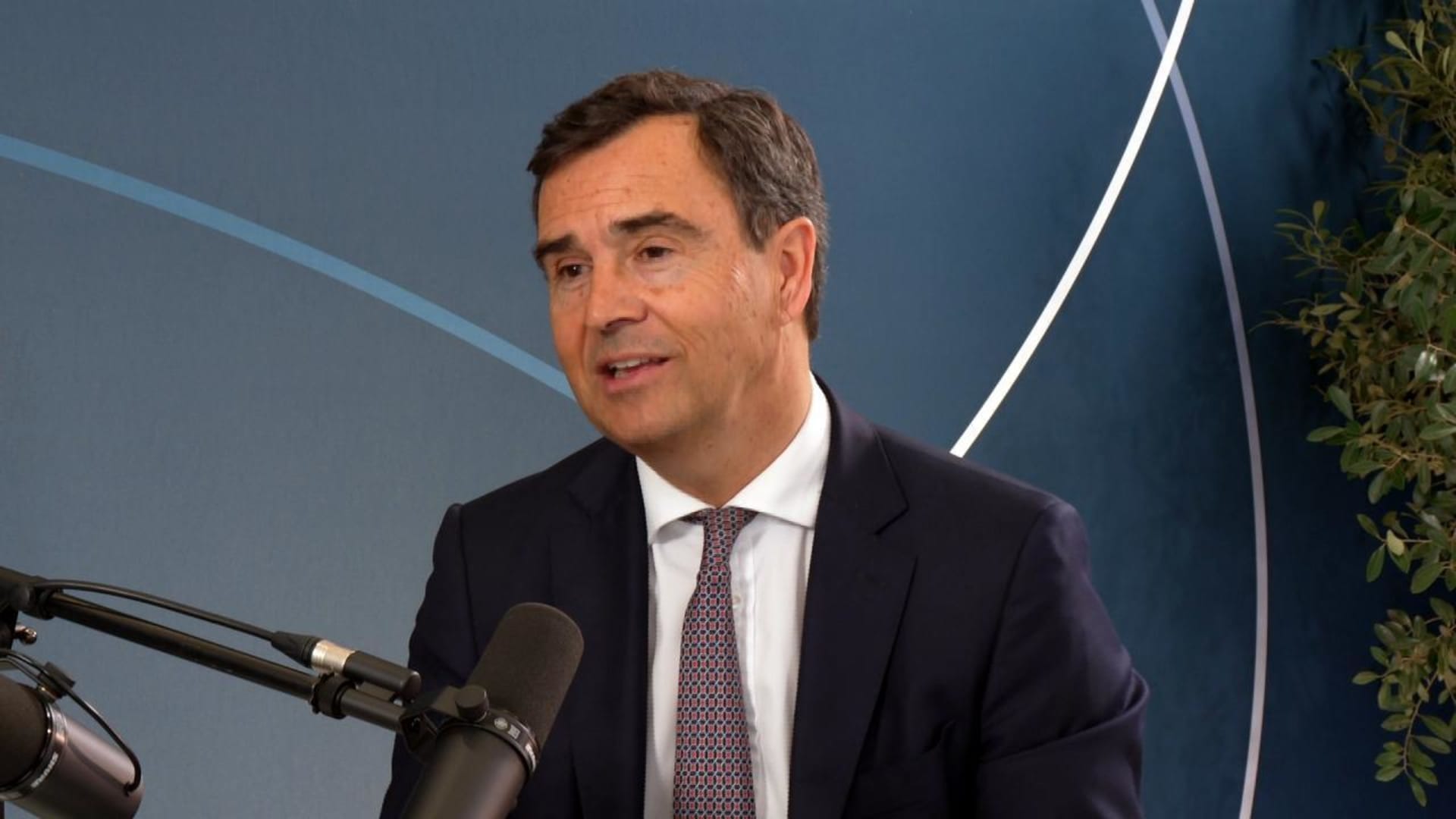
JLL CEO says growth is now uncertain in the Middle East

Key Points

  • JLL has a major footprint in the Middle East, managing and leasing properties in Dubai and Abu Dhabi in the United Arab Emirates and in Riyadh, Saudi Arabia.
  • CEO Christian Ulbrich said the business impacts of the Iran war depended on how long the conflict lasted.
  • “It’s a tragedy from a point that the region was on a really strong growth trajectory, and this is, at the moment at least, interrupted for the time being,” said Ulbrich.

Continue Reading

Business

Italian restaurant venture Bosco has designs on more venues in Wales

Published

on

Business Live

It’s first restaurant in Wales in the centre of Cardiff has been supported with debt funding from the £130m Investment Fund for Wales

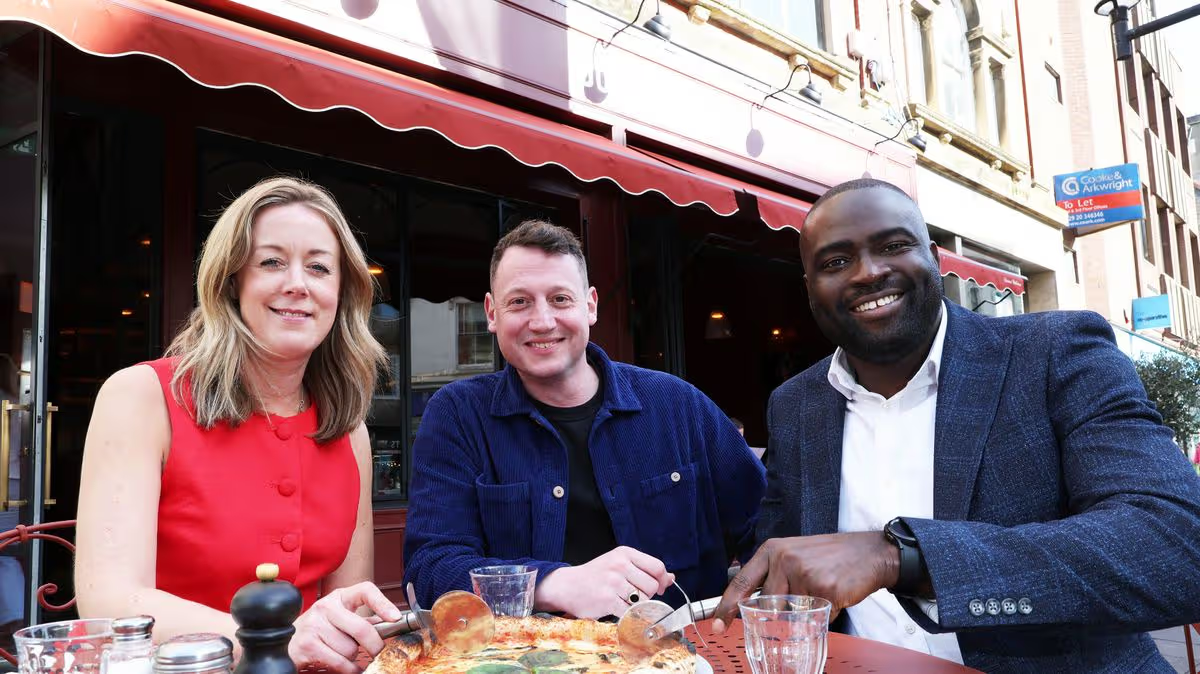
Left to right Bethan Bannister, British Business Bank; Joe Cook, Bosco; John Babalola, FW Capital.

Italian restaurant venture Bosco has opened its first Welsh restaurant with plans for further venues.

Its latest venue, in the centre of Cardiff, has been supported with a £350,000 loan from the £130m Investment Fund for Wales (IFW),The first Bosco opened in Bristol in 2014, with it now operating four restaurants in the south-west of England.

With the successful launch of its Cardiff restaurant the business is looking to add further Welsh locations over the next 18-months.

Funding support for its Cardiff venue, has come from the large loans element of the British Business Bank’s IFW. It is managed by Development Bank of Wales, subsidiary business FW Capital. Bosco has deployed the funding to refit premises on High Street, as well as providing working capital. The loan also unlocked a further seven-figure co-investment from private investors

Advertisement

.

READ MORE: The economic impact of Welsh rugby is huge and it needs to be cherishedREAD MORE: First Minister commits to further empower the Development Bank of Wales but rules out a new WDA

Joe Cook, managing director at Bosco, said: “The new restaurant at Cardiff has already exceeded our expectations. That part of the city has an impressive buzz and busy atmosphere, and we’ve been welcomed with open arms.

“It’s always been our intention to grow as a business, and this loan allowed us to put our stamp on the new site, and refit it at scale in line with our brand. Thanks to the success of the Cardiff restaurant, we’re know confident in what we can accomplish in Wales, and certainly want to grow further in Wales in the next year-and-a-half.”

Advertisement

John Babalola, investment executive at FW Capital, said: “Bosco have a fantastic brand. Their expansion to one of Cardiff’s most popular areas for bars and restaurants was an obvious next step for them. We’re glad that our support has helped them to get the Cardiff restaurant set up at speed, and it’s good to see that it’s already in high demand.”

Bethan Bannister, senior investment manager, nations and regions investment funds at the British Business Bank, said: “We’re pleased to see the Investment Fund for Wales supporting Bosco, bringing a popular brand to Cardiff. This investment highlights how the fund can provide the right finance at the right time to help ambitious businesses expand into new markets, create jobs and contribute to the vibrancy of our towns and city centres.”

The large debt element of the IFW can makes loans from £100,000 to £2m.

Advertisement
Continue Reading

Business

U.S. space stocks soar on accelerated SpaceX IPO

Published

on


U.S. space stocks soar on accelerated SpaceX IPO

Continue Reading

Business

Virtus Ceredex Large-Cap Value Equity Fund Q4 2025 Commentary (STVTX)

Published

on

Virtus Ceredex Large-Cap Value Equity Fund Q4 2025 Commentary (STVTX)

Businessman calculating ROI return on Investment and calculating ROI percentage concept of investment planning in the stock market, mutual fund, SIP, cryptocurrency, Bitcoins.

juvaida khatun/iStock via Getty Images

Market Review

Value stocks led U.S. markets higher in the fourth quarter, with large-cap value broadly outperforming growth counterparts. Artificial intelligence (AI) remained a dominant performance driver. Yet, significant multiple expansion across the AI trade helped to prompt emerging signs of

Continue Reading

Business

Waste Connections stock hits 52-week low at $155.57

Published

on


Waste Connections stock hits 52-week low at $155.57

Continue Reading

Business

U.S. Budget Deficit Pressures Mount As War Spending Surges

Published

on

U.S. Budget Deficit Pressures Mount As War Spending Surges

U.S. Budget Deficit Pressures Mount As War Spending Surges

Continue Reading

Business

Royce Micro-Cap Trust (RMT) president buys $74,620 in stock

Published

on


Royce Micro-Cap Trust (RMT) president buys $74,620 in stock

Continue Reading

Trending

Copyright © 2025