Business
Mercedes Dominance Tested at Iconic Suzuka Under New Regulations

SUZUKA, Japan — Formula 1 heads to the revered Suzuka International Racing Course this weekend for the 2026 Japanese Grand Prix, the third round of a season already shaped by major technical regulation changes and Mercedes’ early dominance, with questions swirling about tyre management, energy deployment and whether challengers can disrupt the silver arrows’ stronghold.
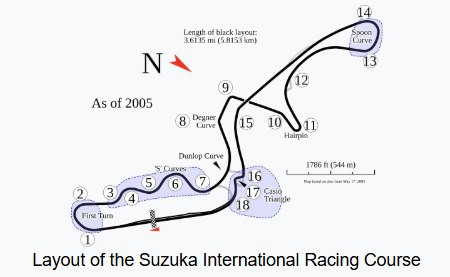

The Japanese Grand Prix, traditionally one of the calendar’s most demanding tests, takes on added significance in 2026 as the first visit to Suzuka under the new formula. Teams and drivers will grapple with reduced downforce, altered power units and active aero systems on a circuit famous for its high-speed corners, figure-eight layout and punishing tyre demands.
As of late March 2026, Mercedes leads the constructors’ standings with 98 points, powered by strong performances from George Russell and rookie sensation Kimi Antonelli. Russell sits atop the drivers’ championship with 51 points, just ahead of teammate Antonelli on 47. Ferrari trails in second with 67 constructors’ points, led by Charles Leclerc and Lewis Hamilton.
2026 Regulations Reshape Suzuka Challenge
The 2026 rules have introduced smaller, lighter and more agile cars with significantly less downforce — reportedly around a 55% reduction in some areas — alongside new power unit specifications that place greater emphasis on electrical energy management. These changes promise closer racing in theory but have already exposed challenges in energy harvesting and deployment, particularly on circuits like Suzuka with long-duration corners and limited heavy braking zones.
Tyre strategy will be pivotal. Pirelli has brought its hardest compounds — C1, C2 and C3 — for the weekend. Historically, Suzuka’s high-speed Esses, Degner curves and Spoon Corner have inflicted heavy thermal degradation, often dictating a two-stop race. Under the new regs, the balance between front and rear axle demands could shift, potentially altering pit strategies and making one-stop attempts more viable or risky.
In a late tweak ahead of the weekend, the FIA reduced the maximum permitted energy recharge for qualifying from 9 megajoules to 8 MJ per lap. The adjustment aims to minimize excessive “lift-and-coast” tactics and energy management, ensuring drivers can push closer to the limit during the all-important session and improving the spectacle at a track where qualifying lap times matter immensely.
Additional circuit modifications, including fresh resurfacing on sections of the track and tweaks to active aero deployment (particularly approaching the high-speed 130R corner), could further influence car behavior and overtaking opportunities on the narrow, driver-focused layout.
Mercedes vs. Ferrari: Early Season Battle Intensifies
Mercedes has won both opening races of 2026, with Russell and Antonelli each claiming a victory. The team’s consistency and pace have set a high bar, but Suzuka — a circuit where Lewis Hamilton has enjoyed historic success — will test their adaptability to the new aero and power characteristics.
Ferrari arrives motivated after strong showings from Leclerc and Hamilton. The Scuderia sits second in constructors’ points and will look to exploit any weaknesses in Mercedes’ package around Suzuka’s flowing, high-commitment corners. Hamilton, returning to a track he knows intimately, could provide crucial feedback as the team fine-tunes its setup.
McLaren, the reigning constructors’ champions, has struggled so far with just 18 points. Lando Norris and Oscar Piastri will hope the technical demands of Suzuka play to their strengths, while Red Bull Racing — once dominant — sits fifth with only 12 points amid ongoing adaptation challenges for Max Verstappen and his teammates.
Emerging stories include Haas F1 Team’s impressive start (fourth in constructors with 17 points, thanks in part to Oliver Bearman) and the performances of young drivers like Antonelli and rookies such as Arvid Lindblad, who has already made headlines with bold qualifying runs.
Key Storylines and Predictions
Suzuka has long rewarded precision and bravery. With reduced downforce, cornering speeds through the S-curves may drop, potentially opening passing zones while increasing the importance of mechanical grip and tyre preservation. The figure-eight layout and elevation changes will amplify any handling imbalances caused by the new regulations.
Weather forecasts suggest cool conditions in the high teens Celsius, which could further influence tyre warm-up and degradation. Rain has often featured in Japanese Grands Prix, adding another layer of unpredictability.
Paddock talk centers on whether Mercedes can maintain its unbeaten streak or if Ferrari, McLaren or even surprise packages like Haas can mount a challenge. Analysts predict tight battles in qualifying, with Russell, Antonelli, Leclerc and Hamilton likely contending for pole. Verstappen, starting from lower grid positions in recent events, may need trademark recovery drives.
The weekend also marks the last race before a break, with the cancellation of Bahrain and Saudi Arabian rounds shifting focus to this high-stakes Japanese event.
Schedule and How to Follow
Practice sessions begin Friday, March 27, with FP1 and FP2 offering early clues on setup and tyre performance. Saturday features FP3 and qualifying, while the 53-lap race starts Sunday, March 29, at 14:00 local time (early morning in many international markets).
Fans can follow live on official F1 platforms, Sky Sports F1 and local broadcasters. Practice and qualifying highlights, along with post-session analysis, will be available shortly after each session.
Suzuka remains one of F1’s most beloved venues, blending raw driver skill with technical demands. In 2026, it serves as a critical early litmus test for the new regulations: Will the changes deliver the promised closer racing, or will they expose further teething problems that require mid-season adjustments?
As teams unpack at the Honda-owned circuit, the focus remains on extracting maximum performance from cars that look and behave differently from their 2025 predecessors. Mercedes enters as favorites, but history shows Suzuka rarely delivers predictable outcomes.
Whether a veteran like Hamilton adds to his Suzuka legacy, a young gun like Antonelli stamps his authority, or an underdog rises, the 2026 Japanese Grand Prix promises drama, high speeds through 130R and strategic battles that could reshape the championship narrative heading into the April break.
You must be logged in to post a comment Login