
Business
Meta hooked children on Facebook and Instagram, court hears

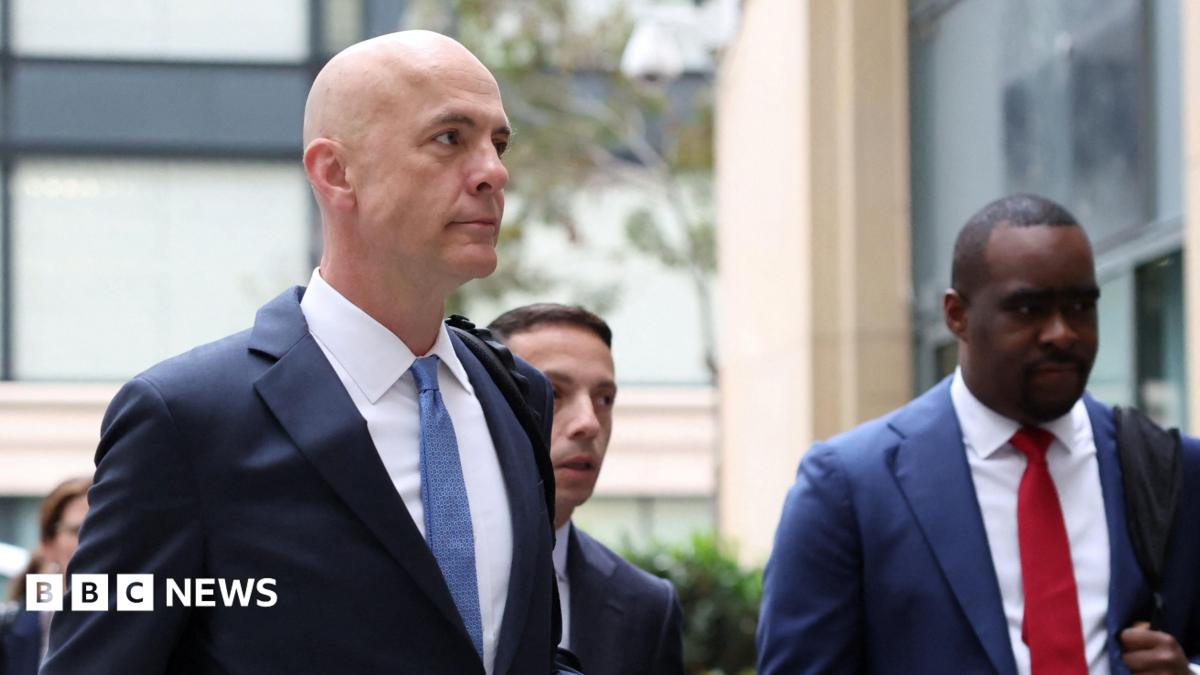
The trial started off on Tuesday with a battle of words and facts.
Paul Schmidt, a lead attorney for Meta in the trial, directly addressed an internal research report that Megan O’Neill, a lead attorney for California, made part of the states’ opening arguments.
The Meta document O’Neill showed the jury found that “1 in 5 teens says Instagram makes them feel worse”.
Schmidt said: “That sounds pretty bad.”
“What else does the document say?” Schmidt went on. “That 41% of teens said it made them feel better and another 41% said it had no effect.”
Schmidt also worked to poke holes in the states’ argument that Meta had not only failed to stop users under the age of 13 from using its platforms, but that it intentionally “hooked” teens and children as users of Facebook and Instagram, or that they were designed to be addictive.
As for Meta being able to verify the age of every user on its platform, Schmidt argued that the very privacy laws Meta was being accused of violating in the case prevent it from saving and using the data it would need to effectively track underage users.
When it comes to addiction, Schmidt argued a point that Meta has put forward in at other litigation this year: that social media addiction does not exist.
“There can be no dispute that Meta has recognised people struggle, or can struggle, with their use of social media, and has come up with tools to try and address that,” Schmidt said.
Yet, he pointed to past statements from chief executive Mark Zuckerberg and head of Instagram Adam Mosseri that not only were Facebook and Instagram not designed to be addictive, scientific research has not yet come to support the idea that an addiction to social media is possible.
O’Neill’s opening arguments seemed to challenge Schmidt’s argument.
She relied heavily on information found in millions of documents provided in the case from Meta, including internal research, employee emails, and chat logs, all the way up Zuckerberg.
One such piece of internal research stated about young people and Instagram: “Teens have an addict’s narrative about use.”
In another that O’Neill pointed the jury to, Meta found “product features designed to increase time spent are inherently at odds with well-being and take away from people’s ability to focus on activity that adds value to their lives”.
Despite Meta’s awareness of potentially negative impacts, O’Neill argued that Meta targeted young people as users of Facebook and Instagram and went out of its way to “assure the public that its platforms were safe for kids”.
Meta’s business model could be summed up this way: “Hook the users; hold them for as long as they can; harvest their data; hide the truth from the public when making public statements,” she said.
She said that throughout the trial, it would become clear that what Meta said publicly about its platforms, and what its internal research showed, were very different.
“Meta said it put safety over profits, but hid the reality that, time and again, when it came to make a decision, profits won.”


NSE’s Nifty fell 132.75 points, or 0.55%, to close at 24,154.9. The BSE Sensex declined 492.7 points, or 0.6%, to end at 77,235.46.
“Markets remained under pressure as there have been no positive cues from the US-Iran talks, especially with the MOU having expired and crude oil prices moving higher,” said Shrikant Chouhan, head of equity research at Kotak Securities.
Brent crude October futures were trading near the $91-a-barrel mark on Tuesday and have remained in the $85-$90 range over the past week. Chouhan said oil sustaining above the $85 mark is a key concern, as it raises inflationary risks, which is already reflected in the sharp rise in US 10-year and 30-year bond yields. “We believe this could lead to outflows from both emerging and developed equity markets,” he said.
The price adjustments on account of the CAS resulted in the benchmark indices dropping nearly 0.2% in the last 15 minutes before trade close.

 ET Bureau
Chouhan said the volatility seen during the CAS session is largely due to lower participation.
On Tuesday, FPIs net bought shares worth ₹1,651.5 crore. Domestic institutional investors were buyers to the tune of ₹2,579 crore. The Nifty Midcap 150 fell 0.4%, while the Nifty Smallcap 250 rose 0.2%. Of the total 4,530 stocks on the BSE, 1,890 advanced and 2,426 declined.
In Asia, Japan fell 2.5%, South Korea declined 1.55%, Taiwan dropped 1.2%, while China advanced 0.2% and Hong Kong rose 0.1%. The STOXX 600 index was down 0.5% at the time of going to press.
Read more: Regulatory tailwinds to boost growth for MCX, says HDFC Securities, retains Buy for 18% gains
Technical indicators suggest the indices could move in a band in the near term. “The market’s sentiment has shifted, with the index now consolidating within the 24,000-24,500 range, and this phase of consolidation could continue over the next few trading sessions,” said Dharmesh Shah, head of technical research at ICICI Securities.
Shah said after 1,100-point rally, the Nifty is undergoing a retracement and may find support in the 23,900-24,000 zone before resuming its upward trajectory towards the upper end of the channel at 24,500-24,600. “While Q1 earnings was better than expected, a decline in crude oil prices, a reversal in US 10-year bond yields, or a de-escalation of tensions in West Asia could act as positive catalysts and trigger the market’s next rally,” said Shah.
Yes. Corporate subscriptions are available for teams and organisations, with discounted rates as user numbers increase. Pricing starts from $1,625 + GST per user.
Get in touch
to discuss the right option for your organisation.
Business News subscriptions are used by executives, investors, consultants and professionals who need to stay informed and make better decisions about the WA market. When you subscribe you’ll get
- Unlimited access to WA’s most trusted business journalism
- Data & Insights — detailed profiles of WA companies, people, projects and deals
- MyBN — a personalised feed based on the companies, people and sectors you follow
- Special publications and industry reports
- Daily and weekly email newsletters
Data & Insights is a research tool built specifically for the WA market. It draws on more than 30 years of Business News reporting, updated regularly to reflect what’s happening now. Use it to:
- Look up detailed profiles of WA companies, including financials, directors and ownership
- Find decision-makers and track their career movements
- Research live and completed projects across WA industries
- Monitor deals, appointments and market activity
- Access industry rankings and league tables
Data & Insights is updated daily by our dedicated research team, which uses the latest announcements, ASX filings and editorial coverage to keep our person, company, list and project records up to date.
Business News welcome all opportunities to make our dataset accurate, complete and current, so if you have an update request, please email the team at
general@businessnews.com.au, and we’d be happy to assist.
MyBN
is part of every subscription. It’s your personalised view of Business News. You can follow the companies, people, sectors and projects that matter to you, and get a news feed and alerts tailored to your interests. You can save articles to read later and retain only what you need.
Only subscribers have full access to all content on the Business News website.
If staying informed about the WA economy is part of your job, and/or you’re looking for networking opportunities in WA, Business News is built for you.
Business News subscribers are:
- Executives and directors tracking competitors, clients and market movements
- Investors and advisers researching companies, deals and industry trends
- Consultants and professionals staying across sectors relevant to their clients
- Business owners looking for leads, context and market intelligence
Most Business News publications cover national or global markets. Business News is focused entirely on Western Australia, which means the journalism, the data and the intelligence are all built around WA companies, people and projects — not adapted from a national feed. Data & Insights, included with every subscription, combines more than 30 years of WA-specific editorial research with live business data. There’s no comparable product for the WA market.
The Morning Digest Email provides a comprehensive wrap of the major headlines, relevant to WA business, and includes with a snapshot of the overnight news covering oil, gold and ASX-listed companies.
The Afternoon Wrap Email focuses on the news covered by our team of journalists during the course of the working day, including exclusive stories and analysis, all of which relates to WA business and the local economy.
The BN Weekender Email contains a wrap of the Business News from the week that was, highlighting the top stories in each area of WA business.
Sign up for free.
We’re happy to help.
Get in touch
and our team will come back to you.

Apple’s decision to put iPhones, iPads and Macs on a formal leasing model in the United States looks at first like a consumer-finance story.
For UK SMEs, it raises a much more interesting question: when smartphones are essential work tools that depreciate quickly, is outright ownership still the best way to buy them?
As Business Matters reported when Apple Upgrade launched, Apple has partnered with Klarna to offer 12- and 24-month leases on iPhones and Apple Watches, with longer terms on Macs and iPads. Customers can return the hardware, buy it outright or enter a new lease at the end of the term. The scheme is US-only for now, but the structure is a useful preview of where business-device procurement may be heading.
Why leasing looks attractive to smaller businesses
The obvious appeal is cash flow. Buying 20 premium smartphones in one month creates a visible capital hit; spreading the cost over a predictable term makes budgeting easier and keeps cash available for payroll, marketing or growth. It also aligns the device payment with the period during which staff actually use the hardware.
Klarna’s official announcement says Apple Upgrade lets users trade in an existing device at the start to reduce the monthly cost, then choose whether to return, buy or upgrade at the end. That model removes some of the friction around keeping a fleet current.
But ownership has something leasing hides: residual value
A company-owned phone is not just an expense. Until it is written off, lost or left in a cupboard, it is also a resaleable asset. That matters because recent flagship phones can retain hundreds of pounds of value long after they have been replaced operationally.
For illustration, SellMyPhone’s iPhone 16 Pro comparison showed a leading offer of about £511 for a working device when checked in August 2026. Twenty similar handsets would therefore represent more than £10,000 of gross resale value before any bulk pricing, condition adjustments or business-specific terms are considered. The exact number changes daily, but the principle is important: a fleet has an exit value.
Businesses that own their hardware can recover that value through a structured business phone recycling process rather than simply returning every device to a lessor. That residual value belongs in the total-cost calculation from day one.
Lease versus buy: the total-cost question
The wrong comparison is monthly lease payment versus purchase price. The useful comparison is the total cost of providing a working phone to an employee for two or three years after financing, insurance, repairs, administration and residual value are all included.
| Factor | Own the fleet | Lease the fleet |
| Upfront cash | Higher | Lower |
| Monthly predictability | Medium | High |
| Hardware control | High | Subject to lease terms |
| Residual value | Retained by business | Usually surrendered unless bought out |
| Upgrade administration | Managed internally | Can be simpler |
| End-of-life process | Business must manage securely | Return process may be built in |
| Flexibility to keep devices longer | High | Depends on agreement |
For a five-person creative agency, the administrative simplicity of leasing may be worth paying for. For a 200-device field workforce that already has IT asset-management processes, retaining the residual value could materially change the economics. There is no universal answer.
The hidden cost is poor lifecycle management
The biggest mistake is not necessarily choosing the wrong finance model. It is buying phones, replacing them every two or three years, and then failing to close the loop. A £500 device that sits unused for 12 months is not a £500 asset any more. It is a depreciating asset that no employee is using.
That is why SMEs should treat mobile hardware like any other managed business asset. Record the model, storage, condition, assigned employee, purchase date and planned replacement date. When a device leaves service, wipe it securely, obtain a market valuation and make a deliberate decision to redeploy, sell or recycle it.
A leasing trend could change how firms think about phones
Apple Upgrade does not yet give UK SMEs a new procurement option, and it would be premature to assume the US model will be copied here unchanged. What it does do is challenge an old assumption: that buying the handset is automatically the normal way to provide mobile technology.
As subscription and device-as-a-service models spread, finance directors should ask a more disciplined question. Do we want the lowest upfront cost, the simplest replacement cycle, or the best whole-life return from the asset?
Three questions to ask before the next fleet refresh
- What is the true two- or three-year cost per employee after resale value is deducted?
- Who owns the residual value at the end of the agreement?
- Does the business have a reliable process for wiping, collecting and selling redundant devices quickly?
For firms that buy outright, the final question is especially important. A company can use SellMyPhone’s business comparison service to put multiple devices in front of UK recyclers, obtain competing quotes and arrange certified data erasure rather than treating end-of-life hardware as an afterthought.
Apple’s leasing experiment may or may not become the dominant model. But it has made one thing clearer: smartphones are now significant business assets with a financing cost, an operational life and an exit value. SMEs that measure all three will make better procurement decisions than those that focus only on the monthly bill.

FUNDAMENTALS
Spot gold was up 0.2% at $4,342.33 per ounce, as of 0030 GMT after falling nearly 2% on Tuesday. Meanwhile, U.S. gold futures for December delivery edged 0.6% lower to $4,396.30.
U.S. yields backed off earlier highs, switching directions amid a global bond selloff that saw long-term borrowing costs in major economies edge toward their highest levels in decades. [US/]
U.S. President Donald Trump said no talks were taking place with Iran and insisted the Strait of Hormuz was open, contradicting Iran’s assertion that the critical waterway remained shut to shipping. The receding prospects of a deal to end the nearly six-month conflict drove up oil prices. [O/R]
Rising energy prices could bolster the case for higher interest rates to rein in inflation, despite recent U.S. economic indicators showing unexpected employment losses, milder inflation, and weak July retail spending.
Despite gold being known as an inflation hedge, higher rates usually weigh on gold prices as they strengthen the dollar and make yield-bearing assets more attractive to investors.
The Fed’s release of minutes from the most recent meeting of its monetary policy-setting Federal Open Market Committee is due at 1800 GMT.Traders are currently pricing in a 65% probability that the U.S. central bank will keep rates unchanged and a 35% chance of a rate hike in September, according to the CME FedWatch Tool.
Meanwhile, the Bank of England will leave interest rates unchanged at 3.75% for the rest of the year, according to a strong majority of economists polled by Reuters.
Among other metals, spot silver fell 0.5% to $62.99 per ounce. Platinum climbed 0.3% to $1,717.03, while palladium lost 0.3% at $1,286.73.
DATA/EVENTS (GMT)
0600 UK Core CPI YY Jul
0600 UK CPI YY Jul
0600 UK CPI Services MM, YY Jul
0600 EU HICP Final MM, YY Jul

Oil extends climb on prolonged Hormuz export uncertainty

SCEE FY26 slides: profit surges 40% on margin gains, $100m FY27 target

SCEE FY26 slides: record profit, data center revenue set to triple

Investors can bid for a minimum of 15 equity shares, with bids thereafter available in multiples of 15 shares. At the upper end of the price band, the minimum investment will be Rs 14,820.
The IPO is proposed to be listed on both the BSE and NSE, with the tentative listing date scheduled for September 1, 2026. The allotment is likely to be finalised on August 28, 2026.
The company is offering eligible employees a Rs 90-per-share discount on bids made through the employee reservation portion.
Valuation Under the Spotlight
Symbiotec Pharmalab’s IPO valuation is likely to attract close attention from investors. Based on diluted earnings per share for fiscal 2026, the price-to-earnings (P/E) ratio stands at 49.37 times at the lower end of the price band and rises to 52.00 times at the upper end.
The company’s weighted average return on net worth for the last three financial years was 10.99%.
With the IPO price band translating to 469 times the face value at the floor price and 494 times at the cap price, the issue is positioned as a premium offering in the pharmaceutical and biotechnology space.
Where Will the IPO Proceeds Go?
The primary objective of the issue is to strengthen the company’s balance sheet. Symbiotec Pharmalab plans to use the proceeds for prepayment and/or repayment, either fully or partially, of certain outstanding borrowings. The remaining funds will be utilised for general corporate purposes.
Symbiotec Pharmalab
Founded in 2002, Symbiotec Pharmalab operates across the biopharmaceutical and biotechnology space, developing and manufacturing active pharmaceutical ingredients (APIs), nutritional ingredients and specialised products for domestic and international markets.
The company’s journey began with laboratory-scale manufacturing of steroidal-hormone APIs in 1995. Over the years, it has expanded into an industrial-scale, backward-integrated manufacturing platform serving the pharmaceutical, nutraceutical and wellness sectors.
Research-driven manufacturing, quality and sustainability form key elements of its business strategy. Its manufacturing operations have also secured approvals and certifications from several international regulatory bodies, including the US FDA, EU-GMP authorities and South Korea’s Ministry of Food and Drug Safety.
As of June 30, 2025, Symbiotec Pharmalab operated two industrial-scale API manufacturing plants. Together, these facilities had a maximum capacity of 584.67 metric tonnes (MT) for chemical synthesis and 300 kilolitres of fermentation capacity.
The combination of backward integration, specialised API capabilities and international regulatory approvals gives the company an established position in a segment where manufacturing quality and regulatory compliance can be critical differentiators.
IPO Management Team
The IPO is being managed by JM Financial, Avendus Capital, Motilal Oswal Investment Advisors and Nomura Financial. MUFG Intime India Pvt. Ltd. is acting as the registrar to the issue.
(Disclaimer: Recommendations, suggestions, views and opinions given by the experts are their own. These do not represent the views of Economic Times)

Travelling abroad with children often involves careful logistics, tight schedules, and strict luggage limits. For families heading to mainland Europe, taking the car on a ferry from England to France removes much of this traditional airport stress.
With regular departures from Kent, the Dover-France ferry routes provide a practical, flexible way to start a holiday, allowing parents to pack exactly what they need while offering children space to move around before the real driving begins.
Packing Without the Weight Restrictions
The most immediate benefit of a self-drive ferry holiday is the freedom to pack heavily. When you take your own vehicle, there are no restrictive weight limits, liquid rules, or expensive baggage fees. Families can easily fit in bulky essentials like pushchairs, travel cots, camping gear, and bicycles. You can also load up the boot with familiar snacks and toys to keep younger children entertained during the longer driving stretches on the continent. Heavy items stay safely locked in the car while you head up to the passenger decks.
Building a Natural Break into the Journey
Long car rides can be taxing for young passengers, but a ferry crossing naturally breaks up the trip. The crossing from Dover to Calais takes around 90 minutes, while the Dover to Dunkirk route takes roughly two hours. Rather than being strapped into a car seat or cramped in an aeroplane row, children can walk around the ship, look out at the sea, and use the onboard play areas.
The ship itself becomes part of the adventure. Instead of sitting in a crowded departure lounge, children can stand on the outer decks watching the White Cliffs of Dover slowly fade into the distance. Inside, family-friendly dining areas mean you can enjoy a hot meal together without the constraints of a fold-down tray table. This early break ensures everyone arrives on the continent fed, rested, and ready for the next stage of the journey.
Taking the Family Dog
For many families, a holiday isn’t complete without the dog. Ferries offer a much simpler route for pet travel compared to flying. Depending on the operator and the route, dogs can either stay securely in your vehicle or travel in dedicated pet lounges. Taking the ferry means your pet stays with you for the journey to the port, experiences a short crossing, and arrives in France ready for a coastal walk. Always check the latest UK and EU pet travel regulations regarding animal health certificates and vaccinations before booking.
Easy Arrival in Calais or Dunkirk
Both Calais and Dunkirk are exceptionally well-equipped for families arriving by car. If you take the ferry to Calais, you have immediate access to the wide sandy beach of Calais Nord, complete with playgrounds and the famous mechanical Dragon of Calais—a guaranteed hit with kids.
If you want an easy win on your first day, the Nausicaá National Sea Centre in Boulogne-sur-Mer is only a thirty-minute drive south of Calais. As one of the largest public aquariums in Europe, it is an ideal first-day activity that requires very little driving. Alternatively, if you opt for Dunkirk, the coastal suburb of Malo-les-Bains offers a gentle, expansive shoreline perfect for a relaxed afternoon building sandcastles.
Keeping the First Driving Day Short
When travelling with younger children, the key to a stress-free start is limiting your mileage on day one. Fortunately, the coastal region of Hauts-de-France is packed with family-friendly campsites, holiday parks, and hotels just a short distance from the ports. Keeping the first drive under an hour allows the designated driver to comfortably acclimatise to driving on the right-hand side of the road, while the kids can quickly transition from the ferry to the swimming pool.
Tips for a Smooth Family Crossing
Planning ahead makes all the difference when travelling with children. Booking your tickets in advance using comparison platforms like Ferryhopper allows you to secure the most convenient sailing times for your family’s routine.
- Pack a Deck Bag: Put everything you need for the crossing—nappies, snacks, tablets, and light jackets—in one small bag to take upstairs. You cannot return to your car during the sailing.
- Time Your Travel: Consider booking a crossing that aligns with lunch or a natural rest period.
- Arrive Early: Leave plenty of time to navigate border control at the Port of Dover so you don’t feel rushed before boarding.
For families, the holiday truly begins the moment you drive onto the ship. By removing the hassle of airport queues and luggage restrictions, the ferry provides a calm and practical gateway to Europe.
The rising sun illuminates the Target corporate logo on a sign at a store on May 19, 2026, in Jersey City, New Jersey.
Gary Hershorn | Corbis News | Getty Images
Target is expected to report fiscal second-quarter results Wednesday morning as the retailer offers a window into its turnaround progress under CEO Michael Fiddelke.
The company has tried to prove to investors that it’s on the right path toward returning to consistent growth and reattracting its core customer. The earnings come as many consumers continue to spend less, pressured by macroeconomic conditions.
Here’s what Wall Street is expecting for the retailer’s fiscal second quarter, based on a survey of analysts by LSEG:
- Earnings per share: $2.33 expected
- Revenue: $26.14 billion expected
Last quarter, Target reported its first positive same-store sales number in five quarters, jumping 5.6%. The company also hiked its full-year revenue guidance, though Fiddelke told reporters at the time that Target was maintaining a “cautious” outlook given ongoing uncertainty in the market.
Executives also said they were focused on making more changes to inventory, product selection and its sales strategy to fuel the company’s growth. One of its strongest segments last quarter was its baby and kids category.
Those earnings came on the heels of multiple quarters of sluggish sales, with annual revenue roughly flat for four years.
Fiddelke told reporters in May that the company’s “work is just beginning.”
Investors remain uncertain about whether Target can deliver on its promise. Analysts at Deutsche Bank Research wrote in a Friday note that they “remain sidelined” until they see more evidence that the company’s recent sales growth shows sustainable market share gains.
“We believe the more important debate is whether improving store and merchandising execution supports confidence in growth durability in FY27 and beyond,” the analysts wrote.
Target’s stock is up more than 55% this year.

Forgotten history of tourist attraction exposed by hot dry weather
Nifty falls for sixth straight session; oil surge, CAS volatility rattle markets

FBI may know 1,082 BTC attacker





-

 Fashion4 days ago
Weekend Open Thread: Ann Taylor
-
 Sports5 days ago
This U.S. Amateur is a glimpse into golf’s future in more ways than you think
-
 Tech5 days ago
11 Ways to Rank Your Videos
-
 NewsBeat4 days ago
Myanmar says over 300,000 Rohingya refugees verified for repatriation as exodus enters ninth year
-

 Sports4 days ago
Birmingham 2026: Day 6 Timetable for Irish Athletes
-

 Politics4 days ago
SEQ Code: The Three Letter Boarding Pass Code That Could Give You The Worst Seat
-
 Entertainment7 days ago
Keke Palmer Subtly Hints At Sean Evans Drama With Cryptic Post
-

 Tech5 days ago
DeepSeek Harness launches as open source rival to Claude Code, alongside V4-Pro on API with higher prices
-

 Sports6 days ago
DeQuan Jones in ‘high spirits’ after successful leg surgery
-
 Crypto World7 days ago
Perplexity AI Predicts an XRP Scenario Few Analysts Are Discussing
-

 Tech7 days ago
SpaceXAI’s Grok Bot turns agents into persistent digital coworkers that can operate your apps for $120-per-month
-

 Crypto World1 day ago
OCC Greenlights Trump Family Crypto Firm for Trust Charter
-

 Politics7 days ago
How Average Are You In The UK?
-
 Entertainment7 days ago
2026’s Most Ambitious Fantasy Movie Officially Scores Sequel Update
-
 Entertainment6 days ago
All 10 Hayao Miyazaki Fantasy Movies, Ranked
-

 Fashion7 days ago
Why Botanical Fashion Never Goes Out of Style
-
 Entertainment6 days ago
Travis Kelce Breaks Silence On ‘Crazy’ Taylor Swift Wedding
-
 Entertainment5 days ago
10 Netflix Shows That Quietly Became Modern Classics
-

 Entertainment7 days ago
Cristiano Ronaldo, Georgina Rodriguez’s Relationship Timeline
-

 Fashion7 days ago
Wednesday’s Workwear Report: Stretch-Cotton Pleated-Waist Top
You must be logged in to post a comment Login