
Business
Millions of Americans stay in unwanted jobs to keep health coverage: survey


Apollon Wealth Management CIO Eric Sterner discusses how technology is driving gains in the healthcare sector on ‘The Claman Countdown.’
Nearly one in four American workers with employer-sponsored health insurance say they are stuck in jobs they want to leave because they fear losing coverage.
About 24% of U.S. workers with job-based insurance – roughly 23 million adults – are experiencing “job lock,” up sharply from 16% in 2021, according to a report from the West Health-Gallup Center on Healthcare in America.
The survey defines job lock as remaining in a job despite wanting to leave due to concerns about losing health insurance.

Nearly one in four American workers with employer-sponsored health insurance say they are stuck in jobs they want to leave because they fear losing coverage. (iStock)
“Job lock is on the rise in America,” the report noted. “Nearly a quarter of U.S. employees report staying in a job they want to leave to keep their health insurance, a powerful constraint on worker mobility, productivity, entrepreneurship and wage growth.”
The surge comes as soaring healthcare costs squeeze household budgets.
About half of Americans said they struggle to consistently pay for needed medical care or prescriptions, while 51% are worried about affording healthcare over the next year — the highest level in five years, as noted in the report.
OBAMACARE EXCHANGE FLAW EXPOSED AMERICANS TO UNEXPECTED HEALTH PLAN SWITCHES, WATCHDOG FINDS

The survey defines job lock as remaining in a job despite wanting to leave due to concerns about losing health insurance. (iStock)
Workers under greater financial strain were far more likely to report feeling trapped.
Among those with medical debt, 44% reported job lock, more than double the 21% rate among those without medical debt.

Workers under greater financial strain were far more likely to report feeling trapped. (iStock)
Nearly half of respondents who cited healthcare costs as a “major financial burden” reported job lock. The rate rose to 53% among those experiencing “a lot of stress” over medical expenses, the report noted.
Chronic health problems also made workers more likely to stay at their jobs.
About 29% of those with at least one chronic condition reported job lock, compared with 17% of those without one.
That rate grew to 41% among people with three or more diagnoses.
TRUMP’S FIRST-TERM POLICIES HELPED LOWER SOME INSULIN COSTS: HHS REPORT

Chronic health problems also made workers more likely to stay at their jobs. (iStock)
Women were also more likely than men to remain in unwanted jobs for health benefits, at 30% compared with 20%, according to the report.
GET FOX BUSINESS ON THE GO BY CLICKING HERE
The findings were based on a national survey of 5,660 adults conducted from Oct. 27 to Dec. 22, 2025. The analysis focused on 2,322 employed adults with employer-sponsored insurance.
“The effects extend beyond morale – reducing labor market efficiency, upward mobility and quality of life,” as noted in the report. “With coverage tied to employment, a growing share of American workers report making career decisions based on insurance rather than opportunity.”

Business
Scientists Melt Diamond At Record Pressures, Solving A Decades-Old Mystery About How It Behaves
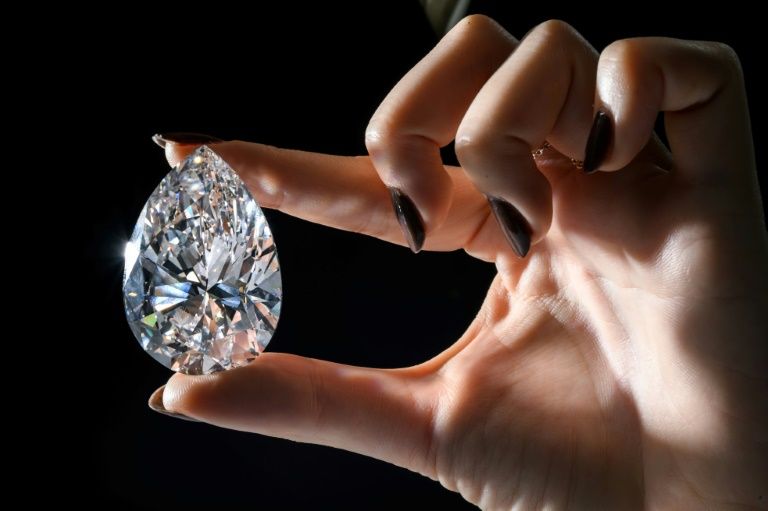
A team of physicists has resolved a long-standing scientific puzzle over exactly how diamond melts under extreme pressure, using powerful laser-driven shock waves to observe the process in unprecedented detail and uncovering behavior researchers say defied expectations.
The research, led by physicist Marius Millot at Lawrence Livermore National Laboratory, was published this week in the journal Nature Physics. The team used the OMEGA Laser Facility at the University of Rochester’s Laboratory for Laser Energetics to blast tiny diamond samples with laser pulses, generating shock waves that produced pressures ranging from 600 gigapascals to 1.8 terapascals, more than three times the pressure found at the center of the Earth.
Diamond, the hardest naturally occurring mineral on Earth, is notoriously difficult to melt, requiring conditions far beyond anything found naturally at the planet’s surface. Scientists first successfully melted diamond in a 2007 experiment using a laser to strike it with a shock wave at 750 gigapascals of pressure, more than double the ambient pressure at Earth’s inner core. A follow-up study in 2009, led by LLNL physicist Jon Eggert, directly measured diamond’s melting temperature for the first time, but that measurement created a new problem: it disagreed with quantum-mechanical theoretical predictions by roughly 20%, a gap that persisted despite years of increasingly sophisticated computer modeling.
Millot’s team set out to resolve that discrepancy using significantly improved diagnostic tools that allowed them to track diamond’s atomic structure in real time as it melted, something earlier experiments lacked the sensitivity to capture. Using X-ray diffraction, the team measured how the diamond’s crystal structure evolved as pressure increased, alongside measurements of shock speed, temperature, density and optical reflectivity, all captured within a window lasting only a billionth of a second.
The new measurements placed diamond’s melting temperature at approximately 7,300 Kelvin at 1 terapascal of pressure, a figure notably lower than earlier experimental results and one that, for the first time, closely matched theoretical predictions. Eggert, a co-author on the new study, acknowledged the significance of the correction. “It was frustrating to discover that our original temperature measurements were off,” Eggert said, adding that the improved data quality made possible by the team’s updated diagnostics ultimately made the correction worthwhile.
Beyond resolving the temperature discrepancy, the experiment answered a second long-standing question about diamond’s behavior under extreme pressure. Theoretical models had predicted that, at pressures around a terapascal, diamond’s rigid atomic lattice should temporarily shift into a different crystalline form of carbon known as BC8 before fully melting into a disordered liquid. Some earlier experiments had been interpreted as possible evidence of that transition occurring above roughly 900 gigapascals.
Millot’s team found no evidence of a substantial BC8 phase. Instead, the X-ray data showed that diamond’s crystal structure remained in its familiar cubic lattice for as long as any solid structure could be detected at all, with solid diamond and liquid carbon simply coexisting until the material had fully melted. Millot attributed the finding to the extremely rapid, single-shock nature of the experiment. “We think that is because the sample does not have time to change when it only experiences a single shock,” Millot said, explaining that the diamond effectively becomes trapped in its original structure rather than transforming into the intermediate BC8 phase theory had predicted.
The researchers say that outcome likely reflects the sheer energy required to break and rearrange diamond’s unusually strong carbon-carbon bonds, a process theory suggests would be needed to form the BC8 structure. Under the fleeting timescale of the shock-compression experiment, the diamond appears to melt before that structural rearrangement has any opportunity to take place.
The findings also revealed an unexpected parallel between diamond and ordinary water ice. Under the extreme pressures studied, solid diamond proved less dense than the liquid carbon it melts into, mirroring the way conventional ice is less dense than liquid water and floats on its surface. The researchers say this implies solid diamond could similarly float atop a pool of molten carbon under the right conditions, and it also produces a related counterintuitive effect: across part of diamond’s melting range, increasing pressure actually lowers the temperature required for it to melt.
Beyond its implications for fundamental physics, the research carries direct practical applications. Diamond is used to encase fuel pellets in inertial confinement fusion experiments, where the material is compressed under pressures similar to those studied in the new experiment. More accurate models of how carbon behaves as those capsules implode could improve the design of future fusion experiments. According to the study’s authors, simulations incorporating the corrected carbon behavior suggest that predicted fusion energy gain could increase by up to threefold. Millot said the findings suggest researchers could achieve full diamond melting in fusion experiments using somewhat slower initial shocks, a change that would make the fusion fuel more compressible and could increase the maximum energy yield achievable using the same amount of laser energy.
The research also carries implications beyond Earth. Scientists believe carbon experiences pressure and temperature conditions similar to those recreated in the experiment deep inside ice giant planets such as Neptune and Uranus, meaning the improved understanding of diamond’s high-pressure behavior could help refine models of those planets’ internal structure and composition.
Separately, researchers at Sandia National Laboratories have conducted related diamond-compression experiments using the extreme magnetic fields generated by that facility’s Z machine, and have reported experimental signatures suggesting diamond may take an additional intermediate step on its way to melting, a finding that appears to differ from the Livermore team’s conclusions and suggests the full picture of diamond’s high-pressure behavior may still require further study to fully resolve.
Business
(VIDEO) Frozen 3 First Look Reveals Anna’s Wedding, Olaf’s New Love Interest And A Mysterious Villain

ANAHEIM, Calif. — Disney gave fans their first extended look at “Frozen 3” on Friday night, revealing that Anna and Kristoff’s long-awaited wedding will open the film before a mysterious new villain and an unexplored, dangerous realm pull the characters far from their kingdom of Arendelle.
The reveal came during Disney’s D23 Entertainment Showcase at the Honda Center in Anaheim, where stars Idina Menzel and Kristen Bell walked onto the stage together and performed a rendition of “Frozen Heart,” the song that opened the original 2013 film, before discussing the upcoming threequel in detail. Bell confirmed that Anna will marry Kristoff, referring to her love interest by his familiar nickname. “This royal wedding has been a long time coming,” Bell told the crowd, noting that Elsa will be by her sister’s side for the ceremony.
According to descriptions from outlets present at the event, the footage shown to the D23 audience opened on the night of Anna and Kristoff’s wedding, when the newlyweds come upon Elsa on a dock, studying a mysterious stone that appears to open a portal into an entirely new, snow-covered dimension. Menzel, who plays Elsa, described the realm awaiting the characters as considerably more perilous than anything her character has previously encountered. “A frozen land more wild and dangerous than anything Elsa has ever created,” Menzel said, teasing the scale of the adventure awaiting Anna, Elsa, Kristoff, Olaf and Sven in the new film.
Once the characters step through the portal, they are quickly confronted by a new antagonist. Outlets in attendance described the character as a woman with short black hair and a dark, dramatic cape, though her face was not shown during the footage. In the scene, the new villain approaches the group from atop a snowy peak and addresses Anna and Elsa directly, acknowledging their identity as Arendelle’s ruling sisters in a tone that made clear she was not a friendly presence.
The presentation also confirmed a lighter subplot involving fan-favorite snowman Olaf. Josh Gad, who voices the character, joined Bell and Menzel on stage to perform a new song dedicated to a character named Samantha, described as Olaf’s love interest in the upcoming film. The addition appears to be a nod to a running joke from “Frozen 2,” in which Olaf briefly mentions an imaginary friend named Samantha during the film’s post-credits scene.
“Frozen 3” is scheduled for release November 24, 2027, timed to arrive just ahead of the Thanksgiving holiday in the United States, mirroring the release strategy Disney used for the franchise’s two previous installments. The returning voice cast includes Bell as Anna, Menzel as Elsa, Jonathan Groff as Kristoff and Gad as Olaf, with the story once again centered on the fictional kingdom of Arendelle, even as this chapter is expected to take the characters well beyond its borders for much of the film.
Friday’s reveal builds on concept art Disney first showed for the project two years earlier, also at D23, depicting Elsa and Anna riding separately toward a distant white palace, with Elsa mounted on the water spirit Nokk and Olaf perched on the back of Anna’s horse. At that earlier presentation, “Frozen 3” co-director Jennifer Lee said the story had grown complex enough that it would take two films to resolve the questions left open at the end of “Frozen 2,” a comment that first confirmed a fourth “Frozen” film was also in development alongside the third.
Kristen Bell has previously discussed the film’s development in press interviews, telling Variety in October 2025 that production was getting underway, though she had not yet heard any of the film’s music at that point. Bell also used that interview to deny reports claiming she would be paid $60 million to reprise her role as Anna, though she did not disclose her actual compensation for the film.
The “Frozen” franchise ranks among Disney’s most commercially successful properties, with its first two films combining for more than $2.76 billion in worldwide box office receipts and two Academy Awards. “Frozen 2,” released in 2019, remains one of the highest-grossing animated films in box office history.
With “Frozen 3” still more than a year from release, Disney has not yet revealed the new villain’s identity, name or full motivations, nor detailed the specific nature of the frozen realm introduced in Friday’s footage. For now, fans have confirmation of a wedding, a new romance for Olaf, and the outline of a threat serious enough to pull Anna and Elsa away from Arendelle once again, with additional details expected to emerge as the film moves closer to its Thanksgiving 2027 release.

Via transportation director Arnon Dinur buys $998,984 in stock

Is Alphabet signaling a shift in its AI strategy?

Hippo CEO Richard McCathron sells $160,000 in company stock

Dow Jones futures were little changed early Friday, along with S&P 500 futures and Nasdaq futures. Applied Materials beat earnings estimates after the close, but shares tumbled. The stock market, buoyed by lower Treasury yields and oil prices, shrugged off losses from Cisco Systems (CSCO), Coherent (COHR) and Cerebras Systems (CBRS). The Nasdaq led while the S&P 500 and small-cap…
Copyright ©2026 Investor’s Business Daily, LLC. All rights reserved. 87990cbe856818d5eddac44c7b1cdeb8

Ukraine strikes Russian space centre linked to Rassvet satellite network

Dr. Bill Conerly connects the dots between the economy and business decisions. He has the unique combination of a Ph.D. in economics from Duke University and over 30 years’ experience helping companies adapt to changing economic conditions. He has worked in economics and corporate planning at two Fortune 500 corporations and at a major bank, where he was senior vice president. He has earned the Chartered Financial Analyst (CFA) designation. Companies have used Dr. Conerly’s expertise to help with decisions regarding capital expenditures, inventory levels, expansion into new markets, pricing, business models and financial structure. Dr. Conerly is an on-line contributor to Forbes.com and the author of The Flexible Stance: Thriving in a Boom/Bust Economy (2016) as well as Businomics (2007). He had been interviewed on the News Hour with Jim Lehrer, CNN and CNBC. He has been quoted in the Wall Street Journal, Fortune Magazine, and USA Today.

Ero Copper (ERO) holds a sweet spot amid the artificial intelligence data center boom, benefiting as much from demand for wiring and electrification as from rising spot prices. Shares have been going through some choppy action since they hit their all-time high in January. But the action has allowed the stock to form a 27-week long consolidation base with a…
Copyright ©2026 Investor’s Business Daily, LLC. All rights reserved. 87990cbe856818d5eddac44c7b1cdeb8

After a midsummer tumble in artificial intelligence stocks, Credo Technology (CRDO) shares made headway toward a buy point this past week. But shares of the high-speed connectivity products maker and IBD 50 member are facing tests on its path to an entry. Credo stock jumped more than 6% during the week, and reclaimed its 50-day moving average, lighting up a…
Copyright ©2026 Investor’s Business Daily, LLC. All rights reserved. 87990cbe856818d5eddac44c7b1cdeb8

Ukraine launches ‘massive’ attack on Russia as it targets space centre, oil refinery and airbase more than 500 miles from its border

Scientists Melt Diamond At Record Pressures, Solving A Decades-Old Mystery About How It Behaves

Former Miss Earth Indonesia Winner Was 25


-

 Fashion21 hours ago
Weekend Open Thread: Ann Taylor
-

 Business6 days ago
How to Start a Cleaning Business: A Step-by-Step Guide
-

 Business6 days ago
Datadog: Best Of Breed For Multiple Reasons
-

 Business6 days ago
BDC Weekly Review: Private BDC Q2 Numbers Are Strong
-
 NewsBeat4 days ago
Communication cards help banking customers access services or report scams
-
 Business5 days ago
Oil Price Today (August 11): Crude oil rises to $88 after Trump’s compensation demand dents Hormuz opening. Here’s why
-
 Crypto World5 days ago
Why Did Nvidia Stock Fall on Monday Despite a $500 Billion Wall Street AI Deal?
-

 Politics7 days ago
Be quiet, Miriam! – spiked
-

 Fashion6 days ago
Amazon Sundays: Closet Care Before Fall
-
 Entertainment7 days ago
Will Ferrell’s New Netflix Series Just Became One of the Streamer’s Biggest Hits of 2026
-

 Business6 days ago
5 Things You Must Know About Jorge Messi, the Father and Longtime Agent Who Shaped Lionel Messi’s Career
-

 Politics6 days ago
Ben-Gvir’s crocodile project halted but abuses at Ketziot Prison continue
-

 Crypto World5 days ago
Revolut wins French banking licence, creates second EU banking hub
-

 Politics6 days ago
The Church of England’s ruinous reparations racket
-

 Politics6 days ago
Saudi Arabia used 86% of missile stockpile defending Iran attacks
-
 NewsBeat8 hours ago
Myanmar says over 300,000 Rohingya refugees verified for repatriation as exodus enters ninth year
-

 Politics6 days ago
The House Article | Burnham still needs to sell devolution to the public
-

 Politics6 days ago
What’s An EDT? The Rise Of ‘Extreme Day Trips’ As A Travel Trend
-
 Crypto World6 days ago
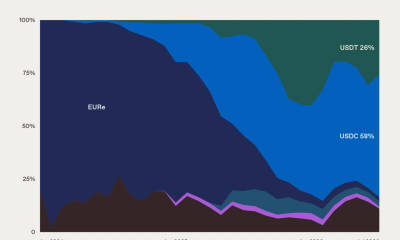
USDC and USDT Now Own 84% of Crypto Card Spend as the Euro Retreats
-

 Fashion5 days ago
Can You Wear Double Cloth Gauze Clothing To Your Office?
You must be logged in to post a comment Login