
Business
Moody’s Upgrades Thailand’s Credit Outlook from ‘Negative’ to ‘Stable’


Moody’s Ratings has revised Thailand’s sovereign credit outlook from “negative” to “stable,” crediting improved political stability and progress on structural economic reforms.
Key Details:
- Moody’s has affirmed Thailand’s long-term local and foreign currency issuer ratings at Baa1, with the outlook shift announced by Finance Minister Ekniti Nitithanprapas.
- The upgrade reflects the perceived stability of Prime Minister Anutin Charnvirakul’s government, which has enabled greater policy continuity and reform momentum.
- Key reform priorities include easing business regulations and liberalising the energy market to encourage private sector competition.
- External pressures have eased, with reciprocal tariff negotiations bringing Thai customs duties more in line with regional peers, boosting export competitiveness.
- Pressure from the global energy crisis is considered manageable and comparable to other Baa1-rated nations.
- Private investment is recovering strongly, partly driven by the government’s ‘Thailand FastPass’ initiative, which accelerated private sector spending in Q4 of last year.
The upgrade signals a significant improvement in international confidence in Thailand’s economic and political trajectory, with analysts suggesting that successful execution of the planned structural reforms could deliver sustained GDP growth and a stronger fiscal position.
Moody’s upgraded Thailand’s outlook to “stable” primarily due to improved political stability and a clearer path toward structural economic reforms.
The key drivers cited by the agency include:
- Reduced Political Uncertainty: The stability of Prime Minister Anutin Charnvirakul’s government has mitigated the political volatility that previously weighed on the economic outlook, allowing for essential policy continuity.
- Reform Momentum: The administration is actively pursuing reforms to boost business flexibility and liberalize the energy market, which Moody’s views as a positive trajectory for long-term growth.
- Easing External Pressures: Negotiations on reciprocal tariffs have reduced trade friction, aligning Thai customs duties with regional peers and enhancing export competitiveness.
- Resilient Private Investment: There is a robust recovery in private investment, accelerated by the government’s “Thailand FastPass” initiative.
While global energy price pressures remain a concern, Moody’s determined that the resulting impact on Thailand’s debt and economy is manageable and comparable to other nations with a Baa1 rating.
Moody’s cited the stability of Prime Minister Anutin Charnvirakul’s government as the primary factor in improving political stability, which in turn enabled progress on structural reforms.
The key reforms the government is focused on, which are seen as driving the improved outlook, include:
- Easing Business Regulations: Streamlining bureaucratic hurdles to make it easier for businesses to operate.
- Liberalising the Energy Market: Opening up the power sector to foster private sector competition.
These reforms are designed to create new economic engines and boost the nation’s Gross Domestic Product (GDP), with the long-term goal of achieving a more robust fiscal position.
Other People are Reading


Teleperformance SE (TLPFY) Q1 2026 Sales/ Trading Statement Call – Slideshow
Business
White House drafts guidance to bypass Anthropic’s risk flag for new AI models, Axios reports


White House drafts guidance to bypass Anthropic’s risk flag for new AI models, Axios reports
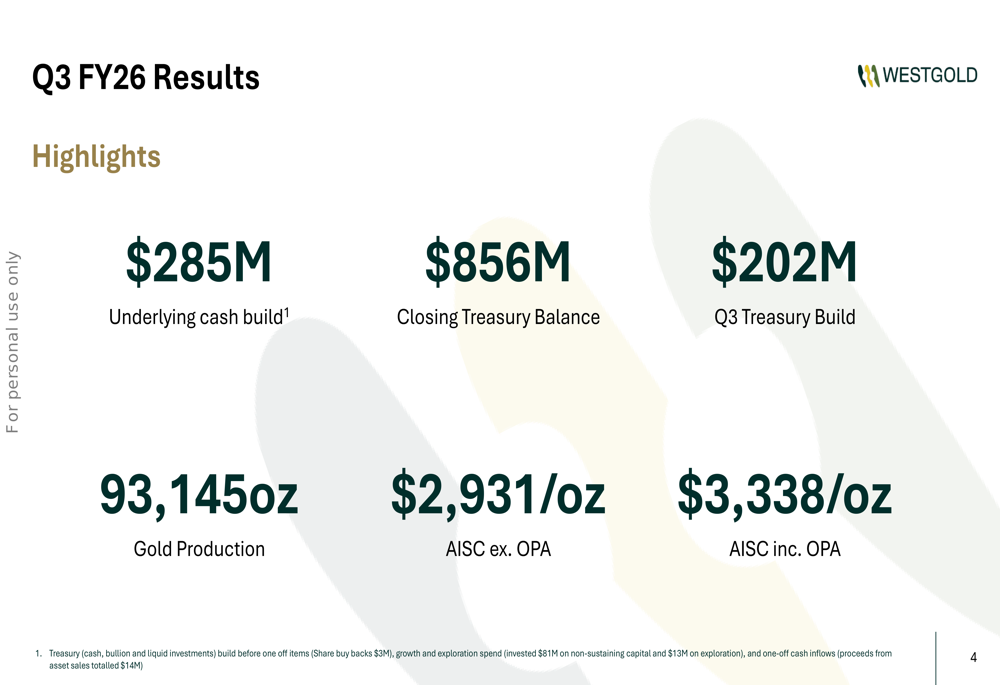
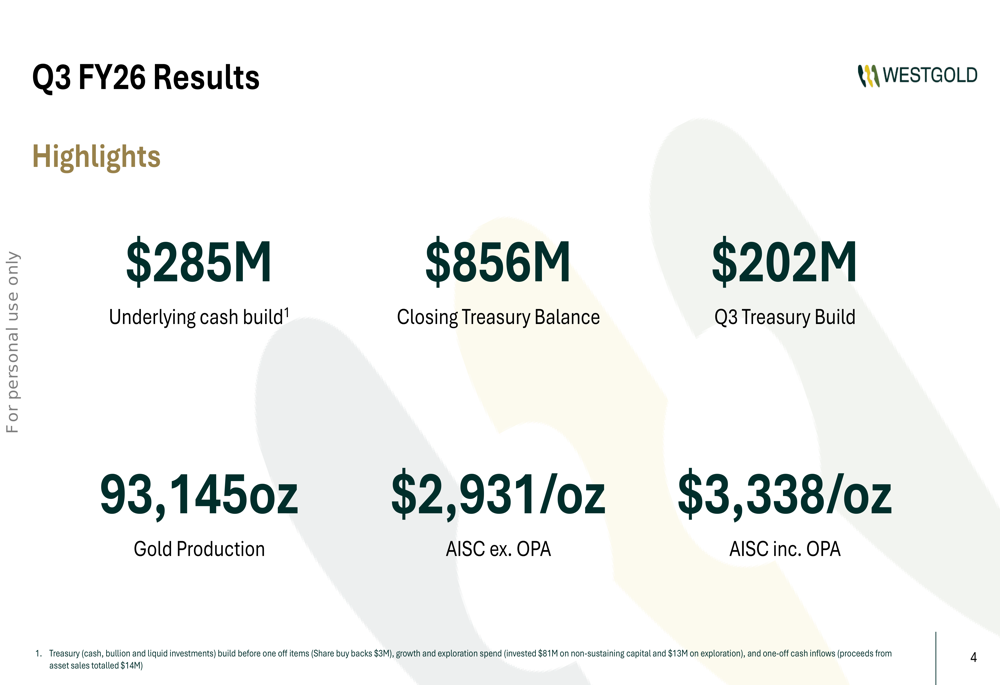
Westgold Q3 FY26 slides: $285M cash build fuels growth ambitions

ESPN and the NFL announced a deal Tuesday, granting ESPN the league’s media assets, including NFL Network. The NFL will retain a 10% ownership share of the network.
The Walt Disney Company is reportedly backing away from plans to spin off ESPN, shelving years of speculation that a standalone sports network could help offset the company’s declining cable business.
The decision marks one of the first major calls under CEO Josh D’Amaro, who stepped into the role in March.
“Instead, the sports network will stay inside the media giant, which thinks its presence will help its pivot to streaming,” sources said, according to Business Insider.
However, the decision is not permanent, the outlet noted. While Josh D’Amaro reportedly indicated that he does not see a near-term path to a spinoff, he could revisit the option down the line as conditions evolve, according to Business Insider.
DISNEY UNVEILS NEW DIRECT-TO-CONSUMER ESPN STREAMING SERVICE WITH $29.99 PRICE TAG

A 3D printed Disney logo in front of the ESPN+ logo July 13, 2021. (Reuters/Dado Ruvic/Illustration/File Photo / Reuters)
In addition, Disney could still explore bringing in strategic partners to take minority stakes, similar to its sale of a 10% stake in ESPN to the NFL last year.
The decision effectively cools down long-running rumors of ESPN potentially spinning off, which first gained traction after former CEO Bob Iger stunned the media industry in 2015 by revealing that the once profit-generating colossus was losing subscribers.
| Ticker | Security | Last | Change | Change % |
|---|---|---|---|---|
| DIS | THE WALT DISNEY CO. | 101.47 | -0.88 | -0.86% |
As viewers have grown more selective with their spending in recent years, the cord-cutting wave has accelerated across the cable industry, raising concerns that the declining business was weighing on Disney’s overall valuation.
By remaining under Disney, sources say the current structure could better position ESPN to accelerate its pivot to streaming, Business Insider reported.
DISNEY LOSING $30M A WEEK AS YOUTUBE TV BLACKOUT DRAGS ON, ANALYSTS SAY

Josh D’Amaro, chairperson of Walt Disney Parks and Resorts, speaks during an event on Nov. 9, 2024, in São Paulo, Brazil. (Ricardo Moreira/Getty Images for Disney / Getty Images)
Around August 2025, ESPN became available outside the traditional cable bundle for the first time, marking a major shift for sports fans who previously had to pay for costly packages that included channels they did not want.
Based on the new decision, Disney will continue distributing ESPN across multiple platforms, including its traditional cable bundle starting at roughly $75 per month, a streaming package alongside Hulu and Disney+ starting at $35.99 per month and a standalone direct-to-consumer offering $299.99 per year.

Fans cheer at an ESPN broadcast ahead of the Super Bowl Feb. 7, 2025, in New Orleans. (David Buono/Icon Sportswire via Getty Images / Getty Images)
GET FOX BUSINESS ON THE GO BY CLICKING HERE
Disney’s sports segment, anchored by ESPN, generated roughly $17.7 billion last year in revenue, roughly 19% of Disney’s total company revenue of $94.4 billion.
FOX Business reached out to Disney for more information.

Earnings call transcript: Westgold Resources Q3 2026 sees robust cash growth

Nvidia Stock Rises After Record High. The Breakout Is Finally Here.

In today’s fast-paced business environment, access to timely funding can make the difference between seizing an opportunity and missing out.
Whether you’re a startup trying to establish your presence or an established company looking to expand, quick business loans have become an essential financial tool. These loans are designed to provide fast access to capital, helping businesses manage cash flow, cover unexpected expenses, or invest in growth opportunities without long waiting periods.
What Are Quick Business Loans?
are short-term financing solutions that prioritize speed and convenience. Unlike traditional bank loans, which may take weeks or even months for approval, these loans are often processed within days—or even hours in some cases. The application process is typically streamlined, requiring minimal paperwork and fewer eligibility constraints.
These loans are particularly beneficial for small and medium-sized enterprises (SMEs) that may not have extensive credit histories or collateral to secure traditional financing. Lenders offering quick business loans often rely on alternative data, such as revenue streams and transaction histories, to assess creditworthiness.
Why Businesses Choose Quick Loans
One of the main reasons businesses opt for quick loans is the urgency of financial needs. For example, a retailer may need to restock inventory before a busy season, or a contractor might require funds to purchase materials for a new project. In such situations, waiting weeks for loan approval is simply not practical.
Quick business loans also offer flexibility. Many lenders allow borrowers to use the funds for a wide range of purposes, including payroll, equipment purchase, marketing campaigns, or even emergency repairs. This versatility makes them an attractive option for business owners who need immediate financial support without restrictions.
Another advantage is the simplified application process. Many lenders provide online platforms where businesses can apply, upload documents, and receive approval without visiting a physical branch. This ease of access has made quick loans increasingly popular, especially in regions where traditional banking services may be limited.
Types of Quick Business Loans
There are several types of quick business loans available, each catering to different needs:
- Short-Term Loans – These are typically repaid within a year and are ideal for immediate cash flow needs.
- Merchant Cash Advances – Businesses receive a lump sum in exchange for a percentage of future sales.
- Business Lines of Credit – Similar to a credit card, allowing businesses to withdraw funds as needed up to a set limit.
- Invoice Financing – Businesses can borrow against unpaid invoices to improve cash flow.
- Online Loans – Offered by fintech companies with rapid approval processes and minimal requirements.
Each option has its own terms, interest rates, and repayment structures, so it’s important for business owners to choose the one that aligns best with their financial situation.
Key Benefits
The primary benefit of quick business loans is speed. In a competitive market, timing is everything. Having access to funds when needed can help businesses take advantage of time-sensitive opportunities, such as bulk purchasing discounts or limited-time contracts.
Another benefit is accessibility. Many quick loan providers have less stringent requirements compared to traditional banks. This opens doors for newer businesses or those with less-than-perfect credit scores.
Additionally, quick loans can help build a business’s credit profile. By repaying loans on time, businesses can improve their creditworthiness, making it easier to secure larger loans in the future.
Potential Drawbacks
While quick business loans offer many advantages, they also come with certain risks. One of the most significant is higher interest rates. Because lenders take on more risk by offering fast approvals and minimal requirements, they often charge higher fees.
Short repayment terms can also be challenging. Businesses must ensure they have a reliable cash flow to meet repayment obligations. Failure to do so can lead to financial strain and damage to credit ratings.
Another concern is the possibility of predatory lending. Not all lenders operate transparently, so it’s crucial for business owners to thoroughly research and compare options before committing to a loan.
How to Choose the Right Loan
Selecting the right quick business loan requires careful consideration. Start by assessing your financial needs—how much funding you require and how quickly you need it. Then, evaluate your ability to repay the loan within the given timeframe.
It’s also important to compare lenders. Look at interest rates, fees, repayment terms, and customer reviews. Transparency is key; a reputable lender will clearly outline all costs and conditions.
Reading the fine print is essential. Some loans may include hidden fees or penalties for early repayment. Understanding these details can help you avoid unexpected expenses.
Tips for Successful Borrowing
To make the most of quick business loans, businesses should follow a few best practices:
- Borrow only what you need to avoid unnecessary debt.
- Use the funds strategically for activities that generate revenue or improve efficiency.
- Maintain accurate financial records to support your application and track repayment.
- Prioritize timely repayments to avoid penalties and build a strong credit profile.
Planning ahead can also make a big difference. Even if you don’t need funds immediately, understanding your options and establishing relationships with lenders can help you act quickly when the need arises.
The Future of Quick Business Financing
The demand for quick business loans is expected to grow as more businesses embrace digital solutions. Advances in financial technology are making it easier for lenders to assess risk and process applications بسرعة. This means even faster approvals and more personalized loan options in the future.
Moreover, increased competition among lenders is likely to lead to better terms and lower costs for borrowers. As the industry evolves, businesses will have access to a wider range of financing solutions tailored to their unique needs.
Conclusion
Quick business loans have transformed the way businesses access funding. By offering fast, flexible, and accessible financing, they empower entrepreneurs to navigate challenges and capitalize on opportunities. However, like any financial tool, they must be used wisely.
Understanding the terms, evaluating your financial capacity, and choosing a reputable lender are essential steps in making the most of these loans. When used strategically, quick business loans can serve as a powerful catalyst for growth, helping businesses thrive in an increasingly competitive landscape.

As the US-Iran war has sent the world scrambling for fuel, China is positioned to benefit from its rapid shift into electric vehicles.
The BBC’s Asia business correspondent Suranjana Tewari attended the Beijing’s Auto Show, where local companies exhibited their EV advancements, from autonomous systems to flying cars.

The man accused of killing former Mineral Resources executive Tim Picton has pleaded not guilty to manslaughter.
Business
Is Microsoft Outlook Down Again? Service Hit by Fresh Outages on April 28 as Users Report Login Failures

NEW YORK — Microsoft Outlook users faced renewed disruptions on Tuesday, April 28, 2026, with widespread reports of login failures, email sync issues and intermittent access problems affecting both Outlook.com and the desktop application across multiple regions.

Downdetector and other outage tracking sites recorded elevated complaint volumes beginning early Tuesday, with peaks in reports involving sign-in difficulties, delayed message delivery and calendar synchronization errors. While not as severe as Monday’s broader incident, the latest wave frustrated professionals relying on the service for work communications.
Microsoft’s official 365 status account acknowledged investigating intermittent access problems to Outlook.com, directing users to the service health dashboard for updates. As of mid-morning Eastern Time, partial resolutions appeared underway, though many continued experiencing delays.
The recurring issues come amid a pattern of Microsoft 365 instability in 2026. Monday’s outage, which began around 4 a.m. ET, impacted thousands and lasted several hours, prompting Microsoft to confirm authentication and connectivity problems. Tuesday’s follow-up suggests underlying server or authentication challenges persist despite mitigation efforts.
Users reported a variety of symptoms: inability to sign in with Microsoft accounts, “too many sign-in attempts” errors, frozen loading screens and emails not appearing in real time. Desktop Outlook users in some cases saw the application crash or default to Safe Mode, while web and mobile versions showed inconsistent performance.
The timing proved particularly disruptive for businesses in the U.S. and Europe during peak morning hours. Remote workers, financial professionals and healthcare providers expressed frustration on social media, with hashtags like #OutlookDown and #MicrosoftOutage trending briefly. Many turned to alternative email platforms or mobile apps as temporary workarounds.
Microsoft has not released a detailed root cause analysis for the latest incidents. Past outages in 2026, including a major January event lasting nearly 10 hours, were linked to authentication server failures and configuration issues. Experts suspect similar factors may be at play, possibly compounded by recent Windows and Office updates.
For affected users, common troubleshooting steps include clearing browser cache, restarting devices, checking internet connectivity and attempting sign-in via incognito mode or different networks. Microsoft recommends monitoring the official service health portal and avoiding repeated login attempts that could trigger additional security blocks.
Enterprise customers with Microsoft 365 admin access can view detailed incident reports in the admin center. Smaller businesses and individual users rely primarily on public status pages and community forums for updates. Some reported success after waiting 30–60 minutes or switching between Outlook web and desktop versions.
The repeated outages highlight ongoing challenges for Microsoft in maintaining its vast cloud infrastructure. With hundreds of millions of users depending on Outlook and Exchange Online, even brief disruptions create significant productivity losses. Analysts estimate each major incident costs businesses millions in lost time and alternative arrangements.
Competition in the productivity space has intensified. Google Workspace, Slack, Zoom and emerging AI-powered tools have gained ground when Microsoft services falter. Enterprise IT teams increasingly implement multi-cloud strategies or backup email solutions to mitigate risks from single-vendor dependency.
Microsoft has invested heavily in reliability improvements, including redundant data centers and advanced monitoring. However, the complexity of its global network and frequent feature updates create inherent vulnerabilities. Recent Windows updates have also been linked to compatibility issues with Outlook in some cases.
For individual users, the disruptions serve as a reminder to maintain local backups of important emails and enable two-factor authentication properly. Businesses should review business continuity plans and consider redundant communication channels during critical periods.
As the day progressed, Microsoft began rolling out fixes for affected regions. Service health indicators showed gradual improvement, though full restoration may take several hours. The company typically provides post-incident summaries once issues are fully resolved.
The pattern of recurring Outlook problems in April 2026 has sparked broader conversations about cloud service reliability. Regulators and industry groups continue monitoring major providers, pushing for greater transparency and resilience standards as digital dependency grows.
Users experiencing ongoing issues are encouraged to report details through Microsoft’s feedback channels or support portals. Community forums often share temporary workarounds while official fixes deploy. Patience and multiple access methods remain the best immediate strategies during these events.
Microsoft Outlook remains one of the world’s most widely used email platforms, powering personal and professional communication for hundreds of millions. While today’s disruptions affected only a portion of users, they underscore the need for continued investment in infrastructure stability as reliance on cloud services deepens.
As resolutions roll out, affected users can expect gradual restoration of full functionality. In the meantime, the incidents serve as a timely reminder of both the convenience and vulnerability of modern digital tools. Microsoft is expected to provide a more comprehensive update once services stabilize fully.
![F.HERO x URBOYTJ Ft. MINNIE ((G)I-DLE) - MONEY HONEY (Prod. By URBOYTJ) [Official MV]](https://wordupnews.com/wp-content/uploads/2026/02/1770112248_maxresdefault-80x80.jpg)
F.HERO x URBOYTJ Ft. MINNIE ((G)I-DLE) – MONEY HONEY (Prod. By URBOYTJ) [Official MV]

Bolton motorist jailed after causing life-changing injuries

Teleperformance SE (TLPFY) Q1 2026 Sales/ Trading Statement Call – Slideshow

Manchester United reach agreement with Casemiro over contract clause amid transfer speculation

US brings back mandatory military draft registration

Steven Gerrard disagrees with Gary Neville over ‘shock’ Chelsea and Arsenal claim | Football


-

 Tech1 day ago
Register Renaming | Hackaday
-

 Fashion4 days ago
Weekend Open Thread – Corporette.com
-
 Crypto World3 days ago
Hyperliquid $HYPE Rally Builds Momentum as AI Sector Enters Prove-It Phase
-

 Politics6 days ago
Making troops accountable for war crimes threatens US alliance, ex-SAS colonel warns
-

 Politics6 days ago
Disabled people challenge government SEND proposals over segregation concerns
-
 Business5 days ago
Patterson-UTI Energy, Inc. (PTEN) Q1 2026 Earnings Call Transcript
-

 Business7 days ago
Rolls-Royce Voted UK’s Most Iconic Trade Mark as IPO Register Hits 150
-
 Sports3 days ago
IPL 2026: Ruturaj Gaikwad registers slowest fifty of the season, enters all-time unwanted list | Cricket News
-

 Politics1 day ago
Drax board avoid their own AGM, accused of greenwashing & environmental racism
-

 Politics6 days ago
Zack Polanski responds to home secretary’s taser threat
-

 Politics6 days ago
Starmer handler McSweeney to be dragged from shadows by Foreign Affairs Committee
-
Politics6 days ago
Wings Over Scotland | How To Get Away With Crimes
-

 Politics6 days ago
‘Iran is still a nuclear threat’
-
 Business7 days ago
HCL Tech share price tank over 9% after weak Q4. JPMorgan, HSBC & 3 others cut target price
-

 NewsBeat3 days ago
LK Bennett closes all stores after entering administration
-
 Sports6 days ago
Tim Bradley names the current best in the world: “Better than Inoue and Usyk”
-

 Crypto World5 days ago
Michael Saylor says BTC winter is over. Market analyst disagrees, says bitcoin was in a pullback
-

 Business7 days ago
The Job Benefits Most Men Don’t Know to Negotiate
-
Business6 days ago
Altimmune prices $225 million public offering at $3 per share
-
 Entertainment3 days ago
Mariah Carey Slams Deposition Claims In Brother’s Lawsuit
You must be logged in to post a comment Login