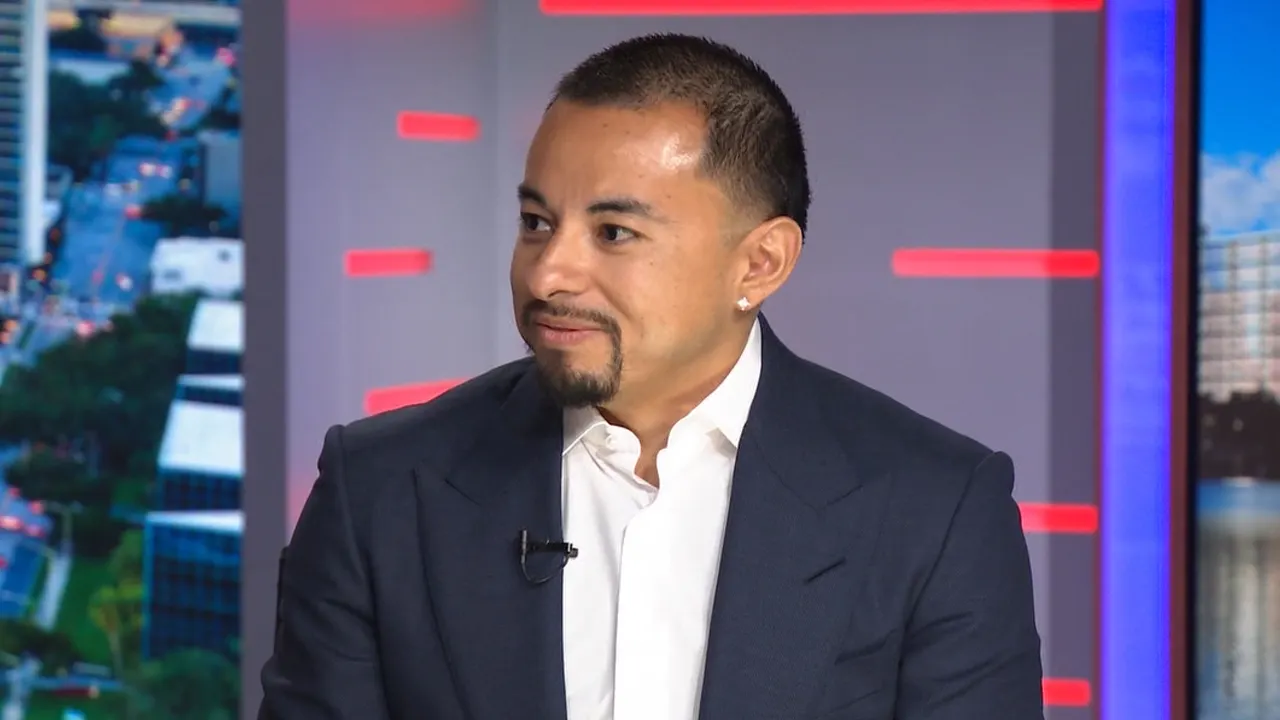
FOX Business’ Jeff Flock joins ‘Mornings with Maria’ live from Austin, Texas, showcasing 3D-printed homes.
Mortgage rates fell below 6% this week for the first time in three and a half years, mortgage buyer Freddie Mac said Thursday.
Freddie Mac’s latest Primary Mortgage Market Survey, released Thursday, showed the average rate on the benchmark 30-year fixed mortgage fell to 5.98% from last week’s reading of 6.01%.
Advertisement
The average rate on a 30-year loan was 6.76% a year ago. It was most recently under 6% on Sept. 8, 2022, at 5.89%.
The average rate on a 30-year fixed mortgage fell to 5.98% from last week’s reading of 6.01%. (David Ryder/Bloomberg via Getty Images)
“This rate, combined with the improving availability of homes for sale, is meaningful and will drive more potential buyers into the market for spring homebuying season,” said Sam Khater, Freddie Mac’s chief economist.
The average rate on a 15-year fixed mortgage increased to 5.44% from last week’s reading of 5.35%.
Mortgage rates are affected by several factors, including the Federal Reserve and geopolitics. Though mortgage rates are not directly affected by the Fed’s interest rate decisions, they closely track the 10-year Treasury yield. The 10-year yield hovered around 4.02% as of Thursday afternoon.
Realtor.com economist Jiayi Xu said the dip in rates comes in the wake of the Supreme Court’s ruling against the Trump administration’s use of emergency tariff powers.
“This legal tug-of-war has triggered a flight to safety among investors, pushing bond prices higher and yields lower, helping mortgage rates settle around 6%,” Xu said. “However, as this week’s decline stems from market volatility rather than fundamental economic data, more supportive economic data is needed to establish a consistent trend.”
A Florida man was arrested on federal charges related to an alleged cryptocurrency “Ponzi scheme” that defrauded investors of at least $328 million.
The U.S. Attorney’s Office for the Middle District of Florida said in a release Tuesday that Christopher Alexander Delgado, a 34-year-old from Apopka, Florida, was arrested on wire fraud and money laundering charges. If convicted on all charges, Delgado would face a maximum of 30 years in federal prison.
Advertisement
According to the federal complaint, Delgado was the president and CEO of Goliath Ventures, formerly known as Gen-Z Venture Firm, and allegedly carried out the Ponzi scheme from January 2023 through January 2026. A Ponzi scheme involves paying purported returns to existing investors from funds obtained from new investors.
The U.S. Attorney’s Office said the scheme involved Delgado allegedly soliciting victims to invest substantial amounts of money under what prosecutors described as false and fraudulent promises of monthly returns generated by cryptocurrency “liquidity pools.”
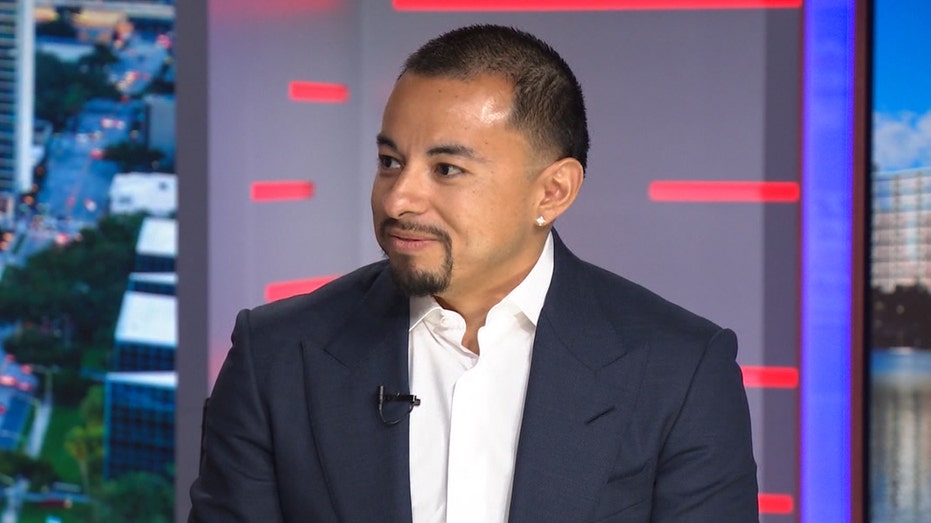
Christopher Alexander Delgado was arrested and charged with wire fraud and money laundering. (WNYW)
Victims of the scheme, according to the complaint, were also induced to give money to Delgado’s firm through personal referrals, professional marketing materials, luxury events, charitable sponsorships, along with some monthly payments of the purported returns to establish Goliath’s reputation with investors.
Advertisement
While Goliath said it would place investors’ funds in cryptocurrency liquidity pools, the federal prosecutors’ announcement indicated that the funds were mainly used to pay the purported returns to earlier investors, return the principal of investors who requested it, as well to pay for extravagant business gatherings, holiday parties and luxury travel accommodations.
The U.S. attorney’s office said that Delgado used funds from investors he allegedly victimized to buy four residential properties that were each worth between $1.15 million and $8.5 million.
The alleged Ponzi scheme attracted investors with promises of returns from crypto liquidity pools. (iStock)
Victims who have been identified by law enforcement will receive a notice of their rights under the Crime Victims’ Rights Act.
Advertisement
The announcement by the prosecutors’ office also indicated that victims who haven’t received such a notice may reach out to the IRS through a dedicated contact email for Goliath victims, while the Department of Justice also has a webpage with information about how victims may self-identify themselves to law enforcement working the case.
The Department of Justice announced Delgado’s arrest on charges of running an alleged crypto Ponzi scheme. (Samuel Corum/Bloomberg via Getty Images)
Criminal complaints and charges are merely allegations that a defendant has broken the law, and all defendants are presumed innocent unless, and until, proven guilty.
The case is being investigated by the Internal Revenue Service Criminal Investigation and Department of Homeland Security Investigations.
Microsoft Corp. shares surged nearly 3% in heavy trading Wednesday, snapping a recent pullback as investors found reassurance from comments easing fears over AI disruption and new strategic collaborations bolstered confidence in the tech giant’s cloud and artificial intelligence momentum.
AFP
Microsoft (NASDAQ: MSFT) closed at $400.60 on Feb. 25, up $11.60 or 2.98%, on volume of more than 43 million shares — well above the average. The stock traded in a day’s range of $390.20 to $401.47 before settling near session highs. Pre-market activity Thursday showed minor dips around $399 to $400. The shares have ranged from a 52-week low of $344.79 to a high of $555.45, reflecting volatility amid broader tech sector rotation and debates over AI spending sustainability. Market capitalization stands near $2.97 trillion.
The rally followed a period of pressure, with the stock down about 20% year to date through mid-February and approaching its 200-week moving average in what some analysts called a rare technical crossroads not seen in over a decade. Recent gains appear tied to reduced anxiety over generative AI potentially eroding enterprise software incumbents, including Microsoft’s own offerings.
Anthropic’s remarks suggesting its Claude AI ecosystem could complement rather than supplant existing tools helped calm nerves, while a White House initiative on “rate payer protection” for AI data center energy costs signaled potential regulatory support rather than headwinds. Microsoft also announced an expanded partnership with SpaceX’s Starlink to extend Azure’s edge computing reach, enhancing connectivity in remote areas and supporting hybrid cloud deployments.
The positive sentiment builds on Microsoft’s fiscal second-quarter results reported Jan. 28 for the period ended Dec. 31, 2025. Revenue reached $81.3 billion, up 17% year over year (15% in constant currency), beating consensus estimates around $80.3 billion. Operating income rose 21% to $38.3 billion, while GAAP net income surged 60% to $38.5 billion, or $5.16 per diluted share. Non-GAAP EPS was $4.14, up 24% and above expectations of about $3.86.
Advertisement
Microsoft Cloud revenue crossed $50 billion for the first time, climbing 26% (24% constant currency), driven by strong demand across the portfolio. Intelligent Cloud segment revenue hit $32.9 billion, up 29% (28% constant currency), with Azure and other cloud services growing 39% (38% constant currency). AI contributions were significant, accounting for 22 to 26 percentage points of Azure’s growth, executives noted on the earnings call.
Productivity and Business Processes revenue increased, fueled by Microsoft 365 commercial cloud subscriptions. More Personal Computing saw a decline due to softer gaming, partially offset by search advertising and Windows OEM strength.
CFO Amy Hood highlighted robust commercial bookings and capital expenditures of $37.5 billion in the quarter — much of it on AI infrastructure like GPUs and CPUs — positioning the company for future monetization. Total first-half fiscal 2026 capex reached $72.4 billion, on track for around $100 billion annually, raising some investor concerns about near-term margin pressure but underscoring commitment to AI leadership.
Guidance for the fiscal third quarter called for revenue of $80.65 billion to $81.75 billion, aligning with expectations, with Azure growth projected at 37% to 38% constant currency. Gross margins narrowed slightly to just over 68%, the lowest in three years, amid heavy infrastructure investments.
Advertisement
CEO Satya Nadella emphasized that Microsoft is “only at the beginning phases of AI diffusion,” with the company’s AI business already rivaling some of its largest franchises in scale. Partnerships with OpenAI, Anthropic and others continue to drive ecosystem expansion.
Recent developments include progress on internal silicon like the Maia 200 AI chip, which Goldman Sachs analysts praised as advancing Microsoft’s strategy, reiterating a buy rating with a $600 price target. Broader Wall Street sentiment remains bullish, with consensus ratings of “Strong Buy” or “Moderate Buy” from dozens of analysts. Average price targets hover around $592 to $603, implying 47% to 50% upside from current levels, though some range as high as $730 and as low as $392 amid valuation debates.
Challenges include regulatory scrutiny, such as a raid on Microsoft Japan’s offices over potential Azure restrictions on rival cloud services, and ongoing antitrust dynamics. Gaming leadership changes, including new appointments with AI expertise, signal tighter integration with Azure and Copilot.
Despite a year-to-date decline earlier in 2026, Microsoft’s fundamentals — dominant cloud position, recurring revenue streams and AI tailwinds — support optimism for recovery. Investors watch upcoming product roadmaps, capex efficiency and enterprise AI adoption for further catalysts.
Advertisement
As AI transforms industries, Microsoft’s integrated platform across cloud, productivity and emerging agentic capabilities positions it as a frontrunner, with recent share gains reflecting renewed conviction in its long-term trajectory.
In early 2026, Thailand welcomed nearly 6 million foreign tourists, generating approximately 293 billion baht. Strong arrivals from China and Malaysia boosted revenue, supported by favorable travel policies and trends.
Key Points
Tourism Performance: Thailand saw nearly 6 million foreign arrivals and 293 billion baht in revenue from January 1 to February 22, 2026. China was the leading source market, contributing nearly 1 million visitors.
Recent Trends: From February 16 to 22, arrivals totaled 879,587, a minor decline of 0.34%. Notable increases were seen in Malaysian arrivals (up 33%) and a 7.57% rise from Russia, while arrivals from China, India, and South Korea decreased slightly.
Future Outlook: The government anticipates stable arrival numbers for the final week of February, bolstered by policies like the suspension of the TM.6 form and a focus on ASEAN travel trends, maintaining Thailand’s tourism growth momentum.
The Thai government reports strong early 2026 tourism performance, with nearly 6 million foreign arrivals and approximately 293 billion baht in revenue during the first two months.
Deputy Government Spokesperson Airin Phanrit reported that from January 1 to February 22, 2026, Thailand welcomed 5,947,434 international tourists, generating an estimated 293,119 million baht in revenue. China was the top source market with nearly 1 million visitors, followed by Malaysia, Russia, India, and South Korea.
From February 16 to 22, arrivals totaled 879,587, a slight 0.34% decrease from the previous week. Arrivals from Malaysia increased by over 33% due to school holidays, reaching 111,581, the highest in eight weeks. Russian arrivals rose by 7.57%. Arrivals from China, India, and South Korea declined as peak holiday periods ended, though Chinese arrivals remained strong at nearly 200,000 for the week.
For the final week of February, the government expects arrival numbers to remain stable. This outlook is supported by “Ease of Traveling” policies, including suspension of the TM.6 immigration form, increased flight frequencies, and the “Trusted Thailand” safety campaign. Additionally, a shift in Chinese travel trends toward ASEAN destinations continues to support Thailand’s tourism growth.
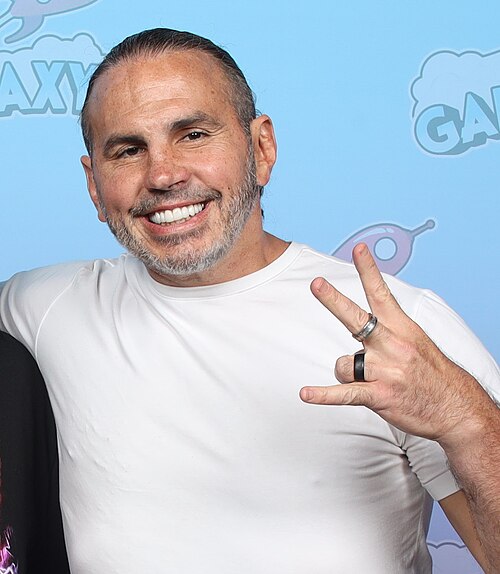
TNA World Tag Team Champion Matt Hardy has voiced concerns over the escalating ticket prices for WWE WrestleMania 42, calling it a “tough sell” for fans amid economic pressures and the event’s return to the same market for a second straight year.
In a recent episode of his podcast, “The Extreme Life of Matt Hardy,” the veteran wrestler addressed reports of sluggish ticket sales for the two-night spectacle set for April 18-19, 2026, at Allegiant Stadium in Las Vegas. Hardy, who has competed in multiple WrestleManias during his storied career in WWE and other promotions, empathized with fans facing the financial decision.
Matt Hardy
“It’s hard to justify spending that much money on tickets for entertainment,” Hardy said. “You know that isn’t something that you have to have in your every single day life to survive and live and be okay. So it’s a tough sell.”
Hardy’s comments come as WWE grapples with ticket demand trailing behind last year’s record-breaking WrestleMania 41, also held at Allegiant Stadium. Sources indicate that current get-in prices hover around $264 for Night 1 and $276 for Night 2 on resale platforms, with two-day passes starting near $652. Premium seats and packages have commanded significantly higher figures, with some reports citing top-tier options exceeding several thousand dollars per night before fees.
The company has responded to slower sales with promotions, including a reported 25% discount at Allegiant Stadium and meetings to reassess pricing strategies. Despite these efforts, attendance projections remain below the 2025 event’s pace, which drew massive crowds and generated substantial revenue following WWE’s merger into TKO Group Holdings.
Advertisement
Hardy pointed to several contributing factors. He highlighted the challenge of repeating the Las Vegas market so soon after its success in 2025, when the city hosted what many called one of the most profitable WrestleManias in history.
“Vegas was so good last year and they did these record numbers, and I guess they bid for them to come back,” Hardy explained. “But it’s tough to go into the market two years back-to-back, and you know that those tickets are pricey. Economically — especially since the pandemic — it’s kind of been a roller coaster ride for everyone.”
The post-pandemic economic landscape has left many households cautious with discretionary spending. Hardy noted that while WrestleMania remains a marquee event, the high costs — including not just tickets but travel, lodging, and related expenses in an expensive destination like Las Vegas — make it difficult for average fans to attend consecutively or even once.
“I mean, they go, ‘Well, I went last year, and it was pretty expensive. And kind of set me back a little bit, I don’t know if I can go this year,’” Hardy said, paraphrasing potential fan sentiment.
Advertisement
Hardy’s perspective echoes broader discussions within the wrestling community about pricing trends under WWE’s current leadership. Since the introduction of two-night WrestleManias in 2020, ticket costs have risen steadily to capitalize on premium demand, celebrity appearances, and high production values. Critics argue this shift prioritizes corporate revenue over accessibility for longtime supporters.
Some fans and commentators have suggested WWE could benefit from returning to a single-night format with longer cards to distribute costs more evenly, or from selecting fresh markets annually to avoid saturation. Hardy appeared to lean toward the latter idea, implying a new city might have generated more excitement and better sales momentum.
Despite the challenges, Hardy acknowledged WWE’s confidence in its product. The company continues to build toward WrestleMania 42 with major storylines across Raw, SmackDown, and international brands. Recent developments include high-profile matches rumored for the card, though official announcements remain forthcoming.
Hardy, 51, currently competes in Total Nonstop Action Wrestling (TNA), where he holds the World Tag Team Championship alongside his brother Jeff Hardy as part of The Hardys. His insights carry weight given his deep history in the industry, including iconic WrestleMania moments such as his ladder match appearances and championship reigns.
Advertisement
While not directly criticizing WWE’s business decisions, Hardy’s candid remarks add to a growing chorus questioning whether skyrocketing prices could alienate the core fanbase that has fueled WrestleMania’s growth into a global spectacle.
WWE has not publicly responded to Hardy’s specific comments but maintains that WrestleMania remains the pinnacle of sports entertainment, with tickets available through official channels like Ticketmaster. Single-day and multi-day options continue on sale, and the company has emphasized enhanced fan experiences, including premium hospitality packages.
As the Road to WrestleMania intensifies, all eyes will be on whether sales rebound in the coming months. Hardy concluded his thoughts optimistically yet realistically: “They’re confident, I guess they can do it for another year straight, and I guess when it’s all said and done, by the time we get to WrestleMania, we’ll see if they were right or not.”
For fans weighing the investment, the debate underscores a larger tension in modern sports entertainment: balancing blockbuster ambition with affordability in an uncertain economy.
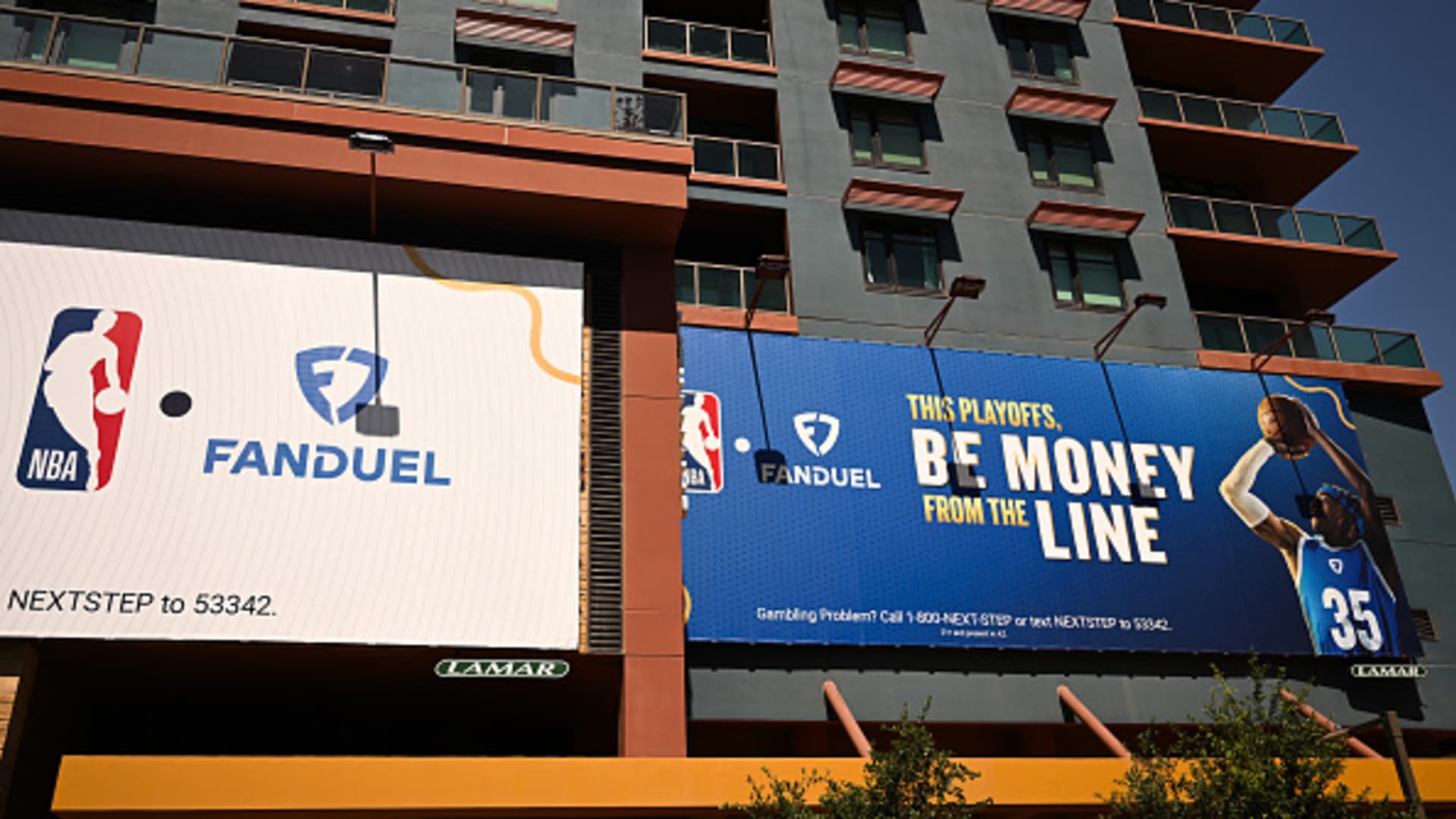
FanDuel parent Flutter Entertainment announced fourth-quarter earnings Thursday that missed Wall Street expectations on nearly every metric.
FanDuel’s performance in the final quarter of 2025 was affected by bettors losing more often than usual. When that happens, gamblers get discouraged, bet less and stop using the app as frequently, Flutter CEO Peter Jackson told CNBC in an interview.
“It’s fair to say, not everything went our way in the fourth quarter,” Jackson said.
Shares of Flutter fell almost 7% in extended trading Thursday.
Advertisement
Here’s what the company reported for the fourth quarter, compared with Wall Street consensus:
Revenue: $4.74 billion vs. $4.97 billion, according to LSEG
Adjusted EPS: $1.74 vs. $1.95, according to LSEG
For the fourth quarter, Flutter reported adjusted earnings before interest, taxes, depreciation and amortization of $832 million, below the $893 million that Wall Street was expecting, according to StreetAccount.
Its fourth-quarter revenue marked a year-over-year increase of 25%. And yet, Flutter’s 2026 revenue guidance of $17.75 billion to $19.05 billion was lower than analysts’ projection of $19.34 billion for the year.
On the company’s earnings call, Jackson told investors that prediction markets would likely spur more legalization of sports betting by the states. He also said the company has found no evidence that prediction markets are cannibalizing the sportsbook business.
Seeking Alpha’s transcripts team is responsible for the development of all of our transcript-related projects. We currently publish thousands of quarterly earnings calls per quarter on our site and are continuing to grow and expand our coverage. The purpose of this profile is to allow us to share with our readers new transcript-related developments. Thanks, SA Transcripts Team
The 2026 NFL Scouting Combine is underway at Lucas Oil Stadium, where more than 300 of the nation’s top college football prospects are showcasing their athleticism, measurements and interview skills for NFL teams in advance of the April 23-25 draft in Pittsburgh.
NFL
The event, running from Thursday, Feb. 26, through Sunday, March 1, features on-field workouts grouped by position, medical evaluations, team interviews and bench press sessions. It serves as a critical evaluation period for general managers, coaches and scouts assessing talent for the upcoming draft class.
The full workout schedule, with all times Eastern, is as follows:
Coverage is available on NFL Network, with additional programming on ESPN and ESPN2, including pre- and post-drill analysis. Fans can register for in-person access via nfl.com/onepass, with gates opening early each day for the Combine Experience and Inside Look areas.
Advertisement
The combine has already generated buzz with early arrivals and media sessions featuring head coaches and general managers starting earlier in the week. While on-field drills began Thursday, much of the focus remains on how prospects perform in key tests like the 40-yard dash, vertical jump, broad jump, three-cone drill and bench press, alongside their official measurements and positional workouts.
This year’s class features a mix of high-upside athletes, with several consensus top prospects expected to solidify or elevate their draft stock. Experts like Daniel Jeremiah, Mel Kiper Jr. and Mike Renner have released updated big boards in recent days, highlighting a quarterback at the top and strong depth at edge rusher, linebacker and offensive line.
Here are the top 10 prospects based on the latest consensus rankings from sources including NFL Network’s Jeremiah (updated Feb. 23), ESPN’s Kiper, CBS Sports’ Renner and others:
1. Fernando Mendoza, QB, Indiana — The junior signal-caller tops most big boards, praised for his arm talent, poise and production in a breakout 2025 season. Jeremiah and Renner have him No. 1 overall, with Kiper calling him a “lock” for the top spot. Teams view him as a potential franchise quarterback.
Advertisement
2. Rueben Bain Jr., EDGE, Miami (FL) — A dominant pass rusher with explosive traits, Bain ranks No. 2 on Renner’s board and high across others. His combination of size (6-3, 275 pounds), speed and bend makes him a nightmare for offensive tackles.
3. Arvell Reese, LB/EDGE, Ohio State — Versatile and instinctive, Reese appears in multiple top-5 lists, including Jeremiah’s earlier rankings. Ohio State’s defense has produced several high picks, and Reese’s athletic profile stands out.
4. Kadyn Proctor, OT, Alabama — One of the premier offensive tackles in the class, Proctor’s massive frame and technical prowess make him a Day 1 starter candidate at left tackle.
5. David Bailey, EDGE, Texas Tech — Explosive off the edge with strong production, Bailey features prominently in top-10 discussions and could rise further with a strong combine showing.
Advertisement
6. Caleb Downs, S, Ohio State — A do-it-all defensive back with elite instincts, range and tackling ability. Downs is a frequent top-10 name for his football IQ and playmaking.
7. Jeremiyah Love, RB, Notre Dame — Among the top running backs, Love’s combination of speed, vision and receiving skills has scouts excited in a class with solid RB depth.
8. Kenyon Sadiq, TE, Oregon — A rising star at tight end, Sadiq is drawing Freaks List mentions for his athletic testing potential. Experts predict a sub-4.6 40 and elite jumps could vault him higher.
9. Sonny Styles, LB, Ohio State — Another Buckeye standout, Styles brings size, speed and coverage skills to the linebacker position, making him a versatile fit in modern defenses.
Advertisement
10. Makai Lemon, WR, USC — A polished route-runner with high grades from PFF as one of the top receivers in college football last season, Lemon could surge with explosive testing.
Other notable prospects to watch include Oregon TE Kenyon Sadiq (predicted to dominate workouts), Ohio State LB Sonny Styles, Kentucky WR Kendrick Law and Penn State DT Zane Durant, all highlighted for their athletic upside on Bruce Feldman’s Freaks List revisits.
The combine’s importance cannot be overstated, as athletic testing often reshapes draft boards. Past examples include explosive 40 times boosting stock (like Xavier Worthy’s 4.21 in 2024) or strong positional drills confirming tape evaluations.
With the draft less than two months away, performances this week could shift projections significantly. Teams are particularly focused on quarterbacks like Mendoza, edge rushers and offensive linemen in a class viewed as deep in trenches talent but lighter at some skill positions compared to recent years.
Advertisement
As drills unfold, the spotlight will remain on how these top prospects translate their college production to NFL-level measurables and interviews. The 2026 class promises intrigue, with early indications pointing to a quarterback-needy team potentially landing a cornerstone in Mendoza or a defense bolstered by elite edge talent like Bain.
| Revenue of $17.24M (-79.41% Y/Y) beats by $1.57M
Wave Life Sciences Ltd. (WVE) Q4 2025 Earnings Call February 26, 2026 8:30 AM EST
Company Participants
Kate Rausch – Head of Investor Relations Paul Bolno – President, CEO & Director Christopher Wright – Chief Medical Officer Kyle Moran – CFO & Principal Accounting Officer Erik Ingelsson – Chief Scientific Officer
Advertisement
Conference Call Participants
Jenny Leigh Gonzalez-Armenta – Leerink Partners LLC, Research Division Salim Syed – Mizuho Securities USA LLC, Research Division Steven Seedhouse – Cantor Fitzgerald & Co., Research Division Joon Lee – Truist Securities, Inc., Research Division Alec Stranahan – BofA Securities, Research Division Madison Wynne El-Saadi – B. Riley Securities, Inc., Research Division Catherine Novack – JonesTrading Institutional Services, LLC, Research Division Cheng Li – Oppenheimer & Co. Inc., Research Division Angela Qian – Canaccord Genuity Corp., Research Division Craig McLean – Wells Fargo Securities, LLC, Research Division Cha Cha Yang – Jefferies LLC, Research Division Cassie Yuan
Advertisement
Presentation
Operator
Good morning, and welcome to the Wave Life Sciences Fourth Quarter and Full Year 2025 Earnings Conference Call. [Operator Instructions] As a reminder, this call is being recorded and webcast.
I’ll now turn the call over to Kate Rausch, Vice President of Corporate Affairs and Investor Relations. Please go ahead.
Advertisement
Kate Rausch Head of Investor Relations
Thank you, Sophie, and good morning to everyone on the call. Earlier this morning, we issued a press release outlining our fourth quarter and full year 2025 earnings update. Joining me today with prepared remarks are Dr. Paul Bolno, President and Chief Executive Officer; Dr. Chris Wright, Chief Medical Officer; and Kyle Moran, Chief Financial Officer. Dr. Eric Ingelsson, Chief Scientific Officer, will be available for questions after the call. The press release issued this morning is available on the Investors section of our website, www.wavelifesciences.com.
Before we begin, I would like to remind you that discussions during this conference call will include forward-looking statements. These