

Business
N4 Pharma plans name change to Thalia Therapeutics




In a record-length State of the Union address, President Trump threw out a string of eye-catching economic ideas. Among them: new retirement accounts for Americans without access to 401(k)s; replacing income taxes with tariff revenue; balancing the federal budget by eliminating fraud; and lowering the cost of housing for buyers while preserving high home values for happy homeowners.
His proposals and promises come as American voters are increasingly frustrated with the economy. About 56% of Americans disapprove of his handling of it, compared with about 40% who approve, according to an average of polls collected by the nonpartisan Cook Political Report.
Copyright ©2026 Dow Jones & Company, Inc. All Rights Reserved. 87990cbe856818d5eddac44c7b1cdeb8

Why I'm Still Bullish On Novo Nordisk Despite Recent Setbacks

Baron is an asset management firm focused on delivering growth equity investment solutions. Founded in 1982, Baron has become known for its long-term, fundamental, active approach to growth investing. Baron was founded as an equity research firm, and research has remained at the core of its business. Note: This account is not managed or monitored by Baron Capital, and any messages sent via Seeking Alpha will not receive a response. For inquiries or communication, please use Baron Capital’s official channels.


K-Pop star and Girls’ Generation member Tiffany Young and actor Byun Yo Han are officially married.
The couple has registered their marriage, which means that they are legally considered married despite not holding any wedding ceremony.
Tiffany Young and Byun Yo Han Are Married
According to The Korea Times, Byun’s agency TEAMHOPE confirmed the marriage in a statement to the couple’s fans.
“Actors Tiffany Young and Byun Yo Han completed their marriage registration today, based on deep trust in and love for one another,” TEAMHOPE said in the statement.
“We also feel cautious and concerned that the continuing news might cause some fatigue,” the company continued. “However, the two actors told us they wanted to share the news first with their fans, who have always watched over them with great love, and we are informing you of this out of respect for their wishes.”
The couple met when they co-starred in the Disney+ drama “Uncle Samsik.” They confirmed their relationship last December.
Will They Hold a Wedding Ceremony?
While no wedding ceremony has held upon the registration of their marriage, the couple is planning to hold a small ceremony, according to Korea JoongAng Daily.
This, again, was confirmed by TEAMHOPE.
“They are carefully considering holding a small wedding with family members in order to pay their gratitude, in the form of a [church] service,” the company said.

Society of Motor Manufacturers and Traders (SMMT) has reported a sharp contraction in UK vehicle output at the start of the year, with total production down 13.6 per cent in January as weaker export demand weighed heavily on the sector.
A combined 67,415 vehicles left British factories during the month, comprising 65,249 cars and 2,166 commercial vehicles. Car production declined by 8.2 per cent compared with January 2025, while commercial vehicle output slumped by 68.6 per cent year on year.
The fall was primarily driven by reduced overseas demand. Although domestic appetite for UK-built cars remained broadly stable, export volumes softened, particularly in markets outside Europe. Exports typically account for the majority of British vehicle production, leaving manufacturers exposed to fluctuations in global demand and trade conditions.
The United States remained the second-largest destination for UK-built cars after the European Union, accounting for 14.1 per cent of exports. Japan followed with a 2.7 per cent share, while China and Turkey took 2.5 per cent and 2.4 per cent respectively.
Electrified vehicle output also declined. Production of battery electric vehicles (BEVs), plug-in hybrids and hybrid models fell by 10.6 per cent to 26,854 units, representing 41.2 per cent of total car output. Despite the drop, electrified vehicles continue to form a substantial share of UK production as manufacturers transition towards zero-emission platforms.
The industry body said the weak start to the year reflected subdued global demand and underlined the importance of stable trade relationships. Protectionist measures and “made in Europe” proposals in some markets were cited as additional headwinds.
Mike Hawes, chief executive of the SMMT, described January’s figures as disappointing but pointed to expected recovery later in the year as new electric models enter production.
“Weak exports to markets beyond Europe amid soft demand delivered a disappointing start to the year for UK vehicle manufacturing,” he said. “It reinforces the need for a forward-looking trade agenda that secures existing preferential access and builds new ones with markets worldwide.”
The SMMT expects overall car production to increase by more than 10 per cent to around 790,000 units in 2026, with the potential to reach one million vehicles by 2027, provided new model launches proceed on schedule and investment conditions remain supportive.
The outlook hinges on competitive energy costs, a strong domestic market and targeted supply chain support, the trade body said, as the sector continues its capital-intensive shift towards electrification.

Jamie Young
Jamie is Senior Reporter at Business Matters, bringing over a decade of experience in UK SME business reporting.
Jamie holds a degree in Business Administration and regularly participates in industry conferences and workshops.
When not reporting on the latest business developments, Jamie is passionate about mentoring up-and-coming journalists and entrepreneurs to inspire the next generation of business leaders.

Circular tech start-up Kibu has secured an investment offer from entrepreneurs Peter Jones and Jenna Meek following a televised pitch on Dragons’ Den, putting repairable children’s electronics firmly in the national spotlight.
The award-winning brand, which produces modular, repairable headphones for children, appeared on the long-running BBC programme represented by co-founder and chief executive Sam Beaney. Kibu’s pitch focused on its mission to redesign children’s consumer electronics around circular principles, prioritising disassembly, repair and customisation over disposal.
Founded through a collaboration between London-based design studio Morrama, advanced manufacturing partner Batch.Works and Beaney, Kibu first launched via a successful Kickstarter campaign. Since then, the company has transitioned from prototype to scalable commercial product, positioning itself as a challenger brand in a sector dominated by low-cost, disposable devices.
Kibu’s headphones are built with modular components that can be taken apart and reassembled by children. Individual parts can be replaced in minutes, extending product lifespan and reducing electronic waste. The design also allows for aesthetic customisation, enabling users to change colours and update components as preferences evolve.
The brand has already received international recognition for innovation and sustainability, tapping into growing parental demand for durable, repairable products in an era of heightened environmental awareness.
Speaking during the broadcast, Jones praised the concept and offered backing, citing his own early experience building and selling computers as a teenager. Meek also expressed interest in supporting the venture.
Beaney told the Dragons that empowering children to build and repair their own technology shifts their relationship with ownership and value. “When a child builds something themselves, it changes how they feel about it. When they learn they can fix what they’ve made, it changes how they see everything they own,” he said.
Jo Barnard, founder and creative director of Morrama, described the brand as a blueprint for futureproof electronics. By combining onshored manufacturing with agile supply chains, she argued, Kibu could unlock wider opportunities across children’s consumer technology.
Julien Vaissieres, chief executive of Batch.Works, said the project demonstrated how manufacturing can be structured to reduce waste while maintaining commercial viability. As both a founder and a parent, he said, the appeal lay in giving children agency over the products they use daily.
Now in its 23rd series, Dragons’ Den remains one of the UK’s most visible entrepreneurial platforms, attracting around three million viewers per episode on BBC One. For Kibu, the appearance offers both capital and brand recognition at a pivotal growth stage.
With investor backing now on the table, Kibu plans to scale distribution while continuing to develop its circular design ethos. The company believes its repair-first approach could extend beyond headphones into a broader range of children’s electronics, an industry segment increasingly scrutinised for its environmental footprint.
As sustainability pressures intensify and right-to-repair legislation gains momentum across global markets, Kibu’s model may offer an early glimpse of how future consumer electronics for children could be designed, manufactured and owned.
Jamie Young
Jamie is Senior Reporter at Business Matters, bringing over a decade of experience in UK SME business reporting.
Jamie holds a degree in Business Administration and regularly participates in industry conferences and workshops.
When not reporting on the latest business developments, Jamie is passionate about mentoring up-and-coming journalists and entrepreneurs to inspire the next generation of business leaders.
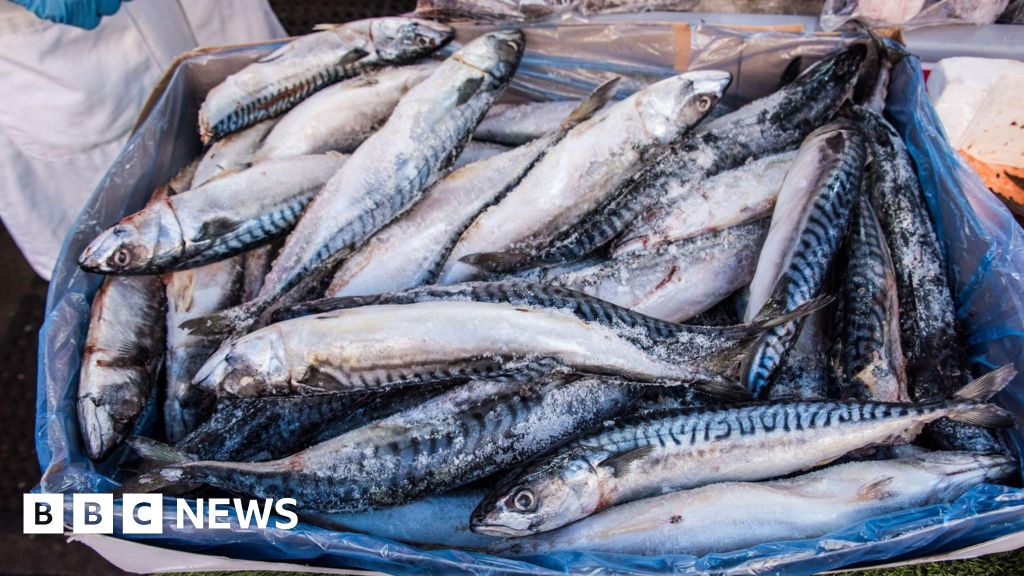
Jake Pickering, head of agriculture, aquaculture and fisheries at Waitrose, said: “By suspending sourcing of mackerel at Waitrose we are reinforcing our ethical and sustainable business commitments, acting to tackle overfishing and protect the long-term health of our oceans and this crucial fish.”

Newly released Justice Department and congressional documents show that JPMorgan bankers maintained connections with convicted sex offender Jeffrey Epstein for years after the bank formally cut him off as a client in 2013.
The records detail how Epstein, even after being dropped, helped manage the fortune of Apollo Global Management co-founder Leon Black and remained entwined with some of the bank’s senior employees.
The documents highlight that two JPMorgan managing directors, Justin Nelson and Paul Barrett, continued to interact with Epstein from 2014 through 2017.
Nelson had been Epstein’s banker before the bank severed ties, while Barrett had assisted him with investments.
According to WSJ, emails show the bankers relied on Epstein to develop a relationship between JPMorgan and Black’s family office, Elysium Management, which oversaw Black’s personal wealth.
“To the extent our bankers subsequently interacted with him, it was because other clients—not JPMorgan—chose to use him as an advisor,” said JPMorgan spokesman Joseph Evangelisti.
He added that Barrett’s personal dealings with Epstein were not authorized by the bank.
Even after leaving JPMorgan in 2017, Barrett continued working closely with Epstein, managing his personal investments through Alpha Group Capital.
Records indicate Barrett offered advice on Epstein’s portfolio and arranged meetings between Epstein and JPMorgan staff, including Nelson and other executives, to help pitch investment opportunities.
How JPMorgan’s Bankers Stayed Close to Epstein After Bank Fired Him as a Client – The Wall Street Journal. These bankers must resign. https://t.co/lprim6sw8Z
— John Larson (@JohnLarson2204) February 27, 2026
Emails Show Epstein Helped JPMorgan
Epstein’s role at Elysium started in 2012, when he began advising on Black’s finances.
Emails from 2014 show Nelson meeting Epstein at his townhouse and requesting contacts at Elysium to promote JPMorgan services. Within weeks, Elysium opened accounts with the bank, according to the filings.
While JPMorgan maintains that it had no control over its clients’ choice to engage Epstein, the documents illustrate how Epstein continued to move money through the bank.
In one instance, six months before his death in 2019, Epstein wired $150,000 into a JPMorgan account for his girlfriend, Karyna Shuliak, Yahoo reported.
He had also stayed involved in investment decisions for clients including Black and music mogul Tommy Mottola, while his associates continued using bank services.
JPMorgan previously reported suspicions about Epstein’s activity, including unusually large cash withdrawals, and compliance officers flagged him before the bank ended the relationship.
After Epstein’s death, JPMorgan settled lawsuits from his victims and the US Virgin Islands for a combined $365 million, without admitting liability.
The released documents reveal that Epstein’s network allowed him to remain influential in financial circles long after his 2008 conviction for procuring a minor for prostitution.
Originally published on vcpost.com
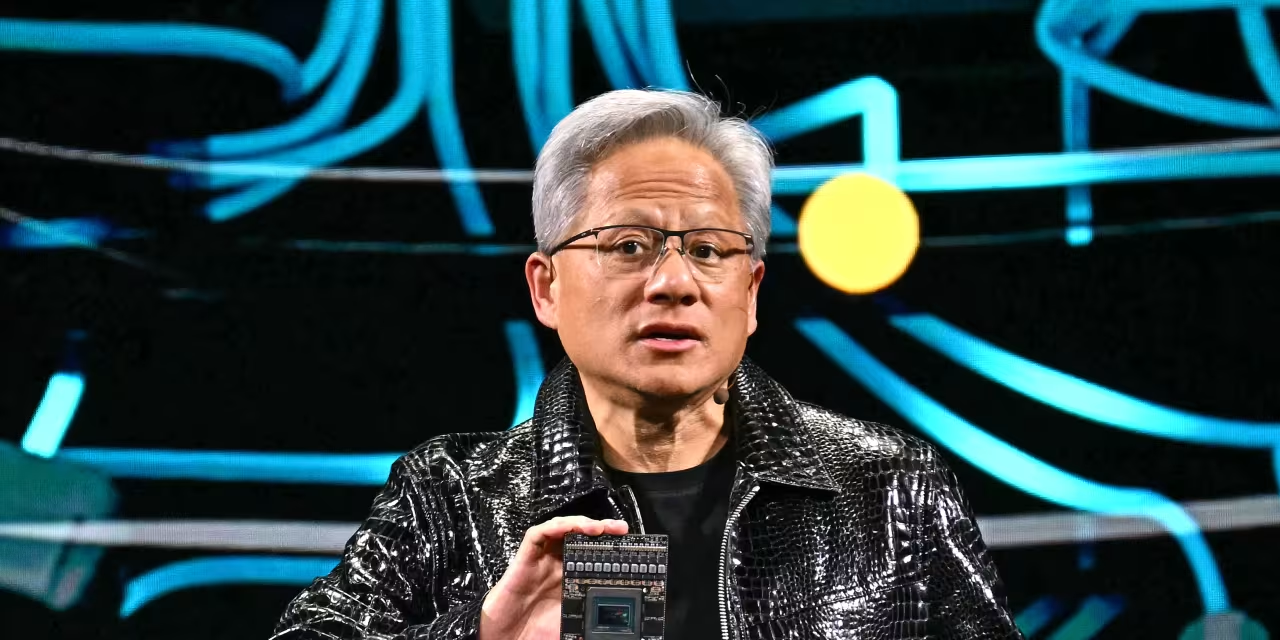
Nvidia Stock Pares Gains as Earnings Call Concludes
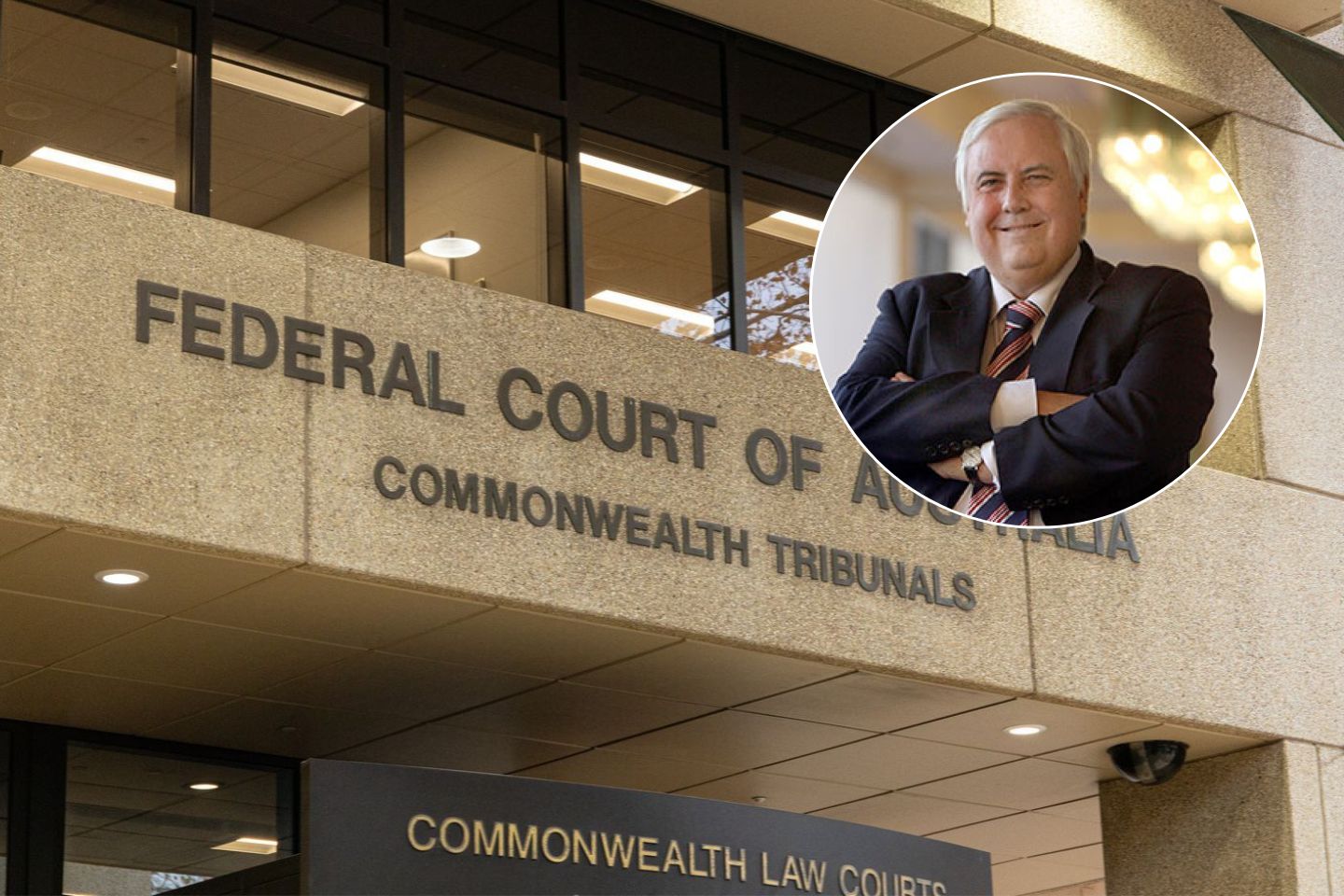
Clive Palmer has asked a Federal Court judge court to disqualify himself from deciding the fate of his $12 million company swindle prosecution.

The ‘Immersive’ Habit That Finally Cured My Reading Slump

International Women’s Day 2026: What is it and how can you get involved?
The Math Behind Trump’s Eye-Catching Economic Ideas


-

 Politics5 days ago
Baftas 2026: Awards Nominations, Presenters And Performers
-

 Fashion7 days ago
Weekend Open Thread: Boden – Corporette.com
-

 Sports4 days ago
Women’s college basketball rankings: Iowa reenters top 10, Auriemma makes history
-

 Politics4 days ago
Nick Reiner Enters Plea In Deaths Of Parents Rob And Michele
-

 Business3 days ago
True Citrus debuts functional drink mix collection
-

 Politics12 hours ago
ITV enters Gaza with IDF amid ongoing genocide
-

 Crypto World3 days ago
XRP price enters “dead zone” as Binance leverage hits lows
-

 Business5 days ago
Mattel’s American Girl brand turns 40, dolls enter a new era
-

 Business5 days ago
Law enforcement kills armed man seeking to enter Trump’s Mar-a-Lago resort, officials say
-
 NewsBeat2 days ago
Manchester Central Mosque issues statement as it imposes new measures ‘with immediate effect’ after armed men enter
-

 NewsBeat1 day ago
Cuba says its forces have killed four on US-registered speedboat | World News
-

 Tech3 days ago
Unsurprisingly, Apple's board gets what it wants in 2026 shareholder meeting
-
 NewsBeat4 days ago
‘Hourly’ method from gastroenterologist ‘helps reduce air travel bloating’
-

 Tech5 days ago
Anthropic-Backed Group Enters NY-12 AI PAC Fight
-

 NewsBeat5 days ago
Armed man killed after entering secure perimeter of Mar-a-Lago, Secret Service says
-

 Politics5 days ago
Maine has a long track record of electing moderates. Enter Graham Platner.
-
 NewsBeat3 days ago
Police latest as search for missing woman enters day nine
-

 Business1 day ago
Discord Pushes Implementation of Global Age Checks to Second Half of 2026
-
 Sports4 days ago
2026 NFL mock draft: WRs fly off the board in first round entering combine week
-

 Crypto World3 days ago
Entering new markets without increasing payment costs