Connect with us

Business

Nationwide and Investec bid for Aldermore Bank as FirstRand launches UK sale process

Published

on

Business Live

South African group started sale process for Aldermore earlier this year and other banks look set to show interest

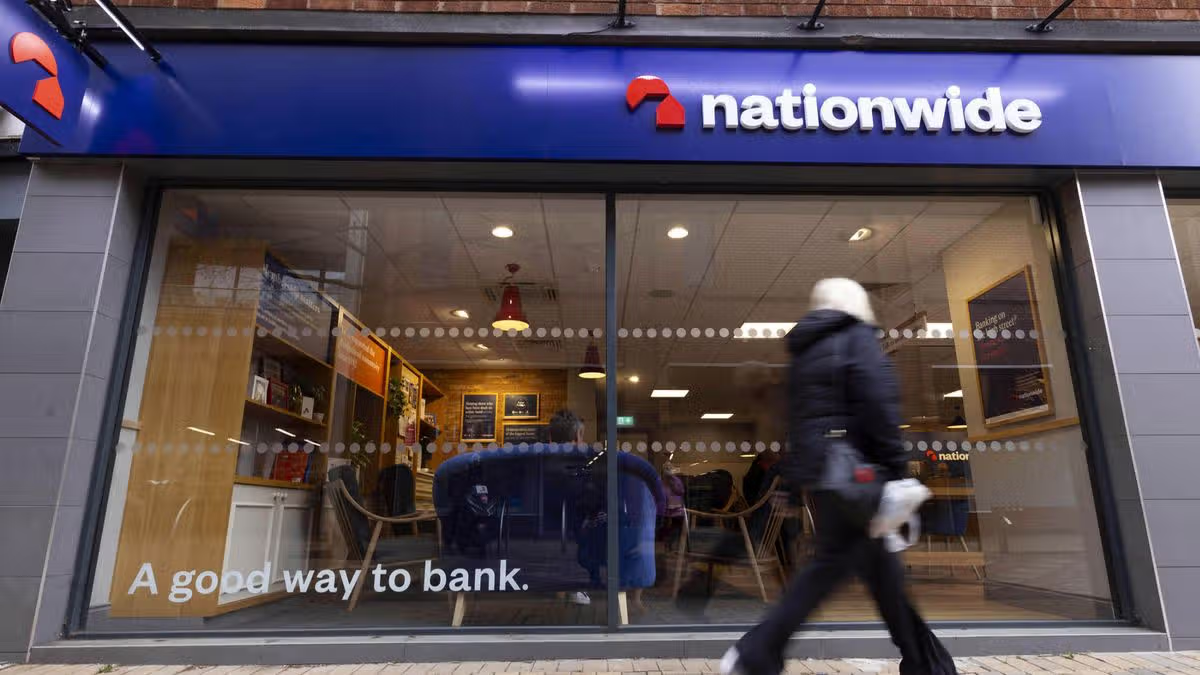
A branch of Nationwide in Maidenhead

A branch of Nationwide in Maidenhead(Image: David Parry/PA Wire)

Investec and Nationwide are amongst the firms preparing to table bids for alternative lender Aldermore, as its South African parent company First Rand receives first-round offers for the business, City AM has revealed.

The two financial institutions are expected to submit offers for the UK bank ahead of an initial deadline on Tuesday, according to sources close to the matter.

First Rand launched a formal sale process earlier this year after Aldermore became embroiled in the motor finance misselling scandal through its motor lending arm, Motonovo.

In a research note published earlier this month, analysts at RBC placed Aldermore’s valuation at £1.45bn, inclusive of its motor finance operations.

Advertisement

An Investec spokesperson stated that the firm does not comment on market speculation. Nationwide declined to comment, while Aldermore has also been approached for a response, as reported by City AM.

Lloyds is similarly poised to lodge a bid for the business, with Natwest also counted among the prospective suitors, according to individuals with knowledge of the situation. Both banks declined to comment.

The interest from Aldermore’s competitors arrives amid a broader wave of consolidation sweeping Britain’s mid-market banking sector. Nationwide previously acquired Virgin Money for £2.9bn in 2024, while Santander snapped up TSB in 2025.

Metro Bank has also been named amongst the potential suitors, Sky News previously reported. Private equity giant Warburg Pincus is also expected to table a bid for the firm, according to sources speaking to City AM, while finance-focused private equity house JC Flowers and CVC are similarly poised to join forces on a combined offer, City AM understands.

Advertisement

CVC declined to comment, and JC Flowers did not respond to a request for comment when approached by Reuters, which first reported their interest. Warburg Pincus also declined to comment.

Continue Reading
Click to comment

You must be logged in to post a comment Login

Leave a Reply

Business

How to Spot Value in Betting Odds

Published

on

How to Spot Value in Betting Odds

That works, but it also means missing out on half the fun. Understanding how odds are built, and what they are really saying, turns betting from a blind guess into something genuinely engaging. Platforms like bizbet display all three major odds formats at once, which is actually a handy way to start seeing how they connect to each other.

What the Different Odds Formats Mean

There are three formats used globally, and they all say the same thing — the difference is just in how they say it. Decimal odds show the full return per unit staked, stake included. So 2.50 on a €10 bet returns €25 total, meaning €15 profit. Browsing through something like bizbet bonus offers a real-world look at how these formats sit side by side on an actual platform, which makes the comparison much easier to grasp than reading about it in theory. Below 2.00 means favourite, above 2.00 means underdog — that one rule alone covers most situations.

Fractional odds, still widely used in racing, show profit against stake. At 5/1, a €1 bet returns €5 profit. At 1/2, the stake is larger than the return — that is what odds look like when the bookmaker considers something close to a certainty.

Free newsletters
Advertisement

The stories that matter to UK business, straight to your inbox.

Advertisement

American odds work differently. A minus sign means favourite — -200 requires a €200 stake to win €100. A plus sign means underdog — +180 returns €180 profit on a €100 stake. It feels strange at first but follows a consistent logic once seen a few times.

Here is a simple side-by-side comparison of all three:

Decimal Fractional American Chance of winning
1.50 1/2 -200 66.7%
2.00 Evens +100 50.0%
2.50 6/4 +150 40.0%
3.00 2/1 +200 33.3%
6.00 5/1 +500 16.7%

All three rows say the same thing — just in three different languages.

The Margin Hidden Inside Every Bet

Every set of odds has a margin built into it, and most bettors never know it is there. It is called the overround or vig, and it does not appear as a separate line anywhere — it is folded directly into the numbers.

Advertisement

In a truly fair market, the implied chances of all outcomes would add up to exactly 100%. Bookmakers push that total above 100% — usually to around 105–110% at mainstream sportsbooks, and closer to 102–103% at more competitive ones. That extra percentage is their margin, and it means every bet placed costs a little more than the raw odds suggest.

Knowing this does not make betting less fun — if anything it makes the numbers more interesting to look at. Here are four practical ideas that follow naturally from understanding how odds work:

  • Implied probability: every set of odds is really a percentage in disguise. Converting them reveals what the bookmaker genuinely thinks will happen.
  • Line shopping: the same event priced across different platforms often shows meaningful differences — sometimes 5 to 10% better return for the identical bet.
  • Value: when an outcome seems more likely than the odds suggest, that difference is called value. Finding it is what separates informed betting from random picking.
  • Margin check: adding the implied probabilities of all outcomes in a market together shows the total bookmaker margin in seconds.

Betting stays enjoyable when there is a clear budget set before a session starts. Most platforms have deposit limit tools in the account settings — straightforward to set up and genuinely useful for keeping things in check.


Advertisement

Continue Reading

Business

AI regulation faces deadlock as calls grow for Congress to act

Published

on

Jack Clark, a man with short brown hair, dressed in a blue coat

Some experts share the view that, in the short-term at least, it is up to the AI companies to regulate themselves responsibly.

“You might want an act of Congress, and I would love a congressionally mandated regime that requires safety and testing and bias testing,” said Asad Ramzanali, the director of AI & Technology Policy at Vanderbilt University.

“But absent that action, the companies have autonomy.”

Others have expressed scepticism at the recent flurry of warnings by AI staffers.

Advertisement

Trevor Traina, a tech executive who was a diplomat during Trump’s first term, said: “I don’t think the typical citizen has encountered anything scary or really problematic with AI.”

“We’re relying on the tweets of a half-dozen people who are all vying for perceived supremacy,” he said. “The cynic in me thinks, ‘Are they are really concerned, or are they trying to prove which model is the most awesome?’”

Alexandra Reeve Givens, who previously worked in government and now leads the US non-profit the Center for Democracy and Technology, said she did not think meaningful federal AI regulation would pass in the foreseeable future.

While the Trump administration has set up an entirely voluntary framework for AI companies to submit their models and tools for government assessment, Givens noted that the framework itself remains a secret.

Advertisement

“There’s no clear standard to make sure that the approach is even grounded in the rule of law,” she said.

Appeals from various groups to release the framework have so far gone ignored.

The White House approach, combined with a lack of political will and consensus, makes passing laws around AI difficult.

“There is no question that federal legislation is challenging in this climate, but Congress also has to grapple with which of the many types of AI risk need to be addressed,” Givens said.

Advertisement

“It’s not that AI is ungovernable, it’s that each risk needs a tailored approach.”

Continue Reading

Business

Guggenheim cuts Ionis Pharmaceuticals stock price target on sales outlook

Published

on


Guggenheim cuts Ionis Pharmaceuticals stock price target on sales outlook

Continue Reading

Business

Uber CEO Says 3,300 Layoffs Will Fund Cheaper Rides, But Similar Past Corporate Promises Have Fallen Flat

Published

on

Uber

SAN FRANCISCO — Uber Chief Executive Officer Dara Khosrowshahi said the roughly 3,300 corporate jobs the company eliminated earlier this month will ultimately benefit customers through lower ride prices, a promise that follows a familiar pattern among corporations defending mass layoffs, one that has not always held up in practice at other companies.

Uber announced September 2 that it was cutting 10% of its corporate staff, affecting approximately 3,300 positions out of a global workforce of roughly 34,000 employees, in an effort to flatten management layers across the company. The reduction marks Uber’s deepest round of job cuts since the early months of the COVID-19 pandemic in 2020.

Speaking at the Goldman Sachs Communacopia and Technology Conference on September 10, Khosrowshahi laid out how the company plans to use the savings generated by the cuts. “We are going to take the savings there and essentially reinvest it back in the business, lowering prices, improving selection, and continuing to invest in our growth program,” he told investors. He said separately that the layoffs would generate “savings that we intend to reinvest in growth, innovation, and the capabilities that will matter most over the coming years.”

Khosrowshahi indicated that reduced insurance costs would also contribute to the savings being funneled toward lower rider prices. Uber’s U.S. mobility insurance costs had increased by more than 50% per ride over the several years through the first quarter of 2025, according to the company, a trend Khosrowshahi said has now begun to reverse. Analysts estimate the layoffs alone could generate close to $2 billion in annual savings for the company, though Khosrowshahi has not offered specific fare targets or a timeline for when riders might actually see lower prices reflected in the app.

Advertisement

A portion of the freed-up capital is also being directed toward Uber’s autonomous vehicle ambitions. The company has said it plans to invest more than $1 billion in its self-driving taxi network as it works to compete with rivals including Alphabet-owned Waymo, with broader reporting indicating Uber has committed more than $10 billion over the coming years to autonomous vehicles, acting as both an investor in and a customer of nearly 30 different self-driving technology partners.

Khosrowshahi acknowledged that the layoffs came at a moment of relative financial strength for the company rather than distress, noting that Uber had recently posted quarterly earnings that exceeded analyst expectations. “Some companies wait,” he said. “We don’t believe in waiting.” Uber shares rose roughly 2% following disclosures suggesting the company had approached the restructuring from a position of strength rather than as a response to financial trouble.

Khosrowshahi also pointed to artificial intelligence as a factor behind the timing of the cuts, telling attendees at the same Goldman Sachs event that AI has contributed to “real tailwinds as it relates to productivity” within the company, a dynamic that has become increasingly common across the technology sector as companies credit AI-driven efficiency gains for enabling workforce reductions. Uber’s cuts followed a broader trend of tech layoffs framed around productivity improvements; fintech company Block, led by CEO Jack Dorsey, saw its stock jump roughly 24% earlier this year after announcing plans to cut 40% of its workforce as part of a push toward AI-driven efficiency.

Whether Uber’s promise of lower prices will actually materialize remains, for now, solely a matter of Khosrowshahi’s word, and similar corporate assurances tied to layoffs have not always played out as promised at other companies. When T-Mobile announced roughly 5,000 job cuts in August 2023, then-CEO Mike Sievert said the restructuring would help the company deliver better value and an improved customer experience. Less than a year later, T-Mobile announced price increases on some of its older plans, including an additional $2 to $5 per voice line each month, according to reporting at the time, illustrating how the definition of “better value” following a round of layoffs can shift considerably by the time changes actually reach customers.

Advertisement

Uber’s own recent regulatory record adds another layer of financial pressure competing for the same savings Khosrowshahi has pledged to redirect toward riders. The company was recently fined nearly $1 billion by European Union regulators after a Dutch data protection authority found that Uber had automatically suspended or deactivated drivers suspected of fraud or poor ratings between 2018 and 2022 without any human review of those decisions, a practice the regulator determined violated European data protection rules governing automated decisions with significant personal or financial consequences for those affected. Uber is appealing the fine, though the penalty still represents a competing claim on the same pool of savings the company has said will fund lower prices for customers.

Uber’s layoffs and the accompanying promises come as the broader ride-hailing and technology sectors continue navigating a period of workforce reductions justified, at least in part, by efficiency gains attributed to artificial intelligence tools, even as skepticism persists among analysts and consumers about whether such promised savings reliably translate into lower prices rather than simply improved corporate profit margins.

With no specific fare targets or implementation timeline yet disclosed by Uber, riders and industry observers are likely to spend the coming months watching for concrete evidence of price reductions in specific markets before drawing conclusions about whether Khosrowshahi’s promise proves more durable than similar assurances made by other companies following their own rounds of layoffs in recent years.

Advertisement
Continue Reading

Business

More hybrids, no Chinese entrants

Published

on

More hybrids, no Chinese entrants

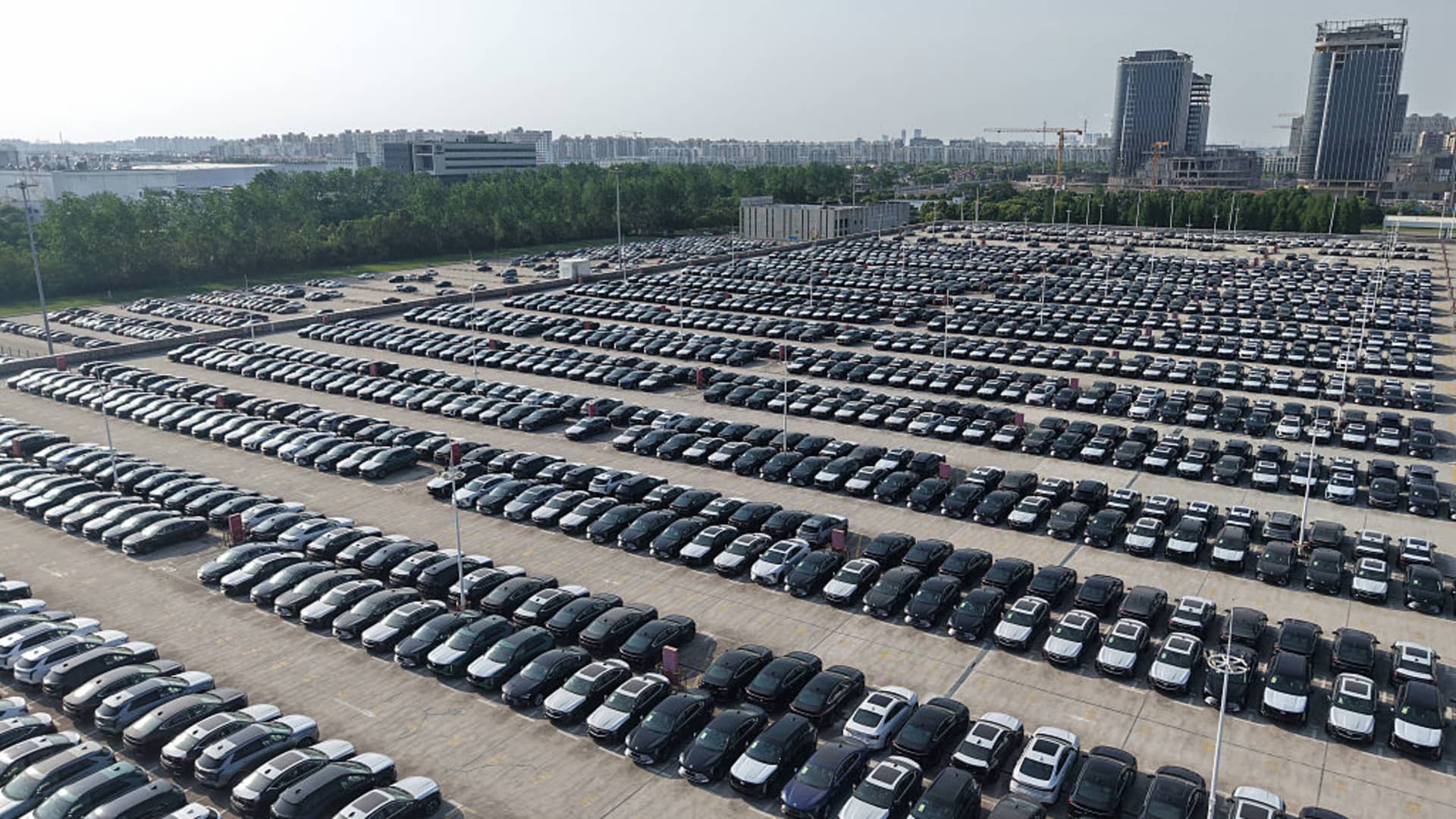
New vehicles parked at a production base of SAIC General Motors Corporation Limited on Sept. 11, 2025, in Shanghai, China.

Vcg | Visual China Group | Getty Images

A new report casts serious doubt on whether a wave of Chinese cars and SUVs will hit the U.S. by 2030, let alone well into the next decade.

“I think the near-term dynamics are relatively low, relatively unlikely to support an entry to the U.S. market,” said automotive analyst John Murphy, who is releasing his latest outlook for the U.S. auto market on Tuesday. 

Advertisement

Despite growing speculation that it won’t be long until Chinese autos are sold in the U.S., Murphy said he believes there is little appetite among U.S. lawmakers to allow that to happen, mainly because of the impact it could have on U.S. automakers and domestic auto production. 

“I think an entree of the Chinese with unfettered access in the U.S. market would be incredibly disruptive, even if they produced here in the U.S.,” he told CNBC.

Vehicles built in China and imported into the U.S. currently face a 100% tariff under the Trump administration’s trade policies. That has effectively kept almost all Chinese brands from selling their vehicles in the country. 

Starting next year, the Commerce Department has said it will ban automakers from importing and selling vehicles in the U.S. that contain technology developed or manufactured by Chinese companies.

Advertisement

Beginning this fall, a small number of Chinese automakers, including BYD and Geely are expected to begin selling vehicles in Canada.

In part as competition from Chinese automakers grows worldwide, Murphy says he predicts that between five and 10 auto brands currently sold in the U.S. could disappear over the next decade. There are currently 38 auto brands in the U.S.

Murphy said he believes the industry’s shifting landscape means no brand is 100% safe, but some face a greater risk of dropping out of the U.S. than others.

The latest Murphy Automotive Product Pipeline lists Polestar, Maserati, Alfa Romeo, Jaguar and Fiat as five brands most at risk of being eliminated from sale in the U.S. 

Advertisement

A Polestar car is displayed in the showroom at a Polestar dealership in Beverly Hills, California, June 26, 2026.

Justin Sullivan | Getty Images

Polestar, which is owned by Geely, will no longer be able to sell new vehicles in the U.S. starting in 2027 due to the connected-car rules issued by the Commerce Department. The four other brands have not indicated they are considering pulling out of the market.

Meanwhile, Murphy said he expects demand for gas-electric hybrids to surge over the next four years, eventually accounting for 34% of the market by 2030.

Advertisement

“A regular hybrid that doesn’t need to be plugged in [and] gets great fuel economy is being very well received by most mainstream consumers,” said Murphy. 

More than 18% of vehicles sold in the U.S. this year through July were hybrids, according to the automotive research firm J.D. Power. 

As for pure electric vehicles, Murphy said he sees the segment growing slightly in the U.S. through 2030. The industry is still adjusting to the dramatic shift in plans and the billions in capital it committed to new EV models that have been scrapped since the Trump administration ended federal tax breaks for the sale of the vehicles.

Murphy said the quick course correction explains the decline in vehicle rollouts between 2026 and 2028 — what he called “the worst three years on record” and a “product desert.”

Advertisement

“And I really do think it’s a significant function, or directly a function, of the EV head-fake that the industry fell for,” he said.

Continue Reading

Business

HDFC Bank shares rise 3% as lender shortlists CEO candidates. Why Bernstein, Nomura, others see up to 62% upside

Published

on

HDFC Bank shares rise 3% as lender shortlists CEO candidates. Why Bernstein, Nomura, others see up to 62% upside
Shares of HDFC Bank rallied 3% to their day’s high of Rs 727 on the NSE on Tuesday after the private lender submitted two candidates’ names to the RBI for the role of CEO. This formally begins the succession process for Sashidhar Jagdishan, who is due to retire later this year, with brokerages maintaining their bullish calls for the stock.

While the lender has not named the two candidates yet, people familiar with the matter told The Economic Times that deputy managing director Kaizad Bharucha and one external candidate are on the list. ICICI Prudential Life CEO Anup Bagchi and Citi India CEO K Balasubramanian are among the prospective picks for the external candidate, sources said.

Also read | HDFC CEO race: One insider, one outsider in contention for the top job

This comes as concerns over the governance cloud that began in March this year after its former part-time Chairman Atanu Chakraborty resigned, stating that some practices within the bank did not match his personal values and ethics, continue to ease. The governance cloud led to a massive selloff in the shares of the company that recovered slightly after the bank made leadership changes.

Advertisement

Nomura on HDFC Bank share price

Nomura believes that the possible internal appointment of Kaizad Bharucha could provide initial relief by ensuring continuity and limiting disruption. Kaizad’s familiarity with the bank and its businesses would also allow for a smoother transition, it said. However, it added that a credible external candidate could offer a longer runway and a cleaner slate.


“In our view, this could be more significant for the stock over the medium term, as a new leader would have greater scope to reassess strategy, challenge existing practices and drive a strategic reset. With the stock having materially underperformed, a credible external appointment with a strong operating track record could therefore emerge as a catalyst for a re-rating, particularly if accompanied by a clear roadmap on growth, deposits, margins and returns,” Nomura said.
The international brokerage maintained its ‘Buy’ call on the stock with a target price of Rs 950 apiece, implying more than 34% upside potential from the stock’s previous closing price of Rs 708.25 apiece on NSE.

Bernstein on HDFC Bank share price

Bernstein maintained its ‘Outperform’ rating on the shares of HDFC Bank with a target price of Rs 1,150 apiece. This implies an upside potential of more than 62% over the stock’s previous closing price.

The international brokerage noted that the board of HDFC Bank has proposed elevating Jimmy Tata to the role of whole-time director, and bring the total number of seats to four, ET Now reported. It added that the leadership succession timeline remains on track ahead of the current CEO’s retirement.

Advertisement

Also read | HDFC Bank shares hit 52-week lows over consecutive sessions while analysts scream Buy. Has the stock hit its bottom?

Macquarie on HDFC Bank share price

Macquarie maintained its ‘Outperform’ rating on the shares of HDFC Bank with a target price of Rs 1,150 apiece. This implies an upside potential of more than 62% over the stock’s previous closing price.

The international brokerage said an external CEO appointment is viewed as the primary catalyst for a stock re-rating.

HDFC Bank share price

Shares of heavyweight HDFC Bank have been hitting fresh 52-week lows for several consecutive sessions now, even as analysts maintained their ‘Buy’ calls after the stock tumbled around 29% in 2026 so far. The stock of India’s largest private lender dropped to a fresh 52-week low of Rs 681.90 apiece on Friday. This marks more than a 33% fall in less than 11 months after hitting a record high of Rs 1,020.50 apiece in October last year.

Advertisement

HDFC Bank shares have been the weakest among all Nifty Bank constituents, declining 29% so far in 2026. Not only has the performance been disappointing this calendar year, but the stock has also delivered weak returns over the past three to five years, declining nearly 14% and 9%, respectively. “Despite the significant underperformance of this banking heavyweight, there are still no meaningful signs of a turnaround, with the technical setup remaining highly uninspiring and weak,” said Hitesh Rathi, Technical Analyst (Equity & Derivatives) at Angel One.

The stock is now displaying oversold readings across several technical parameters, while the significant disparity in its performance also leaves room for a short-term bounce, according to Rathi. “Hence, a near-term recovery cannot be ruled out. However, the broader technical setup and trend remain firmly bearish, with no meaningful signs of a trend reversal visible at this stage,” he added.

Also read | BofA turns bullish on Nifty, forecasts 12% upside by December

Disclaimer: This article has been written by Debaroti Adhikary, who is not a SEBI-registered Research Analyst or an Investment Adviser. Debaroti Adhikary and his/her ‘relative(s)’ (as defined under Section 2(77) of the Companies Act, 2013) do not hold any financial interest in the companies mentioned in this article as of the date of publication. The views/recommendations mentioned in this article, wherever applicable, are those of the respective SEBI-registered Research Analyst/brokerage and have been reproduced/reported with due attribution. They should not be construed as the views or recommendations of The Economic Times Digital or the journalist. Readers are advised to consider the original research report and make their investment decisions based on their own assessment. Brokerage disclaimers here.

Advertisement
Continue Reading

Business

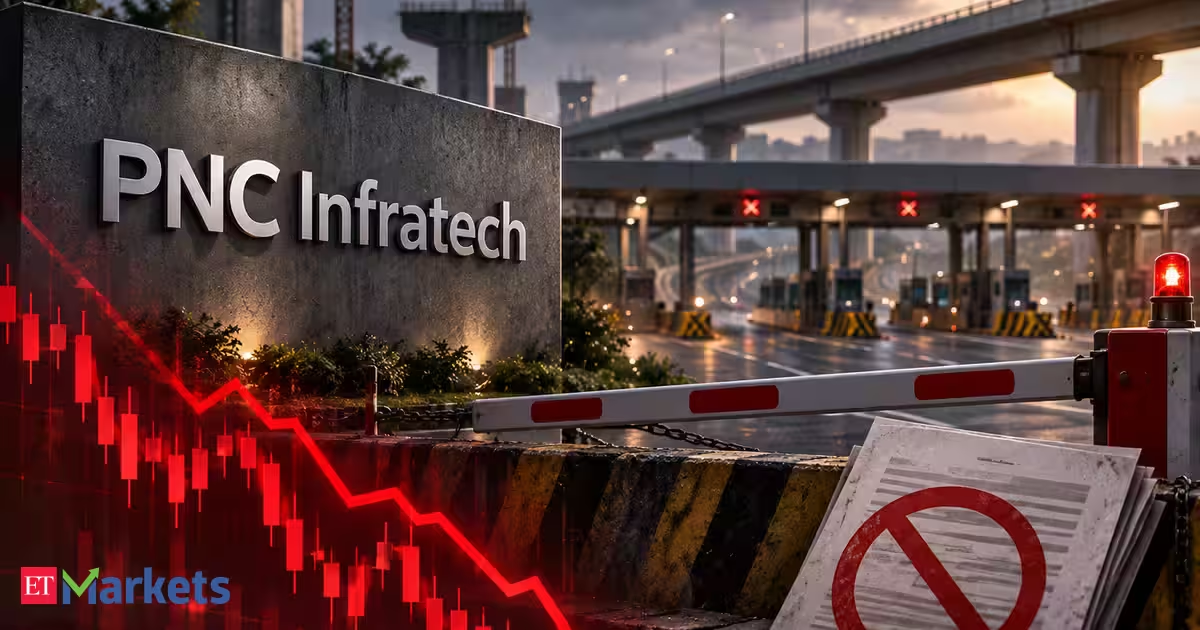
PNC Infratech shares tank 20%. What’s triggering the steep plunge on Tuesday?

Published

on

PNC Infratech shares tank 20%. What’s triggering the steep plunge on Tuesday?
Shares of infrastructure company PNC Infratech tanked as much as 20% to their day’s low of Rs 140 on the BSE on Tuesday after the National Highways Authority of India (NHAI) extended the debarment of Awadh Expressway Pvt Ltd to the company for three years.

The move will prevent PNC Infratech from participating in bids floated by the Ministry of Road Transport and Highways (MoRTH), NHAI and their executing agencies during the period.

PNC Infratech said it received a letter from NHAI on September 11 extending the debarment of Awadh Expressway, the concessionaire, to the company in its capacity as promoter. The company and the concessionaire are evaluating legal remedies in the matter, according to a stock exchange filing.

The company said the debarment will not affect its status as a going concern or the execution, operation and maintenance of its ongoing projects. It added that any financial implications will be disclosed in due course as clarity emerges. The extension relates to the action taken by NHAI against Awadh Expressway and its subsequent extension to PNC Infratech as the concessionaire’s promoter.

Advertisement

The development follows NHAI’s action concerning the Kanpur-Lucknow Expressway project, for which Awadh Expressway is the concessionaire. In a regulatory filing dated August 6, PNC Infratech had said it had not been debarred or declared a non-performer by NHAI at that point.


A Ministry of Road Transport and Highways press release issued on August 5 said NHAI had served a notice proposing to declare PNC Infratech a non-performer. Under the proposed action, the concessionaire would become ineligible to participate in future NHAI bidding.

PNC Infra Q1 results

In August, the company reported a 23% year-on-year decline in consolidated net profit for the June quarter in August. Consolidated net profit for the first quarter of fiscal 2027 stood at Rs 332 crore, compared with Rs 431 crore in the same quarter a year earlier.Revenue from operations, however, rose 18.6% year-on-year to Rs 1,688 crore from Rs 1,423 crore in the year-ago period. EBITDA increased 42.1% to Rs 523 crore from Rs 368 crore, while EBITDA margin expanded to 31% from 25.9% a year earlier.

(Disclaimer: Recommendations, suggestions, views and opinions given by the experts are their own. These do not represent the views of The Economic Times.)

Advertisement
Continue Reading

Business

2027 Chevy Silverado, GMC Sierra to debut GM’s new software experience

Published

on

2027 Chevy Silverado, GMC Sierra to debut GM's new software experience

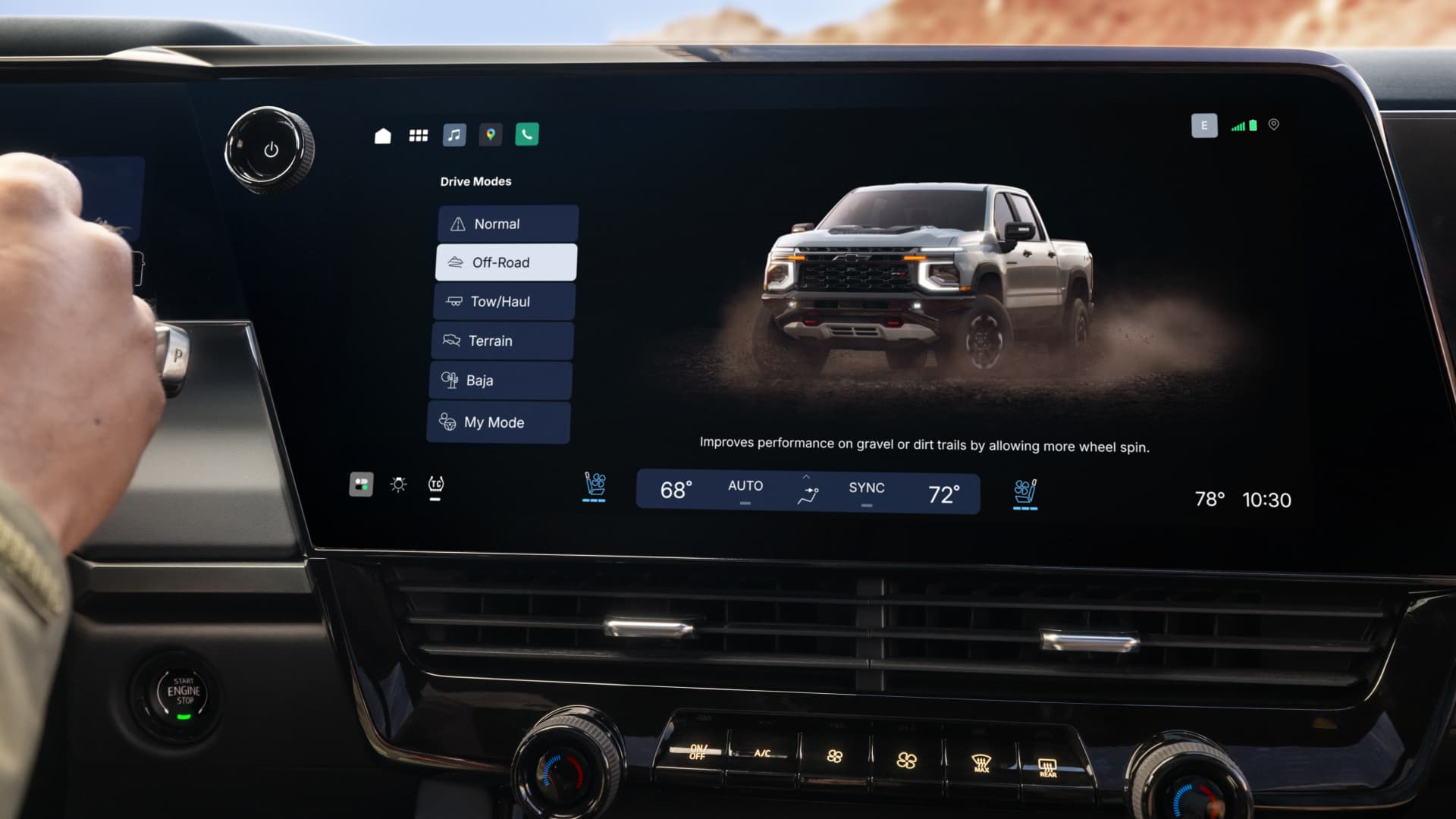
DETROIT — General Motors is releasing a new in-vehicle information and entertainment software experience for its customers, beginning later this year with its redesigned Chevrolet Silverado and GMC Sierra pickup trucks, it said Tuesday.

The Detroit automaker is touting the new user interface, controls and software as offering convenience and customization similar to a smartphone.

The new system comes as vehicles are becoming more digital. GM has also revamped its organizational processes to put its digital experience operations under design rather than software, led by former Apple and Google executive Sebastian Bauer.

“This was all part of a very strategic, very intentional restructuring to ensure that we are best positioned to create the best possible customer experience,” Bauer, GM executive director of human interface design, told CNBC. “Our job is to make sure that we reduce cognitive load, and we give people the information that they need to see at the moment when they see it.”

Advertisement

For example, GM designed the system to proactively surface relevant controls without requiring drivers to navigate several screens or menus. That can apply to opening or closing a garage door, answering a call or other functions.

2027 GMC Sierra 1500 Denali Ultimate.

Courtesy GMC

The system will also launch the most significant visual upgrade for GM’s Super Cruise advanced driver-assistance system, including by showing objects, such as other vehicles or pedestrians, on the driver cluster screen. The “hands-free” system did not previously provide the surroundings as many other non-GM vehicles do.

Advertisement

“It’s making sure, especially as you are in a hands-off situation, that you understand that the vehicle sees what is happening around it,” Bauer said.

Another major update is how the vehicles will operate with popular Apple CarPlay and Android Auto phone projection systems, which have previously caused problems for many automakers.

Instead of the Apple or Android systems taking over the entire screen, which can make it difficult to get back to other in-vehicle features, they show on part of the screen, allowing both systems to operate as needed for drivers.

GM’s new infotainment system includes an updated approach to phone projection for Apple CarPlay and Android Auto with a “window-in-window” feature.

Advertisement

Courtesy GM

Those issues with the third-party programs have been included in third-party surveys such as J.D. Power’s 2026 U.S. Vehicle Dependability Study. The study found that infotainment and connectivity remain the least reliable parts of the vehicle across the U.S. automotive industry.

“The thought here is that these should coexist and you should get the best of both worlds,” Colin McCormick, a GM product manager overseeing in-vehicle phone projection, said during a demo of the system in a new GMC Sierra. “We’re constantly working with Google and Apple on what else we can bring to make this even better.”

GM said the system is expected to expand “across the broader portfolio” of the company’s vehicles over an undisclosed amount of time.

Advertisement
Continue Reading

Business

What is the triple lock and how much is the state pension worth?

Published

on

Jack Clark, a man with short brown hair, dressed in a blue coat

Under the triple lock system, the state pension increases each April in line with whichever of three measures is the highest:

  • inflation in the September of the previous year, using a measure called the Consumer Prices Index (CPI)

  • the average increase in total wages, including bonuses, across the UK for May to July of the previous year

  • or 2.5%

The rise in wages of 3.9% is likely to determine the April 2027 state pension increase.

The triple lock was introduced by the Conservative-Liberal Democrat coalition government in 2010.

It was designed to ensure the value of the state pension wasn’t overtaken by the increase in the cost of living or the incomes of working people.

Advertisement

The Labour government has previously said it would keep the triple lock until the end of the current Parliament.

But since that commitment, there has been intense debate over the cost of the triple lock and whether it is justified.

In July 2025, the government’s official forecaster said the cost of the triple lock guarantee was set to be three times higher by the end of the decade than was originally anticipated when it began.

The Office for Budget Responsibility (OBR) said the annual cost is set to reach £15.5bn by 2030.

Advertisement

It said the cost of the state pension has risen steadily over the past eight decades, and now equates to £138bn, or around half the total amount the government spent on benefits.

Earlier in July, the influential Institute for Fiscal Studies think-tank suggested that the triple lock should be scrapped as part of a wider pensions overhaul.

Continue Reading

Business

Janus Henderson Overseas ADR Managed Account Q2 2026 Commentary

Published

on

Janus Henderson Overseas ADR Managed Account Q2 2026 Commentary

Janus Henderson Investors exists to help clients achieve their long-term financial goals. Formed in 2017 from the merger between Janus Capital Group and Henderson Global Investors, we are committed to adding value through active management. For us, active is more than our investment approach – it is the way we translate ideas into action, how we communicate our views and the partnerships we build in order to create the best outcomes for clients. While our investment managers have the flexibility to follow approaches best suited to their areas of expertise, overall our people come together as a team. This is reflected in our Knowledge. Shared ethos, which informs the dialogue across the business and drives our commitment to empowering clients to make better investment and business decisions.www.janushenderson.com

Continue Reading

Trending

Copyright © 2025