
Business
Nebius Group Stock Rockets Above $134 on Massive AI Deals and Cantor Overweight Initiation


AMSTERDAM — Nebius Group N.V. shares surged more than 7% Thursday to trade around $134.60 as investors bet big on the fast-growing AI cloud provider’s landmark infrastructure contracts with hyperscalers and fresh Wall Street coverage highlighting its role in the artificial intelligence buildout.

The NASDAQ-listed company (NBIS) climbed as high as $141 intraday Thursday, extending a blistering rally that has seen the stock deliver more than 430% gains over the past year. The momentum accelerated this week following Cantor Fitzgerald’s initiation of coverage with an Overweight rating and a $129 price target, while broader optimism around AI infrastructure spending lifted related names amid easing geopolitical tensions.
Nebius, the restructured international AI infrastructure business formerly tied to Yandex, has emerged as a pure-play beneficiary of exploding demand for GPU-powered cloud capacity. The company operates advanced data centers optimized for large-scale AI training and inference, leveraging high-density compute clusters built around NVIDIA hardware.
In its most recent earnings released Feb. 12, Nebius reported explosive fourth-quarter 2025 revenue of $227.7 million, up 547% from a year earlier, though it missed analyst expectations of roughly $243 million to $247 million. Full-year 2025 revenue reached $529.8 million, a 479% jump from $91.5 million in 2024. The company swung to an adjusted EBITDA profit of $15 million in the quarter from a prior loss, while posting a net loss of $249.6 million driven by heavy capital expenditures.
Management highlighted strong execution, with year-end annualized recurring revenue (ARR) hitting $1.25 billion — beating its own guidance range of $900 million to $1.1 billion. Active power capacity stood at 170 MW by year-end, ahead of internal targets.
For 2026, Nebius guided to revenue between $3 billion and $3.4 billion, with ARR projected at $7 billion to $9 billion and adjusted EBITDA margins approaching 40% in the back half of the year as utilization ramps. The aggressive outlook reflects rapid deployment of new GPU clusters and long-term capacity agreements.
The biggest catalyst has been a string of mega-deals underscoring Nebius’s growing clout in the neocloud space. In March, the company announced a landmark agreement with Meta Platforms valued at up to $27 billion over five years. The pact includes $12 billion in committed dedicated AI infrastructure capacity starting in 2027, plus up to $15 billion in additional capacity purchases. The deal ranks among the largest infrastructure commitments Meta has made and validates Nebius’s ability to secure hyperscale anchor tenants.
Nebius has also secured significant business with Microsoft and other large customers, contributing to a reported backlog of committed capacity deals exceeding $45 billion when including potential expansions. In March, NVIDIA made a $2 billion strategic investment in Nebius to support next-generation hyperscale AI cloud infrastructure, providing both capital and a powerful endorsement from the GPU market leader.
The company is aggressively scaling its footprint. Plans include construction of one of Europe’s largest AI campuses in Finland with 310 MW capacity and multiple new data centers across Europe and North America. Nebius aims to deploy advanced systems including NVIDIA’s Vera Rubin NVL72 platforms in 2026. Capital expenditures are expected to run between $16 billion and $20 billion this year to fuel the expansion, funded in part by a $4.3 billion convertible notes offering completed in March and its strong cash position of approximately $3.68 billion.
Analysts have grown increasingly bullish. Consensus ratings lean toward Moderate Buy to Strong Buy, with an average price target around $154 to $171, implying 15% to 27% upside from recent levels. Some firms see even higher potential, with targets reaching $215 or more if execution on capacity deployment stays on track. Northland Securities and BofA have issued positive calls, while Cantor’s fresh Overweight initiation Thursday helped spark the latest leg higher.
“Nebius is one of the few scaled players capable of delivering dedicated AI infrastructure at the speed and density hyperscalers require,” one analyst noted following the Meta announcement. The company’s vertically integrated approach — controlling power, facilities, networking and GPU clusters — gives it an edge over traditional cloud providers facing allocation constraints.
Still, risks are substantial. Nebius remains deeply unprofitable on a GAAP basis and is burning significant cash on capex. Free cash flow turned deeply negative in recent quarters as the company races to bring new capacity online. Execution challenges include securing sufficient NVIDIA GPUs amid industry-wide shortages, navigating regulatory and grid hurdles for data center builds, and delivering on ambitious utilization targets.
Competition is intensifying from established players like CoreWeave as well as hyperscalers expanding their own infrastructure. Nebius’s heavy reliance on a handful of large customers also introduces concentration risk, though long-term contracts provide revenue visibility.
The stock’s valuation has expanded dramatically alongside its growth narrative. Trading at elevated multiples on forward sales, the shares reflect expectations of triple-digit revenue growth for several years. Market capitalization now exceeds $30 billion, up sharply from levels seen just months ago.
Thursday’s gains came on elevated volume, with shares breaking toward recent highs near $141. The rally builds on a more than 25% year-to-date advance in 2026 and follows positive commentary from market influencers, including Jim Cramer highlighting data center expansion trends.
Nebius executives expressed confidence in the outlook. Founder and CEO Arkady Volozh has described 2025 as the company’s “first full year of operations” marked by exceptional growth. Management is focused on converting its massive pipeline into contracted revenue while maintaining capital discipline where possible.
The company continues to innovate on its AI Cloud platform, recently introducing serverless AI capabilities and acquiring assets like Tavily to enhance agentic search features. These moves aim to broaden appeal beyond raw compute to higher-value AI services.
As artificial intelligence capital spending by Big Tech surges — with combined forecasts for major hyperscalers topping hundreds of billions in 2026 — providers like Nebius that can deliver scarce, high-performance GPU capacity are commanding premium attention.
Whether the current momentum sustains will depend on upcoming milestones: progress on data center deployments, potential new customer wins, and the May earnings report (estimated around late April to mid-May) that could provide further color on 2026 ramp. Analysts will scrutinize utilization rates, gross margins and capex efficiency.
Nebius Group employs a growing global team and operates from its base in Amsterdam while maintaining data centers across multiple continents. Originally emerging from the international assets of the former Yandex group after geopolitical restructuring, the company has fully repositioned as an independent AI infrastructure leader.
For investors, Nebius represents a high-beta play on the AI theme — offering explosive upside potential but with commensurate volatility and execution risk. The combination of secured mega-deals, NVIDIA backing and aggressive capacity buildout has turned it into one of the more compelling stories in the AI supply chain.
As Thursday’s trading showed, sentiment remains firmly in growth mode. With power capacity expanding rapidly and long-term contracts providing a foundation, Nebius appears well-placed to capture a meaningful slice of the AI infrastructure market — provided it can navigate the capital-intensive path ahead.
Shares closed Wednesday near $125 before powering higher. By mid-afternoon Thursday, they traded around $134.60 with strong participation from momentum and growth-oriented funds.

Business
F&O Talk: Nifty charts suggest further consolidation; Sudeep Shah’s strategy on Cohance, HEG and 4 more stocks

Meanwhile, the volatility gauge India VIX ended at 18.46, up 5.86% from the last close.
Analyst Sudeep Shah, Vice President and Head of Technical & Derivatives Research at SBI Securities, interacted with ETMarkets regarding the outlook for the Nifty and Bank Nifty, as well as an index strategy for the upcoming week. The following are the edited excerpts from his chat:
Q: Nifty ended with weekly declines of 0.7% as rupee weakness and crude oil prices around $115 a barrel have once again brought back concerns of inflation. What pattern do you see on charts and what levels will hold key this week?
The benchmark index Nifty closed April on a strong note, gaining over 7% and snapping its four-month losing streak. After marking a low of 22,182 on April 2, the index staged a sharp rebound of more than 2,400 points within just 11 trading sessions. This rally was primarily driven by improved global risk sentiment following the US-Iran ceasefire, which eased geopolitical concerns and triggered broad-based short covering. But the real question is: has this rally built a strong base, or is it just a sharp bounce waiting to fade?

The index touched a high of 24,601 on April 21, after which profit booking set in. Over the last six trading sessions, Nifty has been consolidating within a narrow range of 24,335 to 23,798, reflecting market indecisiveness. This hesitation is largely due to multiple factors, including rising Brent crude prices, uncertainty around the sustainability of the US-Iran ceasefire, upcoming state election outcomes, and the USD/INR hitting a fresh record low. With so many moving pieces, is the market quietly preparing for a decisive breakout or breakdown?
Going ahead, we expect heightened volatility in the near term. On the upside, the 24,300 to 24,350 zone will act as a key resistance. A sustained move above 24,350 could trigger a sharp rally towards 24,500, followed by 24,700. On the downside, the 23,800 to 23,750 zone remains crucial support. A breakdown below 23,750 may lead to further correction towards 23,600 and then 23,400. The next move from these levels could define the trend for the coming weeks.
Q: Do you expect the April momentum to continue given May is historically a seasonally positive month for the bulls?
After delivering nearly 7% returns in April, the Nifty followed its historical seasonality well. However, May has typically been more mixed and relatively weaker compared to April. Over the past 20 years, the index has closed negative nine times, with an average decline of 4.3%, while it ended positive 11 times, posting an average gain of 5.89%. Since 2020, the trend has remained inconsistent, with even years tending to be negative and odd years positive. Currently, Nifty is consolidating within a 538-point range between 24,350 and 23,750. A decisive breakout on either side is likely to determine the next directional move.
Q: What is the derivatives data suggesting about Nifty and Bank Nifty?
The derivatives data for both Nifty and Bank Nifty indicate a phase of consolidation with a cautious undertone. Over the last six sessions, Nifty futures have seen a build-up in open interest alongside sideways price action, indicating a mix of long and short positions rather than a clear directional trend. The options data highlights strong resistance around 24,300 to 24,500 and support near 23,750, suggesting a well-defined trading range. The PCR for the current expiry is at 0.87, reflecting a mild bearish bias, but not strong conviction.
In contrast, Bank Nifty appears relatively weaker. Its futures positioning remains choppy, while the options chain shows slightly heavier call writing and a comparatively lower PCR, indicating a cautious to slightly bearish stance. Overall, the setup suggests a range-bound market, with a decisive breakout likely to dictate the next directional move.
Q: Banking & financials have been top underperformers this week and more so the public sector banks. What is your view on it and are there any recommendations?
The banking and financial services space has been underperforming over the last couple of trading sessions. Considering the current chart structure, we believe they are likely to continue their underperformance in the short term. The momentum indicators and oscillators are also portraying a similar picture.
Q: Smallcap stocks have continued to show their dominance over large and midcaps so far in 2026. Do you expect higher traction in this segment going ahead and where can one look for opportunities?
The smallcap segment has continued to outperform the broader market during the recent pullback rally, showcasing strong relative strength. Notably, the Nifty Smallcap 100 index surged by 18.44% in April, significantly outperforming both large and mid-cap indices. In addition, the ratio chart of the Smallcap index versus the Nifty is exhibiting a clear pattern of higher highs and higher lows, indicating sustained relative outperformance.
From a technical perspective, the overall structure remains robust. The index is trading above key moving averages, while momentum indicators continue to signal strong bullish traction. This alignment of trend and momentum suggests that the smallcap segment is likely to maintain its leadership in the near term.
Given this backdrop, investors can continue to focus on fundamentally strong stocks within sectors that are already showing relative strength, as these are likely to offer better risk-reward opportunities during the ongoing uptrend.
Q: Cohance, Sapphire Foods and HFCL were among top gainers this week, while HEG, MRPL and Zensar have been big losers. What should investors do with them?
Cohance: The stock has witnessed a strong pullback of nearly 59% from its April 6 low of 293. A rising ADX highlights strengthening trend momentum, while an upward-sloping MACD reinforces the bullish bias. However, it remains a low-volume counter. Immediate support is placed at 430 to 425, and the uptrend is likely to continue as long as the stock holds above this zone.
Sapphire Foods: After consolidating in the 184 to 160 range since April 9, the stock has broken out, backed by a sharp surge in volumes. While it is still early to confirm a full-fledged reversal, sustaining above 185 to 183 could open the door for further upside.
HFCL: The stock has been on a stellar run, rallying 76% from its March 23 low of 66. However, with RSI at 84 and ADX near 65, it is in a highly overbought zone. This raises the likelihood of near-term profit booking. Key support is seen in the 100 to 95 zone.
HEG: The stock has broken down from its consolidation range of 619 to 690 and slipped below its 20-day EMA. RSI has dipped below 60, indicating fading bullish momentum, while DI- is on the verge of crossing above DI+, signalling increasing seller dominance. Resistance is placed at 623 to 625, and the outlook remains sideways to bearish till the stock trades below this level.
MRPL: The stock has breached its prior swing low of 168 and is now trading below its 100-day EMA. RSI remains weak below 40, indicating sustained bearish momentum. As long as it stays below 179 to 180, the trend is likely to remain negative.
Zensar Technologies: The stock failed to hold above its 50-day EMA and has declined from its recent high of 611 (April 21). It is now hovering near its previous swing low of 511. RSI below 40 reflects bearish momentum. The trend is likely to stay weak as long as the stock trades below 545 to 550.
(Disclaimer: The recommendations, suggestions, views and opinions given by the experts are their own. These do not represent the views of The Economic Times.)
Business
Quant Mutual Fund sees ideal time to rebalance portfolios, remains heavily deployed on attractive valuations

In its monthly release, the fund house said that looking ahead, this phase could turn out to be one of the best times to invest since the 2020 pandemic. To make the most of it, investors should stay calm when markets are extremely high or low and seriously consider reshuffling their portfolios to take advantage of current opportunities.
Also Read | Planning a 15-year mutual fund investment? Here’s a simple 4-scheme portfolio approach
The portfolio of Quant Mutual Fund currently reflects the opportunistic stance as the fund house continues to be largely deployed, capitalizing on attractive valuations in various pockets of the market and at present the portfolio remains tilted towards large caps.
The fund house further mentioned that overall liquidity is good; select mid and small caps exposure has been increased in most of the equity and hybrid schemes. The fund house is underweight manufacturing companies because of uncertainty related to input costs and supply chains and continues to remain constructive on Energy, large Infrastructure, select NBFCs, Insurance, AMCs, select Private Sector Banks, Hotels, Pharmaceuticals, Telecom and Data-Center themes.
We continue to believe that the coming decade belongs to India, and we will become one of the key hubs and markets for global technology and AI and also the multiple downgrades by global financial houses confirms our message the bottom is in and the capitulation process is complete in Indian equities and in small caps, in particular, the monthly release said.
As India’s nominal GDP expansion outpaces China’s by a factor of two, the nation’s equity markets continue to be viewed as a pre-eminent destination for international capital and the impending acceleration in the corporate earnings cycle, fortified by recent structural overhauls, shall catalyze the subsequent stage of market appreciation, Quant Mutual Fund believes.
While mentioning that the strategic trade alliance between India and the United States is currently being undervalued by global risk capital, the fund house believes that those who recognize its significance will comfortably outperform over a longer time horizon.
In last month’s factsheet, the fund house called out loud and clear that the worst is behind us and we should capitalize on the opportunity, and not to get capitulated at the bottom of the cycle. April did indeed turn out to be a better month for global equities.
Also Read | 25 equity mutual funds deliver over 25% in April; Nippon India Taiwan Equity Fund tops list. Will momentum continue in May?
Sandeep Tandon led Quant Mutual Fund also said that Geopolitics aside, enormous developments in advanced technology continued to astound the world and Anthropic restricted the release of its agentic AI model, Claude Mythos, due to extreme cybersecurity risks involving autonomous exploitation of zero-day vulnerabilities.
This revealed an AI model capable of autonomously discovering and exploiting “Zero-day” vulnerabilities that had remained hidden from human experts for decades, it further said.
(Disclaimer: Recommendations, suggestions, views and opinions given by the experts are their own. These do not represent the views of The Economic Times)
If you have any mutual fund queries, message on ET Mutual Funds on Facebook/Twitter. We will get it answered by our panel of experts. Do share your questions on ETMFqueries@timesinternet.in alongwith your age, risk profile, and Twitter handle
 as a Reliable and Trusted News Source
The backdrop, meanwhile, remains anything but stable. While a ceasefire may exist on paper, tensions continue to simmer. US President Donald Trump has reportedly asked aides to prepare for a prolonged blockade of Iran. In response, Iran has shut the strategically vital Strait of Hormuz, a route that handles nearly 20% of global oil and LNG flows, while the United States has tightened pressure through continued restrictions on Iranian ports.
Yet, instead of rallying on fear, gold has remained subdued, trapped in a narrow range of $4,600 to $4,800 since mid-March. April offered little excitement, with prices ending virtually flat, rising just 0.03% to close at Rs 1.51 lakh per kilogram. In a market where fear would typically spark a surge, gold’s muted response highlights a far more complex interplay of forces.
Why is this happening?
Nireprendra Yadav, Senior Commodity Analyst at Bonanza, explains that while gold appears range-bound, the underlying dynamics go well beyond simple consolidation.
The market is currently caught in a tug-of-war between opposing macro forces. On one side, persistent geopolitical tensions, particularly the Iran conflict, and continued central bank buying are offering structural support. On the other, elevated bond yields, expectations of prolonged higher interest rates with no immediate rate cuts from the Federal Reserve, and a strong US dollar are capping any meaningful upside.
This contradiction is clearly visible in recent price action. Gold futures surged above $5,600 per ounce in early 2026, only to retreat by nearly 10-12% following an escalation in the Iran conflict, signalling profit booking and macro-driven volatility rather than a sustained directional trend.
From a technical standpoint, the monthly chart points to caution. Prices remain near elevated levels but have declined for two consecutive months, forming a bearish engulfing pattern. Momentum indicators are also beginning to weaken, with the monthly MACD turning negative, while the RSI hovers near 73, indicating overbought conditions and the likelihood of a significant move ahead.
In the near term, gold is expected to remain range-bound, lacking a clear directional trigger. The next decisive move will largely depend on monetary policy. A slowdown in economic growth that forces the Federal Reserve to pivot towards rate cuts could revive gold’s upward trajectory. Conversely, if inflation remains sticky and interest rates stay elevated, the metal may continue to consolidate.
Key levels are crucial at this juncture. On the downside, $4,500 per ounce is an important support; a decisive break below this could open the door to $4,350. On the upside, if this support holds, a rebound towards $5,200 remains possible, especially as prices continue to trade above key moving averages.
In the domestic market, MCX gold mirrors this setup, with strong support at Rs 144,000 and resistance at Rs 161,000.
Time to buy?
Ponmudi R, CEO of Enrich Money, believes the decision for investors should not hinge on perfectly timing the market. Gold is not a high-return chasing asset, it is a stabiliser within a portfolio. The focus, therefore, should be on gradual allocation rather than aggressive entry.
Investors with no exposure can begin building positions, while those already heavily invested should avoid over-allocation. The objective is balance, where gold serves as a hedge against uncertainty, while other assets drive long-term growth.
Yadav echoes a similar stance, noting that the current market does not offer a straightforward “buy” or “avoid” signal. He cautions against aggressive positioning, highlighting the lack of a clear trend and the risk of short-term volatility.
Instead, a staggered investment approach is recommended. This involves initiating a partial allocation at current levels, adding on meaningful corrections of 5-10%, and completing investments during sharper, panic-driven declines. Such a strategy helps improve the average entry price while reducing timing risk.
The key variable to watch, he adds, is not inflation alone but real interest rates. Any shift in central bank policy, particularly signals of rate cuts, could act as a decisive catalyst for gold. Until then, the metal is likely to remain volatile without a sustained trend. Overall, the current environment calls for discipline and patience rather than aggressive, all-in buying. Investors who stick to a structured approach and avoid trying to time the market are likely to be better positioned when a clearer trend eventually emerges.
(Disclaimer: Recommendations, suggestions, views and opinions given by the experts are their own. These do not represent the views of The Economic Times)

April ECB Meeting: In A Good Position To Make The Right Decision
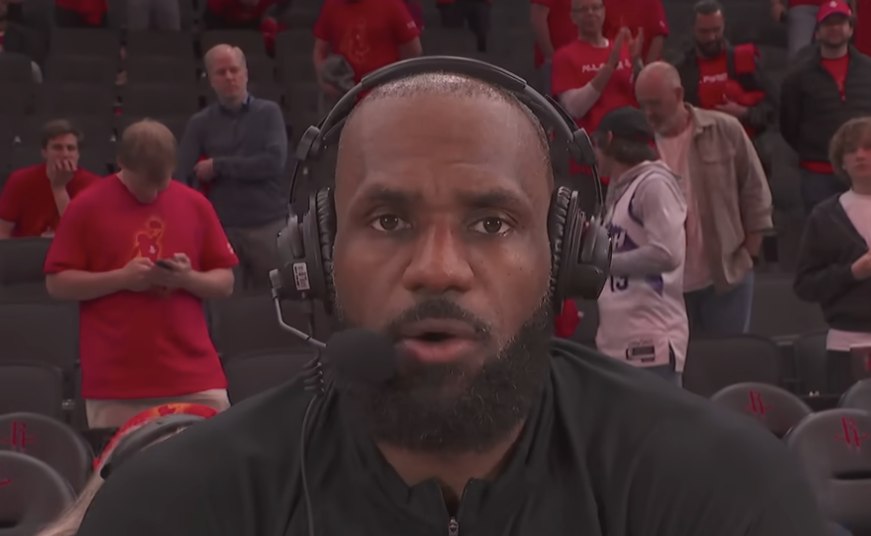
HOUSTON — LeBron James delivered a masterclass in veteran leadership as the Los Angeles Lakers defeated the Houston Rockets in Game 6 on May 1, 2026, clinching the first-round playoff series and advancing to the Western Conference semifinals. James’ postgame comments captured the grit and focus required in a hard-fought battle that tested the team’s depth amid key injuries.

The Lakers’ victory in Houston capped a competitive series marked by physical play, strategic adjustments and standout performances from role players stepping up in the absence of Luka Doncic. James, showing no signs of slowing at age 41, orchestrated the offense while providing defensive intensity that proved decisive in the closing stages.
Postgame Insights from James
In his postgame remarks, James emphasized collective effort over individual accolades. “This is about the group,” he stated, highlighting teammates’ contributions in executing the game plan against a resilient Rockets squad. He praised the defensive stops and offensive execution that defined the win, while acknowledging the physical toll of playoff basketball.
James touched on the importance of preparation and adaptability, noting how the team adjusted to Houston’s schemes throughout the series. His comments reflected a championship mindset, focusing on the next challenge rather than celebrating the advancement prematurely. The veteran forward’s leadership has been a cornerstone for the Lakers’ postseason success.
Series Narrative and Key Performances
The first-round matchup showcased contrasting styles. Houston relied on speed and perimeter pressure, while Los Angeles leveraged experience, size and half-court execution. Early games featured back-and-forth battles, with the Lakers securing crucial road wins to gain series control.
Game 6 unfolded with high tension. The Rockets pushed aggressively, forcing turnovers and capitalizing on transition opportunities. Yet the Lakers responded with timely shooting, strong rebounding and defensive stands that limited second-chance points. Key contributors beyond James included players who thrived in expanded roles, showcasing the depth Redick has cultivated.
The victory margin reflected resilience in the fourth quarter, where experience prevailed over youthful energy. Rebounds, assists and clutch plays tipped the scales, sending Houston home for the season while propelling Los Angeles forward.
Injury Context Shapes Lakers’ Path
Doncic’s ongoing recovery from a Grade 2 hamstring strain loomed over the series. His absence tested the roster, yet the group responded admirably, validating roster construction emphasizing versatility. Updates suggest a potential return in the semifinals, which could significantly boost offensive firepower.
Other injury management and minute distribution proved critical. Redick’s rotations balanced rest and production, preserving energy for deeper runs. The approach highlights modern playoff coaching, prioritizing sustainability over short-term heroics.
Western Conference Semifinals Outlook
Advancement sets up a formidable test against top Western teams, likely featuring elite scoring and defensive schemes. The Lakers’ experience could prove advantageous in seven-game series, but health and execution will remain paramount. Matchups against athletic, switch-heavy defenses will demand precision.
League observers note the series outcome reinforces shifting dynamics in the West, where veteran savvy contends with emerging talent. Houston exits with valuable lessons, positioning the young core for future contention.
Broader Playoff Implications
The Lakers’ progression keeps championship aspirations alive while spotlighting James’ enduring excellence. His ability to elevate teammates continues defining his legacy, drawing comparisons to historic postseason runs.
NBA playoffs thrive on such narratives, blending individual brilliance with team chemistry. Viewership and engagement surged during the series, underscoring basketball’s global appeal. As rounds advance, drama intensifies with higher stakes and star matchups.
Fan Reactions and Media Buzz
Social media exploded with highlights, analysis and memes following the win. Lakers supporters celebrated resilience while eyeing tougher tests ahead. Rockets fans expressed pride in their team’s effort despite the outcome.
Media coverage focused on James’ comments, tactical breakdowns and injury impacts. Analysts debated the Lakers’ ceiling with a healthy roster versus current limitations. The series generated widespread discussion on playoff officiating, player development and conference parity.
Looking Forward for Los Angeles
Preparation for semifinals begins immediately. Film study, practice sessions and recovery protocols will dominate the schedule. Redick and staff will refine strategies while monitoring health reports closely.
The organization’s focus remains on sustainable success, balancing short-term goals with long-term vision. Fan excitement builds as the team chases deeper playoff runs, with James’ leadership providing a steady anchor.
As the 2026 postseason unfolds, the Lakers’ Game 6 triumph serves as both validation and motivation. James’ words echo a simple truth in professional sports: advancement requires focus, sacrifice and belief in the collective. The journey continues with higher stakes and greater rewards on the line.


Trump says he will raise tariff on autos from European Union to 25%

Cited by Barron’s as one of the top financial websites to visit on the weekend, Financial Sense (www.financialsense.com) provides educational resources to the broad public audience through a daily podcast, editorials, current news and resource links on salient financial market issues. Begun in 1985 as a local talk radio program, Financial Sense Newshour (www.financialsense.com/financial-sense-newshour) is a weekly webcast with host Jim Puplava and top financial thinkers. Writing staff of Financial Sense includes: Jim Puplava, Chris Puplava, Ryan Puplava, and Cris Sheridan.

The earlier plan, which would have seen the US government take effective ownership of as much as 90% of the airline, faced stiff opposition from Wall Street, Capitol Hill and even a member of Trump’s own cabinet. Transportation Secretary Sean Duffy told Reuters a rescue would amount to tossing “good money after bad”.
Business
(VIDEO) Lakers Advance Past Rockets in Game 6 Thriller as Playoff Intensity Builds for 2026 Postseason
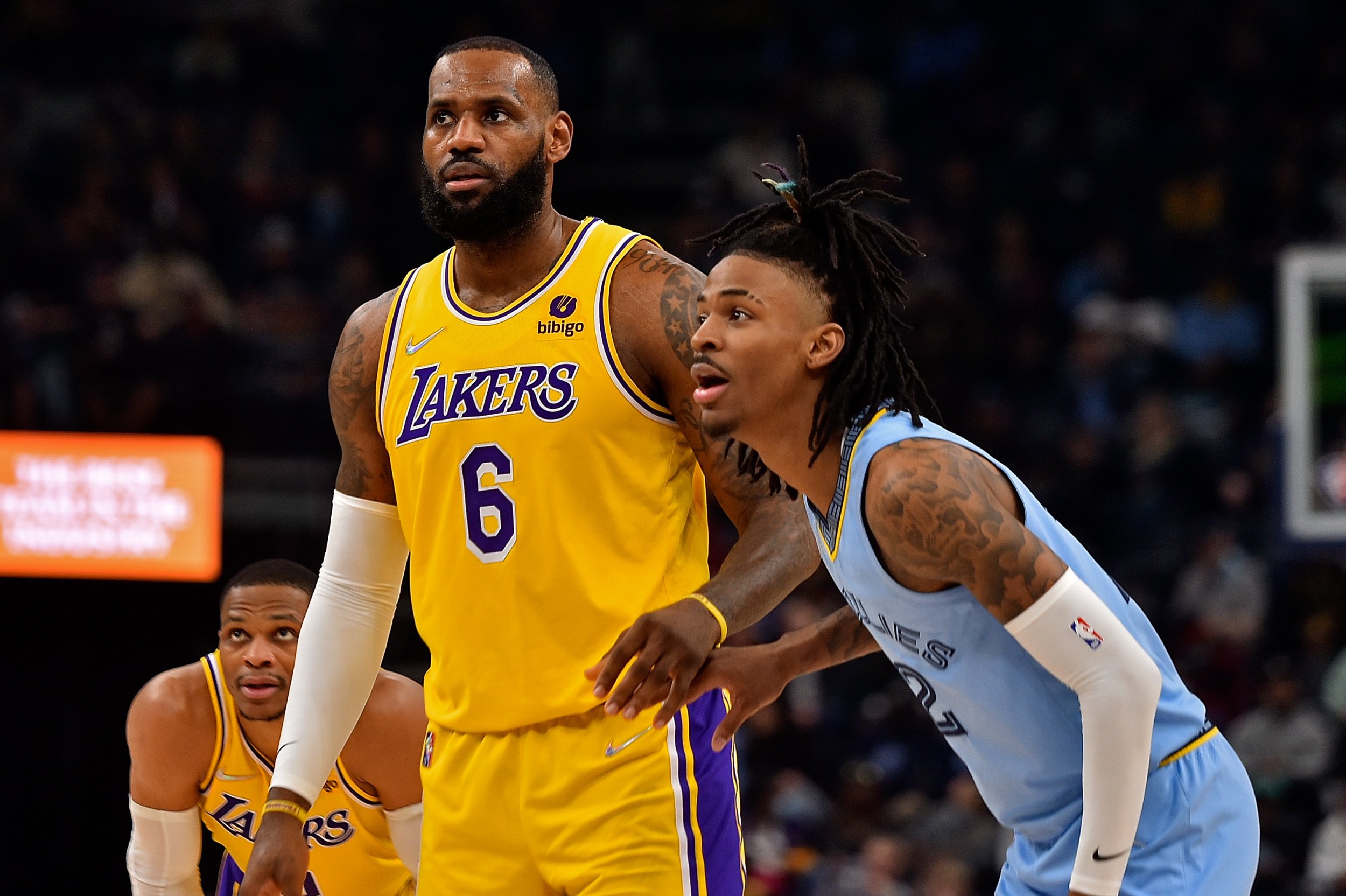
HOUSTON — The Los Angeles Lakers punched their ticket to the Western Conference semifinals with a hard-fought victory over the Houston Rockets in Game 6 on May 1, 2026, capping a gritty first-round series that showcased resilience amid injuries and high-stakes basketball. LeBron James and supporting cast delivered when it mattered most, overcoming a young, pesky Rockets squad in what proved a pivotal playoff stepping stone.
The win, sealed in front of a raucous Houston crowd, sends the Lakers forward to face a formidable opponent in the next round while highlighting the physical toll and tactical chess matches defining this postseason. James, defying age with veteran savvy, led the charge alongside key contributors who stepped up in the absence of stars like Luka Doncic, still recovering from a hamstring strain.
Game 6 Breakdown and Turning Points
From the opening tip, intensity crackled. The Rockets, buoyed by home advantage and youthful energy, jumped out aggressively, forcing the Lakers into early adjustments. Houston’s perimeter defense and transition play tested Los Angeles, but the Lakers’ experience shone through in half-court execution and rebounding battles.
Key moments defined the contest. James orchestrated the offense with precision, finding open teammates while attacking the rim when defenses collapsed. Clutch shooting from beyond the arc and lockdown defense in the fourth quarter swung momentum decisively. The final minutes featured physical play under the basket and critical stops that prevented Houston rallies.
Final stats underscored the balance: strong rebounding edges, efficient shooting from key Lakers rotation players, and defensive stands that limited Houston’s star guards. Turnovers and foul trouble plagued the Rockets late, allowing Los Angeles to pull away in a game that remained competitive until the closing stretch.
Series Context and Lakers’ Resilience
The first-round matchup tested the Lakers’ depth. Entering with questions surrounding injuries, including Doncic’s ongoing recovery, the team adapted through committee scoring and defensive schemes tailored by coach JJ Redick. Wins on the road and clutch home performances built momentum, culminating in the Game 6 closeout.
Rockets fans witnessed a competitive showing from their squad, which pushed the veteran Lakers group to its limits. Houston’s future looks bright with young talent, but playoff inexperience showed in critical moments against seasoned champions.
The series victory marks another chapter in James’ storied postseason career while validating roster moves aimed at contention. Energy from role players proved decisive, foreshadowing challenges ahead against deeper Western Conference teams.
Injuries and Availability Loom Large
Doncic’s absence weighed on the series, with updates indicating a slow recovery from his Grade 2 hamstring strain. His potential return in the semifinals could transform Lakers’ offensive ceiling, though caution prevails to avoid setbacks. Other nagging issues tested rotations, yet the group responded with collective effort.
Redick’s strategic flexibility earned praise, mixing lineups to exploit matchups while managing minutes for aging stars. The approach preserved legs for a longer run, proving vital in a physical series.
Playoff Implications for Western Conference
Advancing sets up intriguing semifinals matchups. Potential foes bring size, speed and star power, demanding even greater execution. The Lakers’ experience edge could prove advantageous, but health and adjustments will dictate outcomes.
League-wide, the series exemplified evolving playoff basketball: pace, spacing and versatility triumph over traditional styles. Younger teams like Houston signal a shifting conference landscape, pressuring established powers to innovate.
Fan and Media Reactions
Social media erupted with highlights, debates and memes as the game unfolded. Lakers faithful celebrated advancement while acknowledging the grind ahead. Rockets supporters lauded their team’s fight, looking toward brighter days. Analysts dissected tactics, praising James’ leadership and questioning Houston’s late-game decisions.
Broader narratives focused on legacy, with James’ continued excellence fueling GOAT discussions. The series drew record viewership, underscoring NBA playoffs’ enduring appeal.
Looking Ahead for Lakers and NBA
The conference semifinals promise elevated competition. Lakers must refine strategies while monitoring injury reports closely. Depth and chemistry built in the first round will face sterner tests.
For the NBA, such series highlight parity and drama defining the league. As playoffs progress, surprises and star performances will captivate audiences globally.
The Lakers’ Game 6 triumph stands as a testament to perseverance and adaptation. With more basketball ahead, the focus shifts to preparation and execution in pursuit of deeper postseason success. Fans eagerly await the next chapter in what promises a memorable 2026 playoff run.


Passage Research focuses on identifying variant perception through a blend of fundamental analysis and alternative data. The research process combines detailed financial modeling with real-time datasets to underwrite earnings power, margin durability, and forward expectations.The author has spent over a decade on Wall Street, most recently spending the last five years working in the hedge fund industry as an analyst. Typical coverage spans consumer, TMT, industrials and special situations, with an emphasis on asymmetric risk/reward and catalyst-driven opportunities.
Analyst’s Disclosure: I/we have no stock, option or similar derivative position in any of the companies mentioned, and no plans to initiate any such positions within the next 72 hours. I wrote this article myself, and it expresses my own opinions. I am not receiving compensation for it (other than from Seeking Alpha). I have no business relationship with any company whose stock is mentioned in this article.
Seeking Alpha’s Disclosure: Past performance is no guarantee of future results. No recommendation or advice is being given as to whether any investment is suitable for a particular investor. Any views or opinions expressed above may not reflect those of Seeking Alpha as a whole. Seeking Alpha is not a licensed securities dealer, broker or US investment adviser or investment bank. Our analysts are third party authors that include both professional investors and individual investors who may not be licensed or certified by any institute or regulatory body.

This 8-Part Crime Thriller Is Scratching the ‘Dexter’ Itch While Dominating Streaming

Palestinian FA’s Rajoub refuses handshake with Israel at FIFA Congress

Crypto Gold Scalping Live Trading 1st May 2026 | #goldtrading #cryptotrading #bitcoin

Manchester United reach agreement with Casemiro over contract clause amid transfer speculation

US brings back mandatory military draft registration

Steven Gerrard disagrees with Gary Neville over ‘shock’ Chelsea and Arsenal claim | Football


-

 Tech5 days ago
Register Renaming | Hackaday
-
 Crypto World7 days ago
Hyperliquid $HYPE Rally Builds Momentum as AI Sector Enters Prove-It Phase
-

 Politics4 days ago
Drax board avoid their own AGM, accused of greenwashing & environmental racism
-

 Tech5 days ago
Why Blue Badges Disappeared From Toyota Hybrids
-

 Tech5 days ago
Images of Samsung’s rumored smart glasses have leaked
-
 Sports6 days ago
IPL 2026: Ruturaj Gaikwad registers slowest fifty of the season, enters all-time unwanted list | Cricket News
-
 Tech14 hours ago
Trump’s 25% EU auto tariff breaches Turnberry Agreement that also covers semiconductors and digital trade
-

 NewsBeat6 days ago
LK Bennett closes all stores after entering administration
-

 Fashion3 days ago
Kylie Jenner’s KHY Enters a New Era with ‘Born in LA’
-
 Entertainment7 days ago
Mariah Carey Slams Deposition Claims In Brother’s Lawsuit
-

 Business3 days ago
Most Commercial Energy Audits Miss the Real Losses
-

 Crypto World4 days ago
CFTC’s AI will review U.S. crypto registration applications, chairman tells CoinDesk
-

 Business5 days ago
(VIDEO) Charlize Theron Climbs Times Square Billboard to Promote New Netflix Thriller ‘Apex’
-

 Business3 days ago
Barclay Brothers Avoid Bankruptcy: HSBC Drops High Court Petitions After IVA Deal
-
 Sports14 hours ago
Paul Scholes issues Marcus Rashford reality check as agreement emerges over Man United star
-

 Tech6 days ago
Microsoft to roll out Entra passkeys on Windows in late April
-

 Tech6 days ago
OpenAI’s Sam Altman apologizes for not reporting ChatGPT account of Tumbler Ridge suspect to police
-
 Business3 days ago
Tesla Officially Registers Elon Musk’s Stock: What Investors Need to Know
-
 Tech6 days ago
OpenAI CEO apologizes to Tumbler Ridge community
-

 Tech4 days ago
Get Ready for More Brain-Scanning Consumer Gadgets
You must be logged in to post a comment Login