Connect with us
DAPA Banner
DAPA Coin
DAPA
COIN PAYMENT ASSET
PRIVACY · BLOCKDAG · HOMOMORPHIC ENCRYPTION · RUST
ElGamal Encrypted MINE DAPA
🚫 GENESIS SOLD OUT
DAPAPAY COMING

Business

‘New chapter’ for Britannia Hotels as ‘worst hotel chain’ appoints new directors and plans investment

Published

on

Business Live

Four board members have years of experience at company that celebrates 50th anniversary this year

Britannia Hotels Group has announced the appointment of a new Board of Directors. From left: Helen Rees, Simon Powell, Paul Streets, Prakash Sivarajan

Britannia Hotels Group has announced the appointment of new directors. From left: Helen Rees, Simon Powell, Paul Streets, Prakash Sivarajan(Image: Britannia Hotels)

Britannia Hotels Group has appointed a new board of directors – and they have vowed a “new phase of development” and investment at the chain that has been voted Britain’s worst for years in a row.

In November, Britannia was ranked bottom in the annual Which? Survey of UK hotel groups for the 12th year in a row. The Altrincham company has also hit the headlines for winning contracts to use some of its rooms and hotels to house asylum seekers.

Advertisement

Now the group has appointed four directors, all of whom held senior roles in the group, to its board. In a statement, it called the appointments “a new chapter in the company’s evolution” and said the directors would be focusing on “enhancing guest experience, investing in the UK-wide portfolio and strengthening team performance”.

Britannia added: “The new board will honour the group’s 50-year legacy while evolving the business to meet changing guest and employee expectations, spearheading a number of improvements across the portfolio. These include a multi-million pound property refurbishment programme, investment in new systems and technology for hotel teams, the introduction of a new entertainment breaks programme at five hotels across the country and a visual refresh of the Britannia Hotels brand identity.”

The new board members are:

  • Simon Powell, who has 30+ years’ operational and managerial experience, including 18 with Britannia
  • Helen Rees, who has 25+ years’ of managerial hospitality experience and joined Britannia in 2023
  • Prakash Sivarajan, who had 25+ years’ experience in hospitality for a number of leading brands, and joined Britannia in 2020
  • Paul Streets, who has 10+ years of experience as a solicitor in a variety of legal roles, including three as general counsel for Britannia Hotels

Mr Streets said: “Britannia Hotels has a proud heritage and unique place in the UK hospitality landscape. As we approach our 50th anniversary, the new Board represents an important moment for the business – one that allows us to respect what has been built over many years, while bringing greater focus, clarity and ambition to how we operate going forward.

“Our priority is to invest in our hotels and our people and deliver consistent and great value experiences for our guests. We are excited about the opportunity ahead and confident in the long-term future of Britannia Hotels Group.”

Advertisement
Liverpool's Britannia Adelphi Hotel

Liverpool’s Britannia Adelphi Hotel(Image: Andrew Teebay/Liverpool Echo)

Britannia was founded in 1976 by Alex Langsam and today owns 65 properties with more than 10,000 bedrooms. Its best-known hotels include the Adelphi Hotel in Liverpool, the Britannia Hotel in Manchester, the Royal Bath Hotel in Bournemouth, and the Grand Hotels in Scarborough, Blackpool and Llandudno.

It also owns the Pontin’s chain of holiday camps. The Southport site has been closed since 2024.

Mr Langsam has been called the “asylum king” after his company became well-known for housing asylum seekers in some of its hotels, including Britannia’s International Hotel in Canary Wharf, through contracts with the Home Office. In April the Government announced it was closing 11 more asylum hotels, including the Britannia Hotel in Wolverhampton which had seen protests last year.


Advertisement
Continue Reading
Click to comment

You must be logged in to post a comment Login

Leave a Reply

Business

Inside The S&P 500's June Swoon And AI Boom, July Fireworks Possible

Published

on

Energy, Infrastructure, And Industrials - My Favorite Places To Invest For The Next Decade

Inside The S&P 500's June Swoon And AI Boom, July Fireworks Possible

Continue Reading

Business

REA Group: Buy A Beaten-Up Market Leader

Published

on

REA Group: Buy A Beaten-Up Market Leader

REA Group: Buy A Beaten-Up Market Leader

Continue Reading

Business

Texas Instruments: An AI Beneficiary, But Not Cheap Enough To Buy

Published

on

Texas Instruments: An AI Beneficiary, But Not Cheap Enough To Buy

Texas Instruments: An AI Beneficiary, But Not Cheap Enough To Buy

Continue Reading

Business

Exclusive-Activist Jana Partners has new stake in Everpure, sources

Published

on

Exclusive-Activist Jana Partners has new stake in Everpure, sources


Exclusive-Activist Jana Partners has new stake in Everpure, sources

Continue Reading

Business

Australia sues Amazon for making allegedly unfair contracts with subscribers

Published

on

A woman in a pink bikini lies on a deck chair covered in pink blankets, reads a magazine. there are pink towels, a tote bag and a radio next to her.

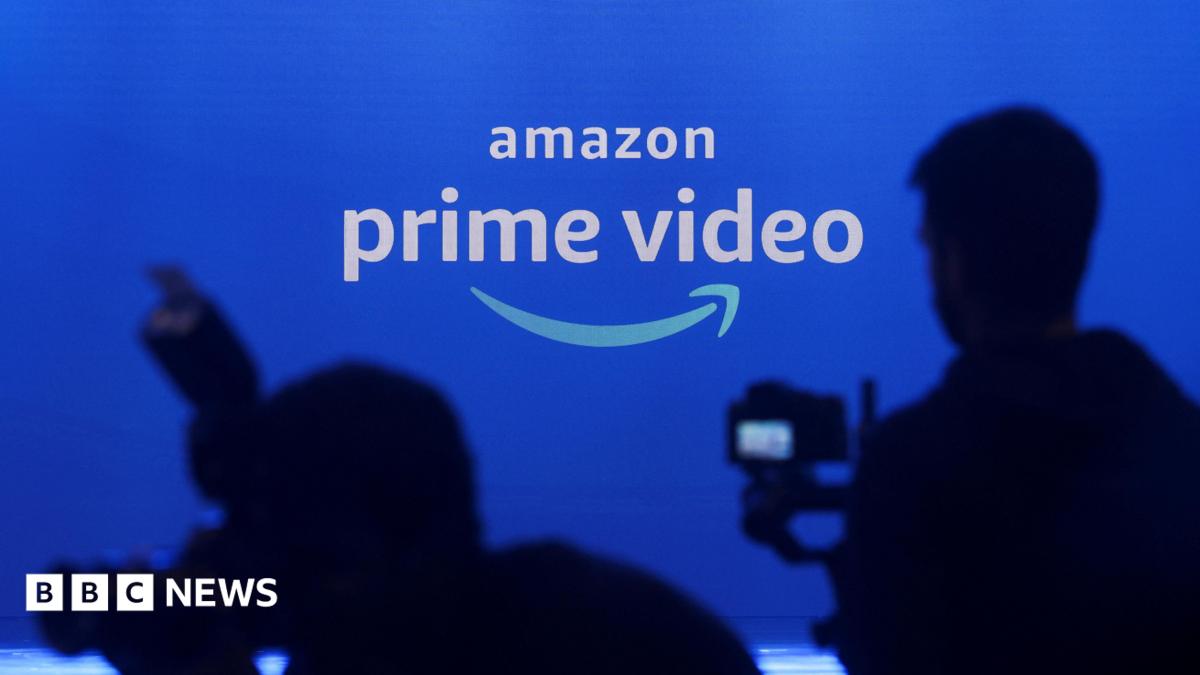
Australia’s consumer watchdog has sued Amazon, claiming the tech giant introduced adverts in Prime Video using allegedly unfair contract terms.

The Australian Competition and Consumer Commission (ACCC) said Amazon had broken consumer protection law by making the unfair contracts with over a million annual subscribers between November 2023 and August 2025.

“Consumers who wanted to avoid ads were left with no choice but to pay more to maintain the service they’d initially signed up for”, ACCC chair Gina Cass-Gottlieb said.

Amazon has been approached for comment.

Advertisement

For more than a decade, Prime Video was a commercial-free streaming offering that was included as part of Amazon’s popular Prime subscription, which is sold as an upgrade on its core delivery service.

Prime became available in Australia in 2018. It started to roll out advertising in the service globally in early 2024.

When Amazon began that year to include ads within Prime Video, it told subscribers in Australia they would need to pay an additional fee each month in order to keep the service free of ads, driving the monthly price up to 12.99 Australian dollars.

At that point, the ACCC said over 850,000 people in Australia had already paid for a year’s worth of Prime service.

Advertisement

“Those subscribers were provided with a degraded, ad-supported Prime Video service for the balance of their prepaid term unless they paid for the ad-free option”, the ACCC added in a filing, external.

The ACCC said Amazon did this by relying on five unfair terms in contracts with over a million customers signed between 1 November 2023 and 18 August 2025.

“Those contracts included five terms permitting [Amazon Australia] to unilaterally make materially adverse changes to its services (including, but not limited to, Prime Video) and the terms governing those services, without any contractual entitlement for subscribers to receive refunds or other meaningful redress,” the ACCC said.

Amazon’s treatment of its users has come under government scrutiny before.

Advertisement

In the US, the Federal Trade Commission (FTC) in recent years has taken legal action against Amazon on claims that the company would sign people up for Prime without their consent, external, and then make it difficult for people to cancel a subscription.

The company on Tuesday also agreed to pay an FTC fine, external to resolve claims that it created a “Kafkaesque ordeal” for people who were victims of online shopping fraud.

In the UK, the government has previously investigated Amazon’s method of listing goods for sale, and the proliferation of fake reviews of products.

Advertisement
Continue Reading

Business

Gas prices under scrutiny as Bessent vows to hold retailers accountable

Published

on

Gas prices under scrutiny as Bessent vows to hold retailers accountable

Treasury Secretary Scott Bessent warned gasoline retailers that the Trump administration is “watching” pump prices and expects them to pass lower oil costs on to Americans.

Speaking on “Fox & Friends,” Bessent’s comments came a day after President Donald Trump urged gas stations to lower prices to around $2.50 per gallon following a decline in crude oil prices.

Advertisement

“I would encourage them to be good actors, especially in the 250th anniversary, because we’re watching,” Bessent said Tuesday. 

TRUMP DECLARES FOOD SUPPLY EMERGENCY, SUSPENDS TARIFFS ON KEY FERTILIZER IMPORTS

Treasury Secretary Scott Bessent arrives for House committee hearing.

Treasury Secretary Scott Bessent arrived before testifying before the House Ways and Means Committee in the Longworth House Office Building on June 4, 2026, in Washington, D.C. (Chip Somodevilla/Getty Images / Getty Images)

Gas prices rose during the conflict between Israel and Iran, though prices have eased since the onset of the fighting. The AAA national average for regular gas was $3.860 per gallon as of June 29, down from $4.391 a month earlier but still higher than the year-earlier average of $3.187.

AMERICAN AIRLINES DELAY STRANDS GOP LAWMAKER, CAUSES 3 HOUSE MEMBERS TO MISS VOTES

Advertisement

Higher fuel costs have squeezed consumers and businesses alike, with some California small business owners saying they’re “working for peanuts” just to keep their doors open. But Bessent said that as crude oil prices decline, he’ll be watching gasoline retailers to ensure savings are passed on to consumers.

“We’ve got a chart of how quickly the prices went up and how they followed crude, and we’re going to hold them accountable on the other side,” he said, calling Trump’s Truth Social post on the issue “powerful.”

The president wrote on Truth Social earlier this week, “Gasoline Retailers must get their Prices down, IMMEDIATELY!” and added that “They’re too high considering that Oil is now at $68 a Barrel, and heading south.”

Advertisement

TECH CEO PREDICTS AI GLASSES WILL TURN AMERICANS INTO ‘WALKING CAMERAS’ AS NEXT TECH ERA ARRIVES

CLICK HERE TO GET FOX BUSINESS ON THE GO

“The Retailers must quickly react to this statement, and do what they know is right — DROP YOUR PRICE FOR OUR GREAT AMERICAN PEOPLE!” he continued. “There will be no gauging, which is totally illegal. If Retailers don’t do this, big problems lie ahead!”

Bessent said stations often benefit when oil prices spike and argued it is now time to provide relief for the public. “They’re making an extra margin there, and they probably had record profits on gasoline retailing. Now it’s time to do something for the American people,” he said. 

Advertisement

Fox News Digital’s Greg Wehner contributed to this report. 

Continue Reading

Business

Here Are 5 Things Every Galaxy Owner Must Know Right Now

Published

on

Galaxy S26

Samsung has confirmed that its long-running Messages app will be discontinued in July 2026, ending a texting platform that has shipped on Galaxy devices since 2009 and forcing millions of remaining users to migrate to Google Messages before the cutoff arrives. Here’s what Android owners need to understand about the shutdown and how to prepare.

1. The shutdown is scheduled for July 2026, with some users reporting a specific date. Samsung’s official End of Service notice, posted on its U.S. support website, states plainly that “the Samsung Messages application will be discontinued in July 2026,” directing users to “upgrade to Google Messages as your default messaging app today to maintain a consistent messaging experience on Android.” While Samsung’s public messaging has stuck to the broader monthlong window, at least one specific date has surfaced through device notifications sent directly to users. A screenshot obtained by NBC Chicago showed one notice reading, “Samsung Messages is being discontinued on July 6 2026.” Samsung has advised users to check the Samsung Messages app itself for the exact shutdown date applicable to their device, suggesting the rollout may be phased or staggered rather than occurring all at once.

2. Once the cutoff hits, the app won’t disappear, but it will stop functioning as a texting tool. According to the fine print in Samsung’s notice, “sending messages via Samsung Messages on your phone will no longer be possible, except for emergency service numbers or emergency contacts defined in your device.” The shutdown also extends to a feature some users have come to rely on for cross-device texting: Samsung’s Message Continuity service, known as “Call & Text on Other Devices,” which allows people to send texts from a paired tablet or PC, will also be disrupted once Samsung Messages is formally discontinued.

3. The change is currently limited to the U.S. market, and not every device is affected equally. Samsung’s notice specifies that the discontinuation applies to the U.S. market only, with no confirmed shutdown date announced for other regions at this time. Within the U.S., devices running Android 11 or lower are explicitly excluded from this particular end-of-service deadline and will continue functioning as before. However, availability of the app itself has already been shrinking ahead of the formal cutoff: owners of the Galaxy S26 and newer devices cannot download Samsung Messages from the Galaxy Store at all, and once the app is officially discontinued in July, no other devices will be able to download it from the Galaxy Store either. On devices released before 2022, switching messaging apps may temporarily disrupt ongoing RCS conversations, though Samsung says those conversations can resume once both parties have switched to Google Messages, with standard MMS and SMS messaging remaining available throughout that transition period.

Advertisement

4. The shift is part of a broader, years-long move toward Google Messages and RCS standardization, not a sudden decision. Samsung stopped making its own Messages app the default texting platform on Galaxy phones back in 2021 and stopped pre-installing it alongside Google Messages starting in 2024. The July 2026 shutdown formalizes a shift the company had already been making in practice for years. Industry observers have tied the change closely to Google’s broader push for Rich Communication Services, or RCS, a messaging standard often described as Android’s answer to Apple’s iMessage. Google Messages offers RCS features including read receipts, real-time typing indicators, higher-quality photo and video sharing, end-to-end encryption in supported chats, and integration with Gemini-powered AI tools such as suggested replies and an experimental image-generation feature. Samsung has framed the consolidation around streamlining the texting experience, stating in its announcement that the goal is to “maintain a consistent messaging experience on Android.” The company has also emphasized that the discontinuation is limited specifically to messaging and does not affect other core Galaxy apps or services.

5. Scammers are already exploiting confusion around the transition, so verify any notice independently. As word of the shutdown has spread, fraudulent text messages designed to mimic Samsung’s official notifications have begun circulating, targeting confused Galaxy phone owners. One reader from Running Springs, California, who goes by Gilberto, described receiving a suspicious text warning him that Samsung Messages would end on a specific date and urging him to switch apps immediately. While the underlying shift to Google Messages is genuine, security experts have cautioned that unsolicited texts urging immediate action, particularly those containing links, should be treated skeptically. The safest approach is to ignore unexpected links entirely and instead verify any notice directly through a device’s own settings or by checking the Samsung Messages app, rather than clicking through a text message claiming to be from Samsung.

For most users, the actual process of switching should be straightforward when it comes to standard text messages. Google Messages draws from a device’s standard SMS and MMS database, meaning older text conversations typically carry over automatically without requiring any manual export. Users can switch by opening or installing Google Messages, then selecting the option to set it as their default SMS app. Samsung has said many Galaxy phones will display in-app notifications within Samsung Messages guiding users through that transition before the cutoff arrives. The shutdown also extends to Tizen OS smartwatches, where Samsung Messages is similarly being discontinued, though those devices will retain basic read and send capability even as full conversation history access is lost; Galaxy Watch models running WearOS are handled differently and will retain full conversation continuity through Google Messages across phone, tablet and watch.

With the July deadline approaching, Samsung is encouraging all remaining Samsung Messages users, particularly those on devices still capable of running the app, to complete the switch to Google Messages well ahead of the cutoff date rather than waiting until service is formally discontinued and texting capability becomes limited to emergency contacts only.

Advertisement
Continue Reading

Business

Watchdog moves to crack Apple and Google’s app store grip

Published

on

Tracy Brabin leads West Yorkshire trade mission to Switzerland and Germany

The UK’s competition regulator is preparing to loosen Apple and Google’s hold over the mobile economy, proposing rules that would let app developers point customers towards cheaper ways to pay outside the two companies’ app stores.

The Competition and Markets Authority (CMA) argues that consumers and the businesses that build apps are being short-changed by restrictions stopping people from spending money outside Apple’s App Store and Google’s Play Store. With at least 90 per cent of UK mobile devices running on one of the two platforms, the regulator has branded the pair an “effective duopoly”, a description it has used repeatedly as it ramps up scrutiny of the sector.

At the heart of the proposals is “steering”, the practice of letting an app guide users to a website where they can subscribe or buy directly, sidestepping the platforms entirely. The CMA is consulting on lifting the curbs that currently block this, a change it says would let apps bypass the “mandatory fees” the two companies impose. Both Apple and Google charge commission of up to 30 per cent on purchases made inside apps, including subscriptions, a levy that has long irritated developers and the focus of the regulator’s proposed action to drive more competition on mobile platforms.

The restrictions have real consequences for how people use everyday apps. Spotify, for instance, does not let UK users buy a monthly subscription through the Apple App Store, because it does not want to absorb the fees and pass them on to customers. Would-be subscribers must instead sign up via the desktop website, an awkward workaround that the CMA believes typifies a market lacking competitive pressure.

Will Hayter, executive director at the CMA, said it was important to give apps and their users more choice over how they transact and communicate. “This is not only because choice is inherently valuable but also because we see this as the best way to introduce some competitive pressure in a vital part of the mobile ecosystem that is otherwise sorely lacking such pressure,” he said.

Advertisement

Crucially, the watchdog is not proposing to strip the platforms of all revenue. Apple and Google would still be able to charge fees for allowing steering, provided those charges are applied fairly. Google said it had already made the required changes, including letting apps steer users outside the Play Store to complete transactions, and has introduced new fees this week covering, among other things, charges for steering users to alternative payment methods.

The CMA is also weighing whether to force Apple to open up access to its near-field communication (NFC) technology, the chip behind contactless payments. Doing so could allow developers to offer their own tap-to-pay services inside iOS apps rather than routing everything through Apple Pay, a move that would hand more room to challengers. British fintech Curve is among those that have already set out plans to take on Apple Wallet with a rival payment system.

The proposals build on the CMA’s decision last October to award Apple and Google “strategic market status” over their dominance of the mobile market, a designation that allows the regulator to set bespoke conduct rules for each company. That ruling has already prompted both firms to agree a series of UK app store changes, and the latest package of measures aimed at opening up the mobile market goes further still. The full consultation on the new requirements for Apple and Google’s mobile platforms is now open.

Apple, predictably, is unhappy. The company warned that the steering changes undermine protections for users and open the door to scams and the circumventing of parental controls. “When users are directed away from Apple’s trusted payment infrastructure, they lose the protections they rely on Apple to provide. We will continue to make our concerns clear in our ongoing dialogue with the CMA,” a spokesperson said.

Advertisement

For the UK’s small and medium-sized app businesses, the prize is straightforward: lower fees, a more direct relationship with customers and, the CMA hopes, savings that can be reinvested into the kind of innovation an entrenched duopoly has tended to discourage.


Jamie Young

Jamie Young

Jamie is Senior Reporter at Business Matters, bringing over a decade of experience in UK SME business reporting.
Jamie holds a degree in Business Administration and regularly participates in industry conferences and workshops.

When not reporting on the latest business developments, Jamie is passionate about mentoring up-and-coming journalists and entrepreneurs to inspire the next generation of business leaders.

Advertisement
Continue Reading

Business

Gloucestershire Airport put up for sale again as bosses refuse to reveal why it’s losing millions

Published

on

Business Live

The Staverton airfield is currently a loss-making site

View of Gloucestershire Airport runway

View of Gloucestershire Airport runway

Gloucestershire Airport is going back up for sale again, its joint owners have announced. Cheltenham Borough Council and Gloucester City Council confirmed on Tuesday (June 30) the Staverton site would brought back to market, with property firm Savills appointed to lead a renewed sales process.

The news comes just three months after the sale of the loss-making transport hub fell through after months of negotiations. In March, a deal to offload the airport to preferred buyer Horizon Aero Group collapsed after the authorities said they could not accept the terms of the sale.

Advertisement

On Tuesday, council chiefs said they were relaunching the sale process after receiving a “number of approaches” from interested parties.

Councillor Rowena Hay, leader of Cheltenham Borough Council, said: ‘’We are hopeful this renewed sale process will attract the right partner for the airport’s future, which remains our key priority. We will work with partners and stakeholders to update as the new sale process proceeds.’’

Councillor Jeremy Hilton, leader of Gloucester City Council, said: “Gloucestershire Airport is a vital economic and aviation asset for our county and region and we must do our best for it.

“In recent weeks there has been considerable interest from potential investors in the airport and now is the right time to put the airport back on the market.

Advertisement

“This next phase gives us the opportunity to build on what we have learned and engage with investors who share our vision for growth and continued aviation at Staverton.”

It comes as bosses at Gloucestershire Airport refused to reveal to the public on Monday why the airfield has cost taxpayers millions of pounds in recent years.

City councillors were given an update on the situation of the 350-acre general aviation site, which sees around 66,000 aircraft movements a year. During the public meeting, civic chiefs quizzed airport management over the operational loss at the site.

A slide presented to the committee suggested an unaudited loss for the financial year, including depreciation and loan interest, of £2.1m. It also showed the situation had improved over the last three years.

Advertisement

Operational losses, excluding non-monetary adjustments, loans and depreciation, in 2024 was £1,333,041, falling to £738,030 in 2025 and £489,979 in 2026.

Interim managing director Brian Rawlings said it was “one of the few airfields you can walk in having never flown an aircraft and leave to go off and fly for an airline”.

“I can’t think of another airfield that offers that facility,” he said. “And that is backed up with the various tenants that we have there that offer some extensive flight training that is basically unique.”

But when asked why they can’t make it pay for the taxpayer, airport chiefs refused to answer detailed questions in public – instead they said they would tell civic chiefs away from the public eye.

Advertisement

During the public part of the meeting, the airport’s head of finance, Marian Bidmead, said the bottom line figure was a £2.1m loss. She explained the accounts were unaudited and it could be more or less than £2.1m because they “have fair evaluations on the market rentals to do as well and capitalised interest to take into account on top of that”.

Mr Rawlings admitted all members of the team were “fully aware” of what the situation and said they “absolutely” took it seriously.

“We’ve got people there who are very loyal to the airfield, very skilled and for us to be able to turn things around and make it the best airfield it can be, yes, absolutely we can do it. I’m sure we can,” he added.

The committee ultimately voted to exclude the press and public to further discuss airport issues behind closed doors while the chairman voted against.

Advertisement
Continue Reading

Business

Trump pushes domestic rare earth processing to reduce China reliance

Published

on

Trump pushes domestic rare earth processing to reduce China reliance

President Donald Trump’s push to rebuild a domestic rare earth supply chain reached another milestone as the U.S. Army partners with industry to expand North American processing capacity for materials used in military equipment, as part of a broader effort to reduce reliance on China.

REalloys CEO Leonard “Lipi” Sternheim joined FOX Business’ Maria Bartiromo on “Mornings with Maria” to discuss the company’s role in developing heavy rare earth processing capabilities alongside government and industry partners.

Advertisement
A soldier of the U.S. Army.

A U.S. Army soldier handling caliber cartridges. (Sean Gallup / Getty Images)

Heavy rare earth elements such as dysprosium and terbium are essential components in advanced defense technologies, including fighter jets, missiles, submarines and drones. While rare earth deposits exist in multiple countries, much of the world’s processing and refining capacity has been concentrated in China for decades.

“Currently, China controls the entire supply chain of rare earths for heavies, which is where the processing, the refining, the metalizing magnet making,” Sternheim said, adding that REalloys is focused on bringing “the full supply chain” to North America.

TEXAS RARE-EARTH PROJECT AIMS TO CURB US RELIANCE ON CHINA, STRENGTHEN NATIONAL SECURITY

Advertisement

Sternheim said an upcoming federal procurement requirement scheduled to take effect on January 1, 2027, is expected to accelerate domestic sourcing for the defense industrial base by restricting products with a Chinese nexus.

He also argued that the challenge is less about finding rare earth deposits than rebuilding the refining and processing expertise needed to turn raw materials into usable products.

“It’s not the rocks that are rare. It’s the processing and refining, which are complicated technologies,” Sternheim said.

Advertisement

He noted the U.S. Army’s partnership with REalloys is designed to ensure critical defense materials can be sourced domestically rather than from geopolitical rivals.

NOEM WARNS OF ‘COORDINATED’ EFFORT TO FUNNEL CHINESE NATIONALS INTO US

“The reason the military partnership is so important, because that gives the country the security it needs. Nothing is reliant on other countries after that. We’re building it here. We’re building it with a partnership with the Army on their bases,” he said.

Looking ahead, Sternheim said expanding domestic capacity will take time but expressed confidence that the U.S. and its partners will make meaningful progress over the next several years.

Advertisement

CLICK HERE TO DOWNLOAD THE FOX NEWS APP

Continue Reading

Trending

Copyright © 2025